
May 4, 2023 / 1 Comment

We Don’t Talk About Bruno

Okay, now back into it for real.

I haven’t done one of these in a while, so forgive me if I’m a little rambly to start.

There’s a dialogue issue that I’ve seen pop up in books and movies and comics, and it was something I’ve never been able to pin down. It was one of those things where I could tell the story was kind of losing its way, but I couldn’t figure out why. Definitely wouldn’t be able to explain it. What was the common thread? Why did the dialogue go from good (or at least adequate, in some cases) to eye-rolling?

And then, as so often happens in nature, a pterodactyl brought a bundle of enlightenment to my doorstep.

Two months ago I was watching this Saturday geekery movie about a group of women who were getting out of the city for what was supposed to be a bachelorette weekend and had instead turned into a “that cheating bastard didn’t deserve you” weekend. A lot of initial, awkward conversations about was it him, was it me, why didn’t I see it sooner, usually cut off by none of that, let’s drink, look, that park ranger’s checking you out. And then, y’know, pterodactyls attacked. As they do. So now this weekend in the mountains is a battle for survival.

Except…

Every time the women ended up somewhere—in a car, in a cabin, hiding behind a boulder, whatever—the conversation would drift back to was it him, was it me, why didn’t I see it sooner. Long conversations about that relationship, and relationships in general and that cheating bastard. And not, y’know, the pterodactyls stomping across the roof or gathered outside the cave or tearing apart the park ranger on the front lawn. Seriously, this happened again and again and again. Not the park ranger, the conversation thing.

It was then that enlightenment struck.

But first, one quick-but-related segue, since it’s been a while…

An idea I’ve brought up here several times is plot vs story. Plot is external. It’s what’s going on outside my characters. Story is internal. It’s all the things inside my characters that they’re dealing with.

It’s also worth noting that plot is active while story tends to be reactive. Plot is things happening, story is how my characters deal with those things and are shaped by them. My characters respond to events based on who they are, but the outcomes affect how they respond to future events. A fancier term for this is a character arc.

So the story advances the plot while the plot advances the story. When it’s done right it’s a beautiful, symbiotic relationship between the two elements, each one lifting the other to new heights. As all the links in these past few paragraphs imply, it’s something I’ve talked about a few times.

Also—one last bit—you may have heard something like this before but your college literary professor insisted “story” actually refers to the driving narrative of the protagonist as seen through the lens of something. Cool. Whatever. If you want to call these two concepts yin and yang or fabula and sjuzhet or Mirabel and Bruno, that’s all great. Whatever works for you. Don’t get hung up on what we’re calling it and ignore the idea behind it.

Okay, got all that? Cool. Let’s get back to the pterodactyls.

So in the situations I described above, there are clear, active plot events going on, but the characters are using this time to talk about our heroine’s story. Yeah, the park ranger’s being torn apart outside but what if this means I’ll never get married? I mean, so many of my relationships go bad like this. They always have, ever since high school.

And if that made you smile a little bit, the funny part is I’m not exaggerating. That’s exactly how it happened in the movie. That was the actual topic of discussion during that specific event.

Now, granted, it’s an extreme example. And I understand why this particular group of filmmakers did it. To be honest, I’ve seen them do it a lot on a few different projects. They’ve created a plot they can’t actually put on film, for whatever reason, so they’re trying to fill space with all these random deep, emotional, and completely unbelievable conversations.

But I think that’s not why this gear-shift feels so inherently fake. I mean, people talk about weird things at weird times. We laugh at odd moments. We finally remember the thing and blurt it out at a perhaps inappropriate time. There’s nothing wrong with doing it now and then. Although I’m sure the park ranger would appreciate maybe being a little more the center of attention during this difficult time for him.

So here’s my new rule of thumb for you. Not a law, not an ironclad thing that applies to every single situation. But I think it’s a good rule of thumb to keep in mind when characters start giving monologues.

Talking about plot feels honest. Talking about story feels contrived.

It makes sense when characters talk about plot. We accept it. Of course they’ll be talking about the things going on around them, the events that will have an affect on them or other people. This is believable dialogue.

On the flipside, when characters talk about story–when they’re talking more about what’s going on inside them than what’s going on around them–it often feels wrong.. Bringing up all that internal stuff, forcing it out into the world, it tends to feel… well, forced. Unnatural. Especially when none of it relates to current events.

NOW… before anyone rushes angrily to the comments to correct me, toss out an example, and point out how awesome it is when characters talk about their feelings, I’d like to point out two things. One is what I just said a minute ago. This is a rule of thumb. It’s a guideline. All writing advice is iffy at best, and I’m openly telling you this one’s a little more iffy than most.

Second is that, in most our favorite books and movies, when characters are talking about their inner feelings and conflicts, they’re using that wonderful tool we call subtext. Chris isn’t talking about their feelings, ha ha ha, no. They’re talking about the carwash, and how great it’s going to be when the mortgage is paid off and we can all, y’know, work on other things. And if Sam wants to stick around to help run the carwash, I mean, yeah, sure, that’d be, yeah, great. Cool.

Want a solid example? In Spider-Man: Homecoming, when Tony Stark tells Peter Parker to hand over his suit, is Peter actually worried about losing the suit? I mean, he still has his old, homemade one. And the web fluid and the shooters, those are his own design. As we see later, he can still fight crime, just like he did before Stark came knocking. So losing the suit can’t really be that big a deal, right?
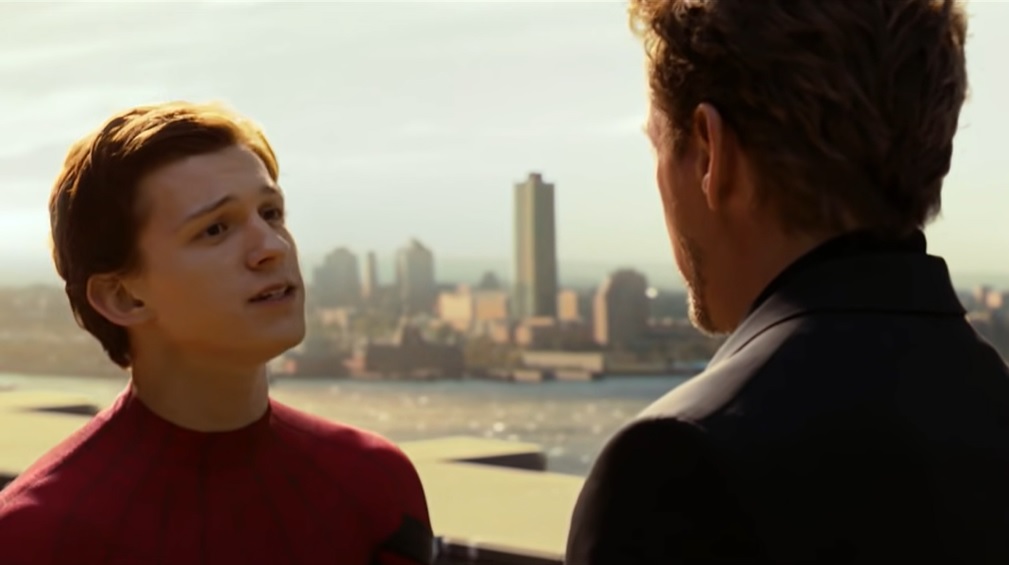
Except we all understand this scene isn’t actually about the suit. It’s about Peter being terrified his future is suddenly slipping away from him. He’s a poor, nerdy kid from Queens who had a shot at the big leagues, at having Tony’s approval, of being part of Stark Industries and part of the Avengers, at finally being—in his mind—someone who matters. And suddenly it’s all being taken away.

But Peter doesn’t talk about being scared. He talks about the suit. And how he’ll be nothing without it.

So if I’ve got a character about to deliver a heartfelt monologue about their inner feelings and desires and conflicts… maybe I should pause and look at it again. Yeah, there’s a chance it’s perfect as is. This is one of those cases when someone can flat-out say exactly what they’re feeling with no subtext and it sounds fantastic

But maybe—especially if I’m doing this two or three or four times—it’d be better if a lot of it was implied rather than explicitly said. Maybe I could bring it out it with some plot-relevant subtext. Or maybe I could show it with their actions and decisions. Story advancing the plot and all that.

Because it just makes people uncomfortable when we talk about that stuff.

Next time, unless anyone has some other suggestions, I thought I’d blather on a bit about that other type of structure.

Until then… go write.

(wow, haven’t said that in a while)
March 11, 2022

I’ve Been Framed!

This week’s random topic is something that’s been gnawing at me for a while. I’ve been batting it around, trying to come up with a good way to explain it, and I think the catch is there really isn’t a good way to do it. This is one of those slightly-more-advanced writing things I either understand or I don’t. If I do… I probably already know to avoid it.

Anyway let’s see if I can stumble through some analogies and examples and hopefully make this a little clearer.

You’ve probably heard the term framing once or twice. It has to do with how I choose to present things in a story. If my character is talking about something, how they’re saying it is part of the framing. So is how people react to it—in both out loud and unspoken ways. How I choose to describe it in the text says a lot about it, too. Framing can involve a lot of subtext, and a lot of not-so-sub text.

(also, just to be clear, we’re not taking about frame stories which are something else altogether that I’ve meant to ramble on about for a while now)

So let’s jump storytelling forms for a moment and I’ll give our first example.

In moviemaking (and photography) people talk about framing a shot. This is a very similar idea. If I’ve got Phoebe on camera, it’s how I’m choosing to set up this shot. How are going to set the edges of the shot? What’s in the background or foreground? How close are we to her? What angle are we seeing her from? Is the camera static or moving? And if it’s moving, how is it moving?

How I frame the shot affects how we, the audience, perceive this shot. It’s an added layer of meaning. A sort of visual subtext, if you will.

Here’s an example I’ve given you a few times before. Let’s say our scene is the young lovers dashing up to the bedroom. One pushes the other down on the bed and then does a sexy, laughing striptease for them. Easy to picture, yes?

However… we’re going to frame this with a handheld camera, looking though the crack between the closet doors. As the shirt gets tossed and those pants are wiggled out of, the camera can tilt one way or another, so the audience can see as much as possible. Where things land, what state of undress people are in. But, y’know… all through that narrow crack.

And this has suddenly become different scene, hasn’t it? Not so fun and sexy anymore. Now we’re just waiting to see who—or what—comes bursting out of that closet. because there’s definitely something in that closet, right? They wouldn’t be framing the shot this way if there wasn’t somebody in there watching all this happen.

That’s kind of the key point I’m awkwardly getting at here. Things can get weird in movies when there’s a big disconnect between what’s going on in the scene and what the subtext tells us is going on in the scene. One of them will usually override the other, and since movies are a visual format, the camerawork—the framing—can override any spoken text pretty easily.

Now, a lot of time this is deliberate. That scene I just described above (and a few hundred just like it) is a pretty standard horror movie shot, especially for slasher movies. The unknown killer watches from the closet. Or maybe just that pervy voyeur they’ll yell at when he stumbles out of the closet (and then they’ll throw him out of the room and he’ll be the one who gets killed). Point is, the storytellers (in this case, the filmmakers) are deliberately subverting what should be a sexy scene by framing it in a way that make it very creepy.

Thing is… it isn’t always that way. If you’ve ever followed along with Saturday geekery on Twitter, you know one of my common complaints is when inexperienced filmmakers try to copy a shot from another movie without really understanding why it worked in that movie. I’ve seen folks do the “peeking out of the closet” shot or the “looking through the window from outside” shot and they did it because, well, that’s how you film sexy scenes in horror movies, right? Wasn’t it super hot when she was swaying at the end of the bed and pulling open her…wait, what? You thought it was ominous? Why? Now suddenly the film is stumbling because the sexy scene is creepy as hell but it was supposed to just be… well, sexy.

And the audience will sense this screw-up. Even if we don’t always know the syntax or conjugation, so to speak, we know enough filmic language to realize something wasn’t landing right there. We’ll figure out eventually from context (y’know, when something doesn’t come out of the closet), but that stumble is going to break the flow and throw us out of the movie as we try to figure out what’s actually going on. Was this a creepy scene or a sexy scene or what? How were we supposed to feel about it?
And we can frame things in our writing, too. We can layer in that subtext through our characters and their reactions, our story structure, even just with with our vocabulary choices. We can make insults sound like compliments, word something innocent so it could be flirty, make it really clear how weak that guy making the loud, angry speech is.

But…

If we’re not careful when we do this, we can end up with that same stumble I was just talking about inexperienced filmmakers causing. If Yakko just insulted Phoebe but my word choice makes it sounds a little too much like a compliment, even though we know Yakko wouldn’t compliment her… well, wait, what’s going on? Or if everything structure-wise says this is when I learn if Phoebe is the super-werewolf or not and instead it’s revealed that we first went to the Moon in 1969… I mean, that’s not remotely the answer we were looking for. It’s not even really an answer. It’s just a random fact. Is it even relevant to this story? And why is it in italics? Why are we emphasizing it? Did somebody think the Moon landing was in some other year?

I know this is one of those things that sounds kind of silly and self-apparent, but I’m surprised now often I’ll come across it. A writer pretty clearly trying to do X, but they’ve set everything up as Y. Unusual framing. Odd vocabulary. Weird emphasis. Things that feel like they’re meant for a different version of this scene. And like with the films, I think these writers are trying to copy something they saw work, but haven’t quite worked out why it worked.

And that’s why this is a tough thing to explain. It’s hard for me to say “make sure you’re using the right subtext for your scene” when I don’t know the scene or the subtext you’re currently using or the effect you’re trying to create with it. It’s going to be different for every writer, every project, every scene.

Okay, I know this hasn’t been super-helpful, so let me toss out a few last suggestions that should make it easier to avoid this issue.

1) Know what words mean—This should be a serious basic for any writer. A bad habit most of us start with is running across words we don’t know and kinda getting their meaning from context, and then using them as we kinda think they’re intended. Which, no surprise, can cause real confusion for people who actually know what the word means. And that’s not even taking into account that I might spell it wrong and spellcheck swaps in some other word altogether. Which I also don’t know.

2) Know how this is supposed to make my readers feel– is this a sexy page or a scary page? Funny or creepy? Should my readers be tense or fascinated? If I don’t know how this bit’s supposed to make them feel, how can I get any sort of emotion across on the page? Bonus—knowing this should also help me figure out if any moments are particularly jarring. Not in the way I might want.

3) Work on my Empathy– I’ve said it before and it’s still true. I need to understand how other people are going to react to things. If I don’t have a good, honest sense of how this character’s going to be received, how that line of dialogue’s going to go over, how my readers will react to this beat or that reveal… well, it’s going to be tough to tell a story. I need to be able to put myself in other people’s shoes so I can take a look at my work and say “Wow… if I do it like this, the readers are totally going to think someone’s in the closet watching Chris and Pat.”

Anyway… this was a little rambly, but hopefully you got something out of it.

Next time… look, I’ll be honest. I’m not sure there’s going to be a post next week because I’ve got a four or five hour drive on Friday and then a talk about worldbuilding. Plus—if you hadn’t heard– I had a new book come out last week and I’ve been a bit overwhelmed. Which means now I’m playing a bit of catch-up. But I’ll try to get something out, if time allows.

Until then… go write.

July 15, 2021 / 1 Comment

Don’t Say It

So, there’s something I was hoping we could avoid talking about this week…

Subtext is one of those things that gets mentioned a lot. In fact, I’d hazard a guess it gets mentioned more than it gets defined, and it probably get defined more than people actually give examples of how to do it. Which is weird because it is so important to good writing. It shows up in prose, it should be all through dialogue, it’s just… it’s everywhere

I think we all get a little nervous around subtext because when it’s done well it’s soooo friggin’ good it becomes intimidating. How many college professors went on and on about it? It’s also one of those things where if I dig deep enough, I can find almost any meaning to anything I want. Which then—through the power of the internet—makes it look the author crafted these twelve layers of intricate meaning when they wrote this chapter and holy crap I don’t know about you but I’m intimidated again.

So what is subtext? It’s the conversation beneath the one my characters are having out loud. Or maybe it’s beneath the conversation I’m having with the reader—that I’m telling you this but we both know we’re talking about this. And sometimes it can be that simple. Subtext doesn’t always have to be rich and elaborate and layered with exquisite meaning. There don’t need to be twelve layers. Or even six.

But good dialogue almost always has some kind of subtext, because that’s how people work. We talk around things more than we say them directly. We have in-jokes and shared experiences and understood context and all these things that let us say exactly what we mean without saying… well, what we mean. Without subtext, it’s really tough to do comedy. It’s almost impossible to flirt.

Here’s a few common examples of subtext you’ve probably seen before. Maybe even used before. They’re really simple and even just using these can bump my dialogue up a notch or two. Also, these are just my own names for all of these. I’m sure there’s some literary or psychological theory that gives them a much more accurate name. But I think you’ll know what I’m talking about, and that’s what matters.

The Friend— Let’s start with the most familiar one. So familiar it’s pretty much become a comedy gag. How many times have you read a story or seen a show where someone goes to the pharmacist to pick up their “friend’s” ointment for… their rash.  Or maybe I know this, uhhhh, person from my book club who got really confused by this one Doom level, and was wondering if you could explain how to beat it in simple terms. For him. And the obvious subtext here is that there is no friend, it’s just the character trying to put some distance between them and the embarrassment of needing that ointment. This is an easy form of subtext, because I’m still saying everything, I’m just pushing all the emotions and thoughts onto a different character—even if it’s a nonexistent character.

A close relative of the Friend is the Hypothetical. That’s when we’re talking about the accursed book of damned souls and I ask you, “well, just for argument’s sake, what if I had read a page of the book out loud? What would happen? Not that I did it, I just want to be sure we all understand the stakes here…”

The Metaphor—This is basic subtext 101. It’s the one I mentioned above, when we’re  talking about X but everyone knows we’re really talking about Y. It’s like talking about my friend, but we’re broadening our palette a bit. I’m talking about cleaning out the garage, but it’s really about letting go of the past. Perhaps my co-worker and I are talking about how much we enjoyed doing this project together when it’s clear we’ve fallen in love. Or maybe the boss is telling his new employee about how much he loves the Klingons in Star Trek, and how in their society you advance by taking out the people above you. Ha ha ha, anyway, welcome to the company. Good luck!

Sometimes an example of this sort of subtext gets repeatedly used so much the metaphor becomes a euphemism—it’s so broadly understood, the subtext has essentially become the text. If my partner calls me up at ten at night and asks if I’m up for some Netflix and chill, we all understand she’s not hoping I’ll sit through the first three episodes of Sweet Tooth(although we may have it on in the background).

The Reverse—Another simple way to use subtext is for my character to just declare the exact opposite of what they really mean. At one point or another, we’ve all probably heard something along the lines of “It’s okay, I really didn’t want the promotion. It would’ve been too much work, anyway.” And we all knew Wakko was lying, but we just nodded and politely agreed with him. Or think of Michelle in Spider-Man: Homecoming, who’s not obsessed with Peter Parker or anything, she’s just knows his class schedule because she’s very observant. That’s all.

Worth noting–a lot of times the reverse can be sarcasm, because sarcasm is all about the subtext. Odds are all of us have made a suggestion where one of our friends has rolled their eyes and said “Oh, yeah, I’d love to do that.”

The Next Step—If you’ve ever read about someone ordering a double at the bar before they break some bad news to their tense friend, you know this method. Or maybe when I know the in-laws are coming for dinner, and I take three or four pictures down from the wall and put up other ones. It’s when a character shows they’re one or two steps ahead. She’s not thinking about now, she’s thinking about fifteen minutes or an hour from now, and planning accordingly. Through their words or actions, my character’s saying “I know where this is going and I know how it’s going to end.”

The Blank—This one’s a slightly trickier way of doing subtext. It’s when my character demonstrates their opinion on something by offering no opinion. Sometimes they do it by ignoring the topic, like when Wakko asks his brother’s opinion on Phoebe and his brother instead pointedly wonders aloud how much the DJ gets paid at this club. Other times he might just dance around it, saying he doesn’t know Phoebe that well or giving a very vague non-answer (“Look, how well can you really know anyone, right?”)


And there’s five easy ways I can put a little subtext into my writing. You’ve probably seen a lot of them already. You may already be doing it—good on you.

It’s worth mentioning that all of these methods need a bit of skill and practice, because sometimes people are just really observant. Every now and then we really do just want to relax and watch something on Netflix. And maybe the boss just really likes Star Trek and I wasn’t supposed to shove Dot down that elevator shaft

Y’see, Timmy, the trick with subtext is making sure it’s clear what I really mean. I can’t be so blunt that my characters aren’t really hiding anything, but I also can’t be so subtle that people think my characters… aren’t really hiding anything. It’s a fine balancing act, and it’ll take a few tries to get it right. Nothing to be ashamed of. I have this one friend and none of his early writing had any subtext in it at all.

Next time…

Okay, so, next week, in a world where everyone had masked up last year and gotten vaxxed as fast as they could this year—in that world, next week is SDCC. Alas, we don’t live in that world, so next week is another virtual con with lots of Zoom panels. Which are fantastic, don’t get me wrong, but I’m not doing any of them. In fact, at best, I may do a more public Saturday geekery and watch a couple fun B-movies. Like maybe the MCU Incredible Hulk and Resident Evil: Apocalypse.

I was also thinking about the blog post for that week. Normally I’d just update my “Top Ten B-Movie Mistakes” list (found footagewas finally going to get a slot). But that just feels kind of needlessly negative, especially after the past year, and I want this place to be more constructive.

So here’s what I’m thinking about doing…

Next week I’m going to do two posts (Tuesday and Thursday) about how to make a better B-movie. Tuesday’s going to about writing it (based on my experience as a writer, screenwriter, and entertainment journalist) and Thursday’s going to be about filming it (based on my experience working on a few dozen B-movies and TV shows, some of which you’ve actually heard of). It’ll probably just be a “top seven tips” sort of thing, and I doubt anyone from the Asylum will ever see it, but I’ll feel better putting something more positive out into the world. And maybe it’ll help somebody.

Sound like fun? 

Cool.

Until then, go write.

And get your shots!

March 25, 2021

Oooooooh, Shiny!

Story time!

I first heard this story many years ago under a different title—the slutty new idea—and while the story/idea is very true, in retrospect I’ve realized the original title is unnecessary and also doesn’t make a lot of sense, if you think about it. It’s implying there’s something wrong with the idea even though the writer’s the one being a bit *cough*cough* promiscuous here. And I don’t want to be one of those people blaming someone else for my behavior. Hopefully you don’t want to be that way either. Plus, I’ve seen it bandied around  a lot more lately as the shiny new idea, which makes a lot more sense. It’s something new and eye-catching and…

Well, let’s talk about the shiny new idea. The story goes something like this…

I, the writer, am out with my story. Maybe it’s a novel or a screenplay or a comic book script. Whatever it is, I’ve been with this story for a while now and I’ve fallen into a good pattern with it.

Perhaps too good. Maybe a bit of a rut. I just don’t have the enthusiasm for the story I once did. There was a point that it was fun and playful and exciting and all I could think of, but as of late… well, the honeymoon’s over and now it takes some effort to get anywhere with my story. Things aren’t bad, mind you, they’ve just become a bit… rote. Maybe even mechanical.

So, anyway, the story and I are out and about and that’s when I happen to notice a shiny new idea across the room. It’s big and bright and it’s got that look to it that just says “hey, you know it’d be fun to tumble around with me for a while.” It’s got a sharp edge to it, and it’s showing just enough I start thinking about all the parts I’m not seeing, and all the fun this idea and I could probably have together. Just looking at it, it’s clear that is the kind of idea a writer’s supposed to have, not the dull thing I’ve somehow ended up with

In fact, let’s just take a moment and be honest with ourselves. That’s how we all want things to be with our ideas, right? It’s what movies and TV shows and so many twitter threads have assured us the life of a writer is like. It’s supposed to be this wild and spontaneous and intoxicating relationship we just can’t get enough of. We want it to keep us up late and wake us up early so we can get right back at it.

Wait, what do you think we’re talking about? No! This is a writing blog! Get your mind out of the gutter!

Anyway, a lot of us know the simple truth of the shiny new idea. Sure, it’s fun and exciting at first, but then one of two things happens. Sometimes we find out there’s not really anything else to it. Oh, that first weekend is fantastic, maybe the week after it is pretty cool, but it doesn’t take long to realize the shiny idea is… well, it’s a bit shallow.  We had some fun, but after a couple days we realize things just aren’t going any further.

On the other hand, things might work out with me and the idea. The passion fades a little bit, but I’m still giving it my all and getting quite a bit in return.  Eventually the two of us settle down into a comfortable story together. And just as I realize things are becoming a bit of work with my story, the two of us are sitting down one evening and I happen to notice a shiny new idea hanging out over at the bar…

Again, we’ve all been there, yes? Hell, I’m there right now. I’m working on this big six-book outline/ pitch document and yesterday I was filling Keyser holes in the lawn and had this whole new book idea pop into my head. So I went inside and scribbled out three pages of notes and oh, look, haven’t gotten much done on that pitch document today, have I?

There’s also a sad parallel to the shiny new idea which I’ve come to refer to as the booty call idea.  This is the idea I used to spend a lot of time with, but now I don’t for one reason or another. Maybe we needed some time apart. Maybe it just wasn’t working out, and I couldn’t figure out how to make it work. It’s possible the idea and I just admitted it wasn’t going to work and decided to call it quits.

But, sometimes there I am late at night, and that idea looks kinda sweet again. There’s definitely some things I could do with it. Nothing serious, mind you, just a writer and an idea playing around, having some fun, no pressure. Yeah, there’s probably other things I should be working on, but one night won’t make any difference, right? Heck, not even the whole night. Just a couple hours to ease back into it and take care of that little itch I’ve had. And maybe this time it’ll be different.

But more often than not, come morning I just feel a bit guilty about the time I spent with the booty call idea when I should’ve been, well, doing other things.

Y’see, Timmy, it all comes down to focus. As I’ve said here once or thrice before, writing isn’t always going to be fun and fast and exciting. Sometimes it’s going to be work. There are going to be times when the days blend together.

But if I stick with it and don’t chase after every little idea that flashes me a bit of plot, I find that most of the days are going to be good ones. And more than a few will be fantastic.

Don’t chase after the shiny idea. Resist the urge to check in with the booty call idea. Don’t ignore them or forget about them, but don’t let them interfere with what you’re working on right now.

Next time…

Okay, before we get to next time, this weekend is WonderCon! They’re now celebrating their second virtual year, and they’ve got a bunch of stuff lined up. For example, Saturday at 10 AM(Pacific Time) we’re doing a virtual Writers Coffeehouse, where I’m answering questions about writing and publishing (and I convinced Sarah Kuhn, Stephen Blackmoore, Fonda Lee, and Greg VanEekhout to join me).

And then starting at noon on Saturday it’s… Saturday Geekery, WonderCon edition. We’re going to watch some wonderful movies together, like Thirteen Ghosts, Solomon Kane, and John Carter. It’s going to be tons of fun, with hashtags and other writers and stuff like that. Feel free to follow along (most of them are free to watch on Tubi or Disney+).

And next time here… I think we need to revisit a core issue. You know witch one.

Until then… go write.

Categories