
April 5, 2026 / 2 Comments

I QUIT! Who’s Coming With Me?!?

Okay, I know I said I was going to talk about twists, but then… something came up.

Last weekend was WonderCon, and once again a few very talented folks (and me) came together to do the Writers Coffeehouse. If you’ve never been, it’s essentially a bunch of professional writers who are just there to answer your questions. That’s it. Anything goes—writing, publishing, feedback, publicity, editing, contracts, managing this whole hobby/ part-time job/ career/ whatever it is to you. You ask, we answer. Sometimes with a joke or two and the occasional segue.

Anyway, one question we were asked ended up getting, well, a strong emotional reaction from someone in the audience. Not angry. Quite the opposite. No, not happy, either. And I wanted to revisit it because I think the answers we gave out got kind of muddled by a few misinterpretations of the question.

So, all that said… when should we give up on a project? What are the signs or benchmarks something needs to hit for us to say this is as done as it’s going to get? When is it time to drag those first 60K words to the recycle bin and start something new?

To be honest, I don’t know.

Great talk, everyone! Glad you keep checking in on the ranty writing blog. So informative, I know.

I don’t know because this is something absolutely nobody can decide but you. If anyone tries to tell you that you should quit, feel free to ignore them. Tell them I said to ignore them, then go back to ignoring them. I don’t care who they are. Your writing instructor, your significant other, your family member, some professional with a pile of credits, that loudmouth guy online with no credits. I don’t care who they are. Seriously, nobody decides this but you.
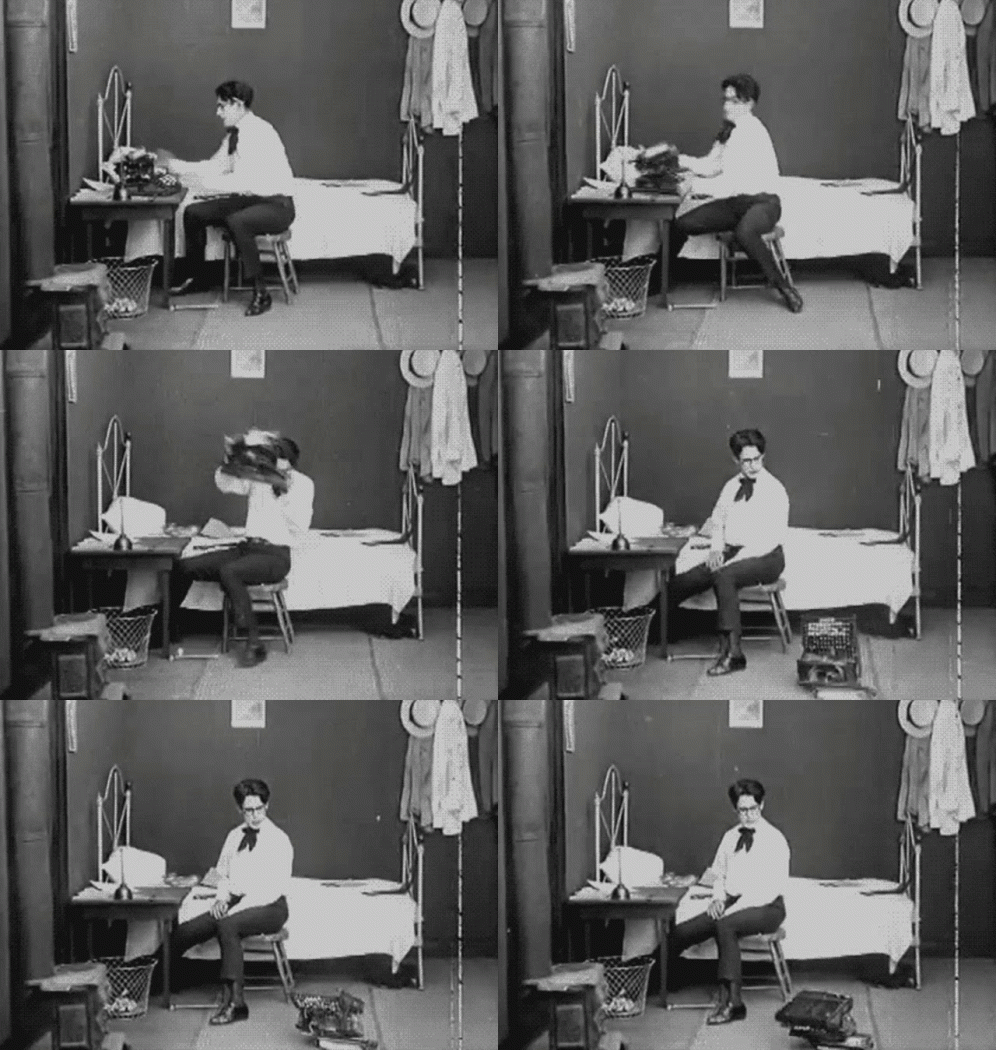
Got it?

Okay then. With that in mind… let’s talk about a few reasons I might be thinking about giving up on this short story or screenplay or novel or long form epic poem. I think it usually comes down to four things. Each of these is kind of an umbrella, and it won’t surprise you that there can be overlap.

First is that I’m stuck. Could be a character thing, a particular interaction, or maybe a description. Maybe I just don’t know how to get from point L to point M, even though I had it all outlined. It just doesn’t work for some reason. Or maybe I didn’t have an outline and I’ve got no idea what happens next. Maybe I’ve been stuck for a while now. Possibly a long while.

Second, closely related to being stuck, is that I’ve been polishing this thing forever. Maybe I can always see something else that needs tweaking. Maybe I show it to other people and they always see something that needs tweaking. Writing means rewriting, and I’ve rewritten this whole thing five or seven or eleven times.

Third is that… well, I’m bored with it. Maybe it’s because I’ve been stuck and beating my head against it for ages. Maybe it just doesn’t excite me anymore. I wrote all the cool bits and what’s left is kind of boring. Nobody wants to write something dull and this thing has become dull.

Fourth and finally is that maybe I’ve become a little embarrassed by it. Ashamed, even. No, not because I forgot there were racy parts when I asked my mom to read it. Okay, maybe that. But maybe because I showed it to someone and they didn’t think it was that great. Maybe they told me it sucked. Hell, maybe I asked for feedback and they just ghosted me. I mean, how bad is this manuscript? I thought it was pretty good, but I guess it’s really awful and I’ve been wasting my time…

So that’s four reasons I think most people consider giving up on a project. Let’s talk about each of them and why maaaaayyyybbeeee they don’t really matter. Or maybe they do, in this case. Again, I can’t decide this for you.

First, we all get stuck sometimes. All of us. Yeah, even pros. Yes, me too. It’s really rare that I can’t write anything, but I have absolutely hit times when I just can’t make this sound right or that bit just doesn’t work, no matter what I do. And sometimes it takes a while to figure it out. One thing that helped me a lot was realizing this usually happened with my first drafts and first drafts just… well, they don’t matter. They can be gloriously messy, error-filled, unfinished things with gaping holes in them. Hell, the first draft I just finished up has so many holes in it, if it was a shirt I couldn’t wear it in public. But it doesn’t matter. A first draft is that shirt you only ever wear around your home because, y’know, it doesn’t matter.

If you get stuck in a first draft… skip it. Seriously. Just leave a note to yourself in all caps or brackets or whatever and just deal with it in the next draft. That’s what the second draft is for. Looking at stuff again when you’ve had some time. You’ll have a better grasp of the characters, the plot, and the whole story, and the things that you were beating your head against before will suddenly seem a lot easier to deal with.

Speaking from a lot of experience on that one.

Second, like I just said, everything needs edits and rewrites. Anyone who says otherwise is lying to you or themselves. Possibly both. We need to clean up that first draft and then go over the second draft to make sure we didn’t make new problems when we fixed the old problems. But it’s easy for this process to become a trap. Because, yeah, there’s always going to be something else to tweak, something else that could be a little stronger, a bit smoother, and crap, I’ve been doing this so long that reference is a little dated now, isn’t it? Maybe i could come up with a better one…

I tend to do five drafts of a book and then… I’m done. I put it down. At that point I know, personally, that anything I do is just going to be stalling. There will always be something else to fix. And there’s probably always going to be another chance to fix it. So don’t get trapped rewriting the same thing over and over and over again when you could be using those skills to move on to something else. Something better.

Third, yes it sucks when writing turns into work. Yeah, that first draft is filled with energy but then… well, it’s always more fun to make the mess than to clean the mess up. Plus, let’s be honest, sometimes we’ve got this other idea bouncing around in our heads and that one is really exciting.

The truth is, if I’m just doing this for fun… punt it. Move on to something you’ll enjoy more. But if I want to do this professionally—at any level—sometimes I just need to slog through it. I can’t really do anything until I’ve got a finished, polished manuscript, and sometimes that just means… I need to finish it and polish it.
Sorry.

Fourth… this one’s probably the worst because this one can hurt. And it’s really hard to ignore something that’s causing us pain. Sometimes it’s accidental. Sometimes… yeah, it a dick who thinks they’re being funny. Worse yet, they’re openly trying to hurt us. Sometimes with the assurance that “oh, it’s for your own good” and sometimes… because they just want to hurt us.

A few things to remember when this happens. Not every story is for everyone, and I can’t be surprised when someone who doesn’t like genre X has a bunch of issues with my genre X story. Some folks are really bad at vocalizing—or honestly, even identifying—what they think does and doesn’t work in a story. Taking criticism is a skill we need to learn, and alas it’s rare to learn how without taking a few bruises.

But while I’m getting bruised, I need to remember, no matter what anyone else says… this is my story. Nobody knows how it’s supposed to go better than me. Absolutely no one can write it better than me. And definitely nobody can fix it better than I can, because (again) nobody knows what it’s supposed to be better than me.

And one of the best lessons of criticism is… sometimes we can just ignore it. It can be tough, but like I said up at the top, no matter who they are, they don’t get to make the decisions.

So anyway… there’s four reasons you might want to quitting on a project. And four reasons you might want to reconsider quitting. Y’know, if you want to. And even if you do, quitting doesn’t mean deleting all your files and burning all existing copies. If you do decide to quit, you can still change your mind later.

Y’see Timmy, like I said above, nobody can decide if you should quit or not. But if you do, just make sure you’re quitting for the right reason.

Next time, for real, twists.

Until then, go write.

September 5, 2025 / 2 Comments

Around the Block

I’m planning out this massive book tour for God’s Junk Drawer at the end of the year and it’s kind of freaking me out in a few ways. Once or thrice now I’ve sort of stopped and quietly shifted my attention to… something else. Anything else. Because then I don’t have to think about how I’m doing all this traveling and signing and talking in just ha ha ha ha like two months. Holy crap, it’s seriously only two months away now.

So let’s talk about something else.

Well, no, hang on. Let’s talk about that. About being a little scared and freaked out. And how it can effect us.

I think a lot of time when people say they have writer’s block, what they really mean is they’re worried that the thing they want to write just isn’t good enough. That their take on it isn’t good enough. Heck, maybe they’re not even the person who should be writing it. It’s not worth doing, especially not with everything going on in the world! Is this page, that paragraph, this sentence as good as it could be? Is this the best way to describe this? Will my writing sell, win awards, or get me mocked on TikTok?

Most of us go through this at one point or another. We start over-analyzing our work and second-guessing everything we put down. And eventually… we don’t so anything. I’ve mentioned the term paralysis by analysis before, which sums this up perfectly. We get so scared at the thought of doing the wrong thing—something that isn’t perfect—that we don’t do anything.

And it’s kind of understandable, right? None of us want to waste time writing the wrong stuff. Putting down a lot of words that we know aren’t the right ones. That’s not how real artists do it.

We’ve talked about this before, though. Not getting it perfect the first time is pretty normal for writing. I need to get past this idea my work should be flawless out of the gate and just admit my first draft isn’t going to be perfect. Maybe not the second draft, either. It’s going to need editing. Maybe lots of editing. Possibly even major rewrites. That’s just the way this whole writing goes.

Once I can admit this to myself, I can get past that block—that fear—and my productivity will go through the roof.

Another cause of writer’s block is a voice issue, or possibly an empathy issue. A lot of us tend to write the way we speak, especially when we’re just starting out. Maybe a little cleaner or clearer, but it’s not unusual for our narrative voice and character voices to use all the same words and phrases and metaphors that we do in our day to day life. It’s normal because it comes naturally. It’s us telling stories about characters who also talk like us.

But at some point—maybe early on, after a few months, maybe a few years in some cases… things stop matching up. We realize that high elf ladies of court and interdimensional aliens probably shouldn’t talk like stagehands from San Diego. They’re not going to see the world the same way a retail clerks from Amherst would. They’re going to have different vocabularies and cadences. They’re not going to sound like me.

And suddenly I’m not writing “naturally” anymore. It’s not that easy gush of words. I need to put myself in a different headspace and look at the world—even this made-up fictional world—in different ways. It takes effort! It’s work.

For some folks this becomes writers block. It’s not that they can’t write, they just can’t understand why it’s become an effort. Because writing should be glorious and effortless, yes? And if it isn’t… well, I should probably wait for the muse to return and the words to flow.

There’s one other big thing that I think can cause writer’s block. And it’s a painful one.

Sometimes people have writer’s block because they don’t have anything to write.

There’s a lot of reasons people sit down and try to write. Could be I have a clever idea, but no real story. Perhaps I just think it’ll be an easy side-hustle to make some money. Maybe I want the adoration for a finished work more than I want to… well, write something.

I know this sounds harsh, but I also know most of us—one way or another—are acquainted with someone like this. Someone who likes the idea of being a writer more than the reality of being a writer. And these folks will talk about being blocked when the truth is they just have no real interest in the act of writing. But I mean if they’re blocked… I mean, that can’t be helped, right?

You may notice one thing I haven’t mentioned is “all this crap going on in my life.” And these days… yeah, there can be a lot of it. It can feel overwhelming and exhausting and oh sweet jebus how do some people find time to write? How is he getting so much done?!?

But that’s not being blocked. That’s just being tired. It’s a self care issue. A scheduling problem. It’s reality, and we’re all living in it (well, most of us). Sometimes, we all have to put the writing aside for a while and deal with, well, life. That’s just the way it goes.

Y’see, Timmy, I don’t really believe in writer’s block. I think it’s just a big, catch-all name we throw over other problems. Fear. Inexperience. Lack of interest. It’s intimidating when it’s a vague concept, but once we break it down and actually identify it, we can address it. And deal with it.

And beat it.

<insert Rocky music here>

Oh, minor segue– if you’re in the San Diego area this Sunday, I’m filling in for Jonathan Maberry and hosting the Writers Coffeehouse at Mysterious Galaxy Bookstore, noon to three. It’s absolutely free, no requirements, no sign-ups, no minimums, no secret password needed. Just show up and talk about writing, publishing, and some of the weird spots where they overlap (or don’t talk and just lurk). Bring your questions and I’ll try to bring some answers. And if I don’t have them, someone else there probably will.

Next time… okay, I know people are still reading this thing, but I feel like I’m just throwing stuff out there. Much like the Coffeehouse, is there anything in particular anyone would like me to talk about or address? Just drop a comment down below. Otherwise I’ll… I don’t know, give you a top ten list or something.

Until then… go write.

November 6, 2017 / 1 Comment

NaNoWriMo Tip

            Hey, y’know what I realized over the weekend?  It’s NaNoWriMo!  Who’s trying it this year?
            I’ll be honest. I’ve never tried it myself.  By the time I first heard of it, as it was just starting to gain popularity, I’d already been writing professionally for a year or two.  Might’ve even already been writing full time (non-fiction, but still).  For the past eleven years… well, every month’s been about word count for me.
            That doesn’t mean I don’t have some ideas and thoughts on NaNoWriMo.  In fact, a lot.  At this early point in the month, I have one very firm reassurance, and one solid tip.
            Which I shall share with you now.
            First piece of reassurance.  No matter who you are, I can tell you with absolute certainty, you are not going to sell the manuscript you write this month.  No agent will consider it.  No editor will look at it.  It’s just not going to happen.

             HANG ON!  This isn’t a kick-in-the-gut thing.  This is liberating.  It’s freeing.

            I’m not saying nobody will ever buy this book.  But what we’re doing during this month is a first draft.  A rushed first draft at that.  It’s going to have plot holes and factual errors and typos.  It will, trust me.  It’s a fantastic starting point, but it’s going to need more work after November 30th. No question about it.
            Again, this is a good thing.  Stop worrying about if an agent or editor or your significant other is going to like this. They’re never going to see it.  This draft is for you and you alone. Be selfish.  Go crazy.  This is the “dance like nobody’s watching” part of the process.  Let your creativity run wild, eat nothing but chips, drink nothing but whiskey, run naked in the coffeeshop, and don’t worry about anyone else and what they may think.  They can see the second or third draft, maybe, but not this one. Do what you want to do with it.  Do anything.  Because this is just the first draft.
            Okay, don’t actually run naked in the coffeeshop.  Yeah, I know they smile at you a lot there, but they’re paid to be nice to you.  They don’t want to see that. Especially not in a place that sells food.
            Second thing—the solid tip.
            Write.
            That’s it. Just write.
            I know that sounds kind of flip and arrogant, but stop and think for a moment.  Like we just said, this draft isn’t for anyone else.  We’re not going to worry about spelling, research, current hot genres, book advances, any of that. All that matters for this month is getting words on the page.
            Sooooo… get the words on the page.
            In my first drafts, I change character names halfway through.  I snip off plot threads and remind myself to pull them out later. I snip off some characters halfway through, and then jump to the alternate timeline version of the book where I killed them sixty pages ago (like I now know I should’ve done in the first place).  And I can do all this because this is going to get another draft.
            For now, the most important thing is to just write.  Put words on paper or on the screen or on your arm or your friend’s shirt or whatever medium you’ve decided to work in. Stop trying to filter or rein in your creativity and get it all out.
            So for now…
            Go write.

Categories