

October 15, 2026

Head Games

Okay, well… it’s been a while.

Again.

If you happen to subscribe to my newsletter, you know it’s been a weird, long summer that ended with me deciding to, well, go hide in the garage for a while. But I’m back and feeling, well, a little recharged. Let’s say not quite as overwhelmed by, y’know… everything

Anyway… let’s talk about writing. Haven’t done that in a while, have we?

So, just a few weeks before I went on this extended hiatus, Alex asked—

How do you go about writing characters with thought-processes considerably different to your own? Fundamental differences like Mike’s savant syndrome, for example, or ingrained stuff like Hector’s military skill. They both read as natural and believable depictions, and I’d kill for some advice on how to make something like that work.

Unless you secretly have savant syndrome and are an ex-secret military agent and are writing from the heart–in which case, props to you.
Are you even still here, Alex?

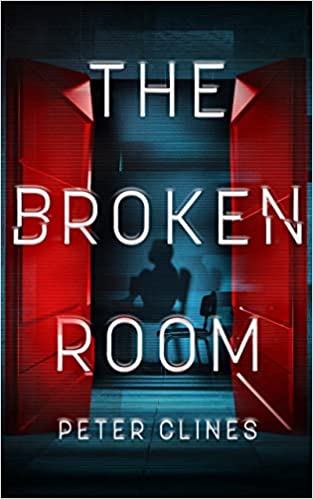
Funny, semi-relevant thing– after The Broken Room came out, I got a happy-but-puzzled email from a friend back east. She loved the book, loved the characters, but one thing she couldn’t figure out… If Hector knew how to do all these things—his skill with weapons, cars, people, tactical situations—well, didn’t that mean I knew how to do all of this? So where and/ or how had I learned all that?

As they say… let’s put a pin in this for a moment.

So, getting back to Alex’s question, the big thing here is we’re talking about characters. I’ve mentioned once or thrice before that it’s a big step for all of us when we start writing characters that don’t sound… well, just like us. We all do it when we’re starting out (yeah, all of us) because the easiest head to get inside is the one we’re already inside. So we write a lot of characters who have similar thoughts, similar views, and/ or similar experiences to us. I mean, everyone always say write what you know, yes?

It’s a big thing when we decide to start stretching out of that comfort zone, and it’s not unusual for it to bring things to a halt at first. Suddenly feeling around in someone else’s head can be… weird. A little invasive? Personally, I remember second-guessing myself a lot about writing characters who weren’t just, y‘know, me with a fresh coat of paint. Especially if these people happened to have different skin tones. Or genders. Was I just completely out of line trying to write the POV of a Black woman?

Here’s two things I did for these characters who weren’t me.

First, I did research. Lots and lots of research. Over the years I’ve researched scientists, soldiers, ballerinas, doctors, and government agents. I’ve researched high IQ people, people with missing limbs, people who run ultramarathons, and more.

A few key things…

One is that I tried whenever I could to actually talk with these folks. In person, on the phone, on video chats. Because I didn’t just want to know things, I wanted to hear how they talked about these things. People tend to respond a bit differently when they’re talking than they do when they’re writing out answers to emailed questions. You’ll also notice that professionals in most fields tend to talk casually about the things in that field.

Another is that I always tried to have follow up questions. How long did it take you to learn that? You always do this, but what would happen if you didn’t? One of my favorite questions is “but what’s the real way this happens,” because for a lot of things there’s the official way we’re all taught or trained, and then there’s how it actually gets done on the job site or out in the field. There’s the way they teach film making at film school, and there’s the way film making happens on set—they’re not the same thing. Heck, remember that part time job you had in high school or college with the silly training videos they made you watch? How to stock shelves. How to talk with customers at the register. Did anyone ever follow those to the letter?

And the last thing in this little subset… listen. Actually listen to people. Not just the things we want to hear, the specific facts we’re looking for, listen to all of it. Like I mentioned above, the way they talk. The tone of their voice. The points they’re sure to make and ones they sort of talk around.

This leads nicely into the second thing, which is empathy. I’ve talked about empathy here once or thrice before. Really simply, it’s the ability to put yourself in someone else’s head. To figure out why someone like that would do something like that. I really, truly believe this is one of the most important skill we develop as writers, and I think it’s really hard for anyone to have any sort of wide appeal if they don’t develop. I’ll always be able to find an audience of people who think just like me, but I’ll find a much bigger one if I can find people who think in different ways about different things.

The catch is, empathy isn’t something we can really teach. We each just need to sit down and figure it out. And that can be rough because sometimes, for whatever reason, we don’t want to put ourselves in that other point of view and take an honest look through those eyes. Maybe because it’s uncomfortable. Maybe it’s because it’ll make us see something uncomfortable in ourselves.

If I’ve got a character who’s radically different than me, I’ll spend a lot of time just thinking about them. What would they think of X? How would they justify Y? Would they ever Z? A lot of the time, these situations will have nothing to do with my plot– I don’t want to possibly get lazy and just give them a reaction that would be really good for the book. I mean, I want it to be good for the book, yeah, but I also want it to feel true to them, the actual character. If they’re just going to be a plot zombie I’m kind of wasting my time. On a few levels.

Let me give you a few quick examples, using the examples Alex asked me about.
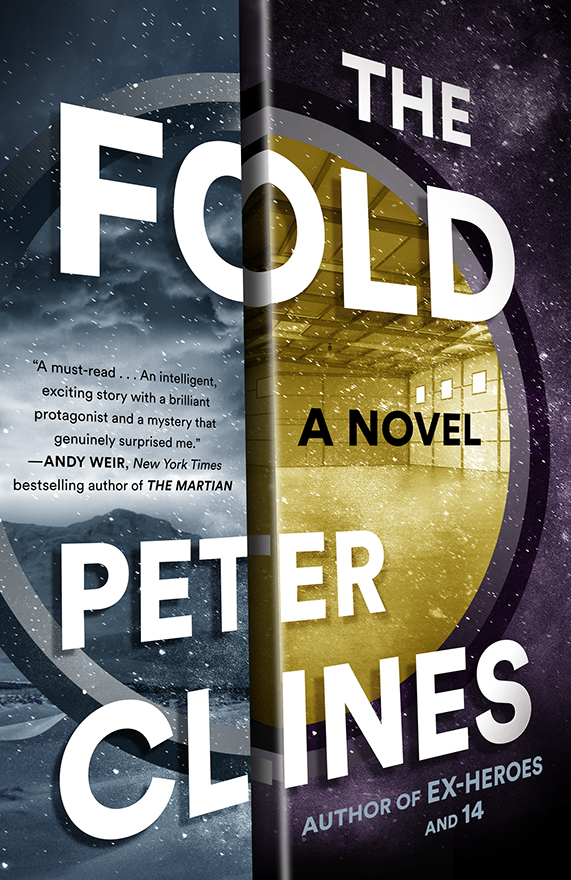
When I was figuring out Mike from The Fold, I knew from the start I wanted him to be someone with a high IQ, but his defining thing became his memory. By all accounts, actual, comic-book level photographic memory doesn’t exist. Or at least, nobody’s been able to prove it exists. But I started wondering about what it would be like for someone if it did.

The big moment was at one point I was playing with the idea of ants as a sort of self-built mental structure. One group of ants carries thoughts, the other carries memories. But then, as I played with this, I had the thunderbolt realization that if Mike every toyed with this idea, he’d never be able to get it out of his head. And that’s when I realized true photographic memory would almost be a curse. It wasn’t about being able to remember everything– it was about never being able to forget anything. Never having anything slip your mind, nothing dulling with the passage of time.

Needless to say, this gave me a huge insight into how Mike would view and interact with the world. It also meant that, as the author, I wouldn’t be able to use a lot of common narrative devices like “it looked familiar” or “he couldn’t place it” or those sorts of things. Essentially, if Mike had ever been exposed to a visual, a concept, a sound, anything—it was right there, in perfect clarity. So this shaped his point of view even more.

As for Hector in The Broken Room… I knew from the very start that Hector was going to be a former secret agent who was living below the radar. Heck, he’s living below the radar in what he views as a hostile country. So he’s always watching everything and trying to stay one step ahead of everyone around him—knowing how they’ll react and how he can take advantage of that.

So really, this is just empathy dialed up to eleven. In order for Hector to believably manipulate this hotel clerk, I need to have the clerk act and react to things in a way that makes sense and will be believable for readers. But I also need to have Hector believably predict that. The less “baseline” their reaction is, the less likely it is my readers would accept him predicting it. Make sense?

Plus… okay, here’s the trick that gets completely overlooked when it’s done well. I’m the one writing this. I can tailor her reactions to his plans and make sure it all works out for maximum effect. So by being able to put myself in both characters’ heads, I can make these scenes even stronger and make Hector seem even more competent. Enough so that I had people who worked the desk in hotels writing to me to say “that absolutely would’ve worked on me” and a friend who’s known me for over thirty years wondering “but how do you know how to do this…?”

That’s it. That’s the whole secret to getting into the heads characters who are really different from me, the writer. Research. Empathy. Mostly empathy.

Next time…

Crap, it’s been a while. I should probably mention that God’s Junk Drawer is out in paperback in just a little less than three weeks. You could preorder a copy now. If you get the newsletter, you know there’s a way you could preorder a signed copy. Ho ho ho.

Next time, nothing’s happened in a while, so I’m going to talk about action. Unless one of you has some pressing topic you’d like me to address? I promise, I’ll get to it much quicker than I got to Alex’s.

Sorry Alex.

Until then… go write.

November 29, 2021 / 5 Comments

Cyber Monday IX: The Consumering

I’m not that big on Cyber Monday anymore because it really tends to just direct a lot of traffic toward Amazon. But it’s that time of year where people have too much eggnog and all the skeletons come out of the closet. Uncle Jack hates to admit it, but artists only get to make art because they get paid.  Artists get paid when people buy their art.

So I’m going to ask you to buy some books. And for two or three of them, I may have to direct you to Amazon. For everything else, you should just be going to your local bookstore and asking for a copy. They’re very cool, they could use the business, and this way you’re not one of those conformists sheeple falling for that Cyber Monday capitalist nonsense. You’ll get to brag about that until Valentine’s Day, easy.

So here’s a list of my books and a few short story collections. Please put them on your wish list or get them as gifts for friends and family members.

First up, you could pre-order The Broken Roomat your favorite local bookstore, in hardcover or paperback. It comes out in early March, so really this is a gift for yourself. And kind of for me, because those preorders really impress publishers and help out a lot. I think we’re going to be having a cover reveal any day now…

Terminus is part of the Threshold universe of stories. It’s about a bunch of people who end up at a strange, uncharted island in the middle of the Indian Ocean. Chase is running away from things, Anne is running towards them, and Murdoch is slowly coming to realize he probably shouldn’t’ve stopped running. They all start to explore said strange island, their paths begin to cross, and the end of the world begins to unfold around them. It’s currently available in ebook and audiobook (read by the always-fantastic Ray Porter). No paper, I’m afraid, but I may have news about this next year…

Dead Moon is about a woman who runs away to the Moon and finds… well, zombies on the Moon. And some other things, too. It’s spooky and fun and I’m quite proud of it. It’s another one that’s in ebook and audio, but no paper (sorry)

Paradox Bound is my New York Times-bestselling story about infatuation, road trips, American history, a pretty cool train and some pretty creepy antagonists. F.Paul Wilson said it was like Doctor Who crossed with National Treasure, and if that doesn’t get you interested I don’t know what will. There’s an audiobook, ebook, paperbacks, and you might even find a hardcover here or there if you’re lucky. Call your local bookstoreand ask if they’ve got one.

Somebody once described The Fold as a horror-suspense novel disguised as a sci-fi-mystery, and I’ve always liked that. It’s available in pretty much every format you can imagine, and it’s also part of the unconnected “series” of Threshold books.

Several of you found your way here because of my odd little sci-fi-urban-horror-mystery novel–14. Alas, the paperback has lone since gone out of print, but there’s still an ebook and a phenomenal audiobook narrated by Ray Porter (the first project we did together). And there might be more versions in the year to come, but we’ll talk about those when we can… 

Another big bunch of you are here because of the Ex-Heroesseries. Superheroes fighting zombies in post-apocalyptic Los Angeles (and a few other places).  Ex-Heroes, Ex-Patriots, Ex-Communication, Ex-Purgatory, and Ex-Isle. All of these are available in a number of formats and a number of languages.

My mashup novel, The Eerie Adventures of the Lycanthrope Robinson Crusoe, is finally available as an audiobook. Bad news… it also only has audio and ebook versions at the moment. Sorry. Hoping to fix that soon, but I really think the audiobook might be a better format for this one.

I also have a short story collection called Dead Men Can’t Complain.  It’s got a bunch of stories I’ve had published over the years in various anthologies and journals, plus a few original ones.  It’s an Audible exclusive, and it’s read by Ray Porter and Ralph Lister.

You can pick up The Junkie Quatrain as either an ebook or an audiobook (still no paper, sorry). It’s my attempt at a “fast zombies” tale, a short series of interconnected stories I’ve described as Rashomon meets 28 Days Later. It also features a recurring character of mine, Quilt, who keeps showing up in different stories in one way or another… 

Thus ends my shameless Cyber Monday appeal to you.  Again, so very sorry we had to do this, but it really does make the marketing folks happy and they’ve always been really good to me. Also, please check out this year’s list of some of the great books I’ve read by other, much better authors.

And please don’t forget my Black Friday offer if you happen to be one of the folks who may need it.

We now resume your regular internet shopping. Browse responsibly. Clear your history on a regular basis. Especially you, Doug. No, sweet jebus, don’t click on that—that’s not really from PayPal.

And we’ll be back to regular writing stuff on Thursday.

Well, it’s that time again. We’ve made it most of the year, but now I’m afraid I need to shill some books. Lots of books.

Yeah, it makes all of us uncomfortable, but it’s also how I make a living. Which is, y’know, writing more books. And which gives me time to make all these ranty blog posts, some of which are about things you’ve asked me to write about.

So really, all of this is on you.

Anyway, here’s a bunch of things I’ve written that are out there for you to enjoy. Or maybe for you to enjoy giving to friends and family members. So they can enjoy them.

Terminus is the latest book set in the Threshold universe of stories. It’s about a bunch of people who all end up at a strange, uncharted island in the middle of the Indian Ocean. Chase is running away from things, Anne is running towards them, and Murdoch is slowly coming to realize he probably shouldn’t’ve stopped running. They all start to explore the strangeness there, their paths begin to cross, and the end of the world begins to unfold around them. It’s currently available in ebook and audiobook (no paper, I’m afraid).

Dead Moon is also about someone running away from their past—a young woman named Cali Washington. And Cali runs all the way to the Moon, where she works as a cemetery caretaker… until the dead start to rise, anyway. Zombies on the moon. Can’t beat that. This one’s also available in ebook and audiobook format.

Paradox Bound is the history-traveling tale of Harry and Eli as they keep bumping into each other and finally start traveling together as part of a fantastic treasure hunt through American history. This is probably one of the most positive, hopeful books I’ve every written, and I’m still ridiculously proud of it. It’s available in pretty much every format you can imagine, and there may even be a few hardcovers kicking around if you check your localbookstores.

The Fold is still a favorite, the story of how Mike, a man with some extraordinary gifts he really doesn’t want, gets dragged into evaluating a government teleportation experiment which goes… well, guess. It’s available in many formats, in many places. Check out your local bookstore and see what they’ve got.

The Ex-Heroes books are the superheroes vs. zombies series that began my career. The ongoing adventures of St. George, Stealth, Zzzap, Cerberus, Captain Freedom, The Driver, The Corpse Girl, and more. Ex-Heroes, Ex-Patriots, Ex-Communication, Ex-Purgatory, Ex-Isle. Available in any format you want, in numerous languages.

14 is my creepy-mystery-cosmic horror-thriller. The book I never thought anyone would like that somehow launched my career up to the next level. If you’re a fan of mine and somehow haven’t read it, all I can tell you is it’s about a guy who moves into an old apartment building in LA and starts to notice some strange things. This one’s currently in audio and ebook formats, but there may still be paperbacks lurking out there somewhere in the world.

The Eerie Adventures of the Lycanthrope Robinson Crusoe – is my attempt at a “serious” mashup novel, rather than just being kind of, y’know, goofy (not that there’s anything wrong with that). I tried to clean it up a lot, but it still hews fairly close to the original, stylistically—consider that a warning some of you might deal better with the audiobook. This one’s currently in audio and ebook formats, but again—your local bookstore might have one of the last wave of paperbacks from a few years ago.

The Junkie Quatrain is a sort of novella/ mini-collection of four intertwining short stories. If you picked up Ex-Patriots as an ebook back in the day, you probably got one of the stories. This is basically Rashomon meets 28 Days Later and its one of those odd little things I’m still very proud of. You can find it on audio or ebook.

Dead Men Can’t Complain is a collection of assorted short stories I’ve written over the past dozen years or so for various anthologies and journals, plus a few extras. There’s zombies, time travel, lizard men, an overprotective ghoul, a noir detective, a lot of creepiness, and maybe a few laughs. At the moment this is only on Audible (and the narrators are amazing), although I’m looking into putting it out as an ebook under my Kavach Press line.

And that’s pretty much everything I’ve ever written. Most of what’s out there anyway. Maybe there’s something you didn’t know about to add to your wish list, or something you really liked that you think somebody you know might like too.

Also, since it’s Black Friday, I’ll also take this moment to remind you of my standard Black Friday deal for those of you who need it. And please—if you need it, don’t hesitate to ask. I’ve been there and I wish someone had offered something like this to me.

Also-also…I’d like to remind you of the other gift you can give authors. Purchases are fantastic, but the next-best thing is reviews. If you enjoyed one of my books, please feel free to throw a few stars and kind words at your favorite online review aggregator of choice. It’d thrill me to no end (and on multiple levels) to look and see a hundred new reviews on Paradox Bound. This kind of things makes books much more visible and helps more people find them. And it’s not just me—all authors feel this way. If you want to spread some joy among your favorite writers, spend an hour some night writing up seven or eight reviews for books you like.

Anyways… That’s Black Friday. I now return you to your post-feasting day of numbness. Be safe. Wear your mask. 

And go write.
November 5, 2020

TMI

So, hey… anything interesting going on in the world?

I kinda touched on this a month or so back, but since we’re all suffering from a bit of information overload right now, I thought it’d be a good topic to talk about. I mean, we’re all familiar with this feeling, right? Dealing with that person who just feels the need to tell us a little too much about things. Seriously, I get that Wakko’s excited about having a kid but do we need that many details about how the child was conceived? No, I completely understand why you thought she couldn’t get pregnant while she had her no y’know what, let’s just stop there.

Actually, let me stay here for another paragraph or three so I can tell you a porn story.

Years ago I was mildly obsessed with a little Canadian show called The X-Files. Maybe you’ve heard of it. It was kind of famous for bold storytelling choices. Multi-part stories and arcs. Realistic lighting. And some bold tricks for getting around the standards and practices rules for what you could show on television. As someone working on a television show at the time, I was amazed by some of the things they did. Especially one time when a recurring character killed a man by pistol-whipping him until he dropped to his knees, pressing the gun against the man’s head, and blowing his brain out.

Of course, we didn’t actually see this. Seeing something like that on broadcast television in the early 90s was strictly verboten, as Kurt Wagner would say. So the X-Files had Mr. X drag the nameless thug around a corner and we saw all this action the same way Mulder did, playing out on the walls as shadows and half-muffled sounds. You can probably picture it in your mind, even if you haven’t seen it. They showed less and did so much more.

The next day at work I was lamenting to my boss, Brad, that we never did anything this cool. Our little martial arts show was kind of… blunt. In the sense that sledgehammers are blunt. Brad just shrugged and said “It’s because all we do here is porn. Doesn’t matter what kind of show it is. Porn is when you show everything. That’s all anyone here knows how to do.”

That was many, many years ago, but I’ve always remembered it. I mean, porn really is the ultimate TMI situation, isn’t it? It’s pretty clear those two (or three) people went off to the poolhouse to have sex, but in porn we see… well, all of it. Every minute. From multiple angles.

Sometimes… our writing leans into porn. I’m not talking about sex, but like Brad said, we start showing everything.  We explain things that don’t need to be explained. Sometimes with far too much detail. A distracting amount of detail. Can you imagine if Ant-Man & The Wasp had a ten minute scene explaining how Pym particles work? Or how Hope controls her wings? Not only would it slow thing to a crawl and break the flow, but I bet anyone with even a thin grasp of science and physics would be able to punch a dozen holes in it.

But there’s another aspect to TMI as well. Experiencing a story is a personal thing. We’re reading it, but we’re feeling it in our gut and filling in a lot of details ourselves. As writers, we try to guide (and maybe even manipulate) how readers imagine things, but in the end a lot of it’s going to be very individual. If you’ve ever read a Jack Reacher book, you’re probably not picturing Tom Cruise, but you’re also not picturing the same person I am. The way I picture Danielle in the Ex-Heroes booksprobably isn’t the same way you picture her, and I probably don’t envision Veek from the Threshold books the same way you do.

So when I start describing too much, things stop meshing in my reader’s mind. I’m breaking the flow again. I’m repeating “six foot blonde” again and again while you’ve already decided Phoebe should be a brunette.

And there’s another way too much information hinders things. In the bigger, overall world of the story, we like having space to wonder and imagine. Especially in speculative fiction. We enjoy filling in some of the blanks ourselves.

For example, when I was a little kid growing up on Star Wars, I assumed the Rebellion was poor (like me) and couldn’t afford to buy cool new ships to fight the Empire. So most of what they had—the X-wings and Y-wings—was essentially kitbashed stuff they cobbled together. They had the basic instructions and diagrams, and they just made the ships out of whatever parts they had (which is why they all had little differences). Heck, I was so convinced of this, I assumed when the Rebellion started using A-wings in Return of the Jedi they were retrofitted snowspeeder hulls, now with airtight canopies and stronger engines. 

Was I right? It didn’t matter—the story had space for me to fill things in on my own. Which is a big part of what I loved about it. Sometimes, leaving things unanswered and unexplained is good. It leaves room for my reader (or my audience) to fill things in on their own and create their own mythology.

Not to mention, it gets harder to tell stories. A good story is about things we don’t know. It’s about the characters (and us) learning and experiencing new things. But the more I know about a character or event, the harder it is to tell a really strong story about them. All the information’s already out there. People give Disney a lot of crap for wiping the Star Wars slate clean and starting over, but the simple truth is it opened up tons of storytelling opportunities. Most of the great Star Wars stories of the past eight years couldn’t’ve been told before, because all those spaces had been filled up and sanded smooth. There were no gaps of knowledge left to fill in.

This can be tough, the idea of not explaining things. There’s a lot of empathy needed. I really need to understand what information my readers will want to know, what they’ll enjoy figuring out for themselves, and when they’ll be fine with nothing more than a handwave explanation of me saying “the flux capacitor is what makes time travel possible.”

It’s also tough because—like with research—sometimes we’ve worked out a really cool explanation or some ironclad reasoning, and we want to share it. We want people to see how clever it is and how well we thought it out. We want them to know we’ve thought of everything.

And let’s be very honest with each other… sometimes we want to fill pages. Nothing wrong with that. Filling pages is kind of the job. I mean, pretty much the first 100 pages of The Fold is scientists and engineers talking about how their little project works. But I’ve also never explained how the Cerberus armor works in the Ex-Heroes books or how Barry turns into Zzzap. And nobody’s complained yet.

Y’see, Timmy, I shouldn’t be scared about not explaining things. Look at some of the explanations and descriptions in your book. It might be new information, but is it necessary information? Does the story need it or does it maybe run a little smoother without it?

Next time… I’d like to talk about how we start things.

Yeah, I know. Great post to do halfway through NaNoWriMo.

Until then, wear your mask, wash your hands, and go write.

Categories