
October 18, 2018 / 3 Comments

Chalk Outlines

Oh, hey, it’s Thursday again.

A few weeks back I asked for possible topic ideas and somebody mentioned outlines.  It’s a good topic, and a good time for it since I’m early into a new book.

Fair warning up front.  This whole post is very much going to follow the golden rule.  Outlining is an intensely personal process, and it changes from author to author and even from project to project.  Figuring out what works best for me (or you) might take four or five or twenty attempts.

Hey, nobody said this was going to be quick and easy.

Nobody who knew what they were talking about, anyway…
Outlines are tricky things.  Depending on who you ask, they’re the most important part of the process or a complete waste of time.  They just need to be a few rough lines of notes or pages and pages of meticulously planned out beats.  They can make things incredibly restrictive or let me spit out pages without a moment of hesitation. 

As I mentioned above, I think outlines are incredibly personal.  I’ve talked once or thrice before about how everyone has their own method when it comes to storytelling.  Maybe outlines are part of that method.  Maybe they’re not.

A good analogy—one that’s going to come up a lot here—is travel plans.  There are lots of different ways to travel.  Some of them might make perfect sense to you.  Some of them might be terrifying.  Again, it’s all about what works for you.

So let me blab about how outlines fit into my method a bit.

Or how they’ve fit over time.

First, there’s a pair of terms you may have heard before—plotters and pantsers. It’s (supposedly) the two big groups writers can get divided into.  Plotters are the folks who plan everything out in advance.  Pantsers make it up as they go along—by the seat of their pants.  Get it?  Hahaa, funny stuff. 

This is pretty simplistic, though, and I’ve had a couple discussions with other writers about the problems with such basic classifications.

I started out as a pantser.  I’d sit down at the keyboard and just type and type and type.  New characters, plot points, subplots… the book just went where it went, y’know.  This was how a lizard man from the center of the Earth ended up finding a crystal cave and wielding Excalibur.  Yes, that Excalibur.

Granted, I hadn’t even hit puberty yet.  But even after I did, most of my attempts at writing were usually just me coming up with one clever idea, starting at a point that I knew would take me straight to that idea, and filling in the rest as I went along.

And there’s nothing really wrong with that method.  It’s kinda like grabbing that special someone, throwing some clothes in a bag, and just going.  Pick a direction and drive.  Choose a flight at the airport.  Just go and see where you end up.

I still remember when I made the next big leap in my sophomore year of college.  A lunch conversation with a woman I was dating sparked an idea for a story about an immortal wandering the world.  Which sparked the story of another immortal.  Which implied a third.  And suddenly I realized this would be the beginning of a really cool book.

A week or so later, in the midst of writing all this down, it struck me that I had no idea what this book would actually be about.  I knew the characters, had cool origin stories for them, but past that… 

So, for the first time, I sat down and figured out—in advance—more or less how this story was going to end.  I came up with a pretty solid idea what actions the heroes and villains would be taking on the final page.  Who was going to win.  Who was going to lose.  Even a clever denouement.  And I knew it was a denouement because I’d just learned that term a few weeks earlier.
This is the slightly more planned trip, if we want to keep using that analogy.  Also in college, one of my best friends and I talked about driving cross-country after graduation.  We knew we wanted to end in California, but past that…  The rough plan was just grab clothes, maybe cameras, and go west.  Probably in her car, which was much more suited to a roadtrip than mine.  We knew eventually we’d hit California and the Pacific and who knows what along the way.

We never ended up going.

Anyway… time passes.

My next big outlining leap was kind of a bookkeeping thing.  I tended to scribble out five or six key plot points, but kept most of the story in my head.  Even with big, novel-sized projects.  When I decided I really wanted to start taking this seriously, one thing I started doing was writing everything down.  Every plot point, every idea, every snippet of action or page of dialogue.  When I finally sat down to write, I’d already have five or six pages of jumbled… stuff.  I might spend an afternoon putting it into a rough order and then—done.  Outline.

If we want to stick with our road trip analogy, this is when we know we’re taking the southern route across the USon our way to Los Angeles.  We’re also going to be stopping in Gracelandand Roswell.  A pretty good idea of direction with a few markers along the way.

Again, perfectly acceptable method.   Fine way to do things.  The first four books I sold (sold for actual money) were all written that way.  My book -14- had a little over eight pages of notes, and that included two and a half pages of character sketches. 

It was right around this time that I ended up with Crown Publishing (a division of Random House) and became a writer with a contract.  I mean, I’d had contracts before, but this was the first time the contract came first.  Everything I’d done up until this point had essentially been on spec, me writing the book at whatever pace I wanted and then hammering out a deal afterwards. 
What I was really dealing with now was a schedule.  A timetable of when things had to be done.  This wasn’t just about me anymore.  People had given me large advances based on the idea I could stick to these schedules.

My first contract with Crown was rough.  Exciting, but rough.  I ignored a lot because holy crap I was a Random House author now!!! 

My second contract…

I’ve got to be honest, the second one was brutal.  I’m still kinda aching from it.  Aching in that “Maybe I shouldn’t’ve asked Conor McGregor if he wanted to step outside” way.  It was about two years of near-constant stress trying to get through three books, start to finish.

And to be very clear—it wasn’t about them.  Despite what you may hear on some sites, the folks at Crown weren’t evil taskmasters or uncaring overlords or anything like that.  Hell, my editor gave me extra time whenever I even hinted at needing it.  he wanted the best book they could get.  Of course, extra time on book one meant I was getting into book two later, so I’d have less time for that…  But still, that was all me.  He was fantastic and accommodating pretty much every time an issue came up.  Everyone there was.  So don’t even think of using this as evidence of how “mean and demanding” traditional publishers can be.  It was absolutely, 100% nothing of the sort.

No, all that stress was on me.  My ambling, feeling-things-out-as-I-go method of writing was fine when I could go at my own pace.  But now I was on a schedule.  Those spaces in the outline where I still needed to figure things out had to be a lot smaller, because I just didn’t have time for them.

So—with some gentle prodding from my agent—I started doing larger outlines.  Now I actually figured out the majority of the story points and plot beats and character arcs in advance.  All the twists.  I had to have an ending—an entire ending—mapped out.

If we want to fall back on travel plans, this is when you’re going past “plans” and into more of an itinerary.  Things are mapped out hour-to-hour now.  Most notably, when you’re done traveling.  I just had that trip to Texas last weekend and honestly… having a full itinerary set up for me was kind of comforting.  Of course, my mom tried doing a family trip like this for us when I was twelve and it was… well, a bit less than fun.

My first couple outlines like this were just shy of twenty pages.  And really, that’s nothing.  The book I’m working on right now has a forty-two page outline.  I’ve got the next book about 2/3 plotted and it’s already close to thirty.

Want to hear impressive?  Back when I was doing a lot of screenwriting interviews, I talked with  Tony Gilroy about his script for Duplicity.  He had, by his guess, a sixty page outline.  For what would eventually be a120-130 page screenplay.  He had the whole thing nailed down.

And to be clear, this took time.  Lots of time.  It flexes different mental muscles to be examining the story in a much more clinical way.  And twice I had to junk half my work and start again.  A week or so of work—gone.

I spent about three months last year working on a handful of outlines (one of which I may never do anything with, after all that hammering and rewriting)

To be honest… I’m still not entirely sure I could say outlining saves time.  It may cut four or five weeks off the writing time, but if I spent four or five weeks working on the outline… well, it all just balances out, doesn’t it?

I guess we’ll have to revisit this six or seven months from now.

Again, please don’t take this as me saying you have to use this last method if you want to be a successful writer.  There are no such guarantees and  it’s all going to vary from person to person.  Like I just said, I’m still not 100% sure it’s going to help mebe  successful.  You may try a few of these versions before you figure out which one works for you.  Or you may find a different one altogether.

So think about the path you want to take.

Next time… I’d like to talk about why this is all happening.  To be more exact, why it’s all happening right now.

Until then, go write.
October 11, 2018

When Writing is a Nightmare

            Yeah, I did it.  I went for the cheesy title…
            Sorry I missed last week.  I got some last minute line edits that I needed to go over… well, line by line.  They ate up a lot more time than expected.
            Plus, as I mentioned the other day, I’m going to be in Lubbock, Texas this weekend, giving a speech on reading and literacy.  Leaving tomorrow, in fact.  So I’ve been poking at my speech all week because… well, I have to give a speech in two days.
            Anyway, rather than leave you all hanging for another week, I dug around and found another old interview from back in the day.  As has come up once or thrice before, I used to do a lot of these.  Sometimes there’d be a movie coming out that the different writers would fight to do an article on.  Other times, the editors would hand-pick people for different assignments.  And now and then a stack of possibles would drop into your lap and you’d get to choose.  Usually these were the sort of “high risk” articles—you could choose it, make space for it on your schedule… but it might not end up happening for one reason or another.
            Fortunately this one did happen. 
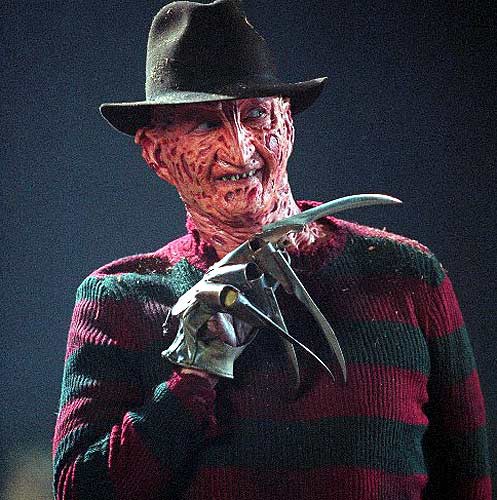
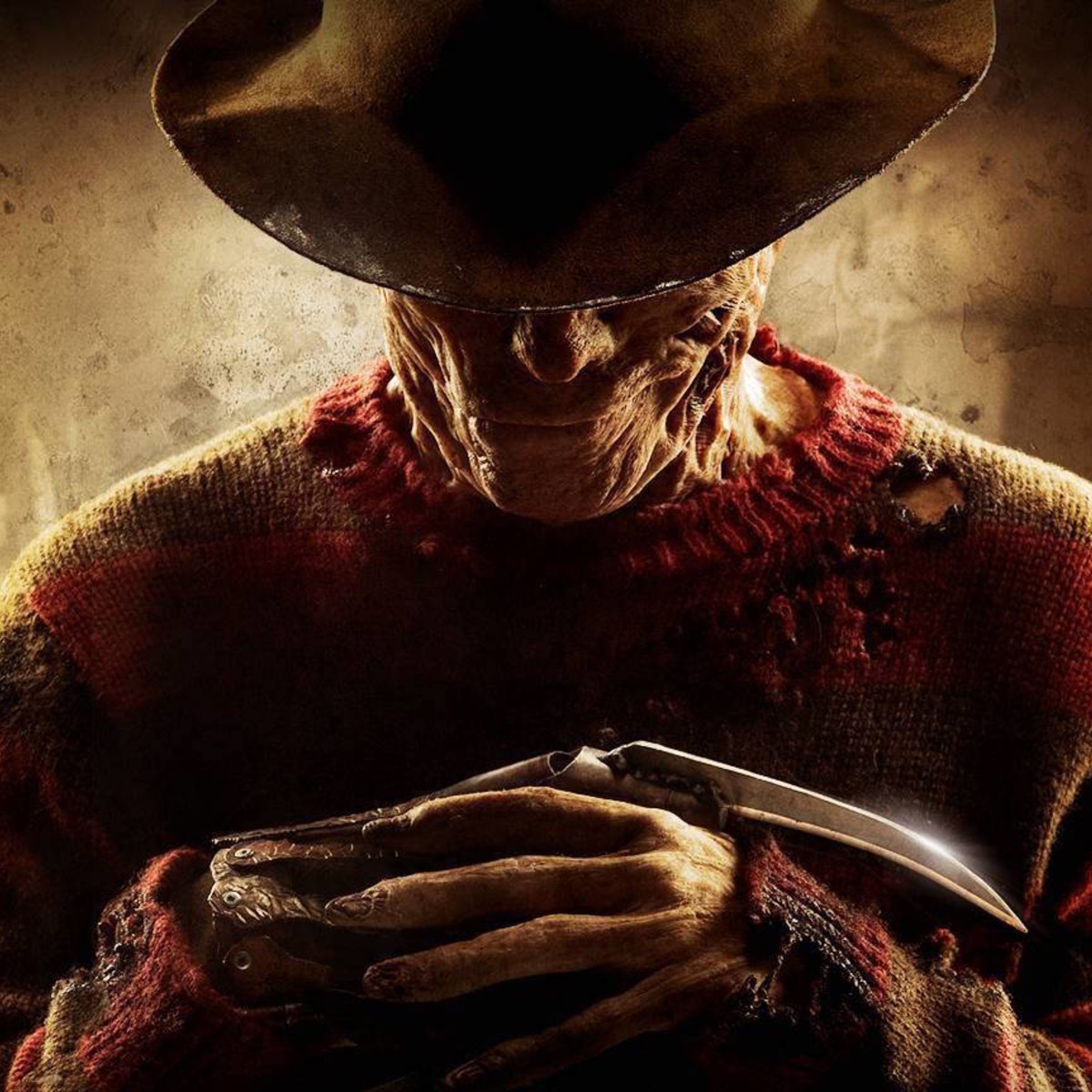
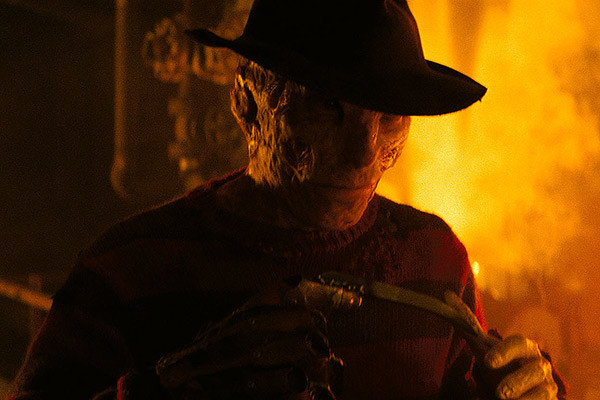
            There’s a strong argument to be made that the 2010 reboot of A Nightmare on Elm Street is what put Eric Heisserer on Hollywood’s radar.  That’s a tough thing to say, because so many people work for years and years before finally being noticed (after which they “come out of nowhere”).  But Nightmare gave Heisserer the clout to move on to other horror projects like the Final Destination franchise, the prequel/remake of The Thing, and Lights Out.
            And I’m sure he’s probably done some other noteworthy stuff since then…
            Anyway, a few of my standard points, but you’ll probably figure them out as we go.  I’m in bold, asking the questions.  Keep in mind a lot of these aren’t the exact, word-for-word questions I asked (which tended to be a bit more organic and conversational), so if the answer seems a bit off, don’t stress out over it.  If you see a long line of dashes (———-) it means there was something I didn’t transcribe, probably because it was just casual discussion, something I knew I wasn’t going to use in the final article for one reason or another, or something that Eric was willing to talk about off the record to help me understand some of his on the record answers.  Any links are entirely mine and aren’t meant to imply he’s specifically endorsing any of the ideas I’ve brought up here on the ranty blog—it’s just me linking from something he said to something similar that I’ve said. 
            By the nature of this discussion, there are going to be a few small spoilers in here, though not many.  Check out the movie if you haven’t seen it yet. 
            Material from this interview was originally used for an article that appeared in the March/April 2010 issue of Creative Screenwriting Magazine.
            So, anyway, here’s me scaring Eric Heisserer with a few questions about the Nightmare on Elm Street reboot.
            (did you see what I did there?)
            (you did?)
            (…okay, I’ll see myself out)
So, how’d you end up on A Nightmare on Elm Street?  Did they come to you, did your reps push you for it, or was it something you wanted?
            It was one of those serendipity moments.  I went for a general at New Line and I think right before I was to go in they were hoping that [Mark] Swift and [Damian] Shannon would be able to transition over from Friday the 13th to do a take on Nightmare.  But they got locked into a Paramountdeal and realized that they had to move fast on this thing.  So what started out as a general turned into an assignment.  It was pretty intense because I was only supposed to meet with Dave Neustadter, who’s a junior there at New Line and instead I’m meeting Walt Hamada and Dave.  And I’m thinking to myself ‘Why am I in the big conference room?  Did I say something bad about New Line?  I’m in trouble, aren’t I…?’
So you walked in not even knowing this was now a specific assignment meeting?
            Correct.  They just pitched it at me.  They said ‘You heard of a little thing called Nightmare on Elm Street?’
Were you really familiar with the original films to start with?
            Yeah.  I grew up loving those movies, especially Dream Warriors. 
Now, I want to make sure I’ve got the timeline right.  The screenplay started with Wesley Strick. 
            Yeah, he did a pass.
They filmed the movie.  Then they brought you in to do some rewrites so they could do reshoots.  Is that correct?
            No, they abandoned his draft entirely.  He did a draft for them and they decided to go in a very different direction.  And I came in at that point and they said ‘Let’s start fresh.’  So the producers, Brad [Fuller] and Drew [Form] at Platinum Dunes and the execs at New Line sat down and the five of us figured out tonally what kind of movie we wanted to make and how we wanted our villain to be.  Because there are various versions of Freddy Kruger.  He changes as the franchise went along.  Once we were all on the same page in terms of the tone of Freddy Kruger, I went off into my cave and I wrote for three and a half weeks or so in order to get a draft to them as fast as possible to put this thing on the production slate for Warners.
So this was a page-one rewrite?
            Yes.
If you don’t mind me asking–it can be off the record–is Wesley’s credit mostly from inherent stuff from the franchise?
            Yes.  Oddly enough a lot of that is.  Strick got his name on it because he was the first writer on and he had one idea that kind of changed the mythology of Freddy.  Which is to put into question if he was guilty or innocent.  That was the one thing in his draft that we stuck with in my draft and subsequent ones.  Freddy Krueger as Samara from The Ring— you think that he just wants one thing and then it turns out he’s just an evil mother@%#r.  And because of that one change in the mythology the WGA decided that it was not a remake but a sequel or some other deviant, and because of that Wes Craven’s name wasn’t put on there.  Which frustrates me because aside from that one change in Freddy’s mythology, everything else is very true to Wes Craven’s story structure.
Now why did you come on?  What about Wesley’s script did they feel needed to change?
            Well, I really wanted to make it scary. Strick had some bizarre elements in his nightmare sequences that really didn’t make them nightmares.  He had unicorns and the lead character was a barely-functioning autistic girl.  The ending was a long monologue, and the monologue is what kills Freddy Krueger.  So I understood why they wanted to start from scratch and rebuild the house for Freddy and focus first on making it scary and then figure out how to escalate that horror into the third act.  Looking at the original, there’s a long gap in the last half of the film between appearances of Freddy Krueger, because people have figured out at that point in time that once you go to sleep, that’s when he gets you.  Nancy, in Craven’s original, spends about twenty minutes of screen time kind of MacGuyvering her house so that when she pulls him into the real world [she’s got booby traps set up].  Johnny Depp goes to sleep, but that’s a very shortened nightmare sequence where he’s just pulled into the bed.  We really don’t see Freddy.  So there’s this long period  where you feel like, in this day and age, the movie would drag.  There’s a lot of stuff that may have worked in ’84, but it doesn’t translate well to now. 
            So I was looking for a way to make Freddy more and more of  a menace as we got closer to the end of the movie.  I did so by researching insomnia and health and other side effects from that.  I discovered around the 70 hour mark of sleeplessness your brain starts to kick into what’s called ‘micronaps,’ and that part of the brain shuts down for a while.  So you are actually asleep even though you’re conscious and you feel awake for the most part.  That was my doorway into allowing Krueger to show up at unexpected times while they were awake and screw with the idea of what’s reality versus what’s dream.
A lot of the old “dream logic” seems to have gone away, too–the idea that absolutely anything can happen in the story because it’s a dream.  Now Freddy’s a worm, now he’s a girl, now his tongue’s twenty feet long…  Why is that?
            Exactly.  I wanted something a lot more grounded for a couple of reasons.  One is that I knew we were under budgetary considerations.  They wanted to hit a target number, so I knew that would help.
            The second thing I discovered is that the scares are harder to deliver when the audience realizes that they’re in the dream world.  Because once they’re keyed into that, the audience–at least part of them–starts to give up and think ‘Well, they’re screwed now.’  Because Freddy has full control there.  He can be anything he wants.  It’s like being in the Matrix.  Breathing, running, distance–all of those are illusions.  So I found that to keep as grounded as possible allowed me to play with when that moment was that they’d fallen asleep and entered the dream world.  That just hit the buttons for me more as a horror writer more than playing with a fantastical landscape.
How do you normally approach a script?  Are you an outliner?  A notecard guy? 
            I start with note cards on a cork wall.  Anything and everything that comes to me for the project–whether it’s a snippet of dialogue, an action sequence, a character, a backstory note–anything and everything I throw on there like a trash pile.  Then I figure out the things I like best from it, start to organize it a bit, and from there I go to outline.  Once I’ve got a decent outline. I use that as the spinal column of the script, and I make sure before I go to that, the script phase, that everybody else on the project agrees to it.  Everybody’s seen it and they’re happy with the skeleton of the piece.
What’s a decent outline for you?  Ten pages?  Twenty? Thirty?
            I land somewhere around twenty pages with these things.
Does it change things a lot for you, writing-wise, to come in and start with someone else’s material?
            It puts a lot of stuff on that cork wall right away.  I like that (laughs).  It gives me a lot of stuff to deal with right away.  I don’t mind coming in with something that already has ingredients set out for me.
Freddy Kruger’s a pretty solid horror icon.  Is it a little intimidating to step in and try to rewrite him, especially when he’s not exactly faded from the public eye?
            Absolutely.  It was scary as hell. (laughs)  I just had to do my best to do him justice.  I wouldn’t’ve taken the job if I thought all I was going to do was deliver something that was a little bit better than what they already had.  I had to deliver something I felt would really fit in with the mythology and restart him properly.
The franchise changed quite a bit over time.  Freddy went from honestly creepy in the first one to more of an… an evil comedian in the later movies.  He’s a lot more dark and savage in this.  Was the focus from the start to “get back to basics,” as it were?
            Yeah.  Right.  I knew that he still needed to have some sense of humor, but I wanted to make it sadistic rather than wise-cracky, Tonight Show.  The reason I went there first is it just gives us more room to grow if this series continues after this first relaunch.  I’ve noticed that a lot of franchises, by the time they’re at the third or fourth film, they bend more and more toward comedy.  Like Lethal Weapon, for instance.  I think if we start there, there isn’t much elbow room for Freddy.  He can always become more wisecracking later on in the franchise, but what makes him an icon is horror is that first and foremost he’s scary.  He’s someone you don’t want to have show up in your dreams.
Nightmare on Elm Street had a great run, originally, as a franchise.  While you were writing were you thinking ahead to sequels or planting any seeds?
            Yeah.  I had to think way down field, otherwise… I don’t know if we would’ve built the movie around the character if we thought of it as a stand-alone story or something we didn’t want to revisit.  We could’ve done a lot more with Krueger’s history and the history of the town, the kids, and the parents.  Realizing that we could explore those layers allowed us, and me as a writer, the freedom to leave questions unanswered.  Or to place questions out there of who this guy is and where he came from.  Of course, I had to internally have all those answers ready for New Line because they wouldn’t let me get away with that (laughs).
Now, there’s also a very interesting twist, hinted at in the trailer, that Fred Krueger might have actually been innocent when the parents killed him.  What made that so appealing?
            What made it appealing was it forced an investigation, some procedural elements into the story.  Our kids, not knowing what happened with Freddy, and feeling that he may be exacting revenge because he was falsely accused or falsely murdered, that allows us investigative beats to get to the truth.  Without that, with just the idea that he’s evil and now he shows up in dreams and he’s killing people… there’s not a whole lot to do there, storywise (chuckles).  Well, I guess I’ve got to stay awake and I don’t know what to do after that.”
There’s an interesting twist to this, although not in the usual sense.  We start the movie focused on Kris.  She’s pretty solidly the main character.  Then a third of the way in… you kill her and shift the focus to Nancy.  How hard is that to pull off?
            Well, that was Craven’s original plan.  We follow a character that we think is going to be our protagonist and then Craven pulls a Psycho and kills her off and then we hook up with Nancy from that point.  I’m kind of mirroring the structure of Craven’s story.  I can’t take credit for that one.
I noticed technology’s a bit more prevalent in this one. When Wes Craven made the original, you didn’t have iPods or cell phones with a hundred apps on them– these days pretty much everyone is carrying an alarm clock around with them.  Did this hinder or help you a lot?
            It helped a couple of times.  Nancyuses her cell phone to set an alarm to wake herself up around the middle of the movie.—— The technology can still have the same problems as the lack of technology did back then.
There’s a very low bodycount in this film.  I think we only see… what, four or five people die?  And two of those are kind of low-key, all things considered.  Why is that?
            Not so much, no.  It’s not like it’s a guy in a hockey mask killing everybody off.  Part of the reason for that is we wanted to spend more time with our characters.  Do our best to get to know them and the relationship between their parents who are involved in covering up what happened to Krueger.  And part of it is it’s harder, I think, in Freddy Krueger’s universe, in the Nightmare on Elm Street  world, to get away with a whole slew of murders in a town and not draw a lot of attention and not change the game.  If it were a camp by a lake and everybody’s off and sequestered in the woods, then you can kill ten or twelve people in one movie.  But here we are in Springwood, a pleasant suburbia, and even one or two [murders] is going to draw a lot of attention. Local, state, national.  Beyond a certain number if someone’s cutting up the teens of such-and-such place.   Even if it looks like it’s accidental deaths, there are a lot of eyebrows being raised.  So you have to be careful about that and not have body count be the focus of the story.  Just find out how Krueger can work under the guise of a dream.
How many drafts?
            Three? — Wow… that was my very first draft after about three and a half weeks on the project.  There’s one that’s March 19 that gets rid of a lot stuff that was just thrown in there. It cleans up a lot of stuff and manages dialogue better.  A lot of the dialogue in the January draft was just placeholder, in terms of throwing in as text what we later wanted to make subtext.  So there’s a March 19th draft and then a production draft in May.
(a lot of off the record stuff)
           
            Really that was pretty much it.  We talked for another five or ten minutes, Eric explained a couple things I’d heard with a gentleman’s agreement it wouldn’t be used (and it still hasn’t been), and that was it.
            So… next week.
            Well, I still have the things I planned for last week.  I just need to make some adjustments.
            Until then… go write.
            And if you happen to be near Lubbock this weekend, come hear me talk about literacy.
October 10, 2018 / 1 Comment

This Saturday…

            Hey, if you happen to live in the rough vicinity of Lubbock, Texas, I’m going to be there this weekend.  I’m doing a signing Saturday afternoon, and giving a little speech that night about writing and literacy to help promote… well, writing and literacy. 
            First, somewhere around 1:30 I’ll be at Barnes & Noble in the South Plains Mall.  They’re having a Star Wars day, so this is just going to be a little quiet, off-to-the-side thing.  I’ll probably be there for about an hour, so if you want to stop by, chat for a bit, and maybe get something signed… that’d be cool.
            Then that night I’ll be joining the folks from Literacy Lubbock for dinner, drinks, and a speech from me—
            —oh crap I need to write a speech—
            —a speech from me which’ll probably be me babbling away about cooking and supercomputers and old Seinfeld episodes.  Which will all circle back around to literacy in a very brilliant and impressive way.  It’s $35 a head, but it all goes to a good cause.  Plus you get to hang out afterwards and laugh about my rambling speech.
            So…  Lubbock.  Saturday.  Hope to see some of you there.
September 27, 2018 / 1 Comment

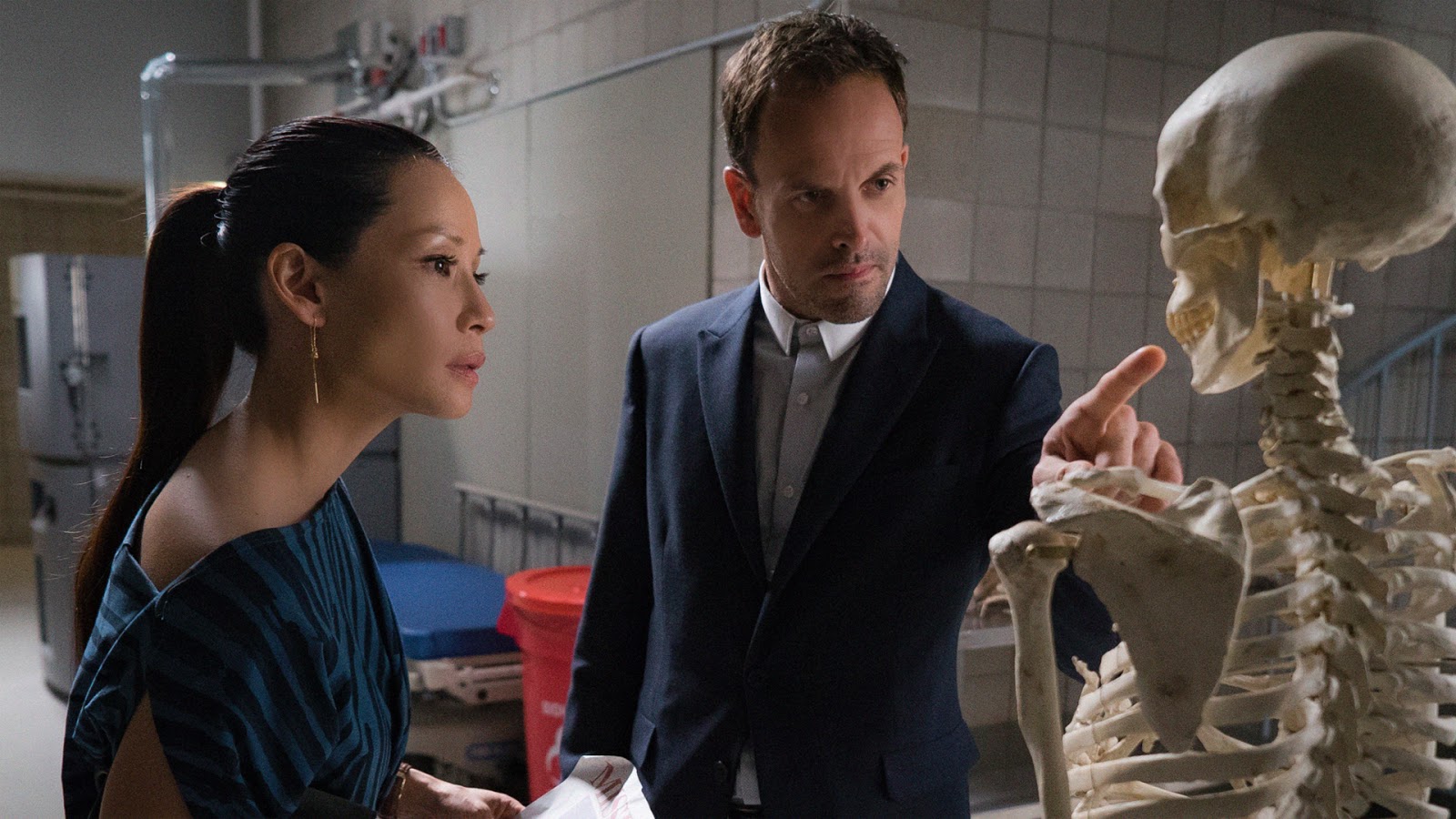
Elementary

            Many thanks to all of you who tossed some new topic ideas at me (here and on Twitter).  I think this might fill up all the slots I had for the rest of the year.  I may even take some time to rethink my upcoming plans.

            Anyway, for now, the potential Sherlock Holmes idea stuck in my head, so let me babble about that for a minute or three.

            There’s a pair of terms that have been floating around for a bit now—Watsonian and Doylist.  On the off chance you don’t get the reference, the terms come from Dr. John (or Joan) Watson, constant companion to Sherlock Holmes, and also to their creator, Sir Arthur Conan Doyle.  When we use these terms, we’re saying there’s two ways to look at any story element.  The in-story reason for this happening, and the author’s reason for this happening.  They’re often very different, but they’re both very important.

            For example…
            Why did Sherlock Holmes die in “The Final Problem,” plunging to his death at Reichenbach Falls?  Well, from Watson’s point of view, Holmes sacrificed himself because it was the only way to stop Moriarty.  The two evenly-matched men fight, and while Holmes dies, Moriarty’s now-leaderless criminal empire will crumble.  A net win for society. 
            From Doyle’s point of view, though, he was just sick of writing Sherlock Holmes stories.  He was making money off them, yeah, but he wanted to move on and start writing more serious, important stuff about, well… ghosts and fairies.  No, seriously.  So he killed Holmes off and tried (unsuccessfully) to move on.
            Yeah, don’t be the person pointing out Doyle later retconned the death.  When he wrote this story, Holmes was dead.  Toast.  Joined the choir invisible.
            Of course, this principal doesn’t just apply to Sherlock Holmes stories.  If you look at most stories, the elements break down into these two categories.
            –Whydid Han Solo get frozen in carbonite?  The Watsonian reason is that Vader wanted to test the carbon-freezing process and Boba Fett wanted to collect on Solo’s sizeable bounty.  The Doylist reason is that Harrison Ford wasn’t sure he wanted to come back to play Solo again, so George Lucas needed an ending that could explain Solo’s potential absence but also contain the possibility of bringing him back.
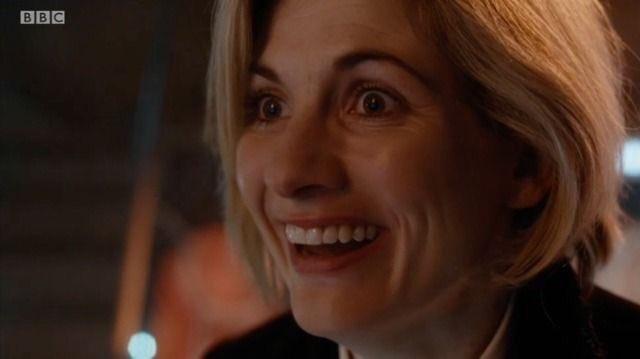
            –Whydid the Twelfth Doctor regenerate?  Watsonian reason—he was shot by the Cybermen and managed to hold off his regeneration briefly before transforming into the Thirteenth Doctor.  Doylist—Peter Capaldi was leaving the series, as was showrunner Stephen Moffat, and the new team decided to cast Jodie Whittaker.
            Here’s one of my own—Whydoes Ex-Patriots begin with a Fourth of July fireworks show?  Well, from a Watsonian point of view, the citizens of the Mount are celebrating.  It’s the Fourth, but it’s also one of their first major holidays since things have (for them) kinda stabilized after the zombocalypse.  So they’re partying hard.
            From a Doylist point of view, though… this opening lets me start with action.  There’s a lot going on.  It gives me a chance to re-introduce our four main heroes. It also lets be immediately bring up the idea of nations and patriotism, which are key themes in the book.  Heck, because this was one of those very rare times where I knewthere’d be another book in the series, this was also a setup for a plot thread in Ex-Communication.
            This all makes sense, yes?
            Why are we talking about it?
            I think it’s really important to remember these distinctions when we’re talking about writing.  To be more specific, when we’re talking about aspects of writing.  If we’re discussing dialogue or characters or settings, we should be clear if this is an in-world discussion or an authorial discussion.  Are we talking about things as they relate to the characters, or as they relate to the author (and the audience)?
            “Authorial”?   Ooooh, don’t I sound all clever…
            For example, once or thrice I’ve mentioned my belief that all good, successful characters have three common traits—they’re believable, they’re relatable, and they’re likable.  But I’ve seen some pushback on this.  I’ve had people online and in person argue that characters don’t need to be likable.  Characters just need to be fascinating or compelling or… well, look.  They don’t need to be likable.
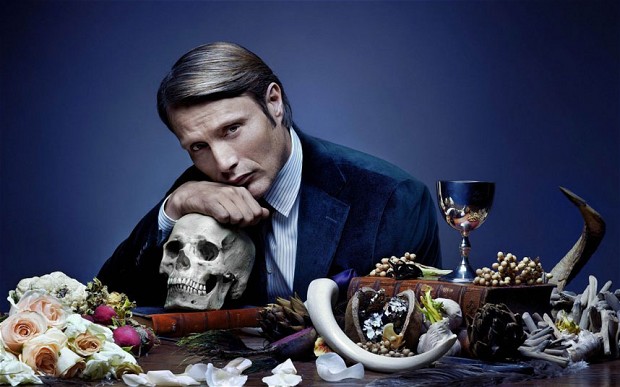
            Here’s the thing.  In a Watsonian sense—I agree with this.  I mean, I’ve said this myself lots of times (pretty much every time I talk about these traits).  Likable doesn’t mean we want a character to marry into our family and they always have a kind word to say.  Within the story, there are tons of popular protagonists who aren’t remotely likable.  Who are kind of awful, really.  There’s not a version of Hannibal Lecter—books, movies, or television—that most of us would want to have a private dinner with.  We probably couldn’t count the number of books and movies that have hit men or assassins as their main characters.  And to bring us back around, most modern interpretations of Sherlock Holmes rightly point out that the guy’s an abrasive, condescending ass. 
            (…and that’s with the people he likes.)
            But in a Doylist sense, viewed from outside… we kinda like these people.  We admire Lecter’s twisted ethics.  We envy the ultra-competent man or woman of action.  And it’s kind of pleasant to watch Holmes point out what’s sitting right in front of everyone’s face.  That separation of fiction, the thin sheath that keeps us from absolutely immersing into the story, lets us enjoy these characters in ways we couldn’t in real life.
            I mean if we didn’t like them as readers, why would we keep reading about them?  Who’d torture themselves like that.  Hell, why would we keep writingabout them if we didn’t like them?  I can’t imagine sitting down and working for months on a story about a character I didn’t enjoy on some level.

            This holds for so a lot of aspects of writing.  I’ve mentioned before that realistic dialogue in fiction is different from the actual conversations we have with each other in the real world.  Other characters might not get my protagonist, but the reader should be able to relate to them.  And I’m never going to be able build any sort of tension if I don’t understand the difference between what my readers know and what my character knows.

            Y’see, Timmy, when I’m taking in advice I need to be clear if we’re talking about things in a Watsonian or Doylist sense.  And when I see advice from other writers, I should stop and think about how they mean it.  Are they talking about the actual pace of events in the timeline of the story, or the pacing in the narrative?  Are they talking about the motives of the characters or the writer?
            In the future, I’m going to try to be better about this, too.
            Next time…
            Well, thanks to some of you, I’ve got next time all planed out in advance.
            Until then… go write.

Categories