
January 24, 2019 / 3 Comments

A League of Their Own…

            Sorry for missing last week.  Just had a couple of those jumbled days where I kept getting called away for other things.  And while I had a topic for this week, it never quite gelled the way I wanted it to in my head.  Although four or five others did, so I’m set for a while here.
            (topic suggestions are always welcome in the comments, though)
            Anyway…
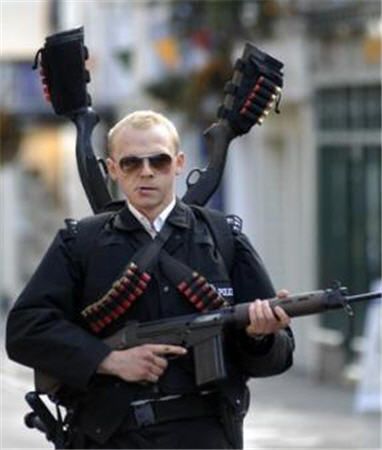
            I wanted to talk a bit today about godlike characters.  Not just in the sense of robes and brilliant auras and hurling thunderbolts.  Sometimes it’s that rugged, locked-and-loaded man or maybe the tall, super-competent blonde.  Really, it’s anyone who is, for one reason or another, way beyond the level of every other character in the story.
            Which really means they’re out of everyone’s league.
            Quick segue.
            One thing that I see come up in discussions of different open-play, MMPORG type games is a balance between players.  For purposes of this discussion, it’s when the overall population of the game has hit a level where it’s essentially unable to support new players.  If everybody’s level 72, it makes it tough for anybody to interact at level one. All those 72’s are using their bigger, badder gear to go on bigger, badder missions, where they’ll face bigger, badder monsters and get even rewarded with even… well, you get the point.
            Meanwhile, I’m over here in the goblin village, poking at things with a knife and hoping I can get my dagger skill up to 65%…
            And if we actually have to fight each other?  Well, I don’t have a prayer.  I mean, we can argue that statistically there’s a chance, but really… there’s no chance.  And from the 72’s point of view, I mean, can we even call it a wasted three seconds?  Yeah, there may be some jerks who just like beating up the noobs, but for everyone else… yeah, this gets to be kind of boring, right?
            See where I’m going with this?
            Stories need this kind of balance, too.  We want characters to have a chance at achieving their goals, but we also don’t want it to be easy.  If the story leans too far one way or the other, it just gets dull.  For everyone.
            F’r example… 
            If my antagonistis all-powerful, my hero never has a chance.  That’s boring as hell.  There might be a few dramatic moments, if the writer really knows what they’re doing, but probably not.  We all know how it’s going to end, and if we know where it’s going… well, then this is all just noise.
            Plus, it’s discouraging.  We identify with the heroes.  That’s why we’re reading.  And to see someone we identify with get beaten down again and again by an opponent we absolutely know they can’t beat…
            Well, it doesn’t make for a lot of repeat reads, let’s say that.
            Keep in mind, too, my antagonist doesn’t have to be a seven foot-tall somebody in body armor and a chrome skull mask.  The high school mean girl, the abusive drill sergeant, even society in general– any of these can be the antagonist.  And, again, if there’s no chance whatsoever of beating the antagonist, my story isn’t going to hold most people’s interest.
            I’ll also point out that beating the antagonist doesn’t always mean bringing about their ultimate, final defeat.  But as far as our immediate story’s concerned, the bad guy needs to have a chance to succeed at their immediate goals.  No chance means no interest.
            Now, as I hinted above, the flipside of this is also true.  If my main character has absolutely no chance of ever being stopped or hindered in any way, that’s not very interesting either.  I’ve talked about this once or thrice before.  When Yakko can effortlessly deal with anything the antagonist, nature, or the universe itself throws at him, it gets boring really fast.  If Dot’s prepared and trained for everything, to the point there’s little or no chance of failure, that means there’s no challenge.  And no challenge means… well…
            An analogy I’ve mentioned before is me getting a glass of Diet Pepsi.  Not exactly something epic stories are built around.  You’re not going to see teams of people stealing ships, racing down city streets, or forming Fellowships around me as we undertake the great adventure of going to the kitchen and opening the fridge.  Because it’s mundane.  It’s easy. There’s absolutely no challenge in it.
            Even if something might be challenging for us, personally, it doesn’t mean we want to watch someone else do it with no effort.  I’m pretty sure if a zombie plague ever descended on the world, I’d be one of those folks gone in the first week or two.  But I don’t have any interest in reading three hundred pages of someone who walks through the undead apocalypse like it’s a guided tour.  Yeah, no matter how colorful the descriptions are of zombies being blown apart.
            Y’see, Timmy, if there’s no challenge—because either my protagonist or antagonist are too powerful—it means there’s not much of a plot.  As I’ve mentioned before, no plot makes it really tough to have a story.  And you may have noticed there’s not a big market for high-stakes character descriptions.
            I also want to toss out one other downside to nigh-omnipotent characters. Gods are boring as hell.  Seriously.  They’re tough to relate to, and if people can’t relate to my characters, they’re probably not going to make any investment in them.  Good characters have needs and desires and flaws, but godlike powers tend to nullify most of those things. 
            Even if it’s not actual powers, it can be dull.  When you have characters who can do anything and succeed at anything… it just gets boring fast.  We like reading about problems, not about potential problems that were planned for and avoided.
            True fact—one I worked very hard at.  My Ex-Heroesbooks have a super-competent character named Stealth.  She’s their version of Batman.  Every book in the series has at least one example of her demonstrating how she’s hyper-trained and/or four steps ahead of everyone else.
            But…
            Every book also has at least one example of something getting past her. Something she didn’t catch or didn’t think of or somebody else figures out first.  She’s world’s greatest detective, but she’s still fallible.  She not perfect.
            If you’ve got a powerful, competent character in one of your stories, take another look at them.  Do they need to be that strong?  Would they be more interesting if there were two or three scenarios they hadn’t been planning for over the past six months?  Isn’t your story going to be a bit more interesting if success and failure both seem like viable outcomes?
            I think it would. 
            But that’s just me.
            Next time I want to talk about something a little more campy.
            And maybe update the FAQ.
            Until then… go write.
            Sound of Music reference for the WIN!!!!  
            Okay, maybe not
            So I’ve been thinking about what would make a good first topic for the start of the year.  Which made me think of a topic that comes up a lot at the Coffeehouse or at different con discussions.  And that topic is “how should I start my book?”
            Now, right up front, here’s the catch.
            I can’t tell you.
            I mean, it’s not like it’s a secret and I want to make you beg or pay for it.  I can’t tell you because I don’t know.  Nobody knows how your book needs to begin except you.  It’s because every writer is different and every story is different.  We each have our own styles and preferences, and each story has its own needs and narratives.

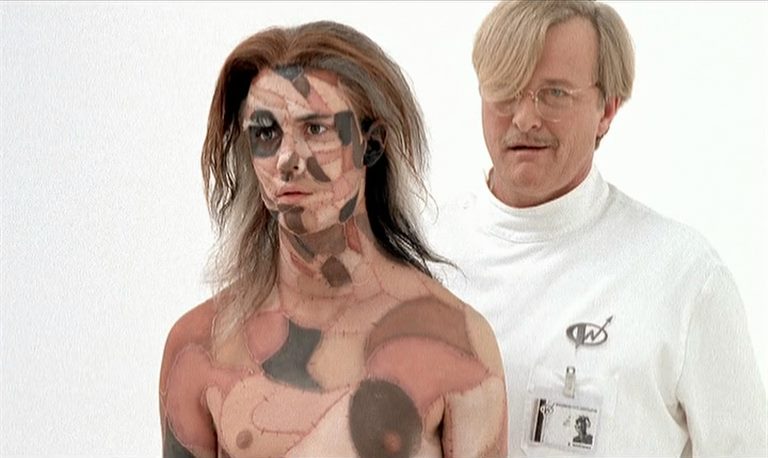
            Heck, even if we’re telling the same story it’s going to be different.  If I told you to write a modern take on Frankenstein (the monster, not the scientist) you’d be telling a different story than me and we’d both be telling a different story than her and a much different story than him.  I mean… seriously, what the heck is that guy doing?  That’s a seriously weird take on Frankenstein.

            But the point is, even though we’d all be telling more or less the same story, we’d also be telling very different stories.  I might decide to start with the lightning storm, the night the monster awakens, but your version might start with Victor in medical school and shemight decide to begin with the event that inspires Victor to create the monster.  All of these are completely valid ways to begin a narrative about Frankenstein.
            And this is why nobody else can tell me how to begin my story.  There are so many elements to consider, it’s pretty much impossible for anyone to know but me.  You and I could talk for an hour about your story, and I might get a vague sense of where it should start.  But that vague estimate is still based off a very limited amount of information, and it only applies to that one specific story.
            So… yeah.  I can’t tell you where to start.  Sorry.
            BUT…
            (you didn’t think I’d leave you hanging like that, did you?)
            I can offer you a few general ideas of what you should and shouldn’t use as starting points.  Not things specific to a story, but things specific to storytelling.  As a wise man once said, the code’s more what you’d call guidelines than actual rules.
            I’ve talked about a lot of these things before, so be prepared for links.
            So, when I consider how to start my story…
            DO start with action.  I’ve talked about this one before, so I won’t go into too much detail here.  “Starting with action” often gets misunderstood as “my manuscript needs to begin with a ninja stopping a hostage situation on a high-speed train with his explosive throwing stars.”  This is, of course, a really weird way to begin a romantic fantasy novel, but people try to do it anyway.
            All starting with action means is that I need something to happen.  Being fired from my job (or written up, or promoted) is action.  Getting beaten up (or asked out) by the quarterback in high school is something happening.  Buying groceries is something happening.
            And, yes, so is having a ninja stop a hostage situation with explosive throwing stars.

            DON’T start with someone writing their novel or screenplay.  Seriously, don’t.  Yes, technically, it’s someone doing something, but it’s a minimal, inactive something that involves one character sitting alone at a desk.  Plus, it’s an opening every editor, agent, and producer has seen at least a thousand times.  Seriously.  One thousand times, minimum.  I don’t want to begin with something everyone’s already bored of seeing.

            DO start with something relevant.  Relevant to this story.  Relevant by at least a third of the way into the story.  An opening scene that makes no sense until the end of my book is an opening scene that makes no sense (and we’re going to forget).  Which means we don’t need it.
            My opening pages should hook the reader right into my story.  They should pay off soon, and that payoff should draw them in even further.  The goal is always to draw them in, not to push them away or hold them at arm’s length.  If I’m trying to distance the reader in the first chapter… that’s not going to work out well.
            
            DON’T start by killing everyone.  Nine times out of ten, if every character from chapter one is dead by the end of chapter two, it means chapter three is where my story really starts.  No matter how cool chapter one and two were.
            A lot of folks stumble into this trap.  They “start with action” (see above) by having a bunch of nameless, unimportant people get killed by some threat, and then they introduce their actual charactersand get on with the story.  Which tells right me there that those opening bits are just more wasted pages.

            DO be aware that the story started long before page one.  There were events in my protagonist’s (and antagonist’s) life that made them the person they are now.  They already have relationships and jobs and histories. We all instinctively understand and acknowledge this (Clive Barker wrote a beautiful introduction about this idea in his book Weaveworld).
            Right from the start, I need to keep in mind that my characters are in this world.  They’ve been there for a while.  It doesn’t surprise them or catch them off guard.  Neither does the existence of their siblings, lovers, employers, or their own body parts.  If my opening is my protagonist expositing about her apartment, her girlfriend, her own body, or the dual nature of this amazing futuristic world she lives in, my readers are going to be rolling their eyes.
            And that’s a few things to keep in mind when deciding how to start my story.  Again, these are just guidelines, but… y’know, guidelines exist for a reason.  I should think long and hard before ignoring them and declaring that my story’s the exception they don’t apply to. 
            Because odds are… it’s not.
            Oh, in other news for SoCal folks, this Sunday is both the Writers Coffeehouse (at Dark Delicacies in Burbank) and the dystopian book club We’re All Gonna Die (at the Last Bookstore in downtown Los Angeles).  Please stop by and hang out.  Although for the book club, you may want to pick up the book first…
            Next time, I’d like to talk about something really powerful.
            Until then, go write.
December 20, 2018

Christmas Time

            Two semi-holiday related posts?  In the same month?  I’ve just totally sold out to the whole capitalist Christmas experience, haven’t I?
            Honestly, I’ve been sick in bed most of the week, so there won’t be much to this.  Lost a lot of time.  I still have a ton of presents to wrap.  And mail…
            Speaking of time, something bounced across my mind a week or three back, and it’s been fermenting over there in the corner for a bit…
            As a little kid, once we hit December, I could tell you almost exactly how long it was until Christmas.  As we got closer, my brother and I would start planning it down to the hour. Sometimes down to the minute.  What time we could wake up.  What time we could expect to wake my parents up (without fear of reprisals).  What time they’d let us come downstairs.  Christmas wasn’t in “a couple of days”—we were two days, fourteen hours, and six minutes away from opening presents.
            (that’s the present Mom let us take to bed with us on Christmas Eve—the bribe to keep us quiet and in our rooms for an hour or so after we woke up)
           Of course, after I got older it did just become “a couple of days” until Christmas.  I met people who didn’t celebrate Christmas and kept an even looser sense of when it was than me.  I even tried to actively avoid it for a while.
            What random point am I trying to make this week?
            How characters think about time says something about them.  It lets me know if they’re precise people or if they tend to speak in generalities.  It even gives me an idea how important events are to them.
            I mean, how long is twenty-four days?  Is it just 24 days?  Or is it  a few weeks?  Maybe three weeks?  Almost four weeks? Practically a month?
            If I told you something happened a couple of weeks, ago does it seem as important as that happened sixteen days, eight hours ago?  Am I looking forward to a party that’s still more than a week away?  Or that dinner that’s in less than four days?
            Y’see, Timmy, people are unique, and we all think about time in different ways.  Sometimes we generalize and estimate.  We round up and down.  We abbreviate one way or another.  And other times we’re very precise.  Maybe we won’t even give an answer until we can give the exact, confirmed answer. 
            And this can all change depending on context.  I might be vague about when I’m meeting friends for drinks, but very specific about when that date with Phoebe is.  I can tell you exactly how long I’ll be at the office, but I might be up playing Falloutuntil, y’know, later.  Don’t wait up for me.
            So when I’m writing characters, and they’re dealing with time, keep that in mind.
            And speaking of time, I hope you’re looking at a comfortable, stress-free couple of days.  If you’re in LA and happen to still need a last-minute gift or two, Dark Delicacies has some autographed books of mine, if that interests you.  And if not, there are a ton of awesome books at your favorite local bookstore.
            I hope all of you reading this have a fantastic holiday season.  Maybe I’ll see you all one last time before the new year rolls in.
            Have fun.  Try to enjoy a few peaceful days.  And maybe, if you have some time…
            Go write.
December 13, 2018

Holiday Triangles

            Well, it’s that time of year again.  Time to cue up that playlist of holiday music and pick out your stack of favorite movies.  Maybe you go a little more unconventional with your choices, maybe you stick to the classics, but whatever your flavor is, I’m sure there’s a lot of them.

            Hell, holiday movies are pretty much a solid, dependable genre at this point.  Just between Hallmark and Netflix, I think there’s forty or fifty new ones just for this year alone.  I worked on one ten years ago and it still gets heavy circulation.  People go nuts about the “plague” of superhero movies, but seriously—Christmas movies are the real machine.
            Anyway…

            We laugh at a lot of these and roll our eyes because they often feature some kind of painful romance.  And that’s what I wanted to talk about.  Where that awkwardness comes from and why these stories kinda keeps us at arms length rather than pulling us in.
            The standard Christmas movie goes something like this.  A young woman (it’s almost always a woman) falls for a guy who’s a few weeks away from getting engaged, married, etc.  The two of them have chemistry, while his girlfriend/ fiancé rages away at her job or as a larval Bridezilla or maybe just as a generally awful, awful person.  Eventually the guy comes to see the error of his ways and our two impossibly good-looking people end up together just in time to kiss on Christmas Eve.
            I’ve talked about this general type of romantic triangle once or thrice before, and before we dive in at might be worth going back and glancing over that real quick—it sums up the ground rules of how and why these triangles work.
            Y’see, there’s a really basic flaw in how a lot of these holiday movies set up that triangle.  It’s why they always come across as a bit weird and the protagonists always seem a bit… well, wrong.  And I think it’s one of those things that’s really easy for me to avoid once I see it all laid out
            Let’s use that basic structure up above for our example.  Our test story, so to speak.  Amy (A) has a meet-cute with Bob (B), who is in a relationship with Kat (C, just to keep you on your toes).  Amy and Bob have chemistry, Kat is bordering on (if not openly) awful and clearly wrong for Bob.  And it’s Christmas because… y’know, that’s when this always seems to happen.
            Now, normally in a romantic triangle situation like this, our protagonist would be Bob.  Bob, after all, is the one who needs to make a choice here, right?  He needs to be active and decide if he wants to be with Amy or Kat.
            But…
            Our protagonist is Amy.  And the only way I can make Amy active in this situation is to make her… well, kinda unlikable.  If she does anything to improve things with Bob—all those standard romance bonding moments like long talks and quiet dinners and heartfelt discussions about shared passions—it kinda means she’s undercutting Bob’s relationship with Kat.  Which is a little rough, morally, no matter what we think of Kat.
            And geeeeez, if things get physical to almost any level, well, now they both look bad.  Amy’s making moves on somebody in a relationship.  Bob’s in a relationship and hooking up with someone else.  I mean, how bad does Kat have to be for us to be cool with Bob cheating on her?  And if she’s not that bad, then… well, yeah, he’s a jerk.
            And, yes—sometimes odd things happen between people in really specific situations.  Everybody reacts differently to stress and fear and all that.  Firm embraces may happen.  Maybe even a kiss or odd proclamation.  But that’s a reeeeeeeeeeeeeeally fine line.  Scary fine.  It’s so easy for that situation to go from understandable and excusable to what-the-hell inappropriate.
            Y’see, Timmy, when Amy’s this point in the triangle, she isn’t the one with a choice to make. Not a real one, anyway. She has two options. She can do nothing (which ends the story pretty quick) or she can try to disrupt Bob and Kat’s relationship. Those are her only paths, as far as our plot goes, and neither of them is a great one from a storytelling point of view.

            I think when writers do this, they’re confusing the outcome with the choices that lead to it. We’ve all heard “the ends justify the means,” but this tends to ignore the fact that the means I use also determine what kind of end I get. There are tons of ways Amy and Bob can end up together, but a lot of them can be paths that make one of them—or both of them—characters we don’t really like or care about. In some cases, we may even be actively rooting against them. Cause they’re horrible people.
           Don’t worry about outcomes. Outcomes are the conclusion of a story.  Think about the path to that outcome. The choices my character has to make in order to get there. 

            Because those choices are my story. They’re my plot.  And if there aren’t any real choices, or they’re all being made by supporting characters, or they’re the wrong kind of choices, or they’re just all bad ones… well…
            I shouldn’t be too shocked if people think it’s a bad story.
            Speaking of stories, here’ s one last reminder that books make fantastic holiday gifts, and to maybe check this out if you’re having trouble affording things this year.
            Next time, I wanted to talk a little bit about time.
            Until then, go write.

Categories