December 6, 2018 / 1 Comment

A Quick Sketch

            December.  How the hell is it December already?
           Some of you may remember way back at the dawn of the ranty blog, when this site had a completely different format.  A bit more block o’text.  Then it updated and we could have fancy things like indents.  Every now and then I’ll find myself referring back to something from the before-time, and I take that as a good sign this is a topic I could revisit
            And sometimes it’s very relevant.  These past few months, I’ve seen a lot of examples of storytellers who didn’t know that much about their characters (or didn’t express it).  And some others who knew way too much about said characters and decided to communicate it all.  Every single life-experience, thought, and item of clothing.
            Character sketches are one of those things that come up a lot when people talk about storytelling.  Novelists and screenwriters talk about them, but in a variety of ways.  Sometimes very indy films are even called character sketches.  So it’s understandable the term could cause confusion, especially when some folks talk about them as if they’re some vital, necessary thing.

            In a visual-artistic sense, a sketch usually isn’t a finished work.  It’s when I use a few quick lines and textures to suggest an image rather than forming a complete image.  It’s inherently incomplete, but also implies something more than itself.

            In a similar sense, a character sketch shouldn’t be an exhaustive list that covers every possible detail of this person’s existence.  It’s supposed to give me, the writer, a sense of the character I can refer back to as a guideline.  It’s notes about how they talk, how they move, what they like, and what they hate. 
            Like a fair number of the things I ramble on about her, a character sketch is going to be something that’s unique to each author.  Probably to each character, as well.  Some characters may need pages of exhaustive notes.  Others may only need a line or two.  And with a few, I may never need to write a single note because I have them perfectly in my mind.
            For example
            In the book I’m working on right now, I sketched out a short paragraph about most of the characters.  I knew Chase was still struggling in the year since he’d lost his family and just not sure what to do with his life—he’d lost his purpose.  I knew Murdoch’s trying to figure out if he could leave his family.  One of the key things I knew about Katangais that his real name’s Leslie, but he knew how much passengers got a kick out of calling him Katangabecause of the Indiana Jones reference.  And Anne…
            Well, Anne’s been in my head for almost seven years, itching to tell her story.  I didn’t need to write down a single word for her. 
            So, what is a character sketch?  It’s whatever works for you.  I’ve found one of the easiest ways to create one, though, is just to ask questions.  Not only does this help me get various answers about someone, it also generally leads to other questions about them that develop the character more.
            For example… let’s talk about Phoebe.
            Also, weird as it may sound after all the times I’ve used it here, this new book is the first time I’ve ever had a character named Phoebe.  And she isn’t remotely what you’d think of when you hear the name Phoebe.  She is… very different.
            So let’s talk about our characters.  I’m going to be answering for Phoebe, but you should pick one from something you’re working on right now.  I’m going to throw out a list of questions.  Answer as you see fit… 
Where did they grow up?
Do they get along with their family?
What was their first job?
Did they go to college? 
Did they live at college?
Did they finish college?
Republican or Democrat?
How many languages do they speak?
What languages?
What do they do for a living?
What do they want to be doing for a living?
Do they brush and floss regularly?
Do they have any hobbies or collections?
Are they religious?
Do they go to church?
Where do they live?
Where do they want to live?
How do they swear? Like a prude?  Like a sailor? 
How old were they when they had their first drink?
When they first had sex?
Do they smoke?
Have they ever done drugs?
Do they work out?
What kind of car do they drive?
What kind of car do they want to drive?
Do they have pets?
What did they name their pets?
            If I can answer even half of those questions, that’s a ton of useful information about this character and their background.  Plus, as you probably noticed, each answer implies other facets of their personality.  Knowing all of this is going to give me a much better insight into how they talk and react to the people and world around them and also how they’ll probably react when things change abruptly for them.
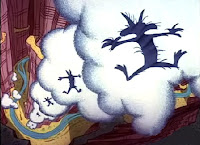
            Now, let me jump back to that analogy of artistic sketches and touch on another point.  There’s another art term you may have heard called negative space.  It’s when I define shapes by the areas around them rather than by the shapes themselves.  Think of the hole in a wall when a cartoon character runs through it.
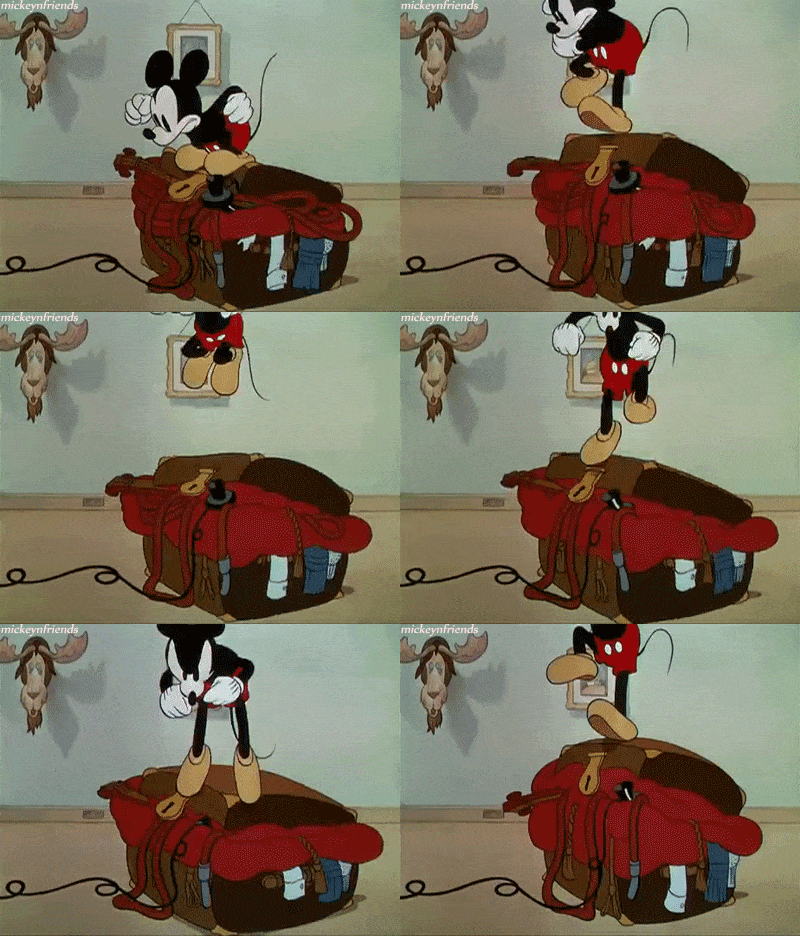
            Sometimes that’s how some writers try to define their characters.  They’ll explain this character’s not like those foolish civilians or those dumb idiots or those freakin’ Hollywoodelites.  Thing is… this doesn’t actually tell me who anyone is.
            Y’see, Timmy, the problem with defining by negatives is that it isn’t actually defining something, it’s just eliminating one option.  If I tell you the shirt I’m wearing right now doesn’t have a Star Wars logo on it…  I mean, that’s accurate, yeah, but does it really tell you anything useful?  If I’m asking you to picture “a shirt without a Star Wars logo,” I’m pretty sure I could get a hundred different responses in the comments and almost guarantee none of them will be what I’m actually wearing.
            Okay, yeah, no way I’ll ever get a hundred responses here.
            I need to actually define my characters.  Who they are. What they think.  Vagueness can be used to great effect, but more often than not it just shows that I don’t know this stuff.  Phoebe (to fall back on my latest creation) is just going to be a formless, unrelatable thing that does whatever the plot needs at the given moment
            And one last point, an idea I’ve mentioned once or thrice before.  Just because I come up with stuff for a character sketch doesn’t mean I need to use it in my work.  Oh, I’ll use all of it to help round out the characters and their history in my head, but just because I came up with a background element doesn’t mean I need to use it. 

            Y’see, Timmy (yep, a double Y’see Timmy—it’s Timmception), an all-too-common mistake is when people come up with all these elaborate backstories and then feel the need to squeeze every single detail of them into the actual manuscript.  A character sketch is for the writer, not the reader.  I know a ton of details about Murdoch and Anne’s past together, and a huge amount about Chase’s screw-ups… but a lot of this isn’t going to be relevant to my book.  And if it isn’t relevant in any way… well, I might want to  think thrice about making space for it.

            Maybe keep that in mind.
           Next time, I’d like to talk a bit about holiday movies and triangles.  And it might be a little early cause I’ve got a thing.
            Oh, and please don’t forget—if you’d like an autographed book, there’s one more week to order them through Dark Delicacies.  All details in that earlier holiday post.
            Until then, go write.
November 8, 2018

Mr. Nobody

            A while back I asked for topic suggestions and this got tossed out by someone (you know who you are).  I’ve been playing with it in my head for a few weeks because it’s one of those topics/questions that’s a little more complex than it seems on the surface.  But I think I’ve got a handle on it to where I could mutter on about it for a bit.
            Or maybe not.  Maybe I’m just suffering from leftover Halloween candy withdrawal.  I guess we’ll see.
            So, the question was, paraphrased, ‘Who deserves to be a character in my story?”  Not in the sense of “wow, this guy on Twitter thinks he should be in my next book”—the answer to that is pretty much always no.  No, we’re talking about where we draw those lines between main characters, supporting characters, and those folks in the background. 

            For example, in the book I’m working on right now, I just mentioned a Lyft driver.  How much detail and backstory do they deserve?  Should they have a gender?  A  hair color?  Maybe an elaborate backstory involving a wild one night stand, a million-dollar art heist, and a cursed music box?

            Should I maybe even give them… a name?
            Now, on a simple, first-draft level, the answer to all of this is yes.  Go for it.  I don’t know how many times I’ve said good characters are the most important part of any story.  So, logically, more good characters makes for an even better story, right? 
            And this is the whole point of a first draft.  Getting it all written down.  All of it.  Everything.  EVERYTHING!  Every crazy idea and phenomenal character concept and neat cameo I can come up.  So my Lyft driver is named Phoebe and that one night stand was actually a threesome and she was blackmailed into working the art heist because they knew about her skill with laser-based sensors but she didn’t know “they” were part of the Black Monks of Beleth, a monastery that deifies a fallen angel who’s now one of the nine kings of Hell and, damn, this stuff really writes itself, doesn’t it?
            However…
            Yeah, there’s a “however.” 
            You probably saw that coming…
            Like a lot of first draft elements, eventually I need to sit down and decide how many of them really contribute to my story versus distracting from it.  In this case, how many of these characters.  And that’s when the real decisions happen.
            For me, it always comes down to how much are they moving the plot or story forward.  Are they sharing important information my protagonist (and my audience) don’t know?  Are they setting something in motion?  Is it vitally important we remember this character fifty pages from now?
            And I should be clear what “moving the story forward” means.  If Yakko needs a ride so he doesn’t miss his meeting with Dot, that doesn’t mean Phoebe the Lyft driver is moving the story forward.  Being in the plot doesn’t inherently make a character essential to the plot.
            Easy way to check—does anything change if I cut out that whole car ride?  If I ended one chapter with Yakko calling a Lyft and started the next one with him running into the lobby of an office building… is anyone going to be really confused?  Will my book be lacking something (except maybe an extra 4000 words)…?
            I’ve mentioned the idea of who gets (or doesn’t get) a name before, and I think it’s a great guideline for this sort of thing.  I don’t want to confuse my readers by naming every single character.  If I’m going to bother to name a character, readers are going to assume I did it for a reason.  This person is going to matter somehow.
            And I think this holds for character traits overall.  If I’m going to spend three paragraphs describing her clothes, his drinking habits, their sexual experiences in college, how she turned down her birthright and he never worked for anything… well, my readers are going to assume this is important.  I wouldn’t just be writing all this out for no reason, would I?  I’m a professional, after all.  There’s a plan to all of this, and it’s a plan of my own careful devising.
            But…
            Yeah, there’s a “but,” too.
            But I need to be sure of that plan.  Sometimes things can seem to be important threads of the plan, but really they’re just bulk filler.  Once or twice I’ve mentioned the idea of “describe and die.”  It’s when the writer introduces characters, gives us tons of description and backstory, and then kills them.  It can seem like a good use of description… but it’s something that wears thin really fast. 
            Like… after one use.
            So imagine how frustrated my readers would get if I did “describe and… do nothing.”
            To be clear, I’m not saying to pare away every single character description that doesn’t advance the plot.  But I need to be careful how and where I’m using them..  There are lots and lots of reasons it might be worth bumping someone up to minor character-hood and giving them a little more.  I just need to be sure I’ve got a valid reason.
            For example…
           In the book I just turned in, there’s an evacuation scene, and I tossed out quick, one-line descriptions for three different characters as my protagonist deals with the crowd.  Two of them even had a very quick dialogue exchange with said protagonist before one of them is abruptly killed.
            Spoilers, but you’ll forget by February.
            Anyway, my editor suggested trimming that down, getting rid of the other exchanges and descriptions and just dealing with the imminent victim.  I explained why I’d rather not—one was that it pushed me into a very light “describe and die” situation. Two is that—after years of watching and working on television—it always feels a little odd and cheap to me when the only person the protagonist interacts with in a crowd is the person something happens to.  Y’know, like when the reporter talks to a random person in the audience about holding the concert despite the building needing repairs, and when that roof beam breaks and falls… well, you know who was under it, right?
            And my editor accepted that.
            Which is a great way to look at it.  Feel free to introduce minor characters.  Give them a line or three of description.  Maybe a paragraph or two of backstory.  But if someone asks why I’m focusing on this person for a few extra beats, can I give a better explanation than “it’s kinda cool,” or “it’s a very pretty description”…?
            Because if I can’t… maybe they don’t deserve to be a character.
            Next time, I’d like to talk about phone calls and rhythm and dialogue.
            Oh, and one other random segue…
            I’m hardly a prude, and I know there are lots of authors out there that have much earthier blogs than mine (some of which are really fantastic).  But I always kept it kinda clean here.  Mostly because this originally grew out of some professional articles I’d been pitching, and I tried to keep that general feel and tone, even though I’ve gotten a bit more loose and casual over the years.
            Anyway, I bring it up because a couple of you have posted some rather *coughs* emphatic responses to things lately.  And while I greatly appreciate the enthusiasm (and the comments), I prefer to keep things at a level that doesn’t get blocked by a lot of web filters.  Alas, the only real moderation tool I have here is a delete button, and I’ve had to resort to that.  Many apologies if your comments vanished in the (tiny) purge.  Again, they’re appreciated but…
            You all get the point.
            Next time, dialogue.
            For now, go write.
September 27, 2018 / 1 Comment

Elementary

            Many thanks to all of you who tossed some new topic ideas at me (here and on Twitter).  I think this might fill up all the slots I had for the rest of the year.  I may even take some time to rethink my upcoming plans.

            Anyway, for now, the potential Sherlock Holmes idea stuck in my head, so let me babble about that for a minute or three.

            There’s a pair of terms that have been floating around for a bit now—Watsonian and Doylist.  On the off chance you don’t get the reference, the terms come from Dr. John (or Joan) Watson, constant companion to Sherlock Holmes, and also to their creator, Sir Arthur Conan Doyle.  When we use these terms, we’re saying there’s two ways to look at any story element.  The in-story reason for this happening, and the author’s reason for this happening.  They’re often very different, but they’re both very important.

            For example…
            Why did Sherlock Holmes die in “The Final Problem,” plunging to his death at Reichenbach Falls?  Well, from Watson’s point of view, Holmes sacrificed himself because it was the only way to stop Moriarty.  The two evenly-matched men fight, and while Holmes dies, Moriarty’s now-leaderless criminal empire will crumble.  A net win for society. 
            From Doyle’s point of view, though, he was just sick of writing Sherlock Holmes stories.  He was making money off them, yeah, but he wanted to move on and start writing more serious, important stuff about, well… ghosts and fairies.  No, seriously.  So he killed Holmes off and tried (unsuccessfully) to move on.
            Yeah, don’t be the person pointing out Doyle later retconned the death.  When he wrote this story, Holmes was dead.  Toast.  Joined the choir invisible.
            Of course, this principal doesn’t just apply to Sherlock Holmes stories.  If you look at most stories, the elements break down into these two categories.
            –Whydid Han Solo get frozen in carbonite?  The Watsonian reason is that Vader wanted to test the carbon-freezing process and Boba Fett wanted to collect on Solo’s sizeable bounty.  The Doylist reason is that Harrison Ford wasn’t sure he wanted to come back to play Solo again, so George Lucas needed an ending that could explain Solo’s potential absence but also contain the possibility of bringing him back.
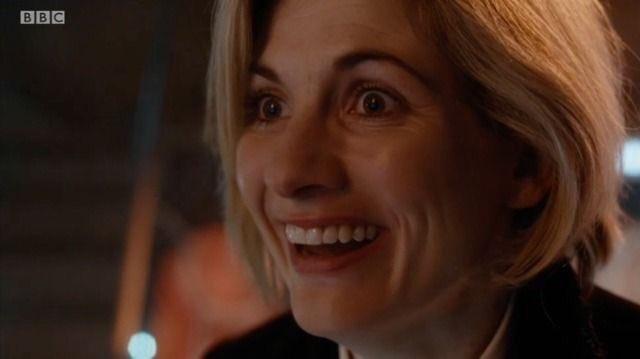
            –Whydid the Twelfth Doctor regenerate?  Watsonian reason—he was shot by the Cybermen and managed to hold off his regeneration briefly before transforming into the Thirteenth Doctor.  Doylist—Peter Capaldi was leaving the series, as was showrunner Stephen Moffat, and the new team decided to cast Jodie Whittaker.
            Here’s one of my own—Whydoes Ex-Patriots begin with a Fourth of July fireworks show?  Well, from a Watsonian point of view, the citizens of the Mount are celebrating.  It’s the Fourth, but it’s also one of their first major holidays since things have (for them) kinda stabilized after the zombocalypse.  So they’re partying hard.
            From a Doylist point of view, though… this opening lets me start with action.  There’s a lot going on.  It gives me a chance to re-introduce our four main heroes. It also lets be immediately bring up the idea of nations and patriotism, which are key themes in the book.  Heck, because this was one of those very rare times where I knewthere’d be another book in the series, this was also a setup for a plot thread in Ex-Communication.
            This all makes sense, yes?
            Why are we talking about it?
            I think it’s really important to remember these distinctions when we’re talking about writing.  To be more specific, when we’re talking about aspects of writing.  If we’re discussing dialogue or characters or settings, we should be clear if this is an in-world discussion or an authorial discussion.  Are we talking about things as they relate to the characters, or as they relate to the author (and the audience)?
            “Authorial”?   Ooooh, don’t I sound all clever…
            For example, once or thrice I’ve mentioned my belief that all good, successful characters have three common traits—they’re believable, they’re relatable, and they’re likable.  But I’ve seen some pushback on this.  I’ve had people online and in person argue that characters don’t need to be likable.  Characters just need to be fascinating or compelling or… well, look.  They don’t need to be likable.
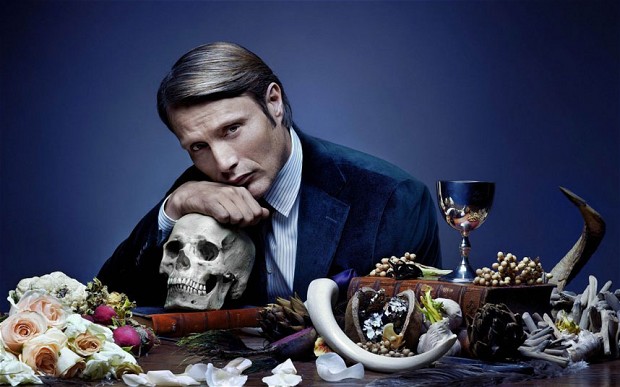
            Here’s the thing.  In a Watsonian sense—I agree with this.  I mean, I’ve said this myself lots of times (pretty much every time I talk about these traits).  Likable doesn’t mean we want a character to marry into our family and they always have a kind word to say.  Within the story, there are tons of popular protagonists who aren’t remotely likable.  Who are kind of awful, really.  There’s not a version of Hannibal Lecter—books, movies, or television—that most of us would want to have a private dinner with.  We probably couldn’t count the number of books and movies that have hit men or assassins as their main characters.  And to bring us back around, most modern interpretations of Sherlock Holmes rightly point out that the guy’s an abrasive, condescending ass. 
            (…and that’s with the people he likes.)
            But in a Doylist sense, viewed from outside… we kinda like these people.  We admire Lecter’s twisted ethics.  We envy the ultra-competent man or woman of action.  And it’s kind of pleasant to watch Holmes point out what’s sitting right in front of everyone’s face.  That separation of fiction, the thin sheath that keeps us from absolutely immersing into the story, lets us enjoy these characters in ways we couldn’t in real life.
            I mean if we didn’t like them as readers, why would we keep reading about them?  Who’d torture themselves like that.  Hell, why would we keep writingabout them if we didn’t like them?  I can’t imagine sitting down and working for months on a story about a character I didn’t enjoy on some level.

            This holds for so a lot of aspects of writing.  I’ve mentioned before that realistic dialogue in fiction is different from the actual conversations we have with each other in the real world.  Other characters might not get my protagonist, but the reader should be able to relate to them.  And I’m never going to be able build any sort of tension if I don’t understand the difference between what my readers know and what my character knows.

            Y’see, Timmy, when I’m taking in advice I need to be clear if we’re talking about things in a Watsonian or Doylist sense.  And when I see advice from other writers, I should stop and think about how they mean it.  Are they talking about the actual pace of events in the timeline of the story, or the pacing in the narrative?  Are they talking about the motives of the characters or the writer?
            In the future, I’m going to try to be better about this, too.
            Next time…
            Well, thanks to some of you, I’ve got next time all planed out in advance.
            Until then… go write.
September 21, 2018 / 4 Comments

One and Done

            Okay, book edits have been turned in, but I never made it to IKEA.  One of our cats is sick and has been getting daily trips to the vet for fluids.  So the library and game room are still stuck in transition.
            Plus, I managed to squeeze a ranty blog post into all of this, only to realize at the last moment (just as I was inserting links and pictures) that I’d talked about this exact topic just a few months ago.  I mean, I used some of the same examples and everything.  I may be a hack, but I’m not that much of a hack.
            So let me skip ahead in my list of topics and talk briefly about killing people.
            A while back I mentioned a bad habit people have that I named “describe and die.”  It’s when an author (or screenwriter) gives us tons of details about a character in an attempt to make them likeable and relatable.  As a way to get us quickly invested. 
            And then kills them.
            Today I wanted to mention a little offshoot of this that I ended up talking about with my editor recently.  Call it a connected bad habit.  One I think grew out of necessity…
            This is going to seem rambling, but stick with me.
            One of the ugly truths about screenwriting is that so many things come back to budget.  I can write the most elaborate script with a broad palette of characters, but at the end of the day it’s going to come down what we can afford to do—especially in television.  I may have written dozens of little characters here and there to help bring the world to life, but the reality is they’re going to be cut and trimmed down to the bare minimum we need to move the plot along.
            Of course, most of us don’t see this.  We just see the final version.  And we tend to absorb some storytelling lessons from it.  Even the bad, unnatural ones.
            In screenwriting it makes sense that we’ll never, ever have a speaking role that isn’t important.  It costs almost a thousand dollars just for someone to have one line.  Seriously.  That actress saying “Your drink, sir”—she just paid rent for the month.  And she’ll get a sliver of the residuals, because she’s a speaking actor.  So Hollywood is reeeeeeeeeaaally conservative when it comes to handing out random lines to random people.  I’ve personally watched those parts get whittled away as new script revisions came out.
            Of course, that’s Hollywood.  Books have no budget.  We can have casts of thousands and dinosaurs and spaceships and all sorts of stuff.  If someone needs to speak, they can speak.
            But…
            Some folks still follow that minimal-character idea, not understanding it’s an element of budgeting, not storytelling.  And when I combine this with describe-and-die, it creates a really weird mechanic in my story.  Not only do I “create” real characters just to kill them off… they’re the only other characters I’m creating.  Nobody else gets a line of description or a few words of dialogue.
            Y’see, Timmy, now my story only has three types of people in it.  Protagonists, antagonists, and… victims.  Heck, depending on my story, I may not even have an actual antagonist.  Now all I’ve got is protagonists and victims.
            Which doesn’t feel like a very well-rounded world, does it?
            I’ve talked here a few times about the need to keep things tight, but—like so many things in life—this goes horribly wrong once it’s taken to extremes.  I don’t want to trim away every single interaction or description in the name of brevity.  A non-stop, breakneck paceis going to get exhausting really fast.
            I shouldn’t be afraid to have a little more in my story.  I don’t want my world to be cluttered, but I also don’t want it to be a stark, utilitarian framework.  Because the truth is… sometimes people are just there.
            Usually blocking an aisle in IKEA.
            Next time…
            Okay, look, my schedule for topics is a mess now, so if you’ve got something you really want to hear me blather on about, let me know down in the comments.  And if nobody does, I’ll just end up blabbing on about Sherlock Holmes or something…
            So until then—go write.

Categories