
Okay, not so much rant.

Well, no more than usual, I guess.

I try to have a running list of seven or eight topics for future blog posts. That way if nobody asks a question or something doesn’t leap out at me, I’ve got something to fall back on. One of the ways things end up on the list is that I’ll be dropping links into a post, pointing back at when I previously talked about this or that, and I’ll suddenly realize I haven’t talked about whatever it is for six or seven years.

At which point I’ll usually let out this tired sigh and think something like holy crap I’ve been doing the ranty writing blog for a long time.

Which brings us to me ranting.

No, wait. That brings us to dialogue.

Hopefully we all understand how important dialogue is, yes? It’s how we bring characters to life, making them sound and speak like real people (sort of—more on that in a moment). It’s also the absolute best way to communicate information to my readers (or any audience) about the characters, their world, or the situation they find themselves in.

Likewise, dialogue is one of the easiest, quickest ways to alienate a reader. If my characters sound forced or stilted or just… well, unnatural, it’s going to push my readers away. So it’s something I’ve got to get right.

I know! There’s so many friggin’ things I need to get right for this to all work. But this is why so many people give up and you’ve stuck with it.

Anyway, I’ve talked once or thrice recently about different aspects of dialogue—vocabulary, subtext, arguments—but it’s been a while since I did a big “here’s a dozen or so tips” rants. So what I’d like to do is toss out a bunch of general “hey, think about this” things I’ve picked up from years of screenplay reading and manuscript reading. Just little things I should to keep an eye on in my dialogue. If it’s something I’ve ranted about in a bigger way at some point, I’ll link back to it.

And, as always, not every one of these is going to apply to every situation in every book. Nobody knows your book better than you. No one. That’s why it’s up to each of us to figure out exactly how this character sounds and speaks to move my plot along, to develop their story, to keep my narrative going, and so on.

Here we go.

Grammar – As you’ve probably noticed in your own life, very few people speak in perfect, grammatically correct English. Our tenses don’t always match. Verbs don’t always line up with our nouns. A lot of “spoken” English can look awful on the page. And this makes some folks choke, because they can’t reconcile those words with the voice in their head. When I lean into grammar I lose that natural aspect of language in favor of the strict rules of grammar, and I end up with a lot of characters speaking in a precise, regulated manner that just doesn’t flow.

This doesn’t mean toss grammar out the window and write however you want. People still need to understand what my characters are saying and that I’ve chosen to have them speak this way. But dialogue does give us a little more freedom in how we say stuff. See?

Contractions– This is kind of a loosely-connected, kissing-cousins issue with the grammar thing I just mentioned. Some folks avoid contractions because they’re trying to write correctly! But most of us use contractions in our everyday speech—even scientists, politicians, professors, soldiers, everyone. It’s just human nature to make things quick and simple. Without contractions, dialogue sounds stilted and wooden. If there’s a reason for one of my characters to speak that way, then by all means do it. If my characters are regular, native English-speaking mortals, though…

As a bonus, using contractions also drops my word count and page count. Win-win.

Transcription– Okay, some of you know I used to be a journalist and did lots and lots of interviews. One thing it taught me is, with very few exceptions, people trip over themselves a lot when they talk. We have false starts. We repeat phrases. We trail off. We make odd noises while we try to remember words. It’s really common and normal

BUT… anyone who’s ever read a strict word-for-word transcription of a conversation (or typed up a lot of them) will tell you it’s awkward, hard to follow, and a lot gets lost without the exact inflection of certain words. This kind of ultra-realistic dialogue will drive readers (and editors) nuts. Plus it wastes my word count on dozens of unnecessary lines. This sort of rambling can work well in actual spoken dialogue, but it’s almost always horrible on the page.
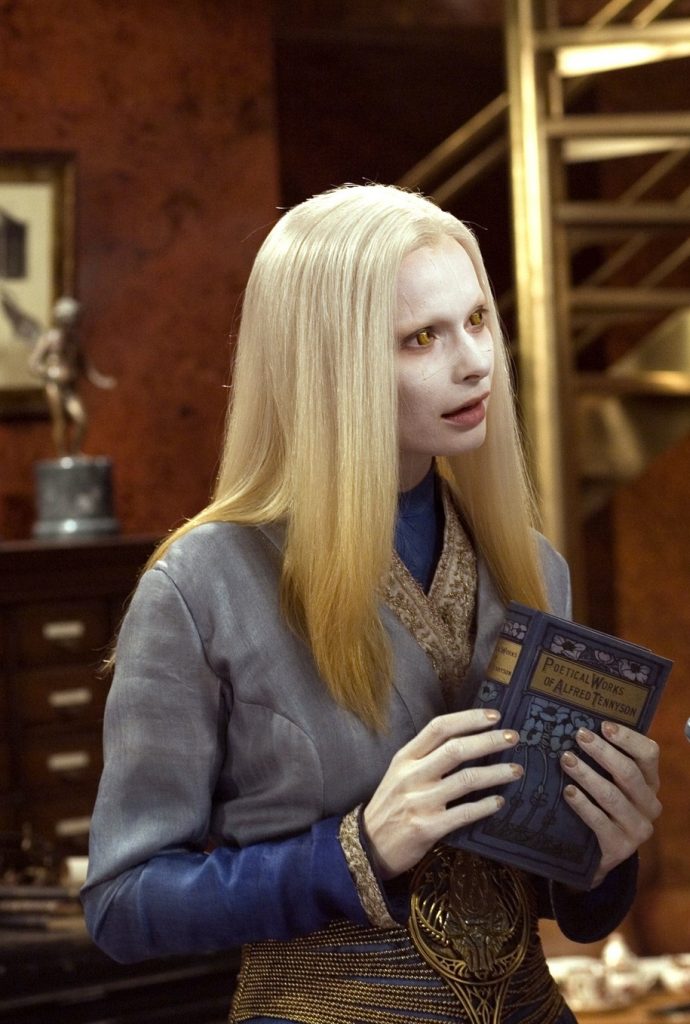
Similarity– People are individuals, and we’ve all got our own unique way of speaking. People from Maine don’t talk like people from California, people living in poverty don’t talk like billionaires, and fantasy elven princesses don’t speak like futuristic bio-engineered soldiers. My characters should be individuals, with their own tics and habits that make them distinct from the people around them. If a reader can never tell who’s speaking without seeing the dialogue headers… I might need to get back to work.

On The Nose—If you’ve ever heard someone call dialogue “on the nose,” they mean the characters are saying exactly what they’re thinking without any subtlety or subtext whatsoever. It’s the difference between “Would you like to come up for a cup of coffee?” and “Would you like to come up and have sex in my living room right now?” There’s no inference or implications, no innuendos or layered meanings. And the truth is, we’re always layering meaning into what we say.

Pro tip—I’d guess nine times out of ten, if a character’s talking to themselves out loud, it’s on the nose dialogue. It just works out that way. I’d guess half the time it’s just exposition (more on that in a minute).

Humor—Here’s another human nature thing. A lot of us tend to make jokes at the worst possible times. Breakups. Office reviews. Funerals. It’s just the way we’re wired. The more serious the situation, the more imperative that release valve is for us. In fact, be honest… people who never crack jokes make us a little suspicious or uneasy. Not everyone and not at every moment, but when there’s no joking at all, ever, it just feels wrong.

Plus, how a character jokes says something about them. Do they make non-stop raunchy jokes? Do they have a dry sense of humor? A completely awful sense of humor. Do they have any sense of when it is and isn’t appropriate to tell a certain joke?

Flirting—Flirting’s like humor in that it’s almost universal. People show affection for one another. They flirt with friends and lovers and potential lovers. Sometimes—like with humor—at extremely poor times. It’s not always serious, it can take different forms, but that little bit of playfulness and innuendo is present in a lot of casual dialogue exchanges.

Flirting is also like joking because it’s impossible to flirt with on the nose dialogue. Flirting requires subtlety and implied meanings. If nobody in my story ever flirts with anyone on any level, I might want to take a second look at things.

Profanity—Yet another ugly fact of human nature. We make emphatic, near-automatic statements sometimes. We react verbally. We throw out insults. How we swear and respond to things says something about us. Phoebe doesn’t swear like Wakko, and Phoebe doesn’t swear in front of Wakko the same way she swears in front of her mother. Or maybe she does. Either way, again, that’s telling us something about her and making her more of an individual.

Fun fact—some profanity is regional. The way we swear and insult people here is not how they do it there. So this can let me give a little more depth to characters and make them a bit more unique. I mean, I had a character who often shouted “tarnation” or “pissbucket!”

Accents– Speaking of regional dialogue… Writing characters with accents. There are a handful of pros out there who can do truly amazing accented dialogue, yeah, but keep that in mind—a handful. The vast majority of the time, writing out accents and odd “language” tics will drive readers and editors nuts.

I usually show accents by picking out just one or two key words or sentence structures and making these the only words I show it with. Just a bare minimum. Like most character traits, my readers will fill in the rest.

Dialogue TagsI just talked about this a few months ago, so we won’t spend long on this. I don’t always need to put Yakko said, Dot replied, Wakko said, because after a point it should be apparent who’s talking. Plus with less words, dialogue gets leaner and faster. Tension builds in the exchanges because the reader isn’t getting slowed down by ongoing reminders of who’s talking.

Names—Related to those dialogue tags, if I don’t need names around the dialogue, I need them even less in the dialogue. Pay attention the next time you’re on the phone with someone. How often do they use your name? How often do you use theirs? Heck, if my friends call my cell phone I know who it is before I even answer—and they know I know—so I usually just say “Hey, what’s up?” We don’t use our names, and we definitely don’t use them again and again in the same conversation. If I’ve got two established characters, it’s really rare that they’ll need to keep using each other’s names. Especially if they’re the only ones there.

Monologues – Here’s another observation. Most of us don’t talk for long. We don’t give lectures or monologues. We tend to talk in bursts—two or three sentences at best. When I have big blocks of dialogue, I usually think about breaking them up. Is this person just talking to themselves (see above)? Is nobody there to interrupt them with a counterpoint or question or a random snarky comment? Is this monologue even necessary? Does it flow? Could I get all this across another way? Is this a time or situation where Yakko should be giving a four-paragraph speech? Especially if it’s the fifth or sixth four-paragraph speech…?

Cool lines— Our latest ugly truth (so much truth in this rant)—everything becomes mundane when there’s too much of it. If everybody can sink a basket with a hook shot from the three point line… sinking a basket isn’t that impressive, is it? If everyone can fly, being able to fly doesn’t seem like such a big thing, does it? As a wise supervillain once said, when everyone’s super… no one is.
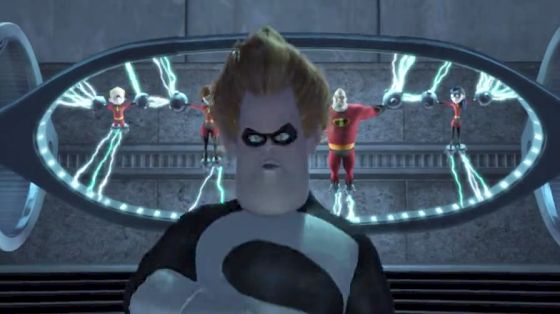
The same holds for dialogue. We all want to have a memorable line or three that stands out and sticks in the reader’s mind forever, but that’s the catch. They’re memorable because they stand out. They’re rare. If I try to make every line a cool line, or even most of them, none of them are going to stand out. When everything’s turned up to eleven… well, it’s all at eleven. It’s monotone.

Exposition—Remember being a kid in school and that one teacher who just read right out of the textbook? Just raw, boring facts poured out in front of you, often without a lot of context? That’s what exposition is like to my readers.

Simple test. If a character ever gives an explanation of something the other characters in the room should already know (or my reader should know)… cut it. Seriously, just slice it out and see if it really makes that much difference. If nothing gets tripped up and things move faster…

“As you know…” – Closely related to exposition. I’ve mentioned this once or thrice before. I need to find every sentence or paragraph in my writing that starts with “As you know” or one of its cousins. “As you may recall…” “You all know…” Once I’ve found these, I need to delete them.

Think about it. A character saying “As you know” is openly acknowledging the people they’re talking to already know what’s about to be said. I’m wasting time, I’m wasting space on the page, and I’m wasting my reader’s patience. If I’ve got a rock-solid, lean-and-mean manuscript, I might be able to get away with doing this once. Just once. Past that, I need to get out my editorial knife and start cutting.

Listen to It—You may have seen the suggestion to read your manuscript out loud to help you see how things flow. Personally, I think this works great for catching errors, but not as good for catching dialogue issues. Since I wrote these lines, so I know how they’re supposed to sound and what they’re supposed to convey. When I read them aloud, there’s a chance I’ll be reading things that aren’t on the page, if that makes sense.

So if you’re worried about dialogue… get somebody else to read it out loud. A real person, not a text-to-voice program. Just a few pages. Let a friend or family member who doesn’t know it read it out loud and see what they do with it.


And there you have it. A big pile of tips which should help your fictional dialogue seem a little more real. Fictional-real, anyway. Not real-real.

Next time…

Holy crap! WonderCon is this week! Like, tomorrow! If you’re going to be there, I’m doing a Friday night panel called Neighborhood Nightmares, a Sunday afternoon session of The Writers Coffeehouse, and a later-Sunday autograph session. Plus I’ll probably be wandering the floor before/after those. If you’re going to be there, please stop by, say hello, ask a question or two!

Anyway… next time here, because it came up on Bluesky… I’d like to talk about twists.

Until then, go write.

September 17, 2020 / 1 Comment

Around Here We Call That…

I wanted to take a minute or two to talk about a certain type of talking.

We all have our own unique voice based on where we grew up or maybe where we ended up. It’s partly accent, partly regional vocabulary. I think we’ve talked about the whole pop vs. soda vs. cola thing before, right? Plus some of you weirdos who just call everything a coke. But there are tons of little things like that. For example, does your street have a parkway, a common, an easement, or a road strip?

Everyone has their own personal vocabulary, and their own preferred words. It’s a way we can identify people (and characters). And it’s a way we can learn a little more about them.

For example… I grew up in New England (mostly Maine, but a fair amount of time in Massachusetts), and I’ve been told my accent really comes out on certain words (like drawer). Plus my particular part of Mainehas a unique term for tourists—goatropers—that my tongue still tries to fling out now and then. But at this point I’ve now spent (wow) half my life in southern California, so I’ve also picked up the odd habit of using “the” with freeway and highway numbers. And I started calling that strip of land the devil strip, just because I saw it explained that way once and fell in love with it. And my partner and I’ve been watching a lot of British gardening shows lately, so I’m pretty sure we’re using a lot of their terminology now.

And that last bit is what I wanted to talk about.

I’m betting most of you have had a job at some point with its own special vocabulary. Certain terms and phrases unique to that business. Sometimes they refer to specialized equipment, other times to certain practices or methods. If you were in retail, I bet you had to deal with a lot of terms that came down from some corporate desk, right?

And that’s another aspect of this. At that job, there were probably all the “correct” terms and phrases and names to use… and then there were the ones that actually got used on the job. I’m sure you know what I’m talking about. There’s the way we get told it works, the way the people up top say it works… and there’s the way everybody down on the ground floor actually does it.

For example, again… most of you know I worked in the film industry for several years (a good chunk of that “half my life in Southern California” time). The film industry has a lot of special equipment and does a lot of things other jobs don’t, so it stands to reason there are a lot of special terms that get used. But… the terms that get used on a film set very often aren’t the ones that get taught at film school. Again and again I’d meet people who “knew” the industry, but were baffled by the actual terms used by the crew. Terms like needing a stinger, turning around, the abby singer, or the martini. And sometimes, yeah, it’s annoying but that martini gets an olive.

But it’s not like the film industry’s that rare. The military has a lot of their own terminology, and a lot of jargon that gets used in place of that terminology. So does the medical community. I’ve talked with my scientist-turned-urban-fantasy-author friend Kristi Charish numerous times about the language and phrases used in a lab. I have a bunch of friends in the game industry who’ve let jargon slide out now and then. I worked at a Walgreens through most of high school, a suit store for a year after college, and a few theaters in San Diego when I first moved to California. And all of these places had their own way of talking and referring to things. Even the samethings.

Weird as it may sound, this is why I like having beta readers with different backgrounds than me. And why I like talking with people who work in all sorts  of fields. Because so often they’ll tell me “this isn’t how Wakko would say this,” or “Dot would probably call this a…”

It’s also why I love talking to people in person (or these days, on Zoom) when I’m asking them questions about things. A lot of the time when they’re speaking (rather than writing it out), they’ll fall back on that jargon first because it’s the natural way they speak about things. And that’s what I want to know—how would my characters naturally talk about these topics. What parts of their work vocabulary leak into their day-to-day conversations?

Of course, this is all just for flavor. I don’t want to bury my dialogue in jargon for the same reason I probably don’t want to write out an extreme accent—I don’t want my readers to get lost or confused in the dialogue. Believe me, back when I was in the film industry, I brought many Thanksgiving dinners to a dead halt as I tried to explain “things that happened at work” to my family. Because these were casual, everyday terms for me, but they had noidea what I was talking about.

I want my readers to be able to flow past odd spellings or to figure out unusual terms from context. And I want the readers who know this jargon to see that I’ve done my research, for them to feel instantly familiar with the characters they should be identifying with the most. Again, just that dash of flavor that makes something perfect.

So learn those odd terms and casual phrases. Make characters talk like the people they’re supposed to be, in the jobs they’re supposed to have. Because it’ll grab your readers and pull them deeper into the story.

And personally, I like it when my writing pulls readers deeper into the story.

Next time, I thought I might go back over a few basics.

Until then, go write.

March 14, 2019 / 4 Comments

Can We Just Talk a Bit…?

Well, this one’s going to be a little awkward. We just said this weekend that we’d talk about dialogue next time at the Writers Coffeehouse. But then we got a request for it here, so… overlap. One way or the other, the second time is going to end up making me look a little lazy, little bit like a hack.

I mean, more than usual.

Ha ha ha, you’re welcome critics. Just tossing that one out there for you.

Anyway…

Dialogue.

I’ve blabbed on once or thrice about how important dialogue is. Yeah, I know I’ve said characters are the most important thing, but dialogue’s how we bring those characters to life. It’s the fuel for the fancy sports car, the foam that hides the gigantic wave, the beautiful full moon that shows us a bloodthirsty werewolf. You get the idea. They’re interdependent. I can’t have good characters without good dialogue, and bad dialogue is almost always going to lead to bad characters. It’s the circle of fictional life.
If a character doesn’t sound right, if their dialogue is stilted or unnatural, it’s going to keep me—the reader—from believing in them. And if I can’t believe in them, I cant get invested in them or their goals. Which means I’m not invested in the story and I’m probably going to go listen to music while I organize my LEGO bricks or something.

So here’s a bunch of elements/angles I try to keep in mind and watch out for when I’m writing dialogue. Some things to watch out for, some things to make sure I have. All sorts of stuff. And I’ve talked about a lot of these before, so some of them may sound familiar…

Transcription– Okay, some of you know that I used to be an entertainment journalist and I did lots and lots of interviews. One thing that never really struck me until then was that, with very few exceptions, people trip over themselves a lot verbally. We have false starts. We repeat phrases. We trail off. We make odd noises while we try to think of words. It’s very human. However, anyone who’s ever read a strict word-for-word transcription of a conversation (or typed up a lot of them) will tell you it’s awkward, hard to follow, and a lot gets lost without the exact inflection of certain words.

I don’t want to write dialogue in this kind of ultra-realistic manner. It’ll drive my readers and editor nuts, plus it wastes my word count on dozens of unnecessary lines. While this sort of rambling can work great in actual spoken dialogue, it’s almost always horrible on the page.

Grammar – As you’ve probably noticed in your day to day life, very few people speak in perfect, grammatically correct English, aside from androids and a few interpretations of Sherlock Holmes. The rest of us speak differing degrees of colloquial English. Our verbs don’t always line up with our nouns. Tenses don’t always match. Like I just mentioned above, a lot of “spoken” English looks awful on the page. And this makes some folks choke, because they can’t reconcile the words on the page with the voice in their head. When I do this I lose that natural aspect of language in favor of the strict rules of grammar, and I end up with a lot of characters speaking in a precise, regulated manner that just doesn’t flow.

Contractions– This is kind of a loosely-connected, kissing-cousins issue with the grammar one I just mentioned. A lot of people start out writing this way because they’re trying to follow all the rules of spelling and punctuation so they write out every word and every syllable. They want to write correctly!

Again, most of us use contractions in every day speech—scientists, politicians, professors, soldiers, everyone. It’s in our nature to make things quick and simple. Without contractions, dialogue just sounds stilted and wooden. If there’s a reason for someone to speak that way (ESL, robots, Sherlock Holmes, what have you), then by all means do it. If my characters are regular, native English-speaking mortals, though…

As a bonus, using contractions also drops my word count and page count.

On The Nose—Okay, in simple terms, this is when a character says exactly what they’re thinking without any subtlety whatsoever. It’s the difference between “Hey, do you want to come up for a cup of coffee?” and “Would you like to come up and have sexual relations in my living room right now?” There’s no inference or implications, no innuendoes or layered meanings—no subtlety at all. And the truth is, we’re always layering meaning into what we say.

Pro tip—I’d guess nine times out of ten, if a character’s talking to themselves out loud, it’s on the nose dialogue. It just works out that way. I’d guess that at least half the time it’s just exposition (see below).

Similarity– People are individuals, and we’ve all got our own unique way of speaking. People from California don’t talk like people from Maine (I’ve lived almost two decades in each state, I know), people living in poverty don’t talk like billionaires, and medieval idiots don’t speak like futuristic mega-geniuses.

My characters need to be individuals as well, with their own tics and habits that make them distinct from the people around them. If a reader can’t tell who’s speaking without seeing the dialogue headers… I might need to get back to work.

Let me follow this with a few specifics…

Humor—Here’s a basic fact of human nature. We make jokes at the worst possible times. Breakups. Office reviews. Funerals. It’s just the way we’re wired. The more serious the situation, the more imperative that release valve is for us. In fact, we kinda get suspicious or uneasy around people who never crack jokes. Not everyone and not at every moment, but when there’s no joking at all… it just feels wrong.

Plus, how we joke says something about us. Does someone make non-stop raunchy jokes? Do they have a dry sense of humor? A completely awful sense of humor. Do they have any sense of when it is and isn’t appropriate to tell a certain joke?

Flirting—Similar to humor in that it’s almost universal. We show affection for one another. We flirt with friends and lovers and potential lovers, sometimes even at extremely inopportune times. It’s not always serious, it can take many forms, but that little bit of playfulness and innuendo is present in a lot of casual dialogue exchanges.

Flirting is a lot like joking because it’s impossible to flirt with on the nose dialogue. Flirting requires subtlety and implied meanings. Flirting without subtlety sounds a lot more like propositioning, and that gives a very different tone to things. If nobody in my story ever flirts with anyone on any level, there might be something to consider there.

Profanity—another ugly fact of human nature. We make emphatic, near-automatic statements sometimes. We throw out insults. How we swear and respond to things says something about us. Phoebe does not swear like Wakko, and Phoebe doesn’t swear in front of Wakko the same way she swears in front of her mother. Or maybe she does. Either way, that’s telling us something about her and making her more of an individual.

Fun fact—profanity is regional. The way we swear and insult people here is not how they do it there. So this can let me give a little more depth to characters and make them a bit more unique.

Accents– Speaking of regional dialogue… Writing in accents is a common rookie writer issue. I made it a bunch of times while I was starting out, and still do now and then. There are a handful of pro writers out there who can do truly amazing accented dialogue, yeah, but keep that in mind—only a handful. The vast majority of the time, writing out accents and odd speech tics will drive readers and editors nuts.

I usually accent by picking out just one or two key words or sentence structures and making these the only words I show it with. Just the bare minimum reminders that the character has an accent. Like most character traits, my readers will fill in the rest.

Weird note—this can become odd with audiobooks, because the narrator will most likely add an accent of some sort to differentiate the character. So the most subtle of written accents can almost become an uncomfortable stereotype once they’re combined. Another reason to think about dialing things back.

Extra descriptors—I’ve mentioned once or thrice that said is pretty much invisible on the page. But it can still wear thin. I don’t always need to use it, because after a point it should be apparent who’s talking.

Plus with less words, dialogue gets leaner and faster. Tension builds in the exchanges because the reader isn’t getting slowed down by ongoing reminders of who’s talking.

Not only that, once I’ve got some of these speech patterns down for my characters, I should need descriptors even less. In my book, Dead Moon, Tessa’s dialogue could almost never get confused with Cali’s or Jake’s or Waghid’s. They’re all distinct, and their speech patterns identify them just as well as a header would.

Names—If I don’t need them around the dialogue, I need them even less in the dialogue. Pay attention the next time you’re on the phone with someone. How often do they use your name? How often do you use theirs? Heck, if my friends call my cell phone I know who it is before I even answer—and they know I know—so I usually just say “Hey, what’s up?” We don’t use our names, and we definitely don’t use them again and again in the same conversation.

Spoken names can also come across as a bit fake. It’s me acknowledging the audience may be having trouble keeping track, and throwing in a name is the easiest way to deal with it, rather than the best way. Remember, if I’ve got two characters who’ve been introduced, it’s really rare that they’ll need to keep using each other’s names. Especially if they’re the only ones there.

Monologues – Here’s another observation. We don’t talk for long. People rarely speak in long paragraphs or pages. We tend to talk in bursts—two or three sentences at best. There’s always rare exceptions, sure, but for the most part we get our ideas out pretty quickly (if not always efficiently)

When I have big blocks of dialogue, I should really think about breaking them up. Is this person just talking to themselves (see above)? Is nobody there to interrupt them with a counterpoint or question or a random snarky comment? Is my monologue necessary? Does it flow? Is this a time or situation where Yakko should be giving a four paragraph speech?

A good clue when examining a monologue–how many monologues have there already been. One script I read a while back for a screenwriting contest had half-page dialogue blocks on almost every page. If I’m on page forty-five and this is my fifth full-page monologue… odds are something needs to be reworked.

I also shouldn’t try to get around this with a “sounding board” character who’s just there to bounce things off. Talking is communication, which means it has to be a two-way street. If I’ve got somebody who serves no purpose in my story except to be the other person in the room while someone thinks out loud… they’re not really serving a purpose.

Cool lines— Our latest ugly truth–everything becomes mundane when there’s no baseline. If everyone on my mercenary team is two hundred pounds of swollen muscle… who’s the big guy? When everyone owns a seven-bedroom mansion, owning a seven-bedroom mansion doesn’t really mean anything. If anybody can hit a bull’s-eye at 100 yards out, then hitting a bull’s-eye isn’t all that impressive, is it.

The same holds for dialogue. We all want to have a memorable line or three that sticks in the reader’s mind forever. The thing is, they’re memorable because they stand out. They’re rare. If I try to make every line a cool line, or even most of them, none of them are going to stand out. When everything’s turned up to eleven, it’s all at eleven– it’s monotone.

Exposition—Remember being a kid in school and being bored by textbook lectures or filmstrips that talked to you like you were an idiot? That’s what exposition is like to my readers.

Use the Ignorant Stranger method as a guideline and figure out how much of my dialogue is crossing that line. If any character ever gives an explanation of something that the other characters in the room already should know (or my reader should know), cut that line. If it’s filled with necessary facts, find a better way to get them across.

“As you know…” – I’ve said this before, but… if you take nothing else from this rant, take this. I need to find every sentence or paragraph in my writing that starts with this phrase or one of it’s halfbreed cousins.

Once I’ve found them, I need to delete them. Gone. Destroyed.

This is probably the clumsiest way to do exposition there is. Think about it. A character saying “As you know” is openly acknowledging the people they’re talking to already know what’s about to be said. I’m wasting time, I’m wasting space on the page, and I’m wasting my reader’s patience. If I’ve got a rock-solid, lean-and-mean manuscript, I might be able to get away with doing this once. Just once. As long as I don’t do it my first ten pages or so. Past that, I need to get out my editorial knife and start cutting.

What is that, fifteen tips? Here’s one more for a nice, hexadecimal sixteen.

You’ve probably heard someone suggest reading your manuscript out loud to catch errors and see how things flow. Personally, while I think this works great for catching errors, it’s not as good for catching dialogue issues. We wrote these lines, so we know how they’re supposed to sound and what they’re supposed to convey. There’s a chance we’ll be performing what’s not on the page, if that makes sense.

So if you can stand to listen… get someone else to read it out loud. Maybe just a chapter or two. Let a friend or family member who doesn’t know it read it out loud and see what they do (SCI-FI) with it.

And there you have it. A big pile of tips which should help your fictional dialogue seem a little more real. Fictional-real, anyway. Not real-real.

Next week… I think it may be time to talk about superheroes.

Until then, go write.

            Pop culture reference. Well, okay, ten-year-old pop culture reference.
            This week I wanted to talk about… well, talking.  Which I haven’t done in a while. 
            Dialogue’s the lifeblood of fiction.  It’s how my characters move beyond the page and become living, breathing people.  In any sort of storytelling, it’s going to be the key to making them memorable.  In screenplays, it’s going to be what makes them quotable. Sounds corny, I know, but it’s true. 
            Bad dialogue is the fastest way to make sure characters are dead to my readers. It’s almost always the second element of my writing to get picked apart (spelling will be the first).   All of us know what people sound like, so when someone speaks in flat, clumsy, expositional dialogue, it makes them unbelievable. And when a reader can’t believe in my characters, it means they can’t believe in my story.
            Here’s a dozen things I should be keeping an eye out for in my dialogue.  Some of them are related.  Others are unique to themselves
            On The Nose—You may have heard people talk about dialogue that’s “on the nose.”  In simple terms, this is when a character says precisely what they mean or what they’re doing without any subtlety whatsoever.   Nine times out of ten, if someone’s talking to themselves out loud, it’s on the nose.  I’d guess that at least half the time I stumble across it, on the nose dialogue is just exposition (see below). 
            A good way to think of this is old radio-shows, when people had no visuals at all and had to depend on doing everything with only dialogue.  If my characters are speaking like that, I’m doing something wrong.
            Grammatically Correct – Very few people speak in perfect, grammatically correct English, aside from a few freaks with inferiority complexes.  Or Sherlock Holmes.  Or robots.  As for the rest of us, we all speak differing degrees of colloquial English.  Our verbs don’t always line up with our nouns.  Tenses don’t always match.  Truth be told, a lot of “spoken” English looks awful on the page (see transcribingdown below).  This is where some folks choke, because they can’t reconcile the words on the page with the voice in their head.  Which is how I end up with several characters, all of whom speak in a precisely regulated manner which seems highly affected and does not flow by any definition of the term.
            Lack of Contractions– Often found with the grammar issue I just mentioned.  A lot of people start out writing this way because they’re trying to follow all the rules of spelling and punctuation so they don’t get branded a rookie, and ironically… 
            While this is a good practice for your prose, dialogue drags and sounds forced when every word is spelled out in full.  As I said above, most of us use contractions in every day speech—scientists, politicians, teachers, and even military personnel.  Without contractions, dialogue sounds stilted and wooden.  If there’s a reason for someone to speak that way (ESL, robots, aliens, or what have you), then by all means do it.  If my characters are regular, English-speaking mortals, though…
            As a bonus, using contractions also drops your word count and page count.
            Similarity– People are individuals, and we all have our own unique way of speaking.  People from California don’t talk like people from Maine (I’ve lived almost two decades in each state, I know), people living in poverty don’t talk like billionaires, and medieval idiots don’t speak like futuristic mega-geniuses. 
            In my writing, my characters need to be individuals as well, with their own tics and habits that make them distinct from the people around them.  If a reader can’t tell who’s speaking without knowing the complete context or seeing the dialogue headers, I need to get back to work.
            Extra descriptors—I just hinted at this, but it’s worth mentioning again.  Even if I’m using said with a character’s name, it can still wear thin.  I don’t always need to use it, because after a point it should be apparent who’s talking.
            Plus with less words, dialogue gets leaner and faster.  Tension builds in the exchanges because the reader isn’t getting slowed down..
            Not only that, once I’ve got speech patterns down for my characters, I should need descriptors even less.  In my book, Ex-Communication, Stealth’s dialogue could never get confused with Madelyn’s or Barry’s or Freedom’s.  They’re all distinct, and their speech patterns identify them just as well as a header would.
            ExtraNames—Let’s come down on names a little more. If I don’t need them around the dialogue, I need them even less in the dialogue.  Pay attention the next time you get on the phone with someone.  How often do they use your name?  How often do you use theirs?  Heck, when my friends call my cell phone I know who it is before I even answer—and they know I know—so I usually just say “Hey, what’s up?”  We don’t use our names, and  we definitely don’t use them again and again in the same conversation.
            Spoken names can also come across as a bit fake.  It’s me acknowledging the audience may be having trouble keeping track, and throwing in a name is the easiest way to deal with it, rather than the best way.  Remember, if I’ve got two characters who’ve been introduced, it’s really rare that they’ll need to keep using each other’s names.  Especially if they’re the only ones there.
            Accents– This is a common mistake by beginning writers.  I made it a bunch of times while I was starting out, and still do now and then.  Writing out accents and odd speech tics will drive readers and editors nuts.  There are a handful of professional writers who can do truly amazing dialogue, yes, but keep that conditional in mind—only a handful.  
            I show an accent by picking out one or two key words  at most and making those the only words I show it with.  If my character’s Jamaican, stick with “mah” instead of “my.”  For the Cockney fellow, keep the dropped H when he speaks.  Past that, just write straight dialogue.   Just the bare minimum reminders that the character has an accent.  Like most character traits, my readers will fill in the rest.
            Transcription– One thing years of interviews have taught me is that, with very few exceptions, people trip over themselves a lot verbally.  We have false starts.  We repeat phrases.  We trail off.  We make odd noises while we try to think of words.  It’s very human.  However, anyone who’s ever read a strict word-for-word transcription of a conversation will tell you it’s awkward, hard to follow, and a lot gets lost without the exact inflection of certain words.
            One of the worst things I can do is try to write dialogue in such an ultra-realisticmanner.  It will drive my editor nuts and waste my word count on dozens of unnecessary lines.  While this sort of rambling can work great in actual spoken dialogue, when it’s written on the page it’s almost always horrible.  I want to keep it simple so I don’t scare off readers.
            Cool lines—  D’you remember in The Incredibles when Syndrome reveals his master plan?  “And when everybody’s super… no one will be.” 
            It’s an ugly truth–everything becomes mundane when there’s no baseline.  If everyone on my basketball team is eight feet tall, who’s the tall guy?  When everyone owns a Lamborghini, owning a Lamborghini doesn’t really mean anything.    If anybody can hit a bull’s-eye at 100 yards out, hitting  a bull’s-eye isn’t all that impressive.
            The same holds for dialogue.  We all want to have a memorable line or three that sticks in the reader’s mind forever.  The thing is, they’re memorable because they stand out.  For every fun, quotable line in Iron Man 3, there are also pages of dialogue that just advanced the story.  We all remember Tony mocking Rhodey about his friend’s new code name, but how much do we remember about Aldrich Killian’s business pitch about Extremis?
            If I try to make every line a cool line, or even most of them, I’m shooting myself in the foot because none of them are going to stand out.  When everything’s turned up to eleven, it’s all at eleven– it’s monotone.
            Exposition—Remember being a kid in school and being bored by textbook lectures or filmstrips that talked to you like you were an idiot?  That’s what exposition is like to readers.
            I should use something like the Ignorant Stranger method as a guideline and figure out how much of my dialogue is crossing that line. If any character ever gives an explanation of something that the other characters in the room already should know (see below) or my readershould know, I need to cut that line. If it’s filled with necessary facts, find a better way to get them across.
            Monologues—This one’s closely related to exposition.  A good monologue can be a major point in any story or film.  By the same token, though, a bad one can bring your story to a screeching halt.
            Is my monologue necessary?  Does it read naturally?  Is it flowing?  Does it fit the moment?  If I’m breaking one of these guidelines and doing it with a 750 word monologue, my manuscript is going to end up in the ever-growing left hand pile.
            Second clue if it’s bad is to count how many monologues there’ve already been.  Yes, that may sound laughable, but you’d be amazed at some of the things I’ve seen.  One script I read for a screenwriting contest had half-page dialogue blocks on almost every page.  If I’m on page forty-five and this is my seventh full-page monologue… odds are something needs to be reworked.
            “As you know…” – If you take nothing else from today’s rant, take this.  I need to find every sentence or paragraph in my writing that starts with this phrase or one of it’s halfbreed cousins. 
            Once I’ve found them, I need to delete them all.  Gone.  Destroyed.
             Think about it.  If I’m saying “As you know,” I’m openly acknowledging that the people I’m talking to know what I’m about to say.  I’m wasting time, I’m wasting space on the page, and I’m wasting my reader’s patience.  This is probably the clumsiest way to do exposition there is.  If I’ve got a rock-solid, lean-and-mean manuscript, I might be able to get away with doing this once.  Just once.  As long as I don’t do it my first ten pages or so.  Past that, I need to get out my editorial knife and start cutting.
            And here’s a bonus tip.  One idea you may have heard is to read your dialogue out loud to find where it trips.  It’s not bad, but if I really want to find out how it reads, I should ask someone else to read it out loud—preferably somebody who hasn’t seen it before or heard me talk about it.  If I’m reading it myself, I know how it’s supposed to sound, where the breaks should be, and what gets the emphasis.  Let a friend or family member who doesn’t know it read it out loud and see what they do with it.
            And there you have it.  A baker’s dozen of dialogue tips which should help your fictional dialogue seem a little more real.  Fictional-real, anyway.  Not real-real.
            Next week…
            I’m going to have to skip next week, I’m afraid.  Rewrites are due on Ex-Isle so odds are I’ll be up late second-guessing myself.  I may put up one of the photo tips.
            After that, I’m open to suggestions, if anyone has any.  Or if anyone made some good ones I’ve misplaced.  If not, maybe I’ll offer a quick idea about drafts.
            Until then, go write.

Categories