
April 8, 2021 / 2 Comments

…In The Trunk

A few weeks back (over on Twitter) I tossed out a general question to any writer who wanted to answer—“Do you have a trunk novel that you wouldn’trelease right now?” And I wasn’t really surprised to see a fair number of folks respond affirmatively. One or two were almost enthusiastically affirmative. In fact, only one person said no, and even their no was couched in the acknowledgement said novel would need to be rewritten.

And, okay, maybe I’m skipping ahead a bit. Does everyone here know what a trunk novel is? Let’s start there.
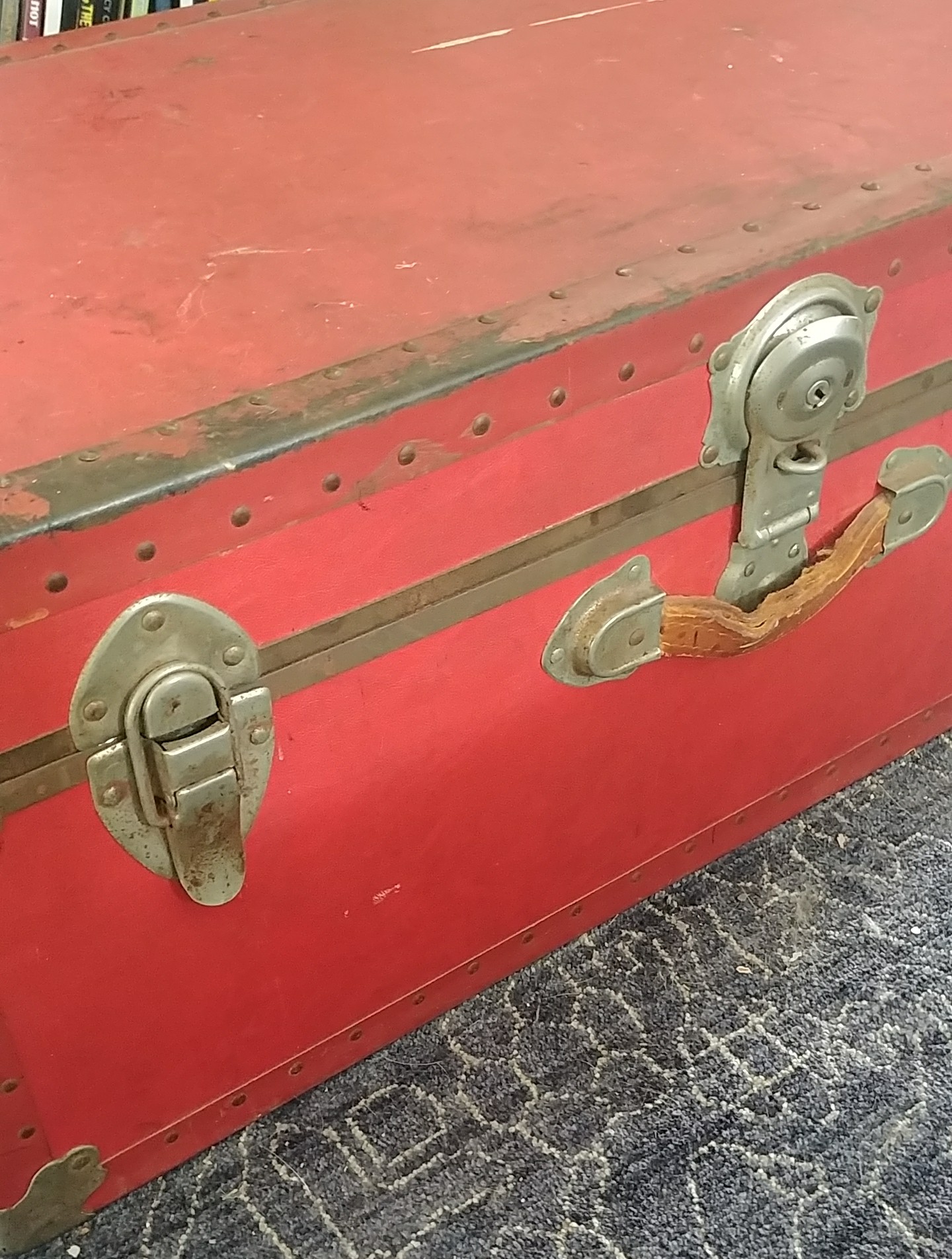
Really short version, a trunk novel is a finished (or maybe close-to-finished) novel that I’ve decided to put aside for a while. Usually a long while. It gets its name from ye olden times, when authors had to write everything on crushed papyrus. And if you had something that didn’t work out (for one reason or another) you either had to throw out that physical copy or, y’know, put it away somewhere so it wasn’t taking up desk space. Like, say, in a trunk. Because everyone had steamer trunks back then.

Nowadays we don’t have the space problem (yay, electromagnetic memory bubbles), but a lot of us still end up with stuff we can’t find homes for right now. And that’s what I wanted to talk about. Why things get put away and what happens when we pick them back up.

Right off the bat, there’s nothing wrong with needing to put something aside. It doesn’t mean I’ve failed or wasted time. If anything, I think it can be kind of mature and healthy when someone sets things aside. From a writer-ly point of view, it means I’ve realized this isn’t going to work, for one reason or another. Maybe I’ve admitted I don’t have the skill yet to make this particular story work the way I want it to. Perhaps I’ve determined the market’s not good for my story right now. Hell, it could be that I’ve realized the story just doesn’t work. It seemed clever at first but now that I’ve cleaned it up and expanded it… yeah, that is a massive, gaping hole there in the middle of it. Like, highway-swallowing-sinkhole massive.

So, yeah. Absolutely nothing wrong with taking something I spent a lot of time on and just wrapping it up in a blanket to sleep while I move on to other things.

Because after a point there are choices to be made. I can just keep plugging away at this again and again and again until I get it right. Or I can keep hunting for a market to take it, until I’ve been hunting so long I can circle around to those first submissions again and say “well, how about now?”  But this is a tricky balance. Because there is a point that I’m spending so much time on this thing—trying to make it perfect, trying to get it sold—that I haven’t done anything else. And the months and years I spend doing that are months and years I could’ve spent writing something new. That’s a tipping point we all need to find for ourselves, when “not giving up” becomes “putting off doing anything else.” It’s the polar opposite of the shiny new idea.

And, yeah… I’m speaking from experience here. A lot of you have heard of my trunk novel, The Suffering Map. I worked on it on and off for years. Maybe three years of solid work altogether, spread out across almost four times that. I rewrote it again and again. I showed it to agents and editors. I rewrote it some more. And finally I realized, like I just said, that I’d been working on this thing for over a decade. I was in my thirties and I’d been working on it pretty much since I got out of college.

So after my latest round of rejections, I put it away and called it good. And went on to start writing a book about a government teleportation projectwhich, oddly enough, I set aside when I got a really good opening from a publisher to deliver a zombies vs. superheroes book.

Which means putting The Suffering Map aside and moving on was a really good decision on my part.

But let’s look at the second half of this. What about picking it up again? I mean, trunking a novel isn’t like shooting it into a black hole. Or being like Robert Louis Stevenson and burning a whole manuscript because he felt it was just way too disturbing for the current market (no, seriously, he did). We can pull it back out, rework it, and maybe find a home for it.

Let’s really consider this, though. Because we can’t just leap back into something from five or ten years ago (or more) and expect it to work just like it did then. For a couple of reasons.

F’r example… hopefully we’ve grown as writers. I think most of us realize the stuff we did when we were fifteen might not hold up as well as the stuff we did at twenty-five or thirty-five. I’m not the person I was then, and I hope you’ve matured too. As a person and as a writer. We’ve (hopefully) grown our vocabularies a bit, learned some new structure tricks, maybe gotten a bit better with subtlety and nuance. We may realize, wow, that whole thing I did there was a bit pretentious, wasn’t it? And maybe that other bit was…

Okay, look, we can just cut all of that bit. Nobody’ll ever even know it was there. Plausible deniability. It’ll be fine.
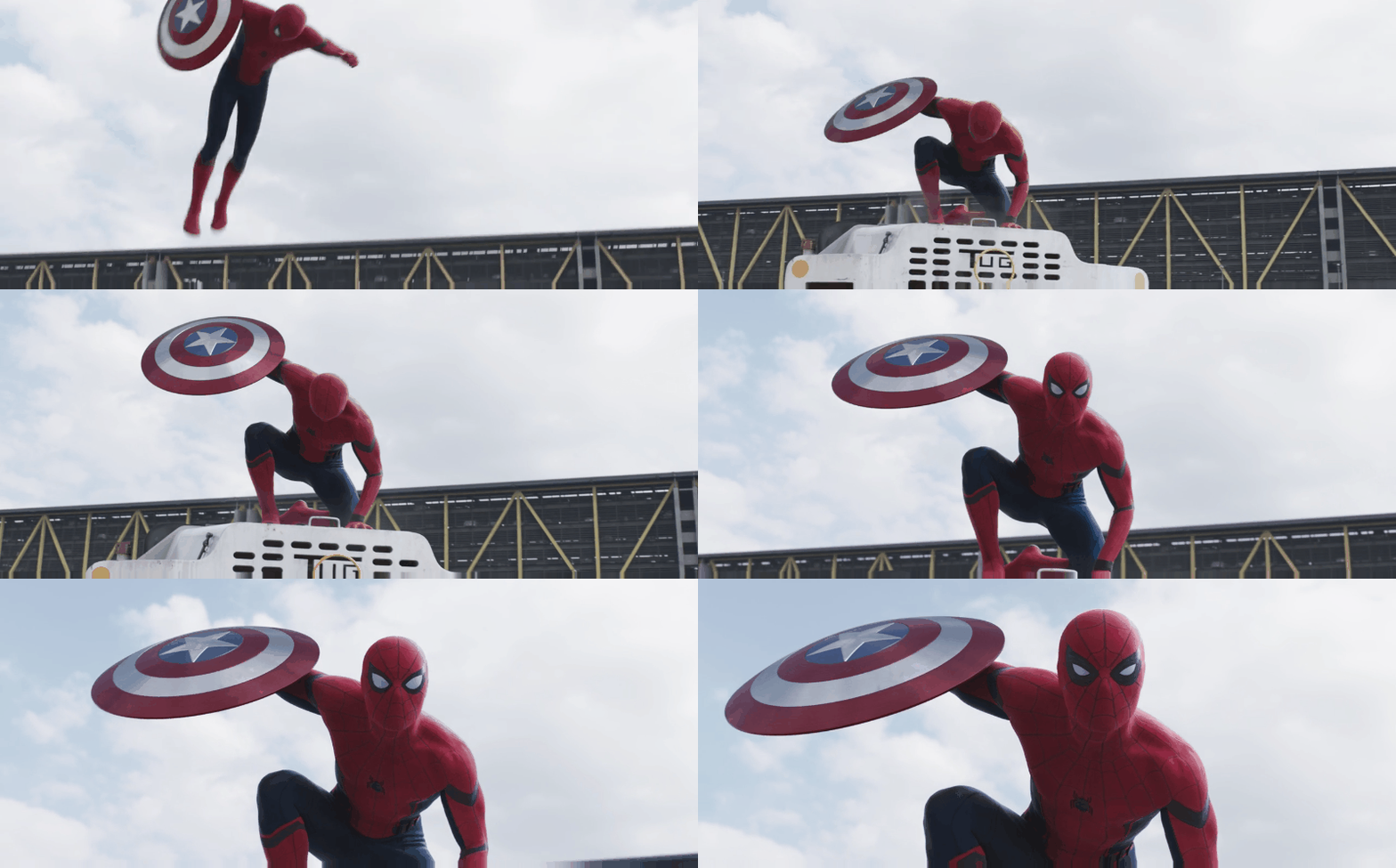
But the world’s also going to change. Yeah, even in just a couple of years. I mean, go back just five years—April 2016. Obama was still the USPresident. There were two people vying for the Democratic ticket, but three fighting for the GOP nod. The majority of people went around without masks. Technology was different. Entertainment was different (we were all still waiting to see this latest Spider-Man in Captain America: Civil War, due out that summer). Society was different. Hell, 2020 was a horrible year in so many ways, but it also opened a lot of eyes to the injustice and social issues millions of people deal with on a daily basis.

And that’s all stuff that should be reflected in my writing.

F’r example… let’s look at The Suffering Map again.

As I’ve mentioned here once or thrice, I can look back at the things I did with this book and see flaws that weren’t apparent to me then. Problems with the dialogue, the structure, and some of the characterizations. There’s a lot of stuff in there I’m very proud of, but there’s also a lot of stuff that makes me very glad nobody outside of a small circle ever saw it. And I absolutely understand why the agents who liked my pitch and read some of it ultimately rejected it.

One of the big issues with it, which I’ve mentioned before, is that I had the wrong character as my protagonist. In retrospect, I stuck with Rob for eight drafts because Rob was, well, the most like me. The easiest to write. And I might not have consciously realized it, but I knew I didn’t have the skill at that point (or the confidence) to write a female character who didn’t feel kinda like… well, kind of a cliché.  A bunch of clichés, honestly. So it was easier then to make Sondra a supporting character, even though I realize now her arc is way more interesting than Rob’s. If I ever decided to pick it up again, no question I’d rewrite the whole thing to make her the protagonist.

Plus, let’s look at the world between when I started writing The Suffering Map and now. Answering machines were still a thing then. Same with Walkmans. Cell phones have become much more common than they were then, and they’ve become smartphones. All this means major changes for four or five chapters in the book (plus fallout from those changes), and even some structural changes because smartphones have completely changed how we interact with each other and the world. I mean, I had a scene where Rob gets a call at work, and two others where he uses a Thomas Guide. Anyone remember those?

Politically/socially we were in the height of the Clintonyears. Roaring economy. Big business being taxed. Budget deficits shrinking. Small businesses are a large part of the book, and they couldn’t really be presented now the way they were then (although one side hustle aspect of Rob’s life would seem more believable).  No 9/11 yet, either, and that really showed in a lot of places. And there’s at least one chapter that’d play out really differently because of this.

Here’s another thing. In early drafts of The Suffering Map, Sondra was a woman who’d worked in adult films, and as a dancer in later revisions. It was a “young and needed the money” thing. But truth be told, the sex industry has changed quite a bit in the past twenty-five years, and so has many folks’ views of it. It’s still rarely seen as a great thing, but it doesn’t have quite the massive stigma it used to. Which makes it worth mentioning—when you add in the cell phone/internet issue—if I did want to keep something like this hidden, it’s a lot harder these days. Also, a lot of these jobs doesn’t pay as well as they used to (that damned internet again).

So this is a whole character element that would need major revision—if I even decided to keep it and not just have her be an Uber driver or something.

Any of this make sense? I know I’m babbling a bit because this is kind of a big, sprawling thing and I’m trying to cover a lot of it and give some examples.

The two big things to remember are this. There’s nothing wrong with setting something aside, for whatever reason I decide to do it, because I can always pick it back up again. I just need to remember the world is going to change. And if I’ve been doing things correctly. Hopefully I’ve changed too.

Hopefully.

Next time, I want to talk to you about a very important saxophonist.

Until then, go write.

April 1, 2021 / 4 Comments

Assorted Magical Spills

The comments section has been pretty dry lately, so I’ve gone digging through my list of “things to talk about,” trying to come up with a semi-interesting topic. I was about to fall back on recycling some general writing/publishing stuff from one of the other blogs I used to keep and then I thought “hey, you know what we haven’t talked about lately? Spelling!”

More importantly, when computers try to spell.

Three really common features these days are autocomplete, autocorrect, and spellcheckers. I’m betting the device you’re reading this on has at least two of them. Maybe all three. There’s also a good chance you’ve shut at least one of them off. Because…. well, they’re not that ducking great when you get down to it. Yeah, sure, some of them build up custom dictionaries or preferences, but even those can have issues.

Truth is, the more complex and nuanced we get with language, the less these things work. Because they’re tools. And that’s what tools do. They don’t replace skills, they just help focus them.

Think of it this way. I’m guessing you’ve got a hammer, right? Maybe it’s in that drawer in the kitchen (or was it in the office…?). Maybe you’ve got a little emergency toolbox with some basics in it. Maybe you’ve got a big rolling tool chest out in your garage with four different hammers and a rubber mallet and that other hammer you loan out to people who come over and ask if they can  borrow your tools. Anyway, wherever it is, you’ve got a hammer, right?

But we accept that a hammer only does so much. Owning a hammer doesn’t instantly mean I can now build a bookshelf or a rocking chair or a new deck out back. I’m more handy than some folks thanks to a few years of film and theater work, but I’ve got two friends who are professional carpenters and they both make me look completely unqualified to even own a toolbox.

And we all get this, right? The tool doesn’t amplify ability or replace it. It just allows me to use that existing ability better. If I didn’t have the skills to build a rocking chair before buying a hammer, owning one’s not going to change anything. And if I’m convinced holding a hammer suddenly does give me abilities and skills… well, I’m probably about to hurt myself.

(weird fun fact—the majority of cases where men lose a finger or toe involve them using a new tool. Seriously)

Spellchecker is a tool. So is autocorrect. And autocomplete. They can make things faster and more efficient, but only if I know what I’m doing in the first place.

For example…

faze vs. phase – one of these you grow out of

feet vs. feat – one of these is a measurement

losing vs. loosing –one of these is a release

week vs. weak—one of these is not that strong

bear vs. bare—one of these is a bit revealing

sconces vs. scones—one of these you eat

All of these are words I’ve seen recently in articles, headlines, and so on. And in every one of these cases… they should’ve been using the other one. But if I’m trusting my spellchecker to know more than me, it’s just not going to end well.

Seriously, computers are ducking idiots. They really are. Remember when I talked about Watson, the IBM supercomputer that was specificallybuilt to understand language and nuance and crush opponents on Jeopardy? Do you remember how his success rate ended up working out?

If Watson isn’t going to be able to pick up the slack, why would I think the spellchecker they bolted on to my word processor at the last minute is going to be better?

Learn to spell. If I want to do this professionally, it’s not enough to have the tools. I need the knowledge that makes them useful. Cause if not… I’m just hammering away wildly.

Next time…

Honestly, the next thing on my list is an overdue update of the FAQ. But to be honest, nothing’s really changed since the last time I updated it (well, nothing I can talk about, anyway). So I’ve got… hmmmmmm, well a question about plot we didn’t get to during the WonderCon Writers Coffeehouse. Or maybe talk about my old trunk novel a bit?

Any preferences? Drop ‘em down below.

And then go write.

March 25, 2021 / 1 Comment

Oooooooh, Shiny!

Story time!

I first heard this story many years ago under a different title—the slutty new idea—and while the story/idea is very true, in retrospect I’ve realized the original title is unnecessary and also doesn’t make a lot of sense, if you think about it. It’s implying there’s something wrong with the idea even though the writer’s the one being a bit *cough*cough* promiscuous here. And I don’t want to be one of those people blaming someone else for my behavior. Hopefully you don’t want to be that way either. Plus, I’ve seen it bandied around  a lot more lately as the shiny new idea, which makes a lot more sense. It’s something new and eye-catching and…

Well, let’s talk about the shiny new idea. The story goes something like this…

I, the writer, am out with my story. Maybe it’s a novel or a screenplay or a comic book script. Whatever it is, I’ve been with this story for a while now and I’ve fallen into a good pattern with it.

Perhaps too good. Maybe a bit of a rut. I just don’t have the enthusiasm for the story I once did. There was a point that it was fun and playful and exciting and all I could think of, but as of late… well, the honeymoon’s over and now it takes some effort to get anywhere with my story. Things aren’t bad, mind you, they’ve just become a bit… rote. Maybe even mechanical.

So, anyway, the story and I are out and about and that’s when I happen to notice a shiny new idea across the room. It’s big and bright and it’s got that look to it that just says “hey, you know it’d be fun to tumble around with me for a while.” It’s got a sharp edge to it, and it’s showing just enough I start thinking about all the parts I’m not seeing, and all the fun this idea and I could probably have together. Just looking at it, it’s clear that is the kind of idea a writer’s supposed to have, not the dull thing I’ve somehow ended up with

In fact, let’s just take a moment and be honest with ourselves. That’s how we all want things to be with our ideas, right? It’s what movies and TV shows and so many twitter threads have assured us the life of a writer is like. It’s supposed to be this wild and spontaneous and intoxicating relationship we just can’t get enough of. We want it to keep us up late and wake us up early so we can get right back at it.

Wait, what do you think we’re talking about? No! This is a writing blog! Get your mind out of the gutter!

Anyway, a lot of us know the simple truth of the shiny new idea. Sure, it’s fun and exciting at first, but then one of two things happens. Sometimes we find out there’s not really anything else to it. Oh, that first weekend is fantastic, maybe the week after it is pretty cool, but it doesn’t take long to realize the shiny idea is… well, it’s a bit shallow.  We had some fun, but after a couple days we realize things just aren’t going any further.

On the other hand, things might work out with me and the idea. The passion fades a little bit, but I’m still giving it my all and getting quite a bit in return.  Eventually the two of us settle down into a comfortable story together. And just as I realize things are becoming a bit of work with my story, the two of us are sitting down one evening and I happen to notice a shiny new idea hanging out over at the bar…

Again, we’ve all been there, yes? Hell, I’m there right now. I’m working on this big six-book outline/ pitch document and yesterday I was filling Keyser holes in the lawn and had this whole new book idea pop into my head. So I went inside and scribbled out three pages of notes and oh, look, haven’t gotten much done on that pitch document today, have I?

There’s also a sad parallel to the shiny new idea which I’ve come to refer to as the booty call idea.  This is the idea I used to spend a lot of time with, but now I don’t for one reason or another. Maybe we needed some time apart. Maybe it just wasn’t working out, and I couldn’t figure out how to make it work. It’s possible the idea and I just admitted it wasn’t going to work and decided to call it quits.

But, sometimes there I am late at night, and that idea looks kinda sweet again. There’s definitely some things I could do with it. Nothing serious, mind you, just a writer and an idea playing around, having some fun, no pressure. Yeah, there’s probably other things I should be working on, but one night won’t make any difference, right? Heck, not even the whole night. Just a couple hours to ease back into it and take care of that little itch I’ve had. And maybe this time it’ll be different.

But more often than not, come morning I just feel a bit guilty about the time I spent with the booty call idea when I should’ve been, well, doing other things.

Y’see, Timmy, it all comes down to focus. As I’ve said here once or thrice before, writing isn’t always going to be fun and fast and exciting. Sometimes it’s going to be work. There are going to be times when the days blend together.

But if I stick with it and don’t chase after every little idea that flashes me a bit of plot, I find that most of the days are going to be good ones. And more than a few will be fantastic.

Don’t chase after the shiny idea. Resist the urge to check in with the booty call idea. Don’t ignore them or forget about them, but don’t let them interfere with what you’re working on right now.

Next time…

Okay, before we get to next time, this weekend is WonderCon! They’re now celebrating their second virtual year, and they’ve got a bunch of stuff lined up. For example, Saturday at 10 AM(Pacific Time) we’re doing a virtual Writers Coffeehouse, where I’m answering questions about writing and publishing (and I convinced Sarah Kuhn, Stephen Blackmoore, Fonda Lee, and Greg VanEekhout to join me).

And then starting at noon on Saturday it’s… Saturday Geekery, WonderCon edition. We’re going to watch some wonderful movies together, like Thirteen Ghosts, Solomon Kane, and John Carter. It’s going to be tons of fun, with hashtags and other writers and stuff like that. Feel free to follow along (most of them are free to watch on Tubi or Disney+).

And next time here… I think we need to revisit a core issue. You know witch one.

Until then… go write.

March 18, 2021

Good and Bad Conflict

Sorry I missed last week. Taxes. As I mentioned earlier.

A few weeks back, during my usual Saturday geekery, I had a sudden epiphany about Asylum movies. Even though, technically, it wasn’t an Asylum movie I was watching. I feel safe saying whoever made this film studied at the feet of the mast… well, at the feet of the Asylum producers. And it’s a problem I’ve seen in a lot of book manuscripts. So I made a note of it and told myself I’d have to do a post on it sometime soon.

And then last weekend’s geekery gave me a trio of movies that suffered from the exact same issue. So I thought, wow, serendipity. Definitely a sign of… something. So sometime soon became this week.

Once or thrice here I’ve talked about the ideas of plot and story. Plot is what happens outside my characters, story is what happens inside my characters. The basic idea of a narrative is that conflicts (of many different types) will drive that plot forward, and the plot and story will work together and feed off each other like some beautiful alien symbiote that bonds with you and manifests as bio-armor under times of stress or when you summon no, wait, that’s the plot of the Guyver. I’ve talked about how plot and story work together before. Stick with that, forget the Guyver. For now.

What I wanted to talk about was the conflicts, all those roadblocks that pop up between the beginning and end of the story. The things that get in the way of my characters getting what they want. Because some of these things are great and some are… not so great.

As I mentioned above, I have conflict in my book to drive the plot. My character has to overcome social pressures, financial constraints, power structures, ancient death traps, and a variety of other obstacles. Dealing with these things (or failing to deal with them)  forces my character to grow and change internally (sometimes called a character arc) while at the same time usually subjecting them to greater pressures/constraints/death traps. That’s dramatic structure. Who my character is at the beginning of the book starts and shapes the plot. Who they become at the end helps them resolve the plot.

Here’s a cool way to think of it. Picture a staircase. Every time we climb up a stair, it feels like we’re on level ground, but we’re actually higher than we were before. As we keep climbing stairs, we keep going higher. That’s conflict moving the plot. Climbing stairs moves us higher. Make sense?

Now, the problem I was seeing is that some storytellers had lots of conflicts popping up—but they didn’t actually do anything. They didn’t affect the plot in any way. They’d encounter a new obstacle, deal with it, and then be… right back where they started. Nothing gained. Nothing accomplished. Nothing learned. Our characters haven’t moved any closer to the end of the plot, haven’t grown or changed in any way. These conflicts were so self-contained we could just snip them and lift them out and there wouldn’t be any real change. Heck, we probably wouldn’t even need to stitch things together on either side.

If you wanted to use that staircase analogy, at this point the steps have kind of fallen over and become more a line of peaks. Every time we go over one, we’re just… right back at ground level. Not to mention, they’re all kind of the same peak. None of them stand out, and we realize pretty quick it’s just going to be that same thing again and again.

A term I’ve brought up here before is episodic. Yes, like TV episodes. Its when the conflicts resolve and the plot and story basically reset to where they were at the beginning. Our characters don’t grow or change in any way, they gain nothing, they just… go to the next episode. Which is exactly the same.

Neat thing to think about—because of that “reset,” it doesn’t matter what order we watch a lot of older shows in. We can go from episode twenty-three to episode fifteen to the eighth episode of season four and… you can’t tell. There’s no change because there’s no actual goal. The characters aren’t really trying to accomplish anything past the particular obstacles of this single episode.

When this happens in a larger story—say a novel or a movie—the storytellers are just dropping in these episodic conflicts because… well, we need conflict, right? So we’ll get a flat tire, spend ten minutes changing it, and then we’re back on the road. Or we’ll get caught in a super-embarrassing, borderline scandalous situation at work that nobody remembers or comments on the next day. Or we’ll find ourselves going out to rescue Wakko againand drag him back home because he just won’t stay put during the zombieapocalypse. These events are there. They fill pages. But they have no repercussions. No lasting effects. They don’t spark any changes in the way anyone thinks or acts.

Y’see Timmy, there’s conflict that advances the plot and conflict that just prolongs the plot. It isn’t there to help develop the characters or their stories, it’s just there to keep us from reaching the end too soon. So people get flat tires. Or wander out of their house during the zombocalypse. Or—no joke—fall off the Great Pyramid of Giza.

And absolutely nothing happens. No one suffer any consequences from these events at all. None.

Now, this isn’t to say nobody can get a flat tire in my manuscript. Flat tires are a real thing that happen to all of us. But I should think about why this flat tire’s happening. As I’ve mentioned before, I’m the all-powerful Creator-of-your-choice in the world of my story. Nothing happens here except by my choice and my will. So why is this flat tire happening? What purpose does it serve in my story? Is it advancing the plot? Giving someone a moment to expand their character arc?

Or is just happening to keep them from getting where they’re going too soon?

Look over some of your story points. Are they advancing your plot? Or are they just stretching it out?

Next time… I had a new idea I wanted to talk to you about.

Until then, go write.

Categories