

Okay, well… it’s been a while.
Again.
If you happen to subscribe to my newsletter, you know it’s been a weird, long summer that ended with me deciding to, well, go hide in the garage for a while. But I’m back and feeling, well, a little recharged. Let’s say not quite as overwhelmed by, y’know… everything
Anyway… let’s talk about writing. Haven’t done that in a while, have we?
So, just a few weeks before I went on this extended hiatus, Alex asked—
How do you go about writing characters with thought-processes considerably different to your own? Fundamental differences like Mike’s savant syndrome, for example, or ingrained stuff like Hector’s military skill. They both read as natural and believable depictions, and I’d kill for some advice on how to make something like that work.
Unless you secretly have savant syndrome and are an ex-secret military agent and are writing from the heart–in which case, props to you.
Are you even still here, Alex?
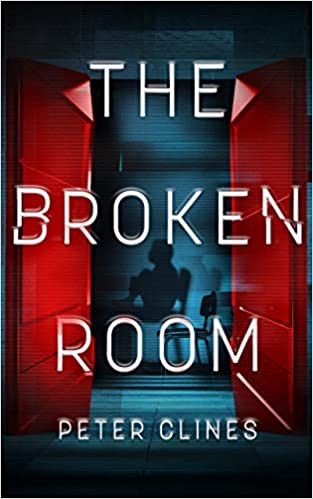
Funny, semi-relevant thing– after The Broken Room came out, I got a happy-but-puzzled email from a friend back east. She loved the book, loved the characters, but one thing she couldn’t figure out… If Hector knew how to do all these things—his skill with weapons, cars, people, tactical situations—well, didn’t that mean I knew how to do all of this? So where and/ or how had I learned all that?
As they say… let’s put a pin in this for a moment.
So, getting back to Alex’s question, the big thing here is we’re talking about characters. I’ve mentioned once or thrice before that it’s a big step for all of us when we start writing characters that don’t sound… well, just like us. We all do it when we’re starting out (yeah, all of us) because the easiest head to get inside is the one we’re already inside. So we write a lot of characters who have similar thoughts, similar views, and/ or similar experiences to us. I mean, everyone always say write what you know, yes?
It’s a big thing when we decide to start stretching out of that comfort zone, and it’s not unusual for it to bring things to a halt at first. Suddenly feeling around in someone else’s head can be… weird. A little invasive? Personally, I remember second-guessing myself a lot about writing characters who weren’t just, y‘know, me with a fresh coat of paint. Especially if these people happened to have different skin tones. Or genders. Was I just completely out of line trying to write the POV of a Black woman?
Here’s two things I did for these characters who weren’t me.
First, I did research. Lots and lots of research. Over the years I’ve researched scientists, soldiers, ballerinas, doctors, and government agents. I’ve researched high IQ people, people with missing limbs, people who run ultramarathons, and more.
A few key things…
One is that I tried whenever I could to actually talk with these folks. In person, on the phone, on video chats. Because I didn’t just want to know things, I wanted to hear how they talked about these things. People tend to respond a bit differently when they’re talking than they do when they’re writing out answers to emailed questions. You’ll also notice that professionals in most fields tend to talk casually about the things in that field.
Another is that I always tried to have follow up questions. How long did it take you to learn that? You always do this, but what would happen if you didn’t? One of my favorite questions is “but what’s the real way this happens,” because for a lot of things there’s the official way we’re all taught or trained, and then there’s how it actually gets done on the job site or out in the field. There’s the way they teach film making at film school, and there’s the way film making happens on set—they’re not the same thing. Heck, remember that part time job you had in high school or college with the silly training videos they made you watch? How to stock shelves. How to talk with customers at the register. Did anyone ever follow those to the letter?
And the last thing in this little subset… listen. Actually listen to people. Not just the things we want to hear, the specific facts we’re looking for, listen to all of it. Like I mentioned above, the way they talk. The tone of their voice. The points they’re sure to make and ones they sort of talk around.
This leads nicely into the second thing, which is empathy. I’ve talked about empathy here once or thrice before. Really simply, it’s the ability to put yourself in someone else’s head. To figure out why someone like that would do something like that. I really, truly believe this is one of the most important skill we develop as writers, and I think it’s really hard for anyone to have any sort of wide appeal if they don’t develop. I’ll always be able to find an audience of people who think just like me, but I’ll find a much bigger one if I can find people who think in different ways about different things.
The catch is, empathy isn’t something we can really teach. We each just need to sit down and figure it out. And that can be rough because sometimes, for whatever reason, we don’t want to put ourselves in that other point of view and take an honest look through those eyes. Maybe because it’s uncomfortable. Maybe it’s because it’ll make us see something uncomfortable in ourselves.
If I’ve got a character who’s radically different than me, I’ll spend a lot of time just thinking about them. What would they think of X? How would they justify Y? Would they ever Z? A lot of the time, these situations will have nothing to do with my plot– I don’t want to possibly get lazy and just give them a reaction that would be really good for the book. I mean, I want it to be good for the book, yeah, but I also want it to feel true to them, the actual character. If they’re just going to be a plot zombie I’m kind of wasting my time. On a few levels.
Let me give you a few quick examples, using the examples Alex asked me about.

When I was figuring out Mike from The Fold, I knew from the start I wanted him to be someone with a high IQ, but his defining thing became his memory. By all accounts, actual, comic-book level photographic memory doesn’t exist. Or at least, nobody’s been able to prove it exists. But I started wondering about what it would be like for someone if it did.
The big moment was at one point I was playing with the idea of ants as a sort of self-built mental structure. One group of ants carries thoughts, the other carries memories. But then, as I played with this, I had the thunderbolt realization that if Mike every toyed with this idea, he’d never be able to get it out of his head. And that’s when I realized true photographic memory would almost be a curse. It wasn’t about being able to remember everything– it was about never being able to forget anything. Never having anything slip your mind, nothing dulling with the passage of time.
Needless to say, this gave me a huge insight into how Mike would view and interact with the world. It also meant that, as the author, I wouldn’t be able to use a lot of common narrative devices like “it looked familiar” or “he couldn’t place it” or those sorts of things. Essentially, if Mike had ever been exposed to a visual, a concept, a sound, anything—it was right there, in perfect clarity. So this shaped his point of view even more.
As for Hector in The Broken Room… I knew from the very start that Hector was going to be a former secret agent who was living below the radar. Heck, he’s living below the radar in what he views as a hostile country. So he’s always watching everything and trying to stay one step ahead of everyone around him—knowing how they’ll react and how he can take advantage of that.
So really, this is just empathy dialed up to eleven. In order for Hector to believably manipulate this hotel clerk, I need to have the clerk act and react to things in a way that makes sense and will be believable for readers. But I also need to have Hector believably predict that. The less “baseline” their reaction is, the less likely it is my readers would accept him predicting it. Make sense?
Plus… okay, here’s the trick that gets completely overlooked when it’s done well. I’m the one writing this. I can tailor her reactions to his plans and make sure it all works out for maximum effect. So by being able to put myself in both characters’ heads, I can make these scenes even stronger and make Hector seem even more competent. Enough so that I had people who worked the desk in hotels writing to me to say “that absolutely would’ve worked on me” and a friend who’s known me for over thirty years wondering “but how do you know how to do this…?”
That’s it. That’s the whole secret to getting into the heads characters who are really different from me, the writer. Research. Empathy. Mostly empathy.
Next time…
Crap, it’s been a while. I should probably mention that God’s Junk Drawer is out in paperback in just a little less than three weeks. You could preorder a copy now. If you get the newsletter, you know there’s a way you could preorder a signed copy. Ho ho ho.
Next time, nothing’s happened in a while, so I’m going to talk about action. Unless one of you has some pressing topic you’d like me to address? I promise, I’ll get to it much quicker than I got to Alex’s.
Sorry Alex.
Until then… go write.