
December 20, 2021

Going With It

Holy crap how is this year almost over? Why is time moving so fast? What did all of you do? Who touched the red button?!?!

So, not to keep mining the past, but I wanted to talk about one more thing that came up at the SDCC Writers Coffeehouse. During the Q & A someone asked what I generally think of as an “impossible” question—although just looking at that written out I really should find a better term. See, it’s not so much that these questions are impossible to answer, it’s that there’s really only one person who can give a definitive answer. And it’s usually the person asking the question.
Y’see, there are questions that are very specific to my story, and the “correct” answer for me probably isn’t going to be the same correct answer for you. Things like, how many characters should I have in an ensemble? What’s the correct point of view to use? How much sex is too much? How much detail do I really need? See what I mean? There’s no real way to answer that unless I know the whole story, how it’s written, the context things are happening in…

Somebody at the Coffeehouse asked (paraphrasing from memory here) “how many made up words can you have in your first couple pages before an editor stops reading?” And my immediate answer was, well, I couldn’t really answer that. Again, the right answer for me won’t be the right answer for you, and said answer’s going to change from book to book.

But about a week later it struck me there is a way that we, as writers, can at least get a sense of if something’s disruptive or not. And that’s by being aware of the flow of our work. So let’s talk about that a little bit.

I think we’re all aware of flow on one level or another. I first heard the term from a writing coach named Drusilla Campbell, but I knew what she was talking about as she explained it. Paraphrasing a bit more, she described it as why some books you can’t put down and other books make you think about how  the laundry needs folding.

I’d say flow is equal parts pacing, tone, and empathy. It’s about me understanding what’s going to jar my reader, either by nature of structure or material or vocabulary. What’s going to make them pause to remember these are just words on a page and not actual events. It’s about me stepping out of the way and not trying to be seen as the author. Letting people read my story rather than analyzing it. Really simply put, flow is what keeps people in my story instead of, well, knocking them out of it.

And that brings us to using words we’ve made up. Could be a simple portmanteau or clever bit of wordplay. Maybe terms from a technology we made up. Or a secret dark order. Maybe even a whole language. But I have to be careful, because  there’s a good chance I could kawonk someone right out of the story if I’m using a lot of words I’ve made up.

You all see what I did there, right? Or maybe you didn’t. Kawonkis a nonsense pile of letters I threw together, but in context you kind of understood what I was saying with it almost immediately. Some of you may not even have really registered it as a made up word and just read it as a funny onomatopoeic sound effect or something.

But something can only work in context when I understand the context. So the more words I swap out with made up ones, the less chance there is of my readers understanding what I’m trying to say. Like if I told you we needed to kawonk this dreeenil ptoob before we niknik ptar the cheegles. I mean, if we hit a sentence like that we’re going to instinctively stop and start parsing the structure to figure out what this whoa I just broke the flow, didn’t I?

And even if there is plenty of context, it can get annoying to read something where I’ve decided to substitute existing words with made up ones for no real reason. Say, for example, people in my fantasy world all duel with scheevs. Some are cheap and crudely made, some are works of art, but most people have one. You see, a scheev is a narrow, double-edged blade about 24 to 30 inches long (originally iron or bronze, but mostly steel now), with a strong grip, some sort of protective guard or crosspiece between the blade and the grip, and often a small counterweight at the base that also locks the blade in place. And if you’re thinking, wait, did I just spend a whole paragraph describing a sword you are correct.

Except here they’re called scheevs. For… reasons.

And again, imagine how frustrating that paragraph would be if instead of bronze and steel it talked about droker and ogyed, flokks instead of inches, and an oppomass instead of a counterweight. Hopefully I didn’t make up my own numerical system, Think about pausing to dig through all of that and try to glean a meaning out of it and realizing we’re just talking about goddamn swords.

I don’t know about you, but that’d bring things to dead halt for me as I groan and rub my eyes.

‘Cause here’s the thing we always to remember. Weird as it may sound, the words I use don’t really matter. I mean, of course they’re important and they’ll bring nuance to the story. But that’s my point—the story is what matters. The charactersmatter. The plot matters. The actual words are just a delivery device. They’re the corn chip getting all that delicious salsa and guacamole into or mouths. And if I’m focusing a lot of my time and energy on coming up with a new way to say corn chip, that’s a good sign something’s probably going wrong in my writing.

I’m not saying don’t make up words. I mean, I put squale out there into the world. But there should be a reason for them being in my story, and the reason should be better than “I wanted to make things sound different.” Ultimately, they should be adding to my story, not distracting from it. Definitely not knocking me out of it to diagram sentences, glean meaning, or just grind my teeth in frustration.

Next time…

Okay, this was super late, so next time will be in three days. And I’ll probably be talking about the holidays.

Until then, go write.

Let’s be honest, we’re not going to get a lot more in before 2022, so try to make it count.
December 9, 2021 / 3 Comments

Two Rights Don’t Make…

Jeeez, it’s been so long. You’ve both been very patient.

I got a question a few weeks back about using the world of my books in a game setting. Not, like, a question from Blizzard or Bethesda or something. Just someone running a tabletop campaign who (very graciously) asked my permission to use a bunch of these elements I’ve created in the game they were playing.

And this put me in such an odd spot I didn’t respond to it for a while. The more I thought about the answer, the bigger and more sprawling (and apologetic) it became. And then there was a semi-related question that came up while I was blathering away at the Writer’s Coffeehouse for SDCC, which reminded me I’d never answered it here.

So… let’s talk about rights a little bit. This is one of those terms that doesn’t get discussed a lot. Well, not in the correct way, I think. I’ve seen a couple people get screwed over because they didn’t realize what they were giving up and/or who they were giving it up to.

Also, to be clear, I’m just going to talk about what rights are. If any of you want to talk about how much rights cost or how long they should be held, that’s a different conversation, and not quite relevant to all this. For now, just defining rights and a little bit on how they move around

The easiest way to think of rights is that they’re legal permissions. I’ve created something (for our purposes, a long story of characters and events) and I can give, sell, or rent out (so to speak) all the assorted rights to this story. You’ve probably heard of some like First North American Publishing Rights. This means the person who has those rights is (surprise) the person who gets to legally publish the story for the first time in North America. My agent likes to talk about foreign-language rights a lot—German rights, Spanish rights, Thai rights. That means who gets to tell my story in those languages. And we all love to talk about movie rights, television rights, and action figure rights.

You might’ve chuckled at that last bit, but it’s worth mentioning. The number of rights is pretty much infinite, because there’s a near-infinite number of things that can be done with my story. It can be turned into a hardcover book or a Portuguese eBook. It can be a French stage play or a Russian movie or an episodic Korean podcast with a dozen voice actors. It can be adapted into a comic book or a video game or a line of collectible stickers. It’s sort of like, well, Rule 34. If I can imagine a right, that right exists. Because I own ALL the rights to my work, no matter how bizarre or absurd they are. I still hold all the collectible blind bag phone charm rights to the Ex-Heroes series and you’d better believe nobody’s getting those cheap.

Also, remember when I mentioned renting some of my rights up above? That’s what an option is. If someone can’t afford to buy the rights (or maybe doesn’t want to commit that much at the moment), they may option them. It means they get to act like they own the rights, but there are certain limitations and a very strict time limit.

This is one of the reasons contracts tend to be long. We want to be very specific about what rights the writer’s giving up and what the other party’s getting (and for how long). F’r example, let’s say I’m making a deal with a company for the audiobook rights to a book. If I just say they get all audio rights, there’s a strong argument that I’ve also just included podcasts and live audio streams and maybe even recordings of performances. Yeah, if someone finally decided to make that stage musical of The Eerie Adventures of the Lycanthrope Robinson Crusoe, a good lawyer could argue that those folks couldn’t release an album because this other company has all the audio rights.

So rights get divided up and different groups get permission to do different things with my story. For example (again), right now there’s at least eight entities (probably closer to a dozen, but eight off the top of my head) who all legally have different rights to my book 14. Some have them for a few more months, some have them for years, one has them for more than a decade. And it takes my agent a bit of work to make sure there are no overlaps, or that things are very specific when there are.

Make sense so far?

This brings us back around to that original tabletop game question. Which was, if you remember, about getting permissions. Sound familiar? So this moves us into tricksy legal grounds. Because this is a discussion about gaming rights and also (looking at the original question) streaming rights. And there’s a good chance (in this specific case, a really solid chance) these rights are already tied up. Someone else has them, which means I legally cannot say “yeah, sure, go for it,” because I’m not the person who can give those permissions anymore.

And I know some of you might say “No, no, Pete, this is just a casual game between friends. We don’t need to be this serious about it.” Which I absolutely get. Seriously, I do. Believe me, I used to work stuff from books into my games all the time. But this is one of the weird downsides of our modern world. It’s fairly easy to reach me (or any other creative person you admire), but it puts us in the weird position of having to respond in writing. And we all know what it means when something’s in writing.

Which is why some writers often don’t answer or give a very definitive no when someone asks about things like this. It puts us in a potentially bad position. There’s a lot of deals and contracts out there, lots of rights changing hands, and me (or someone else) putting something in writing that contradicts any of that long contract could be a real headache for me. Or for you. Or maybe for that new deal my agent’s been trying to put together that was going to cover my mortgage this spring. Somebody stumbles across that Twitch channel or YouTube video and suddenly, hey, why are these people saying they’ve got permission to do this? I thought these rights were available?

Which is why a lot of folks—including me—tend to be a bit cold when people message us about this stuff. Because there’s business stuff going on that we might not be able to talk about, but we legally need to respect.

And two quick notes—first, don’t take this to mean you can do whatever you want with someone else’s material as long as you don’t ask. Not what I’m saying here and you know it, so don’t try to use that as justification—to someone else or to yourself.

Second—the simple truth is almost every writer I know loves to hear they inspired people this way. That people want to play in their worlds, literally or figuratively. They’d want you to have that fun. Just because you can’t say anything in writing doesn’t mean you can’t tell them in person (as we creep closer to having public events again).

And that’s some quick facts and thoughts about rights.

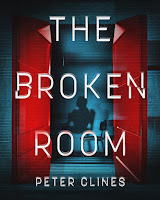
Oh, shameless plus in case you missed it. Yesterday we had a cover reveal for my new book, The Broken Room. Out everywhere in just a little over two months, and I’d really appreciate it if you stopped by your friendly local bookstore and pre-ordered a copy. They’d appreciate it too.

Next time… well, there was another question I got at the Coffeehouse that I’d like to answer a little better than I did there.

Until then, go write.

Seriously, the holidays are coming up and you know you’re probably not getting any writing done then. So write now.

November 29, 2021 / 5 Comments

Cyber Monday IX: The Consumering

I’m not that big on Cyber Monday anymore because it really tends to just direct a lot of traffic toward Amazon. But it’s that time of year where people have too much eggnog and all the skeletons come out of the closet. Uncle Jack hates to admit it, but artists only get to make art because they get paid.  Artists get paid when people buy their art.

So I’m going to ask you to buy some books. And for two or three of them, I may have to direct you to Amazon. For everything else, you should just be going to your local bookstore and asking for a copy. They’re very cool, they could use the business, and this way you’re not one of those conformists sheeple falling for that Cyber Monday capitalist nonsense. You’ll get to brag about that until Valentine’s Day, easy.

So here’s a list of my books and a few short story collections. Please put them on your wish list or get them as gifts for friends and family members.

First up, you could pre-order The Broken Roomat your favorite local bookstore, in hardcover or paperback. It comes out in early March, so really this is a gift for yourself. And kind of for me, because those preorders really impress publishers and help out a lot. I think we’re going to be having a cover reveal any day now…

Terminus is part of the Threshold universe of stories. It’s about a bunch of people who end up at a strange, uncharted island in the middle of the Indian Ocean. Chase is running away from things, Anne is running towards them, and Murdoch is slowly coming to realize he probably shouldn’t’ve stopped running. They all start to explore said strange island, their paths begin to cross, and the end of the world begins to unfold around them. It’s currently available in ebook and audiobook (read by the always-fantastic Ray Porter). No paper, I’m afraid, but I may have news about this next year…

Dead Moon is about a woman who runs away to the Moon and finds… well, zombies on the Moon. And some other things, too. It’s spooky and fun and I’m quite proud of it. It’s another one that’s in ebook and audio, but no paper (sorry)

Paradox Bound is my New York Times-bestselling story about infatuation, road trips, American history, a pretty cool train and some pretty creepy antagonists. F.Paul Wilson said it was like Doctor Who crossed with National Treasure, and if that doesn’t get you interested I don’t know what will. There’s an audiobook, ebook, paperbacks, and you might even find a hardcover here or there if you’re lucky. Call your local bookstoreand ask if they’ve got one.

Somebody once described The Fold as a horror-suspense novel disguised as a sci-fi-mystery, and I’ve always liked that. It’s available in pretty much every format you can imagine, and it’s also part of the unconnected “series” of Threshold books.

Several of you found your way here because of my odd little sci-fi-urban-horror-mystery novel–14. Alas, the paperback has lone since gone out of print, but there’s still an ebook and a phenomenal audiobook narrated by Ray Porter (the first project we did together). And there might be more versions in the year to come, but we’ll talk about those when we can… 

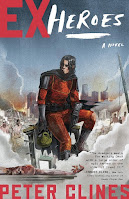
Another big bunch of you are here because of the Ex-Heroesseries. Superheroes fighting zombies in post-apocalyptic Los Angeles (and a few other places).  Ex-Heroes, Ex-Patriots, Ex-Communication, Ex-Purgatory, and Ex-Isle. All of these are available in a number of formats and a number of languages.

My mashup novel, The Eerie Adventures of the Lycanthrope Robinson Crusoe, is finally available as an audiobook. Bad news… it also only has audio and ebook versions at the moment. Sorry. Hoping to fix that soon, but I really think the audiobook might be a better format for this one.

I also have a short story collection called Dead Men Can’t Complain.  It’s got a bunch of stories I’ve had published over the years in various anthologies and journals, plus a few original ones.  It’s an Audible exclusive, and it’s read by Ray Porter and Ralph Lister.

You can pick up The Junkie Quatrain as either an ebook or an audiobook (still no paper, sorry). It’s my attempt at a “fast zombies” tale, a short series of interconnected stories I’ve described as Rashomon meets 28 Days Later. It also features a recurring character of mine, Quilt, who keeps showing up in different stories in one way or another… 

Thus ends my shameless Cyber Monday appeal to you.  Again, so very sorry we had to do this, but it really does make the marketing folks happy and they’ve always been really good to me. Also, please check out this year’s list of some of the great books I’ve read by other, much better authors.

And please don’t forget my Black Friday offer if you happen to be one of the folks who may need it.

We now resume your regular internet shopping. Browse responsibly. Clear your history on a regular basis. Especially you, Doug. No, sweet jebus, don’t click on that—that’s not really from PayPal.

And we’ll be back to regular writing stuff on Thursday.

November 27, 2021

Small Business Saturday

Hey there! As I have several times in the past, I thought I’d take a moment at the holidays to mention some of the books I’ve read and enjoyed this year by much more talented authors. If you’re still wondering about what to get that certain someone, you could go hit your local bookstore, browse around a bit, and maybe find a few things from this list they might enjoy.

Or maybe you’ll just find something on your own. That’s the fun of browsing in real-world bookstores.

So, in no real order…

Project Hail Mary by Andy Weir – we’ll start with an easy one. If you haven’t somehow heard, Andy’s latest is (surprise) just fantastic. The tale of an (accidentally) lone astronaut’s desperate attempt to save the Earth. It’s fun, it’s fast, it’s incredibly smart while being ridiculously accessible. Absolutely anyone will enjoy it. Yeah, even that grouchy uncle who doesn’ tlike sci-fi stuff.

The Invisible Life of Addie LaRue by V.E. Schwab—I’m a sucker for stories about memory and identity, and this book approaches it from the opposite side. What if it wasn’t your memory but everyone else’s. What if no one could ever remember you? What if they forgot you the moment they couldn’t see you? What kind of life would this be? And what if that life never, ever ended… ?

Bottle Demon by Stephen Blackmoore—every year Stephen writes a new book about necromancer Eric Carter and every year it ends up on this list. This most recent one is, hands down, his most amazing, and probably the most emotional, too, as Carter deals with an army of golems, an irate djinn, and the completely mysterious and unexpected resurrection of… well, himself.

King Bullet by Richard Kadrey—if you’re one of those people who waits for the end of a series to start reading, well, I guess this is a good day. Kadrey brings the Sandman Slim books to a close with one last Stark adventure and a truly magnificent ending that feels perfectly fitting while also being somehow completely unexpected.

Dread Nation by Justina Ireland—I’ve read a lot of zombie books out of a very broad genre, but this book manages to be fresh and very fun, picturing an alternate world where the American Civil War is disrupted by a mass zombie outbreak, and young women of color are trained to be bodyguards against the undead for “proper” women. I liked it so much I recommended this one for our Last Bookstore dystopian book club.

The History of What Comes Next by Sylvain Neuvel—a wonderful tale about aliens and their very long-game plan to shape the Earth’s assorted space programs to prepare us for… something. It’s one of those books that’ll teach you a lot of history even as it entertains you.

Madi by Duncan Jones, Alex deCampi, and too many fantastic artists to list here—this graphic novel is set in the same world as Jones’s films Moon and Mute, and asks what happens when a government super-cyborg decides to retire, especially when their body’s loaded up with proprietary software and hardware that requires ongoing maintenance and updates. It’s kind of like the weirdly fun baby that came out of a threeway between The Transporter, Crank, and The Bionic Woman.

Hard Reboot by Django Wexler—it’s a love story about a pair of women trying to rebuild a giant robot so it can compete on the giant robot pit-fighting circuit. Seriously, what more do you need to know?

Reclaimed by Madeleine Roux—remember what I said about memory and identity? Seriously, it’s like Madeleine wrote this book just for me. A group of people agree to be test subjects for a procedure that can erase traumatic experiences from your memory. But how much of who you are is defined by those experiences? What kind of person are you changed into once they’re gone? And how would you go about fixing that change…?

The Book of Accidents by Chuck Wendig—this is a beautiful, brutal book, and it’s almost tough to recommend because it hit a lot of nerves for me, personally, that are probably going to be raw forever. That said, it’s a wonderful book about choices and consequences and how they make us who we are.

All Systems Red by Martha Wells– people have been telling me about the Murderbot books for ages, so I’m really late to this party. You may already know this but if you somehow didn’t… wow, what a fun read. The story of a security android that figures out how to hack its own code, inadvertently becoming an independent being and now stuck guarding a group of scientists on a survey mission.

Ballad of Black Tom by Victor LaValle –another one I’m really late on but goddamn. This was one of the first books I read in 2021 and it’s still hands down the best. There just aren’t enough adjectives to describe how fantastic this book is and on how many levels. Lovecraftian horror grounded in real-world horror and it’s just brutally beautiful.

And those are my personal favorites for the year. I may add to this list over the next week or two, depending on how my current reads go. Please feel free to add any of your own must-reads down in the comments. I’d also shamelessly remind you that you can find a lot of my own books at your favorite local bookstore, like The Fold, Paradox Bound, or the Ex-Heroes books.

I’ll also take this moment to remind you of my Black Friday offer, just in case you missed it earlier. Please feel free to get in touch if you think it might help you out. And please—it’s not about if someone needs it more than you. It’s just about if you need some help.

Oh, and if you happen to be at SDCC Special Edition this weekend, I’m going to be hosting the Writer’s Coffeehouse on Sunday at 11:30, room 32AB. Ninety minutes of random tips and facts from me as I try to answer all your questions about publishing, writing, and anywhere those two might overlap.

Happy holidays. Probably back to all our usual stuff next week.

Categories