So, if you’re one of the hundred or two regular readers of this space, you may notice this past year’s been a little… sparse. Not quite the standard level of output for this blog. Normally by this point in the year I’d’ve made at least a dozen posts, and I think this one makes seven so far for 2022.
It’s not for lack of topics. I’ve got two or three on deck, plus a nice question about foreign languages someone asked in the comments a while back (thanks, Oliver!). And I’m sure I’d end up with one or two more by the time all those are done. Saturday geekery usually spawns a good one every other week or so.
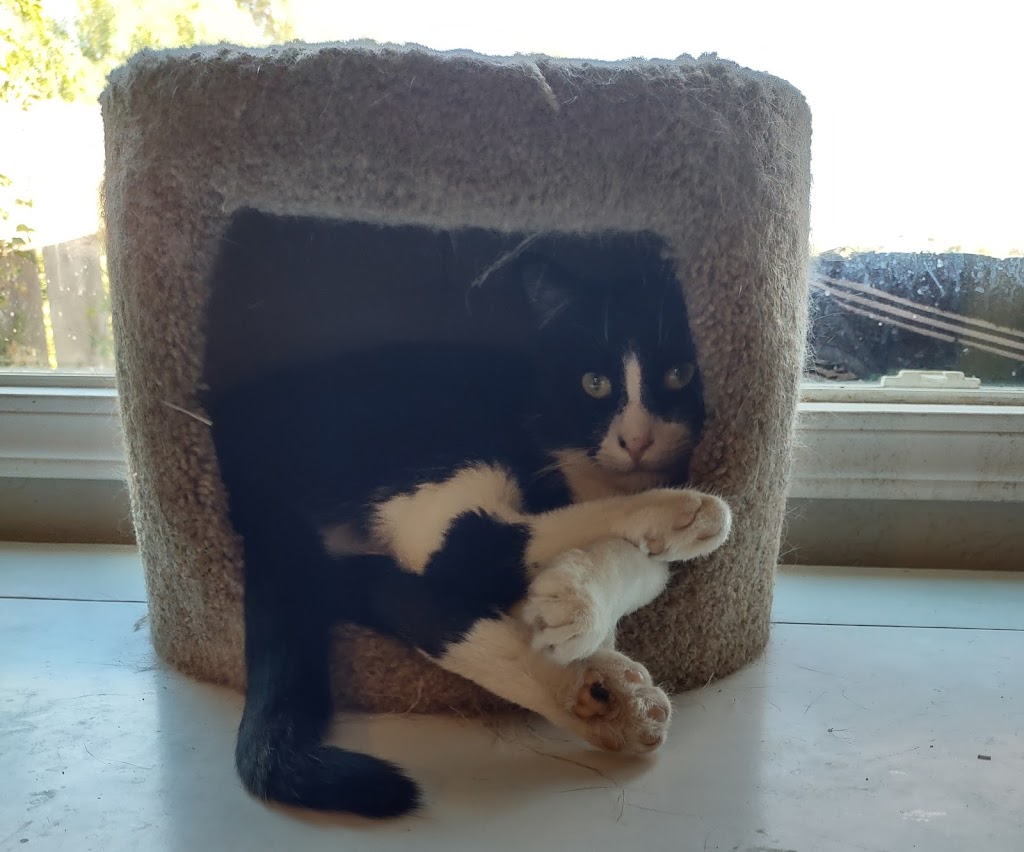
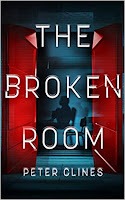
Truth be told… I’ve just been fried. Since 2022 started I’ve traveled for the first time in two years. I’ve been reading books for blurbs. I’ve been trying to work on my new novel and also the novel after that and a pair of short stories for different anthologies. There were a few vet visits (cats are all fine, no worries) and a new kitten who can be VERY loud sometimes (often in the middle of the night). Taxes are coming up and I still have a ton of work to do to get those even semi-organized. And of course, I had a new book come out—The Broken Room—which is a whole big thing in itself. Many thanks to those of you who may have read it and left a kind review someplace.
And, yeah, I know a lot of this is just what a pro writer’s supposed to be doing. Juggling stuff and scheduling time and making it all work. I’ve been doing it for many years now. But these past few months—since the holidays, really—I’ve just been friggin’ burnt. And like a lot of folks who hit this state, I’ve been letting one or two things slide. Not intentionally. It just sort of… happened. And this blog was one of the easiest things for it to happen with because…
Well, let’s be honest. This has never been a major stop for the general writing community. I really, truly appreciate all of you who’ve found your way here over the years, but I also see the numbers and I know this has never been a super popular spot. I’ve had plenty of off-the-cuff tweets that get far more visibility and interaction than posts I’ve spent multiple days working on. I enjoy doing this, but if something was going to slide it was bound to be the thing that feels like it’s got the lowest work/return ratio.
So I’m going to try to take a little time, maybe the next two or three weeks, and just try to get myself back to a place where I can get all those balls back up in the air and keep them there. I know I can do it. I want to do it. But one thing most people don’t realize about juggling is that it’s a serious arm workout. And you can only do any workout for so long before you either collapse or start getting kind of distorted.
And, hey, speaking of all this…
This weekend I’m going to be at WonderCon in Anaheim. I’m hosting the Writer’s Coffeehouse on Sunday (11-1:00) where I’ll be talking about publishing, answering questions, and trying hard to be educational and entertaining. If you happen to be there, please stop by and say hi.
Next time… we will talk about languages. I promise. And I’ll make sue you all know when it’s up.
This week’s random topic is something that’s been gnawing at me for a while. I’ve been batting it around, trying to come up with a good way to explain it, and I think the catch is there really isn’t a good way to do it. This is one of those slightly-more-advanced writing things I either understand or I don’t. If I do… I probably already know to avoid it.
Anyway let’s see if I can stumble through some analogies and examples and hopefully make this a little clearer.
You’ve probably heard the term framing once or twice. It has to do with how I choose to present things in a story. If my character is talking about something, how they’re saying it is part of the framing. So is how people react to it—in both out loud and unspoken ways. How I choose to describe it in the text says a lot about it, too. Framing can involve a lot of subtext, and a lot of not-so-sub text.
(also, just to be clear, we’re not taking about frame stories which are something else altogether that I’ve meant to ramble on about for a while now)
So let’s jump storytelling forms for a moment and I’ll give our first example.
In moviemaking (and photography) people talk about framing a shot. This is a very similar idea. If I’ve got Phoebe on camera, it’s how I’m choosing to set up this shot. How are going to set the edges of the shot? What’s in the background or foreground? How close are we to her? What angle are we seeing her from? Is the camera static or moving? And if it’s moving, how is it moving?
How I frame the shot affects how we, the audience, perceive this shot. It’s an added layer of meaning. A sort of visual subtext, if you will.
Here’s an example I’ve given you a few times before. Let’s say our scene is the young lovers dashing up to the bedroom. One pushes the other down on the bed and then does a sexy, laughing striptease for them. Easy to picture, yes?
However… we’re going to frame this with a handheld camera, looking though the crack between the closet doors. As the shirt gets tossed and those pants are wiggled out of, the camera can tilt one way or another, so the audience can see as much as possible. Where things land, what state of undress people are in. But, y’know… all through that narrow crack.
And this has suddenly become different scene, hasn’t it? Not so fun and sexy anymore. Now we’re just waiting to see who—or what—comes bursting out of that closet. because there’s definitely something in that closet, right? They wouldn’t be framing the shot this way if there wasn’t somebody in there watching all this happen.
That’s kind of the key point I’m awkwardly getting at here. Things can get weird in movies when there’s a big disconnect between what’s going on in the scene and what the subtext tells us is going on in the scene. One of them will usually override the other, and since movies are a visual format, the camerawork—the framing—can override any spoken text pretty easily.
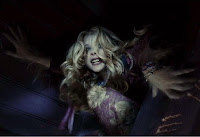
Now, a lot of time this is deliberate. That scene I just described above (and a few hundred just like it) is a pretty standard horror movie shot, especially for slasher movies. The unknown killer watches from the closet. Or maybe just that pervy voyeur they’ll yell at when he stumbles out of the closet (and then they’ll throw him out of the room and he’ll be the one who gets killed). Point is, the storytellers (in this case, the filmmakers) are deliberately subverting what should be a sexy scene by framing it in a way that make it very creepy.
Thing is… it isn’t always that way. If you’ve ever followed along with Saturday geekery on Twitter, you know one of my common complaints is when inexperienced filmmakers try to copy a shot from another movie without really understanding why it worked in that movie. I’ve seen folks do the “peeking out of the closet” shot or the “looking through the window from outside” shot and they did it because, well, that’s how you film sexy scenes in horror movies, right? Wasn’t it super hot when she was swaying at the end of the bed and pulling open her…wait, what? You thought it was ominous? Why? Now suddenly the film is stumbling because the sexy scene is creepy as hell but it was supposed to just be… well, sexy.
And the audience will sense this screw-up. Even if we don’t always know the syntax or conjugation, so to speak, we know enough filmic language to realize something wasn’t landing right there. We’ll figure out eventually from context (y’know, when something doesn’t come out of the closet), but that stumble is going to break the flow and throw us out of the movie as we try to figure out what’s actually going on. Was this a creepy scene or a sexy scene or what? How were we supposed to feel about it?
And we can frame things in our writing, too. We can layer in that subtext through our characters and their reactions, our story structure, even just with with our vocabulary choices. We can make insults sound like compliments, word something innocent so it could be flirty, make it really clear how weak that guy making the loud, angry speech is.
But…
If we’re not careful when we do this, we can end up with that same stumble I was just talking about inexperienced filmmakers causing. If Yakko just insulted Phoebe but my word choice makes it sounds a little too much like a compliment, even though we know Yakko wouldn’t compliment her… well, wait, what’s going on? Or if everything structure-wise says this is when I learn if Phoebe is the super-werewolf or not and instead it’s revealed that we first went to the Moon in 1969… I mean, that’s not remotely the answer we were looking for. It’s not even really an answer. It’s just a random fact. Is it even relevant to this story? And why is it in italics? Why are we emphasizing it? Did somebody think the Moon landing was in some other year?
I know this is one of those things that sounds kind of silly and self-apparent, but I’m surprised now often I’ll come across it. A writer pretty clearly trying to do X, but they’ve set everything up as Y. Unusual framing. Odd vocabulary. Weird emphasis. Things that feel like they’re meant for a different version of this scene. And like with the films, I think these writers are trying to copy something they saw work, but haven’t quite worked out why it worked.
And that’s why this is a tough thing to explain. It’s hard for me to say “make sure you’re using the right subtext for your scene” when I don’t know the scene or the subtext you’re currently using or the effect you’re trying to create with it. It’s going to be different for every writer, every project, every scene.
Okay, I know this hasn’t been super-helpful, so let me toss out a few last suggestions that should make it easier to avoid this issue.
1) Know what words mean—This should be a serious basic for any writer. A bad habit most of us start with is running across words we don’t know and kinda getting their meaning from context, and then using them as we kinda think they’re intended. Which, no surprise, can cause real confusion for people who actually know what the word means. And that’s not even taking into account that I might spell it wrong and spellcheck swaps in some other word altogether. Which I also don’t know.
2) Know how this is supposed to make my readers feel– is this a sexy page or a scary page? Funny or creepy? Should my readers be tense or fascinated? If I don’t know how this bit’s supposed to make them feel, how can I get any sort of emotion across on the page? Bonus—knowing this should also help me figure out if any moments are particularly jarring. Not in the way I might want.
3) Work on my Empathy– I’ve said it before and it’s still true. I need to understand how other people are going to react to things. If I don’t have a good, honest sense of how this character’s going to be received, how that line of dialogue’s going to go over, how my readers will react to this beat or that reveal… well, it’s going to be tough to tell a story. I need to be able to put myself in other people’s shoes so I can take a look at my work and say “Wow… if I do it like this, the readers are totally going to think someone’s in the closet watching Chris and Pat.”
Anyway… this was a little rambly, but hopefully you got something out of it.
Next time… look, I’ll be honest. I’m not sure there’s going to be a post next week because I’ve got a four or five hour drive on Friday and then a talk about worldbuilding. Plus—if you hadn’t heard– I had a new book come out last week and I’ve been a bit overwhelmed. Which means now I’m playing a bit of catch-up. But I’ll try to get something out, if time allows.
I wanted to jump back to something I mentioned a few weeks ago. Creating my own words for stories. Yes, all words are made-up– don’t be the clopos in the room, okay? I recently got a new laptop and as I was bringing everything over I stumbled across a very old blog post about using made-up words. It had a few nice rules of thumb for separating good uses from bad uses, and I thought it might be worth revisiting them.
So let’s dive right in.
First off, let’s talk about names. Proper names for people, places or things. This may sound kind of simple, but I’ve seen it go wrong enough that I think it’s a good place to start off.
When we’re worldbuilding an alien or fantasy world, or sometimes one in the distant past or future, there’s an urge to hand out a lot of different names. For characters, towns, deities, what have you. On the surface, there’s nothing really wrong with this, but I should think a bit about how I’m going to introduce these names. Especially if I’m going to do it in dialogue or a first person POV.
Let me give you a few quick, example sentences.
“Tim, it’s good to see you.” “We’re going to try for another child, if Phoebe’s willing.” “Sarah, what are you doing here?”
Pretty straight-forward, yes? No confusion about what any of these sentences mean. Heck, the second one even slips in some personal information about the speaker. But watch what happens when I switch the names like this?
“Jesus, it’s good to see you” “We’re going to try for another child, if God’s willing.” “Christ, what are you doing here?”
See? Now these these sentences are conveying different information. They’ve shifted to expletives and figures of speech. But we only know that because we recognize this second set of names. Because watch what happens when we don’t have reference for any of these names…
“Tokar, what are you doing here?” “We’re going to try for another child, if Ostriax is willing.” “Grothnixian, it’s good to see you.”
Soooooo…. now what are these sentences saying? We can’t really parse them without a frame of reference for those names. Is Ostariax the speaker’s wife, husband, or chosen deity? Heck, Tokar and Grothnixian might not even be names at all. Maybe they’re swears I made up and they’re just capitalized because they start the sentence. I mean, it’s clear to me, the writer, so I guess if you don’t understand it in context the problem’s just you…
The problem here is that when a reader stumbles across this, their brain’s going to make a decision and stick with it. It’s going to say Grothnaxian is a proper name, Ostariax is a god, and Tokar is one of those words you might use with your close friends, but not in polite company. You definitely wouldn’t use it on the internet where it might come back to haunt you years from now.
And when, fifteen or twenty pages later, my reader realizes Ostariax is actually someone’s sister… It’s going to break the flow. Like, shatter it. My reader’s going to stop and re-read those last ten pages to see how many things they misunderstood, or if some things make more sense now. And they’re going to double check Tokar to make sure they aren’t misunderstanding that name, too. Heck, odds are pretty good they’re going to be cautious moving forward, because I’ve shown I can’t really be trusted to be clear about this. All the names are suspect now.
As I said above, I need to be very careful about how I first introduce these.
Also, as a quick aside, something to consider for distant past/future names. Truth is, they’re probably not going to be that different. I mean, how many Biblical names are still in common use today? Matthew, John, Mary, Joseph, Luke, Thomas (and let’s not forget Peter). Odds are you even run into some of the Old Testament ones on a regular basis—David, Abigail, Joshua, Leah– heck, Adam and Eve. Regardless of your religious beliefs, it’s clear these names have been around historically for thousands of years. It’s not hard to believe a lot of our present names will go that far into the future. I mean, does anyone even think twice about it when names from today show up in the hundreds-of-years-from-now world of Star Trek? Christopher, Michael, James, Will, Beverly, Ben, Miles, Katherine, Tom, Harry…
You get my point. Do I really need to create “ancient” or “futuristic” names? Probably not.
As for making up words for regular things—calling eyeglasses optykwear or motorcycles bipulsors or a breastplate torsarmor—maybe I should stop for a moment and consider why I’m renaming them. Am I doing it because it actually matters to the story or plot somehow? Or is this a cheap, quick attempt at worldbuilding? Just hitting something with a coat of literary paint to try to make it look shiny and new?
Here’s one of those easy rules-of-thumb I mentioned up top. Try to sum up your whole story in about two pages. You don’t actually need to write it all out, but try to at least have the whole thing organized in your head so you could jot it down or explain all of it to me in under five minutes. This is the long-ish elevator pitch.
Got it?
Okay, if at any point find myself simplifying some of my terms for this summary—just talking about my character’s glasses or her motorcycle or the breastplate that saves her life—then this is the term I should probably be using in my story. Why force the reader to remember an awkward name for something common? Let’s just call a sword a sword and be done with it. We’ve got better things for our readers to spend their time on, right?
Y’see, Timmy, I don’t want to overcomplicate my story with details that are just going to slow it down and drive readers away. If I don’t need to make up a name or a term… then why would I? It’s better just to keep it simple and let them enjoy the read without me getting in the way.
Speaking of getting in the way, this is the point where I awkwardly insert a reminder that my latest book just came out this week. The Broken Room is an action/thriller/sci-fi/horror story with a lot of heart. No, really. One blurb called it “a cosmic horror John Wick” which I was kind of fond of. You can pick it up at your friendly local bookstore, and probably in any format you could want. Fair warning—it does sound like there may have been some supply chain issues this week, so try to be patient with folk if they can’t put something in your hands right this second.
On which note, I did a signing with Mysterious Galaxy last night and scribbled in their extra copies. You could give them a call and they could ship you one. And this Saturday, for you LA-area folks, I’m going to be at Dark Delicacies in Burbank, scribbling in even more books. If you’d like one personalized, please swing by. Or give them a call ahead of time.
And speaking of time… next time, I’d like to talk about framing things.
I know, I know. I’ve been really bad about this lately. As some of you may be aware, it’s been a wild month for me. New book comes out next week, so I’ve been doing tons of promo stuff, some interviews, scheduling other promo stuff and interviews, and also—when I can—trying to work on my new book. The one everyone’s going to be asking about week after next.
Oh, and I also spent some time going up on the roof (twice!) trying to fix a tarp. That ate up a fair amount of time.
Also, random fun fact– this is post #750 here on the ranty writing blog. Yay to all of us for sticking with it this long. Hopefully you’ve gotten something out of all these random rants and musings.
Also-also… holy crap this has been a stressful week. We’ve been dealing with some horrible stuff here in the states and as of last night a large chunk of Eastern Europe kind of spiraled into.. well, hell. So I completely get it if you’re not up to this right now. It might help get your mind off things, but it also might feel kind of frivolous, both me writing this and you reading it, and stress you out even more. I know why I’m here, but seriously– if you need a minute to not look at a screen, to just close your eyes and listen to music or something… go for it. Take ten, take a few deep breath, put your favorite song on repeat. Take care of yourself, okay? You can’t do anything if you’re a wreck, so do what you need to keep yourself together.
Anyway…
I wanted to talk to you real quick about that unknown thing. You know the one I’m talking about. Yeah, that.
So, hey, I was watching a Saturday geekery movie a few weekends back, and the actors, director, and even the writer didn’t know what the monsters were. From a production point of view, anyway. Y’see, it was pretty clear the movie was done very cheap and on the fly, without much of a script. It’s my educated guess that they just shot the movie and figured “well, when we’re in post we’ll see what the special effects house has for cheap models and CGI in some kind of monster then.”
The problem, of course was… well, they’re filming now. And the actors need to look at that spot on the driveway and pretend there’s something there. But they can’t say anything definitive because nobody knows what it’s going to be. Maybe dinosaurs. Maybe giant insects. Maybe dragons. Who knows. Again, we’ll figure it out later, right? For now, just… be vague. Act confused.
Which they did. A lot. And it got thin really fast. Because while it was unknown to them, filming the movie, the monsters were very clear and visible to us watching the finished movie. So nobody’s reactions made any sense, because nobody knew what they were reacting to. What it was doing, how big it was, nothing. People were looking past monsters, above monsters, at one point kind of uncomfortably at a monster’s crotch.
Plus, nobody’s dialogue made any sense because it was all about “those things” rather than what those things were. I mean… that’s a dinosaur. No question. Even if it’s secretly a giant robot or an alien, it looks exactly like a dinosaur and it’s kind of silly for nobody to say that. If anything, it makes the characters look really stupid.
Perhaps even more jarring, nobody ever talked about whythese things were there. I mean, if you and I went outside and almost got killed by a dinosaur/giant spider/dragon and ran back inside (slamming the door behind us), it makes sense we’d be yelling “WTF was that?!?!” But after things calmed down a bit and we had time to talk… wouldn’t we wonder how there’s a dinosaur in the driveway? Maybe question where these giant spiders came from? That’d seem kind of natural, right?
But the characters couldn’t have these conversations because nobody actually knew what was in the driveway. A bat-winged demon with a spiked tail and a killbot with missile pods on its shoulders would spark two very different discussions. But we don’t know what it’s going to be, sooooooo… the characters need to talk about something else. And not the giant monsters outside. Maybe about how she hates her job. Or why they wish they hadn’t argued with their girlfriend this morning. Maybe a little monologue about faith or humanity’s basic nature.
Anyway, have you figured out how this applies to writing in general?
It’s pretty common in fiction to have “unknown” elements. The faceless enemy. The mysterious figure. The unseen monster. Things that leave our characters confused and maybe angry and trying to figure out what the heck’s going on.
But… at some point they’re going to find out what that unknown element actually is. Either that, or we need to have a serious talk about it’s aggressively unknown state. And once it’s known, everything still has to make sense. The way Phoebe reacted in chapter four. Dot’s vague statements in chapter eight. How Wakko was killed in chapter fifteen. All of that’s going to line up and make sense with the now-known element, right? And, yeah, even if I want to keep things unknown to my readers (and maybe my characters, too) for the whole story,I still need to know what this unknown element is.
Y’see, Timmy, the world I’m creating needs rules. because my readers are going to sense if I’m just sort of winging it and saying “anything goes.” Doesn’t matter if it’s sci-fi or supernatural or ancient elder evil from the dawn of time—my story comes with an unwritten promise that all this makes sense. I’m not cheating you, there really is a logic to this. I might not directly tell it to you, but you should still feel it and see its affect on things.
So, yeah, I can use the unknown. But at the least, I need to know which unknown I’m using. because believe me… they’ll know.
Next time…
Crap, like I said above, there’s a lot happening between now and then. The Broken Room comes out next Tuesday, and if you’d like to pick up a copy in your preferred format, that’d be super cool. If you’re so interested, I’m also doing signings Wednesday at Mysterious Galaxy and Saturday at Dark Delicacies. You could pre-order from either of them, wherever you are, and get a personally-defaced copy shipped to your doorway. If you order from Mysterious Galaxy, you can watch me babble about the book online in real time.
Anyway, next time, I’d like to talk about making stuff up.
Until then, go write.
And seriously. Take ten. Take a few deep breaths. Drink some water. Listen to some music.