
May 10, 2018 / 3 Comments

Meanwhile, At A Secret Island Base…

            As has come up here once or twice or thrice, I like to watch bad movies (and usually offer a bunch of half-drunken live tweets as I do).  I’m a big believer in learning from the bad stuff over copying the good stuff.  Plus it’s kinda fun, in a masochistic sort of way.  I mean, statistically, somebodymust’ve made a good shark movie, right?
            Yeah, sure, Jaws, but I’m thinking in the forty years since then…
            Anyway, a few times now I’ve noticed an issue that I’ve also caught in some literary fiction.  By which I just mean “fiction on the page,” to distinguish it from cinematic fiction.  It can be brutal in movies, but it stings in books, too.   So I wanted to blab on for a minute or three about an aspect of pacing that seems to get overlooked a lot.
            It’s a very natural part of storytelling to shift between locations or timeframes. At a particularly dramatic moment, we may leap over to a parallel storyline, or maybe flash back to a key moment that happened hours, weeks, or even years ago.  Depending on our chosen genre, we may leap across centuries or galaxies.
            And that’s cool.  We all love it when a story covers a lot of ground and shifts between points of view. It lets us tell multiple stories and tie them together in clever ways, or to get information across using different methods.
            But…
            There are still some things I need to keep in mind as a storyteller. As beings that live more-or-less linear lives, we tend to notice when there’s a jarring difference in the passage of time.  We understand that time spent here is also time spent there… even if we don’t see it happen.
            That’s the thing to keep in mind.  Just because we cut from scene A to scene B, it doesn’t mean scene A stops. Time still passes.  Characters keep doing things.  They continue to talk and discuss and explain and comment on things.
            It’s not unusual to skip over swaths of time in a narrative.  As I was recently reminded, we don’t need to see the four-day cross country trip if… well, nothing happens during those four days. No matter how beautiful the language or evocative the imagery is, if nothing happens to further the plot, it’s an irrelevant scene.  Or chapter, as it was in my case.
            But here’s the thing I need to remember.  That time is still passing.  My character may get on the bus at the end of chapter six and get off at the start of chapter seven, but that doesn’t mean the journey was instantaneous.  There were meals and probably some conversations and a few bathroom breaks and some sleeping.
            More to the point, it wasn’t instantaneous for everyone else.  Four days passed for all the other characters, too. Time progressed for everyone.
            Now, I can fudge this a bit in a book.  It’s much harder to do in a movie, but in a book we can be made to understand that time didcome to a halt between chapters nine and eleven.  We went off to deal with something else for fifteen pages, yet when we come back everyone’s still standing here with pistols drawn, cards on the table, or awkward confessions hanging in the air.
            But…
            Yeah, another but.  Sorry.
            Whenever I have one of these cutaways, in prose or on screen, I need to consider the pacing and flow.  My readers will need to switch gears and jump into a new headspace for this different scene with different characters.  Sometimes it can be fantastic.  Cutting away can increase tension, ramp up the stakes, or just heighten emotions.  Done right, it can take my readers from screaming to laughing and back.
            Done wrong… and it just reminds people that things weren’t happening.  That the  action just froze during the time we shifted attention to something else.  The writer skipped over it… and they assume the characters did, too.
            I saw this in a friend’s book.  Some characters went through a major event together, drove two hours back home… and thenstarted talking about what had happened.  And my comment was, what were they talking about during the two hour drive?  Or there was a recent geekery movie where one of the aspiring victims was running from the homicidal killer, and then we cut away to six or seven minutes of the local sheriff discussing the recent killings over coffee.  And then… back to the victim.  Still running.  Still with the killer a few yards behind…
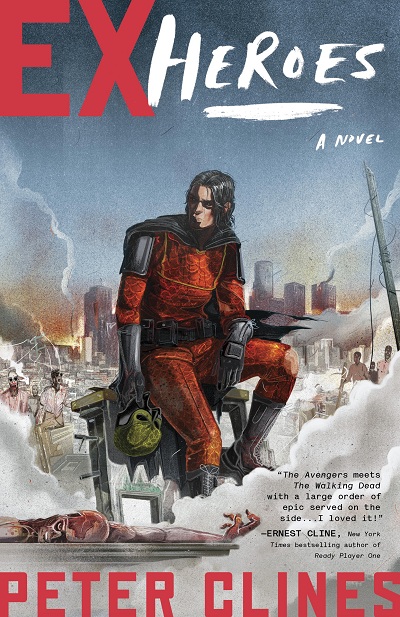
            And I did it once, too. In an early draft of Ex-Heroes, right in the middle of the climactic battle, the story cut away to a slow, almost introspective flashback.  Conversations were had, moral decisions were made, and in the end a plan was created to help save as many—WAIT, back to the fight with the zombie demon!!
            My beta readers made fun of me, too.
            Part of this is a pacing issue. If the action is happening with breakneck, life-or-death speed in this scene, I probably want to be cautious about jumping over to a slow stretch of decompressed storytelling.  I don’t want my reader stumbling as they try to figure out what’s happening and when it’s happening.
            Y’see, Timmy, when that stumble happens, it knocks us out of the story.  The cutaway brings things to a jarring halt.  We go from experiencing the story to analyzing it.  Puzzling over it.  Maybe even… laughing at it.
            Laughing at, mind you.  Not laughing with.
            So be careful where you make your cuts.
            Next week I’d like to talk about another aspect of writing that’s really close to this, one I’ve been bringing up a lot lately, to be honest.  This’ll flow really well right into it.
            Until then… go write.
May 3, 2018 / 1 Comment

Dogs and Cats! Living Together!

            Pop culture reference!  From a movie I used to love and now have mixed feelings toward because of a bunch of internet trolls.
            But anyway…
            I was working on a rough outline for a book I’m hoping to write next year, and it occurred to me that I’d written a classic device into the story. About halfway through the book, my protagonist saves her cat.
            …in a really clever and freaky way, I assure you.
            You’ve heard that phrase before, yes?  Saving the cat?  I’ve talked about it here once or twice, and this little incident made me think it might be worth mentioning again.
            “Saving the cat” is a term screenwriter Blake Snyder came up with many years ago.  It’s when my character does something simple and quick early on in my story that gets everyone on their side.  The example Snyder uses is saving a cat.  My heroine sees a cat stuck in a tree, she gets the cat out of the tree.  No big deal, moving on, right?  It’s just a simple action or moment that assures my readers that this character is an overall decent human being.
            (fun fact—“saving the cat” is a reference to Ripley saving Jones in Alien. Seriously.  Look it up.)
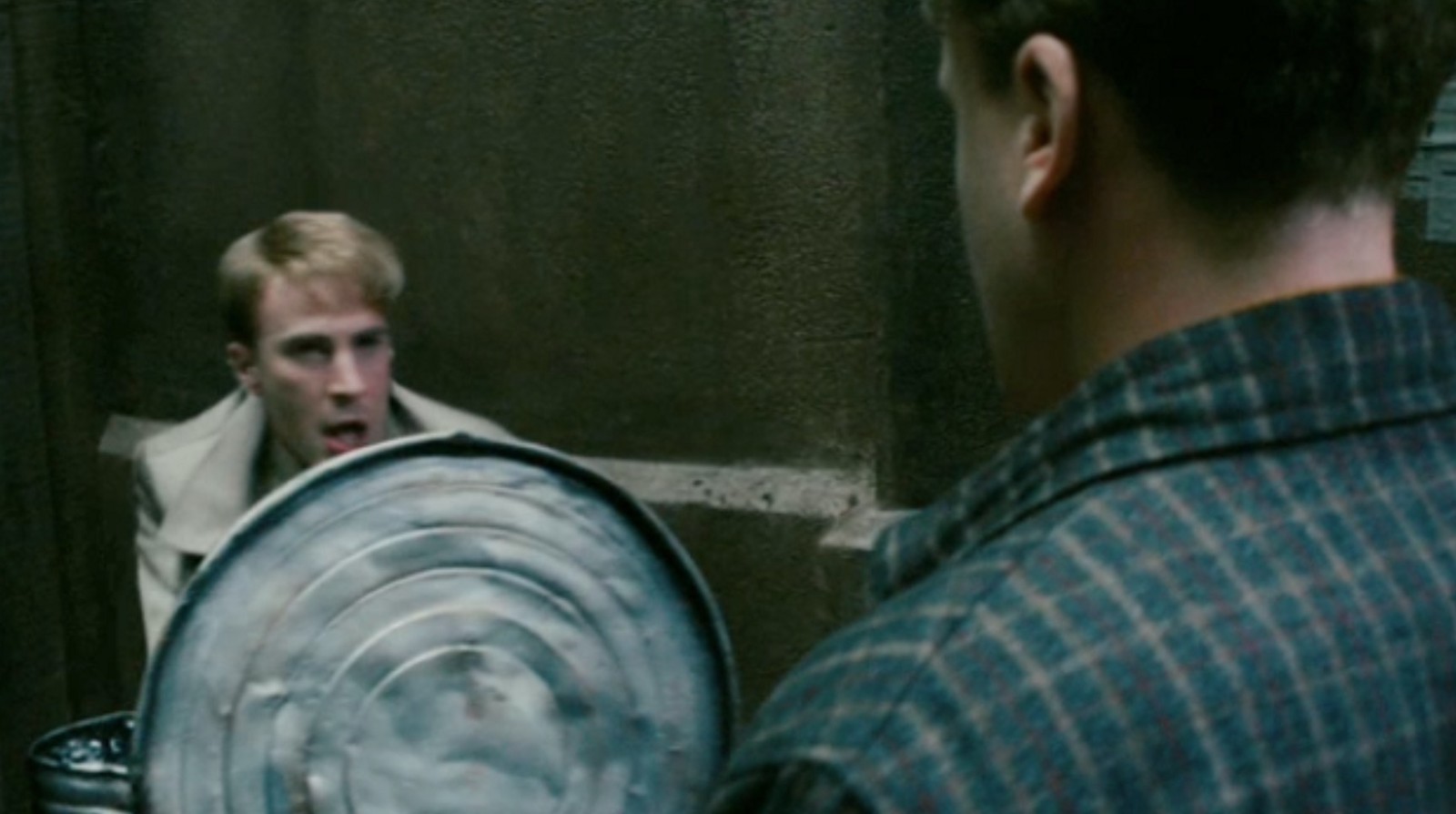
            Remember in the first Captain America movie, when scrawny Steve Rogers stands up to Hodge out behind the movie theater, even though Hodge is twice his size?  That’s a saving the cat moment.  How about in Wesley Chu’s The Rise of Io, when the title character makes a point of sharing her food with the mangy dog that hangs around outside her apartment?  Or when poor unloved Harry Potter sympathizes with the snake in the zoo about being raised in captivity? 
            All of these are save the cat moments.  They’re small, almost inconsequential things that rarely have repercussions in the larger plot. But they affect how we view the character.
            Now, here’s two key things to remember when I’m playing around with a save the cat moment.  First, as I mentioned before, they almost always come fairly early in my story.  Second. the reader has never been against the character who’s having this moment.  Because saving the cat isn’t about changing my reader’s opinion of this person, it’s about emphasizing their opinion.  It’s a shortcut to help my reader like them more and get invested in them sooner so I can move on to bigger and better things.  The plot, for example.
            Why do I mention these key things?
            Well, there’s another device that mistakenly sometimes get lumped in with saving the cat, but it’s really the exact opposite.  It’s not even a device so much as a bad habit some people have.  It’s called patting the dog.  This is when one of my characters does a small token thing late in the story and it’s supposed to make up for the numerous awful things we’ve seen said character do up ‘til this point.
            See, patting the dog is usually third-act type stuff, because I’ve spent all my story up til now establishing this character in a certain way, that they have certain beliefs and loyalties.  And the whole point of patting the dog is to then reverse how my reader feels about this person.  If up until now, we wanted to see them dead under a bulldozer, at this point we should cheer for them.  This one small act’s supposed to cause an emotional 180 in the reader.
            Like I said, it’s pretty much the exact opposite of saving the cat.
            It’s worth noting—patting the dog is almost always applied to antagonists.  Usually as some kind of twist to turn the bad guy into some sort of anti-hero, or even a full on hero.  When Wakko murders a dozen families and their children, but then realizes killing *this* person would be wrong… that’s patting the dog.  Same with the evil cheerleader who’s made Dot’s four years of high school a living nightmare, but then decides to chip and help make posters for a bake sale.  So’s the evil villain’s loyal lieutenant who tortures and maims our hero’s friends, but then discovers he has some vague relationship with the protagonist and decides to turn on his boss of ten years.       
            Now, this isn’t to say I can’t reverse how my readers see one of my characters.  That’s one of the big goals in writing—to change how people think about things. But it’s never going to be a quick fix I can pull off with one paragraph.  It’s going to take lots of moments and a lot of work.  It’s a process that can’t be rushed.  Even if I’m doing it with a clever twist, the reader needs to look back and see that the seeds of this change stretch all through my story.
            Because you may remember the other word for when someone does a sudden change of beliefs and loyalties.  It’s called a betrayal.  And no one likes to be betrayed. 
            Even if it’s just by something they’re reading.
            Next time, I’d like to talk a bit about what’s going on in that other scene.
            Until then, go write. 
April 27, 2018 / 11 Comments

Workhorses

            Very sorry for the delay. Taxes.  Jury Duty.  Making the New York Times bestsellers list with Paradox Bound.  And that’s just what I can talk about.  The past two weeks have been kind of crazy, and last Thursday was when it all caught up with me.  Well, Wednesday night, to be honest.
            But now that I’ve got my excuses out of the way…
            (did I mention the New York Times bit…?)
            I stumbled across an interview I did with author Jessica Meigs a few years back.  I said something that sounded vaguely profound.  Or, at least something I was trying to make sound profound…

            “I think people like radical new ideas, but sometimes—most of the time, honestly—they just want the basics. There’s only so many times you can go out and have a mesquite-smoked sirloin patty garnished with goat cheese and pine nuts on a croissant. It’s cool, but eventually you just want to have a cheeseburger.”
            If it sounds vaguely familiar, Stephen King’s said something similar a few times.  I think I may have been subconsciously mimicking him.  Plus, I’ve used cooking metaphorshere a few times.  Hopefully it’s not too obscure or vague as metaphors go.
            Now, I don’t watch a lot of cooking shows (used to love Kitchen Nightmares), but I’ve never heard anyone make the argument that we should all eat nothing but gourmet food.  I can imagine how much we’d all scoff at someone who campaigned to ban cheeseburgers.  And if anyone tried to tell me I’m a crappy cook because I don’t make my own pizza dough from scratch, I’d probably laugh in their face. And then not invite them over for pizza.
            But…
            Every couple of months I’ll see some new article about how aspiring writers should use better words. Better descriptions.  Better structures.  Only uneducated simpletons and talentless hacks would use verbs like said or was. You used redinstead of encarmine?  It’s cute that you’re trying to write for grade schoolers…
            None of this is true, of course.  And I can’t help but notice that the vast majority of people who make these declarations… well, they don’t tend to sell a lot of books.  In fact, I’d guess the majority of them aren’t even professional writers. Or even amateur writers.
            It keeps coming up, though. And aspiring writers keep trying to follow it.  And often they end up in this horrible downward spiral, progressing less and less as they try to make every sentence “better.”
            Possibly weird aside.  But it has a point.  Honest.
            There’s a type of riddle that often stumps people—the one with the obvious answer.  Those ones where we stop and think and think because the answer can’t be that simple.  I mean, isn’t the whole point of a riddle to trick you into giving the wrong answer?  So even if the simple answer fits all the requirements of the question, people will convince themselves it’s got to be something more complex and spend who knows how long trying to figure out what that unnecessarily complex answer must be
            When I’m telling a story, there’s going to be lots of times that call for simplicity over complexity.  It’s not uncommon for a short, straightforward sentence to have far more impact than a far more elaborately-crafted one.  A simple structure can be a faster, much more enjoyable read for my audience than a twisting, interwoven one.  And a basic character motivation is going to be much easier for my readers to grasp and relate to than one that needs thirty pages to explain.
            Let me mention two or three basic, solid writing devices that get a bad rap.
            It was/ he was/ she was—If I’m writing in third person, past tense (it’s not as dominant as it used to be, but I think it’s still the most common type of narration you’re going to stumble across), I’ll be coming across this form of “be” a lot.  If I’m leaning toward present tense—and that’s okay, a lot of the cool kids are doing it—I’ll probably see isjust as often.
            There are times was can be the sign of some needed work. Whenever I edit I tend to do a was pass and see how often I can turn things like “Wakko was running” into “Wakko ran.”  But sometimes, after all that running, I might just have “He was exhausted.”  Sure I could be a lot more descriptive and evocative, but there’s also going to be points where “He was exhausted” is quick, gets the information across, and lets me move on to other things.
            Said—The most basic dialogue descriptor there is.  Said is a classic. Quite literally.  People have been using said for almost a thousand years.  And it’s still around and still in regular use.
            I’ve talked about said a few times in the past, so I won’t go into too much here.  I just want to remind you that one of my first face-to-face interactions with an actual, book-buying, money-paying editor was him telling me to get rid of the dozens of different descriptors I was using on every page and replace 95% of them with said.  Let it do all the heavy lifting and save the special words for special occasions.
            Linear Structure—I also talked about this just a few months ago.  It’s very common for linear structure and narrative structure to run side by side.  It’s so common  because it’s the way we’re used to experiencing things.  Our brains are pretty much  programmed to accept stories this way, and if we’re given them in other ways we’ll try to mentally wrestle them into this format.
            Now, personally, I love a story that uses clever structure or devices to move the plot along.  I think most people do. That’s kind of the trick though—I’m using them to move the plot along.  If I have dozens of flashbacks that don’t really accomplish anything, or running the story backwards just because it sounded like a cool idea, I’m just making the story more complex for no reason.  And once my convoluted structure breaks the flow for the third or fourth time, well…
            Again, something like 85-90% of all fiction (numbers pulled from experienced ether) is going to have this very straightforward format.  There’s nothing wrong with it.  I shouldn’t be nervous about just… telling my story. 
            Y’see, Timmy, there’s nothing wrong with simplicity.  Nothing’s inherently good just because of overly-complex structure or incredibly obscure vocabulary.  My writing isn’t automatically better because I decided to use four syllable words rather than two syllable ones.
            And to be very clear—I’m not saying there’s anything wrong with complexity either.  Nothing at all.  There are some wonderfully complex books out there.  It’s when I insist that everything has to be one or the other that problems arise.
            Okay, that’s a lie.  Problems arise all the time.  Hell, I could shut this blog down if that was the only time problems arose…
            My point is, if I insist that everything has to be exquisitely crafted, impenetrably structured, polysyllabic sentences that run on for pages, collected in an order that would stump most cryptography software… my writing’s probably going to be very hard for most people to get into.  It’s going to be tough for it to have any kind of flow.  And it’s going to take me a very, very long time to get that first book done.
            And that means it’s going to be tough for me to have a lot of readers.
            Anyway… I’m going to go watch Infinity War now.
            Next time, enough about workhorses.  Let’s talk about cats and dogs.
            Until then… go write.

Categories