
January 14, 2021

So. Much. Winning!

This is one of those posts some folks may feel the need to argue with. It’s a writing tip that’s going to feel obvious to some of you, and ridiculous to others, but I truly think a writer needs to follow if they want any measure of success.  And when I say “success” I refer to the classic definition—“making money off your material.”

If I want that kind of success, my hero has to win.

Fair warning, there’s going to be a couple spoilers coming up. Kind of necessary if we’re going to talk about how things end for a character in a story. They’re for pretty big things I’m sure most everyone already knows the ending of, but there’s the warning just in case. If you’re way behind in your required reading or viewing, you may want to stop here.

Also, I’m using hero in the gender-blind sense. If it makes you feel better, feel free to swap in heroine or protagonist. I’m not against any of these terms or the characters they attach to, I’m just using hero because it’s short, and quick and I’m trying to stay focused on this instead of everything going on in the world. So for this post, I’m just talking about the hero.

And the hero wins.

Pretty much always.

Now, there’s a belief in some circles that having the hero of the story fail and die somehow improves the story. That it’s more dramatic. It’s the belief that having something depressing and random happen to my hero is more “honest” because life is often depressing and random. I think this ties back to the frequently-waved buzzwords realism and art. Art imitates life, so if I’m imitating life, I must be making art. That’s just logic. Right?

As I’ve mentioned once or thrice before, this kind of ending sucks. It sucks because we all inherently know the hero is supposed to win, since we identify with the hero. If the hero loses, it means we lost. We’re losers, identifying with another loser.

Believe it or not, this sort of statement doesn’t go over well with most people. I mean (as we’re currently seeing in the real world) people have a lot of trouble dealing with it when a character they’ve invested so much of themselves in doesn’t win.

Now, before people start scribbling down below (for any reason, although I’m sure at least one person already has), let me finish.

I’m not saying every book has to end with happy smiles and people rolling around on piles of money in their new twelve-bedroom mansion. My hero doesn’t need to defeat the cyborg werewolves, save the world, and fly off into the sunset with nymphomaniac heiress Margot Robbie in her private jet.

Truth is, the hero doesn’t necessarily need to enjoy winning. I just said they need to win. They may be damaged physically, emotionally, or both. In fact, if my hero ends up wounded or broken after all they’ve done, it just makes us identify with them a little more, doesn’t it?

When they win like this, we often call it a pyrrhic victory. Maybe our hero solves the murder mystery, but loses their best friends in the process. She got revenge, but her lover’s still dead and now she’s a wanted criminal herself. He won the contest, but now his family’s humiliated and wants nothing to do with him. The team tried to save all the hostages but only half of them got out alive. As I mentioned above, victory isn’t an all-or-nothing thing, and my hero can still have a pile of losses even though they’ve succeeded in their main goals. A partial win is still a win.

Hell, the hero doesn’t even need to survive the story in order to win.  There are plenty of characters in books and film who didn’t live to enjoy their victories. At the end of Rogue One (here’s that spoiler alert) our two surviving heroes are literally incinerated in the blast from the Death Star’s test firing. And note I say surviving heroes. The rest of their team has already suffered a series of brutal and violent ends. Nobody gets out of that movie. Same with Tony Stark in Avengers: Endgame, cooked from the inside with a single snap of his fingers.

And yet, in both of these examples, the heroes win. No question about it. Anyone who’s seen these stories will tell you the good guys won and the bad guys lost.

A key thing here is my character’s motive. What are they trying to do? Keep in mind, their stated goals and their actual goals might not always be the same. Phoebe may say she wants to date the head cheerleader, but what she’s really looking for is romantic love and companionship. Wakko may say he wants revenge, but what he really wants is justice. So they may fail at that obvious, stated goal (dating the cheerleader) or even a broader, more universal goal (keeping their left leg attached), but still succeed with their actual, motivating goal.

Now, I want to mention one other thing, because my friend Stephen Blackmoore brought it up when I mentioned this theory of winning at the Writers Coffeehouse once. There are some stories (a lot in the noir genre, for example) where the hero doesn’t win. In fact, in some cases they fail completely, on all levels, and end up much worse off than they began. This can absolutely happen in stories. Great stories, some of which get a lot of praise and awards.

But…

I think if we named some stories where the hero fails in this complete way, we’d probably realize… they’re not all that well-known. And they’re probably read even less. Again, not saying they’re bad, but it is a much smaller niche of potential readers who’ll enjoy a story where the hero, well, doesn’t really accomplish anything. Even if it’s beautifully written. So there’s nothing wrong if those are the stories I want to write, but I should have my eyes open about how wide an appeal they’re going to have.

Y’see, Timmy… we encounter enough failure and losing in real life that most folks aren’t going to also enjoy it as entertainment. We want to see victories and success and heroic sacrifice because these are the things we dream of in our own lives, and we relate to those people because they’re the kind of people we wish we could be. Even if just for a little while.

So if I’m my plot ends with a massive failure or my hero dies for no reason… maybe it’s worth rethinking that.

Especially if I want to win.

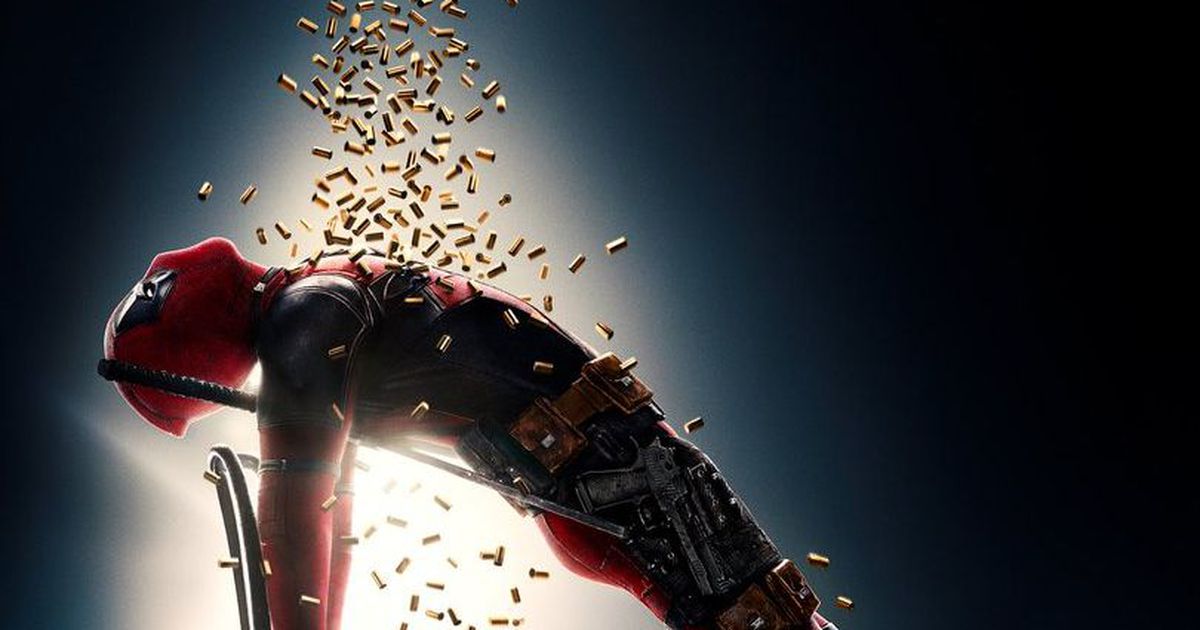
Next time, I’d like to talk about Flashdance.

Until then, go write.

January 6, 2021 / 3 Comments

To Start With…

Well, here we are in 2021. A serious sci-fi year. 2021! It feels like it should be in a cool chrome font, doesn’t it? We should all be heading to work in flying cars, jetpacks, or giant robots. And instead we’re dealing with a pandemic. Oh, and an attempt to overthrow the government of the US by a bunch of domestic terrorists inspired by an unstable President.

But other than that… Happy 2021!

Anyway… hey there! I was thinking about my usual start-of-the-year post and trying to think of something new I could bring to it. I’ve talked in years past about how I started doing this and what I’m trying to do here. I thought maybe this year I’d talk about you and what you might get out of this. And what you won’t get.

This collection of scribbled essays is probably 83% writing advice. Straight writing and storytelling. Not publishing, marketing, networking, or any of that. Those are all other things, and being clear about that—really understanding it—is a big step in becoming a better writer. I do talk about them here sometimes (thus, the above links) but they’re the minority topic by far. Maybe 15-16% If that’s the kind of thing you’re really interested in, there are a lot of better places to get it, and more regularly than I’ll talk about it.

That last one or two percent? Cartoons. A tiny bit of politics. Maybe con schedules, back in the clean days when we all went to cons.

But let’s talk about that writing advice. I think there’s a bunch of conditionals that should get applied to any advice someone gives. Or gets. Seriously.

That’s pretty much conditional number one. If you’ve been following me for a while, that’s my Golden Rule here—what works for me probably won’t work for you, and it definitely won’t work for him. I’m not saying my advice—or anyone else’s—is necessarily bad. But the simple truth is we’re all different writers with different projects at different points in our career, and trying to make advice a one-size-fits-all thing just isn’t going to work.

I’ve mentioned before that a big part of maturing and growing as a writer is figuring out what works for you. Because that’s all that matters. What makes it easier for you to write, and what helps you write better. I don’t care if the advice is from Stephen King, N. K. Jemisin,  Cormac McCarthy, Margaret Atwood, Ta-Nehisi Coates, or whatever author you consider your writing idol. It doesn’t matter that it works for them—if the advice doesn’t work for you, you shouldn’t be following it.

Which brings me to conditional number two. There’s a difference between advice and rules, and—much as some folks hate to hear it—there are rules to writing. Yes, there are. Spelling is a real thing. So’s grammar. And structure. These are real, quantifiable things I can get wrong.

However… this is art. You’re an artist (don’t say wordsmith don’t say wordsmith don’t say wordsmith). And that means we get to bend and break rules when we need to. Again—key thing—when we need to. Not on a whim. Not because we don’t know the rules to start with. Not to show those gatekeepers they’re not the boss of me! There’s got to be a reason for rule-breaking, and there still need to be enough rules in play that other people can understand me.

And this brings me to my third and probably final conditional for advice. Unless I think of a fourth one while I’m writing this out. Third is that I need to be aware most advice is intended for people at different points in their writing development. If I get asked the same question by a pro, by someone just breaking in, and by somebody just starting out, there’s a chance I’m going to give a notably different answer to each of them. And it could be really harmful if someone’s following the wrong advice.

Okay, that feels a bit clumsy so let me try it this way.

I’ve talked about cooking as an analogy for writing a couple times, and I’ve compared the ranty blog to a sort of cooking school. But it struck me a while back that even that’s a little off, because I can take a beginner cooking class at my local community college or I can take a course at Le Cordon Bleu in Paris. But I think we can all agree those are two very different things.

Y’see, Timmy, there’s absolutely nothing wrong with what they teach at Le Cordon Bleu. It’s one of the world’s greatest culinary institutes and the instructors have a lot to teach. That said, a huge amount of what they teach is assuming I know a lot of basics, and probably a few advanced techniques as well. Again, world famous institute.

If I can’t tell the difference between sifted flour and corn starch, I can waste a lot of time and money at Le Cordon Bleu. Good chance I’d develop a bunch of bad habits, too, as I try to absorb and implement lessons I don’t have the foundation to fully understand. Heck, I could even come out of there a worse cook than I went in, trying to spatchcock a lobster thermidor or something like that.

This collection of rants is kind of a cooking school, but it’s maybe a second or third level community college class. I’m expecting everyone can tell salt and sugar apart, that you know how to softboil an egg, and you understand the difference between baking and broiling. And, maybe most importantly, that you actually want to learn more. I mean, that’s the whole point of taking a higher-level class, right? You don’t take it to argue with the instructor or tell all the other students how you don’t need to be there.

Well, okay, there’s probably some people who take classes for those reasons…

But you get my point. The advice I’m offering is for people who’ve written a few short stories, maybe a few chapters, maybe even a first novel. You’re already a few rungs up the ladder and I’d like to help you go a few more. But if you’ve had a book or two published, maybe a good string of short stories… you’re already near the top of that ladder. There’s not much I can do for you that you probably couldn’t do quicker and easier on your own.

So that’s what I’m serving here. Advice and tips and maybe pointing out a few rules. If any of that sounds good to you… stick around. And if there’s something in particular you want to hear me blather on about, just let me know down at the bottom. I feel all warm and special when people leave comments.

Next time, to start us off, I’d like to talk about success.

Until then, go write.

December 30, 2020

The Tally of the Plague Year

Well, here we are. The last post of the year. Finally.

Normally, when I get to the end of the year, it’s a chance to sit down and list off all the stuff I got done over the past twelve months. But wow… here in the USnine of these past twelve months have been pretty awful. Made even worse by the fact that it feels like certain parties/persons in the government really don’t even care if Americans live or die. I understand the UKisn’t much better. Hell, is it even still the UK?

It all combined to make a pretty rough year.

If you didn’t get a lot done this year as a creative person, you’re not alone. We all had a big shift in priorities and schedules, not to mention financial shifts. And just lots and lots of stress. If you weren’t worried about things this year… honestly, I don’t know what to say. For the rest of us, it was just brutal.

I know I got waaaaaaaay less done than I’d wanted this year. Pretty sure I lost the back half of March through early May to doomscrolling as the pandemic found its legs and took off. And then, just as I was getting back on my creative feet, the summer protests kicked into gear—some of them very close to me. And it’s tough to work on weird, entertaining stories when you know just a few miles away people are risking their lives trying to end… well, pretty much a reign of terror.

Okay, this is spiraling into despair, so let’s talk about good things. Because there were some good things. There’s no way you can tell me you didn’t have brief moments of creativity this year.

The big thing for me was The Broken Room. Still not sure about the title, but I’m very happy with the book itself. I started it last year, got the first draft done before, y’know, everything, and then spent the summer cutting and editing. And then my agent had some good thoughts (a few of which had already been gnawing at me) which I’m in the process of implementing now (not right now obviously, but for the past few weeks). If all goes well, you might get to read it next year.

I also wrote a massive outline for what will hopefully be a six book series. Not an ongoing universe or anything, but a large story told, beginning to end, across six books. A hexalogy or sextet, depending on your preference. This is something I wouldn’t’ve even thought about a couple years ago, for a few reasons, and even as it is my agent’s warned me it might be a tough sell. But I’ve been playing with this for a while and it’s finally all come together and… well, hopefully I’ll get to tell you more about the Creatureverse in the near future.

Speaking of things I’ve been playing with for a while… There’s an idea I bounced off an editor about six or seven years ago (over whiskey and apple pie late one night at San Diego Comic-Con), and he pointed out I basically had a well-thought out idea, but not much of a plot, really. Well, about two weeks ago that whole knot just unsnarled in my head. Or got cut in half, depending on how you like to picture tough knots getting dealt with. I ran to my computer and typed out a little over three pages of notes for that. Who knows when I’ll get to it, but when I get the chance I know I can write it.

I also pitched a dream project to a comics editor. I think I’ve got a solid take, but I can also admit (in retrospect) my pitch was pretty weak. I should’ve done a better job figuring out how to pitch things for this particular format and for that particular editor. If I’m lucky, maybe I’ll get to try again in a year or four, when the shame of this bad attempt has faded from both our memories.

Oh, and there’s the ranty writing blog itself. Seventy-three posts here, although probably a dozen of those were cartoons or quick notices about new books or something. And a quarter of it past that was all the A2Q series, which hopefully one or two of you found semi-useful.

I also managed to read thirty-one books this year, despite all the doomscrolling. Nowhere near my usual amount but… hey, doomscrolling. As it is, most of these were either for the Last Bookstore’s dystopian book club or blurb books for friends/editors/ my agent. But I might get one more done before New Year’s! Which is also a blurb book.

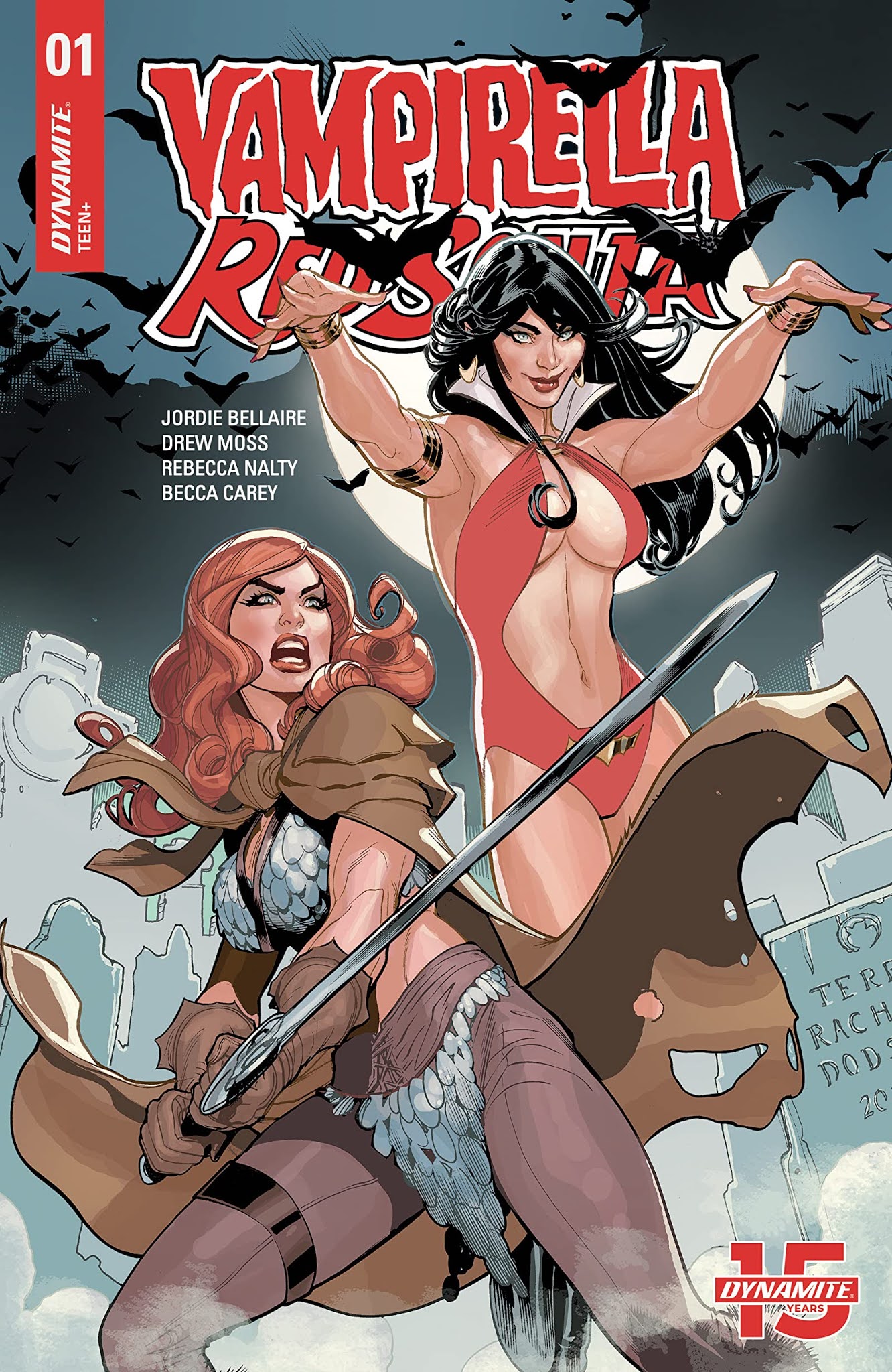
I read a lot of comics for fun. Shadow Road. Transformers. GI Joe. Vampirella/Red Sonja(which is amazingly good). There’s also a Transformers/Terminatorcrossover book which I’m only two issues into but it’s very clever.

And that’s what I got done this year. A lot of time lost, but I think I used the remainder pretty well. I’m happy with how it all turned out, anyway…

How about you? I don’t think any of us got as much done as we’d wanted, for a bunch of reasons. but hopefully you got something down you’re happy with. A few chapters, a couple of pages, or maybe some notes to work with once everything’s just a little calmer. The important thing isn’t how much you did—it’s that you did it.

Seriously, if you managed to get stuff done in 2020, think what you’ll be able to do when the world’s not on fire.

And hey, speaking of things not being on fire—sorry, quick segue—Georgia residents, I know you’ve been battered with this but please vote in your Senate runoff next week, and please vote for Reverend Raphael Warnock and Jon Ossoff. The simplest way to get the government working for you again is simply to remove Mitch McConnell as Senate Majority Leader. And voting for Warnock and Ossoff will do that. Plus, added bonus, it’ll get rid of two incredibly corrupt members of the Senate who’ve blatantly used their positions to enrich themselves. So really it’s a win-win.

I hope all of you have the absolute best New Year’s you can with the state of things right now, and that 2021 brings all of us peace, relief, and maybe a few clever plot lines.

See you again in the future.

Until then, go write.

December 23, 2020 / 2 Comments

It’s Not Christmas Without…

And here we are, at that wonderful time of year when a young man’s thoughts turn toward… Nakatomi Plaza.

I wanted to do a holiday-ish post, and then (while watching a favorite seasonal movie) it hit me I could address a fierce debate that’s surged up over the past few years. And maybe I could even make it semi-educational. From a writing point of view.

Is Die Hard a Christmas movie?

Now, let’s be honest. If you’ve got strong opinions about this, I’m not going to change your mind. But if you’re somebody who cares a lot about stories (and if you’re reading this, I’d guess there’s a semi-decent chance you are) maybe this week’s little ramble will make you look at Mr. McLane’s late December adventure a little differently. And maybe some other stories, too.

With that disclaimer out of the way… let’s start by talking a bit about the difference between an element and a genre. I’ve mentioned this before, so I won’t go into it too much. Simply put, there are a lot of labels we can slap on both story elements and genres, but the presence of one doesn’t automatically create another. For example, there’s a strong romance element in Bloodshot, the Vin Diesel movie that came out earlier this year. It’s also got a few funny moments. But I don’t think any of you would be surprised to learn Bloodshot isn’t considered a romantic-comedy. Romance, comedy, suspense, mystery, horror, sci-fi… all of these things can be in a story that’s not in that same-named genre.

So let’s talk about Christmas as an element and as a genre.

As an element, Christmas can be a couple things. Easiest is the setting—it’s a specific timeframe that pretty much everyone on Earth knows and can understand to some extent, even if they don’t celebrate the holiday themselves. Also worth noting that Christmas is one of those (if you think about it) rare holidays that has a very fixed date, unlike lots of other that slide around the calendar a bit each year.

Christmas is also in the details and descriptions. Christmas trees, wreaths, presents, garland, lights, a Santa on every corner and a snowman in every yard. These are things I can mention in my story (or show in my movie) and they create an immediate association for people.

It’s also a mood, and a lot of traditions. If I’ve got a story set at Christmas, it’ll probably show up in dialogue. Let’s face it, people interact and talk a little differently in December, no matter which way they feel about any particular holiday. Scrooge is a little nastier. That super-peppy woman at the coffeeshop is almost scarily happy and peppy.

I think there’s a lot of movies and stories out there that get marketed as Christmas tales, but really just have a few random elements tossed in. We could move said movie to Memorial Day weekend or a random bank holiday and nothing notable would change. The romance would have the same meet cute, the comedy would have the same awkward moment at the dinner table, the zombie movie would have the same stupid montage of our protagonist fighting the horde witha baseball bat.

And this would bring us to Christmas the genre. There’s a lot of thoughts on defining genre (I’ve shared some too) but I think one notable thing is how abundant those elements are. Eventually the romance or the comedy becomes a dominant aspect and we think of this story as a romance, a comedy, or maybe a romantic comedy if it’s got both. The horror or sci-fi elements are so intrinsic to the plot my novel would crumble without them.

What marks something as part of the Christmas genre? The setting, absolutely. Sometimes the characters. It’s really hard to do a movie where Santa or Rudolph’s a main character and not have it be a Christmas story. And we see a lot of common themes in the Christmas genre. Joy. Peace. Happiness. Love. Togetherness.

Simple, right?

However…

There’s another aspect to this, and it’s something I hinted at up above and once talked about with (shameless name drop in three… two…) Shane Black. Christmas, maybe more than any other Western holiday, is an amplifier. Everything hits a little harder at this time of year. Romance is great, but Christmas romance is even better. Friendship is wonderful, but being with your friends at Christmas is fantastic. Family squabbles can be funny, but during the holidays they’re even funnier. And, yeah, puppies are great, but have you ever seen CHRISTMAS PUPPIES?!?

(seriously, you just grinned at the thought of Christmas puppies, didn’t you? See?)

And, yeah, this goes the other way. If something’s tense, it’s three times as tense at Christmas (scientifically measured). When something horrible happens, it’s even more horrible because it happened at Christmas. And to touch on a serious issue, depression’s never great, but depression during the holidays is just awful.

So I think it’s fair to say there are stories that may lean heavily toward non-Christmas elements, but the Christmas setting amplifies these stories. It inherently makes them more than they would be without it. Not a coincidence how many Christmas stories involve finding true love or reuniting with your family. And there’s a serious glut of Christmas horror movies. No, seriously. They’ve been a thing for decades.

Now… keeping all that in mind… let’s talk about Die Hard.

Die Hard is loaded with Christmas elements. I mean, 90% of it is set at a Christmas party gone very bad. And it’s a high-end party so decorations are everywhere. Really, look at a lot of these scenes and check out how often there’s a wreath, a garland, a Christmas tree, something. I’d bet half the scenes in this movie have a direct, visual tie to Christmas. And the music! It’s all Christmas music. All of it.

Plus, this setting is a big driver for the plot. John’s out in LA to see his kids and maybe patch things up with his wife. The Christmas party is why there are so many people conveniently in the building after hours to be taken as hostages. The watch she got as a Christmas gift from her boss is a point of contention (and a great Chekhov’s gun). When the FBI wants to shut down power to the building, the main reason there’s a fight is because it would mean shutting off the electricity to ten blocks of LA on Christmas Eve. Hell, John’s last minute surprise for Hans Gruber and his Huey Lewis look-alike pal? Remember how he pulls that off…?

Finally… the amplification factor. Realizing your relationship is collapsing is always bad, but on Christmas Eve? Sweet jebus, that’s a gut punch. Getting taken hostage absolutely sucks, but when it happens at the company Christmas party? And issuing ominous threats to the bad guys is badass, but when you get to tag on Ho-Ho-Ho…? Seriously, it’s one of the most memorable moments in a movie filled with great moments.

And so many of those moments get cranked up five or ten percent higher ‘cause we’re constantly reminded… it’s Christmas.

So… is Die Hard a Christmas movie? I mean, I think it is. And if you want to argue it isn’t then I think there’s a lot of other movies (many of them with Christmas in the title) that we’d have to toss out as well. ‘Cause if we’re saying hitting all these benchmarks doesn’t matter… well…

Look, nobody likes a grinch, okay?

With that, speaking of grinches, I give you one last shameless capitalist reminder that you can give people ebooks as last-minute gifts, and I happen to have a ton of them out there.

I hope this long weekend is wonderful and peaceful for you, no matter who you are, whatever you believe, and whatever you celebrate this season.

And maybe we’ll squeeze in one more chat before 2021.

Categories