
August 11, 2023 / 2 Comments

The Spot X Used to Mark

I don’t like to talk about non-writing related things here on the ranty writing blog. In the sense of I like talking about writing (the art) as opposed to writing (the career). It’s why I rarely talk about publishing, marketing, agents, publicity, any of those after-issues. I’m a big believer that there’s not much point in me worrying about any of the career stuff until I’ve actually done the art stuff. Like I talked about a few weeks back, if you’re here, you’re 100% interested in the art, but not necessarily in the career.

But these are interesting times, and as I find myself navigating a path through them, I figured I might as well drop a bird crumb or three. Or beat the whole loaf into crumbs and just dump it out here. We’ll see which one turns out to be the better approach…

In case you missed it, the human embodiment of the Dunning-Krueger Effect spent an ungodly amount of money to buy a company he had absolutely no idea how to run. What followed next was kind of like a car crash I was once in. Another car slammed us into the side of the freeway, our car kind of bounced off the concrete wall, but momentum and a jammed steering wheel guided us back into side of the freeway again, where we bounced off again, slammed into the wall again, and continued doing this for maybe a full minute/ three or four impacts before the car finally came to rest a few hundred yards down the freeway. And no, the other driver never stopped, just shot off down the 405, looking for another car crash to cause.

So that’s what Twitter’s been like for the past couple of months.

Really, even before the Muskrat, things weren’t looking great. In general, the social media landscape’s been looking more and more like some bombed out no-man’s land during World War One. Algorithms have made sites less and less usable, while a complete lack of algorithms have made other sites less appealing. At this point, the only thing social media shows you is ads and the only thing you can easily find is outrage.

Where does this leave us all now?

Not in a great place.

I’m hardly the first to say it, but I think the age of social media may be over. It’s crumbling fast, at the very least. Yeah, there are a few places that have tried to step up and fill the gap, but none of them are moving at a good speed, either in growth or management. Bluesky’s probably my favorite right now, but it’s still got huge issues. Plus, if they shift to the federated idea, I think that pretty much kills them right there.

Yeah, federation’s just weird. It feels like a buzzword too many techbros are leaping at, even though it pretty much boils down to “social media, but with less reach.” It also feels a lot like “look, we invented subreddits!”

Anyway…

Hopefully it’s clear this really sucks for artists of all types. For a while now publishers (of all types) have kind of been leaning on artists to get their own message out. After all, through social media we can reach everyone pretty much everywhere, right? So… reach! New book coming out, book signing this weekend, anthology story in November, con appearance next month!

BUT… we all hate it when artists just say “buy my stuff” again and again. And most artists hate doing it. That’s why we’re usually just trying to… well, be ourselves. Show you other stuff we’re interested in. Movies, cooking, photography, LEGO, exercise, toys, pets, whatever. I think most people appreciate that honesty, even if it’s not something they might not be interested in themselves.

(like, for example. two writers I know from the fleshworld talk a lot on social media about Magic the Gathering, a game I know absolutely nothing about past “you play it with cards.” But I love their passion for it. It doesn’t matter that I’ve got no clue about it– I can enjoy their love of it)

Worth noting—I’ve never heard of an author not getting a deal because of a small social media following. I don’t think any publisher’s ever said “Wow, it’s the most amazing thing I’ve read this year and we think we can easily move 100K copies BUT you’ve only got 200 followers on Twitter. So sorry. Please try again later.”

I have, however, heard more than a few stories where blame for a book’s failure is quiiiiiiietly shifted to the author. They should’ve promoted more. They should’ve talked about it more. Clearly their fault. Nothing we could’ve done that would’ve changed things.

And the key thing here is it’s been shown time and time and time again that big social media numbers really don’t, in any way, translate to sales. There are famous examples of people with millions of followers who can’t even sell 500 copies of a book. I mentioned a while back how Nathan-freakin’-Fillion tweeted how much he liked the first two Ex-Heroes books and it barely bumped the needle on sales.

So all of this should be inconsequential! Social media collapsing really shouldn’t be the giant source of stress that it is for so many creative folks. But we keep doing it because… everyone expects us to. And we all have this nagging worry that if we don’t do it maybe sales will go down. Maybe my feeble attempts at keeping your attention really are where a third of my sales come from. Which would be sad on numerous levels. For all of us.

Plus… I made a joke about this a while back and Chuck Wendig actually just did a whole post about it over on his site. Most artists are exhausted by all of this. This whole collapse and trying to find a new place and… all of it. Seriously. I mean, we need to use social media—to some extent—as a business tool. So imagine having to move your whole office to another building. The office you’d spent years getting settled into and arranging, where everyone knew where you were and all your clients and associates knew right where to find you. But now you have to move.

So you pack everything up, move it all, get everything unboxed, start moving it all around, figuring where everything’s going to go, you give everyone your new phone number and new address and WHOA hang on, turns out this place has a ton of security issues. Sooooo pack it all up again, move again, get it all unboxed again, give everyone your new-new phone number and address and HOLY CRAP this new place is also owned by a narcissistic billionaire? Okay… pack it all up again, find another place, set it all up again…

And of course, every time you do this you lose something. A few photos. A little memory. There’s one or two people you forget to tell you’re moving. Five or six people who just can’t find that new address. Another five or six who refuse to drive to that part of town.

Again, that’s what the past few months have been like for most artists. Exhausting.

Which leads us to… what can we do?

Well, first off, a lot of it’s going to depend on you and what you can tolerate. What you want to be part of. What you want to support.

Past that…

I think, personally, if you like an author, an artist, a franchise, a toyline, whatever… you should probably bookmark their site now. Not their Twitter page or Instagram account—their site. Every writer and artist I know is trying to let everyone know where they’re going, but there are so many barriers in the way. We’re all scattering and some people are going to get lost. So ignore all the random platforms and just go straight to their little corner of the web. I guarantee you they’ve got something out there, even if it’s just 83% placeholder. So bookmark it, try to check it now and then. Like in the olden times, when the internet was just stone tablets that we threw at each other.

If said artist tells you they’re going somewhere… try to follow them. I screenshotted so many Bluesky addresses before I got an invite. All those folks saying “find me over here.” And when I finally got a code… I found as many of them as I could. Newsletters? Probably not a bad idea to sign up for those, too, if that’s your thing. Do you need a Bluesky invite? Seriously, I’ll just drop codes here if it helps people get away from Twitter. Because none of us can depend on it anymore. For anything.

I don’t know. This is feeling rambly. I have so many thoughts, and I’m also worried nobody’s ever going to read them. Because social media’s collapsed and I have no way to tell you I’ve put up a new post here on the ranty writing blog.

I guess we’ll all just have to see what happens.

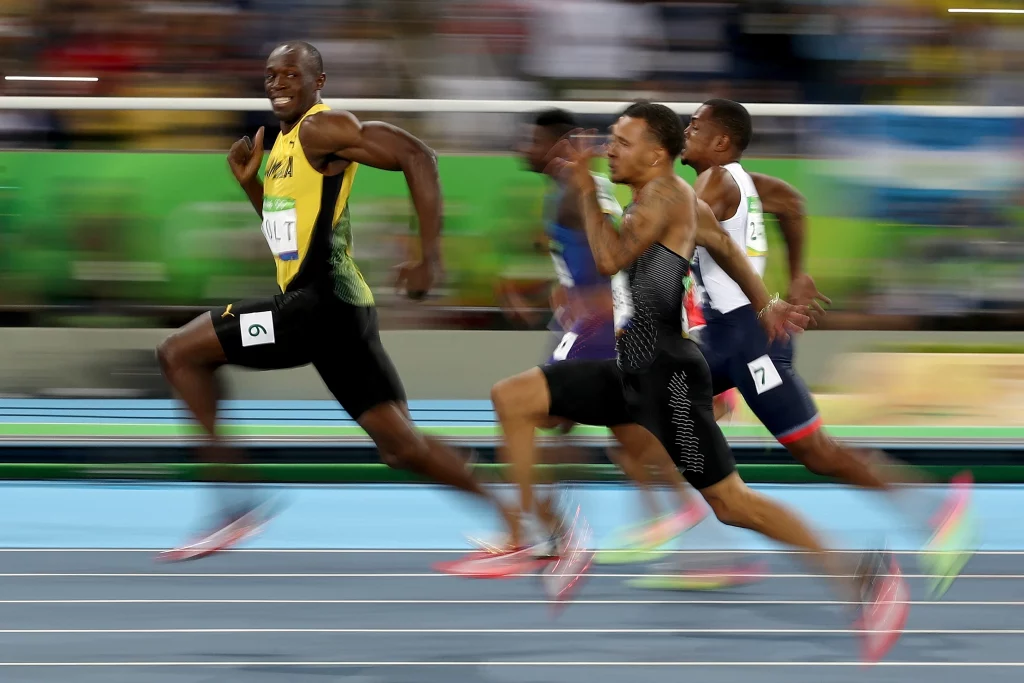
Next time, I think I’d like to talk about how little time it took Usain Bolt to win an Olympic gold medal. Unless you’d like to talk about something else? Feel free to leave any thoughts, suggestions, or comments down below

And until then… go write.

August 3, 2023 / 1 Comment

Prep Work

I’m assuming most of you are familiar with Ludwig Wittgenstein from his philosophical work involving mathematics, logic, and language. He’s considered the most noteworthy philosopher of the twentieth century. What he’s less known for is a fairly dry series of what we’d now probably call YA sci-fi stories he wrote at Cambridge, showing his idea of a utopia, what sort of problems could arise in such a utopia, and how the peoples of such a world would respond to said problems.

The reason you probably haven’t heard of that less known bit is because I just made it up. Or did I? You’ve got no idea, do you? But you’re going to keep reading to find out…

Another possibly made-up story I’ve heard about Wittgenstein is that one day he was walking in the city with someone, discussing history and knowledge in general, when his companion made the observation that people in ancient times must’ve been… well, really stupid. How could they possibly have thought the sun went around the Earth? I mean, it’s so obvious how the two interact once you stop to think about it. Were people just… a lot smarter back now?

And as the story goes, Wittgenstein nodded agreeably through most of the little tirade, and then, when he had a chance to respond, he wondered, just out of curiosity… what would it look like if the sun was orbiting the Earth?

While you’re dwelling on that, let me talk about the pandemic a bit.

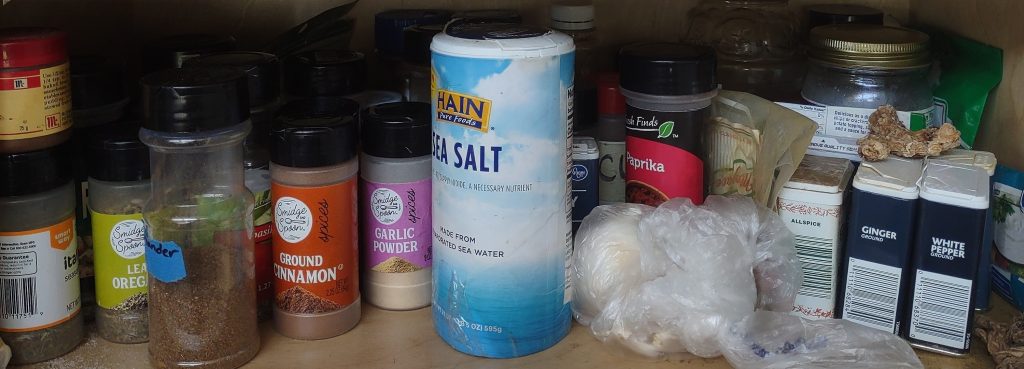
Like a lot of folks, I ended up using the lockdown to work on my cooking skills. Watched a lot of YouTube videos. Ended up trying a lot of Korean recipes and even some vegan/vegetarian ones. I can make pretty good fried rice now. And some fantastic spicy broccoli noodles. Also, those plant-based meats like Beyond and Impossible cook up great in dishes that call for ground beef.

One of the biggest parts of this learning curve was learning the difference between preparing to cook and the actual act of cooking. Like a lot of you, I’m guessing, I tended to do a lot of stuff on the fly. And it usually led to me getting more and more frantic as I was looking for this ingredient or that implement and crap how long has that been in the water now? Crap crap crap turn the pan down and where the hell is the colander?!?

Anyway, point is, my cooking skills improved a lot once I started doing a little more prep work. Not to the level where I had ten silver bowls each one with an ingredient in it, but also… not far from that. I get all my veggies cut, get the sauces mixed, get individual spices or oils out. It takes a little longer, but my cooking’s consistently so much better.

The other cool thing about the prep work is that it’s kind of free-form. It doesn’t really matter what order I do most of it in as long as most of it’s done before I start cooking. Maybe I’ll pull out everything I need to make the spicy sauce. If my partner’s around, maybe I’ll cut mushrooms and peppers while we talk or watch something silly. Sometimes I make the sauce while I’m waiting for the water to boil for noodles. It doesn’t really matter as long as I get enough of it done that it’s not slowing me down once the timers get set.

Anyway, maybe some of you have figured out what I’m getting at here. And some of you are just getting hungry. Its okay, go grab something, I’ll wait.

One question that tends to come up a lot in writing discussions is how do you start? Do you need characters first? Should I begin with the plot? How much do I need outlined? Do I have to know my theme right out of the gate?

Here’s the ugly truth big writing degree doesn’t want you to know (“gurus hate him…”). It doesn’t matter. Seriously, doesn’t matter in the slightest.

Whatever little snippet of dialogue or character quirk or cool worldbuilding idea that sparks a story in your head—that was the correct thing to begin with. If the first thing you want to do is figure out a coherent theme or write out a beat-for-beat plot… fantastic. Character sketches? Big swaths of dialogue? That one big twist scene at the end that’s going to freak everyone out? Do it! It’s all good.

All of this stuff is the prep bowls. They’re the scattered ingredients we’re going to pull together to make our story. But it doesn’t matter what order we set them up in—it just matters that they’re there on hand when we turn on the heat and start working. I don’t want to be sixty pages in and find myself thinking “okay, and maybe our hero has a love interest who’s… a woman… who works at… her job… and has a… name.”

And the reason it doesn’t matter how I start is that nobody’s going to see this part of it. It’s like the first draft I don’t show to anyone, except this is pre-first draft. Nobody sees any of this. At best, it’s a two-minute story I get to tell in an interview about “where did you get the idea for this?”

Y’see, Timmy, what 99.9% of all people are going to see is the finished book. And even if you set up your prep bowls in the complete opposite order I did, nobody’s ever going to know. Because both of us are going to have completed, polished books with all those elements seamlessly integrated. Two very different processes end in the same result.

So stop worrying about starting with the right thing and just start with your thing. The thing that caught your attention. The thing that sparked your imagination.

Next time, well, I guess we should talk about that thing marking the spot. Or what used to be the spot.

Until then… go write.

July 31, 2023

July Newsletter

We’re halfway through the year. That’s just amazing to me. Then again, the past decade has pretty much destroyed my internal clock and I have no sense of time anymore, so…

What can I tell you about?

I finished that last short story. Finally. I know I’ve told you about a few I’ve done lately, but the truth is I’m not great when it comes to short stories, especially for anthologies. I can come up with lots of great short story ideas, yeah, but a lot of the time I tend to freeze up. Especially when they’re very specific. “We’re doing an anthology about cyborg vampire motorcycle gangs—you in?”

In this case the specific aspect of the anthology came from, well, history. It’s a Carter & Kraft story, which have all been set during World War II, but this is the first time I’ve tied one to a very specific historical event. And that meant flexing and stretching and doing my best to make the story work within that framework. Fortunately the editor read the first draft, made some suggestions, and also assured me we didn’t need to be super-rigid with regards to history. So it got done, we’re both happy, and I can’t wait for you to read it. To read all of them, really.

And all of this means I’m back working on TOS, which I’ve mentioned here once or thrice. I’m thinking this could be really solid by the end of the month. At least a big chunk of it done. Which would be very cool.

In other news…

As I’m writing this, we’re mere days away from San Diego Comic-Con, and this is the first time in well over a decade I’m not going. And I live here in San Diego! I was thinking about it a few months back, and the sad truth is I haven’t had a release in over a year at this point (yeah, I know! Imagine how I feel about it). So if I went, I’d have nothing new to show anyone, just be taking space away from someone else, and—truth be told—probably not doing a lot with that space. Plus, to be totally honest… I wasn’t really thrilled about the safety protocols during last year’s SDCC (or at least, the lack of enforcement), and now that they’re just throwing the doors open, well…

(although on Friday the 21st I’ll be doing my own mini-panel on Instagram– all day Ask Me Anything. Old projects, new projects, film work, toys, cats, whatever)

Then again, with the film industry strikes (go union, burn this friggin’ system to the ground), this might be the best con in years for writers and artists. Who knows? All I know is next year I’ll be pushing to have a much bigger con presence wherever people want me.

And one more thing. I’m thinking of migrating this newsletter over to a different service. I’m really not liking the Substack business model, as I’ve mentioned once or thrice before, and after a few months of trying to balance things I’ve just come to the conclusion… they just don’t balance. Not for me, anyway.

That said, we’re all trying to be a little safer with personal information, so I just wanted to get a general vibe if most of you would be okay with me just shifting your email address over to another system (and then shutting this down). Generally yes? Absolutely not? How did I get on this mailing list?

Anyway…

Cool Stuff I’ve Been Watching— Still enjoying Strange New Worlds (as I type this, we’re less than two weeks from the Lower Decks crossover episode). Skull Island was surprisingly fun—I was expecting something much more kid-oriented.

Cool Stuff I’ve Been Reading— I got to read the new one from Kristi Charish (which you’ll all probably get to read next year). About to dive into The Endless Vessel by Charles Soule and then another book to blurb.

Cool New Toys – I got the Spinnerette figure that was part of a Spider-Man two-pack. It’s basically “what if Mary Jane also had spider powers,” and I think we even glimpse her in the Spider-Verse. Through eBay I stumbled across a toy/ game/ comic shop (KC’s Rockets) which is ridiculously close to me and has been here for years. So I picked up the Red Guardian (from Black Widow), a classic Ravager Star-Lord, and Toybox versions of Cap and Spidey.

July 27, 2023

Devil In The Details

Hey, look! Lori made a request a few weeks back and we’re fulfilling that request. Because that’s how we roll here!

So, the question is details. How much is too much? How do you know if it’s not enough?

This won’t be great to hear but… this is pretty much impossible to answer. Mostly because writing is art and all art is subjective and a lot of the stuff we call “description” is a huge chunk of the art portion of this equation. Hypothesis? Theorem?

Anyway, my book isn’t going to be anything like your book. Your style isn’t going to be anything like my style. And we each probably have different ideas about how we want our respective stories to land. And that’s before we even touch on basic structure ideas, that different chapters and scenes are going to have different pacing and purposes and will need different levels of description and detail. Within the earlier restrictions I mentioned about our individual styles and all that.

Really filling you with confidence right now, aren’t I?

I thought about this a bit, and I think the best thing I can do is give you my own personal rules for how I tend to approach these things in my own writing. The sort of rules-of-thumb I use to decide if I spend a paragraph describing someone or something, or a full page, or maybe just half a sentence. And like any kind of writing advice, this is just what works for me, so it might not work for you. It definitely won’t work for that guy. But hopefully it’ll get you thinking and considering things in your own work…

So here’s my three guidelines for adding (or not adding) details/descriptions in my writing.

1) Are these details necessary

There’s an idea I’ve brought up once or thrice here before, Damon Knight’s information vs noise. Facts we don’t know are information. Facts we already know are noise. We like getting information and we pay attention to it. Noise is annoying, and we tend to ignore it whenever we can.

In my mind, describing objects, places, or processes that we all know is kind of a waste of my word count and the reader’s patience. Especially if these things aren’t somehow important to my plot or story. We all know what a smartphone looks like. And a grocery store. And how to pump gas. I don’t want to spend my precious words on things like this. I want to use them to describe the strange pendant that woman slipped into my pocket when she bumped into me. Or that alien in the middle of the road I might have just hit with my car.

What’s that in the back? Well, yeah, there are a lot of makes and models of phones out there. Very true. But honestly… how many of them look all that different, especially once they’re in a case? I mean, think of the BBC Sherlock with Benedict Cumberbatch. His smartphone was a huge part of his character and how he interacted with others, and the show itself changed how everyone does texting in television and movies.

Off the top of your head,…can you say if Sherlock’s phone was an Android or iPhone? You probably can’t because the truth is it’s completely irrelevant. It would’ve been a waste of time to make any sort of distinction.

In fact, as I’m scribbling this, I’d like to expand on the information/ noise idea a bit. I think the first few times we encounter obvious noise in a story, we tend to think there’s a reason for it. That the author has a purpose for describing something we’d otherwise consider not worth mentioning. I mean, they wouldn’t give us half a page of description of the waitress and give her a name if she wasn’t kind of important to the story, right? This has to be information. And that’s why this sort of thing can cause a lot of frustration, because at some point the readers realize the waitress is irrelevant and it doesn’t matter what kind of phone she uses and they’ve just been processing a lot of noise that isn’t necessary to the story.

Now, before anyone gets too grumpy, I want to move on to my next wishy-washy rule…

2) Do these details serve a purpose

A purpose? Wait, isn’t that what I was just saying? Am I having a stroke?

When I say a detail serves a purpose, I mean it might not be a necessary, integral part of my plot or story, but I still have a reason for including it. Maybe it’s helping me set the tone or the mood or it’s hinting at something about a character or location or an object. Whatever it is, if you asked I could explain the function of this bit of description.

For example, what color and model of car Yakko drives is probably irrelevant to my plot. It’s important that he has a car, but nothing hinges on him having, for example, an economy car vs a sports car. The reader could picture either and nothing would change in my story. But if I call it his fire-engine red midlife crisis on wheels? That’s giving you piles of extra information, isn’t it? It’s not necessary, but it serves a purpose.

A few key things here. First is word choice. Since I’m putting in this description for a reason, I should really make sure the words I choose push that purpose. Like with Yakko’s car. It could’ve just been a red sports car, but describing it the way I did told you it’s a red sports car and about Yakko, and about how I (or maybe the narrator?) want you to view him in this story.

Second is not to go overboard. It’s easy to describe more and more and more and come up with a rationalization for all of it. Like, if I want to show how wealthy someone is, I could give lush descriptions of every item in their office and it’d all fall nicely under the umbrella of “showing how wealthy they are.” But I could also probably do this by focusing on just one or two things– maybe that painting or the weird glass sculpture of.. whatever that is. Friggin’ modern art. Costs a bundle and I can’t tell if it’s supposed to be a flower or a naked woman or maybe it’s just a shape? I don’t know. Some people have money to burn, right?

I’ve got one more details guideline for you. I really think this is the most important thing about including details. If you want to ignore the last two things, fine, but please consider this one…

3) Are these details affecting the pacing

Almost universally, things are going to get faster and tenser as my plot and story progress. That’s just basic narrative structure. It picks up its pace as it moves along. And I want my readers to feel that quickening of events, that rise of tension. I want it to carry them along like a wave carries a surfer.

Description almost always brings things to a halt. It can’t be helped. In the real world we can actually see/ hear/ feel things and absorb all those details almost instantly, but on the page we have to write them out. A single glance can take four or five paragraphs to cover everything we saw.

This means it’s very easy for details to mess up my pacing. If things are moving at even a mild pace, one or two paragraphs of description can slow things down and knock us out of the story for a moment. If we’re near the end and things have really picked up speed, hitting even a few lines of excess description can be jarring. So I need to be careful about where and when I deploy them.

It’s my own personal style, but I’ve mentioned before that I like action (as in fists and guns and swords and car chases action) to feel like it takes about as long to read as it would take to happen. As close as possible, anyway. It doesn’t sell a blinding-fast martial arts fight to write out each strike, each block, each counter. Same with running in sheer terror from the monster in the woods, which has two primary horns on each side of its head, three smaller curled horns clustered around them, and a sort of ridged brow over each eye, which are a fiery red. These are times when–IMHO–pausing to add a lot of detail can really kill the pacing or tension. It knocks us out of the fast-paced flow of the moment and suddenly we’re standing around counting eyebrow ridges instead of running for our goddamned lives.

Also, overall, I feel it’s better to describe things earlier than later. The pacing should be slower in the beginning of a story, so it makes a brief pause here or there fit in better. Plus, it makes sense to describe things when we first see them (or when we eventually stop running away from them)

And again, there could always be an exception to this. There might be an all-new element in the third act that has to be described in detail. But really, if you think about it, structure kind of demands these things be rare. If I’m introducing a lot of necessary stuff in my third act… something may have gone wrong somewhere.

So that’s it. Those are the three ways I tend to screen my descriptions and details to figure out if they’re good, excessive, or just completely unnecessary. Hope they help a little.

And if you’ve got a question or a topic request, please let me know.

Next time here, I’d like to talk a little bit about one of our planet’s great philosophers, Ludwig Wittgenstein.

It’s going to be so much fun.

Until then, go write.

Categories