
December 20, 2017 / 4 Comments

Critical Hit

            Okay, first of two posts this week, as promised…
            So a while back at the LA Writers Coffeehouse we were going to talk about criticism.  All the directions it can come from.  What it’s like from either end. How to put it out there.  How to receive it.  We never got around to it there, so I thought I’d talk about it here.
            Just to be different, though, let’s approach this from the tougher angle, in my opinion.  Giving criticism.
            I know that’s hard to believe—that giving criticism can be the hard part.  I mean, just check out any social media site.  Over the past week or so there’ve been tons of people offering critiques of… y’know, different stories.  Often for free. Usually unasked for.
            And, most of the time, not very good.
            Criticism—actual, constructive criticism—is a bit more than ranting online.  It’s being able to state quantifiable, true, relevant facts about a work.  There are a lot of folks who consider themselves critics who really just… spout their opinions a lot.
            I saw one of these recently.  Directed at me.  Someone had read one of my books, loved the first two thirds, but then it had an “action-packed, nonsense finale” that the reader didn’t like.  Which was a shame, because the rest of the book had been pretty good.
            I’ve talked a bit about this before, one of the first things to learn about giving criticism..  Me liking or not liking something isn’t really criticism.  It’s irrelevant.  That’s just a subjective opinion.
            This can be a tough thing to figure out sometimes.  It took me years to be able to separate my opinions from actual facts and observations about the story I was reading.  There are a lot of books and movies I didn’t like, but I can also acknowledge that doesn’t make them bad.  It just means they’re not for me. 
            So that’s lesson one in offering good criticism. Separating my opinion from actual facts.  Anyone can say “this sucks.”  If I’m trying to offer valid criticism, I need to be the person  who can explain whyit sucks.
            And remember—“I didn’t like it” isn’t a reason.
            This should bring us to the second point about giving criticism.  It should be constructive, not destructive.  The goal isn’t to rip something apart, it’s to explain why and how it can be better.  Yes, sometimes this might mean a couple blunt, harsh truths will need to come out.  But even these don’t need to be designed to make the writer cry for weeks.  If that’s why I offered to critique someone’s work, well… I’m doing this for all the wrong reasons.
            Here’s a good rule of thumb.  I shouldn’t point out problems if I can’t offer some kind of actual solution.  This is also a good way to figure out if this is an opinion-vs.-criticism issue.  It’s tough to change opinions, but if something’s actually wrong, it shouldn’t be hard for me to figure out some way to fix it.
            Keep in mind, this doesn’t have to be a good solution.  My editor—a very high ranking editor at Random House—freely admits he’s great at spotting problems, awful at coming up with solutions.  But he’ll always have an answer whenever I ask about something.
            And I shouldn’t offer these solutions unless the writer specifically asks for them—it’d be rude of me to start explaining how someone else should be writing their story.  I mentioned helping a friend with her travel book a while back, and twice or thrice in the notes I’d point out an issue and say “I have an idea that might help with this—let me know if you’re interested.”
            Which is a great lead in to my third point.  If I’m going to offer criticism, I should know what I’m talking about.  This is a tricky one, because it means a lot more than “I read a book every week” or “I’ve seen every Best Picture winner.”  It especially means more than “I just want to read it early.”
            Being able to offer a good critical analysis means being able to juggle a lot of hats.  I need some actual knowledge and understanding of different structure forms and grammar.  I need to have read more than two or three “how to write a bestseller” books.  It wouldn’t hurt if I’ve sat and thought about this knowledge and absorbed it a bit.

            And just book-learning isn’t going to cut it.  I also need a lot of practical experience.  Lots and lots of reading.  Not just the classics. Not just the NYT bestsellers.  Not just the “good” stuff.  I need a broad-yet-solid background in the subject matter—no one should be asking me to read their hospital-based romance, and if they do I should be clear up front this isn’t quite my area of expertise.

            There’s also an empathy issue here, too.  I’ve mentioned a few times that writers have to have a good sense of empathy—if I can’t put myself in other people’s shoes, I’m going to have a tough time as a storyteller. Same goes for critiquing a story.  I need to be able to see what effect the writer’s going for andbe able to predict how people are going to react to it.  If I can’t do this, my whole critique is going to collapse.
            And that brings us to the fourthand final point.  This one’s going to sound obvious.  If someone’s going to trust me with their work, if I’m going to tell them I’ll critique it… I should.  They’re asking for feedback and I should make an honest effort to give it to them.  There’s few things more frustrating for a writer than waiting weeks for feedback and getting a one line email that says “Yeah, I liked it.  It was fun.”
            You may laugh but…  I’ve had beta-readers do that.  Which is why they’re not beta-reading for me anymore.
            Likewise, comments that are too vague to help… don’t really help.  I shouldn’t be writing things like “I saw a couple typos—you’ll probably catch them next time through.”  Again, if I’m doing a critique, I should be noting all this stuff.  Getting caught up in it isn’t an excuse—I’m not supposed to be reading this for fun.  I should take my time and do it right.  As the man says (paraphrased), treat them the way you’d want to be treated.
            Now, with all that said… here’s two positive things about giving criticism.
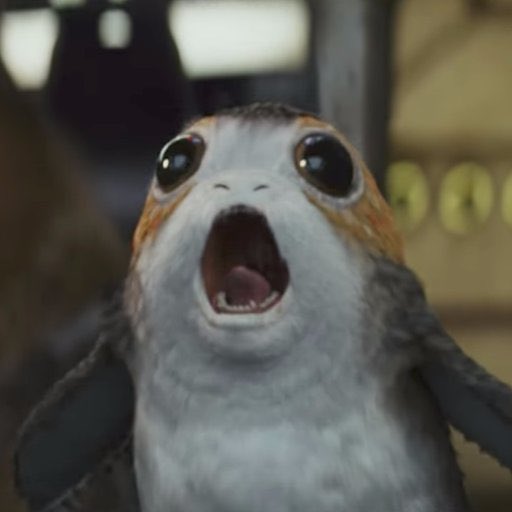
            Oneis that it doesn’t need to be stiff. Unless I’ve been hired as a professional, I’m reading/critiquing for somebody I know.  Possibly someone I even consider a friend.  I can have fun with this.  It can be conversational.  It can be funny/snarky/flirty whatever.  I don’t need to change my relationship with someone to offer them criticism.  They want it from me, not from Professor Huffy von Formalnotes.
            Twois that… well, I don’t have to read it all.  No, I don’t.  Really. I’m not getting paid, I’m not doing this as part of a formal submission… I don’t need to read all 815 pages. 
            At least three or four times I’ve read books for friends who wanted feedback and forty or fifty pages in it was clear there were… inherent issues.  Things that weren’t going to change.  Things that were going to kill the book’s chances if an editor or agent read those first fifty pages. So I stopped there.  I gave them all the notes I’d made up to that point, and then explained the bigger problems I was seeing.  And that was it. My time is valuable—and so’s theirs.  They don’t need to read twenty pages of notes from me repeating the same things over and over and over again.
            And again.
            There you have it.  Some tips to giving better criticism.  Maybe even a few tips about dealing with it if you read around the edges a bit (and follow some of the links).
            Next time… well, we’re closing in on the holidays, and after all this criticism we could probably talk about some good stuff, yes?
            Until then, go write.
December 15, 2017

Family Tree

            Ugh.  Completely missed last week.  So very sorry.  I was trying to get a pile of outlines done. 
            Yeah, I know.  Me doing outlines. The world really has turned upside down.
            So, a few weeks back and I asked about possible topics and I got one request that seemed… well, it could be very relevant.  I’ll know in a couple hours, but I won’t say anything.
            Most of us are related to someone.  It’s really rare for someone to have no relations. So rare that it’s usually a major issue—for someone to have no parents or grandparents, no siblings or cousins. It’s almost off-putting, isn’t it?
            Likewise, most of our characters are going to be related to someone. Because our characters are realistic, relatable people.  And again, if we’re introduced to a character with no family at all… it usually says something about them, doesn’t it?
            Over the past ten or fifteen years, maybe, it’s become a big thing to have notable relations. Everybody is someone’s daughter, the brother of that guy, or the second-cousin of her mother-in-law.  Historical figures, mythological figures, other fictional characters.  How often have we seen a character who’s descended from this line or heir to that empire?
            Now, there are some plusses to me doing this sort of thing.  The quickest one is that it’s an easy connection to previous stories and can save me some worldbuilding.  Just by telling you my next book is about King Arthur’s secret daughter, I’ve established a timeframe, the general world, some potential history,
            Plus—it can be a bit of fan service—which isn’t always a bad thing.  If you’re a comic book fan, you may be familiar with the Huntress.  In a simpler time, the Huntress was living proof that Batman and Catwoman hooked up (something we now just kind of take for granted).  So her parentage was very important to her character.
            Which is kind of the big point with this sort of thing.  If I’m going to bring up these relations… well, there should be a reason for it.  If I decide to bring up Wakko’s uncle and tell you he was the guy who invented lasers, yeah, it’s neat, but so what?  Likewise, if my peasant Dot is secretly the illegitimate daughter of the king, this better be a story about bloodlines and inheritance.  Because if it isn’t… well, why does it matter that she’s the illegitimate daughter? Why did I waste precious time and word count telling you this?
            I’m stressing this because there’s also a bit of a trap with this device, and I think the trap is what people tend to think of when they gripe about this sort of thing.
            Y’see, Timmy, sometimes this relationship to another person is all the character development someone gets.  Characters get defined by their relationships to other characters rather than by actual, active traits of their own.  Or the relationship’s a stopping point—once we know this, we don’t really need to know anything else.  They cease developing at that point because… hey, look who his mom is.  What else could you possibly need to know about him?
            I’ve seen this happen a lot.  If I had to guess, I’d say at least a third of the time when I’ve seen a big “relative reveal,” that’s pretty much it for character development.
            And I’d guess another, somewhat overlapping third of the time, the relation’s completely irrelevant to the story.
            That overlap’s a bad place to be.
            Just sayin’.
            So don’t be scared of giving your characters a family.  Even ancestors, if it comes to that.  Just make sure there’s a reason for it in the story you’re telling.
            Next time…
            Okay, I still feel bad about missing last week, so I’m going to try to make next week a twofer.  Tune in Tuesday and we’ll talk about getting feedback from your (former) friends and how to avoid being disowned when you give it.
            Until then… go write.
November 30, 2017 / 4 Comments

One Of You… Is A Murderer

Sorry for the blast of posts this week.  Feel free to blame it on my love of storytelling—my own and other peoples.  Or rampant consumerism.  Or on me wanting to pay rent in January.  Any one of these answers is true.

But now… let’s get back to some plain old writing advice.

Readers tend to love a good mystery.  It’s kind of like the original VR game, where we get to see all the same clues and evidence as the protagonists and try to piece them together first.  We do it with books. We do it with TV shows.  Hell, there are some fantastic comic books you can do it with.  Alan Moore made a compelling argument once that comics are the perfect medium for mystery stories.

But…

As writers, let’s be honest.  Mysteries are tough.  They need to be in that perfect sweet spot—not so tough they’re impossible, but not so easy that my reader solves it before my character does (and then my character looks stupid for the next 150 pages for not figuring this out yet).

Plus, there’s so much to keep track of.  Who saw what.  Where they saw it.  When they saw it.  These are all super-important, because readers hate it when they get to the end of a mystery and find a gaping hole there.  It’s probably the second-most annoying thing I can do when I’m writing a mystery.

(And now I’ve got you all wondering, don’t I…?)

At the Writers Coffeehouse a few weeks back, one of our regulars, Hal Bodner, offered a brilliant tip for writing mysteries. It eliminates this issue almost altogether.  Honestly, it’s so clever… it’s the whole point of this little rant.

If you’ve ever seen or read an older mystery, they almost always have a chapter near the end when our fearless detective (or sleuths or investigators or what have you) bring all the suspects together and walk them through the crime.  They’ll go over the evidence, the clues, the alibis.  They’ll explain what each one means, which ones were red herrings, which ones they immediately discounted, and which ones pointed to…you, Widow Humphries!  Or should we call you, Isabella, the Viscount’s estranged sister!!!

You know this scene, right?  I’ve heard it called the parlor scene, the tea room room speech, the summation gathering, and other titles along those lines.  Hal called it the detective’s speech.  You might still catch it today on shows like Elementary, although it’s often pared down to just the detective and the guilty party.

So… here’s the tip.

Write that scene.  Even if my hard-boiled action story doesn’t really call for it, I should spend a day or three and write it out before I get going.  Have my investigator pace the room and point at people and say how he noticed this and saw those and learned about this.  Explain how this theory was discarded and where that idea came from.  And then point that finger right at the guilty party and scream “J’ACCUSE!!

Or maybe your detective plays it cooler than mine and just stands there with her hands in her trenchcoat.  Maybe she gives a little nod and a faint smile when the murderer gets hauled away. And then she pulls out her flask and crawls deep inside until she can re-bury all those memories about Jenna that this case dragged up again…

Anyway…

I don’t need to keep this scene, mind you.  Very likely this will just be one of those things I write that doesn’t get used.  Probably best if it isn’t.  Like I mentioned above, it’s kind of an archaic, cliche scene, and on the off chance it shows up it’s really pared down and tight.

But once I have it written out, I have a mini-outline for how the mystery is revealed in my story.  Literally, who knows what when.  When they met the suspects.  What they see.  When they see it. When they make which connections.  It’s all right there in that speech—what my investigator needs to solve the crime.

So gather your suspects—yes, even the butler—get them all seated in the parlor, and tell us about the first thing you noticed when you saw the crime scene.

Next time, I wanted to talk about Luke’s father.

Until then, go write.

November 29, 2017

Other Awesomer Books

            Monday I posted the usual ego-stroking Cyber-Monday list of my own books and some anthologies I’m in.  Today–as I have in the past–I thought I’d toss out some other books I’ve enjoyed this year that were written by much more talented people than me.  They’re not really in any order, and a few of them aren’t exactly new, but if you’re looking for something for that special somebody (or for yourself), it’s going to be tough to go wrong with any of these… 
            As always, you can prove you’re a morally better person by visiting your local bookstore.  There’s still plenty of time for them to order something for you if they don’t have it in stock.  Plus, some of them have connections and can get you autographed copies and stuff like that…
Every Heart a Doorway by Seanan McGuire—the short, simple explanation is that this book is about all those kids who find mystic gateways or enchanted wardrobes or interdimensional touchstones, have fantastic adventures… and then eventually end up back in their normal, mundane homes again and having to cope with real life. The best thing I can think to say is that I’m so ridiculously jealous of this book. It’s just magnificent.

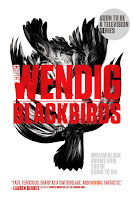
Blackbirds by Chuck Wendig – I am super-late to the table with this one, because Wendig’s been writing this series for five years now.  Miriam Black is a foulmouthed alcoholic who’s gifted (or cursed) to immediately know how and when everyone she touches is going to die. After years of dealing with said ability, she’s seen someone’s future death that involves… her.  It’s funny and dark and fantastic and I think there are five of these books now.

Heroine Complex/ Heroine Worship by Sarah Kuhn –superpowers are real. So are superheroes.  The two aren’t always connected.  Oh, demons are real, too, and they can possess all sorts of things.  Evie and Aveda are such crazy-fun -lovable-exciting characters that you’ll devour each book in a day.  I did.

Killing Is My Business by Adam Christopher—I mentioned the first book in this noir-robot-detective series a while back. Adam’s written more of said series.  They’re still amazing, and now there are mysteries-within-the mysteries.  You should read them.
An Excess Male by Maggie Shen King – I got to read an early copy of this and it’s just brilliant.  A dystopian tale set in future-China, where the one child policy has gone… well, just like everyone predicted.  Our four protagonists are trying to form a family while also each hiding an array of personal secrets and deciding who to trust with them.  It’s a fantastic, slow-burn book that reads like the wonderfully twisted love child of The Handmaid’s Tale and Big Love.
Sleeping Giants/ Waking Gods by Sylvain Neuvel—another one I was late picking up (but got caught up quickly).  A fantastic epistolary tale about the discovery of a giant alien robot and the team that comes together to figure out how they use said robot to defend the Earth.  It’s Contact crossed with Pacific Rim, and if that idea doesn’t excite you we have nothing else to say to each other.
            Good day to you.
            I said good day.
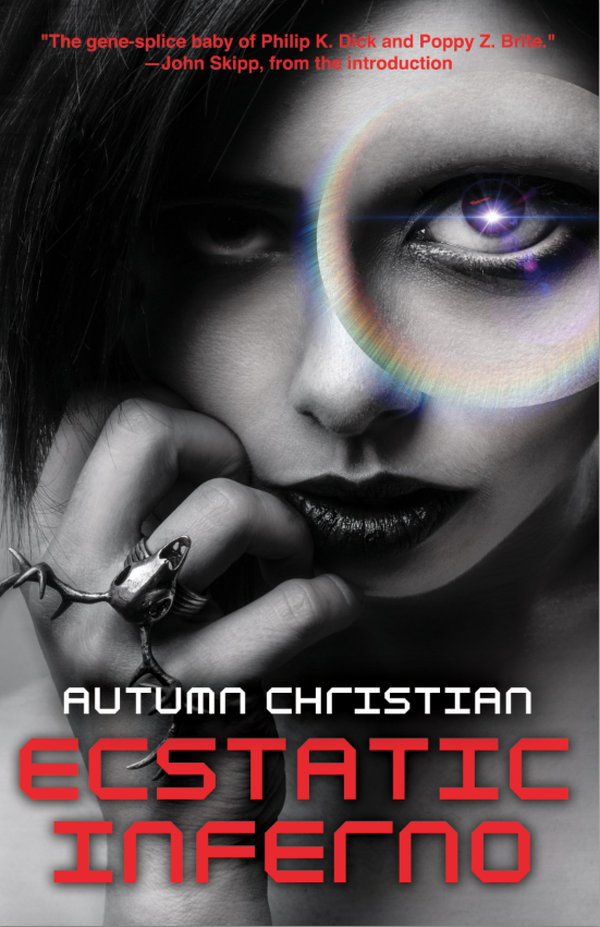
We Are Wormwood by Autumn Christian – a beautifully surreal tale about a young woman growing up with insanity and then… well, descending into it herself with a few nudges from her demon girlfriend.  Christian also has a fantastic collection of creepy/scary/sexy short stories called Ecstatic Inferno that I wolfed down in about a day.  I befriended her on Twitter just so I can constantly prod her to write new stuff for me to read. I’m selfish that way.
Ninth City Burning by J. Patrick Black—okay, this glorious space opera’s kind of tough to explain, because in the future Earth has shifted over to an entirely new form of technology.  In short, its about a group of people developing new weapons, learning to use them, and learning to be them.  It may take a little bit to get into this one, but it’s sooo worth it.

Revolution –by John Barber and Cullen Bunn—I was a die-hard comic fan for years, but got driven out by the constant (and often substandard) crossover events.  I started reading some of IDW’s “Hasbroverse” books last year and was frustrated when they announced Revolution, their own upcoming crossover event.
            Holy crap.  This was my favorite comic book event in at least twenty years. It begins with a conflict between the GI Joe team and the Autobots which gets disrupted when Rom the Spaceknight shows up and uses his Neutralizer to incinerate General Joe Coulton before flying off again. If you were already a fan of IDW’s GI Joe or Transformers books, you can guess how a silver robot showing up and killing the Joes’ CO goes over.  If you’re a fan of Rom… you know what this killing implies.  Revolution is honestly suspenseful and dramatic, and has amazingly solid ties to all the books involved.  It’s clearly a crossover that was planned far in advance, and it made me a regular at my comic shop again.

            And anyway, those are some of my favorite things I read this year.  Any one of them would make for a fantastic gift.  And if you’ve got some suggestions of your own, please mention them in the comments down below.

            Tomorrow… regular old writing advice.  Thanks for your patience.

Categories