So, hey, random bonus interview!
Well, not exactly random. Tuesday is the day new books come out and one of them’s from my good buddy Craig DiLouie, who I crawled up out of the zombie trenches with many years back. We ended up seated next to each other at our first convention as writers (well, it was mine—not sure it was Craig’s and now it’s too late to ask for this), and we sat next to each other many, many times after that. At one point we had a combined sales pitch where we could talk about each other’s books to people.
Anyway, he and I were shooting messages back and forth last week, talking about publicity and visibility and authors helping authors. At some point during the back and forth it struck me we could just do it ourselves. I mean,
I used to interview complete strangers for a living… surely I could interview someone I know and help them get a tiny bit more exposure. And maybe talk a little bit about writing, too.
So welcome to what may be a new regular feature, based entirely around my schedule, my friends’ schedules, book release schedules, and okay maybe it won’t be that regular. Semi regular. And before we go, here’s all the usual explanations/ provisos that I put on
every interview I post here. Bold is me asking questions, the rest is Craig answering. I’ve dropped in a couple links, but this isn’t meant to imply Craig’s endorsing my views. It’s just giving you a handy connection when he’s said something that might sound similar to something I’ve said.
Our War is out today everywhere. Go pick it up at your favorite local bookstore.
We’ve known each other for eight years now, right? I think we first met face to face in 2011 at a Seattlecon, right?
It was around 2011, that’s right—Zombiecon. We were with Permuted Press in those years, churning out zombie fiction. It was an amazing time. At these cons, you meet all these great people, but sometimes, you run into a brother from another mother. You were one such guy for me and still are!
We talked a lot of shop at that con, and I remembered thinking right off the bat that you were a writer who was going to go places. This was right about the time your novel
-14- was in production. It’s incredible how much has
changed for both of us.
Right, We did Crypticon up there a bunch of times and I always forget we started with Zombiecon at the same hotel. And, yeah, I love that every time we get together we just instantly drop back into conversation mode and start talking.
Speaking of which (clever segue), let’s talk about Our War What’s your two or three line elevator pitch?
Our War is a dystopian thriller about a brother and sister forced to fight on opposite sides of a second American civil war. Recruited and radicalized, they eventually realize they must fight for each other and themselves if they want to survive. The novel might be described as Omar El Akkad’s
American War meets Steven Galloway’s
The Cellist of Sarajevo, both of which put a human face on the horrors of modern civil war.
I think I already know the answer to this, but other people might not– when did you start writing this, or playing around with the idea, I guess? Was it something recent you based off current events or one of those cases where reality started leaning into your story over time?

Why would I write a dystopian novel? Because they always say, “Write what you know!”
Americais more divided than ever. The tribalization of American politics has always troubled me because there’s only one way it can go, which is worse. So I did what I often do when I start a novel, which is say, “Okay, let’s take this to its logical conclusion. What would it really look like?” No wish fulfillment,
no straw man supervillains, no
romanticism, no plucky patriots resisting tyranny. Just Americans living in different political narratives fighting over which narrative was true. While I was writing, real events started to feed me fresh ideas, making the story feel torn from current headlines.
Okay, you’ve actually given me lead ins for two things I wanted to ask you, because one thing I really liked about this was that you kept it grounded. This isn’t some over-glamorized epic, it’s very close and intimate. It’s a national civil war, but I really like the idea that it’s not a north and south thing, but individual cities that have split in half, more like gang turfs than enemy lines. Was that a key idea from the start or was it something you sort of found yourself working into to solve problems, this whole smaller-scale? I mean, for me there’s almost always at least one point in the process where I realize “geeez, this will all be so much easier if I just do this…”
Early on I planned this book out, I came to the conclusion that a civil war in
Americawould look far more like the Bosnian War in the 1990s than the last civil war in the 1860s. Triggered by a Constitutional crisis, an armed national protest by the Right snowballs into a revolution. The resulting war is
rural versus urban, not states versus states, and in that type of conflict, how could the military respond? Look at an electoral map by county, and you can see the battle lines drawn along the red, blue, and purple. This is a war in which everybody fights, and nobody wins.
By making two of Our War’s protagonists child soldiers—who didn’t want the war and barely understand it—we see the real victims of civil war. In this type of conflict, the innocent always lose the most. All the things Americans shake their heads at happening in other countries like Syriacould happen here. Early on, I wanted to focus on the child soldiers’ story and the people whose lives they touch—a UNICEF worker, a journalist, and a rebel militia sergeant—to show different perspectives but otherwise keep the war local. They all care about the big picture, who’s winning or losing, but they are far more concerned about what’s happening right in front of them. This makes the story feel both intimate and deep.
You actually write about kids and horror a lot. I mean, Suffer the Children had adult protagonists, but the story was all about their kids. One of Us. Now this. Do you always intend to write about children? Or, I guess, a better way to put it, are you starting with the core idea that horror/suspense is always creepier with kids (which it is) and moving forward from there, or are you coming up with your plot, your world, and at some point going “y’know what would make this really intense…” ?
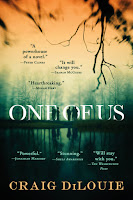
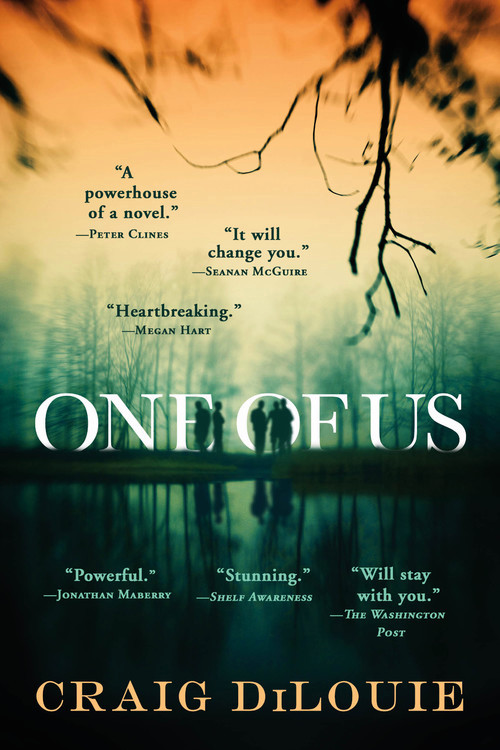
It’s funny because it’s not my intent, it just turns out that way. I think a big part of it is being a father who is deeply invested in his kids. They really are the world to me and never far from my thoughts. In fiction, children are also an excellent lens to examine big issues from a fresh angle. In Suffer the Children, we have a vampire novel where the world’s children are infected by a parasite that requires them to drink blood in order to stay alive. The result is a horror story that is also an examination of how far parents will go for their children. In One of Us, the story is about teenagers who are part of a generation born with strange mutations, which became a way to examine prejudice. And with Our War, having two of the five protagonists being children, and joining the war by becoming child soldiers, shows the real cost of war and in particular civil war. The contrast of innocence with very real horrors I think punches the theme to a higher level.
It strikes me that you and I rarely talk about politics. We talk about story ideas and movies and publishing paths and a lot of stuff in our field, but I’m trying to think of any political discussion we’ve had that did more than skim issues. So, that said, there’s no denying this is a really political novel. Probably the most starkly political one you’ve written, yes? Or, at least, that I’ve read (maybe your submarine novels are super-partisan–I have to be brutally honest, I haven’t read them). I do remember us talking about Our War at one point while you were writing it and you laughing and saying “this is going to give everybody a reason to hate me,” or words to that effect. Now that you’ve had time to get some distance, do you still feel that way? Are you still nervous about this part of it?
I’m not as nervous as I was because the early reviews are saying good things about the novel being ideologically fair, which was my intent. Look, typically, when you have a second civil war novel, the author has three choices. They can choose an ideology and offer a wish-fulfillment story, they can avoid politics entirely and set the war far in the future to make it fantastic, or they can tear it from today’s headlines but try to be fair. I took the last path, which is the most challenging and risky. Challenging because I as the author I had to keep myself entirely out of the story, even though I have strong political convictions. And risky because when you strike the middle path in a polarized environment, you risk pleasing nobody.
With Our War, two of the principal protagonists are children indoctrinated into opposing militias, and while they grasp core ideas, the politics are gibberish to them. They are exposed to ideological viewpoints, and then the other protagonists have their own convictions the reader gets firsthand. So the reader is exposed to a palette of views from characters entirely convinced they are right, and I trust the reader to do their own thinking without me trying to force anything on them. The primary point of the book isn’t the politics, however, but the polarization itself that leads to civil war. In that, Our War does its job as dystopia by issuing a warning, and it fights political narrative with a different story of what happens when tribalization goes too far. And despite dystopia being kind of dark, I think there’s a lot of optimism in Our War, if readers come away with new energy to resist such a future.
It’s funny, you mentioning the wish-fulfillment option. I think we both probably saw a lot of that when we were doing a lot more in zombie circles. Do you think–I’m gonna step away from your book for a sec to ask a general question–do you think those books come from a lack of empathy, or just a disregard for it? I mean, any sort of wish-fulfillment story is going to have kind of a narrow, focused audience. So do you think people tent to write them because they’re choosing to aim at that niche, or because they honestly don’t realize it’s just a niche and not a widely held view?
I remember back when we were writing zombie fiction, I used to categorize zombie books as either wish-fulfillment to satisfy the Z Nationcrowd or exploring all possible consequences of TEOTWAWKI to please The Walking Dead crowd. As for the authors of both, they were probably writing what they wanted to read, or they had a good sense of what some readers wanted, or both.
I get what you’re saying about empathy and would say it’s probably a disregard for it. Not a bad kind of disregard, though, it’s more like setting it aside so the story can go where it needs to go. Personally–and this is just me without judgment on what other authors and readers like–I like consequences in my fiction and the fiction I read, and I want realism to make willing suspension of disbelief all the more satisfying. But that’s me as I’ve gotten older; when I was a teenager, I read every Robert E. Howard story I could get my hands on, wishing I was Conan and loving getting to be him for a short period of time.
When dealing with a topic like a second American civil war, the wish-fulfillment aspect takes a different turn into politics, which is what I was referring to in my previous answers. This is where say a plucky band of patriots resists a tyrannical Marxist government putting all Americans into concentration camps, a storyline I’m not making up as I read one exactly like this. This type of novel provides a wish-fulfillment experience for a certain type of reader while reinforcing their ideological worldview. Which is fine for people who want that, but for me, telling the story of a second American civil war demanded gritty, unflinching realism and an impartial approach. A story not aimed solely at a certain reader but at everyone.
Yeah, I remember you and I were on a post apocalyptic panel years back and one of the of the panelists very much had that wish-fulfillment/ideological reinforcement view. I think we talked about it for a while as a business path.
Hey, it just struck me this is going to be on my ranty writing blog, so let me ask you a few writing-related questions, and you can talk about Our War as a reference. How do you generally plan out a book? Do you like outlining? Notecards? Are you a little more of a pantser? How much do you usually have by the time you start writing?
I’m an absolute plotter, though there’s plenty of discovery and change as the novel progresses. In a given year, I produce a standalone novel for Orbit, several episodes in various self-published series, and a huge output from my technical freelance writing business. So for me, efficiency rules.
My main plotting tools are a four-act plot structure and character arcs. With a four-act plot structure, you have the inciting incident, which kicks off the central conflict; introduction to the normal; first plot point where something happens that changes everything; the protagonists react to that change; the midpoint; the protagonists are propelled to become more proactive toward the central conflict; second plot point; and then the protagonists go all in to win or lose.
Character arcs can be fairly detailed, but in its most basic form, the protagonist has a need to change, a mis-belief preventing that change, an external goal with an opposing force, and personal transformation achieved through the resulting struggle.

For Our War, which is more of a character-driven work, I relied more on character arcs than major plot points to move the story forward. In this story, the first, mid, and second plot points marked major changes on the battlefield and resulting balance of power and stakes. These big changes in the protagonists’ world affected the dynamics and choices in their individual character arcs, which I also mapped out until I really knew whose these people were from the inside out. While I was sketching out these goalposts, I was “dreaming” the book–doing tons of research, taking plenty of notes, and otherwise allowing the story to percolate in my subconscious until it all hit a critical mass and I could start writing it. And while I had the goalposts set up before I started writing, the actual writing involved a lot of discovery, where I allowed the characters to develop as they needed to. The result is a story that is both planned and organic. In the end, even when you plan it, the novel will tell you what and how it wants to be.
Okay, follow-up question, because I think we both know people worry about this a lot when they start out. You’re a dad and you still have a full-time job. How much time do you actually get to write each day? Do you have set word counts you try to hit per day or per week?
I’m really lucky in that my full-time job as a journalist and educator in the lighting industry is at home. You know what they say about people who work for themselves: They can work anytime they want, but they’re always working. So it was always super busy–which is a good thing–but there was just enough time to develop my own projects. Over time, as I gained some success, I was able to treat my fiction as a client and give it the time it was due during my day. Over the years, the amount of hours I put in tuned my brain for writing, and I now produce projects fairly quickly compared to that first novel back in my early twenties, which felt like mentally climbing Everest.
So how fast do you turn a draft around? I mean, you’re writing a lot of stuff every year. Once you’ve got an outline, how long does it usually take you to get a completed first draft? Like, how long did Our War take, beginning to end, however many drafts you did?
These days, I can write a novel first draft in about six weeks. That’s actual typing time, during which I’m living and breathing the novel. Before that, there is maybe one or two months of
planning and dreaming,note-taking and research. The beauty of working with Orbit is Bradley Englert, my editor, is both talented and kind at his job, and the long stretches of being away from the manuscript during the production process gives my brain some objective breathing space so I return to it fresh. Bradley’s edits always cut straight to the heart of what needs work, and then I spend another say four to six weeks on revising and editing. In all, the book is completed in two major drafts, with nothing rushed. By the time I hand in the final manuscript, I’ve read the book probably eight or nine times, endlessly polishing.
Three things have aided me in terms of speed. One is me constantly learning and internalizing craft, tuning my brain through practice, and having been at this long enough to discover my natural voice. The second is raw passion for the project, the joy of writing a novel I wanted to read myself and share with others; you have to love what you write, and if you do, that love will become infectious for the reader. The third boon to speed is the simple benefit of a contract, knowing at the end of all this hard work that a quality publisher was going to publish it if I gave them a good product on deadline.
We should probably stop now–we’ve been batting this back and forth all weekend. Unless there’s some last thing you want to get in. Your secret pet peeve? The one question you always wish you were asked? New projects?
Right now, I’m wrapping up a new supernatural horror novel for Orbit titled
Mysterion, which is about a group of people who grew up in an apocalyptic cult and survived its horrific last days. Years later, they reunite to confront their past and the entity that appeared on the final night. Think Netflix’s
The Haunting of Hill House meets the Jonestown massacre. Thematically, it touches on trauma, memory, faith, and belonging. Stay tuned–this one is coming in the fall of 2020. In the meantime, I’ll also be launching a new self-published WW2 adventure series titled
Armor, which follows the crew of a
Shermantank from
North Africa to
Berlin. Readers can stay tuned at my website/blog at
www.CraigDiLouie.com.
Thanks for the opportunity to visit with you, brother! I’m looking forward to my next Peter Clines read!


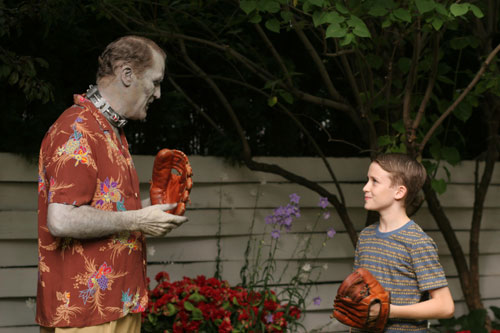
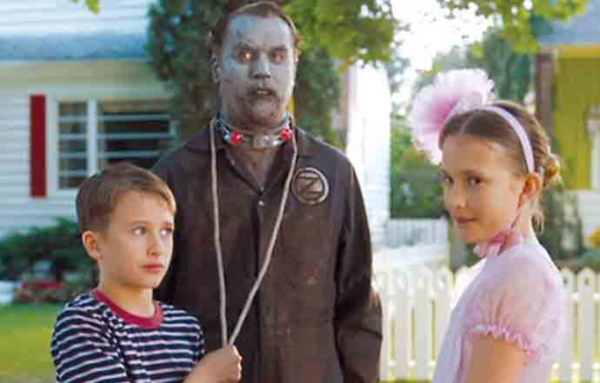 Some of you may be familiar with Fido, a wonderfully heartwarming (no, seriously) zombie story about a boy and his… well, pet zombie. It was also a nearly fifteen year labor of love for Andrew Currie, Robert Chomiak , and Dennis Heaton, taking them from film school to Lionsgate Pictures, where the movie finally came to be with a very impressive cast. I got to speak with Andrew back then, and we talked a lot about his creative process and how the story evolved going from an elaborate novella to a screenplay to a finished movie.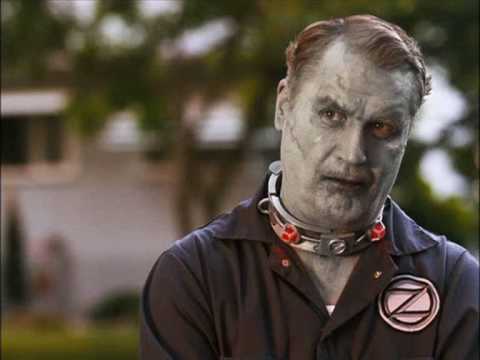
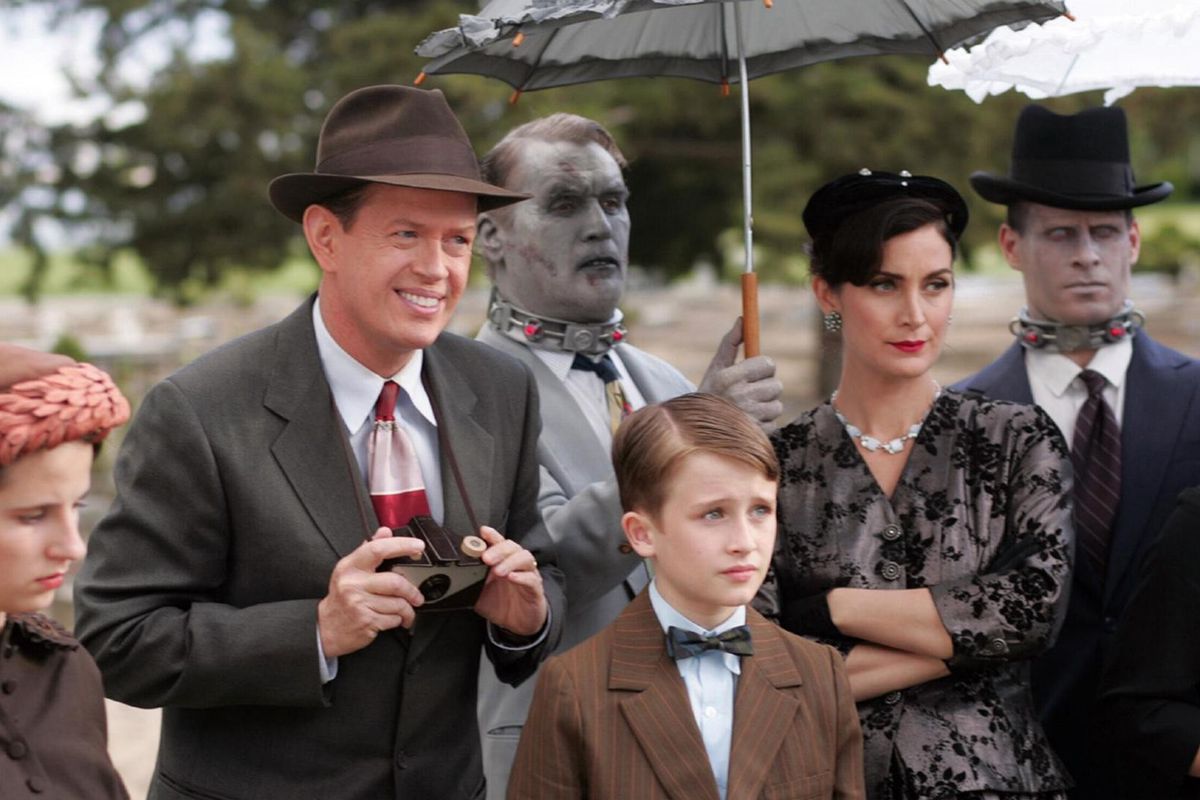 That was back in 1994. We went off and did other projects, and I took the script out to the
  So the allegory was certainly intentional. What we really wanted to do was, on the surface, just have fun and play with the idea of Lassie and the “boy and his dog” story, but then on the deeper level have that political resonance and then in terms of the characters, tying to that. Really, the theme we were writing from was “love, not fear, makes you alive.” Bill is the embodiment of fear and Fido is the embodiment of love. He brings this relationship into the family and becomes a catalyst for change within the family.
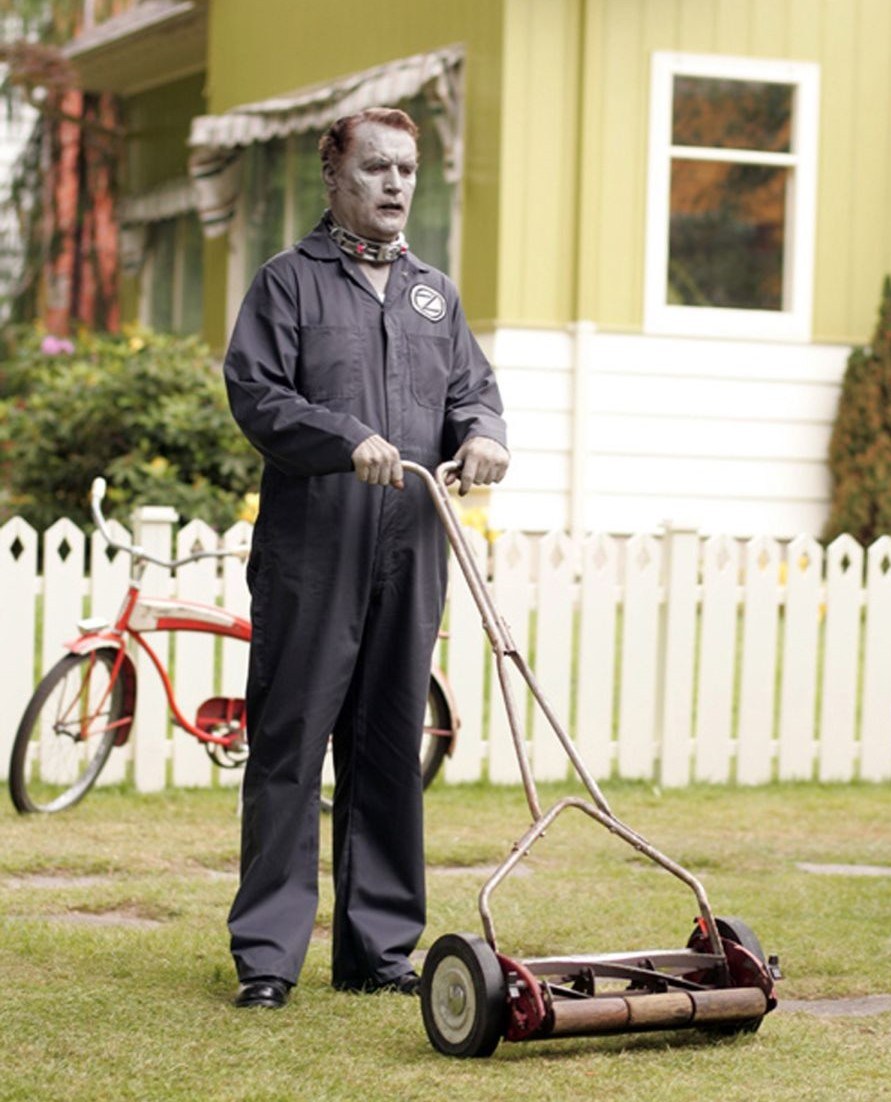 It did. What was great about it was getting Lionsgate and having such big fans. They read the script and said they loved it, and let’s shoot it as it is. They were completely behind it. There were other distributors and there were concerns about the script. Those concerns were mainly “what is it?” Is it a family film, a horror film, a zombie movie? The majority of the people, and very happily all of the actors, got what the world was and the depth of it and the fact that it had this satirical throughline. But certainly for a percentage of people there was this sense of, how is that mishmash of genres going to work.