October 31, 2025 / 2 Comments

Resident Evil: Flashbacks

Happy Halloween, everyone! Hope you’re all prepared for tonight. And may the gods have mercy on those of you who aren’t…

Let’s talk about scary movies for a moment.

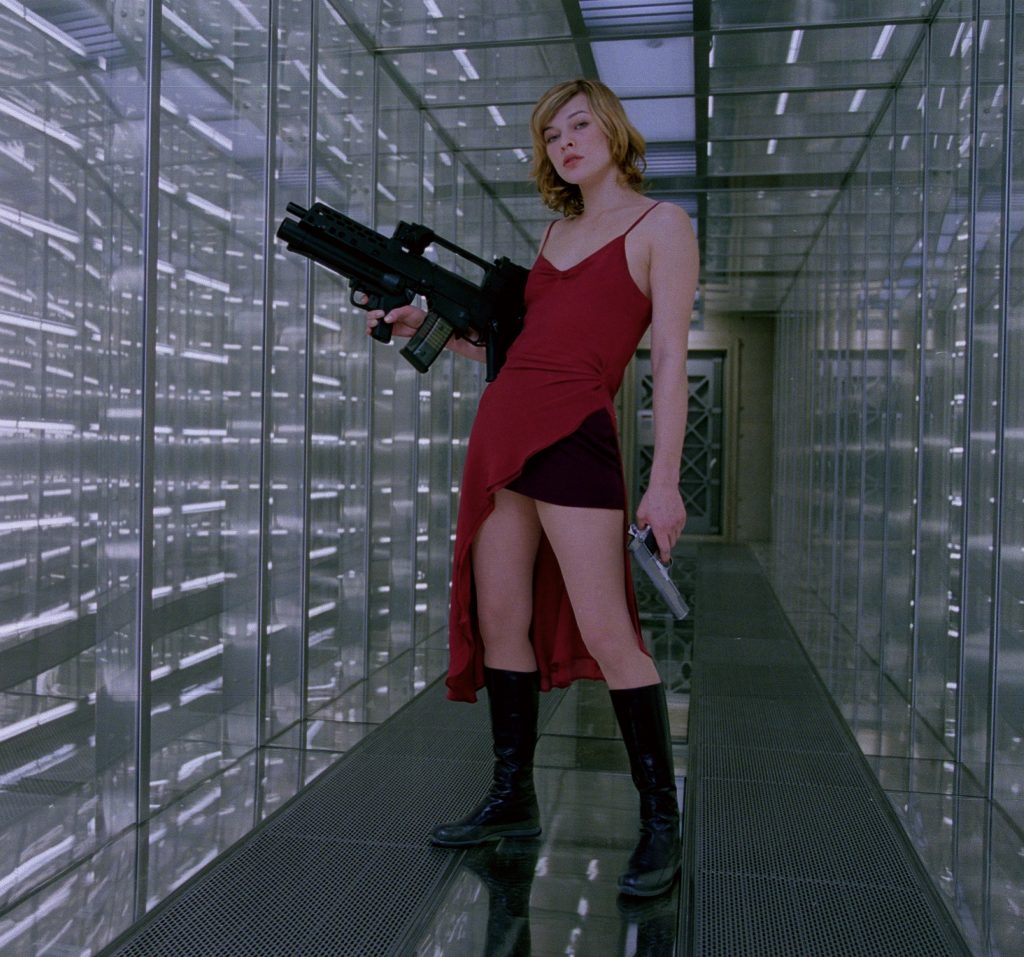
If you aren’t familiar, there was a long-running movie series called Resident Evil based off the long running game series of the same name, which also spawned a series of animated movies. But we’re talking about the live action ones. Well, the original live-action ones.

Specifically, I’d like to talk with you about the first one, written and directed by Paul W.S. Anderson. Rather than base the movie directly off the game story, Anderson decided to use lots of elements from the game with all-new characters. This gave him a lot more freedom in how he told the story, and let him structure the film for a general audience instead of specifically for fans of the game.

That structure is what I wanted to talk about. If you’ve been following the ranty writing blog for a while, you know I love pointing out how well this movie uses flashbacks. Seriously, it’s amazing. The movie’s pretty much a masterclass in how to do flashbacks well in a story. They all serve a clear purpose. They all advance either the plot or the story (often both). They all fit within the narrative and linear structure of the story. And none of them create fake-tension situations that are undermined by the present. You can read more about my rules-of-thumb for flashbacks right here, if you like.

So I figured, since it’s Halloween and all, I’d walk through these flashbacks one by one and show you how and why they’re so effective.

Now, you’re going to get a lot more out of this little rant if you’ve seen the movie. I highly recommend checking it out. It’s seasonal, it’s fun, it’s much more of an action-horror film than a gorefest. I don’t know if it’s streaming free anywhere, but I think you can rent it most places for three or four bucks? Also, kind of goes without saying but there are going to be some unavoidable spoilers in this discussion so… be warned.

Here’s a brief refresher for those of you who haven’t seen it in a while (or are just determined to go on without seeing it)…

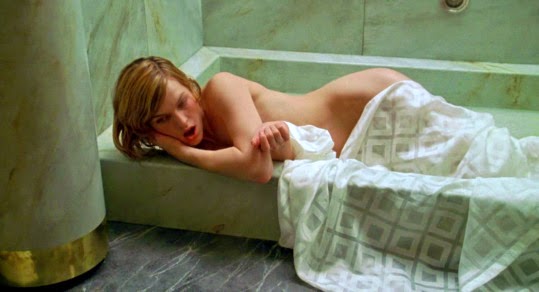
Resident Evil begins with a few quick minutes showing the lab accident that kicks off everything before the lab goes into a drastic lockdown mode that seems to kill, well, everyone. And after that we’re with our heroine, Alice, who wakes up naked and wet on the floor of a bathroom, half-draped in a shower curtain and suffering from near-complete amnesia. Very quickly she learns she’s part of a security detail guarding a hidden entrance to the Hive, a massive underground lab/ testing facility operated by the multinational, multibillion dollar Umbrella Corporation. And the lab accident earlier has set a very nasty bioweapon loose down there, the T-virus, which has had, politely, some effects on the researchers and other staff members.

And we’ll stop there for now.

So let’s talk flashbacks. I’ll try to go over all of them and give you a little context for each one. I’m also going to mention where they are so if you’re actually doing your homework, you can skim around in the movie and find them.

Our first one shows up a little over nine minutes in. Alice has woken up, staggered to the bathroom mirror, and is staring at her reflection when this flashback kicks in for a few seconds. She was in the shower, there was a vent, her eyes rolled up, and she collapsed, dragging the shower curtain down with her.

So this first one does a few things. It tells us right up front Alice didn’t pass out she was knocked out—this is something that was done to her, not something that just happened. It also establishes her flashbacks are very distinct from the “present’ story line in the movie—they’re in overexposed black and white, with echoey sound and a fast cut, glitchyquality that helps sell her fragmented memory. And it fits story-wise. This is something she’s focused on and trying to remember, so it makes sense we’re seeing this and not, y’know, last night’s dinner or something.

Also worth noting Alice’s reactions after this flashback because it’s very clear this is all the information she got from this sparked memory. She still doesn’t know who or where she is, or what’s going on. This is going to hold for all the flashbacks—she doesn’t get anything “extra” out of them. She sees what we see.

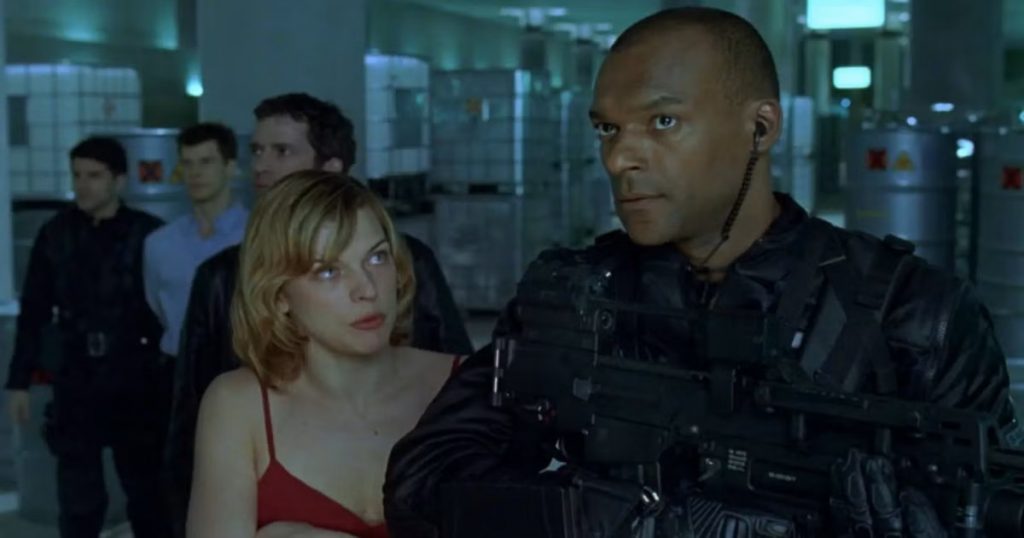
Our next flashback comes at eighteen minutes in. Alice has been taken with the security team to the underground train that leads to the Hive, and they’ve found an unconscious man on board. Alice stares at the man’s face and flashes back to her and him together and happy. Again, just quick flashes. Her in a gown, him in a tux, laughing, posing for photos together.

Worth noting that Alice had also seen a wedding photo of her and said man a few minutes earlier, and this flashback pretty much explains where that photo came from. It also connects the two for the audience—the man here now on the floor of the train (we’ll learn his name is Spence and he’s also suffering from gas-induced amnesia) is the man we saw earlier in photos. Whoever he is, Alice has a definite history with him.

Which brings us to the third flashback. Maybe 22 minutes in now. It’s mostly a recap of the first one as the security team commander explains what’s actually going on here and gets everyone up to speed. So as he’s explaining the computerized security systems and known side effects of the gas (short-term amnesia), we see Alice get gassed in the shower again—this time with an extra few shots to show us how the vents are hidden away in the walls.

So this one’s a little more structural—it’s a quick reminder for the audience. It emphasizes things are run by the computer (some of you know where that’s going). It’s giving us a bit more information about how thing are hidden and automated in Umbrella facilities.

Our fourth flashback happens three or four minutes later (just shy of 26 minutes in). We’re in the Hive now, and Spence offers Alice his leather jacket to keep warm. It’s the first time they’ve actually touched and it sets off a bunch of memories for Alice. Really specific ones showing she and Spence knew each other. Like, y’know… knew each other. Physically. As was the style at the time.

And that means now Alice knows something about Spence. He’s clearly someone she has a history with, and a history that involved, well, a degree of sharing and trust between them. As always, she doesn’t remember anything else, but it’s enough that she clearly decides he’s someone she can trust.

Notice the pattern here so far. All four of these flashbacks barely add up to fifteen seconds. They’re not slowing anything down. They’re all related to the actual events going on and the information the movie’s giving us (and Alice). And every one of them tells us something new—there’s very, very little noise. They all keep advancing out knowledge of the plot or the characters.

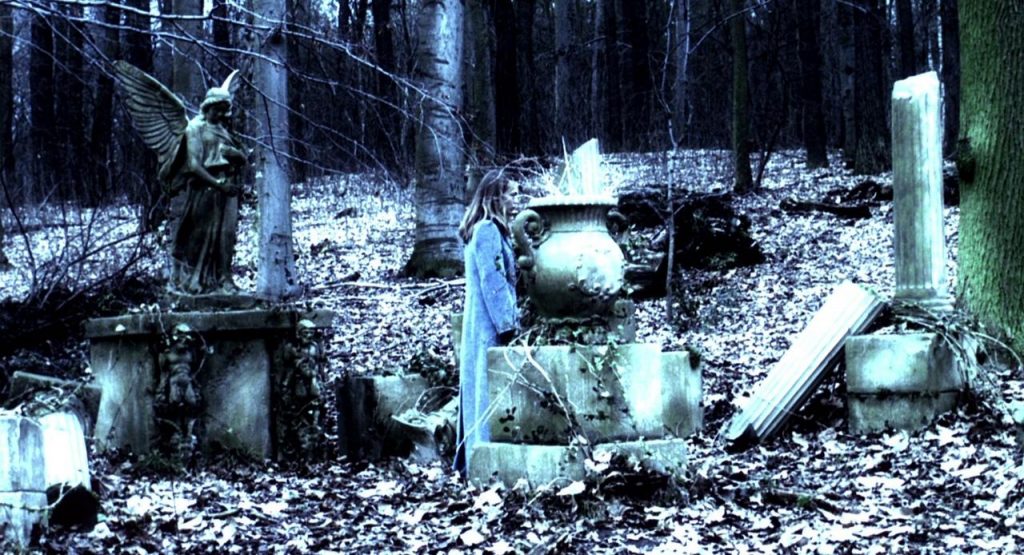
The next flashback doesn’t happen for almost half an hour—there’s a lot of action going on and dropping in a flashback would just disrupt the flow of things. Then around the 53 minute mark, Alice saves Matt from a zombie that’s attacking him and she recognizes this zombie. We get our longest flashback yet (almost ten seconds!)– Alice and this woman meeting in a deserted graveyard, where Alice is offering her access to the T-virus, Umbrella access codes, surveillance plans… for a price.

So… this one does a bunch of stuff. It’s suddenly casting Alice’s real goals and loyalties into question (at a point when she still can’t even remember them). It’s showing us she was part of a larger story than just the current events going on in the Hive, and making it clear Umbrella has been a questionable company for a while now. It’s also a nice reminder all these zombies were actual people—people we saw back at the start of this doing their jobs, chatting, drinking coffee, and just living their own lives.

And it doesn’t help that shortly after this Matt tells Alice the mystery woman was his sister. The two of them were gathering information to expose Umbrella’s illegal, unethical practices. His sister had found someone who could get them all the information they needed to get out with the evidence… but whoever it was they betrayed her. So now this flashback has Alice really questioning herself—and us questioning her, too. Amnesia-Alice seems great, but maybe if she had all her memories…?

Now, something happens around 70 minutes in that’s worth mentioning. Alice gets some memories back but it’s not set up as a flashback. It’s not in blown-out black and white. It’s not glitchy. And she’s not part of it. She just suddenly recognizes an area of the Hive they’re in and pictures it up and running and full of people. And she remembers what should be in a nearby lab– the cure for the T-virus.

I think this is worth noting because by breaking the flashback format here, the movie’s showing us that things are changing. Alice is getting more solid memories, and they’re appearing more solid because of that. The flashbacks are a clever device and being used well, but things are moving past the point of needing them and trying to force this particular bit of information into that format could actually be distracting at this point. And we never want our flashbacks to be distracting. Also, this scene is a little longer and somewhat talky but it’s happening at a time when our main story has slowed down a bit. Again, it isn’t messing with our flow.

So… moving on. One final flashback, and it happens just two minutes after the last one. They find the lab with the cure and it’s gone. The vault is empty. And as our heroes look around the lab trying to find some clue what might’ve happened to it… Spence has a flashback. And it’s a big one.

Turns out Spence was spying on that meeting in the graveyard, and he decided to steal the T-virus first. And almost 2/3 of his flashback is… the very beginning of the movie. All seen from his point of view. Spence caused the lab accident! Deliberately! To cover his theft.

(fun fact—if you freeze frame at the three minute mark in the very beginning, you can actually see it’s Spence right then! At 3:02, to be exact)

So, what does this last flashback do? It tells us what really happened to cause the lab accident. It reveals Spence as one of our main villains all along. And it firmly establishes that Alice, with or without her memories, is our hero—we find out her “price” for giving Matt’s sister all this evidence is that they use it to destroy the Umbrella Corporation.

Again, new information given in a way that adds to the tension, doesn’t slow down the pace of the actual story, doesn’t undermine anything.

See what I mean? Seven flashbacks in a movie that’s barely a hundred minutes. And heck, really all of them are in the first seventy minutes or so. And every one of them works for both the narrative and linear structure. Every one of them gives us information that’s relevant to “now.”

That’s some good zombie flashbacks.

Next time, I’d like to talk about how long all this takes.

Until then… well, enjoy Halloween.

And then go write.

February 18, 2021

The Cloverfield Conundrum

If you’ve been following this blog (or me on Twitter) for any amount of time, you know one of my favorite Saturday thing to do is watch B-movies. I’ve always had a certain love for them, and I think it’s a place to find some unsung gems if you’re willing to dig. Plus, lots of chances to flex your storytelling muscles and figure out some stuff. Where did this go wrong? Am I doing this in my own writing? How could it be fixed?

One type that always puts me on edge is found footage movies. After movies like The Blair Witch Project and Cloverfield became huge hits, shooting movies in this style exploded. Especially lower budget movies. There are dozens and dozens of them out there, covering topics from US forces in Afghanistan to dinosaur lost worlds to Judgment Day itself. Although you do have to ask… who found that particular footage…?

The catch, though, is found footage is one of those storytelling methods that looks very simple and forgiving. In fact, it’s an incredibly difficult way to tell a story, especially if I want to do it well. Possibly one of the hardest ways. And I’ve thought a few times about scribbling up a bunch of points and warning signs to watch for in such things, but the simple truth is I don’t offer a lot of straight screenwriting (or filmmaking) advice here anymore. Nothing major, anyway.

But it recently hit me there’s a way this ties to prose writing, and that’s through the epistolary form. If you’re not familiar with it, it’s when the story’s told through letters, journals, news articles, and other bits of found media (aaahhhhh, sound familiar?). Dracula and Frankensteinare both classic epistolary novels. There’s a magnificent one that just came out from Dan Frey called The Future is Yours, which uses emails and blogs and text messages. I used it for a section of one of my own books, Ex-Communication, where we get a look at a young girl’s journal, and in the very first story I ever sold for cash money, “The Hatbox.”

But just like found footage, an epistolary novel or short story can look deceptively easy. And it turns out they hit a lot of the same basic problems as found footage movies. So I thought I could take a few minutes and talk about four major flaws I see in both of these related formats—the movies and the books..

As always, none of these are die-hard absolutes, and it’s always possible someone could do this in a movie/ novel and make it work beautifully. But I also think they’re common enough as flaws that I need to be 100% sure what I’m doing is flawless if I decide to use one of these devices, because the automatic assumption is going to be… it’s a mistake. And when people hit the third or fourth obvious mistake in my story, they’re probably going to move on to something else. And that’s all on me, not them.

So… first thing.

Mistakes must be deliberate and clearly be deliberate
A lot of storytellers see the found footage/epistolary style as, well, an excuse to be lazy. Yeah, they do. Sorry.

Sure, there are lots of spelling mistakes, but that’s only because my narrator doesn’t know how to spell. Yeah, there are gaping holes in the plot, but the narrator wasn’t there for everything—they can only tell what they know. Yeah, this isn’t what we want to see or hear, but it’s more believable they’d be writing about this or pointing the camera at that. And, whoa, did we not once get the actress’s face in that scene? Well, it’ll be fine, that’ll just look even more authentic.

What’s going on here is something I’ve talked about before. People are confusing reality—that thing we walk around in most of the time—with fictional reality. Often they fall back on this to excuse bad dialogue or behavior in prose. Here I’m using it to excuse my writing in general. Or, in the film case, horribly framed and/or lit shots.

The bigger aspect of this, though, is my audience (readers or viewers). I mean, we can all spot mistakes when we see them. Clearly I wasn’t supposed to see that crew member in the mirror, or the battery pack and wires for her mic pack, and we all know the difference between there and their and they’re (don’t we…?). So when we see these things, our automatic gut reaction isn’t “gosh, this seems so real,” it’s just “Mistake!!” and maybe a pointing finger.

That’s why I need to be super cautious about “mistakes” in this sort of storytelling, because they’re going to be interpreted as, well, actual mistakes. Not something wrong with my character’s spelling ability, but a failure on my editor’s part. Its just an actual mistake in the film or book. And that’s the kind of thing that ruins the flow.

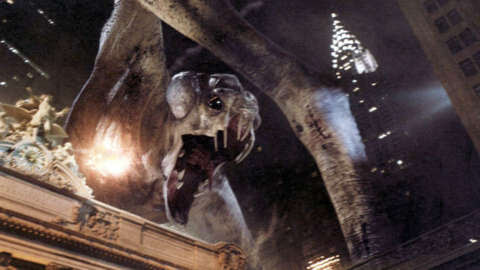
Cause here’s the thing… Absolutely no one went into Cloverfieldthinking they were looking at actual footage of a giant monster attacking New York. They knew it was a movie (or a book in their hands). The format pulls it a little closer to home, maybe bulks up the willing suspension of disbelief a bit, but everyone still knew this was something that had been created and promoted for months in advance.

So if I’m going to make mistakes, they have to be super-blatant mistakes. Things nobody could’ve missed. Things a spellchecker would catch. I don’t want to put their instead of they’re, I want to see there’re or theyer. Really clear, very deliberate mistakes.

Cameras are not characters
There’s a scene (or series of scenes) in every found footage movie where the camera moves too much. It’s imitating the gaze of the character holding it rather than, y’know, being a camera they’re holding. These moments can be subtle and ring a bit false—looking back and forth between two things, for example—or they can be big and make the audience shout “Why are you stillholding the camera?!!?” Y’know, like when you stop to point the camera at the giant monster opening its mouth to eat you.

We all recognize in these moments that no human being would still be carrying a camera on their shoulder or holding a cell phone out in front of them. They definitely wouldn’t be turning, aiming, resizing, refocusing, and so on. It’s a cheat, and we all recognize it as one.

Likewise, there are things it’s tough to buy in epistolary form. A journal is close to first person POV, but it’s still something different and distinct. If I just spent six hours fighting the zombie horde with an axe, am I really going to sit down and write out those six hours in meticulous detail? Would I write out what all the zombies looked like, what I was thinking of when I decapitated them, some random observations about the human condition? Or would my entry just be—

Feb. 18th (??? Thursday???) – brutal day killing zombies. friggin exhausted. most everyone made it. maybe write more tomorrow if there’s time.

Heck, would I even write that much? I mean, with everything going on, am I really going to spend any of my precious downtime writing? And by… flashlight? Campfire?

And it’s not just fighting zombies. How much would you want to write after eight hours of hiking or a twelve hour work day? Seriously, think of the writing you’ve done in your own life. Letters, journals, diaries—how much detail did you really go into? How often? How many things did you just skim over? I know my attempts at journaling were never that great, and I know they would’ve been worse if I was in the middle of a custody battle or an alien invasion. Or both. Heck, I still write physical letter to a few folks, but there are long gaps between them and lots of stuff I never include. Yes, Kevin, I know I’m very behind—sorry.

I need to have amazingly rock-solid reasons for why people would continue to point that camera or keep up those journal entries. And doing this can’t conflict with that first flaw up above. There’s only so many times we’ll buy “oh, I thought I turned the camera off.”

Cameras are not eyes
When watching my Saturday geekery movies, it’s pretty common for me to give a movie crap for jump scares. Especially ones where the monster/ ninja/ cyborg is leaping into view of the camera but it clearlywould’ve already been in view of the characters. This is a really common problem in found footage movies—confusing what the camera sees for what the character sees.

This is more a mechanics of storytelling issue. Understanding there’s more going on than we’re seeing, and that my characters have thoughts and experiences beyond what they share with the audience. We know they’re hearing and seeing things the camera isn’t, so it’d be bizarre for them to act as if the only things they experienced were the things that appeared on camera.

A weird flipside of this that happens enough to make it worth mentioning—I can’t show something on a found footage camera and then say my characters didn’tsee it. Either they were looking through the viewfinder or they watched it reviewing the footage (because why else did they have cameras running?). So characters acting like they didn’t see what we, the audience, saw just makes them look stupid.

Likewise, journals aren’t really narrative. They’re one person’s very limited view of a narrative Even more limited than regular first person. We’re removed from the actual events by the narrator and by the narrator’s personal biases and limitations—again, how much they actually write and what they write about vs. what’s actually happening in the narrative.

If that sounds a little confusing, think of it in terms of an unreliable narrator. We know they’re telling us a story, but we also know it’s not the real story. Maybe they’re leaving things out or putting a spin on the facts or just don’t understand what’s going on around them. We understand we have to translate what they’re telling us and fill in some facts ourselves.

And this is what every journal is like. They’re all kinda unreliable. They’re filtered by our individual experiences, our knowledge, our maturity, and our own views. There’s always going to be more going on than what’s on the page.

Super short version of this–I can’t have piles of story beats that are only about how the audience will react to things—I need to consider the characters too. How are they interpreting and reacting to the events going on all around them?

It’s all just random incidents and coincidences
This is what usually happens when more than one of the above flaws happen. The narrative starts to break down because it can’t actually be supported in this form. A lot of time when this happens, filmmakers will give up on the found footage conceit altogether and just have random camera views from, well, anything. It was 90% cell phone footage until we had a car chase, so now it’s all random traffic cams or ATM cameras. How did we get that footage? Not important!

Likewise, as tension mounts in a story, it becomes less and less believable that someone’s taking the time to write out more and more details in their diary. It makes us aware that the zombies could burst in at any minute, but I took half an hour to scribble down all the gory details of how Wakko died. It’s either the story grinding to a halt or the story getting skimmed over because who has time to be writing right now?!?!

A common sign of this in both films and journals? The story just stops. It doesn’t end, mind you. It just… stops. The movie that goes black or the journal that ends in mid-sentence. Which, I mean, is still slightly better than…

I hope this letter gets to you somehow, Yakko, because I hear footsteps on the stairs. There’s no way out for me but remember what I told you! Oh no!! They’re right outside my door!!

Anyway…

There are the four common flaws I’ve seen in this type of storytelling. Each one is pretty bad. I think any two of them together will pretty much sink my story. So if I’m going with the found footage/ epistolary style, I need to make sure I avoid them.

But hang on! All of this means it’s going to be a lot harder to tell the story, right? I’m going to have to figure out new scenes and sequences. Probably change dialogue. Maybe restructure some things. And then still make it a good story?

Well… yeah. I mean, I chose to tell something in this format. This is what the format needs. What am I complaining about? Can you imagine if I started writing a romance novel an then said “awwww, geeez… there’s all this relationship stuff and kissing I have to deal with. I don’t want to write any of that.”

Like so many artistic things, I need to do a lot of work to make it look easy.

Hey, speaking of work and advice… WonderCon is coming up, and I’m going to be doing another Writers Coffeehouse with a bunch of professional writer-friends. We’re recording next week, so if there’s any writing-related question you’d like to get a consensus answer on, this is your big chance. Just toss it in the comments below or hit me up with it on Twitter. Outlining, characters, dialogue, daily schedules, editing, tell us what you need.

And next time here, I’d like to talk to you about the one time when all these rules don’t matter.

Until then, go write.

Or shoot something with your phone.

October 29, 2020

All Hallow’s Idiot

Halloween is so weird this year. One, because we’re all just exhausted from a year of isolation and stress and way too much death. I really hope none of that death has touched you and yours, but we’re kinda at the point where odds are it probably has. And if that’s the case, I’m so very sorry.

The other reason it’s weird is because we all understand it’s pretty much not happening. Trick or treating’s risky. Partying’s right out unless you’re an idiot.

Actually, that’s what I wanted to talk about.

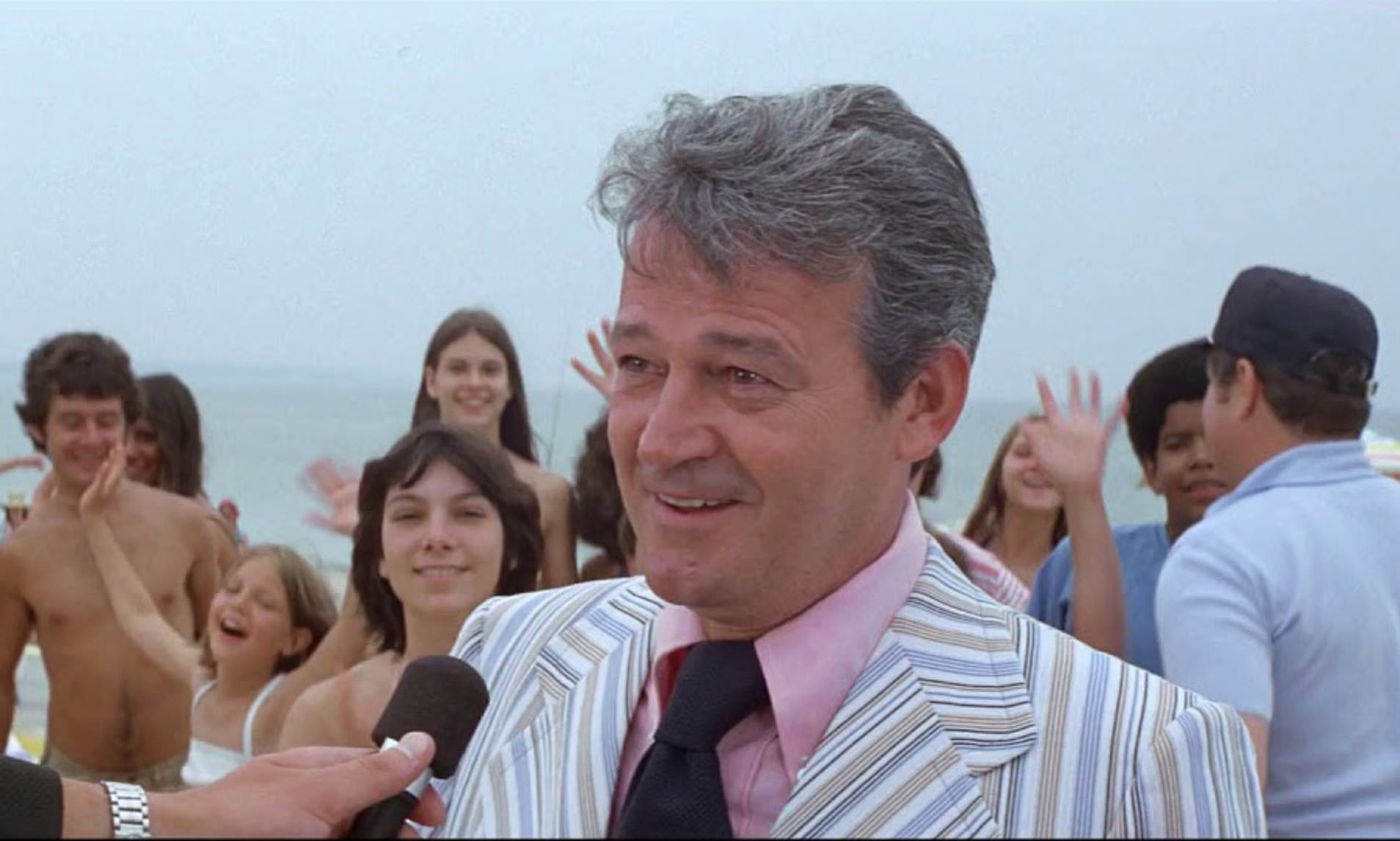
There’s a certain type of character who shows up a lot in horror, and for lack of a better term, we’ll call them the Idiot. They’re the one who simply refuses to believe zombies are real, even when three people have been killed. They’re convinced the aliens are benevolent and this is just a communications problem that can be worked out. Or maybe they’re convinced *cough*cough* the deadly virus is nothing to worry about. Probably one of the most famous Idiots is Mayor Vaughn from Jaws. On the off chance you haven’t seen the movie—and seriously, what the hell is wrong with you if that’s the case—when a great white shark appears off the coast of his small New England resort town, Vaughn ignores all the warnings he gets from the local police chief and a visiting scientist, refusing to close the beaches.

As you may have heard, this does not work out all that great for him. Or some of his constituents.

It’s worth pointing out most of the time the Idiot isn’t actually ignorant. They’re making a deliberate decision to ignore all this evidence they’ve been given. Maybe it’s because it goes against too many things they believe. Maybe their motivation’s more financial. Maybe it’s about power. But it’s almost always a decision made for personal reasons, not because of lack of actual information.

There’s a reason for that, and it’s one of the reasons these characters sometimes fumble. If someone comes running up to me and says there’s a zombie horde around the corner, I’m going to assume they’re either under the influence or maybe a bit unbalanced. Because zombies don’t exist. Me thinking they don’t exist is completely rational. If a storyteller tries to paint someone like me, in a real-world setting, as the Idiot… it’s not going to work that great.

But…

If there’ve been reports of zombie attacks for weeks, and I saw a zombie take down a guy in the Target parking lot two days ago, and now someone runs up and says there’s a zombie horde around the corner… Okay, now I’m in a bit of denial if I mock them. Because I’ve seen evidence of this already. Lots of evidence.

When an Idiot character doesn’t work, I think a lot of times it’s because of where they’re appearing in the story. There’s only a small window where this character really shines. Too soon in the chain of events, and—as I mentioned above—it makes sense I’m not going to believe in zombies. So being the Idiot early on doesn’t work. 

On the flipside,  if we’re two years into the zombie post-apocalypse, it’s kind of tough for readers to believe someone could still be in denial. Heck, how could they have survived this long? There’s a point where we’ve moved past “denial” and we need to be asking about head trauma and medications.

Y’see, Timmy, the Idiot only really works in that one sweet spot of the greater, overall story. After things could be rationally excused or ignored, but before things are, y’know, in flames. If I try to have this character outside that range, it’s going to be really tough to make it work.

Also worth noting the Idiot tends to be an authority figure. Not always, but I’d guess it’s more often than not. Police chief, military general, senior scientist, politician—these are all common Idiots (no pun intended). From a narrative point of view, this gives their decisions (or lack of decisions) more weight. A waiter deciding he’s going to ignore the CDC zombie guidelines when he makes decisions doesn’t have as much impact as, say, a governor or a senator who thinks they can be ignored.

Now, granted, there are times I’ll have a character in my story who’s just… an idiot (garden-variety, small “i”). There’s always going to be that person who firmly believes zombie vision is based on movement, who crouches down to pat the alien space cobra, or who thinks wearing a protective mask is more likely to get them sick than not wearing one. That’s just kind of the way people are in any society that’s taken off some Darwinian pressure. Some folks are just stupid and they do stupid things.

And while having this kind of annoying character can serve a purpose in the story, we shouldn’t get them confused with that deliberate, capital-letter type. An Idiot can stick around in my story for a while, but an actual idiot… well, readers generally don’t have the patience for them. Not to point fingers, but think how fast most Vince Vaughn characters get annoying. We don’t have patience for idiot (small i) characters because the nature of the story asks us to identify with characters. And really, why would anyone want to identify with an idiot?

But the Idiot… we may not like or agree with their motivations, but we can understand them. Mayor Vaughn in Jaws knows there’s a shark out there. He also knows shutting down the beaches could ruin his small town and it’ll definitely ruin him come the next election. So… he makes a stupid decision. A similar thing happens in my own book, Dead Moon, with Luna City’s mayor, Lana.

Do you have an Idiot in your story? Do they exist in that sweet spot? Or are they at a point where their stubborn denial is just coming across as unbelievable?

Next time… look, you’re telling me too much. Please stop. I don’t want to hear this. TMI.

Until then, go write.

October 28, 2019 / 1 Comment

Zombie Love

Hey, look! It’s even more bonus content! What the hell? This is turning into one of those blogs where there are semi-regular posts.

Hahahaa no it’s not. I’m just going to be really busy in November (for a couple of reasons) so I wanted to give you some extra stuff now while I had time. Plus, hey, it’s Halloween and I can always blather on about this sort of stuff a bit more. So everybody wins.

As a lot of you know, I worked on film crews for a lot of years, and then I wrote about filmmaking for another five or six years after that (there was a bit of overlap). This meant I got to interview a lot of screenwriters and writer-directors about their different projects, and some of them leaned into the spirit of this particular holiday season. And I still had some more of those sitting around so I figured, hey, why not share another one.
Some of you may be familiar with Fido, a wonderfully heartwarming (no, seriously) zombie story about a boy and his… well, pet zombie.  It was also a nearly fifteen year labor of love for Andrew Currie, Robert Chomiak , and Dennis Heaton, taking them from film school to Lionsgate Pictures, where the movie finally came to be with a very impressive cast. I got to speak with Andrew back then, and we talked a lot about his creative process and how the story evolved going from an elaborate novella to a screenplay to a finished movie.

A few of my standard points before we dive in.  I’m in bold, asking the questions.  Please keep in mind a lot of these aren’t the exact, word-for-word questions I asked (which tended to be a bit more organic and conversational), so if the answer seems a bit off, don’t stress out over it.  Any links are entirely mine and aren’t meant to imply Andrew’s specifically endorsing any of the ideas I’ve brought up here on the ranty blog—it’s just me linking from something he said to something similar that I’ve said.
By the nature of this discussion, there are going to be a few small spoilers in here, though not many.  Check out the movie if you haven’t seen it yet. It really is wonderful. I mean, it’s a feel-good zombie movie about families. What more could you want?
Material from this interview was originally used for an article that appeared in the CS Weekly online newsletter.
What got you into filmmaking and screenwriting?
I guess just, from a really young age, being a fan of movies.  I remember I was six years old and my dad took me to 2001: A Space Odyssey in the theatre.  And I still remember just being completely blown away by the movie—obviously not understanding it, but the visceral impact of the images.  And really being a life long film buff, a film geek I guess you’d say, staying up late watching horror filmsonce everyone else went to bed.  The standard path (laughs).
You’ve written a lot of the stuff you’ve directed.  Do you think of yourself as a writer or director more? 
I think of myself as a writer-director.  I generally write on most of the things I direct.  I certainly have directed stuff I didn’t write.  I just find that, to me, there’s that idea that there are three films; there’s the film that you write, there’s the film that you shoot, and there’s the film you complete in post-production.  Those three phases to me are so fluid that they tend to all become one.  The writing process for me is directing on the page quite a bit.  I guess I find that being involved in the writing is fairly critical.
D’you think you’d ever write a screenplay without wanting to direct it?
Oh, I’d love to. (laughs)  But God knows who would want to direct it.  
Yeah, I’m not the fastest writer, and that’s another wonderful thing about collaborating.  What’s exciting for me about film is that it’s collaborative, it’s bouncing ideas off other creative people.  When we wrote Fido–Robert, Dennis, and I–we spent a lot of time in the story room together just bouncing around ideas.  I think often that’s the most fulfilling way of working, because you become so much more inspired by working with collaborators.
You’ve worked with Robert a few times, yes?
Yeah, Robert and I have co-written a couple things.  He’s wonderful, and he’s got that combination of having a wonderfully bizarre take on the world but also being a very pragmatic writer as well.  He’s great.
Now, Fido was originally a short story by Dennis, yes?
Well, Dennis had written this… it was somewhere between a short story and a script.  It was seventy or eighty pages, it was pretty long.  It was about a little boy in a small town who had a pet zombie.  The boy just fed him raw meat so he wouldn’t eat people.  We all went to Simon Fraser Universitytogether for film school.  Dennis and Robert did two years of the program, and I went for the whole four years, and when I graduated we all decided we wanted to write something together.  It was one of those things where everyone brings five ideas to the table, and Dennis brought Fido.  We just all immediately got excited by it and the potential for it.  We actually wrote the first draft really quickly.  A lot of the basics came really quick, but it really was nothing more than a world with zombies and Leave It To Beaver, cardboard cut-out characters.  There was a lot of fun, but we also didn’t have much to say about the world.  
That was back in 1994.  We went off and did other projects, and I took the script out to the Canadian Film Centerin 1996 and worked on it out there, and then came back.  We started working on it again in 2001, and by then we had all developed more as writers.  We approached it much more from theme and character, and it made such a difference.  The world became much more complex.  And then September 11th happened and that started to affect the story in a political way as well.  It just started getting layers that were really exciting for me as the director.  You’re telling this absurdist comedy and you’ve got these other layers that you’re putting in, and whether people get them or not became an interesting debate for us.  You can lay something in, but if it’s too subtle it just flashes past people.
You mentioned 9/11.  There’s a lot of underlying paranoia and a very us-vs-them mood, even past the usual zombie movie standards.  How much of that was very deliberate?
Oh, it was very specifically an allegory, but it’s quite subtle.  You know, for example, in the beginning of the film Mr. Bottoms comes into the classroom and he tells the kids that he’s building the fences higher and there’s going to be security vans on every corner and he’s going to take everyone’s picture “just in case they get lost.”  And that was very much referencing Homeland Security.  What was really exciting was when we started thinking about the film in that way, it really started to affect the characters, namely Bill, the father.  The idea of ZomCom– which is sort of the government and a corporation as an amalgamation– pushing fear within a community as a means of control, which happens (pause) in many, many places in the world.  And Bill ended up becoming the embodiment of fear.  He’s terrified of zombies and his goal in life, really, is to die and not have to come back, and he’s got this slightly absurd childhood trauma of having to shoot his father when his father turned.  And the central irony of the whole movie, for me anyway, is that Fido is this dead creature who comes into the family and is more emotionally engaged in the world than the father.
So the allegory was certainly intentional.  What we really wanted to do was, on the surface, just have fun and play with the idea of Lassie and the “boy and his dog” story, but then on the deeper level have that political resonance and then in terms of the characters, tying to that.  Really, the theme we were writing from was “love, not fear, makes you alive.”  Bill is the embodiment of fear and Fido is the embodiment of love.  He brings this relationship into the family and becomes a catalyst for change within the family.
You did a short about a zombie, Night of the Living, a few years back, yes?  Are you a fan of zombie movies?
Yeah.  I saw a zombie movie, I don’t even know what it was, when I was really little.  I remember being really traumatized by it.  In a good way (laughs).  Y’know, there are so many damned zombie movies out there, it’s a bit of a drag.  When we started Fido in ’94 there weren’t that many around.  Now I have to read some critic going “they’re just taking the end of Shaun of the Dead and turning it into a movie.”  Which is really painful when we wrote it fourteen years ago.
For me, they make such great metaphors.  I think what’s interesting about zombies is that they are so close to us.  They are human in a way, and they tap into some primal fears in a really visceral way.  The idea of death and dying and mortality and disease, they embody all of those things.  A lot of monsters and creatures in horror are of the supernatural variety or completely inhuman, so they’re not as close to us in that respect.  So zombies have a greater sense of dread about them.
There’s a lot of baggage that comes with the word zombie.  Did it make it tough to sell people on this story?
It did.  What was great about it was getting Lionsgate and having such big fans.  They read the script and said they loved it, and let’s shoot it as it is.  They were completely behind it.  There were other distributors and there were concerns about the script.  Those concerns were mainly “what is it?” Is it a family film, a horror film, a zombie movie?    The majority of the people, and very happily all of the actors, got what the world was and the depth of it and the fact that it had this satirical throughline.  But certainly for a percentage of people there was this sense of, how is that mishmash of genres going to work.
There’s a few things that it seems somebody would’ve started pointing at (the killings, Mr. Theopolis, schoolkids with guns, etc).  Did you get a lot of notes from the producers or the studio about the script?
No, that was the great thing.  I don’t think I got a single note.  Everyone who was in on the film, Lionsgate, they were really big supporters.  It was almost odd that people were just so supportive.  I mean, I’d just made one feature before this called Mile Zero, which is a very character-driven drama, completely unlike Fido. 
Did the R rating come as a shock to you?
Absolutely.  I was quite disappointed with the MPAA and I had many conversations with them.  I went into the editing room  and we tried different things.  In the end, what they needed to make it PG-13 just undermined the film in a way that just wasn’t something we wanted or Lionsgate wanted.  So we decided we had to stay with an R.  The thing about the MPAA is that they really got the humor and they said they were real fans of the movie.  I think because children and the elderly get consumed in the movie, I started wondering if there was a moral compass at play.  There’s so little violence, I was really surprised with them being so hard on it, especially in light of so many other films that are PG-13.
Was doing the script as a group, the three of you, was it very different, process-wise, than if you’d just sat down and done it on your own?
The process for Fidowas so unique in the sense that it went on for so many years.  When I was out at the Film Center I was working on it for about a year on my own, and then I’d come back and we’d all work on it.  It became a really dragged out process, and we got to a certain point, which was about a year and a half before shooting, where the three of us just did everything we could do and it was time for me to take it and start moving it towards production.  So Dennis and Robert stepped off at that point.  Screenplays can certainly exist just as screenplays, but there’s a point when they have to move towards the reality of being made and things change.  Dennis and Robert were wonderful about it– I don’t want to sound like I’m insulting them.  They stepped away and then I worked on it, finessing certain things, and moving it towards production in terms of the reality of creating the world and making it happen.
Do you have any solid habits or methods when you write?

I really believe in the outline.  I always work from a beat sheet.  In terms of the scene by scene, I just find it’s such a wonderful focusing tool for me.  The way I write is probably quite a bit with the directing hat on, maybe more so than I should.  I tend to imagine the scene, and then re-imagine it and flip it over and over in my head until it clicks and then put it down on paper.  Even when I direct I work from a beat sheet, in the sense of what the real intent of the scene is and the character beats and the key moments.  I think it’s important to keep those clear and present.

How is it for you when actors start asking for changes?  Either actual rewrites of scenes or just adlibs on set?
I like and encourage improvisation at times, but the truth is sometimes if you allow improv just to start happening in an escalating way, what you can end up with is something that’s not nearly as coherent a story as it should be.  I really believe in getting a script to the place where it really works and then having faith in that structure.  Story structure works.  Character arcs work.  When they’re well written they really do fulfill the promise of the script.  A lot of times actors will bring wonderful moments and wonderful bits into the process, and I completely support that, and love that, as long as the arc and the integrity of the structure is being honored.

Categories