
January 15, 2026 / 1 Comment

Infinite Growth

Well, hey… 2026 managed to go off the rails pretty quick, didn’t it?

I totally get it if you can’t get your head around the idea of writing right now. It’s tough to be creative when it feels like you’re trapped in a burning house. But I’m going to soldier on because, well, it’s my job. And the ranty writing blog is part of it.

That said…

It being the start of the year, a lot of us are setting goals of some kind. Things we’re going to achieve. Ways we’re going to change. How we’re going to improve. And yes, maybe some of this is writing related.

There’s a saying you may have heard– change is good. As I may have mentioned before, I’m not a huge fan of it. It’s easy for change is good to become a defensive thing, a shield from criticism. After all, if change is good, and I changed something, my change must be good, right? It’s not my fault you can’t accept change.

What I prefer to say is that change is necessary. Change happens, whether we like it or not. And sometimes… yeah, we won’t. Styles go out of fashion. Preferences shift. Standards change. Lines get redrawn. What’s acceptable (or possible) changes. We learn new facts and (hopefully) shift our view of the world to embrace them. Not every change is going to be good, but… things are going to change.

As some of you know, I used to work in the film industry. At various times I found myself working with different producers. Knew a few folks who’d worked with others. And at some point I realized two of them made for an interesting study on creativity. Both of had begun their careers at the same point, making very similar movies and shows, but ended them very differently. And a lot of that had to do with their willingness to change.

Names shall be avoided out of basic politeness, but it wouldn’t take too much digging if you really had to know who some of them were.
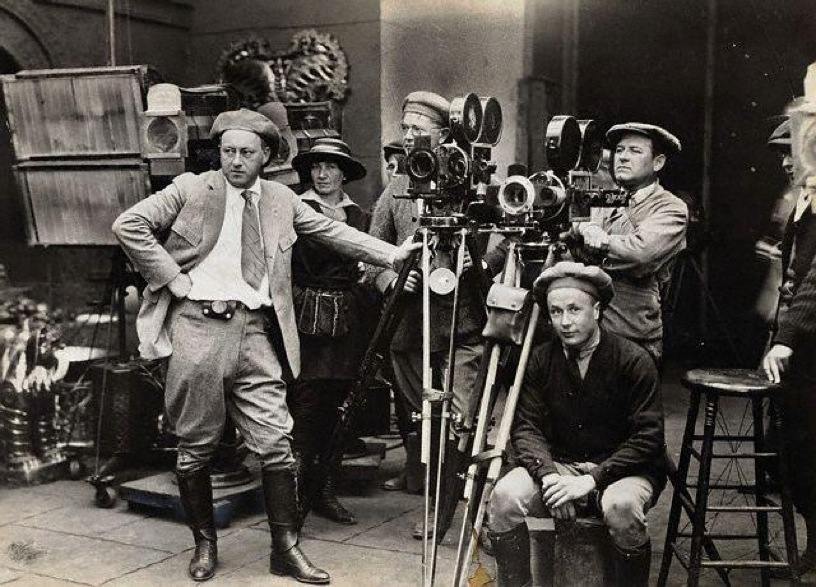
At first, Producer One was the more successful by far. By a lot of metrics, the most successful producer of the decade—television or film. And the next decade too. He was the guy behind some filmmaking techniques people take for granted today. I could probably name half a dozen shows he did (or more) and I’d bet serious money you’d know every one of them

But as that next decade started to wind up… this producer started to lose popularity. Y’see… as audience and studio expectations progressed, he was continuing to make what were essentially the same shows in the same way. I worked with him maybe ten years after that point and he was still making the same shows. Same kind of characters, same kind of plots and storylines, insisting on the same kind of shots and edits that had worked for him twenty years earlier. It got harder and harder for him to get projects off the ground because his work just felt more and more dated. Heck, when a few of his earlier, better-known things got rebooted, I heard from a few folks that the studios openly paid good money for him… not to have anything to do with them. To stay away and not be involved at all.

On the other hand, producer B kept growing and changing. He’d been making the same sort of shows at first, but he paid attention to the shifts and changes in what audiences expected. And what filmmakers could do with stories, and what they could do within different formats. He kept making hit shows, because he was willing to learn and grow and change. Maybe more importantly, he was willing to let go of old ways of doing things and old ways of thinking. And that growth kept him relevant. And very successful well into the 21st century.

But I know what you’re saying. Pete, I don’t want to work in Hollywood. Being a producer means nothing to me. What is this all about?

Let me put it to you this way…

I knew a genre author a few years back who talked constantly about how big publishers made so many mistakes and how self-publishing was the only way forward. And a main part of this author’s proof that publishing was doomed was, well, twenty years earlier they (the author) had been huge in their genre. A damned-near superstar. They’d learned how to write at the feet of a fantastic editor in the genre back in the 90s, learned exactly how to do the characters, the story beats, the payoffs. They’d taken those lessons to heart and sold a lot of books back then.

But over the years their sales diminished more and more. When I asked what they’d changed, they were pretty adamant—nothing! They were still writing books just like they’d learned how to in the 90s. The right way. The problem, I was told, was publishers were just chasing new trends and not sticking with what worked. Which is why, they would tell me again and again, traditional publishing was doomed.

And when I tried to gently hint that maybe there was something to learn from some of these new books… well, that was nonsense. After all, they had learned exactly how to write these books. Twenty years ago. From a master. Why would they change?

Y’see, Timmy, it’s tough to be creative when I’m not willing to acknowledge new things. Creation is, literally, making something new. I can’t improve if I’m not open to growth and change.

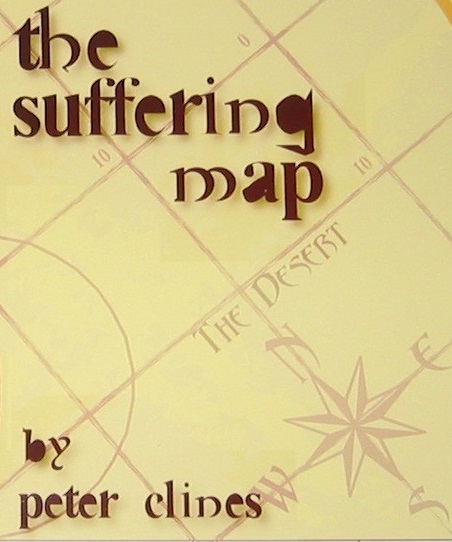
I’ve mentioned The Suffering Map here once or thrice—my first serious attempt at a novel, finished back in my mid-thirties. And I’ve also mentioned it wasn’t that good. Bordering on bad. For a bunch of reasons. But I’ve gotten better since then. Because I made an effort to learn. To change how I did things and looked at things. To grow as a writer.

Hell, I’ve tried to grow as a person. I’m glad a lot of my views and opinions have changed from what they were when I first started taking this seriously twenty years ago. Or thirty years ago. And sweet jebus, let’s not even talk about being a teenager in the eighties. Sooooooo glad I’m not that stupid kid anymore. He had a lot to learn about so many things.

I can’t do anything new if I’m not willing to try anything new. I can’t be current if I’m determined to stay in the past. And I definitely can’t expect to catch a lot of attention with an idea (or a mindset) that was outdated thirty years ago.

So as we stride forth into this new year, maybe think about letting go of those outdated ideas. The worlds moving on with or without us. Let’s learn some new stuff and do cool thing with it.

Next time, speaking of the film industry, I’d like to tell you about one of my favorite directors I ever worked with.

Oh, and if you’re reading this just as it published, tonight (Thursday) I’m going to be at Mysterious Galaxy in San Diego talking with Jeff Rake and Rob Hart about their new book, Detour. If you’re in the area, stop by and say hi!

Until then, go write.

May 30, 2024 / 4 Comments

Five by Five

Tomorrow’s another big birthday for me. I think Patton Oswalt called it “the double nickel” a few months back when he also hit said milestone. I’m probably going to spend it doing something silly. Maybe random toy shopping. Maybe playing games. I’m probably going to watch a Godzilla movie or two and try to keep up that tradition.

Anyway, I often try to mark the day by offering you some semi-useful thoughts on writing in general. More the whole big idea of writing and being a writer than the nutsy-boltsy stuff I tend to blather on about most of the time. And this is going to be one of those posts. Apologies if it’s a little long.

So, for my 55th birthday, here’s five things I wish I’d known at various points in my writing journey.

1) You’re never too young
For a long time I thought I wasn’t old enough to tell stories. I was writing well before I hit my teens, yeah, and even submitting some of it. But that was all just being young and stupid and not knowing any better. Once I started taking my writing seriously, I felt like I needed more experience—in just about every way possible—before anyone was going to give me any consideration. And I didn’t shake this feeling until well into my twenties. It took me a long time to believe my work was going to measure up to all these other folks.

What I discovered much later was that so many of those people I’d admired as writers hadn’t been much older than I was when they started out. Some of them had only been a few years older than me at that point. It’s not so much that they’d been drastically more experienced, they’d just been willing to take a few chances. Not wild, longshot risks—there’s still a wide swath of property between “brave” and “foolish”—but they decided to try rather than wait until they’d hit some self-imposed limitations.

So don’t rush to do something as soon as you can… but also don’t wait to hit some weird benchmark you read somewhere on the internet or just made up yourself.

2) Don’t worry about getting it perfect
I went through a long phase of trying to get everything perfect. Of trying to make it all, y’know, real writing. And I was usually trying to do it on the first try. I’d spend hours on each paragraph, trying to find the perfect phrasing, the perfect word, not moving on until I’d gotten things just right.

Of course, what this really meant was it was taking me ages to do anything. My first complete draft of The Suffering Map took actual years (plural) to get done. Because I was so wrapped up in what it should be like by the time it was done, I wasn’t acknowledging how many more steps there were before it was done.

It’s something a lot of folks have to get past, but the truth is… there’s going to be a second draft. I’ll get to clean and polish and, yes, pick better words. In fact, they’ll probably be much better because I’ve had time to think about them in context rather than obsessing over this single phrase in chapter three for an hour or so.

Which means for the first draft, I can just write. Not sure about that word? Just say “fast” for now and we’ll find the perfect word in the next draft. Not sure about her name? She’s “Phoebe” for now and if a better name comes to me I’ll start using it then. It took me years to realize this, but once I did my productivity probably quadrupled.

3) Finish things
For the longest time, the biggest thing holding me back was that I never finished anything. Which sounds silly but… there it is. All those early submissions I made to Marvel? I was sending in the first issue of what was clearly a multi-issue story. And in complete honesty, I had no real idea how the rest of it would go. A lot of the early “novels” I’ve mentioned here? Lizard Men From the Center of the Earth? All that Doctor Who and Boba Fett fanfic? The Werewolf Detective? The Trinity? None of them were ever completed. Still haven’t been. I’d just rocket from one thing to the next. Usually just writing the fun, cool parts before I got bored and moved on.

Weirdly enough, my first real, serious interest came from a completed script for Deep Space Nine, which got me half an hour in a room with Ron Moore, and then later another half hour or so with Hans Beimler. Later, when I actually finished a novelThe Suffering Map—I started getting interest from agents.

Yeah, some of the fun goes out of writing when I made that jump from “writing the fun parts” to “writing all of it.” But it was also a huge moment when I realized I’d actually finished an entire, start-to-finish book manuscript—something Drusilla Campbell once told me less than one out of a hundred people who call themselves writers ever do.

And, off my own experience, I’d guess it’s something 99 out of a hundred agents and editors want to see.

4) You’re never too old
Every now and then someone starts talking about ageism in publishing. Or Hollywood. Or comics. A friend’s dad once told us, right after college, that if you haven’t made your mark by age 25 it was never going to happen. End of story.

And it’s easy to see why people feel this way. Society loves youth (sometimes, but that’s another discussion). You don’t hear about a lot of forty year old breakout stars. Forbes doesn’t do a “Sixty under Sixty” list. And yeah… publishers aren’t always as eager to publicize their *cough* more mature writers.

But the simple truth is, there are countless stories out there of people over the age of twenty-five writing their first book or making their first movie and finding success. I sold my first novel at 39 and it didn’t see print until just before I turned 41. This keeps happening, even as people say it doesn’t happen. I mean, just think about it. Can you honestly picture a publisher saying “Damn, this is the most page-turning, uplifting manuscript I’ve ever read and we’ll sell a million copies, easy… but the author’s forty-three.”

I think—and this is just me spitballing with a bit of evidence—that a lot of ageism complaints come from people who aren’t willing to change or adapt. “This is how we did it thirty years ago and it worked just fine then!” When I used to read scripts, I got some that were clearly very old scripts that had gotten a fresh coat of paint to update them. But often this “update” made it clear the screenwriter didn’t understand a lot of the terms they were using and that they were… well, old.

(seriously, how do you not know how an iPod works?)

Look, I’m minutes away from turning whatever-that-double-number-is years old. I grew up in a very different world than most of you reading this. Different views and values. Different technologies. And very different ways of telling stories. I’m trying hard to be better when it comes to writing the world as it is, not as it was—in so many ways. It’s not about whether I can do it, or if anyone will let me do it–it’s about whether I can learn to do it or not. Am I willing to change and grow, or do I want to keep insisting it’s 1988 and complaining that nobody else understands how things should work?

5) Do it because you love it
This may feel obvious, but I honestly couldn’t tell you how many folks I’ve met who look at writing for all the wrong reasons. They think it’ll be easy. That they’ll get rich quick. That it’ll get them invited to all the cool parties. They think it’ll get them a movie/ streaming deal. I’m talking probably hundreds of people I’ve personally been in the presence of.

On a similar note, there’s a lot of people who write in certain genres or formats because of… well, all those above things. It’s not what they’re interested in, but scribbling out a romance will be easy, right? First person is what everyone’s buying. Fantasy means I can just make it all up—it doesn’t have to make sense. Thrillers are where the big money is right now.

I tried chasing the boom for a while. I tweaked my writing to what I thought it needed to be to succeed in this genre or that style. And doing this led me down a lot of dead ends. Stories I didn’t enjoy writing. Stories I wasn’t all that excited by. Stories that went nowhere.

Again, the response to my work got a lot better when it was my work. The kind of weird, twisty stories I liked. The kind of characters I liked. All written in the style I enjoyed writing in. Because I really, truly believe readers can tell how the author felt about a story. They know if I had fun writing this or not. If I was excited about writing it, and about them reading it.

So don’t worry about meeting someone else’s expectations or about what’s hot right now. Write the things you want to write. Tell your stories the way you want to tell them. They’ll be stronger, they’ll be more authentic, and that love you have for them will show through.

Anyway, that’s all the old man birthday wisdom I’ve got for you. Hope some of it was useful or encouraging. Or at least entertaining. All birthday thanks can be given in the form of action figures or rum. If you don’t know how to get action figures or rum to me, you don’t need to worry about it (but thanks of the thoughts). Please don’t sing. I really can’t stand that.

Next time, I’ll probably talk about some of the people I’ll be talking with at StokerCon tonight.

Until then, go write.

January 18, 2024

Acknowledgments

Okay, one last start-of-the-year post. I promise. I won’t ask you to think about anything else writing-related.

Well, not until next week. But that’ll be different stuff.

Last week I talked about process and diminishing returns. That maybe the way I’m doing things right now—no matter how long I’ve been doing them—might not be the best way for me to do things. Maybe just for this project, maybe… overall. Sometimes we just need to look at what we’re doing and how we’re doing it and figure out if there’s room for improvement.

The catch here, of course, if I have to be willing to improve. I have to acknowledge there’s a problem that needs to be fixed. Or at least a rough spot that could use some sanding or lubrication or something.

And like I mentioned before, that can be tough. Nobody wants to admit they’ve been doing things wrong or that they’ve possibly wasted a lot of time beating their head against a wall when the door was right over there. I mean, it even had a bright red exit light over it.

So look… here’s four things I should be willing to graciously acknowledge about my writing.

1) My first attempts at writing aren’t going to be good
When we first start writing, it’s tough to admit something we wrote isn’t good. We put in the time and the effort (okay, maybe we only put in one of those) and ended up with a solid three pages that were… mediocre, maybe. Possibly just bad.

But this isn’t anything to be bothered by or ashamed of. It’s normal. You didn’t expect to make a perfect three-layer cake the first time you tried. Didn’t think the first time you started jogging it’d be as effortless as some runners make it look. Why would writing be any different?

None of us like to be the clumsy rookie, but the fact is it’s where everyone starts. Especially in the arts. People love to tell stories about those gifted prodigies who won awards and prizes with their first attempt at something, but the truth is most of them are just that—stories. It’ s folks cherry picking (or ignoring) the facts to create a narrative that helps them push an idea. Sure, there’s a few actual gifted amateurs out there—very, very few—but the vast majority of us have to work at something to get good at it.

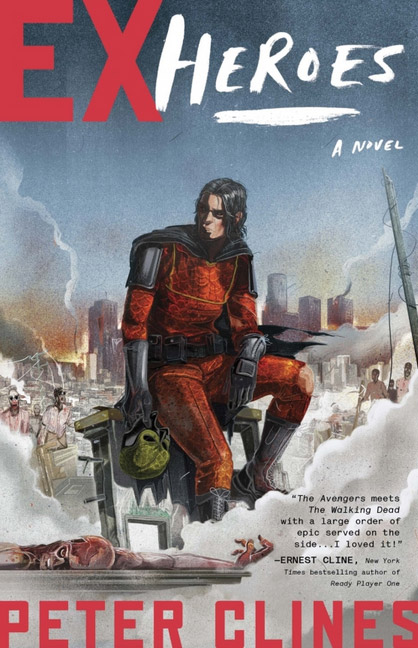
You noticed I said “us,” right? Lots of folks think of Ex-Heroes is my first attempt at a novel, but it wasn’t. There was the very clumsy early work Lizard Men from the Center of the Earth, a super-derivative sci-fi novel called A Piece of Eternity, a puberty-fueled fantasy novel (embarrassing on a number of levels), some Star Wars and Doctor Who fanfic, The Werewolf Detective of Newbury Street, The Trinity, The Suffering Map, about half of a novel called Mouth… and then Ex-Heroes.

And I can tell you without question that most of those sucked. In many different ways. It doesn’t mean I didn’t try to sell some of them (we’ll get to that in a minute), but I couldn’t improve as a writer until I accepted that I needed improvement.

2) My first draft isn’t going to be good
There was a point where I ‘d fret over my writing. I’d worry about individual words, each sentence, every paragraph. I’d get halfway down the page and then go back to try to rewrite the first paragraph. And then I’d get to the bottom of the page and rewrite it again. My productivity was slowed to a crawl because I kept worrying about what had happened in my story instead of what was going to happen.

It was a very freeing moment for me when I realized my first draft was pretty much always going to suck. And that’s okay. Everybody’s first draft sucks. We all have to go back and rework stuff, no matter how long we’ve been doing this. Everyone. I’ve seen some folks argue that they don’t technically do drafts, per se, but if you look close even they admit they rewrite a lot.

Once I could admit that and shrug off all those worries about word choice and sentence structure and dialogue and everything else… well, it became a lot easier for me to finish a first draft. Which meant I could do a second draft and a third draft. And then maybe even sell something.

3) My writing’s going to need editing
Okay, this seems like an obvious second half of the last admission, doesn’t it? If my first draft is bad, clearly it’s going to need some editing. Thing is, there’s a lot of folks who hear “it’s bad” and immediately move on to the next thing (I’ve got a whole school of thought about why this is, but that’s a different topic). Because my writing is perfect, so you saying it’s bad must mean there’s some inherent flaw in the plot or the characters that would mean rewriting the whole thing and who has time for that?

Look, we miss a lot of stuff on a first draft. On reflection, that character may be a bit of a stereotype. That dialogue could be a little sharper. I use that one turn of phrase a lot. I mean, seriously, it’s in every chapter.

And holy crap. Chapter nine? What was I even thinking? That’s just gone. Deleting the whole thing. Best if nobody ever sees that. It seemed like I needed it at the time but now that we’re doing this whole “admitting” thing… yeah, it should go. Doesn’t matter that I spent three days writing it. Gone. Remember to fix all those chapter numbers now…

Truth is, the editing is where we actually start to get better. It doesn’t happen by going to seminars or reading how-to books, it happens by sitting down and working on the writing until it’s better. And sometimes, yeah, it takes time and effort and multiple tries to make things work. Worse yet, no matter how much we learn, we’ll always find new mistakes to make and new things we can mess up.

Ha ha ha, you say. Well, only for so long, right? Eventually I’ll hit the point where I’ve figured it all out and writing holds no more mysteries. I will solve writing, yes?

Ehhhh, not really.

One of our goals is to come up with something new. We’re going to try these characters in that setting, this plot with those characters, maybe even some types of characters I’ve never tried writing before. And all these new combinations mean new things to learn and new mistakes to make in my early attempts. Running some quick and kind of horrying numbers, I can safely say I’ve been trying to tell stories for over forty-five years now (which is really weird when you consider I’m definitely still in my late thirties) and I really wish I had this down to a science. But the truth is I just finished a major rewrite on a book that’d already gone through four drafts. Because… well, it needed the editing.

4) My writing’s going to be rejected
Look, not everything’s going to appeal to everyone. Doesn’t mean it’s bad, it’s just that people have different tastes. They have different moods. No matter how hard we try to be fair, we like and dislike things for random reasons. Maybe it was a good story but the main character has the same name as an ex things ended really poorly with. Maybe I’d just seen one too many journal-style stories that week. Heck, maybe I had mild food poisoning at the time.

Good stuff gets rejected sometimes. It’s just a fact of life. Heck, even with the list of publishing credits I’ve got now, I’ve had short stories rejected, book proposals, comic proposals, all sorts of stuff. Rejection got less painful once I realized it wasn’t some personal attack, just a person who didn’t connect with my story at that moment for some reason.

Also probably worth admitting the ugly truth. Sometimes we also get rejected because… well, our stuff’s just not that good. Two agents asked to see The Suffering Map and both sent me a polite “sorry, not for me” letter. And they were (in retrospect) 100% right to do so. It wasn’t a great book and it had a lot of problems.

Oh, and please don’t fall into the trap of thinking something’s automatically good because it got rejected. We’ve all seen the folks who see rejection as proof their book is too good for those agents and Big Five publishers. We’re being honest here and admitting the truth, remember?

Y’see Timmy, if I can admit some of these things to myself, it can only make me a better, stronger writer. These aren’t flaws I have to wear forever like a big red letter A. Really, if I look at the above statements and my gut reaction is “Well, yeah, but this doesn’t apply to me,” it’s probably a good sign I’m not admitting some thing to myself.

So as you step fully into this new year, take a good look at your writing, and be willing to acknowledge what’s there.

Next time, I may blather on about first drafts a little more. Or tabletop games. Or maybe something else, if anyone has requests.

Until then, go write.

January 5, 2024 / 1 Comment

Let’s Start Again

Welcome to the far-flung future of… 2024!

Anyway, I often start off the year with a little post about why I do this. How the ranty blog got started. What I tend to blather on about. Sort of like that first lecture in most college classes—here’s what we’re doing for the next six months.

But let’s flip it around

Why are you here? What are you reading this for? What do you hope to get out of this?

Are you just here because you like my books and you’re looking for fun facts or advance news about upcoming projects? Nothing wrong with that. You can get a lot of that out of the more-or-less-monthly newsletter. You can sign up to get it delivered right to your inbox or just wait for it to show up here on the ranty blog at the end of the month

Are you curious about my process? Maybe you want to know how I came up with that character or some insight into why I set things up like this. Also a valid reason to be reading. It does come up here now and then, usually as an example. Hell, there’s a few dozen posts here that reference my first finished novel– The Suffering Map – and what a cautionary tale it turned out to be.

Are you thinking about writing something yourself? Maybe you’re already in the process of writing something? Heck, maybe you’ve completed something? Good on you. Whichever, maybe you’ve ended up here looking for the next step. Could be one of the very first steps. Could be one of the last ones. Maybe it’s somewhere in the middle and you need a helping hand or a little nudge or a firm kick in the butt.

Honestly, you’re the folks this is mostly for. I blather on about a few different things here, but mostly I’m just trying to make the kind of resource I wish I’d had access to back in the day. One place where I could just type in, f’r example, “structure” and find a bunch of explanations and examples. And maybe not have someone basically say “wow, you’re doing everything wrong” the whole time.

Or maybe… you’re here looking for the secret word? The word that makes writing a novel easy? The word that gets you an agent and a publishing contract and your first hardcover? That word is mellonballer!! Seriously! Drop it into an opening paragraph, a cover letter, a casual DM with an editor and behold! Champagne will fall from the heavens. Doors will open. Velvet ropes will part.

No, of course they won’t. I think (I hope?) all of us here know there’s no secret word that makes some part of this easier. No magic phrase. No trick. A very large percentage of getting to do this as a career (if that’s what you want) is just doing the work. Not finding a clever way to get around doing the work.

So if that’s what you’re here for… sorry.

Anyway… I guess that tells you a little bit about what I’m doing here after all. Drop a comment down below, say hi, and let me know why you’re here.

And since we’re talking about the start of the year, next time I’d like to talk to you about your resolutions.

Until then, go write.

Categories