
April 5, 2026 / 2 Comments

I QUIT! Who’s Coming With Me?!?

Okay, I know I said I was going to talk about twists, but then… something came up.

Last weekend was WonderCon, and once again a few very talented folks (and me) came together to do the Writers Coffeehouse. If you’ve never been, it’s essentially a bunch of professional writers who are just there to answer your questions. That’s it. Anything goes—writing, publishing, feedback, publicity, editing, contracts, managing this whole hobby/ part-time job/ career/ whatever it is to you. You ask, we answer. Sometimes with a joke or two and the occasional segue.

Anyway, one question we were asked ended up getting, well, a strong emotional reaction from someone in the audience. Not angry. Quite the opposite. No, not happy, either. And I wanted to revisit it because I think the answers we gave out got kind of muddled by a few misinterpretations of the question.

So, all that said… when should we give up on a project? What are the signs or benchmarks something needs to hit for us to say this is as done as it’s going to get? When is it time to drag those first 60K words to the recycle bin and start something new?

To be honest, I don’t know.

Great talk, everyone! Glad you keep checking in on the ranty writing blog. So informative, I know.

I don’t know because this is something absolutely nobody can decide but you. If anyone tries to tell you that you should quit, feel free to ignore them. Tell them I said to ignore them, then go back to ignoring them. I don’t care who they are. Your writing instructor, your significant other, your family member, some professional with a pile of credits, that loudmouth guy online with no credits. I don’t care who they are. Seriously, nobody decides this but you.
Got it?

Okay then. With that in mind… let’s talk about a few reasons I might be thinking about giving up on this short story or screenplay or novel or long form epic poem. I think it usually comes down to four things. Each of these is kind of an umbrella, and it won’t surprise you that there can be overlap.

First is that I’m stuck. Could be a character thing, a particular interaction, or maybe a description. Maybe I just don’t know how to get from point L to point M, even though I had it all outlined. It just doesn’t work for some reason. Or maybe I didn’t have an outline and I’ve got no idea what happens next. Maybe I’ve been stuck for a while now. Possibly a long while.

Second, closely related to being stuck, is that I’ve been polishing this thing forever. Maybe I can always see something else that needs tweaking. Maybe I show it to other people and they always see something that needs tweaking. Writing means rewriting, and I’ve rewritten this whole thing five or seven or eleven times.

Third is that… well, I’m bored with it. Maybe it’s because I’ve been stuck and beating my head against it for ages. Maybe it just doesn’t excite me anymore. I wrote all the cool bits and what’s left is kind of boring. Nobody wants to write something dull and this thing has become dull.

Fourth and finally is that maybe I’ve become a little embarrassed by it. Ashamed, even. No, not because I forgot there were racy parts when I asked my mom to read it. Okay, maybe that. But maybe because I showed it to someone and they didn’t think it was that great. Maybe they told me it sucked. Hell, maybe I asked for feedback and they just ghosted me. I mean, how bad is this manuscript? I thought it was pretty good, but I guess it’s really awful and I’ve been wasting my time…

So that’s four reasons I think most people consider giving up on a project. Let’s talk about each of them and why maaaaayyyybbeeee they don’t really matter. Or maybe they do, in this case. Again, I can’t decide this for you.

First, we all get stuck sometimes. All of us. Yeah, even pros. Yes, me too. It’s really rare that I can’t write anything, but I have absolutely hit times when I just can’t make this sound right or that bit just doesn’t work, no matter what I do. And sometimes it takes a while to figure it out. One thing that helped me a lot was realizing this usually happened with my first drafts and first drafts just… well, they don’t matter. They can be gloriously messy, error-filled, unfinished things with gaping holes in them. Hell, the first draft I just finished up has so many holes in it, if it was a shirt I couldn’t wear it in public. But it doesn’t matter. A first draft is that shirt you only ever wear around your home because, y’know, it doesn’t matter.

If you get stuck in a first draft… skip it. Seriously. Just leave a note to yourself in all caps or brackets or whatever and just deal with it in the next draft. That’s what the second draft is for. Looking at stuff again when you’ve had some time. You’ll have a better grasp of the characters, the plot, and the whole story, and the things that you were beating your head against before will suddenly seem a lot easier to deal with.

Speaking from a lot of experience on that one.

Second, like I just said, everything needs edits and rewrites. Anyone who says otherwise is lying to you or themselves. Possibly both. We need to clean up that first draft and then go over the second draft to make sure we didn’t make new problems when we fixed the old problems. But it’s easy for this process to become a trap. Because, yeah, there’s always going to be something else to tweak, something else that could be a little stronger, a bit smoother, and crap, I’ve been doing this so long that reference is a little dated now, isn’t it? Maybe i could come up with a better one…

I tend to do five drafts of a book and then… I’m done. I put it down. At that point I know, personally, that anything I do is just going to be stalling. There will always be something else to fix. And there’s probably always going to be another chance to fix it. So don’t get trapped rewriting the same thing over and over and over again when you could be using those skills to move on to something else. Something better.

Third, yes it sucks when writing turns into work. Yeah, that first draft is filled with energy but then… well, it’s always more fun to make the mess than to clean the mess up. Plus, let’s be honest, sometimes we’ve got this other idea bouncing around in our heads and that one is really exciting.

The truth is, if I’m just doing this for fun… punt it. Move on to something you’ll enjoy more. But if I want to do this professionally—at any level—sometimes I just need to slog through it. I can’t really do anything until I’ve got a finished, polished manuscript, and sometimes that just means… I need to finish it and polish it.
Sorry.

Fourth… this one’s probably the worst because this one can hurt. And it’s really hard to ignore something that’s causing us pain. Sometimes it’s accidental. Sometimes… yeah, it a dick who thinks they’re being funny. Worse yet, they’re openly trying to hurt us. Sometimes with the assurance that “oh, it’s for your own good” and sometimes… because they just want to hurt us.

A few things to remember when this happens. Not every story is for everyone, and I can’t be surprised when someone who doesn’t like genre X has a bunch of issues with my genre X story. Some folks are really bad at vocalizing—or honestly, even identifying—what they think does and doesn’t work in a story. Taking criticism is a skill we need to learn, and alas it’s rare to learn how without taking a few bruises.

But while I’m getting bruised, I need to remember, no matter what anyone else says… this is my story. Nobody knows how it’s supposed to go better than me. Absolutely no one can write it better than me. And definitely nobody can fix it better than I can, because (again) nobody knows what it’s supposed to be better than me.

And one of the best lessons of criticism is… sometimes we can just ignore it. It can be tough, but like I said up at the top, no matter who they are, they don’t get to make the decisions.

So anyway… there’s four reasons you might want to quitting on a project. And four reasons you might want to reconsider quitting. Y’know, if you want to. And even if you do, quitting doesn’t mean deleting all your files and burning all existing copies. If you do decide to quit, you can still change your mind later.

Y’see Timmy, like I said above, nobody can decide if you should quit or not. But if you do, just make sure you’re quitting for the right reason.

Next time, for real, twists.

Until then, go write.
April 8, 2021 / 2 Comments

…In The Trunk

A few weeks back (over on Twitter) I tossed out a general question to any writer who wanted to answer—“Do you have a trunk novel that you wouldn’trelease right now?” And I wasn’t really surprised to see a fair number of folks respond affirmatively. One or two were almost enthusiastically affirmative. In fact, only one person said no, and even their no was couched in the acknowledgement said novel would need to be rewritten.

And, okay, maybe I’m skipping ahead a bit. Does everyone here know what a trunk novel is? Let’s start there.

Really short version, a trunk novel is a finished (or maybe close-to-finished) novel that I’ve decided to put aside for a while. Usually a long while. It gets its name from ye olden times, when authors had to write everything on crushed papyrus. And if you had something that didn’t work out (for one reason or another) you either had to throw out that physical copy or, y’know, put it away somewhere so it wasn’t taking up desk space. Like, say, in a trunk. Because everyone had steamer trunks back then.

Nowadays we don’t have the space problem (yay, electromagnetic memory bubbles), but a lot of us still end up with stuff we can’t find homes for right now. And that’s what I wanted to talk about. Why things get put away and what happens when we pick them back up.

Right off the bat, there’s nothing wrong with needing to put something aside. It doesn’t mean I’ve failed or wasted time. If anything, I think it can be kind of mature and healthy when someone sets things aside. From a writer-ly point of view, it means I’ve realized this isn’t going to work, for one reason or another. Maybe I’ve admitted I don’t have the skill yet to make this particular story work the way I want it to. Perhaps I’ve determined the market’s not good for my story right now. Hell, it could be that I’ve realized the story just doesn’t work. It seemed clever at first but now that I’ve cleaned it up and expanded it… yeah, that is a massive, gaping hole there in the middle of it. Like, highway-swallowing-sinkhole massive.

So, yeah. Absolutely nothing wrong with taking something I spent a lot of time on and just wrapping it up in a blanket to sleep while I move on to other things.

Because after a point there are choices to be made. I can just keep plugging away at this again and again and again until I get it right. Or I can keep hunting for a market to take it, until I’ve been hunting so long I can circle around to those first submissions again and say “well, how about now?”  But this is a tricky balance. Because there is a point that I’m spending so much time on this thing—trying to make it perfect, trying to get it sold—that I haven’t done anything else. And the months and years I spend doing that are months and years I could’ve spent writing something new. That’s a tipping point we all need to find for ourselves, when “not giving up” becomes “putting off doing anything else.” It’s the polar opposite of the shiny new idea.

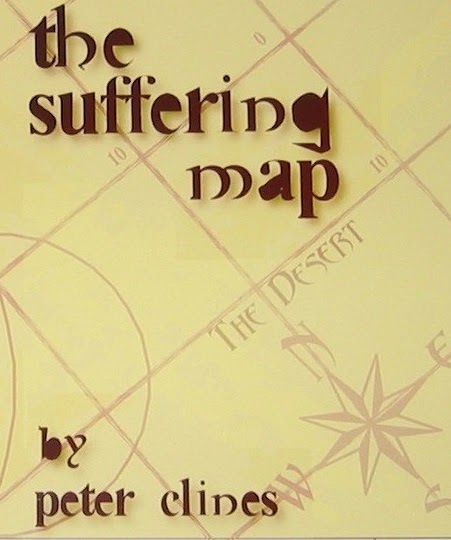
And, yeah… I’m speaking from experience here. A lot of you have heard of my trunk novel, The Suffering Map. I worked on it on and off for years. Maybe three years of solid work altogether, spread out across almost four times that. I rewrote it again and again. I showed it to agents and editors. I rewrote it some more. And finally I realized, like I just said, that I’d been working on this thing for over a decade. I was in my thirties and I’d been working on it pretty much since I got out of college.

So after my latest round of rejections, I put it away and called it good. And went on to start writing a book about a government teleportation projectwhich, oddly enough, I set aside when I got a really good opening from a publisher to deliver a zombies vs. superheroes book.

Which means putting The Suffering Map aside and moving on was a really good decision on my part.

But let’s look at the second half of this. What about picking it up again? I mean, trunking a novel isn’t like shooting it into a black hole. Or being like Robert Louis Stevenson and burning a whole manuscript because he felt it was just way too disturbing for the current market (no, seriously, he did). We can pull it back out, rework it, and maybe find a home for it.

Let’s really consider this, though. Because we can’t just leap back into something from five or ten years ago (or more) and expect it to work just like it did then. For a couple of reasons.

F’r example… hopefully we’ve grown as writers. I think most of us realize the stuff we did when we were fifteen might not hold up as well as the stuff we did at twenty-five or thirty-five. I’m not the person I was then, and I hope you’ve matured too. As a person and as a writer. We’ve (hopefully) grown our vocabularies a bit, learned some new structure tricks, maybe gotten a bit better with subtlety and nuance. We may realize, wow, that whole thing I did there was a bit pretentious, wasn’t it? And maybe that other bit was…

Okay, look, we can just cut all of that bit. Nobody’ll ever even know it was there. Plausible deniability. It’ll be fine.

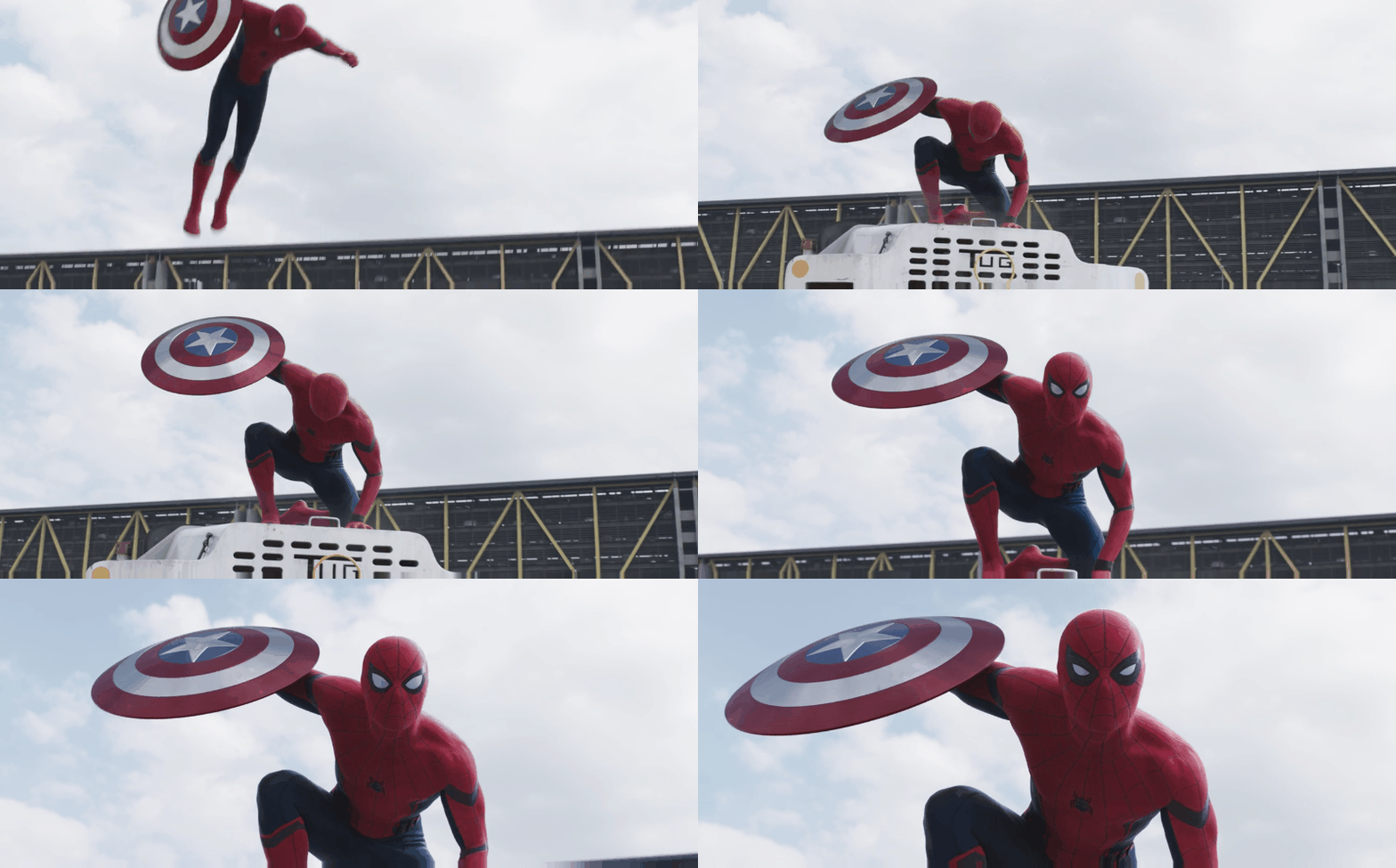
But the world’s also going to change. Yeah, even in just a couple of years. I mean, go back just five years—April 2016. Obama was still the USPresident. There were two people vying for the Democratic ticket, but three fighting for the GOP nod. The majority of people went around without masks. Technology was different. Entertainment was different (we were all still waiting to see this latest Spider-Man in Captain America: Civil War, due out that summer). Society was different. Hell, 2020 was a horrible year in so many ways, but it also opened a lot of eyes to the injustice and social issues millions of people deal with on a daily basis.

And that’s all stuff that should be reflected in my writing.

F’r example… let’s look at The Suffering Map again.

As I’ve mentioned here once or thrice, I can look back at the things I did with this book and see flaws that weren’t apparent to me then. Problems with the dialogue, the structure, and some of the characterizations. There’s a lot of stuff in there I’m very proud of, but there’s also a lot of stuff that makes me very glad nobody outside of a small circle ever saw it. And I absolutely understand why the agents who liked my pitch and read some of it ultimately rejected it.

One of the big issues with it, which I’ve mentioned before, is that I had the wrong character as my protagonist. In retrospect, I stuck with Rob for eight drafts because Rob was, well, the most like me. The easiest to write. And I might not have consciously realized it, but I knew I didn’t have the skill at that point (or the confidence) to write a female character who didn’t feel kinda like… well, kind of a cliché.  A bunch of clichés, honestly. So it was easier then to make Sondra a supporting character, even though I realize now her arc is way more interesting than Rob’s. If I ever decided to pick it up again, no question I’d rewrite the whole thing to make her the protagonist.

Plus, let’s look at the world between when I started writing The Suffering Map and now. Answering machines were still a thing then. Same with Walkmans. Cell phones have become much more common than they were then, and they’ve become smartphones. All this means major changes for four or five chapters in the book (plus fallout from those changes), and even some structural changes because smartphones have completely changed how we interact with each other and the world. I mean, I had a scene where Rob gets a call at work, and two others where he uses a Thomas Guide. Anyone remember those?

Politically/socially we were in the height of the Clintonyears. Roaring economy. Big business being taxed. Budget deficits shrinking. Small businesses are a large part of the book, and they couldn’t really be presented now the way they were then (although one side hustle aspect of Rob’s life would seem more believable).  No 9/11 yet, either, and that really showed in a lot of places. And there’s at least one chapter that’d play out really differently because of this.

Here’s another thing. In early drafts of The Suffering Map, Sondra was a woman who’d worked in adult films, and as a dancer in later revisions. It was a “young and needed the money” thing. But truth be told, the sex industry has changed quite a bit in the past twenty-five years, and so has many folks’ views of it. It’s still rarely seen as a great thing, but it doesn’t have quite the massive stigma it used to. Which makes it worth mentioning—when you add in the cell phone/internet issue—if I did want to keep something like this hidden, it’s a lot harder these days. Also, a lot of these jobs doesn’t pay as well as they used to (that damned internet again).

So this is a whole character element that would need major revision—if I even decided to keep it and not just have her be an Uber driver or something.

Any of this make sense? I know I’m babbling a bit because this is kind of a big, sprawling thing and I’m trying to cover a lot of it and give some examples.

The two big things to remember are this. There’s nothing wrong with setting something aside, for whatever reason I decide to do it, because I can always pick it back up again. I just need to remember the world is going to change. And if I’ve been doing things correctly. Hopefully I’ve changed too.

Hopefully.

Next time, I want to talk to you about a very important saxophonist.

Until then, go write.

March 12, 2015 / 5 Comments

Quitters Prosper

            Never say never…
            I wanted to blather on about quitting for a couple of minutes.  There comes a point in many endeavors when you realize you’re not getting ahead.  That all the time, effort, and enthusiasm that’s been expended on this project just isn’t enough. For one reason or another, I didn’t make the cut.  The team picked that skinny kid with the limp and the glasses over me.
            At which point, I need to make a choice.  Do I keep trying to get on this team? Do I continue throwing myself unto the breach?  Forging on despite all odds with the strength of my convictions?
            Or should I give up?
            Honestly?  After working at this writing thing on one level or another for a good chunk of my life…
            I think it’s time to quit.
            If I’ve spent the past decade trying to get any publisher in the world to just look at one of my book manuscripts, and they’re not interested… that’s a sign.  If I’ve spent thousands of dollars on screenwriting classes and books and contests over the past ten or twelve years, but I still don’t even have a toe in the door…I should consider saving my money this year.  When I submit a story to a hundred magazines, journals, and anthologies and get back a hundred rejections… I need to take that hint.
            I should quit.  Cut my losses.  Stop beating my head against the wall, demanding to be recognized, and move on.
            No, hold on.  Don’t leave yet.  Keep reading ‘till the end.
            What I’m getting at ties back to an idea I’ve talked about a few times here.  I need to be able to look at my own work honestly and objectively.  Knowing when to give up on a project is part of that.  After querying a hundred or so reps or editors and not getting a single nibble, I need to consider the fact the problem may not lay with them.  My writing may be perfect, it may be gold, it may be what everyone in America is dying for.  At the moment, though, for one reason or another, it’s not what those specific people—those, dare I say it, gatekeepers—are  looking for.  And, right or wrong,  they’re  the ones who make that decision. 
            Now… here’s that important part.
            I’m not saying I’m going to stop writing altogether.  This doesn’t mean I should never touch a keyboard again or that it’s time for me to forget the big leagues.  It’s just time to sit back and look at what I’ve done and how I’m doing things.  Maybe the problem is the characters.  Maybe it’s dialogue.  Perhaps even something as basic as an overwhelming number of typos.   Heck, it could just be my cover letter.  At the end of the day, something is holding me back, and that needs to stop happening.
            I’ve met people who wrote one novel way back in college and have spent the past twenty years sending it to agent after agent, publisher after publisher.  They haven’t changed a single word since they first set it down on paper.  They haven’t written anything else since (“Why should I write something else nobody’s going to pay me for?”).  They’ve just got that one novel going out again and again and again…
            Same thing in Hollywood.  People write a screenplay over a long weekend, never polish or revise it, but try to use it as a calling card for years.  I know of a guy on the contest circuits who pushed the same script for almost a decade.  He hasn’t done anything else in the meantime, just sent that same script to contest after contest, waiting for fame and fortune as if winning was a lottery and he had to keep playing his lucky numbers.
            Knowing when to quit and move on isn’t a weakness. It’s not a flaw in my approach.  It’s a strength.  It’s the only way I can grow and learn new things, because I won’t get any better if I keep rewriting the same manuscript again and again for decades.  Sometimes you just have to give up on something. 
            It took me almost eleven years to finish my first solid novel, The Suffering Map.  Not an idea, not a work in progress, not something I’ve been poking at.  A complete, polished book manuscript, first page to last page.  Beginning, middle,and end.  Yeah, that’s a long time, but close to a decade of that was the film industry convincing me to go work on screenplays instead.  It probably only took about two years of actual work.
            So, eleven years of on-again-off-again work, and then the querying.  Letter after letter, rejection after rejection.  Go through it again, create a new draft, and then start the letters again.  Some folks asked to see it (one or two of them were powerful, well-placed folks).  Many letters and emails were traded back and forth. 
            In the end, though, after almost a dozen very major revisions, all of them passed on it.  And then I realized, this was done. I’d been working on that book on and off since graduating from college.  It was time to expand my horizons and write something else. 
            And that something was an early draft of a book about a government teleportation project gone wrong.  Which I followed up with a book about superheroes fighting zombies.  And then a few things since then.
            If I’d stayed focused for years on that novel no one wanted to see, though, I wouldn’t’ve done any of it.  I’d still be back there at square one.  And my list of published credits wouldn’t be the size it is now.
            I’m not saying I’ll never go back to The Suffering Map.  Many writers will tell you if your screenplay or novel gets rejected, put it in the drawer and wait a few years.  I’m also not saying it will sell in a heartbeat if I decide to try again in five years.  For now, though, I’ve given up on it. 
            So the next time you’re frustrated by months and months of trying to find a home for your work… stop and really think about it.  Maybe it’s time to move on and try something different.  Something new.
            Because that next thing could be the big thing.
            Next time might be a bit delayed.  Sorry. But when it happens, let’s flip this around.
            Until then… go write.

Categories