
February 8, 2026

Maximum Effort

There’s a little maxim you may have heard– work smarter, not harder. If you haven’t, what it means is some folks solution to every problem is to throw 100% of their effort at it. They’d throw 110% at if that was possible. But it’s not.

Meanwhile, another type of person will look at the problem and figure out how much effort it actually needs. Do we want to do the time and work to dig through the mountain when we could go over it? Or around it? And then we can save all that effort and energy for somewhere we actually need it rather than burning out early on problems we could’ve just, well, easily gone around.

I mention that so I can tell you a few stories. There’s a theme. Trust me.

A bunch of you know I worked in the film industry for about fifteen years. Mostly television, some movies. Some of it’s even stuff you’ve heard of.

An all-too common problem I saw from beginning directors (and let’s be honest– also from plain bad directors) was an urge to make every single shot special. Every one had to be Oscar or Emmy-worthy. Didn’t matter if it was a wide shot, a close-up, a master, or coverage. Didn’t matter where it fell in the story. Didn’t matter what the day’s schedule looked like. Every shot of every scene required hours of set up and rehearsals and discussions and little tweaks and adjustments.

Now, on one level, yeah, this is sort of the director’s job. To make it all look good. But there’s a lot of nuance there. I can make an individual shot look good, sure. But does it fit with the last good shot? Does it fit with the rest of the scene? Is the editor going to be able to cut these shots together in a way that works within the filmic, visual language we all know on some level? Heck, does it even fit in the story I’m telling?

Plus, well… this is going to be an awful shock for some of you, but there are a few capitalist aspects to filmmaking. Yeah, sorry you had to find out this way. Making a movie costs money. It has a budget, and one way that budget’s expressed is in how long you have to shoot something. Spielberg can take a week waiting for the absolute perfect sunset his heroes can ride off into, but I’ve got today and it took us too long to get to this location so I might get two tries at this if I’m lucky and that’s it.

Anyway, what this meant for the crews I worked with was we’d get stuck with a new (or bad) director and they’d spend hours on the first two or three shots of the day. Like I mentioned above, it didn’t matter what they were or were they fell in the story. These folks would spend the whole morning working on whatever scene happened to be first up, and then we’d come back from lunch and surprise we still have 83% of today’s schedule to shoot in the last six hours of the day. So we’d rush through all that stuff—again, no matter what it was—and then come in the next day and, well, usually watch them do the whole routine again.

And this was really bad, from a storytelling point of view. The final film or TV episode would end up uneven because there was all this visual emphasis on random scenes that didn’t need it and often very little on scenes that did. Heck, once or twice I saw folks spend all this time on a random “pretty” shot and it wouldn’t even get used because there was no way to cut it in. These directors were so focused on making individual shots look amazing—no matter what that particular shot was—that they didn’t stop to think of the film as a whole.
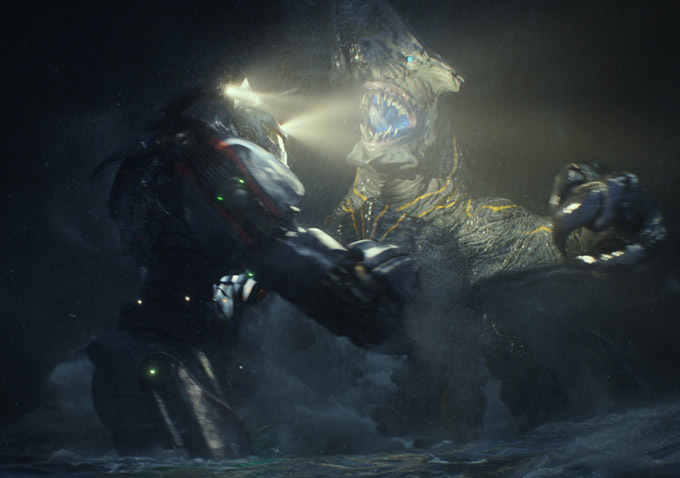
Okay, this actually reminds me of another fun story (still semi-related). A few years after I got out of the industry, my beloved took me to an Academy screening of Pacific Rim (yeah, she’s super cool) and Guillermo del Toro was there talking about the movie. One of the things he stressed was even though he knew large swaths of the movie were going to be mostly computer-generated, he didn’t want any sort of wild, impossible “camera moves.” You know, the ones where the camera’s essentially whizzing through the air and then it loops down under the monster’s armpit to come back up between punches from the giant robot and then it circles around the two of them before pulling back for the panoramic shot of the city in flames as they fight? We’ve all seen some of those, right?

Yeah, del Toro didn’t want any of that in Pacific Rim. He understood those sort of visuals becomes distracting very easily, and once the audience is thinking about them they realize how impossible these moves are. And suddenly a big chunk gets lopped off their willing suspension of disbelief. They become consciously aware they’re just watching a movie rather than getting drawn into the story. That’s why the CGI camera shots in Pacific Rim are all set up as if actual, physical cameras are there doing regular, normal shots.

Now… I told you all this so I could tell you about Krishna Rao.

I worked with Krishna on a show called The Chronicle, back when the SyFy Channel was called the Sci-Fi Channel. Krishna started out in the crew (one of his very first film credits is on John Carpenter’s Halloween) and over the years worked his way up the ladder (seriously check out his list of credits), becoming a director of photography and quite often a director as well. Which is how I knew him. He had a loose rule he tended to follow when he was filming an episode. Honestly, I’m not sure he ever even put it into words, because it didn’t really click in for me until the second or third time I worked with him.

Krishna would only really plan on one pretty shot a day. That’s it. Once a day we’d have a complicated move with the camera dolly or some other elaborate shot that required lots of set-up and rehearsal. Everything else would be simpler, workhorse stuff– masters, overs, some coverage if it was needed. And I’m sure a few folks reading that may have some thoughts about “real” directors or the lack of art in American television or whatever. But here’s a few things to keep in mind.

Krishna made his schedule pretty much every day. Because he didn’t overload himself trying to do too much, he could make sure all his material fit together just how he wanted. He still had at least seven solid, very pretty shots per episode—that’s a cool shot every six minutes in a standard 42 minute television episode. And because he was being careful about using them, they always landed where they’d have the most visual impact.

And, sure, like any rule, sometimes he’d bend it a bit. He wasn’t against doing something fun or clever if he could do it quick. Sometimes we’d do two pretty shots in a day, maybe because of stunts or special effects. But these were always the exception, not the rule.

And his episodes always looked fantastic,

Okay, all interesting, but what does it have to do with books? With, y’know, our kind of storytelling? We don’t deal with visuals.

Y’see Timmy, something I’ve talked about a few times here on the ranty writing blog is pointless complexity. In structure. In dialogue. In vocabulary choices. I’ve seen stories with the most confusing non-linear structure just because the writer… felt like using non-linear structure. There are folks who scoff at using pedestrian words like blue or house or said. They spend all their time figuring out how to bury their story (or hide the fact that they don’t actually have one) behind layers of complexity.

To be clear, I’m not saying any of this stuff is inherently bad in and of itself. Personally, I love a story with a clever structure, an author who knows how to use their full vocabulary, and some twisty-turny character motivations. But a key thing is that when they do this—when they make a choice that isn’t the basic, workhorse choice—is that it’s actually making things better. This added complexity is an improvement, not an affectation.

And one other thing to consider. Sometimes… we need the simple stuff. We need the workhorse to just come in and deal with this paragraph or page. Because if I try to make every single sentence/ paragraph/ chapter the one that gets me an award, what I’ve really done is make a flat, monotone manuscript. If every single line is the utterly amazing artistic-piece-of-beauty one, they all have the same weight. Nothing has emphasis. To paraphrase one of great modern philosophers, once everything is super… nothing is.

So think about where you’re putting your effort. And how much of it you’re putting there. And how much you might want somewhere else.

Next time, I may blather on about the Children of Tama. Haven’t talked about them in a while.

Until then, go write.
October 23, 2025 / 6 Comments

Seeing the Invisible Man

Revisiting an older post with a Halloween themed post! Sort of! But still with lots of thoughts and (hopefully) informative tips and hints.

I’m going to go out on a limb and guess most of you are familiar with The Twilight Zone. It’s one of those lightning in a bottle things that people have tried to re-create again and again over the years. I think we’re up to… three remake series? And the movie?

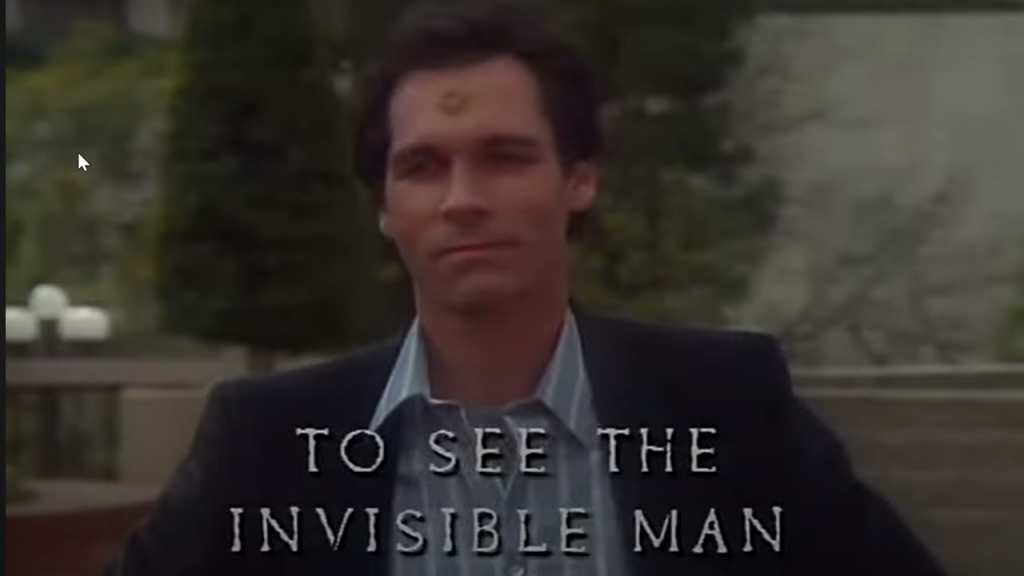
During the ‘80s revival, they did a story called “To See The Invisible Man” (adapted by Stephen Barnes from an old Robert Silverberg short story). It’s about a man in a somewhat-utopian society whose asshole behavior gets him sentenced to a year of “public invisibility.” Key thing though…

They don’t actually turn him invisible. He just gets a small sort of implant-mark on his forehead that tells everyone to ignore him. That’s the curse of it. Everyone can see and hear him–and he knows they can– but no one’s allowed to react to him or anything he does. Even when he desperately needs to be acknowledged (I remember an eerie scene in a hospital emergency room after he’s been hit by a car), people just all pretend he’s not there. Even though they know he is.

Why do I bring this up?

In a weird way, this story’s kind of a metaphor for being a writer. The reader absolutely knows I’m there, that I’ve created this story, made up these characters, and chosen these individual words. But at the same time… they don’t want to admit that. They want to get caught up in the flow and immerse themselves in the story and pretend for an hour or an afternoon or a commute home that all of this is real. That it’s just them and the characters and the plot and I’m… not there. Not part of it.

It’s just my opinion, but I think one of the worst things a writer can do is draw attention to themselves in their writing. We need to be invisible. I mean, we want our characters to be seen. We want our dialogue to be heard. We want our action and passion and suspense to leave people breathless. But us—the writers? We’re just distractions. Less of us is more of the story. Being able to restrain myself is usually just as impressive as how excessive i could be.

So here are some ways not to be seen.

Vocabulary— A fair amount of would-be writers are determined to prove they’re cleverer than everyone else. More often than not, they latch onto (or look up) obscure and flowery words because they don’t want to use something “common” in their literary masterpiece. These folks write sprawling, impenetrable prose and all too often they’ll try to defend this habit by saying it’s the reader’s fault for having such a limited vocabulary. After all, I can easily picture a glabrous man in habiliments of titian and atramentous, not my fault you’re so basic.

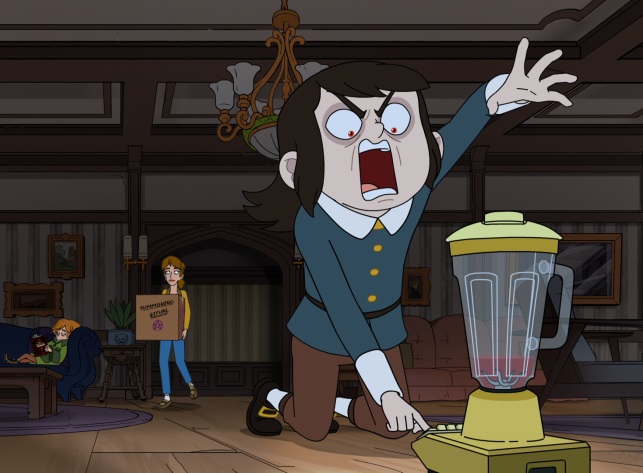
Any word I’m choosing just to draw attention, to prove I don’t need to use a common word, is the wrong word. Any word that makes my reader stop reading and start analyzing is the wrong word. I can try to justify my word choice any way I like, but when my reader can’t figure out what’s being said for the fourth or fifth time and decides to put the book down and go get caught up on Haunted Hotel… well, there’s only one person to blame. And it’s not them.

Complication— This is kind of like the vocabulary issue. Sometimes folks try to prove how clever or artistic they are by creating overly-elaborate sentences or structuring their whole narrative in a needlessly complicated way. I mean, I once tried to read a book with—no joke—a three-page opening sentence. Yes, sentence.

If I have an actual reason for doing this sort of thing in this piece of writing, fantastic. But if not… why would I do something that makes my readers more and more aware they’re reading a book rather than letting them get immersed in it? My writing should be clean, simple, and natural.

Said— I just talked about this recently so I won’t spend a lot of time on it here, but said is invisible. People skim over said on the page. It’s fantastic that I know a hundred other dialogue tags, but save them for when they matter. If every single tag is the special one, then none of them are special. So I shouldn’t draw attention to myself with twenty different descriptors on the page when I could just use said.

Names. If I use them in moderation, names are invisible. They’re just shorthand for the mental image of a character. But any name that repeats too often becomes the name we see everywhere and then it becomes noise distracting my readers from, y’know, the things I’m actually trying to show them. When Dot talks to Bob and Bob talks to Dot and Dot calls Bob by name and Bob calls Dot by name and then Bob and Dot… I mean, personally I start flinching a bit at that point.

Y’see, Timmy, every time I make the reader hesitate or pause for a second, I’m breaking the flow of the story. I’m encouraging them to skim at best, put the manuscript down at worst. I never want my reader thinking about how much they’re enjoying the latest Peter Clines book—I don’t even want them to think about the fact that they’re reading. I just want them to be immersed in this world alongside Noah, Parker, Olivia, Sam, Josh, the Castaway, Ross, Dieter, Neith, and all the rest.

If I’m the one they’re looking at, something’s gone wrong.

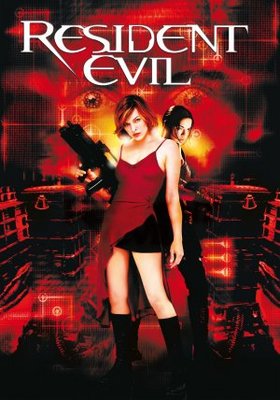
Next time… I thought I’d stick with the Halloweenish theme and do something I’ve threatened you all with for a long time now. I’m going to talk about Resident Evil. A lot.

Oh! And this coming Tuesday night I’m going to be at Mysterious Galaxy in San Diego talking with Eric Heisserer about his fantastic new crime procedural-reincarnation book Simultaneous. You should stop by and check it out.

(and do your homework– go watch Resident Evil)

Until then, go write.

June 27, 2024

Hail Flash!

So, I’d like you to cast your mind back a few weeks to when I told you what we’d talk about next time. Which, by odd coincidence, was casting you mind back a few weeks to thhink about what I told you then…

Yeah, I’m running late, but it turns out it works thematically so… yay.

I thought it might be cool to talk about flashbacks for a minute or six. I’ve mentioned them half a dozen times over the past few years—usually relating to story structure, but I haven’t really talked about how to do them in a couple years. Maybe ten years? Wow I remember it as if it were only yesterday…

Anyway, for our purposes, when I’m saying flashback it can cover a few things. It can be an element within the story like a recalled memory, or something more physical like a letter or journal entry. Sometimes, like in my Ex-Heroes series, it’s part of the way the narrative has been structured. All I need to remember is that whatever form my flashback takes, it just needs to follow a few rules-of-thumb if it’s going to work.

<insert usual disclaimer of yes it’s always possible to find a way, exceptions do not disprove the rule, etc, etc>

Now, first rule of thumb is I can use a flashback anywhere in the story, but this switch in the narrative structure can’t affect the dramatic structure. If I’m going to drop linear point E between points R and S in my narrative, it still has to keep the story moving forward. It needs to keep building tension and/or pushing the character arc. If it doesn’t do either of those things… what was the point to this flashback?

A lot of writers use flashbacks as infodumps. The flashbacks are seen as a chance to show how Wakko met Phoebe, how Phoebe became a ninja, why Wakko hates snakes, and so on. The mistaken belief is that if I do this in a flashback, I’m not affecting the pacing or tension of the present storyline because these events aren’t happening now—they’re happening in the past.

When I do this, I’m confusing linear structure with narrative structure. A flashback has to keep moving the story forward. It doesn’t matter where the events fall in the linear structure of the story, but wherever I’m using them they have to fit into the narrative structure I’ve established.

I mentioned the Ex-Heroes books and, in all fairness, I did this with the first one. I dropped a flashback dead in the middle of the big climactic end battle and brought things to a grinding halt. Full-tilt, non-stop action to no-tilt, standing-in-place dialogue chapter in one page. Which meant (once it was pointed out to me) weighing if I needed this flashback or not, and if I did… where should it be instead? Where would it actually fit?

Now, the second rule of thumb is just the reverse of the first one. It’s when I confuse the narrative structure with the linear one. This is similar to a problem I’ve mentioned once or thrice before, understanding when something happens for the first time in my story. When I do this with flashbacks, instead of messing up the tension or the pacing. I mess up the internal logic of the story. It also happens sometimes with poorly set-up twists or reveals.

F’r example let’s say I’m telling a werewolf story, and on page 100 my protagonist has no idea who the werewolf is. Then, on page 200, I flash back two weeks to something that happened “off camera” earlier. Here I reveal that she learned the identity of the werewolf because of a clue she spotted in the old family Bible.

And yeah, in a quick, don’t-think-about-it-too-much way, this makes sense. On page 100 she doesn’t know, but by page 200 she does. Except… it’s new information for the reader on page 200, yeah, it’s not new to my heroine. She’s known all along, right? Pg 200 happened before page 100 once we look at this in linear order. Which makes her actions, motivations, and even some of her dialogue for the last hundred pages… probably don’t make a lot of sense.

The simplest way to test this is to take my narrative apart and put it back together in linear order. When I read it now… are people doing or saying things that don’t make sense? Does that twist land really flat? Are they acting strange for no reason? If my flashback doesn’t work once it’s in linear order… something probably needs work.

Now there’s one last thing I need to watch for, and that’s my third rule of thumb. This one had a bit of venn diagram overlap with the last two, but I think it’s pretty its own thing. It’s also a common problem in prequel stories which, if you think about it, are just big flashbacks.

By its nature a flashback is giving my readers a glimpse into the past. This also means, though, that they’ve effectively seen the future. They know, to a large extent, how things are going to play out. So trying to create a lot of drama and tension within my flashback can end up feeling… well, a little silly. Did forty-year-old Phoebe get eaten by a shark when she was fifteen?!? Hopefully we’ll find out in her next flashback…

I think some writers feel like they’re adding to the tension or suspense when they do this with flashbacks. Thing is… there really isn’t any tension in this cliffhanger, is there? Because y’see, Timmy, the moment the reader pauses, even for an instant (like, say, at this chapter break), they’ll remember forty-year-old Phoebe’s back here in the main narrative of the story and pretty solidly un-shark-eaten. No missing limbs. No major scars. Not even any nibbles that we’ve seen or heard her mention. So the attempt to build tension here just feels, well, artificial. It’s me trying to create tension in a situation where there clearly isn’t any.

So, to recap, my three three rules-of thumb for flashbacks.

1) My flashback needs to work within the narrative structure.

2) My flashback needs to work within the linear structure.

3) My flashback can’t create tension that’s undermined by the present.

Also, as I’ve been doing for years, I’m going to suggest some homework for you. Go watch the first Resident Evil movie. Yeah, the one with Milla Jovovich. Seriously. It’s action-horror fun but it’s also got some of the best flashbacks I’ve ever seen. Each one nudges either the plot or Alice’s personal story forward a little bit more, they all fit together flawlessly (as the movie even shows you), and rather than get undermined by the “current” narrative these flashbacks actually rack up the tension in it. Honestly, it’s well worth a watch and you can probably find it for free on Netflix or Tubi or something.

You only have to watch the first one. I mean if you want to watch them all, I happen to think they’re kind of fun. No, they don’t follow the games but it’s a pretty solid sci-fi/ horror series in its own right, especially when you consider almost every movie is clearly done as “okay, this is the last one…”

Anyway, next time, I’m going to revisit my simple four step plan for success.

Until then, go write.

Okay, we’re in the middle of a big discussion/ lecture/ infodump about story structure. To be more exact, the different types of story structure, because there are a bunch of them and they all serve a different purpose. That’s what I blathered on about last week. Well, that and linear structure. So if you skipped last week, you might want to jump back (look, a handy link) and read that first. Or maybe re-read it as sort of a refresher before we dive into this week’s little rant.

Now I want to talk about narrative structure. As I mentioned last time, these things have a few different names, depending on who’s talking or teaching, so maybe your stuffy literature professor called this syuzhet or something like that. But for now (and because it’s what I’ve done in the past) I’m going to call this narrative structure.

Remember how I said linear structure is how the characters experience the story? The narrative structure is how I, the author, decide to tell the story. It’s the order and style and viewpoint I choose for how things are going to unfold. It’s me saying I want to start with a prologue or ten minutes before the finale and then jump back to the beginning. Or that every third or fourth chapter will be a flashback. Or that I’m going to tell the whole thing from the point of view of the sidekick instead of the superhero. Or maybe, somehow, all of these things in one story. All of these are narrative decisions.

Actually, that’s a good before-we-go-any-further thing. My story might use a point of view or a device (say, a journal or epistolary form) that gives the appearance of “telling” the story. For our purposes here, though, if I talk about the narration I’m talking about me, the writer, and the choices I make. Watsonian vs Doylistic, remember? Because that first-person narrator or journal scribbler doesn’t say or do anything I don’t want them to. No I don’t care what that one other writer says about the characters having a life of their own and telling the writer what they want. I’m in charge. I’m God in the world of the story.

So, now that we’ve got our weekly blasphemy out of the way…

In a good number of stories we encounter, the linear structure and narrative structure are identical. They’re linear stories. Things start with Phoebe on Monday, follows her to Tuesday, and conclude on Wednesday. Simple, straightforward, very common. These books may shift point of view or format, but the narrative pretty much just goes forward hour by hour, day by day. My book, Dead Moon, fits in this category. It’s got a bunch of twists and reveals, but the narrative is pretty much a straight line from the beginning to the end. No flashbacks or frames or anything.

I’m not going to talk about this type of narrative too much because… well, I already did. If my narrative matches my linear structure, any narrative issues I might have are also going to be linear ones. And we talked about those last week (here’s another handy link in case you missed the last one).

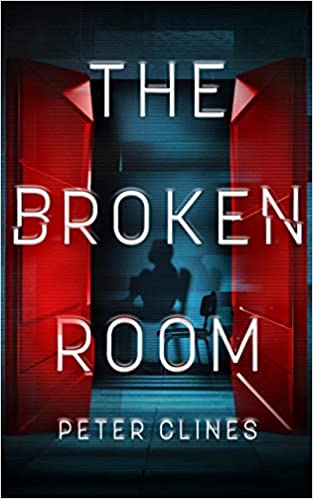
Our focus right now is going to be stories where the narrative doesn’t follow the linear structure of the story. Sometimes the story has flashbacks or a frame, where it’s mostly linear with a few small divergences. Others might split the story between multiple timeframes, with one thread taking place in the present and one in, say, the 1950s. Or maybe the story’s broken up into lots sections and the reader needs to keep track of how they all line up—these are called non-linear stories, or you may have heard it as non-linear storytelling. It was the hip new thing for a while there. My book, The Broken Room, has a large flashback section where Natalie talks about her past, and it’s worth noting that her extended flashback/ retelling is all linear within its own subset of the book (she’s very precise about that sort of thing).

It’s important to understand narrative structure is more than just switching around my story elements. It means I need to start actively thinking about how all these structures interact. So here’s a few things I need to keep in mind when I start playing with my narrative structure.

First off, putting things in a new narrative order doesn’t change the linear structure of my story. As I mentioned above, the week goes Monday through Friday, and this is true even if the first thing I tell you about is what happened on Thursday. Monday was still three days earlier, and the characters and events in my story have to acknowledge that. I can’t start my book with everyone on Thursday baffled who stole the painting, then roll the story back to Monday where everyone was a witnesses who saw the thief’s face.

That’s a kinda stupid, overly-simple example, yeah, but you’d be surprised how often I’ve seen this problem crop up. Sometimes in really simple ways like this. Storytellers want to switch stuff around, but then they ignore the fact that just because they told us about Thursday before Wednesday doesn’t mean Thursday happened first. Again, the story collapses when the narrative elements are put in linear order. This is a really easy problem to avoid, it just requires a little more time and work.

Yeah, weird, I know. Telling a story in a more complex way is more work. Go figure.

The second thing to keep in mind when experimenting with narrative structure is… why? Seriously, why am I breaking up my story instead of telling it in order? I mean, yeah, all that non-linear stuff was edgy and bold for a while, and a lot of folks still do it, but… what’s the point of it in my story? Why am I starting five years ago instead of today? Why do I have this flashback at that point?

As an aside, I know some people hate “why is it happening now” as a story critique, and in a Watsonian way, I kind of get that. Sometimes things happen just because they happen. That’s how life works. I think sometimes things can work this way. I think sometimes they can’t.

But remember, we’re not talking about the Watsonian view of the story, we’re talking about the Doylist one. So why did I, the author, arrange these events in this way in the story? What effects am I trying to create? How is the narrative improved by shaping it this way?

And if I can’t explain how the narrative’s improved by shaping it this way—or if it plainly isn’t improved—again, what’s the point?

The third and final issue with a complex narrative structure is a little more subjective.

Last week I mentioned that we all try to put things in linear order because it’s natural for us. It’s pretty much an automatic function of our brains. This flashback took place before that one. That’s a flash forward. This flashback’s showing us something we saw earlier, but from a different point of view. Our brains latch onto the little details (or sometimes the big headers) and sort things accordingly.

But our brains have limits. There’s only so much we can keep track of and—let’s be honest—only so much we’re willing to keep track of. if I give you four or five numbers or letters and ask you to put them in order, it’s not a big deal. G X B N. See? You did that without too much effort.

On the other hand, if I throw a deck of cards on the floor and ask you to put them all in order… well, now this is a task. Heck, first you’ve got to find all the cards. And are they all supposed to be in numerical order or should you be doing them by suits? Are aces high or low? And if this is all in order, where do we put the jokers?

Point is, there’s a point where I’ve tweaked my story so much, my audience is going to spend less time reading it and more time analyzing it. Diagramming it like some photo-and-yarn covered conspiracy board. When somebody hits the ninth flashback done in a third tense from a fifth point of view… there’s a good chance they’ll need to pause to reorganize or re-analyze things in their head. And every time they have to pause, it’s breaking the flow. It’s knocking them out of the narrative when I want them to be sinking deeper into it.

And once I break the flow, that’s when people set my book aside to go have a glass of wine and watch gardening shows. I can say whatever I want about art or attention spans or readers putting in some effort, but at the end of it people can’t get invested in my story if they can’t figure out my story. And if they’re not invested… that’s on me.

Y’see, Timmy, narrative structure can be overdone if I’m not careful. I know some of the examples above sound a little extreme, but the truth is… they’re not. I’ve seen manuscripts where writers tossed linear order out the window and jumped tenses and povs and timeframes a dozen times. And some of them did all of that in the first fifty pages. Seriously.

This is something that can be tough to spot and fix, because it’s going to depend a lot on my ability to put myself in the reader’s shoes. Since I know the whole linear story from the moment I sit down, the narrative is always going to make a lot more sense to me, but for someone just picking up my story… this might be a bit of a trainwreck.

That’s narrative structure. However I decide to tell my story, it still needs to have a linear structure. Maybe even more important, it still needs to be understandable.

Next time, I’ll try to explain how linear structure and narrative structure combine to (hopefully) form a powerful dramatic structure.

Until then… go write.

Categories