
October 31, 2025 / 2 Comments

Resident Evil: Flashbacks

Happy Halloween, everyone! Hope you’re all prepared for tonight. And may the gods have mercy on those of you who aren’t…

Let’s talk about scary movies for a moment.
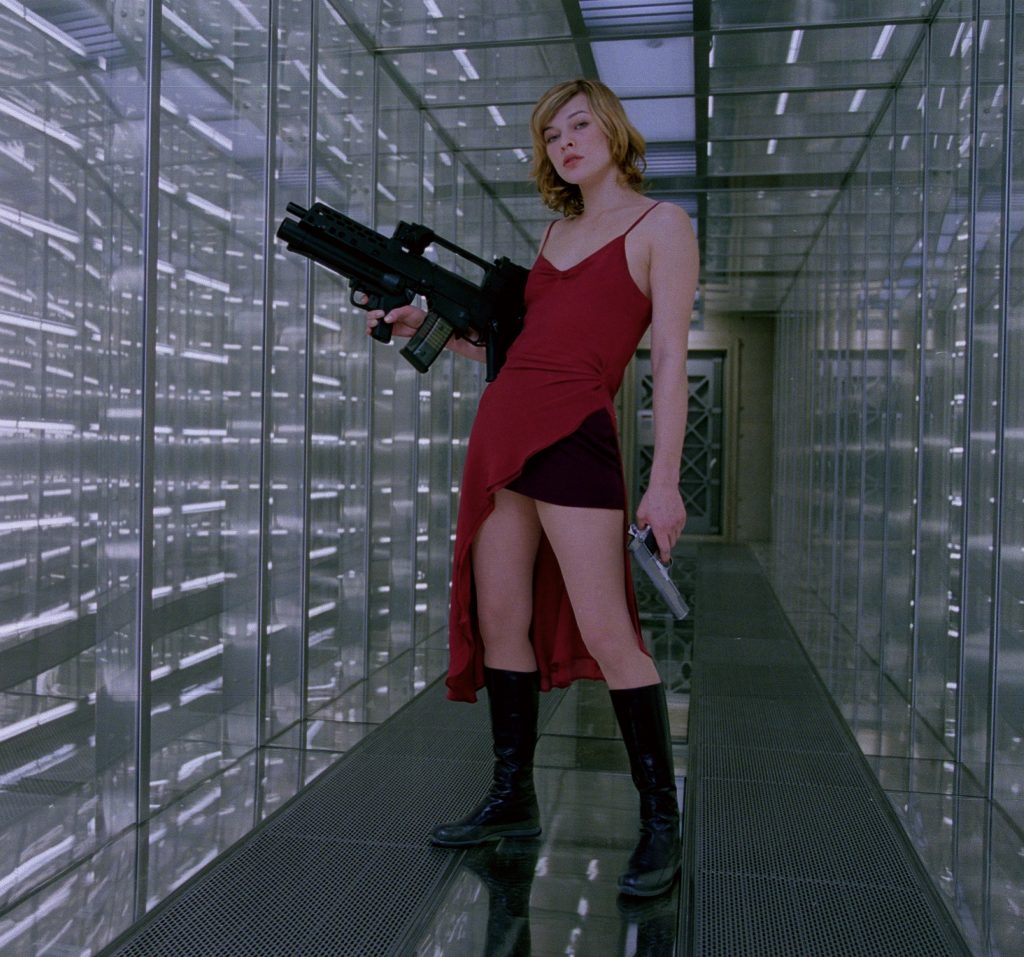
If you aren’t familiar, there was a long-running movie series called Resident Evil based off the long running game series of the same name, which also spawned a series of animated movies. But we’re talking about the live action ones. Well, the original live-action ones.

Specifically, I’d like to talk with you about the first one, written and directed by Paul W.S. Anderson. Rather than base the movie directly off the game story, Anderson decided to use lots of elements from the game with all-new characters. This gave him a lot more freedom in how he told the story, and let him structure the film for a general audience instead of specifically for fans of the game.

That structure is what I wanted to talk about. If you’ve been following the ranty writing blog for a while, you know I love pointing out how well this movie uses flashbacks. Seriously, it’s amazing. The movie’s pretty much a masterclass in how to do flashbacks well in a story. They all serve a clear purpose. They all advance either the plot or the story (often both). They all fit within the narrative and linear structure of the story. And none of them create fake-tension situations that are undermined by the present. You can read more about my rules-of-thumb for flashbacks right here, if you like.

So I figured, since it’s Halloween and all, I’d walk through these flashbacks one by one and show you how and why they’re so effective.

Now, you’re going to get a lot more out of this little rant if you’ve seen the movie. I highly recommend checking it out. It’s seasonal, it’s fun, it’s much more of an action-horror film than a gorefest. I don’t know if it’s streaming free anywhere, but I think you can rent it most places for three or four bucks? Also, kind of goes without saying but there are going to be some unavoidable spoilers in this discussion so… be warned.

Here’s a brief refresher for those of you who haven’t seen it in a while (or are just determined to go on without seeing it)…
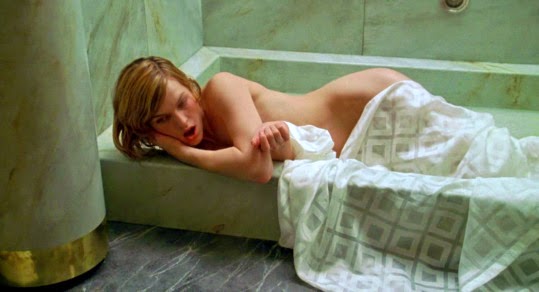
Resident Evil begins with a few quick minutes showing the lab accident that kicks off everything before the lab goes into a drastic lockdown mode that seems to kill, well, everyone. And after that we’re with our heroine, Alice, who wakes up naked and wet on the floor of a bathroom, half-draped in a shower curtain and suffering from near-complete amnesia. Very quickly she learns she’s part of a security detail guarding a hidden entrance to the Hive, a massive underground lab/ testing facility operated by the multinational, multibillion dollar Umbrella Corporation. And the lab accident earlier has set a very nasty bioweapon loose down there, the T-virus, which has had, politely, some effects on the researchers and other staff members.

And we’ll stop there for now.

So let’s talk flashbacks. I’ll try to go over all of them and give you a little context for each one. I’m also going to mention where they are so if you’re actually doing your homework, you can skim around in the movie and find them.

Our first one shows up a little over nine minutes in. Alice has woken up, staggered to the bathroom mirror, and is staring at her reflection when this flashback kicks in for a few seconds. She was in the shower, there was a vent, her eyes rolled up, and she collapsed, dragging the shower curtain down with her.

So this first one does a few things. It tells us right up front Alice didn’t pass out she was knocked out—this is something that was done to her, not something that just happened. It also establishes her flashbacks are very distinct from the “present’ story line in the movie—they’re in overexposed black and white, with echoey sound and a fast cut, glitchy quality that helps sell her fragmented memory. And it fits story-wise. This is something she’s focused on and trying to remember. It also fits because it’s relevant to what’s going on and it’s something we, the audience want to know. So on a few levels it makes sense we’re seeing this and not, y’know, last night’s dinner or something.

Also worth noting Alice’s reactions after this flashback because it’s very clear this is all the information she got from this sparked memory. She still doesn’t know who or where she is, or what’s going on. This is going to hold for all the flashbacks—she doesn’t get anything “extra” out of them. She sees what we see.

Our next flashback comes at eighteen minutes in. Alice has been taken with the security team to the underground train that leads to the Hive, and they’ve found an unconscious man on board. Alice stares at the man’s face and flashes back to her and him together and happy. Again, just quick flashes. Her in a gown, him in a tux, laughing, posing for photos together.

Worth noting that Alice had also seen a wedding photo of her and said man a few minutes earlier, and this flashback pretty much explains where that photo came from. It also connects the two for the audience—the man here now on the floor of the train (we’ll learn his name is Spence and he’s also suffering from gas-induced amnesia) is the man we saw earlier in photos. Whoever he is, Alice has a definite history with him.
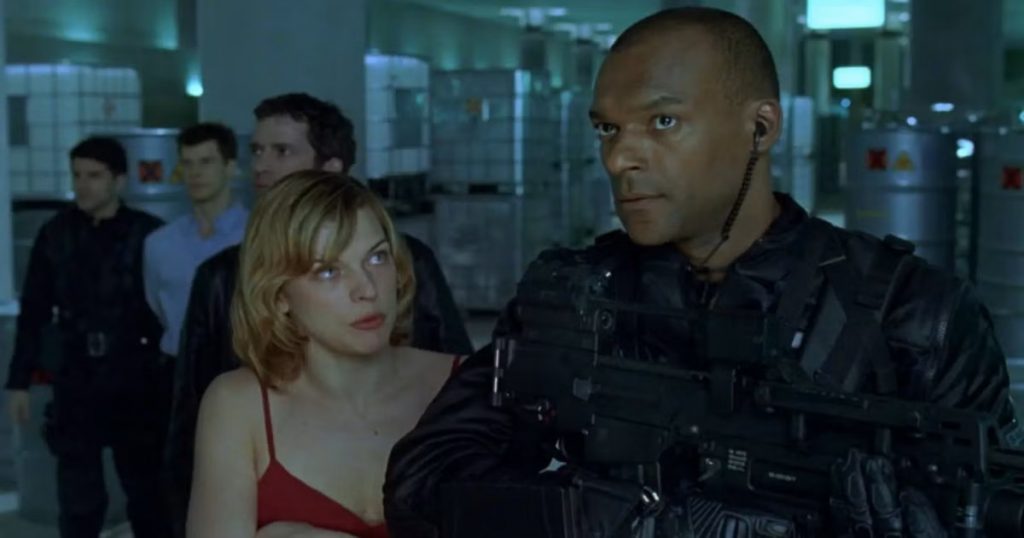
Which brings us to the third flashback. Maybe 22 minutes in now. It’s mostly a recap of the first one as the security team commander explains what’s actually going on here and gets everyone up to speed. So as he’s explaining the computerized security systems and known side effects of the gas (short-term amnesia), we see Alice get gassed in the shower again—this time with an extra few shots to show us how the vents are hidden away in the walls.

So this one’s a little more structural—it’s a quick reminder for the audience. It emphasizes things are run by the computer (some of you know where that’s going). It’s giving us a bit more information about how thing are hidden and automated in Umbrella facilities.

Our fourth flashback happens three or four minutes later (just shy of 26 minutes in). We’re in the Hive now, and Spence offers Alice his leather jacket to keep warm. It’s the first time they’ve actually touched and it sets off a bunch of memories for Alice. Really specific ones showing she and Spence knew each other. Like, y’know… knew each other. Physically. As was the style at the time.

And that means now Alice knows something about Spence. He’s clearly someone she has a history with, and a history that involved, well, a degree of sharing and trust between them. As always, she doesn’t remember anything else, but it’s enough that she clearly decides he’s someone she can trust.

Notice the pattern here so far. All four of these flashbacks barely add up to fifteen seconds. They’re not slowing anything down. They’re all related to the actual events going on and the information the movie’s giving us (and Alice). And every one of them tells us something new—there’s very, very little noise. They all keep advancing out knowledge of the plot or the characters.
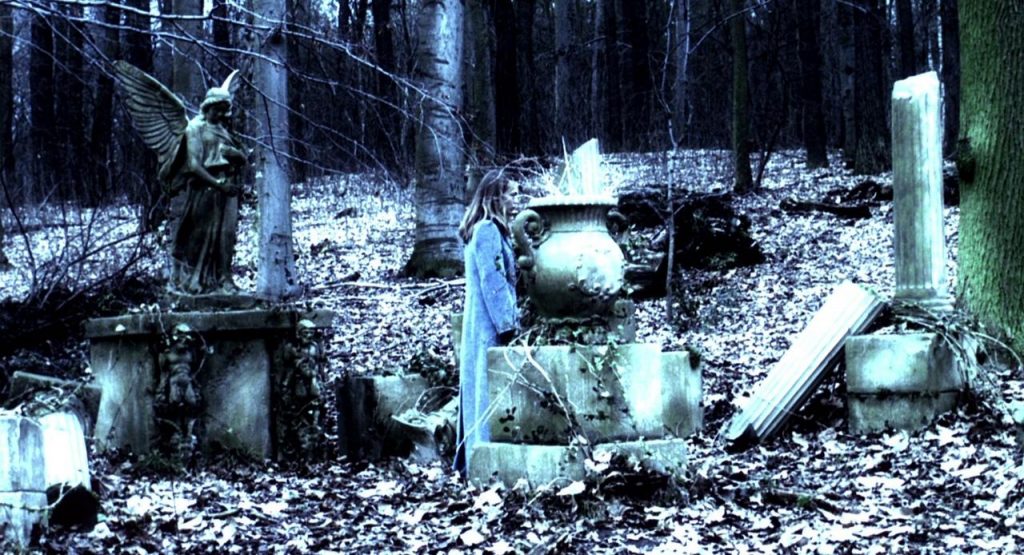
The next flashback doesn’t happen for almost half an hour—there’s a lot of action going on and dropping in a flashback would just disrupt the flow of things. Then around the 53 minute mark, Alice saves Matt from a zombie that’s attacking him and she recognizes this zombie. We get our longest flashback yet (almost ten seconds!)– Alice and this woman meeting in a deserted graveyard, where Alice is offering her access to the T-virus, Umbrella access codes, surveillance plans… for a price.

So… this one does a bunch of stuff. It’s suddenly casting Alice’s real goals and loyalties into question (at a point when she still can’t even remember them). It’s showing us she was part of a larger story than just the current events going on in the Hive, and making it clear Umbrella has been a questionable company for a while now. It’s also a nice reminder all these zombies were actual people—people we saw back at the start of this doing their jobs, chatting, drinking coffee, and just living their own lives.

And it doesn’t help that shortly after this Matt tells Alice the mystery woman was his sister. The two of them were gathering information to expose Umbrella’s illegal, unethical practices. His sister had found someone who could get them all the information they needed to get out with the evidence… but whoever it was they betrayed her. So now this flashback has Alice really questioning herself—and us questioning her, too. Amnesia-Alice seems great, but maybe if she had all her memories…?

Now, something happens around 70 minutes in that’s worth mentioning. Alice gets some memories back but it’s not set up as a flashback. It’s not in blown-out black and white. It’s not glitchy. And she’s not part of it. She just suddenly recognizes an area of the Hive they’re in and pictures it up and running and full of people. And she remembers what should be in a nearby lab– the cure for the T-virus.

I think this is worth noting because by breaking the flashback format here, the movie’s showing us that things are changing. Alice is getting more solid memories, and they’re appearing more solid because of that. The flashbacks are a clever device and being used well, but things are moving past the point of needing them and trying to force this particular bit of information into that format could actually be distracting at this point. And we never want our flashbacks to be distracting. Also, this scene is a little longer and somewhat talky but it’s happening at a time when our main story has slowed down a bit. Again, it isn’t messing with our flow.

So… moving on. One final flashback, and it happens just two minutes after the last one. They find the lab with the cure and it’s gone. The vault is empty. And as our heroes look around the lab trying to find some clue what might’ve happened to it… Spence has a flashback. And it’s a big one.

Turns out Spence was spying on that meeting in the graveyard, and he decided to steal the T-virus first. And almost 2/3 of his flashback is… the very beginning of the movie. All seen from his point of view. Spence caused the lab accident! Deliberately! To cover his theft.

(fun fact—if you freeze frame at the three minute mark in the very beginning, you can actually see it’s Spence right then! At 3:02, to be exact)

So, what does this last flashback do? It tells us what really happened to cause the lab accident. It reveals Spence as one of our main villains all along. And it firmly establishes that Alice, with or without her memories, is our hero—we find out her “price” for giving Matt’s sister all this evidence is that they use it to destroy the Umbrella Corporation.

Again, new information given in a way that adds to the tension, doesn’t slow down the pace of the actual story, doesn’t undermine anything.

See what I mean? Seven flashbacks in a movie that’s barely a hundred minutes. And heck, really all of them are in the first seventy minutes or so. And every one of them works for both the narrative and linear structure. Every one of them gives us information that’s relevant to “now.”

That’s some good zombie flashbacks.

Next time, I’d like to talk about how long all this takes.

Until then… well, enjoy Halloween.

And then go write.

October 26, 2024

…Fear Itself

A few years back I was on a panel with Pierce Brown (back when cons were safe) and he made the great analogy that genre is like a compass. It’s a thing pointing you in a certain direction. You like sci-fi, go north. Fantasy is off to the west. Romance, head east. Sexy romance, you head south-east. You may not find the exact thing you want, but that’s the direction of things that’ll probably interest you.

I think genre is also a set of expectations. Really, I think genre sets expectations. If you tell me something is horror, at some point I’m going to expect something scary or creepy. If you tell me it’s comedy, I’m going to be waiting for the laughs. If it’s a murder mystery, where the heck is my body? I WAS PROMISED A DEAD BODY!

And I think this is where problems can arise. Because if I’m following that compass and I’ve got those expectations, it can be very disorienting to get something else. More to the point, no matter what it is, that something else is going to fail to meet those expectations I have. And when something doesn’t deliver like that, our automatic reaction is almost always that this thing is bad. It’s wrong.

Look at it this way. If you tell me we’re going to the LEGO store and instead we go to the book store… well, I mean, these are great and I enjoy them both a lot. But they’re still different places. And depending on how much I was looking forward to one, I might be less inclined to see the good points of the other.

Likewise, if I’m referring to something as the wrong genre, or leading people to believe it’s a different genre… they may view things with a harsher eye when they follow that compass to my work. I mean, you can try to defend it any way you like, but the simple truth is the latest Hellraiser movie is the worst-written, worst-structured romantic comedy you’re ever going to watch. It’s just horrible. Seriously, it misses every single romantic comedy benchmark you can think of. The two leads don’t even kiss at any point!

Of course, Hellraiser wasn’t trying to be a romantic comedy. Not remotely. It’s a fantastic horror movie, but that won’t matter when I’ve told everyone to judge it by romantic comedy standards. They’ll look through that lens and nothing will line up. It’ll all be… wrong.

And this holds of sub-genres, too. We all recognize that “horror” isn’t one, monolithic thing. There are so many different types and flavors of creepiness. Cassandra Khaw’s The Salt Grows Heavy is horror, sure, but that doesn’t mean we immediately lump it in with The Last Voyage of the Demeter. Cherie Priest’s The Toll is horror, too, but that doesn’t mean it’s doing the same things as Chuck Wendig’s Black River Orchard, which doesn’t approach things the same way as the Out There Screaming anthology. And none of these are like my own book, The Broken Room, which has a bunch of horror elements.

Why do I bring this up?

When most of us start off as writers, we flail a bit. We attempt to copy stories even though we don’t quite understand all the mechanics of them. We’re not sure where our own stories fit under that big horror umbrella (or sci-fi, or fantasy, or…). We’ll begin a tale in one sub-genre, then move into a plot more fitting a different one, wrap up with an ending that belongs on a third, and have the tone of yet another through the whole thing.

Y’see, Timmy, it’s important to know what I’m writing for two different reasons. One is so I’ll be true to it and don’t end up with a sprawling story that covers everything and goes nowhere. Two is that I also want to be able to market my story, which means I need to know what it is. If I tell an editor it’s not torture porn when it plainly is, at the best I’m going to get rejected. My readers may toss it aside.

At the worst, they’ll all remember me as “that idiot” the next time they see something of mine.

Next time… well, for some of you November means NaNoWriMo. It used to, anyway. So I wanted to toss out a few quick thoughts about that.

Until then, go write.

October 22, 2021

Scary But Funny

I wanted to talk a little bit about horror today, as I tend to do around this time of year. More I thought about it, though, I was having trouble thinking of an aspect or angle of horror I haven’t done before. Sometimes more than once. I’ve talked about sub-genres of horror. Talked about monsters. Talked about the victims.

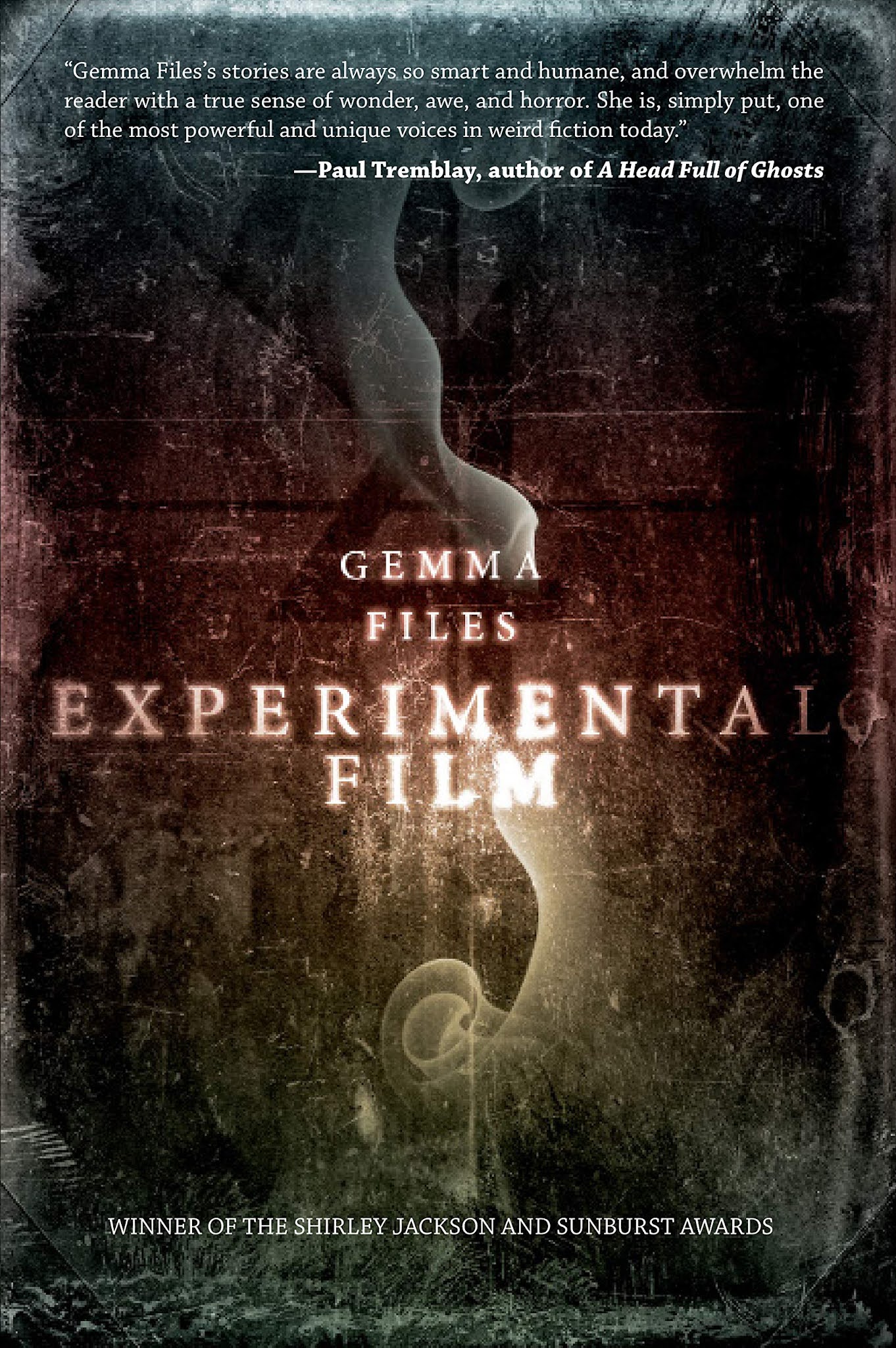
So then I thought I’d talk about the mechanics of horror. But even that’s tough because of the wide and varied sub-genres. I’ve mentioned this before. The horror of Frankenstein is not the horror of, say. Experimental Film by Gemma Files which is not the same as Bradbury’s Something Wicked This Way Comes and none of those are The Devil’s Rejects. Depending on what kind of horror I’m aiming for, I could be trying to do some very different things. Which means different rules and guidelines and expectations.

And this made me think, of course, about comedy.

Structure-wise, comedy’s a lot like horror. It’s got many levels and subgenres. It can be subtle and nuanced or in-your-face blatant and over the top. It’s really common for people to like one form of it but not another. I  also think they’re both something that’s kind of ever-present in our lives, on some level or another. There’s a lurking dread or a potential for laughs in almost any situation.

I made what I thought was a semi-clever observation about comedy a while back, and I think the same parallel holds for horror as well—scary is to horror the same way notes are to music. One is made up of the other, but just having a bunch of those components doesn’t automatically make the bigger thing. Just taking a big pile of “scary things” and dumping them on the page doesn’t mean I wrote a horror story, in the same way that, well, having a big pile of meat and bones doesn’t automatically give me a person.

See? That was kind of creepy, right? So is this post a horror story now? No, of course not. No, not even if I add a jump scare. Or is it? Maybe as we keep going you’ll realize how I’ve lulled you into this false sense of security and then maybe you realize… you’ve been in this horror story all along.

Also, it kind of matters what’s in that pile. I can’t just have a big pile of bones, especially the same kind of bones. A big pile of skulls definitely isn’t the same thing as a person. I also can’t mix in random horse bones or gorilla muscles or insect DNA. I can’t just shove anything in there and expect to end up with a working person (or horse, or insect). And even when I get all those components right, they can only go together a certain way. These bones go here, those muscles connect there, that part… okay, look, that’s kind of optional. You can put it in or leave it out at your discretion, just remember what you did with it.

This might seem kind of boring, just putting together a person. Makes it sound like every person we make is going to be like every other person. And on some level… yeah, they are. There are a lot of basic similaritiesbetween people, but there are a lot of differences, too. Yeah, even on this basic constructional level. And even more so once we get to know them.

Also, quick pause before we move on. Please don’t get confused by my use of a body as a metaphor for a story. If I’m writing horror, yeah, obviously mixing horse parts with human parts can be an element in a great story. Mixing in some insect DNA has been the basis of several great horror stories. But that’s talking about things in the story, not the structure of the story itself. To fall back on said metaphor, that’s me focusing on an individual bone and saying there’s absolutely nothing wrong with it while ignoring the fact said bone is in a pile of meat that used to be a person.

Or that I’m trying to tell you is still a person…

So, anyway, how do I do this? How do I figure out which parts I’m going to sew together into this new person a.k.a. story? Which ones do I want in there, which ones need to be in there, and which ones… okay, look, the antlers are cool, yes, but people don’t have antlers. No antlers!

Okay. maybe very small antlers.

A lot of this is going to depend on two things. Knowing what I want to end up with and general empathy. The first one’s easy. Once I know what kind of horror story I want to tell, it’s easier to choose the parts I need to tell that story. Yeah, there’s some general stuff I’ll need, but after I’ve got the rough framework there I can start fleshing in (so to speak) all the little details and elements that are going to make this story unique. And this can be a multi-step process. I don’t need to get it all right on the first try, I can go back through and shape the story to better be what I want it to be.

The second part, general empathy, is a little tougher. As I’ve said here once or thrice, I can’t tell you how to have empathy. But it’s sooooo important in horror, because I need to know what my audience is expecting and I need to understand how they’re going to receive these elements in my story. Is that person being sprayed with blood and gore and slime supposed to be horrific? Awful-but-funny? Mildly erotic? Am I sure my readers are going to take it the way I intended it? Because having a beat land wrong can really kill the flow of my story.

And that would be… well, horrible.

So there’s some quick thoughts on horror. Should be easy for you to swallow, now that they’ve been deboned and cut into little bite sized chunks. Yeah, some of them are still moving, don’t worry about that…

Narrator: And as they choked down the morsels, they realized… it had been a horror story all along.

Next time, we could probably talk real quick about NaNoWriMo.

Until then… I’m not letting you out of the room until you swallow every last piece of this.

I mean, hahahahaaa, go write. That was it. Go write.

October 12, 2021

Behind the Mask!

Oddly enough, not a Halloween-themed post. Although… maybe it is. It’s all perspective, I guess.

Since I first started taking this whole writing thing seriously, there’s been a general mindset I’ve seen bubble to the surface once a year or so. Maybe more in some places. It’s the idea that I can’t write about X if I haven’t personally experienced X. Can’t write it well, that’s for sure. If X hasn’t been an integral part of my life at some point or another, I’m just wasting everyone’s time by trying to write about it. Definitely by putting that writing out there. It’s a version of the old “write what you know” superball that gets bounced around. If you’ve never known X, you certainly can’t write about X.

Starting out in the horror community, I’d see this again and again. The folks who’d insist it just wasn’t possible to write horror without a horrific, awful background. You want to write horror? Real horror, not this weak “vampires and demons and zombies” crap? Well you better have fought in a war and had several people killed in front of you. Or had a horribly abusive family. All your pets better be dead, and most of your friends too, and if you’re not dealing with it through life-crippling addiction to something, you’re just a goddamn tourist who has no business in this genre.

Because of this, I’d see some folks get scared off from their chosen genre. Have I experienced real, soul-wrenching love? I mean, really experienced it? Maybe I shouldn’t be writing romance. My parents loved me a lot, I get along well with my brother, and I’ve got a bunch of really cool friends. Maybe I don’t have any business writing horror. And, heck, I’ve never even killed a human being before. I guess murder mysteries really aren’t for me.

At least, that’s what notorious serial killer Sue Grafton always said.

And a friend of mine recently pointed out this is such a pervasive idea that even some readers believe it. There’s no way I could write about a character that awful unless I myself am truly that awful, right? I mean, somebody couldn’t just make that stuff up, right? If one of my characters has sex more than twice, I’m clearly a sex addict (and let’s not even talk about what their chosen sex position says about me). Heck, I think I’ve talked before the weirdness that can happen when you name a character after a family member or friend without thinking about it.

Now, before I go any further… as I mentioned above, this has all been proven wrong again and again. Seriously. Yeah, there’s definitely some horror writers out there who’ve seen some awful stuff and I’ve known one or two folks over the years who’ve written intense erotica as an outlet when, y’know, no other outlet was available. There are some action writers out there who have very intense backgrounds in the military or private security, and a few sci-fi writers with pretty solid scientific credentials.

But I also know a ton of horror writers who had really nice childhoods and now live very happy lives, without a single dismemberment or traumatic beating or other ghastly event in their past or present. I know action writers who haven’t been in a single barfight or high speed chase or gun battle. I know people with no military experience  who write very successful military books. There are more than a few sci-fi writers who haven’t traveled in time or even left earth orbit once. And I know people who write sex scenes in their books who have, if I may be so bold, fairly vanilla sex lives. At least, going off all the pictures one of them showed me. Like, insisted on showing me.

That was a really weird brunch.

Anyway…

I think all of this ties back to a few things I’ve talked about here a few times. So I thought  maybe it’d be worth mentioning a few totally valid ways we can write about things we haven’t actually experienced. For example…

Voice—A big step for all of us is the day we realize midwestern grocery store clerks don’t talk the same way as third-generation bio-apocalypse survivors. Dwarven warrior queens have a different vocabulary than techbro CEOs. And fresh-out-of-grad-school schoolteachers don’t sound the same as battle-hardened Army sergeants. And getting that voice right, knowing how she’d say this vs. how he’d say it vs. how I’d say it is a big step in our growth as writers.

Research—seriously, we live in a freakin’ golden age of resources for writers. I’ve been doing this just long enough that I remember ads in the back of magazines for small press books about what it’s really like to be a doctor or a homicide detective . Or I’d spend hours in the library trying to find pictures of Paristhat didn’t involve the Eiffel Toweror a museum. These days, if I need to know something I have access to so many sources. I can find research papers or anecdotal accounts or heck, even actual people who will answer my questions or help me find the answers, and usually tell me some other useful things if I’m paying attention.

Extrapolation— I’ve never been shot in the knee, but I’ve had the meniscus behind my kneecap rupture (and collapse again and again and again). I’ve never done super heavy drugs but I’ve been very drunk a few times. I’ve never been able to fly, but when I was a kid there was a bridge in my hometown we all used to jump off into the river. Yeah, these experiences aren’t the same, but I can use them as building points. If this registers as a six, what would a nine be like? If it felt like this for ten seconds, what would it feel like after twenty? Or thirty? I stayed conscious here but would that much short out my brain for a few seconds (from pain or pleasure or excessive introduced chemicals)? It’s a basic creativity exercise. 

Empathy—I’ve talked about empathy here a few times, and I have to say once again it’s the most important trait a writer can have. Seriously. It’s what everything here really boils down to. Being able to put myself in someone else’s shoes. I’ve never had a parent die, but I’ve had friends who did. I’ve never served in the military, but I have family who did. I’ve never been married or had kids or burned dinner when someone’s coming over I really want to impress. But I look at my friends and family, I listen to them, I take note of what they’re saying and what they’re not saying, and I try to relate it to things I’ve gone through. I try to imagine how I’d feel in a similar situation, based off my own experiences. And I use some of that in stories.

In fact, let’s take this one step further and address one of the points that started this off. If I’m going to tell someone they can’t write great horror unless they’ve been through awful stuff (like I have)… well, isn’t that kind of implying I don’t have great empathy? I mean, think about it. I’m saying I can only write this because I experienced it, and I’m also admitting I can’t imagine being a person who can write it without experiencing it.

Maybe it’s just me, but I don’t think that’s something I should be bragging about.

Y’see, Timmy, much like “write what you know,” this mindset assumes people can’t learn or grow or imagine anything. And if I want to be a good writer, I have to be able to do that. I can’t tell myself not to write about bank robbery until I’ve actually tried to rob a bank. Hell, where does that people who write murder mysteries? Or giant robot sci-fi? Or dark period fantasy. I mean, if you haven’t had sex with at least three people from the twelfth century, how do you expect to write medieval romance? I need to understand most writers research things, extrapolate feelings and reactions, get inside their character’s heads, and just try to have an honest sense of what someone else would feel in this situation.

Look, the truth is, if I’m doing my job right, you should feel like all my characters are real people in real situations. The janitor. The nymphomaniac barista. The half-human, reluctant cultist. The little kid with PTSD. The burned-out secret agent trying to forget most of his life. The world-ending cosmic event that they’re all tied up together in. And when we read a description of a real person, when we hear about the believable, relatable aspects of their life, it’s natural for us to assume they’re… well, real.

And the obvious real person is me, the author, telling you this story. So it’s not surprising some people think I must’ve experienced these things firsthand.

But I shouldn’t need to.

Anyway…

Next time, I want to throw a bunch of characters at the wall and see which ones stick.

Until then, go write.

Categories