
April 9, 2020

A2Q Part Nine—Editing

Well, if all goes well, we’re making a big time jump here. All the past things I’ve been blathering on about—plot, characters, story, theme—these are all elements that we can spend a day or three on. Maybe even less, if they’ve been fermenting in my head.

But between last week and this week, well… hypothetically a lot of time has passed. I’m really, really hoping you didn’t write an entire first draft in a week. If you did… well, that’s another issue we need to discuss. I’m hoping you took your time, within reason, and we are—hypothetically—a month or two or maybe even six later.

You have a first draft now. And it’s a beautiful thing. Maybe the file is so big it’s an entire meg on your computer. An entire megabyte of your words. I know that might sound laughable or dismissive, but seriously—you need a lot to hit a one megabyte Word file.

But…

(yeah, here comes the but)

…it needs editing. No probably. There’s a chance you wrote a perfect, flawless first draft, but more than likely… you didn’t. I haven’t yet and I’ve been doing this for a while.

It’s okay, though. Everybody needs to edit. Everyone. Anyone who says they don’t is either A) lying to you or 2) delusional. Our work needs editing and revising. If you remember waaaay back at the beginning of the A2Q, I talked about how ideas need to be cut and polished like diamonds? Well, that’s what we’re doing now. Figuring out what needs to be cut and then giving it all a good polish.

Again… this is okay. Don’t worry. Every book you’ve ever loved has gone through this process. And we’re going to go through it so this book can be one other people can love.

Ready?
First up, the easy part. This is a 100% complete draft, right? Beginning, middle, and end? I’m not going to get a hundred pages in and find blank space or notes to myself like [FIND WHAT THESE ARE REALLY CALLED] or [ASK ELLEN HOW TO DO THIS]. There’s nothing wrong with doing that on a first pass—I do it all the time—but before I start editing I need to fill in those spaces in my book with actual, y’know, book.

So, again… this is a 100% complete draft, right?

Fantastic.

Before diving in, may I suggest taking some time away from your book. You don’t want to finish a draft, then turn right around and start the next one. We want to get a little space, and let things fade in our mind a bit. I don’t want to be looking at the manuscript in my head, I want to be seeing the one in front of me—the one everybody else is going to see. We’re going to need some stark honestly for this, so I want to be clear what’s really there.

One tip for this—I’d suggest switching the font. Go from Times Roman to Courier. If you’re one of those folks who likes to write in Comic Sans, switch it back to Times. A different font is going to make everything sit differently on the page and it’ll make you actually read what’s on the page. You’ll become very aware of what is and isn’t there, and catch a lot of stuff that’s been sliding past you.

Once you’ve taken some time away, changed the format… read it. Just read through this new manuscript with those fresh eyes. Maybe make some quick notes, but for now just read it. Again—don’t remember it, read it. Try to see what’s really there on the page.

Now, I’ve talked about editing a bunch of times. It’s a big umbrella that a lot of things fall under, many of which I think can get broken down into three categories or types. It is my humble opinion that one of the big reasons people have issues with editing is they get these different types confused because they never get more specific than “editing.” I want to talk about each of these three types of editing and maybe give a few examples of each. You may have heard of one or two of them.

First up is story editing. This is when we try to improve the plot and story by reorganizing different elements, clarifying them, maybe even adding to them. Sometimes we might even add all-new elements.

Second is what I’m going to call reductive editing. This is when we’re cutting things, usually to tighten up dialogue, descriptions, and maybe even to simplify larger elements a bit. Sometimes, in all honesty, we’re just cutting to get closer to a certain word count.

Third is copyediting. This is when we’re correcting things throughout the manuscript. Formatting. Spelling. Grammar. The nuts and bolts things that are still important because they’re holding things together.

You may notice there seems to a bit of overlap here. I’d say it’s a little less “overlap” and a little more “weaving between lanes in high traffic,” as we’ll see. You may have also heard different names or definitions for these. Look, I never claimed to be an English major or anything. If you’ve heard it called something else, cool. I’m just trying to make this easy to distinguish.

Anyway… let’s go through these in a little more detail.

We’ve kind of talked about story editing already, in a sense. When we first had that pile of ideas and notes and we started sifting and arranging them into an outline—that was story editing. Trying to find the best order for things, the best way to introduce different elements, and so on. That’s what this is—taking what we’ve already got and figuring out if we can make it even better.

Yeah, we’ve already done that. But now we’ve written everything out. We’ve got a better sense of the characters and the size of the events and how they’re going to land with my audience. Maybe that needed a little more description than we thought and that bit needs a lot less. And maybe we’ve realized some of this… doesn’t really serve any purpose.

This is one of the reasons we want to look at this with fresh eyes. So I can see where problems have developed. Or maybe they were there all along, but I couldn’t recognize them until it was all here in front of me.

F’r example, now that I’ve looked at all of this again, does it have a good dramatic structure? Does the tension start low and rise throughout the book (maybe with a few dips and drops here and there for our heroes)? How’s the pacing? Does it feel like there are any slow parts that just stretch on a little too long with nothing actually happening?

That’s a good one right there? Are things happening? Are events pushing the plot and my characters’ stories along? Or are they stalling out in places. Are people talking or thinking about doing things more than they’re… y’know, doing things?

This is story editing. Taking an honest look and deciding what story elements do and don’t need to be there. Or maybe just need to shift to somewhere else.
Also—don’t get scared here if it looks like you need to make big changes. If it turns out my outline was wrong, then it was wrong. So what? The first draft’s done. Make a new outline if you want and then write to that one. I’ve written a complete first draft and then gone back and completely rewritten the ending, or ripped out whole chapters. It happens. Don’t worry if it does.

Next up is what I’m calling reductive editing. This is something I’ve talked about a lot here on the ranty blog. We all get a little wordy in our first drafts. We use a few too many adverbs. We describe things with a bit too much detail. We let conversations go on and on. And we also tend to…

Okay, a thought exercise for you. If I said you no-questions had to get rid of three characters in this book—three characters with names and/or dialogue, who would you pick? Why did they jump right to mind? Is it because you knew getting rid of Wakko wouldn’t mean too much rewriting? Or because Dot and Yakko could be merged into one character (Dakko? Yot?) pretty easily? Because really… they don’t do that much.

We all do this. We bulk up characters and their descriptions and subplots, letting them take up a lot more space on the page than their actual contributions might warrant. I’m not saying every single character has to be a vital linchpin to the plot, but… well, how fast did you come up with three characters you could cut?

And I’m sure some folks reading this are thinking “Ha ha, good thing there’s absolutely no literary fat in my manuscript. Every single element is perfectly balanced and artistically necessary.” Which, yeah, there’s a chance it is. Maybe.

But remember this. As a first time author—hell, even as a successful one—the odds of a sale are better with a smaller, tighter book. No one’s saying a publisher won’t look at something big, but if I can trim two or three thousand words off my manuscript it can make a difference. Even just a psychological difference, when they look at that cover page and see 98K words instead of 101K words.

Finally, there’s copyediting. The often long and painful process of going through a manuscript line by line, word by word, and making sure everything’s correct. I’m using the correct words, spelled the right way. I’ve got commas where I need them and all my dialogue’s got quotation marks at both ends. Indents and spacing and page numbers.

People get contentious about this for a few reasons. Some folks will declare writing doesn’t have rules and they can do whatever they want, however they want. Others say it’s irrelevant because the genius of their writing will shine past all that to illuminate the heart and soul of the reader. And still others say, well… I mean, isn’t that the publisher’s job? They’ve got people for that, and they know this isn’t going to be perfect.

There’s a bunch of problems with all these views, biggest among them… what if I plan on publishing it myself? If I’m the publisher I need to be able to do all of this. And if I want someone else to publish it… well, why would they bother to look at it if I can’t be bothered to give them my best work? I mean, if they get those first fifty pages and it’s clear I didn’t even bother to fix my spelling mistakes, what else didn’t I bother with?

And to be clear—there are times my story might require typos and odd grammar. I occasionally spell words in odd ways. I sometimes take certain stylistic liberties with commas when I write. So do a lot of writers I know. But it’s always very clear this is a deliberate thing—I know I’m doing it and why I’m doing it. But these are exceptions, and exceptions by their very nature are rare things.

So there’s a bunch of editing thoughts. Let’s apply some of them. Remember that first page and a half  of our werewolf novel I wrote last time…?

++++++++++
Chapter One
            “Luna!”
            Phoebe sifted through the laundry pile again, willing the black top to appear even though it hadn’t the last three times she’d looked. “Luna,” she bellowed again.
            Upstairs the sound of the shower finally stopped and she heard the thump of feet on the wooden floor. The bathroom door creaked open. “What?”
            “Where’s my black top? The one with the ribbing?”
            “I’m trying to get ready,” her little sister growled. “I’m going out!”
            “So am I! Where is it?”
            “How should I know?”
            “You borrowed it last night. You promised you’d wash it.”
            Silence. Then the bathroom door creaked again quietly.
            “Luna!”
            What?” Her voice echoed in the small house.
            “Where is it?”
            A sigh echoed down the stairs. “I’ll get you a new one.”
            “You’ll what?”
            “I kind of… misplaced it.”
            “You what?”
            “I lost it, okay. I said I’ll get you a new one.”
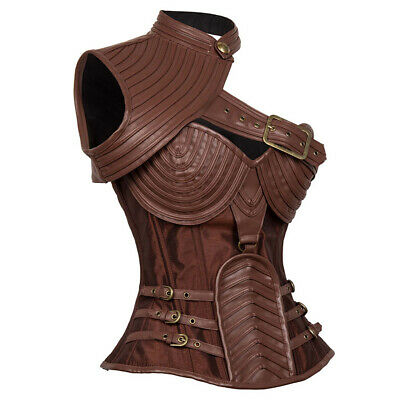
            “Goddammit. I wanted it tonight. It fits under my armor.” She looked at the leather sleeves, vest, and gorget piled on the bed. Her mom’s old hand-me-down armor. Stained dark brown with years of oil and sweat and blood that sank in before it could be cleaned off.
            “Wear the green one.”
            “It’s long-sleeved and I wore it last night. It stinks.”
            “It’s not like anyone’s going to complain.”
            Phoebe bit back a sigh of her own sigh and marched over to the hamper of dirty clothes. “How did you ‘misplace’ lose it?”
            “I was at a party.”
            “That’s not an answer.”
            “Yes it is,” Luna sang down the stairs. “I’m getting back in the shower now.”
            “We’re going to talk about this later.”
            “Whatever.” The bathroom door creaked shut and hot water started to gush flowed again.
            They’d have to talk about that too. The water bill and the gas bill had been high last month. Phoebe felt pretty sure Luna’s long showers were a major big part of that.
            She pulled the green top from the hamper. It had been warm last night, especially under all the leather, and she’d sweated a lot. The top was still damp, and it reeked. But it was that or she could try to find a Henley or turtleneck that wouldn’t bunch up under the armor and slow her down.
            She sure as hell wasn’t going to be some B-movie cliché, hunting werewolves with nothing on but a leather vest.
++++++++++

Let’s talk about some of the tweaks.

As far as story editing goes, you’ll notice I changed “mom’s old armor” to “hand-me-down armor.” Now it feels less sentimental and more a necessity from lack of funds—a subtle hint at their financial status.

For reductive editing, I snipped some adverbs and redundant words. Only seven altogether (when we count what I added in). Doesn’t seem like much, but this was only a page and a half. At that rate, we’re talking about 1,400 words cut out of a 300 page manuscript—closer to 294 pages at that point. And those were really minimal cuts, weren’t they?

There wasn’t a lot to copyedit because, well, I checked it all as a regular part of the blog post last time. But I remember there were two or three typos in it, because I scribbled that all out really fast. One of them was my thumb not hitting the space bar hard enough so two words ran together.

Also worth mentioning you don’t have to do all of this at once. Some people like to just work in a single document through the whole process. Others write, save it as a draft, do an editing pass, save it as a draft, do another editing pass, save a draft, and so on. I’ve talked about my own method before, but figure out what works for you.

Y’see Timmy, that’s one of the toughest thing about trying to explain editing—even just these small tweaks. A lot of it does just come down to figuring it out. Yeah, we can study grammar, but so much of the raw art of it is just experience. Being honest with myself about my own work. Writing a lot. Reading a lot. Making mistakes. Learning from them. It’s how we get a sense of which words fit and which ones don’t. And like so much of this, it’s a flexible thing. Just because it worked last time doesn’t mean it’ll work every time.

In the end, the goal is to make this the best I possibly can. Not the best first draft or the best it can before I get bored. Ugly truth is, it’s going to be work, it’s going to take time and there’ll be points when you go back and forth about cutting or keeping things. That’s just the way it goes. But it’ll get slightly easier every time. I promise.

…at least, until you try to write a more complex book.

But we’ll get to that another time.

I think I’ve still two or three post left in this whole big process thing. Hopefully you’re still interested to read them. But next time I may take a quick break from the A2Q to talk about some related ideas.

Until then, go write.

And edit.

April 2, 2020 / 4 Comments

A2Q Part Eight—The First Draft

And here we are once again. Or maybe we never left. Maybe we’ve been here all along, obsessively reading news articles and checking on friends in hotspots.

No? Just me? Really?

I find that hard to believe…

Anyway, it’s back to the A2Q, this rambly, sprawling series about how to write a book from bare-bones idea to finished manuscript. And it’s the day you’ve all been waiting for. We’re going to start writing. Finally! I mean, this is what the whole A2Q thing was supposed to be about, right? Writing a book. And yet, for some reason, we’re not getting to “writing the book” until part eight. EIGHT? What the freakin’ hell?

Hang on, though.

There’s a reason we took the long path. Well, I took the long path and just sort of led you along with little bread crumbs and Reece’s Pieces and maybe shots of whiskeys. Trust me, I lured you out this way for a reason.

Remember how I compared outlining to road trips? We can make a very loose, bare-bones plan or we can map out the whole thing and schedule every stop along the way. There’s plusses and minuses to both of these, but for the moment I want to flip this idea a bit and compare it to something else.

Have you ever needed to go somewhere you’ve never been before? Not wanted to go—needed to go? Maybe a doctor’s office or a job interview or a bar where that person is waiting for you and you really want to be there and make a good impression? And that place is… six or seven miles away? Maybe ten? Google gives two or three routes and it doesn’t seem quite sure where you’re going but you’ve memorized the names of a couple cross streets and maybe two stores that are supposedly nearby.

What’s that drive usually like? Overly-focused? Watching the clock a lot? Maybe a bit nerve-wracking because you thought you left early enough but you still haven’t found it and you’re watching the clock tick closer and closer to the time you’re supposed to be there and now you’re doing mental calculations about how far you think you’ve still got to go and find parking and… look, you know this feeling, right?

Compare that to the last time you drove to your significant other’s place. Or the grocery store. Or the mall. Did you think about street names? Did you even notice any of the stores along the way. No, of course not. It was familiar and easy and you barely thought about it at all. You just did it.

That’s why we’ve been talking about all this stuff up front. So you’ll have the characters and the setting and the plot and the story solidly in your mind. Heck, maybe you’ve got some bare-bones thoughts about theme. And because we talked about outlines and you moved things around a bit on paper—or even just in your head—you’ve got an idea how all these things fit together. Most importantly, you know what happens next. You’ve got an endpoint you’re aiming for, which means you can always keep going.

So, let’s get writing.

No, seriously. That’s it. Dive in. You’ve got the story in your head, so start writing.

Okay, fine. Here’s some more advice. Just because I like you.

First, dump any idea you have about art. Throw out all those books. Don’t even mention your muse. We’re not making excuses, we’re writing. The only way this happens is you pick up a pen or sit down at the keyboard. That’s the biggest thing. You just need  to do it.

Second, think of this a lot like NaNoWriMo, just without the time limit. If it takes you six weeks or three months or half a year to do this… so what? You work at your own pace. You’ve probably got other stuff going on in your life and sweet jeebus there’s a lot going on in the world. Right now you’re under no time limit and nobody’s expecting anything from you.

More importantly, just like NaNoWriMo, absolutely nobody’s going to see this. Seriously. It’s a first draft. It’s going to be messy, you’re going to change a bunch of stuff as you go, and it’s definitely going to need editing. So much editing. Don’t worry, we’ll be getting to that point soon enough.

If it makes this easier, I forbid you to show it to anyone. Just like that. Forbidden. It’s going to be awkward to explain to your friends, I know, but it’s a little bit of a relief, too, isn’t it? Now you don’t have to worry about it being perfect. You can just put a bunch of words down on the page. And then do it again the next day. And the day after that. Are they all the right words? Probably not. Good thing you’ve been forbidden from showing it to anybody.

Third, don’t judge your process off anybody else’s. Some people can do a first draft in weeks, some need a few months, but like I just said up above—none of them are you moving at your speed. Don’t worry that he turns out great first drafts or that she claims she doesn’t even do drafts(that’s usually a bit misleading anyway). This is your book. It’s just about you. I absolutely, hand-on-my-copy-of-On Writing swear your editor or readers will not care in the slightest how long you did or didn’t spend on this. Unless I tell them I wrote my six-hundred page masterpiece in a week, in which case… they’re going to go into it a little leery.

Fourth, because it bears repeating, please remember nobody’s going to see this. You can’t disappoint anyone. No one will know about those typos. That big plot hole is going to go unseen. You can’t even disappoint yourself. It’s all my fault. I forbade you from showing anyone, remember?

So for now, forward motion. Just get it done. We’ll clean up that other stuff next time. Honest.

Finally, have some fun with this. I know that might sound tough, but… you have to want to write this. You should be excited about writing it. As someone who’s been doing this full time for a while now… yeah, it can be rough and a grind and there are days (especially this past month) when it’s really hard to focus or feel like this isn’t frivolous somehow.

But even on the rough days, I’ve still got passion for it. I’m thinking of how cool this is going to be. When we started this thing, I jokingly came up with the idea of using a werewolf story to illustrate a lot of my points. But as we’ve been talking more and more about Phoebe and Luna and their family legacy and Luna’s curse… well, I started to get invested in it. I saw solid directions it could go in and even came up with a few little twists I liked and one big twist I really liked. To be honest, I’ve had a few developments I didn’t mention because now I’m thinking I want to write this as my next project (bumping my historical horror/weird western idea back yet again).

I’ve got nothing to back it up past my own gut, but I think readers can tell when the writer is bored. If I’m not enjoying writing it, they’re not going to enjoy reading it. My lack of energy for a character or a point of view or a sequence is going to be clear. Again, just my opinion, no hard research behind it, and there are always exceptions to the rule. But I really think it’s true.

So for now, just write. You’ve got the story in your head. Put it on the page “good enough” for now, we’ll make it better later.

Ready?

++++++++++
Chapter One
            “Luna!”
            Phoebe sifted through the laundry pile again, willing the black top to appear even though it hadn’t the last three times she’d looked. “Luna,” she bellowed again.
            Upstairs the sound of the shower finally stopped and she heard the thump of feet on the wooden floor. The bathroom door creaked open. “What?”
            “Where’s my black top? The one with the ribbing?”
            “I’m trying to get ready,” her little sister growled. “I’m going out!”
            “So am I! Where is it?”
            “How should I know?”
            “You borrowed it last night. You promised you’d wash it.”
            Silence. Then the bathroom door creaked quietly.
            “Luna!”
            What?” Her voice echoed in the small house.
            “Where is it?”
            A sigh echoed down the stairs. “I’ll get you a new one.”
            “You’ll what?”
            “I kind of… misplaced it.”
            “You what?”
            “I lost it, okay. I said I’ll get you a new one.”
            “Goddammit. I wanted it for tonight. It fits under my armor.” She looked at the leather sleeves, vest, and gorget piled on the bed. Her mom’s old armor. Stained dark brown with years of oil and sweat and blood that sank in before it could be cleaned off.
            “Wear the green one.”
            “It’s long-sleeved and I wore it last night. It stinks.”
            “It’s not like anyone’s going to complain.”
            Phoebe bit back a sigh of her own and marched over to the hamper of dirty clothes. “How did you ‘misplace’ it?”
            “I was at a party.”
            “That’s not an answer.”
            “Yes it is,” Luna sang down the stairs. “I’m getting back in the shower now.”
            “We’re going to talk about this later.”
            “Whatever.” The bathroom door creaked shut and hot water started to gush again.
            They’d have to talk about that too. The water bill and the gas bill had been high last month. Phoebe felt pretty sure Luna’s long showers were a major part of that.
            She pulled the green top from the hamper. It had been warm last night, especially under all the leather, and she’d sweated a lot. The top was still damp, and it reeked. But it was that or she could try to find a Henley or turtleneck that wouldn’t bunch up under the armor and slow her down.
            She sure as hell wasn’t going to be some B-movie cliché, hunting werewolves with nothing on but a leather vest.
           
++++++++++

That’s a rough, first-draft, off-the-top-of-my-head page and a half. It’s not great, I’m probably going to tweak the dialogue, and I already have some thoughts on word-choice. But the point was just to get it out.

I’m a big fan of exploring and learning stuff in a first draft. But I think a lot of people get caught up because they don’t have a good sense of their characters or the world, and they don’t know where they’re going. They’ve got too much to explore, and so a lot of their first draft gets eaten up dealing with… well, all that stuff we’ve been  going over for the past few weeks.

But when you’ve got enough of it in your head, you can just go.

Will it be perfect? Definitely not. But that’s okay, because we’re just doing a first draft.

So get to it.

Next time… should I keep going with the A2Q? Or should we take a break and I could talk about something else for a bit? Let me know what you’re thinking.

Until then… go write.

Write like nobody’s going to see it.

October 31, 2019

Ultimate NaNoWriMo Tip

Hey! I know it’s the day of costumes and candy, scary movies and fun photos, and all that sort of stuff. Writing’s probably the last thing on your mind right now. Heck, it might be sometime Friday afternoon when you read this.

Which, oddly enough, is what I wanted to talk about real quick.

As some of you are probably aware, Friday’s also the first day of November, which means it’s the first day of National Novel Writing Month.  People sit down at their keyboard, scoop up a legal pad, put a new sheet of paper in their old vintage typewriter, jam that USB16 plug into the hexadecimal cerebral port behind your left ear, and try to get an entire novel written—start to finish—in just 30 days.
Are you one of said people? Maybe you have been in the past. Maybe this is your first time. It’s my first time. Yeah, I’m going to try to get my current work in progress finished this month. Granted, I’m about 25K into it already, but my hope is to hit at least 100K this month. Yeah, even with the parents coming out for Thanksgiving.

(this will also be my convenient excuse later)

Anyway, lots of people are tossing out NaNoWriMo tips right now and I wanted to offer my own good news/bad news advice for you. More of  a mindset thing. I know it helped me a lot when I finally figured it out.

The bad news is this isn’t going to be a book. Not even close. See, the name NaNoWriMo is kinda deceptive, because we’re not really going to be writing a novel this month. We’re writing the first draft of a novel. Just a first draft. And, as we’ve discussed here a few times, there’s a big difference between a first draft and a polished, completed manuscript. 

And really, we’re writing a rushed first draft.  It’s going to have plot holes and dropped threads and factual errors and punctuation mistakes and typos.  Sooooooo many typos.  Incredibly embarrassing ones. It absolutely will, trust me.  Having a finished first draft is a fantastic starting point, but it’s going to need a lot more work after December first. No question about it.
Very sorry if you had any great plans about this finding an agent before Christmas. I’ve actually heard stories about agents who… well, I shouldn’t say they dread the first weeks of December. Or that they all physically cringe when they see “NaNoWriMo” in the introductory paragraph of the cover letter. But I think it’s fair to say they go into these things with a few strong opinions already formed.

Now, the good news is… well, it’s a first draft. We can stop worrying if an agent or an editor is going to like it because they’re never going to see it.  This draft is just for us to do whatever we want with.  I shouldn’t spend a minute second-guessing what those other people will want to see.  They may see later drafts, sure, but what we’re doing right now? This is just a big bowl full of cake batter. It’s got potential, sure, and it’s kinda yummy as is, but the truth is this isn’t even halfway through the process. There’s so much more that needs to happen before it’s ready to serve to anyone.

So forget ‘em.  Right now we can crank up the music and let our imaginations run wild.  We can do whatever we want.  We can tell our story.  We can drop all expectations and inhibitions and just write. Feel free to mess up, to use the wrong word, to make drastic changes, to leave things blank or marked [FIX THIS LATER]. Don’t worry about critics or agents or book covers or any of that

Seriously. NaNoWriMo is about the first draft so be selfish. Make it all about you and what you want to do. This is, as the youths say, the “dance like nobody’s watching” part of the process, so dance your ass off.  Hemingway said write drunk, edit sober, and well… we shouldn’t be doing a lot of editing this month. Let your creativity off the leash, eat nothing but corn chips, drink nothing but whiskey, run naked in the park, and don’t worry about anyone else and what they may think.  Do what you want to do with this one.  Do anything, free of worry or expectation.  Because this is just a first draft.
Also, don’t actually run naked in the park. You’ll probably get arrested, and that’s going to eat up a big chunk of your writing time.  Plus it’ll end up on YouTube and let’s be honest… unless you’re in really good shape that’s not going to help your career, either.
Although these days, who knows. Dad bod is kinda in with some folks.

You know what? If running naked in the park is part of your process, go for it. You do you. Tell the police I said it was okay.

Anyway, that’s my big NaNoWriMo tip for you.

Next time, I’d like to talk about twists. Really, about what happens before them.

Until then, go write.
April 25, 2019

In The Beginning…

Running a bit late with this today.  Sorry.

So, I’m wading into a new book this month, and I figured… well, that’s probably a great time to talk about getting started and the draft process.

Of course, right off the bat… did I really start it this month?  I mean, sure, about two weeks ago I sat down and started actively working on an outline for it.  But the truth is, this is actually the second outline.  I first pitched it to my agent almost two years ago (and then again to my editor that summer).  They both said (and eventually, I agreed) that it needed some more work.
And, really, the bare idea came almost a year before that.  Back in early 2016, if memory serves.  I know I talked with another author, Kristi Charish, about one aspect of it back then, to get her thoughts and expertise on parts of it.

When do we “start” writing?  When does it count?  Is it when we first start thinking about a project?  When we actually make some notes or an outline?  Or is it not until I write VAMPIRE KAIJU: BOOK ONE by Peter Clines   CHAPTER ONE…?

I think that’s worth mentioning, because whenever I see someone talking about writing a book in five weeks or two months or whatever, I always wonder what they’re counting.  A finished, polished manuscript?  Just the first draft?  Are they counting the time they spent outlining, or that they started mulling it over months—maybe years—in advance?

Paradox Bound came out in 2017, but I pitched it to my editor and wrote up a first rough outline back in 2013.  And Dead Moon, my new one that just came out on Valentine’s Day?  My very first stab at that actually happened back in 2011, right after I finished writing Ex-Patriots.  Yeah, it was a different book back then, but still… when I sat down to “start” writing it in 2017, I already had about 30,000 words done.

So how long did they take to write…?

Again, just think about that the next time you see someone say they wrote something in a short amount of time.  Or in a very long amount of time.  We all have our own thoughts about what counts as starting and stopping points.

Anyway…

At the risk of sounding arrogant, let me walk you through my process.  Well, more of a quick stroll, really.  I’ve talked about a lot of this before (so I’ll add a lot of links), and I don’t want to bore you with it since… well, odds are you won’t be doing things this way.

No, seriously, you won’t.  The process I use is pretty much unique to me.  And the process you use is unique to you—even if maybe you haven’t figured it out yet.  Or you’re in the process of evolving from one process to another.  I’m just showing off mine to maybe spark some thoughts and help you think about such things.

So… let’s get started.

All of this always starts with an idea.  Maybe you’re the type who writes them down, maybe you keep it in your head for a while.  I’m 50-50 on it.  If an idea really sings in my head right at the start, in any sort of way, I always write it down.  But some I mull over for a while.  I let them ferment in my brain, see if they grow a little or get a better shape.

Eventually all these notes come together in some form of rough outline.  I think we all do some kind of outline.  Even the most random of road trips starts with, at the bare minimum, “let’s head west.”  Maybe it’s just a page or two of those rough notes.  Maybe it’s an extensive beat sheet.  It might be a huge stack of color-coded index cards.  This stage is really going to come down to “whatever works for you.”  The outline I just finished up for this project is twelve pages, with another two page document about the characters, but that’s just me.

And now, I guess, we’re ready to “start” writing.

My first drafts are big, messy things.  I write a lot, but I also skip a lot of things.  The only goal with a first draft is to get it done.  Nothing else matters.  Not punctuation, not spelling, not finding the exact right word or crafting the perfect cool line to end that chapter on.  These things’ll matter eventually, but right now… I just want to finish this draft.

NaNoWriMo is really all about this.  It’s pushing yourself to just focus on finishing a first draft, rather than slowing down to worry about individual scenes and chapters.  If you’re especially determined (or masochistic) you could try the 3 Day Novel contest.  My partner’s done it a few times now and… well, I just try to keep her supplied with coffee and stay out of her way.

Once I’ve got this done, I dive into my second draft.  This is me in clean-up mode.  All the stuff I skipped gets filled in.  Sentences I never finished, incomplete descriptions, the places where I had to look up a certain place or name and for now it’s just ######### or [ADD BIG FIGHT HERE] or [MAKE THIS NOT SUCK SO MUCH!!!]
I also take a good look at the things I skipped.  Why didn’t I write it earlier?  Could I not come up with anything to go between these two elements?  Was I just not interested in writing that bit? If I’m not interested in writing it, people probably aren’t going to be interested in reading it.  This might tighten things up right here.

For me. the goal with this draft is to end up with a solid, readable manuscript.  Someone should be able to go to page one to page 500 and never hit any weird gaps or confusing typos or anything else that immediately kills the flow.

Third draft is editing.  I go through the whole manuscript line by line.  I check all my spelling.  I look for repetition and redundancy.  I cut a lot of excess words here.  Thousands of words, usually.  This involves a bunch of passes, the last one to make sure all this random cutting and tweaking hasn’t created any new hiccups.

When I’m all done with this—which can take a week or so—I try to get it in front of a few people I trust.  My partner.  Old friends who’ve ended up in the storytelling line of work.  People who’ve heard me talk about it and people who don’t know a thing about it.  The important thing is they’re all going to give me honest thoughts and opinions.  Which may sting sometimes, but will be much more useful.

Once I have all these notes from folks, I start my fourth draft.  Now I’m going through all these copies one line at a time, taking notes of my own and implementing changes where they’re needed.  How many people liked this bit?  How many didn’t like that one?  Whoops, guess I missed a comma there.  Now, having been away from this for a month or so while other folks were reading it, that line’s really dumb, isn’t it? Did I actually think that was deep and clever at some point?

This takes at least a week. Often more.  I’m simultaneously reading three or four copies of the book line by line, getting everyone’s thoughts and takes on it.  Weighing their thoughts against my own and each others.  Sometimes it goes fast, other times… it’s really slow.

And this eventually, finally brings us to the fifth draft.  This is me going through the whole thing again to make sure those fourth draft edits didn’t leave anything hanging or tweak a key point.  Just a nice, slow read-through.

One thing I like to do at this point is switch the whole thing into another font.  If I’ve been writing in , I switch it all over to Courier New.  If you’ve been doing that Comic Sans thing, hey, you needed to switch anyway.  When I do this, it makes everything sit differently on the page.  The words look different.  And suddenly passages I’ve been glossing over (after going through this a dozen times) are fresh and new.

And at this point… I wrap it up.  I think it’s important to just say “done” and move on to new projects, or else you can get stuck in an endless trap of rewriting again and again.  After all these rewrites and edits, there’s not much else I can do.

So that’s my process, beginning to end, in a nutshell.

Hey, what do you want?  I just started a new book.  I’ve got work to do.

Speaking of which… next time, I’d like to talk to you a bit about that guy across the street who just said the weirdest thing to me.  See him right over… where did he go?

Until then… go write.

Categories