

June 27, 2019 / 2 Comments
Investment Advice
This might be a weird, kinda rambly one. Also on the shorter side because I’m really trying to get through all these manuscript notes before my editor goes on vacation.
Also, if you came here for some reason expecting financial advice… seriously, how did you end up here? I’m really curious. But, no, not what I’m going to be blabbering on about. Buy low. Sell high. Diamonds are inherently worthless. Go green.
That’s all I’ve got for you on that front.
What I want to talk to you about is investment in stories. One issue I see a lot is a sort of general assumption that we’ll just care about the characters in stories. This is a story about Dot. Dot’s a person. You care about people. Hey, look you’re invested in my story.
Except Dot isn’t a person. She’s a fictional character. I made her up. You know she’s not real. Heck, you know she’s not even a character. She’s just a name, even if you didn’t really acknowledge it until I just pointed it out now. Seriously, what color are her eyes? What’s she wearing? How tall is she? And she’s a name I use all the time for these generic examples, one I lifted from a cartoon I watched all the time back in my twenties.
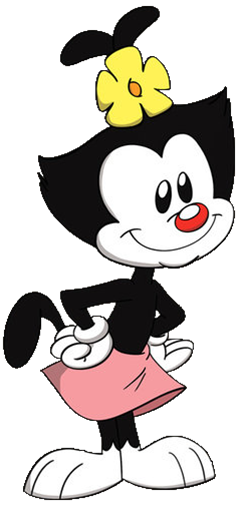 That’s why you kinda skimmed past her and why you’re waiting for me to get on with whatever hints I’m going to offer, right? You’ve got no reason to linger on her. She’s barely a placeholder. She’s punctuation in a vaguely human form.
Jump back. That’s a great way to think of it. The lingering. When we keep thinking about the characters or the story after we’re done reading. We wonder what happens to them next. We try to figure out the puzzle. We hope Wakko gets what’s coming to him. Because we all know he deserves what’s coming.
That’s investment. These characters or stories are sticking around. They’ve earned a few hours or days or maybe years of free rent in my head. Enough to make me keep going back to the story to see how things turn out, and maybe even enough that I find that storyteller and beg them for more.
We get investment through characters. Ones we can, on some level, relate to. Characters we can believe in within the world of this story. And, yeah, ones we like reading or watching stories about.
When we connect to characters this way, they become, to some extent, real people. We project onto them, and so they get bigger than the page, bigger than the screen. I may be off base, but I think it’s the moment when we start thinking of them in terms of ourselves. Maybe we empathize with how they feel about something, or remember what it was like to be in a similar situation. Maybe it’s agreeing with their stance or envying their accomplishment. It might even be a wish-fulfillment thing we know we’d never really do—I wish I had the guts to quit like that. Or the ability to take down a worldwide crime syndicate because one of those bastards killed my dog.
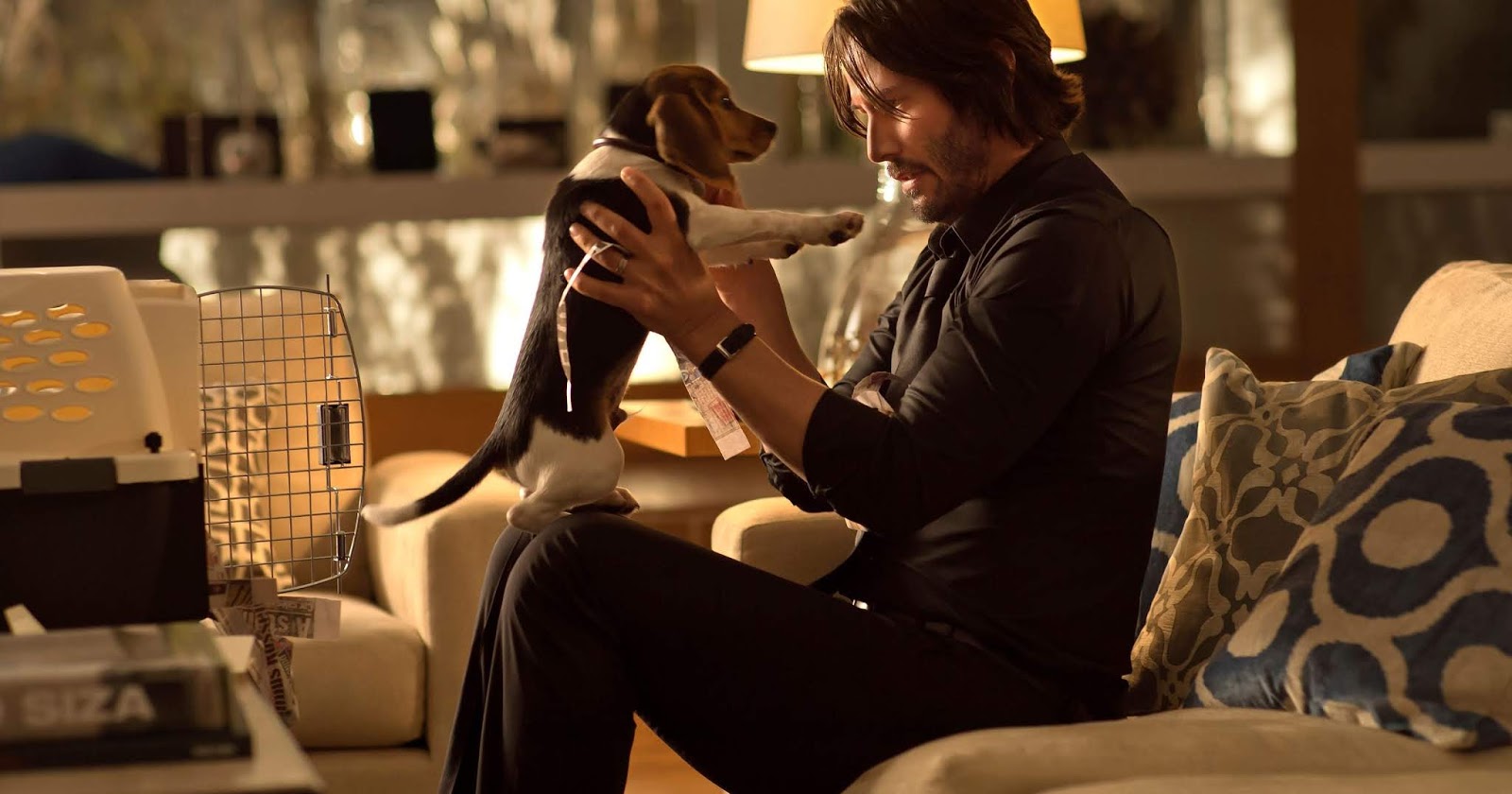 That’s investment. That’s us letting these characters in the same way we’d let a person into our lives. We think about them. We want to know how they’re doing. We consider their existence past that bit we’re told. We actively worry about them, get excited for them, want them to win.
Y’see, Timmy, without that investment in the characters and the story we’re just… reading. Watching. Observing dispassionately from a distance. The only connection is eye contact, and the minute that’s broken we’ve got nothing.
If any of you follow along during my Saturday geekery movie sessions, there’s a phrase you’ve probably seen me use once or thrice or every other movie. “Who am I supposed to be rooting for?” So many of these stories push characters who just aren’t likable or relatable in any way. They’re obnoxious. They’re cruel. They’re ignorant. They’re sexist. They’re just plain annoying. And they’re supposed to be the hero.
Because of this, it’s tough to get invested in these stories. The characters are literally pushing me away from them. And if I keep watching under these conditions, well…it’s easier to focus on the flaws because there’s really nothing else to focus on. I mean, these movies are rarely known for their top-notch special effects.
I should ask myself a few questions as I get started. Why should someone be invested in my story? What am I offering? What’s here that my readers are going to like or relate to? Are they going to believe in my characters… or roll their eyes at them?
Next time…
Oh, wow. Next time’s the Fourth of July. I’m going to be eating grill-cooked food and playing with little toy soldiers and just possibly enjoying a beverage or two. So no post next Thursday.
Maybe on Wednesday I’ll talk about computers a bit.
Until then, go write.
June 20, 2019
The Negative Zone
Today’s musings got inspired by a couple things. A headline. A few twitter posts from people I know. Some thoughts that’d been bouncing in my head for a while. And a movie I watched last weekend during my usual bout of Saturday geekery… So, let’s take a moment and talk about negative space.
No, not the Negative Zone. That’s another thing entirely. Like, a completely different universe.
Anyway…
You’re probably already familiar with the idea of negative space in art even if the term might not be familiar. It’s the space around the subject, rather than the subject itself. Negative space is a necessary thing—it helps us isolate and define elements. We need that open, less-defined area for our brains to process things correctly.
Think of this page. There’s open space between the letters and the words, which help us to read. There’s also spaces between the paragraphs. That’s more of a modern web format, sure, but even on a printed page we use indents—more space—to help mark off new paragraphs.
And here’s the interesting thing. We all know the space is there. We register it and process it. It’s blank, but it’s serving a purpose.
There’s also space within storytelling itself. We often leave things blank, so to speak. We don’t always explain everything or describe everything or answer every question. Because we know the reader can do a lot of it for us. They’re going to make their own images in their mind and fill in little details. And we all process it a little differently, which is why we don’t always picture things the same way as everyone else.
 What does blank space in a story look like? Well I’ll have the famous bank robber ride into town with a big sackful of cash. Wakko might have a scar on the side of his face. Dot could have a necklace she never takes off.
Negative space in a story is all these things, some minor, some major, that I don’t spell out for you. I mean, just off those random sentences, I bet you came up with an explanation for all of those things. It’s something I don’t need to explain because it’s either not that unusual (lots of people have jewelry they always wear) or because we can figure it out pretty easily (gosh, where do you think Iron Thorpe got that bag of money?).
Now, you may remember I’ve mentioned Academy Award winner Billy Wilder here once or thrice. He had a great little aphorism—if you let the audience add 2 + 2 on their own now and then, they’ll love you for it. I’m a big believer in this. I think it’s one of the honest, physical joys of reading. Figuring things out—even small, simple, subtextual things—gives us a feeling of satisfaction. It sets off a tiny little squirt of the happy chemicals in our brains, the biochemical reward for doing something right or solving a puzzle. That moment of adding 2+2 together is why we enjoy reading.
So if we’ve got the stuff I’ve explained to you and the stuff you figured out on your own, what parts are you more likely to enjoy? Which ones are going to stick with you? Sam Sykes (professional bear wrestler and author of Seven Blades in Black) has pointed out that when it comes to backstories and mythologies, the parts we figure out on our own are the ones we love. We like parsing out who the bad guy was in that hundred-year-old conflict, or the realreason Yakko and Phoebe get so icy when they end up in a room together.
 And sometimes… we just don’t need to know. We don’t. Period. Sometimes the explanation’s just completely irrelevant. Sometimes it’s better to leave the past shrouded in darkness and mystery. When we find out all the details about how Wakko got that scar sometimes… it’s just kind of a let down We like the mystery aspect of it, the uncertainty, far more than the actual answer (Neil Gaiman once said as much in his Sandmanbooks—Cain and Abel openly discuss it with another character). I’ve mentioned William F. Nolan’s “bug in the closet” idea before, and how it limits horror, and that’s kinda what we’re talking about. Sometimes letting the reader make the final decision is much more powerful. ‘Cause when we don’t know the answer to something, there are lots of possibilities, so many things for our minds to dwell on. But once we know… there’s only one. That’s it. Done.
I’ll add one last thought to this before we wrap it up. From a basics mechanics point of view, if I leave these things unsaid… it leaves me space to say otherthings. As I’ve mentioned before, any story only has so much room. Books only have so many pages. Movies can only be so long. The five paragraphs I spent explaining how alchemy works in this world are five paragraphs I could’ve spent on advancing my plot. Or developing one or two of my characters.
That Saturday geekery movie I mentioned up top? It spent tons of time in the very beginning explaining how the different magical sciences worked and where they came from. Which turned out to be a big waste of time because, naturally, once the story got going we were shown how they worked. And where the sciences came from… well, it never really had any bearing on the story.
With all that said, would you be shocked if I told you most of the characters were pretty thin? Their motivations were all sketchy at best. Hell, I couldn’t even tell you most of their names.
A big hurdle we need to overcome as storytellers is figuring out that negative space. Realizing what parts we don’t need to tell. What parts might be good, but just aren’t relevant. And what things actually improve my story by being left out of it.
And what things are weakening it or slowing it down because I’ve left them in.
Next time, I’d like to offer you some investment advice.
Until then… go write.
June 13, 2019 / 3 Comments
New Challenger Approaching
Y’know, I just noticed that there hasn’t been a single comment here in weeks. Not sure if that’s because more people are leaving comments over on Twitter when I link to these… or if I just haven’t been that interesting.
…let me know down in the comments.
Anyway, I’m a bit short on time—the past few weeks have been a bit crazy for me—but I still wanted to get something up here. And I realized there was a topic I hadn’t talked about in a while. Not in any detail, anyway…
One of the basic parts of storytelling is the obstacle. It’s what stands between my characters and whatever they want. Maybe they want to save the farm, but they’re too far in debt and can’t raise the money in time. Maybe they want the super-bedazzled mitten, but there’s a big purple guy with his own army who also wants it. Maybe they just want to ask that cute barista if she’d like to, I don’t know, get some coffee sometime or… no, wait, that’s stupid. Auugggggh, I have to go hide for at least a year. And maybe change my name.
Anyway…
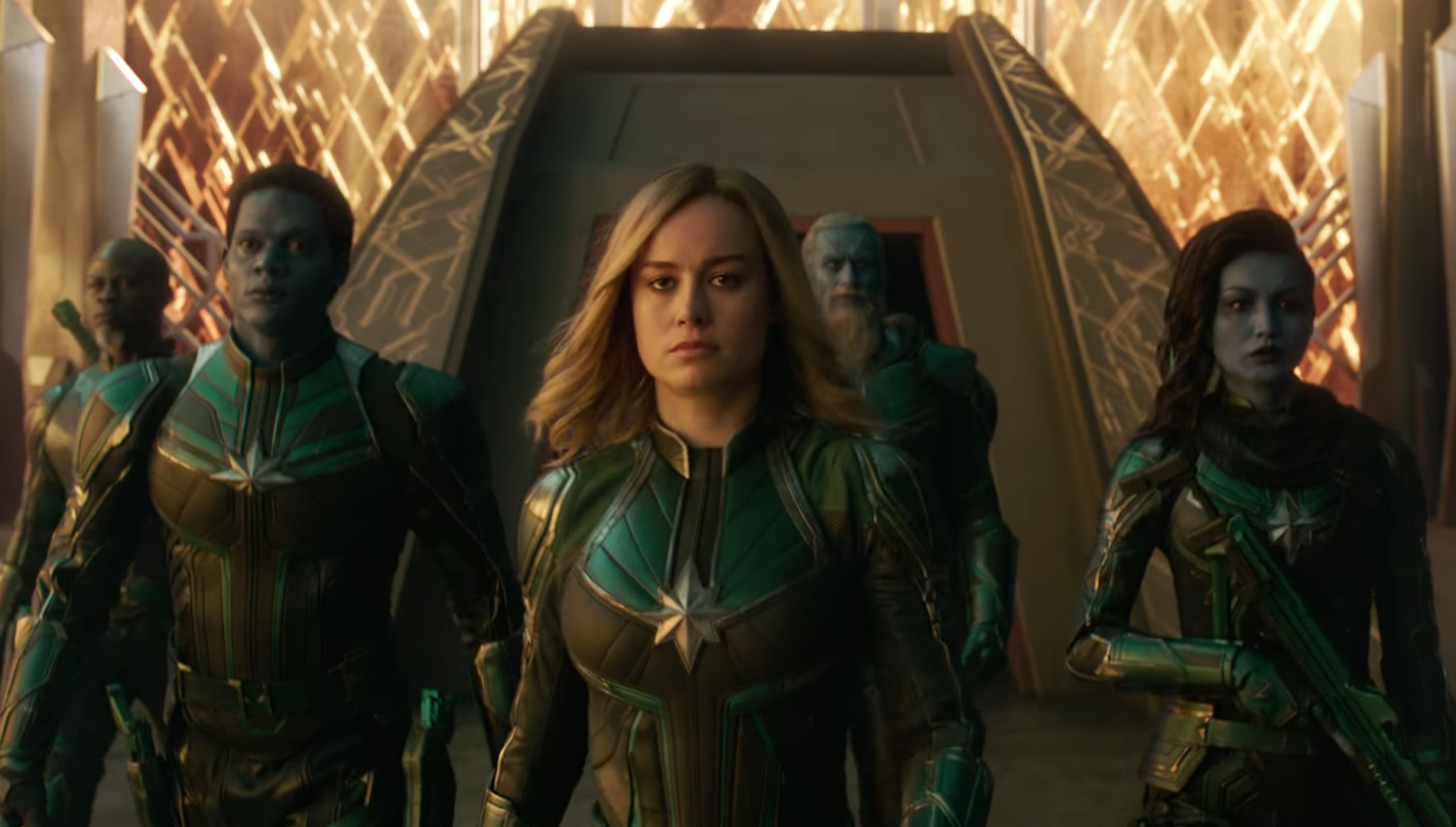 Personally, I think an obstacle’s slightly different from a conflict. It’s just terminology, yeah, but exterior problems tend to be called obstacles, while interior ones are almost always labeled as conflicts. Captain Marvel wants to save Earth from an alien invasion (obstacle), but first she needs to come to terms with the fact that her adoptive alien race, the Kree, may have been lying to her for years about a lot of stuff (conflict). See what I mean?
Because of this, I prefer the overall term challenge. I find that thinking about “obstacles” tends to make me think more about physical things in the way of my heroes, like parts of an obstacle course. And, again, while this isn’t technically wrong, it tends to lead to a lot of the same things in my writing. This is when I get challenges with more of an episodic, low-end videogame feel to them. My character defeats obstacle A then moves on to obstacle B, obstacle C and finishes up with D.
So here are a few thoughts about challenges, external and internal, that might be worth thinking about while I’m planning out my story—whether I’m writing a novel, short story, screenplay. or six-part epic somethingorother. I’ve mentioned them once or twice before, so if they sound familiar… good job. You’ve been paying attention
First Thought– I must have a challenge
I’m sure we’ve all run into books or movies where people either sit around doing nothing or just meander through events with little to no effort. If the character needs something, they either already have it in their backpack or it’s in the first box they open. If they need help, people are always able and willing. Any lucky break that has to happen does happen just when they need it to. I know these examples sound silly, but it’s stunning how often I see this happen in screenplays and/or books.
There needs to be something between my characters and their goals. If there isn’t, they would’ve accomplished these goals already. Look. I just got up and made myself a drink. I wanted one. I got it. Heck, if I hadn’t said anything you never would’ve known. That’s just not the stuff we see as bestselling, high-stakes drama.
Second Thought–My characters need a reason to confront said challenge.
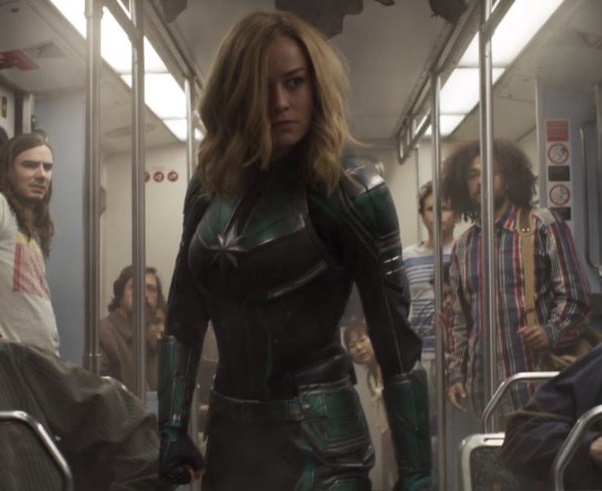 If my characters are going to take on a challenge, they need a reason to do it. If I’ve spent the past four days walking through the desert, getting that drink is probably a life-or-death thing for me. Captain Marvel isn’t pursuing the Skrulls as a part time hobby—it’s her sworn duty as an officer of the Kree military. I need to make sure this reason is really there. It might be clear in my head why the characters are going to undertake a challenge, but is it clear on the page? This is doubly true for internal things, which can be a lot more subtle depending on what point of view I’m using
Third Thought—My challenge needs a reason to exist.
Like I said right at the start, I need to have some kind of challenge, but I don’t want a challenge that only exists to be a challenge. It’s got no reason for existing in the world of my story, no past, no future, no motivation. It’s only there to serve as an obstacle for the protagonist to overcome. We can probably all think of a book or movie where, for no reason at all, an obstacle just popped out of nowhere. That kind of stuff just weakens any story.
Challenges have a purpose. Whether they’re the driving force behind my story or minor distractions my characters need to deal with quick, they’re a kind of antagonist—something or someone working against my heroes. That oasis is the only source of water for a hundred miles in this desert, which is why the people who used to live here set so many guards to protect it. There’s also a reason the Skrulls are on Earth (they’re searching for a hidden lab) and there’s a reason they’re tough to find (they’re shapechangers). I need to think about why a challenge is in my story, and if there isn’t a real reason… maybe re-think it
.
.
One other note. I think it’s generally better if my audience (reader or viewer) has at least some idea why this challenge exists. They don’t need to know all the details immediately (or even accurately), but I also shouldn’t be saving them for a last-page reveal.
Fourth Thought—My challenge needs to be daunting.
 Not only am I weak from dehydration and facing ten armed guards around the oasis, the actual spring itself is booby-trapped. Someone centuries ago built all sorts of pressure plates around the thing and I’m not exactly in the best condition right now to be tip-toeing and balancing through this spike-launching mine field. Plus, if Captain Marvel can’t find the Skrull agents on Earth, they could establish a foothold here, rebuild their strength, and endanger peace throughout much of the galaxy.
This may be a weird way to look at it, but challenges are things we needto deal with, but we don’t want to deal with. My characters don’t want to deal with this because they don’t even want to be in this situation. I think we can all agree things would be a lot easier if that challenge wasn’t even there.
But it is there, so… goddammit…
Fifth Thought—My challenge can’t be impossible.
Okay, we all write fiction. But even within a fictional world there are things that just can’t happen. Normal people can’t punch out gods or outsmart supercomputers. And if all those guards around the oasis have motion sensors, night vision goggles, and shoot to kill orders, there’s very little I’m going to get—holy crap there’s fifty guards? I thought there were only ten. And when did they all get machine guns?
If you’ve ever watched a horror movie where the killer is merciless,unstoppable, and inescapable… well, that gets pretty dull after the second or third kill, doesn’t it? One of the reasons Jason Voorhees was scary is that he never ran. He just sort of… marched? Lumbered? It always felt like somebody could get away from Jason if they could just go a littlefaster. If it feels like there’s no chance, it’s not interesting. We already know the outcome.
There are two other issues with the impossible challenge. One is if I make my challenge out to be completely impossible and my hero pulls it off anyway, there’s a good chance it’s going to knock my audience out of the story. I’ve just shattered the rules of what’s possible in my story. That usually means it’s “throwing the book across the room” time.
The second issue is when I have challenges that seem impossible to my characters, but have painfully obvious solutions to my readers. We just don’t like these characters, by nature of their stupidity, and that’s not going to win me any points.
Sixth Thought—Holy crap there are a lot of these
This was supposed to be a quick rehash of an old topic, but I keep finding things I want to add to this. I’ve got editing to do, dammit!
This was supposed to be a quick rehash of an old topic, but I keep finding things I want to add to this. I’ve got editing to do, dammit!
Seventh Thought—My challenge should be unexpected.
This isn’t a hill-I-will-die-on rule… but I’d be willing to fight on that hill for a little while. Once I admit that I need a challenge, it’s kinda the next logical step.
If my heroes are so prepared, so trained and equipped that they’re completely ready for this challenge… well, there isn’t really a challenge, is there? If they’ve covered all the angles, researched every possibility, how can they lose? And if they can’t lose… well, that’s kinda boring, isn’t it? We know the outcome again.
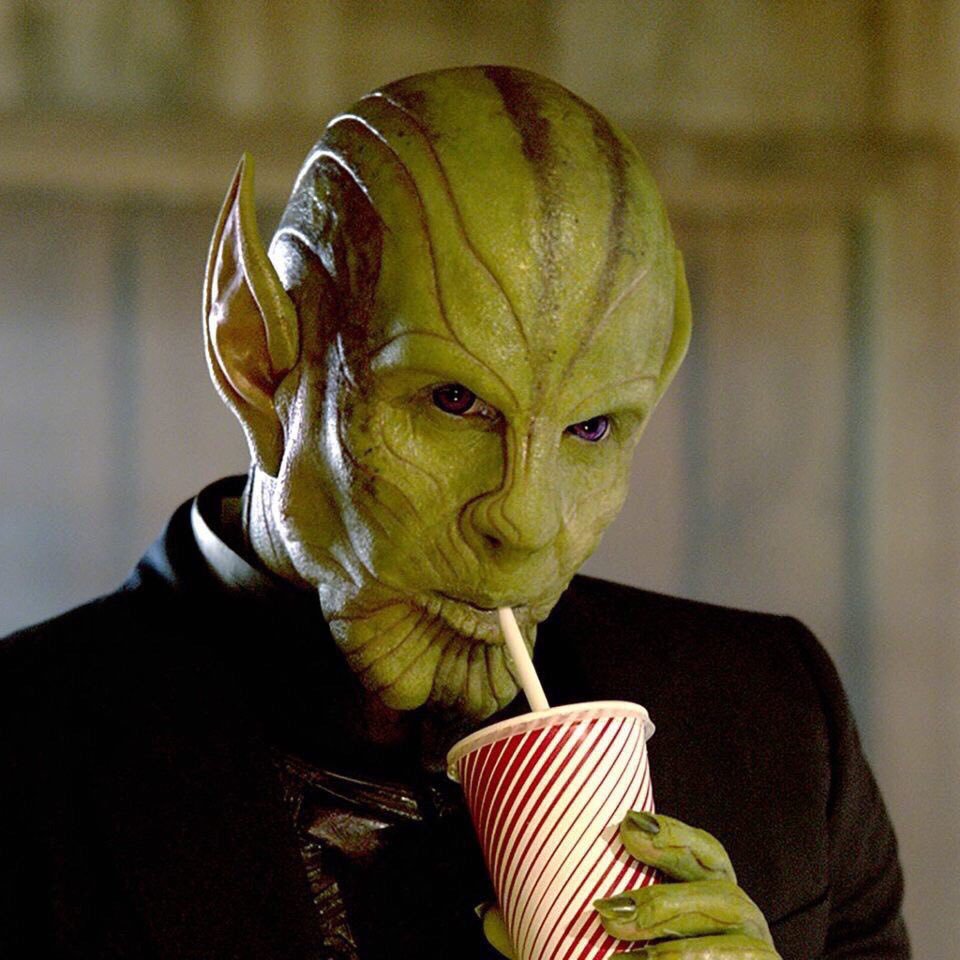 A standard part of so many stories—including Captain Marvel— is when something changes or goes wrong. The one thing we didn’t prepare for happens. We learned something new that completely flips our goals and understanding of the situation. One way or another, the plan’s shattered into a million pieces. I beat the guards and made it past the booby traps and WHAT? There are albino crocodiles in the oasis? Wait, are these guys actually poachers?
But think about it—when this happens in a story, it’s almost always the moment we love. It’s when my characters get to look good and show how smart or clever or tough they really are.
Eighth and Last Thought–I need to resolve my challenge
Once I’ve set up a challenge, it needs to be resolved somehow. I can’t crouch on a sand dune outside the oasis for five chapters studying the guards and their patrol patterns, then just wander off back into the desert. It leaves a lot of dangling threads and unanswered questions. Who were all those guys? How did they get here? Why did I give up when I desperately needed water?? How did I wander away if I was weak from dehydration? Why did the author spend five chapters on this if I was just going to wander away…?
To paraphrase Chekov, if we see a phaser on the bridge in act one, we need to see it on overload in act three. And then either disarm it or watch it take out the Enterprise
And they will judge me on it.
Those are my way-too-many thoughts on challenges. Maybe take some time and look at the challenges your own characters are facing. Are there any? Are they challenging enough? Does your character have a desire to avoid them and a need to face them?
Next time, speaking of challenges, I’m going to do something I’ve tried really hard to avoid here for years. I’m going to go negative.
Until then… go write.