
January 14, 2017 / 2 Comments

Time for Torches and Pitchforks

            So sorry this is a bit late.  Deadlines. They can suck, but they pay the bills.
            Anyway, with some of the awful changes we’re already seeing this year, I thought it’d be good to try some positive changes.  In the next few weeks I’m hoping to do much more regular (and frequent) posts and also address a few different topics people have tossed my way.  And maybe even a big overhaul of this whole page.
            But first, I wanted to talk to you about the little European country of Switzerland.
            I’m guessing everyone reading this has seen some version of Frankenstein, yes?  Maybe the iconic Universal film or one of its many sequels.  Or the Abbot & Costello movie.  Or even the comedy remake Mel Brooks did.
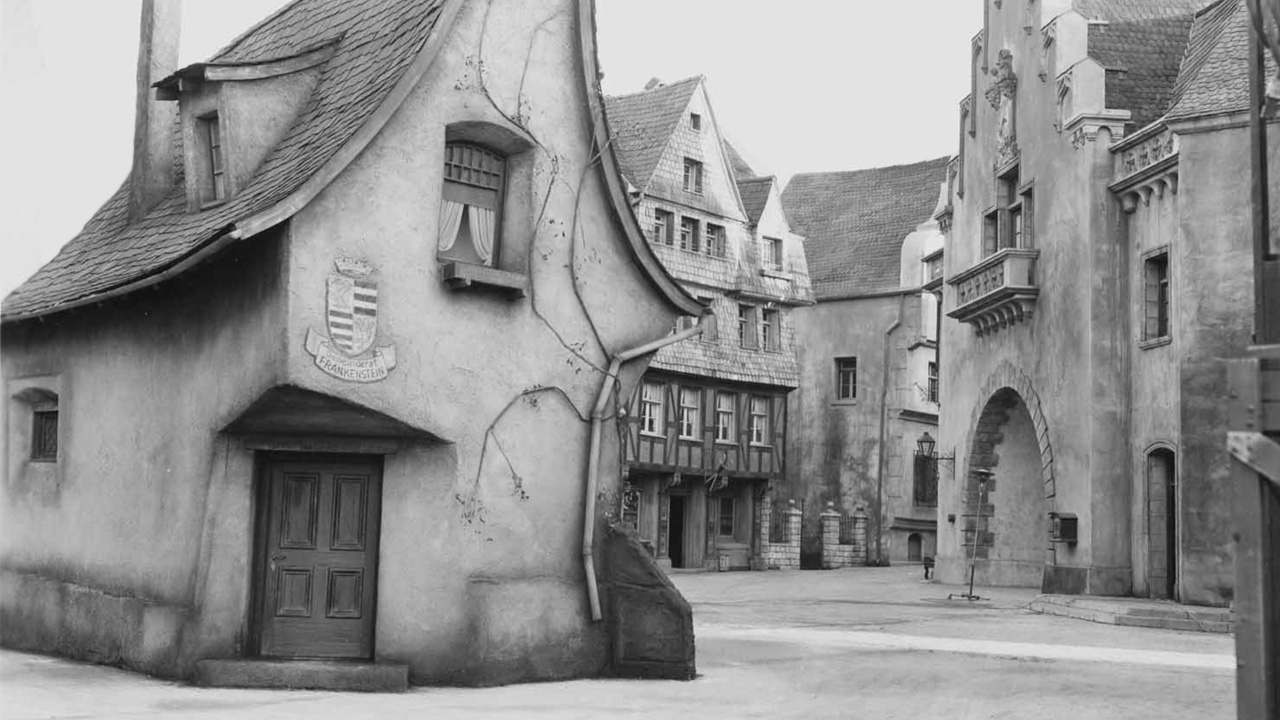
            (For the record Frankenstein here is the name of the movie, not the monster…)
            One standard in all of these is the little nearby village.  It shows up in every version of the story I just mentioned, plus a few dozen more.  And yeah, in the movies it’s in Switzerland.  Weird, I know.
            Anyway, I’m sure most of you reading this can picture it in your minds, yes?  The wall with the big gate.  The houses with the exposed timbers and big fireplaces.
            Okay, got all that in mind?
            Whenis that small town?
            No, no, don’t try to reason it out. Just answer the question.  In what time frame is that little town set?
            I bet that made your brain seize up for a moment.  Y’see Frankenstein was written back in the early 19th Century, and is actually set in the back half of the 18th.  It’s a contemporary of Ben Franklin and his lightning experiments.
            (For the record, Frankenstein here is the name of the book, not the monster…)
            And yet…
            The films kind of updated the story and gave it a slightly more “modern” setting.  The clothes and some of the doctor’s technology hint at a story set closer to the Victorian era.  There’s mention of trains in some of them.  The Abbot and Costello movie is set in “modern” times.  There are cars, planes, telephones–they’re full-on into the 20th century at that point.
            And yet… the little hamlet below the castle looks exactly the same in every movie.
            It’s not impossible.  There are lots of villages in Europe that still look a lot like they did two or three centuries ago.  Even here in the US we’ve got towns that haven’t changed much since the fifties.  Or the twenties.
            What’s my point in this?
            I read a book recently that was set in a village a lot like the one in Frankenstein.  There were even a couple of castles.  And one of the annoying things was I couldn’t tell when this story was supposed to be taking place.  No mention of electricity, radio, or cellphones, but also no mention of horses, woodpiles, or outhouses.
            The author described the clothes on a few characters, but these days having an eccentric, oddly-dressed character is kind of commonplace.  So maybe that woman’s clothing is a hint as to what era the story’s set in… or maybe she’s just really into steampunk or some kind of retro cosplay.  One guy carried a crossbow but… well, kind of the same thing, right?  These days crossbows, longbows, swords—they’re not that unusual in stories from any time period.  Look at The Walking Dead.  Heck, Warhammer 40,000 is set… well, about 38,000 years from now, and people are still using swords in that.
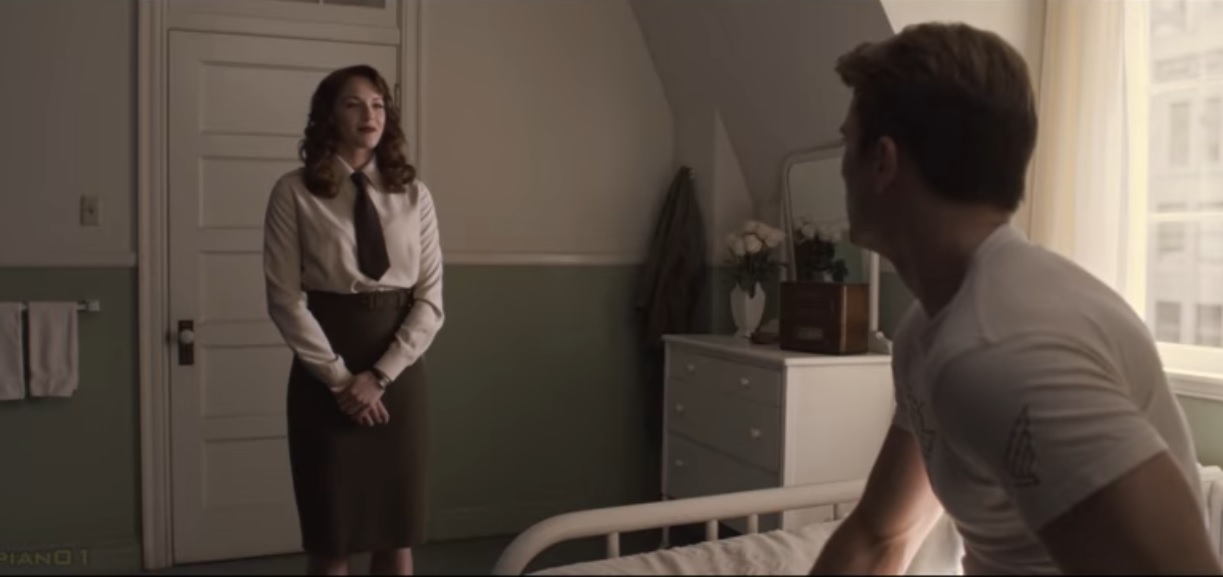
            Yeah, there’s always going to be that time where I want to misdirect my reader into thinking it’s 1944, but Cap really just woke up in 2012.  Or that the high-tech lair is in the future, not inside an Egyptian tomb in 1250 BC.  The thing I need to keep in mind is that these aren’t cases where I’ve just forgotten to mention the time—it’s being deliberately withheld to create an effect later.
            Y’see, Timmy, knowing the when of a setting is just as important as the where.  It’s one of the things we use as writers to help the readers relate to elements of the story. And it helps to define the world I’m creating.  Without knowing when my story’s set, it’s tough to tell when something’s exceptional or important in that world.  A soldier talking on a walkie-talkie isn’t exactly earth-shattering stuff, but if I tell you this soldier’s with George Washington in 1776, that walkie-talkie conversation becomes interesting on many more levels. And it immediately tells my readers what kind of story they’re reading.
            So remember the when along with the where.
            Next time, I’d like to talk about something I’m not going to talk about anymore.
            Until then… go write.
January 5, 2017

Here We Go Again…

            Hope you had a fantastic New Year, everyone.  Welcome to 2017.  Or, as history will probably call it, America’s make-or-break year.
            As I often do at the start of each year, I wanted to blab on for a minute or three about what I hope to accomplish with this little collection of rants and ravings.  And I think one of the best ways to accomplish that is to start off by telling a quick story…
            Another friend of mine—a very accomplished professional writer—talks about some advice he got once from Richard Matheson.  To paraphrase, writing is an art.  Publishingis the business of selling as many copies of that art as possible.  If I want to be a successful writer, I need to understand that difference.
            What does that have to do with my rants?
            This page isn’t about “when you’re done.”  I’m always coming across pages and groups where people want to know what to do with their finished manuscript.  How do I get an agent?  How do I promote myself?  How do I get a publisher?  Should I self-publish?  Should I be networking more?  How do I get blurbs?
            None of that here.  That’s all publishing stuff.
            Not to sound harsh, but this page also isn’t for inspirational ideas, mindless encouragement, or a joyous celebration of art.  I’m not really big on the we-can-all-succeed mindset (I used to say “special snowflake,” but that’s become a stupider, crueler term lately, so I don’t feel very comfortable with it anymore).  I’m also not a fan of those folks who see writing as some bohemian form of expression where there are no wrong answers or directions.  If that’s the kind of “advice” you’re looking for… wow, this is so not the place you want to be.
            And, I also don’t use this page for self-promotion.  I may mention stuff that’s new or noteworthy, but that’s about it.  No sales or contests or interviews (well, not with me, anyway).  There’s some links on the side, yeah, but those are almost more for credentials purposes than sales.
            (Although if you want to buy something, I’d never object…)
            So, with all that out of the way… what are all these little rants for?
            Well, it struck me about ten years ago that there weren’t many places online to find actual help with writing.  Not useful help, anyway.  Yeah, all that “when you’re done” stuff I mentioned is important, but the writing is the first big step.  Nothing else matters until that step is done.  If I don’t have a decent piece of art, there’s nothing to do on the publishing half of the equation.  It doesn’t matter how much work I put into self-promotion.
            I look around and I saw—and still see—a lot of folks making mistakes with their writing.  Sometimes it’s from inexperience.  Sometimes it’s wishful thinking.  Sometimes it’s from following bad advice.  And a few times…
            Okay, sometimes I have no clue where some people are getting their information from.
            This is the time when we all make a lot of resolutions.  We’re going to quit smoking, drink less, eat better, exercise more, travel more… and maybe write more.  Maybe finally get that manuscript finished and out to some publishers.
            Now, sadly, we all know the truth behind a lot of these resolutions.  Most people don’t follow through on them.  In fact, a lot of gyms and weight loss programs make a ton of money off people who sign up for a one year membership in January and then more or less give up in… February.
            I’ve already seen a ton of folks making promises to themselves.  To finish a screenplay or a book.  Maybe two books.  That’s mine.  To finally get two books done in one year.
            But why?  Do I just want to write a screenplay because I’ve always wanted to try it?  Or am I hoping this could lead to a career in the film industry?  Am I looking to write a novel just for myself, or am I maybe looking to…well, make some money off of it?  And if so, am I looking at this as a nice hobby that will pay for some LEGO models, or is this something I’m hoping will be a career?  Like a paying-all-the-bills career?
            As I talked about earlier, when I first started this page a good chunk of the actual writing advice I could find was kind of… questionable.  Always follow this structure.  Always write at least 1000 words a day.  Don’t worry about spelling or editing.  Never use common wordsNever use saidName every character.  It all just seemed to be either something people were pulling out of the air or they were repeating something that had gone through twenty rounds of the telephone game.
            So what I’ve been trying to do here is to fill a gap.  To offer some useful help for people who’d like to improve their writing and move it toward something they could actually sell to a much larger audience and maybe not just… well, a hundred people they know between Facebook and Twitter.
            This means there’ll be some harsh facts now and then.  Yeah, facts, not opinions.  Also some very firm rules.  Some people will argue with these (some people always do) because some of those facts and rules are going to go against the way they’ve chosen to see things in the writing-publishing world.  Others will be upset because some of the things I say might indicate they’re not quite as far along their career path as they thought.  Or maybe they’re not on it at all. 
            I apologize in advance if this ends up being you.  It’s nothing personal—it’s just the facts as I see them after almost (gasp) thirty-seven years of trying to do this professionally.  If it makes you feel better, there are very, very few screw-ups you can make that I didn’t beat you to ages ago.  And I learned from them and want to help you get past them.
            I’ll also offer up some much gentler tips and advice.  Some of these suggestions will work for you.  Some won’t.  Part of my job as a professional writer is to figure out what does and doesn’t work for me.  I’ve spent years doing it.  If you want to be a professional, it’s part of your job, too.
            And if writing’s just something you like to dabble with on weeknights because you enjoy it… cool.  Nothing wrong with that.  Maybe you’ll find some stuff here that makes it even more fun for you.  Or maybe you’ll just show up to laugh at those of us in the publishing rat race.  That’s cool, too.
            So…that’s the basic idea behind this page.  There may be two or three deviations over the course of a year, but mostly… that’s it.  And, hey, if there’s something specific you’d like to see me blab on about, please feel free to ask.  I’m always open to suggestions, and I try to get to them within three or four weeks (depending on how many things I’ve already got planned out).
           Oh, and if you’re in Southern California, this weekend is both the Los Angeles and San Diego Writers Coffeehouses.  San Diego is at Mysterious Galaxy and hosted by the amazing Jonathan Maberry.  Los Angeles is at Dark Delicacies and hosted by the not as amazing… well, me.  Both of them are noon to three, open to absolutely anyone of any skill level, and they’re completely free.  No sign ups, no lists, nothing.  Just show up and join in.
            Next time… I’d like to talk to you about that little village near Castle Frankenstein.
            Until then, go write.
December 29, 2016 / 4 Comments

2016 Is Over. Finally.

            I don’t know about you, but this year has been kind of brutal on me.  We don’t even need to bring up politics or innumerable dead entertainment icons.  It’s sucked.  I lost my grandma.  Two friends.  One of my cats.  Hell, even the car I’ve had since I was twenty-seven and working on Silk Stalkings.  
           All dead.
           Screw this year.  Screw 2016.  And I’m only saying “screw” so this page doesn’t get banned from your work server.  I’ve been a lot more emphatic in real life.
            But, anyway… let’s talk about writing.
            At the beginning of every year I toss out some encouragement and ideas about writing. And throughout the year, I jab you pretty much every post with a gentle reminder to go write.  Because that’s the only way this happens. We sit down and we write.
            So… what did you write this year?
            I’ll go first.
            Well, let’s be honest.  The vast majority of this year was spent on Paradox Bound (which most of you will get to read in about… seven months?). I turned in a really wild, scattered draft to my editor (I can admit it), and he politely handed it back and said “try harder.”  Which made me take a long, hard look at a lot of it, rip out a large part of the ending and restructure it, which also meant going back and reworking a fair amount of the beginning.
            But in the end… I’m really proud of how this has turned out. I think you’re going to like it a lot.
            Between drafts, I also finally finished (and submitted) a little story called “Projekt: Maria” for an anthology titled Mech.  That should be out early next year, I believe.  If you read Kaiju Rising a while back, this story is another World War II adventure with Kraft and Carter trying to counter the latest weird and unusual Nazi plot.
            Plus, I’ve done a bunch of work on my next big project (no real title yet—well, not one I’m up for sharing).  And a lot of notes and bits on the next Ex-Heroes book (currently called Ex-Tension).  And I scribbled some notes and pitches for some things… well, that I can’t really talk about quite yet.
            And, hey, this is the 46th ranty blog post this year.  Granted, a handful of those were photo tips, but still… that’s a fairly regular output there. I mean, I’m no Chuck Wendig or Scalzi, but I think that’s a respectable number.  I even managed a couple over on my geeky blog, too… although nowhere near as many as I’d wanted to.
            What else did I do with my time?
            Well, if I’m counting right, I read about thirty-eight new books this year. By which I mean, books I’d never read before.  About half a dozen of them non-fiction. 
            There were also another twenty or so books I re-read, either for reference or enjoyment.  Plus a big pile of comic books and graphic novels—the IDW Revolution event (featuring GI Joe, Rom, Transformers, and Micronauts) was magnificent, as was the conclusion to The Sixth Gun. If you added all of those, I’m probably somewhere in the low sixties.
            Not an ugly score.  Essentially a book a week. I’m huge believer that reading is essential if I want to be a decent writer.  I have to take in material if I want to create material.  I can’t be a filmmaker without watching lots of films. I can’t be a bodybuilder without taking in food.  I can’t be a teacher without learning.  And I sure as hell can’t be a writer if I never read.
            So that’s what I accomplished.  How about you?
            Granted, I’m in the fortunate position where I get to do this full time.  On average, I’m probably going to write more, revise more, and read more than most of you reading this.  It’s not a slam, that’s just basic scheduling.  There’s only so many hours in the day, and I get to spend most of them in this area.  We all have different amounts of time we can put toward these things.  People have kids, jobs, other priorities.
            This also isn’t a contest.  I’m not going to berate you because you only read twenty books this year. I wouldn’t feel extra-special if I read a hundred.  We all read and absorb and work at our own rates
           The key thing is that I can see honest, real forward motion.  I started here and I ended with all of thisdone.  I can’t be telling myself “well, this counts as getting stuff done” or “I meant to do that.”  I should be able to point at things I wrote.
            I mean, that’s what we’re all trying to do, yes?
            I’d like to thank you all for reading this collection of random thoughts and lessons as we head into (holy crap) the ranty blog’s tenth year.  I’ll try my very best to stay entertaining, educational, and semi-relevant.
            Next time, as I usually do, I’d like to start the year by setting down a couple ground rules—for myself and the ranty blog and the rest of you.
            Until then… go write.
            Have a fantastic New Year’s.  May 2017 be better for all of us.
December 22, 2016 / 1 Comment

Time to Pay Up…

            Okay, we’ve all got better things to do right now, so this is going to be a quickie…
            This is another one of those spelling-vocabulary things that shows up way too often.  I saw it misused the other day in someone’s internet press release—the third or fourth time I’ve seen it in recent memory—and it made me grind my teeth.
            Not good, since I got these crowns.
            Anyway…
            Easy question for you. Do you want to pay your dues and become a writer?  Or would you rather pay your dos?
            Are you worried things might be past do?  Or that you haven’t gotten what you’re do?  Either way, have you considered heading do south?
            We’re not even going to talk about the people who bring dew into it.
            Really, the more important question is—are you grinding your own teeth after some of these?
            Do vs. due is one of those… okay, seriously, I don’t know what to say about this.  If I’m going to call myself a writer—any kind of writer—and I’m messing this up, well, it’s not a good sign. 
            It’s ridiculous that I have to bring this up, right?  And yet…
            Journalist, fiction writer, editorials, non-fiction… there really isn’t a type of writing where this kind of mistake is okay.  Because this is a bare-bones basic mistake.  From a writing point of view, this is a flat Earth/Moon-is-made-of-green-cheese-level mistake.  Like so many word choice/use issues, this is a do diligence thing, where I deserve to get smacked down if I can’t due it right.
            One simple, but not perfect, tip—if I’m talking about someone getting something, I probably need due.
            Another simple-but-not-perfect tip—if I’m talking about some form of action, I probably need do.
            Direction is usually going to be due.
            Parties or hairstyles, I would most likely need do.
            The one perfect tip—I should actually learn what words mean before I use them.
            Y’see, Timmy, if I’m messing up something as simple as due and do, it means I’m failing on a bunch of levels.  I’m using phrases I’ve heard but I don’t really understand.  I’m not bothering to look up words I don’t know in a certain context.  I’m just going with what sounds right and not bothering to check if it is right.
            And if that’s how I’m doing things… well, I can’t be surprised if nobody wants to pay me for my writing.
            If you’re reading this, I hope you have a Happy Christmas, Happy Hanukkah, or just a peaceful weekend. Regardless, I’m sure I’ll see you all one more time before the end of the year.
            And if you have some free time in there… go write.

Categories