
February 7, 2019 / 1 Comment

In Context

            I’m writing up this post as I levitate upside down in my office.  Which—cool thing about this new house—exists in an orbiting satellite that’s only accessible through a teleport array we found in the attic.  Really cuts down on the commute to work, let me tell you…
            Okay, we’ll get back to that.
            I wanted to expand a little bit off something I touched on last week, and that’s the idea of context within a story.  When we talked about it before, I was using it to show how I can’t pull random elements from that story, copy them into my story, and expect them to work the same way
            Quick semi-related question.  What does it mean if I walk up and smack someone?  Full on, five fingers, hard across the face.
            Well, it could mean any number of things.  It could mean they’re a complete jackass.  Or maybe I am.  Maybe they deserved it.  Maybe they’re in shock and I’m trying to bring them around.  We don’t know enough about the circumstances, the background, the existing relationships between me and the person I smacked.
            What if I just walked up and kissed them?  Or slapped their ass.?  Kinda the same thing, right?  We don’t know enough.  Maybe I’m a complete sleaze.  Maybe this is my partner of several years.  Hell, this could mean different things depending on where it happens. Doing it at the office could be extremely inappropriate, but in the locker room this could be a congratulations, and in the bedroom it might be foreplay.
            All of this additional information—the stuff we don’t know in these situations—is the context.  It what makes actions creepy or exciting or exciting in that other way.  As I’ve said before, there can be many different interpretations of the same thing depending on all the other things around it. 
            This becomes extremely important in genre fiction, because one of the big aspects of genre is that we tend to tweak the world a bit.  Maybe superheroes are real.  Or dragons. Or cybernetic implants.  Maybe they’re not just real, they’re common.  Boring, almost.
            For example, take my opening paragraph.  It probably made you smile, because it’s absurd in two or three different ways, right?  Complete nonsense, because we all know how the real world works and I am, no matter how many times I’ve wished otherwise, part of said real world.
            In a genre story, though, all of that could easily be true.  Then it isn’t laughable—it’s setting.  Possibly important plot elements. 
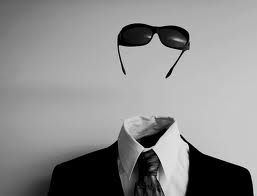
            Charlie Jane Anders made a wonderful observation a while back about how some of her least favorite stories were the ones that got pitched as something like “it’s a world just like ours, except everyone can turn invisible.”  The problem with these stories is that if everyone could turn invisible… well, the world would be completely different.  Views on privacy would’ve changed massively, possibly in different directions depending on how long this power’s been available.  Social views would be different, because anyone might be listening.  Heck, traffic laws would need to be adjusted because what if an invisible three year old wandered into the street?  Technology would be different, because there’d be whole-new priorities in this world.
            And if none of these things have changed… well, that just doesn’t make sense, does it?  Try to think of an aspect of your life that wouldn’t be different if there could be two or three invisible people in the room with you.  Any room.  At any time.
            Context lets me know what is and isn’t possible in this world.  By extension, it lets me know when people’s reactions are appropriate or wildly inappropriate.  If my story doesn’t explain what the limits of my world or characters are–or if I don’t give my readers enough to figure it out—it’s going to limit their investment and immersion in the story.
            For example…
            I watched this movie a while back where a guy hires a live-in maid (occupations and genders may be changed to protect… I don’t know, surely somebody deserves it).  Nothing weird or unusual there, right?  Except when the maid shows up, she’s kind of… well, unnatural.  Pallid, almost gray skin.  Dark circles under the eyes.  Blank stare.  Never speaks.  Tends to move in a kind of slow, lurching way.
            You can kinda see where this is going, right?  Zombie maid.  Clearly.
            But here’s the thing.  Our protagonist and his roommate don’t notice anything unusual about her.  They act like she’s totally normal.  One of them even thinks she’s kinda hot.  Same with other people who stop by.  They all just treat her like… well, the maid.  Or, at the very least, the woman staying at Yakko and Wakko’s place.
            And let me save you an assumption.  This wasn’t a comedy movie.  It bordered on melodramatic horror, really.  Except… nobody was horrified. 
            Well, maybe me…
            So what was going on?

            I watched the whole damned movie and I still don’t know.  Was she a normal woman who just happened to look and act like a zombie for some reason?  Maybe?  But if that was the case, wouldn’t people comment on it?  Since nobody in the movie ever mentions that the new housekeeper looks like one of the walking dead, it seems like this might be, well, a common thing.  In fact, there are two or three scenes where the characters pretty much treat her like an appliance, even putting her in a storeroom at one point.
            But if she wasa zombie maid, shouldn’t that come up?  Heck, even if it’s the most normal thing in this world to have undead people cleaning your home, you think someone would mention it.  And plus… the rest of the time they’re talking to her and acting as if she’s a completely normal person.  Hell, like I mentioned before, the roommate’s even mildly obsessed with “how hot she is” and more than once talks about trying to get her in bed.  Which is a bit odd if she’s supposed to be a zombie.  At least worth a small discussion, yes?
            The real problem was that I couldn’t tell how to feel about any of this.  Were the guys being jackasses who objectified their maid—which would imply I shouldn’t like them, right?  Or was this a normal reaction, the way you or I would treat the vacuum cleaner when we weren’t using it?  Was the roommate’s desire to have sex with the maid kinda weird?  Full on creepy?  Hell, maybe even normal?  I don’t understand the world, so I don’t have any context to base these reactions in.
            And just to be utterly, completely clear—there’s nothing wrong with a story about zombie maids.  That’s the basis for a very cool story.  I’d never say otherwise.  Heck, it’s the basis for Fido, a really fun movie.  But if this is the world I’m setting my story in, I need to be clear this is… well, the world my story’s taking place in.
            Now…
            All that said, it’s really common to start off with a story set in “the real world”  and then it suddenly veers off into the realm of magic, aliens, and/or elder gods.  We’ve all seen it.  If you like hearing about three act structure, this kinda thing is a common way the first act ends.  Again, nothing wrong with this.  Like I said, it’s really common and I bet we’ve all got a favorite story or six that does this.
            Why can they do it?  Well, if you look at these stories, the big reveal that zombie cyborg lizard men are secretly running Wall Street is pretty much always structured as a low-level twist—it doesn’t alter the context, it enhances it.  These reveals force us to look at a lot of earlier story events in a new light.  They don’t actually contradict anything we’ve already seen in those first two or three chapters.  And since they happen early in the story, they’re not asking us to rethink a lot of assumptions or beliefs about these characters or the world they live in.
            There’s also another way to pull off this context shift, and it’s one that you’ve probably seen done a couple times.  I do it in Dead Moon.  Heck, J.K. Rowling copied it from the original Predator.  No seriously.
            Okay, not seriously.
            Just tell them right up front.
            Most people tend to forget, but Predator begins with an alien spaceship doing a fly-by of Earth and launching a landing pod as it zooms past.  That’s the very first shot in the movie.  Seriously.  And then it’s half an hour of Arnold and Shane Black shooting guys in the very real-world jungle before we see another hint of the alien.  Same with Harry Potter.  Sure, there’s all that stuff about Harry’s miserable childhood with the Dursleys, but the first chapter’s all about magic cats and a flying motorcycle.  Rowling all but openly says right up front there’s a magic world the Dursleys are desperately trying to ignore, despite their clear connection to it.
            What this does is establish right up front these are genre worlds, no matter how normal they may seem as we ease into the story.  When they take their sharp turn, it isn’t out of nowhere. It’s just a reminder of what we’ve already been told.
            Y’see, Timmy, without this context, my readers are left in a kind of “anything goes” situation.  Which it makes it really hard to have stakes.  Which means they won’t be able to make any kind of investment in either the plot or the characters.
            And no investment means no reason to keep reading.
            Next week is a double-header for me.  It’s Valentine’s Day and I have a new book coming out.  Have I mentioned Dead Moon?  Two or three times?  Today?  Okay, just checking.
            Anyway, I’m going to be busy on Thursday.  But I’ll probably put something up earlier.  In the spirit of the holiday, I’ve been thinking it’s about time we talked about… you know.
            Until then, go write.
August 27, 2018

Dragon Con Schedule

              Hey, you know what’s happening this week?  I’ll give you a couple hints.  Atlanta.  Tons of fun.  Non-stop geekery!
            That’s right… 
            I’m flying in Thursday night and—starting Friday—I’ve got stuff every day.  Panels.  Signings.  Readings
            Behold!
FRIDAY
Apocalyptic Throwdown: Aliens vs. Zombies
7:00 pm 
Chastain F-G in the Westin
            An in-depth, highly scientific debate regarding the survival of the fittest in various climates and scenarios.
            (it’ll be fun)
Fightin’ ‘n’ Writin’
10:00 pm 
Embassy CD in the Hyatt
            Me and a few other folks are going to talk about writing.  Specifically, about writing action scenes.  Hand to hand, tooth and claw, swordfights, gunfights– we’re going to share our thoughts and suggestions on all of them.
SATURDAY
Reading
5:30 pm 
Vinings in the Hyatt
            This is just me and you as I read some older stuff you may not have heard and maybe some newer stuff you might find interesting…
            (green cockroaches may be involved)

SUNDAY
Autograph Session:
11:30 am 
International Hall South 4-5 in the Marriott
            My official Dragon Con signing session.  Bring books, kindle covers, scraps of paper, t-shirts, plush animals, other people’s books, or whatever it is you might like me to sign.
Signing at the Missing Volume
5:00 pm
1201,1203,1300,1302 on the first floor of the Americasmart Building 2
            If you missed the last one, here’s another chance to get things scribbled in or on. Please keep in mind, though, this one’s being hosted by the Missing Volume, so the classy thing is to buy at least one of my books from them.
MONDAY
Keep on Rotting in the Free World
11:30 am 
Peachtree 1-2  in the Westin
            Some more discussion about zombies, specifically zombie books.  I’ve written a few of these.  I may talk about the brand new one I’ve got coming out…

            And there you have it! 
            Hopefully I’ll be seeing some of you there.

March 1, 2018 / 1 Comment

It’s All Uphill From Here

            No, the title’s relevant. Really.  Just wait.
            Okay, so… we started with linear structure, and last week I went on for a bit about narrative structure.  This week I want to close up my extended TED talk by discussing dramatic structure.  It’s the way I weave the previous two forms together to form a killer story.
            Fair warning up front—this one’s going to be the longest, so if the others strained your patience or ate into your lunch break… hey, I told you.  Go hit the restroom, grab a snack, and pour yourself a drink. 
            What, now you’re drinking at work? Seriously? You might need to talk to someone.
            You might recall I said that linear structure is how characters experience the story and narrative structure is how the author chooses to tell the story. In that vein, dramatic structure is how my audience receives the story.  As the name implies, dramatic structure involves drama.  Not in the “how shall I make Phoebe love me” sense, but in the sense that the tension and interactions in my story should almost always be building.  Any story worth telling (well, the vast, overwhelming majority of them) are going to involve a series of challenges and an escalation of tension.  Stakes will be raised, then raised again.  More on this in a bit.  
            I hate getting really clinical with this stuff because… well, we’re talking about art. Not in that “ARRRRRTTTTT!!!” sense, but in that golden rule, we’ve-all-got-our-own-methods-of-doing-things way.  The art part of this is personal and we should all be cautious when someone starts slapping down graphs and charts of how “good” stories go together.
            But… I also think most of us here have been doing this writing thing long enough to understand that sometimes there are rules. There may be a few exceptions here and there, but that doesn’t change the fact that there are some very solid guidelines that cut across the vast majority of stories. Especially the vast majority of popular, successful stories.
            That being said…
            Let me show you some graphs and charts of how good stories go together.
            No, don’t freak out.  They’re really simple, and this is the easiest way to demonstrate the points I’m trying to make.  Hell, if you’ve been following the ranty blog for any time now (or gone back and read a lot of it) you’ve probably seen them before.
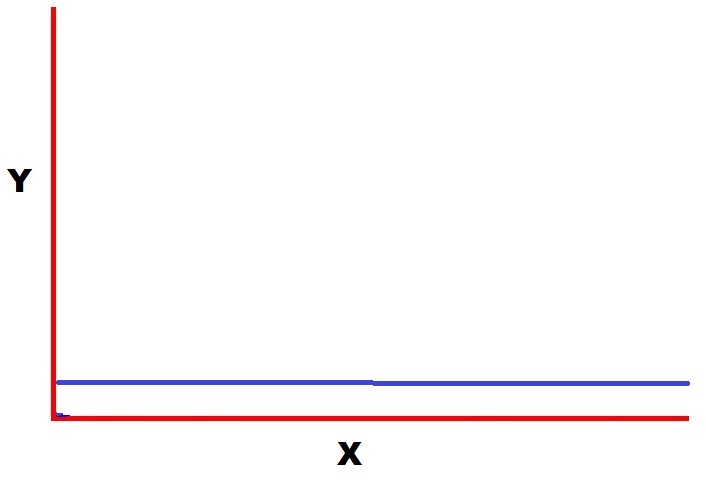
            On all these graphs, X is the progression or the story from beginning to end, Y is dramatic tension, high to low.  This first graph shows nothing happening.  Absolutely nothing.  This is me getting a good night’s sleep.  From my point of view.  I didn’t even have any interesting dreams.  No highs, no lows, no moments that stand out.  It’s flat and monotone.
            Boring as hell.
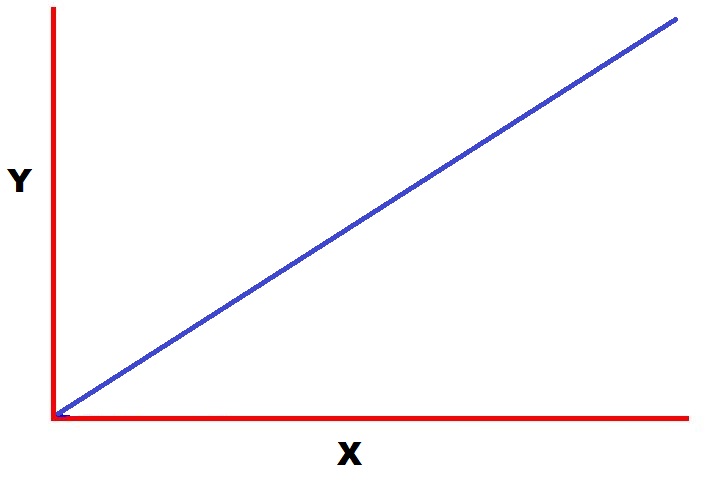
            As my story progresses, I want the tension to rise.  Things need to happen.  Challenges need to appear and be confronted by my protagonists.  By halfway through, the different elements of the story should’ve made things much more difficult for my heroes.  As I close in on the end, these difficulties and stakes should be peaking.
            Check this out. Here’s a bare-bones dramatic structure.  We start small, and tension increases as time goes by.  Low at the start, high at the end.
            Mind you, these don’t need to be world-threatening challenges or huge action set pieces.   If the whole goal of my story is for Phoebe to ask Yakko to the Sadie Hawkins dance without looking like an idiot, a challenge could just be finding the right clothes or picking the right moment in the day.  But there needs to be something for my character to do to get that line higher and higher.  There’s a movie out right now called Please Stand By where the main character’s goal is traveling to Los Angeles so she can submit her amateur Star Trek script to a screenplay contest.  The challenge is that she’s kind of high on the autism spectrum, so doing something this far out of her routine is a huge deal for her.
            Make sense so far?
            Okay, now here are a few things we need to keep in mind. 
            And there are visual aids, too
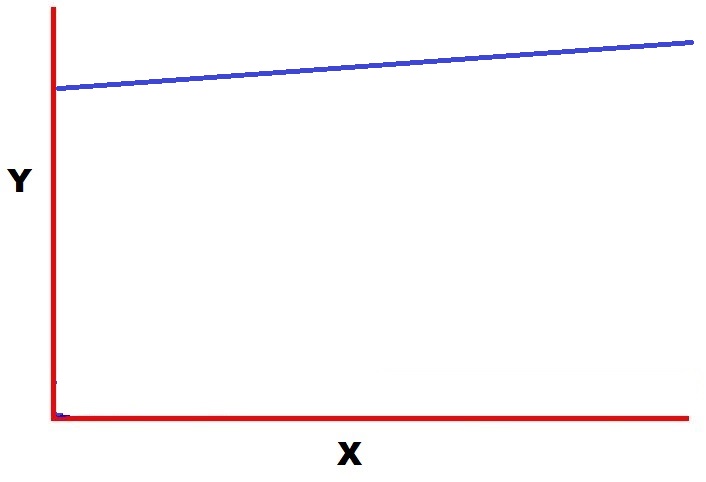
            First, you may have heard that “starting with action” thing that so many gurus preach.  A lot of folks start with that line up around eight… and then they increasing tension.  This doesn’t leave a lot of room for things to develop, but we’re hitting the ground running and going until we drop.
            Thing is…when we plot this out, the line looks a lot like the one on that first graph up above.  It’s pretty much just a straight line because there isn’t anywhere for things to go.  And, as we established earlier, straight lines are pretty boring whether they’re set at one-point-five or at eleven.  They’re monotone, and monotone is dull.
            This brings me to my second point. Dramatic structure can’t be a nice, even rise like the second graph.  That’s another straight line, and straight lines are… well, you get it by this point. 
            Think back to high school physics for a minute.  We don’t feel a constant velocity.  If I’m driving a car at a nice, even speed, I can reach out and play with the radio. I can have a drink of water or soda or coffee.  I can wiggle around and take off my jacket or get my wallet out or whatever.  And it doesn’t really matter if I’m moving at 40 or 60 or even a hundred miles per hour.
            Y’see, Timmy, we don’t notice the constant, we notice the change.  That’s what grabs our attention.  When I have to hit the gas or slam on the brakes or turn fast—these are the moments that grab me. These points stand out above the constant ones.
            In a good story, there’s going to be multiple challenges and my hero isn’t always going to succeed.  No, really.  He or she will win in the end, sure, but it’s not going to be easy getting there.  There’s going to be failures, mistakes, and unexpected results.  Ups and downs.  Because that’s normal. We don’t want a character who’s good at everything and never has a problem.  So that line is going to be a series of peaks and drops.  For every success, every time we get a little higher, there’s going to be some setbacks. A new, bigger challenge that appears.
            Still making sense?
            Good.
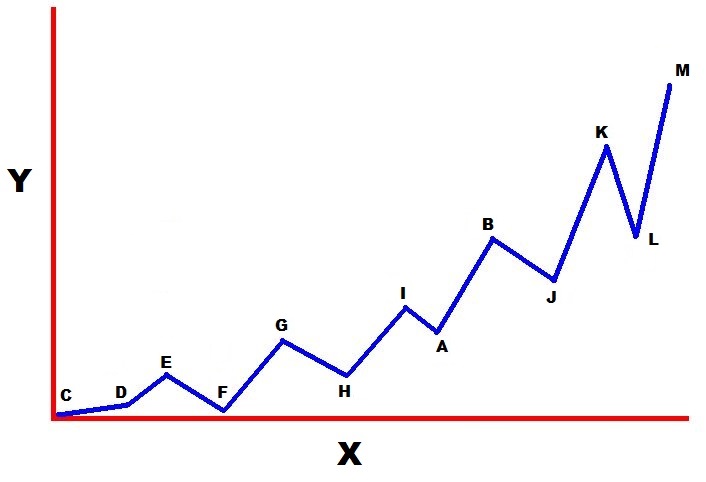
            So, with that in mind, here’s my big graph.
             This is everything I’ve been talking about these past few weeks.  Just like above, X is narrative structure.  It’s the story progressing from page one until the end of the story.  Y is dramatic structure. We can see the plot rising and falling as the characters have successes and failures which still continue to build.  And the letters on the graph are the linear structure—we all know what order the alphabet goes in.  We’re beginning at C, but there’s also a flashback much later on that go back to A, and we understand that occurred before C even though we don’t see it until this later point..
            Pretty much every story should look like this graph if I map it out.  Not exactly peak for peak, no, but they should all be pretty close to this pattern.  They’re all going to start small and grow.  We’ll see tension rising and falling as challenges appear, advances are made, and setbacks occur.  Small at the start, increase with peaks and dips, finish big.
            That’s it.  This is the big, easy trick to dramatic structure.  No matter what my narrative is doing, it has to keep increasing the tension.
            Simple, yes?
            Keep in mind, this isn’t an automatic thing.  This is something I, as the writer, need to be aware of while I craft my story.  If I have a chapter that’s incredibly slow, it shouldn’t be near the end of my book.  If a scene has no dramatic tension in it at all, it shouldn’t be in the final pages of my screenplay.  And if it is, it means I’m doing something wrong. 
            Not to hammer the point, but this is what I’ve talked about a few times now.  There needs to be a reason for this shift to happen at this point—a reason that continues to feed the dramatic structure.  If my dramatic tension is at seven and I go into a flashback, that flashback better take it up to seven-point-five or eight.  And if it doesn’t, I shouldn’t be having a flashback right now.  Not that one, anyway.
            See, let’s take another look at that A-B flashback up above.  Even though it’s near the end of my story, it’s still pushing the story higher than everything that came before it. I’m choosing to put this information in this place in order to create a specific dramatic effect.
            Think about a lot of your favorite stories.  When the readers learn things affect the kind of stories they are. And that change affects the dramatic structure.  Because dramatic structure tells us that things in the beginning are small, things at the end are big.  Something I know at the start is automatically a minor point, but it could be a major one if it’s revealed closer to the end.
            Got all this so far?
            Don’t worry, we’re almost done.
            There’s one last cool thing I can do with dramatic structure.  It makes it easy to spot if a story is worth telling.  I don’t mean that in some snarky way.  The truth is, there are a lot of stories out there that just aren’t that interesting. We all know this. Since we know a good story should follow that ascending pattern of challenges and setbacks, it’s pretty easy for me to look at even the bare bones of a narrative and figure out if it fits the pattern.
            For example…
            I’ve read a lot of zombie books (not surprising) and seen a lot of movies.  I’ve read and watched stories set in different climates, different countries, and with different reasons behind the end of the world.  I’ve also seen many different types of survivors.    One that crops up too often is the protagonist who decides on page seven to turn their house into a survival bunker for the thinnest of reasons. They stockpile food, weapons, ammunition, and other supplies.  But twenty pages later, when the zombies finally appear out of nowhere…  damn, are they ready.  Utterly, completely ready.  There’s no mistakes, no problems, no setbacks, because they have prepared for everything.
            In other words… there’s no change.  No challenge.  The plot just drifts along from one incident straight to another, and the fully prepped, fully trained, and fully loaded hero is able to deal with each one with minimal effort.  That’s not a story worth telling, because that story is a line. 
            And I’m sure you still remember my thoughts on lines…
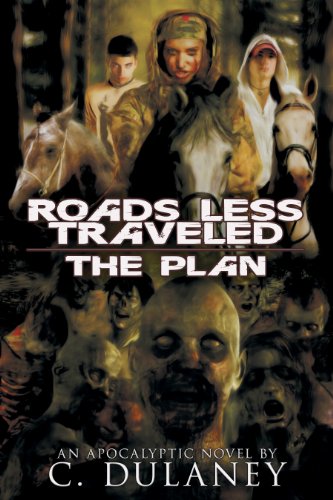
            On the flipside, some of the best zombie stories have people caught unawares, or finding their plans collapsing around them.  The Undead Situation has a young protagonist who suspects the end’s coming and stocks his home… with candy and pet treats.  In Fiend we find out that meth addiction makes you immune to the zombie plague… but being on meth makes it challenging to survive the zombie apocalypse.  Roads Less Traveled has the protagonist work out a meticulous zombie-survival plan with her friends… which slowly unravels as people don’t follow the rules, come up short on their requirements, and generally act like, well, people.
            Again—dramatic structure isn’t an automatic thing.  Just because I reveal something later on doesn’t guarantee it’ll be more dramatic.  But if I map out my story like this, even in my head (and be honest with myself about it), I can get a better sense of how well my story’s structured.
            And honestly… I think with that I’ve thrown enough at you.  I wish I could offer you more.  But a lot of this is going to depend on you.  While the other two forms of structure are very logical and quantifiable, dramatic structure relies more on gut feelings and empathy with my reader.  I have to understand how information’s going to be received and interpreted if I’m going to release that information in a way that builds tension.  And that’s a lot harder to teach or explain.  The best I can do is point someone in the right direction, then hope they gain some experience and figure it out for themselves.
            On which note… next time I’d like to talk about getting started.
            Until then… go write.
December 21, 2017 / 3 Comments

The Happy Ending

            Oh, get your mind out of the gutter…
           Well, it’s been a brutal week on a couple levels. And it’s the holiday season, I think we can all use a little cheering up, don’t you?  So let’s talk about some good stuff.
            And I’ll start by talking about what happens in the grim, dark future…
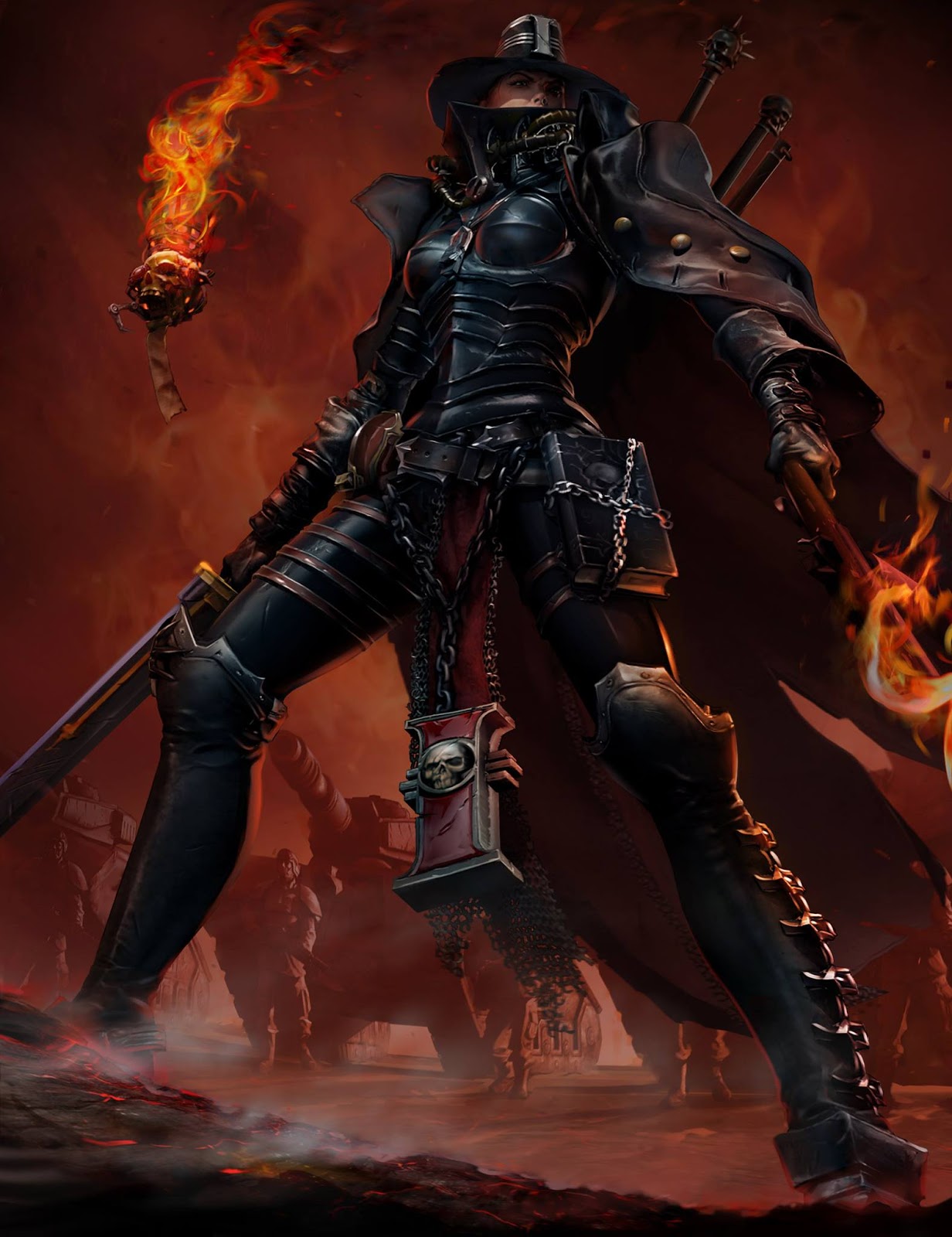
            As I’ve mentioned once or thrice here, I’m a bit of a geek.  One of my biggest geekery hobbies by far is Warhammer 40K.  If you’re not familiar with the game, it takes place in the distant future (around the year 40,000—surprise!) where mankind has risen, fallen, risen, fallen again, risen one last time… and is now pretty much on the way out.  Not immediately. Not in our lifetime.  But the glory days are gone and the Empire of Man is well past middle aged and fighting to hang on to its driver’s license, if you get my drift.
            When my lovely lady and I first started hanging out, she expressed interest in this silly toy soldiers game, and—being a geek—I immediately started telling her about the different armies and the massive back story and setting of the game.  And after a few hours of listening to stories of the waning Imperium, she finally laughed and said, “Why would anyone want to live in this world?  I’d just kill myself.”
            Which is a fair point.  To be honest, I hadn’t been fond of some of the earlier stories myself.  They were just bleak as hell. You may have heard the term “grimdark” used for some fiction.  It actually comes from this game.  That phrase I used up above, “in the grim, dark future”—that’s part of Warhammer 40K’s tagline.
            Of course, it’s not just the little toy soldiers.  The grimdark label ends up on a lot of things these days.  Urban fantasy stories.  Post-apocalypse stories.  Superhero stories.  And this isn’t just about genre books.  People try to do “serious” books all the time that are nothing but sadness, misery, and death.  There’s a common belief that making things gritty and dark, and edgy automatically makes them more “mature.”   I’ve mentioned once or thrice before how some writers think having bleak, depressing endings is artistic because it’s more “real.”
            I’m sure you can think of plenty of examples of this.
            The catch is, this gritifying of stories rarely works.  Usually making something grim and dark just makes it… well, grim and dark.  That’s it.  Seriously, check out bestselling books or big box-office movies.  The popular stuff almost always leans toward lighter and fun.  A lot of it has (gasp) happy endings.
            As another famous sci-fi icon once said, it’s not enough to live.  You have to have something to live for.
            Again, why would anyone want to live in my fictional world?  Seriously.  Take a moment and think about it.
            What saved the world of Warhammer 40K for me was the writing of folks like Dan Abnettand Sandy Mitchell.  They added a human element.  They told stories that involved jokes and drinking buddies and love and people just enjoying their lives.  Heck, Abnett had a whole subplot in one book about a toymaker saving his business by building wind-up robots.
            I’ve gotten a lot of praise for my Ex-Heroes series.  It’s a series that’s lasted through five book so far, and across six years. Long after when many people said zombies were… well, dead.  And I believe a lot of that praise and success comes from one simple thing.
            It’s a post-apocalyptic story, but it’s a hopeful one.  Yeah, things are overall awful, but the characters are actively trying to make life better.  They choose to move forward rather than do nothing or wallow in the past.  They laugh.  They love.  They play games.  They flirt.  They celebrate.  They have fun.  A lot of their life is stressful and difficult, but it’s not every-minute-every-hour-every-day stressful and difficult.
            And it’s important to see these other moments because now we know why the characters are going on.  We know what they’re living for.  Deadpool is a story about hopelessness and terminal diseases and bloody revenge, but it’s also a story where Wade and Vanessa pretty much screw each other silly for an entire year before he proposes with a Voltron ring
            Resist the urge to have nothing but grim darkness.  Don’t be scared about having a good thing or three happen in your story.  Don’t think you can’t have any light-hearted moments. 
            Believe in the happy ending!
            On which note, I hope you all have a fantastic weekend and (if it’s your holiday) a very Happy Christmas.
            Try and get a little writing in before then.

Categories