December 22, 2016 / 1 Comment

Time to Pay Up…

            Okay, we’ve all got better things to do right now, so this is going to be a quickie…
            This is another one of those spelling-vocabulary things that shows up way too often.  I saw it misused the other day in someone’s internet press release—the third or fourth time I’ve seen it in recent memory—and it made me grind my teeth.
            Not good, since I got these crowns.
            Anyway…
            Easy question for you. Do you want to pay your dues and become a writer?  Or would you rather pay your dos?
            Are you worried things might be past do?  Or that you haven’t gotten what you’re do?  Either way, have you considered heading do south?
            We’re not even going to talk about the people who bring dew into it.
            Really, the more important question is—are you grinding your own teeth after some of these?
            Do vs. due is one of those… okay, seriously, I don’t know what to say about this.  If I’m going to call myself a writer—any kind of writer—and I’m messing this up, well, it’s not a good sign. 
            It’s ridiculous that I have to bring this up, right?  And yet…
            Journalist, fiction writer, editorials, non-fiction… there really isn’t a type of writing where this kind of mistake is okay.  Because this is a bare-bones basic mistake.  From a writing point of view, this is a flat Earth/Moon-is-made-of-green-cheese-level mistake.  Like so many word choice/use issues, this is a do diligence thing, where I deserve to get smacked down if I can’t due it right.
            One simple, but not perfect, tip—if I’m talking about someone getting something, I probably need due.
            Another simple-but-not-perfect tip—if I’m talking about some form of action, I probably need do.
            Direction is usually going to be due.
            Parties or hairstyles, I would most likely need do.
            The one perfect tip—I should actually learn what words mean before I use them.
            Y’see, Timmy, if I’m messing up something as simple as due and do, it means I’m failing on a bunch of levels.  I’m using phrases I’ve heard but I don’t really understand.  I’m not bothering to look up words I don’t know in a certain context.  I’m just going with what sounds right and not bothering to check if it is right.
            And if that’s how I’m doing things… well, I can’t be surprised if nobody wants to pay me for my writing.
            If you’re reading this, I hope you have a Happy Christmas, Happy Hanukkah, or just a peaceful weekend. Regardless, I’m sure I’ll see you all one more time before the end of the year.
            And if you have some free time in there… go write.
December 8, 2016

Yelling vs. Screaming

            Hey, everybody. Many thanks for your patience while I sorted out family crisis stuff.
            And, jeeez… now it’s three weeks until Christmas.  What the hell…?
            Anyway, I wanted to take a quick minute to talk about something I used to screw up a lot—word choice.
            I know I go on and on about spelling and vocabulary a lot.  To be honest, I make a point of working it into the schedule every four or five months.  I’ve mentioned before how many editors, script readers, and contest directors mention spelling as one of the main problems in a manuscript.
            Thing is, if I want to be taken seriously as a writer, I need to know my vocabulary.  Not guess or generally understand or depend on my spellcheckerknow.  Because there are lots of subtleties to any language –especially a crazy, messed up one like English.  One word can have a slightly different meaning than another, and that difference can have a huge impact on how that sentence or paragraph is understood by the reader.
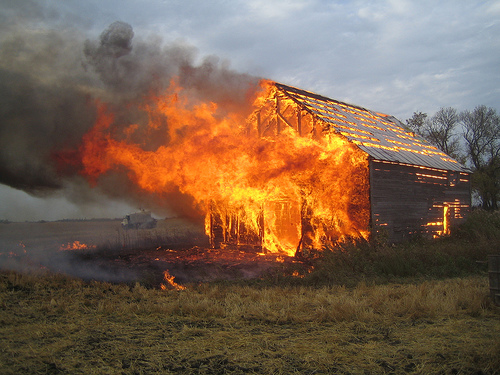
            In my current project, there’s a big gun fight in a barn.  Between three different groups.  And did I mention that the barn’s on fire?  There’s a lot of stuff going on, and it’s a big, loud moment.
            And it made me look at my “loud” dialogue descriptors, because I realized the tone of the fight didn’t feel consistent.  Some people sounded angry, others scared, and a few almost seemed… well, bored.
            Check it out.  Here’s the same line of dialogue a few times with a different “loud” descriptor on it.  Take your time, pause between each one, and read through them…
            “Dot,” he shouted, “look behind you.”
            “Dot,” he screamed, “look behind you.”
            “Dot,” he called out, “look behind you.”
            “Dot,” he shrieked, “look behind you.”
            “Dot,” he yelled, “look behind you.”
            “Dot,” he bellowed, “look behind you.”
            D’you notice how they all have a slightly different feel?  Shouted and called out feel kind of low-energy with screamed between them.  It just seems a bit more urgent.  Shrieked gives the line a bit of desperation, whereas bellowed makes it sound kind of like a demand or order.
            Y’see, Timmy, this is that subtlety I was just talking about.  I’ve seen these words used lots of different places, lots of different times, so I’ve picked up on the distinct use.  And I’ve taken the extra step of looking them up—I want to knowwhat the words mean, not just have some vague idea.
            Because if I only have a vague idea what words mean, I’m only going to be able to create vague scenes with vague emotions.
            And nobody’s going to connect to that.
            Next time, I’d like to reminisce about a wonderful talk I once had with one of my favorite screenwriters.
            Until then, go write.
September 2, 2016 / 3 Comments

Let’s Go, Voltron Force!

            Pop culture reference!  Hasn’t been one in ages.  This one’ll make sense in a few minutes.
            I wanted to take a moment to rant about one of my favorite topics—spelling.  Any of you longtime readers know how I feel about misspelled and misused words.  But this week I’d like to approach a specific facet of that problem.
            One thing I see a lot is folks who misuse compound words.  If, for some awful reason you don’t know, a compound word is when you mash two words together and create a new word. And much like the lions that merge into Voltron or the Combaticons combining into Bruticus, sometimes that word is greater than the sum of its parts.
            In fact… sometimes the word is very different from the sum of its parts.  For example, a kneecap is a floating bone in your leg that protects the hinge joint.  But a knee cap is a little hat you wear above your calf.  By extention, kneecapping is the brutal practice of breaking that bone, usually with a bullet, while knee capping is the weird and somewhat creepy habit of putting tiny headgear on other people’s joints.
            Or your own joints, I guess.
            But that almost makes it weirder.
            Want another one?  Whiplash is a condition caused by a sudden thrashing of the neck.  A whip lash can refer to either the leather straps of the whip or the whip’s actual strike.  Like in Pirates of the Carribean,when Davy Jones threatens Will Turner with five whip lashes.
            See the problem here?  The compound word and the phrase refer to two different things. And if my reader has even a faint grasp of vocabulary, they’re going to stumble over my un-compounded word and go back to read it again.  I might know what pissantmeans, but if I come across piss ant… well, is that one of the creepy crawlies from Chuck Wendig’s new book?
            Take a look at a few more of these and see if you stumble on any of them…
straitjacket vs. straight jacket
something vs. some thing
hardcore vs. hard core
breakneck vs. break neck
kingpin vs king pin
connectability vs connect ability
maybe vs. may be
lovesick vs. love sick
sometime vs. some time
            Did you feel it?  That little pause when you were reading?          How many of these did that to you? A few?  Some? If you’re reading this, I’m guessing you’ve got a thing for writing, so maybe a lot of them.
            Y’see, Timmy, once I break the compound word apart, it’s… well, two words. And as long as those two words are spelled correctly… well, that’s all that matters, right?  Most people will get the general meaning from context.
           I think folks do this because they don’t know how to spell the compound word correctly and break it apart to “fix” it.  Maybe my spellchecker kept rejecting straightjacket but once I broke it into two words… oh, well that must be right now.  It’s one of those cases where I’ve assumed the machine is much smarter than I am.
            But that flow-break becomes even worse when people aren’t even using the right words.  I’ve seen people talk about mere cats in Africa and the turn styles in the New York subways.  My spellchecker will accept those, too, just like it will any other misused word.
            Hyphens don’t help the situation.  Most spellcheckers will accept a hyphenated word as correct if the two individual words are correct.  For example, mistake, missed-take, miss-steak, and mist-ache are all spelled correctly.
            The real problem here is that—like any spelling mistake—these sort of mess-ups will break the flow of my story.  If my reader spends just two seconds trying to figure out what liberated bricklayers have to do with an urban fantasy story, they’ve stopped reading in order to analyze.  And once they start analyzing… it’s hard to get them to stop.
            And yeah, a lot of folks will almost immediately figure out that when I said free masons I actually meant the Freemasons—that semi-secretive service organization that so many hack writers use as a fallback source for historical mystery (check out my new book, Paradox Bound, coming out next September). 
            But…
            That pause is still going to happen.  After three or four instances of breaking the flow like that, the reader’s going to set my book aside for something easier to understand.  Like an Overwatch hint guide. Or a rewatch of Stranger Things.
            I need to know how words work. Including compound words. Knowing the two halves doesn’t mean I know the whole, and vice-versa.  I have to know how words work. And what they mean.  And how to spell them.
            In closing, being able to proofread something is a skill every writer needs to develop.  But anyone can proof read… provided the proof is in a language they understand.
            Next time, I want to talk about that guy.  No, no,not him. The other guy.
            And I’ll probably have an update on the whole Amazon review thing, too.
            Until then, go write.
April 28, 2016 / 2 Comments

Spelling—Yes, Again!

            By the time you’re reading this, I’m either high in the air soaring over the American southwest, or possibly landed and already in the hotel bar.  Yes, even if you’re reading this sometime on the weekend, there’s a decent chance I’m in the hotel bar.  I’m at Texas Frightmare Weekend, stop by and say hullo.
            Anyway…
            Looking back through things, I decided we were overdue to discuss that most favorite of topics… spelling.
            I know I hammer on spelling a lot.  At least two posts a year, which means something like one out of twenty posts on average.  I brought it up at the Writers Coffeehouse recently and got a couple pleasant smiles and a few eye-rolls from folks.  Even as a non-telepath, I could almost feel and hear the thought-waves bouncing around the room.  “Of course we need to know about spelling. That’s a given. Can we get to the important stuff?”
            Here’s the thing though…
            I’ve talked with lots of editors.  And a couple of agents.  Plus, back in the day, I interviewed a dozen or more folks who ran screenwriting contests across the country (even some of the really big ones you’ve heard about).  D’you know what every single one of them named as the number one mistake they saw?  The most glaring, common problem with submissions?
            Spelling.
            Grammar came in a close second, but everyone said spelling first.  Not formatting. Not subject matter. Spelling was the problem they saw again and again and again.
            Which is why I tend to go on about it here.  It’s a very basic, very common problem, one that can lead an editor to throw my manuscript on that big pile on the left.  And I think the advent of technology has made it a hard problem to acknowledge. For example, if you’ve been following the ranty blog for a while, you might remember me using this sentence a few times before…
Inn odor two kell a vampire yew most half a would steak.
            Now, the first impulse is to say pretty much every word in that sentence is spelled wrong.  The catch is… none of them are.  Oh, most of them aren’t the right word, yes, but they’re all spelled correctly.
           This is what I’m talking about with “the advent of technology.” See, when I ran this document through a spellchecker, it leaped right over that sentence.  Because there aren’t any spelling mistakes in it.  And so this leads a lot of people to believe they’re much better spellers than they really are.
            Also, to be clear, I’m not talking about typos.  Y’know, when you’re going to fast and leave an O off too, or you’re just caught in the moment and miss that R altogethe.  Or we’re in a groove, type hearinstead of here, and forget to go back in the flurry of words.  That happens to everybody.  All of us make typos.  Every pro writer, every novice, every rank amateur.  I don’t think I’ve ever shown a manuscript to a beta reader or editors and not have them find at least half a dozen typos in there.
            What I’m talking about is not knowing how to spell in the first place.  If I don’t know the difference between itsand it’s, I’m going to have a tough time as a writer. Same thing with the infamous they’re, their, and there.  If I’m pretty sure I know what anathemameans (deadly poison, right?), but I never bother to actually learn what it means, odd are I’ll be using it wrong a lot. 
            And when I make all these mistakes, my spellchecker’s still going to tell me my manuscript is absolutely fine.  And so some folks who are really awful at spelling never improve.  They see no need to.  The computer told them they were right.  You’re not going to argue with the Machine, are you!?!?  It told me the words were all correct!!
            That’s when this gets really silly.  Sometimes the spelling will be so redacalusey off on a word that spellchecker kind of flails for a second and throws out its best guess.  And if I don’t know how to spell or what words really mean, I might just blindly accept whatever the Machine tells me.  Like up above.  You understood from context that I meant to write ridiculously, but the spellchecker just looked for a close match and gave me radicalize.
            Let me give you another example.  I read a manuscript recently with a heavy crime element and it kept referring to “the infighting incident.”  I could not for the life of me figure out what it was talking about.  Was there some internal mob power struggle going on that I’d missed?
            After a few attempts, it hit me. The author hadn’t written in infighting—they’d written insighting, a bad attempt to spell inciting.  So when the Machine hit insighting, it suggested the closest word and they said “sure, change it.”
            Check out this list of words. They’re all pulled from various books, articles, and blog posts.  One or two of them were mine.  All of them are from people trying to come across as professionals.
a lot vs.allot
pleas vs.please
possible vs. posable
mascara vs.massacre
tact vs. tack
your vs. yore
aloud vs.allowed
lo vs. low
canon vs.cannon
peak vs. peek
ensure vs.insure
Claus vs.Clause
marital vs.martial
wanton vs.wonton
            Did you know them all?  Did you reallyknow them all, or are you just sort of aware that these are two different words?  If I picked one of these pairs at random, could you tell me the difference between these words?
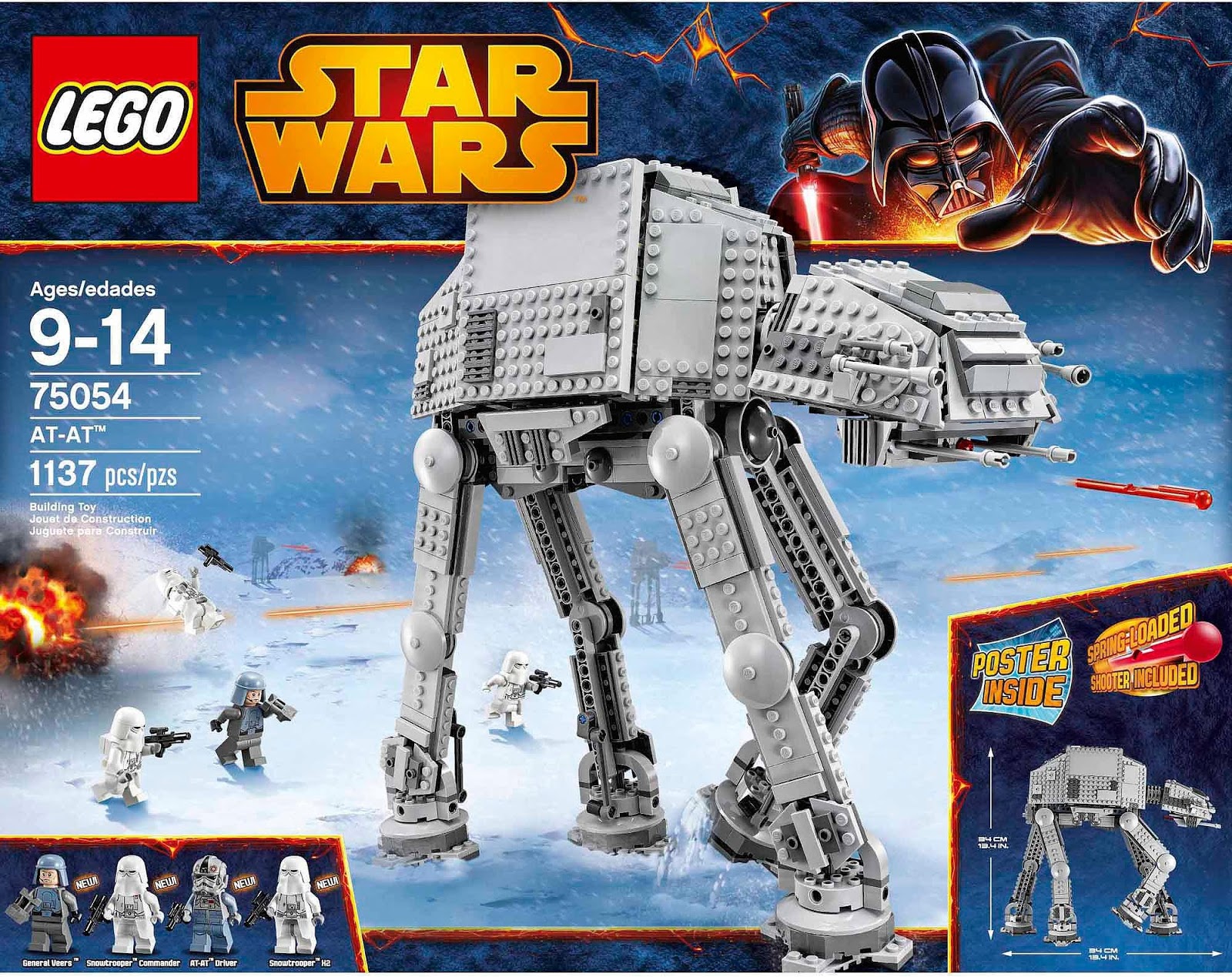
            For example, Amazon once offered a LEGO AT-AT for sale which came with possible legs.  I’ve lost track of how many authors I’ve seen fire canons at me, often back in the days of your.  And if we’re talking about late night encounters, would you rather be writing about a peek experience or a peakexperience?  Depending on your personal preferences, either one might pique your interest, but they’d be two fairly different things.  And when I try to bring these points up in discussion, somebody almost always tries to change tact.
            If I want to be a writer, I have to know words.  I have to love them.  Words need to be to me what clay is to a sculptor.  A sculptor can tell the difference between clay and plasticene, between green stuff and Fimo, and between Sculpey and Play-Doh.  I need to know the difference between they’re, there, and their.  I need to understand that infighting and inciting aren’t remotely the same thing.
            I need a better-than-working vocabulary.  I need to be able to spell.  Me, not my spellchecker. Because my spellchecker is an idiot, and idiots make lousy writing partners.
            Next time, I’d like to challenge you with something we haven’t talked about in a while.

            Until then… go write.

Categories