
March 14, 2019 / 4 Comments

Can We Just Talk a Bit…?

Well, this one’s going to be a little awkward. We just said this weekend that we’d talk about dialogue next time at the Writers Coffeehouse. But then we got a request for it here, so… overlap. One way or the other, the second time is going to end up making me look a little lazy, little bit like a hack.

I mean, more than usual.

Ha ha ha, you’re welcome critics. Just tossing that one out there for you.

Anyway…

Dialogue.

I’ve blabbed on once or thrice about how important dialogue is. Yeah, I know I’ve said characters are the most important thing, but dialogue’s how we bring those characters to life. It’s the fuel for the fancy sports car, the foam that hides the gigantic wave, the beautiful full moon that shows us a bloodthirsty werewolf. You get the idea. They’re interdependent. I can’t have good characters without good dialogue, and bad dialogue is almost always going to lead to bad characters. It’s the circle of fictional life.
If a character doesn’t sound right, if their dialogue is stilted or unnatural, it’s going to keep me—the reader—from believing in them. And if I can’t believe in them, I cant get invested in them or their goals. Which means I’m not invested in the story and I’m probably going to go listen to music while I organize my LEGO bricks or something.

So here’s a bunch of elements/angles I try to keep in mind and watch out for when I’m writing dialogue. Some things to watch out for, some things to make sure I have. All sorts of stuff. And I’ve talked about a lot of these before, so some of them may sound familiar…

Transcription– Okay, some of you know that I used to be an entertainment journalist and I did lots and lots of interviews. One thing that never really struck me until then was that, with very few exceptions, people trip over themselves a lot verbally. We have false starts. We repeat phrases. We trail off. We make odd noises while we try to think of words. It’s very human. However, anyone who’s ever read a strict word-for-word transcription of a conversation (or typed up a lot of them) will tell you it’s awkward, hard to follow, and a lot gets lost without the exact inflection of certain words.

I don’t want to write dialogue in this kind of ultra-realistic manner. It’ll drive my readers and editor nuts, plus it wastes my word count on dozens of unnecessary lines. While this sort of rambling can work great in actual spoken dialogue, it’s almost always horrible on the page.

Grammar – As you’ve probably noticed in your day to day life, very few people speak in perfect, grammatically correct English, aside from androids and a few interpretations of Sherlock Holmes. The rest of us speak differing degrees of colloquial English. Our verbs don’t always line up with our nouns. Tenses don’t always match. Like I just mentioned above, a lot of “spoken” English looks awful on the page. And this makes some folks choke, because they can’t reconcile the words on the page with the voice in their head. When I do this I lose that natural aspect of language in favor of the strict rules of grammar, and I end up with a lot of characters speaking in a precise, regulated manner that just doesn’t flow.

Contractions– This is kind of a loosely-connected, kissing-cousins issue with the grammar one I just mentioned. A lot of people start out writing this way because they’re trying to follow all the rules of spelling and punctuation so they write out every word and every syllable. They want to write correctly!

Again, most of us use contractions in every day speech—scientists, politicians, professors, soldiers, everyone. It’s in our nature to make things quick and simple. Without contractions, dialogue just sounds stilted and wooden. If there’s a reason for someone to speak that way (ESL, robots, Sherlock Holmes, what have you), then by all means do it. If my characters are regular, native English-speaking mortals, though…

As a bonus, using contractions also drops my word count and page count.

On The Nose—Okay, in simple terms, this is when a character says exactly what they’re thinking without any subtlety whatsoever. It’s the difference between “Hey, do you want to come up for a cup of coffee?” and “Would you like to come up and have sexual relations in my living room right now?” There’s no inference or implications, no innuendoes or layered meanings—no subtlety at all. And the truth is, we’re always layering meaning into what we say.

Pro tip—I’d guess nine times out of ten, if a character’s talking to themselves out loud, it’s on the nose dialogue. It just works out that way. I’d guess that at least half the time it’s just exposition (see below).

Similarity– People are individuals, and we’ve all got our own unique way of speaking. People from California don’t talk like people from Maine (I’ve lived almost two decades in each state, I know), people living in poverty don’t talk like billionaires, and medieval idiots don’t speak like futuristic mega-geniuses.

My characters need to be individuals as well, with their own tics and habits that make them distinct from the people around them. If a reader can’t tell who’s speaking without seeing the dialogue headers… I might need to get back to work.

Let me follow this with a few specifics…

Humor—Here’s a basic fact of human nature. We make jokes at the worst possible times. Breakups. Office reviews. Funerals. It’s just the way we’re wired. The more serious the situation, the more imperative that release valve is for us. In fact, we kinda get suspicious or uneasy around people who never crack jokes. Not everyone and not at every moment, but when there’s no joking at all… it just feels wrong.

Plus, how we joke says something about us. Does someone make non-stop raunchy jokes? Do they have a dry sense of humor? A completely awful sense of humor. Do they have any sense of when it is and isn’t appropriate to tell a certain joke?

Flirting—Similar to humor in that it’s almost universal. We show affection for one another. We flirt with friends and lovers and potential lovers, sometimes even at extremely inopportune times. It’s not always serious, it can take many forms, but that little bit of playfulness and innuendo is present in a lot of casual dialogue exchanges.

Flirting is a lot like joking because it’s impossible to flirt with on the nose dialogue. Flirting requires subtlety and implied meanings. Flirting without subtlety sounds a lot more like propositioning, and that gives a very different tone to things. If nobody in my story ever flirts with anyone on any level, there might be something to consider there.

Profanity—another ugly fact of human nature. We make emphatic, near-automatic statements sometimes. We throw out insults. How we swear and respond to things says something about us. Phoebe does not swear like Wakko, and Phoebe doesn’t swear in front of Wakko the same way she swears in front of her mother. Or maybe she does. Either way, that’s telling us something about her and making her more of an individual.

Fun fact—profanity is regional. The way we swear and insult people here is not how they do it there. So this can let me give a little more depth to characters and make them a bit more unique.

Accents– Speaking of regional dialogue… Writing in accents is a common rookie writer issue. I made it a bunch of times while I was starting out, and still do now and then. There are a handful of pro writers out there who can do truly amazing accented dialogue, yeah, but keep that in mind—only a handful. The vast majority of the time, writing out accents and odd speech tics will drive readers and editors nuts.

I usually accent by picking out just one or two key words or sentence structures and making these the only words I show it with. Just the bare minimum reminders that the character has an accent. Like most character traits, my readers will fill in the rest.

Weird note—this can become odd with audiobooks, because the narrator will most likely add an accent of some sort to differentiate the character. So the most subtle of written accents can almost become an uncomfortable stereotype once they’re combined. Another reason to think about dialing things back.

Extra descriptors—I’ve mentioned once or thrice that said is pretty much invisible on the page. But it can still wear thin. I don’t always need to use it, because after a point it should be apparent who’s talking.

Plus with less words, dialogue gets leaner and faster. Tension builds in the exchanges because the reader isn’t getting slowed down by ongoing reminders of who’s talking.

Not only that, once I’ve got some of these speech patterns down for my characters, I should need descriptors even less. In my book, Dead Moon, Tessa’s dialogue could almost never get confused with Cali’s or Jake’s or Waghid’s. They’re all distinct, and their speech patterns identify them just as well as a header would.

Names—If I don’t need them around the dialogue, I need them even less in the dialogue. Pay attention the next time you’re on the phone with someone. How often do they use your name? How often do you use theirs? Heck, if my friends call my cell phone I know who it is before I even answer—and they know I know—so I usually just say “Hey, what’s up?” We don’t use our names, and we definitely don’t use them again and again in the same conversation.

Spoken names can also come across as a bit fake. It’s me acknowledging the audience may be having trouble keeping track, and throwing in a name is the easiest way to deal with it, rather than the best way. Remember, if I’ve got two characters who’ve been introduced, it’s really rare that they’ll need to keep using each other’s names. Especially if they’re the only ones there.

Monologues – Here’s another observation. We don’t talk for long. People rarely speak in long paragraphs or pages. We tend to talk in bursts—two or three sentences at best. There’s always rare exceptions, sure, but for the most part we get our ideas out pretty quickly (if not always efficiently)

When I have big blocks of dialogue, I should really think about breaking them up. Is this person just talking to themselves (see above)? Is nobody there to interrupt them with a counterpoint or question or a random snarky comment? Is my monologue necessary? Does it flow? Is this a time or situation where Yakko should be giving a four paragraph speech?

A good clue when examining a monologue–how many monologues have there already been. One script I read a while back for a screenwriting contest had half-page dialogue blocks on almost every page. If I’m on page forty-five and this is my fifth full-page monologue… odds are something needs to be reworked.

I also shouldn’t try to get around this with a “sounding board” character who’s just there to bounce things off. Talking is communication, which means it has to be a two-way street. If I’ve got somebody who serves no purpose in my story except to be the other person in the room while someone thinks out loud… they’re not really serving a purpose.

Cool lines— Our latest ugly truth–everything becomes mundane when there’s no baseline. If everyone on my mercenary team is two hundred pounds of swollen muscle… who’s the big guy? When everyone owns a seven-bedroom mansion, owning a seven-bedroom mansion doesn’t really mean anything. If anybody can hit a bull’s-eye at 100 yards out, then hitting a bull’s-eye isn’t all that impressive, is it.

The same holds for dialogue. We all want to have a memorable line or three that sticks in the reader’s mind forever. The thing is, they’re memorable because they stand out. They’re rare. If I try to make every line a cool line, or even most of them, none of them are going to stand out. When everything’s turned up to eleven, it’s all at eleven– it’s monotone.

Exposition—Remember being a kid in school and being bored by textbook lectures or filmstrips that talked to you like you were an idiot? That’s what exposition is like to my readers.

Use the Ignorant Stranger method as a guideline and figure out how much of my dialogue is crossing that line. If any character ever gives an explanation of something that the other characters in the room already should know (or my reader should know), cut that line. If it’s filled with necessary facts, find a better way to get them across.

“As you know…” – I’ve said this before, but… if you take nothing else from this rant, take this. I need to find every sentence or paragraph in my writing that starts with this phrase or one of it’s halfbreed cousins.

Once I’ve found them, I need to delete them. Gone. Destroyed.

This is probably the clumsiest way to do exposition there is. Think about it. A character saying “As you know” is openly acknowledging the people they’re talking to already know what’s about to be said. I’m wasting time, I’m wasting space on the page, and I’m wasting my reader’s patience. If I’ve got a rock-solid, lean-and-mean manuscript, I might be able to get away with doing this once. Just once. As long as I don’t do it my first ten pages or so. Past that, I need to get out my editorial knife and start cutting.

What is that, fifteen tips? Here’s one more for a nice, hexadecimal sixteen.

You’ve probably heard someone suggest reading your manuscript out loud to catch errors and see how things flow. Personally, while I think this works great for catching errors, it’s not as good for catching dialogue issues. We wrote these lines, so we know how they’re supposed to sound and what they’re supposed to convey. There’s a chance we’ll be performing what’s not on the page, if that makes sense.

So if you can stand to listen… get someone else to read it out loud. Maybe just a chapter or two. Let a friend or family member who doesn’t know it read it out loud and see what they do (SCI-FI) with it.

And there you have it. A big pile of tips which should help your fictional dialogue seem a little more real. Fictional-real, anyway. Not real-real.

Next week… I think it may be time to talk about superheroes.

Until then, go write.
January 29, 2019 / 10 Comments

Those Frequently Asked Questions

            It’s been another six months and a few things have happened, so I thought it’d be worth updating this…
            One aspect of being on social media a lot is getting asked questions.  Which is overall fun and cool.  But some times I get asked the same questions.  Again and again.  I suppose you could say they’re… frequently asked.  This is less fun and cool.
            The ugly truth is it can really wear on you to answer the same questions again and again because some folks won’t scroll down two or three posts or up through the comments.  Between this blog, Twitter, Instagram, Facebook… well, it adds up to a lot of people repeating the same questions.  Again and again.
            (No, I’m not singling you out because you just asked a question. You just did it once without thinking.  You’re cool, no worries. 
            (I’m talking about that other guy.  Him.  You know who I mean…)
            Anyway… rather than get testy and frustrated with someone for asking the same question I already answered three times this morning in the same thread, I figured I’d scribble up answers to the most common questions I get and pin them on a lot of my social media pages.
            Then when people ask me anyway, I can point them at this.
            Or maybe I won’t say anything, cause… look, there’s an FAQ pinned right here.

1) What’s out next?
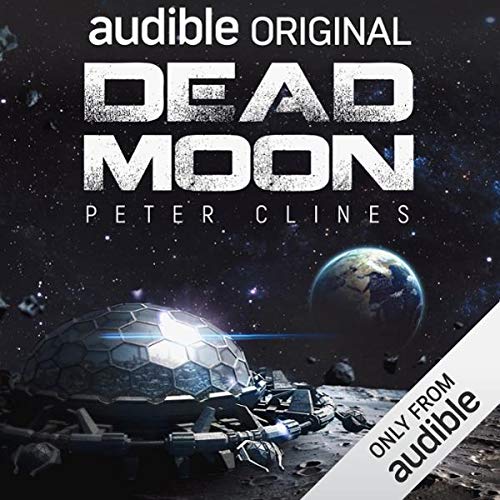
            Well on Valentine’s Day you’ll (hopefully) be listening to Dead Moon, a sort of sci-fi horror story about zombies on the Moon and stuff like that.  No, seriously.  It’s kinda fun and pulpy and creepy.  That’s exclusively with Audible for six months, sooo… we’ll probably talk more about that when I update this FAQ in July or August.
         And speaking of July, late this summer, if everything times out, you should see another Audible exclusive from me– another beautiful Threshold book.  It’s got a few threads, one of which involves a lonely guy named Murdoch who’s trying to deal with his childhood sweetheart, Anne, coming back into his life, and also her family… which is technically his Family, too.  Also a guy named Chase who’s, ironically, on the run from something.  And there’s some other characters in it you may recognize, too.
            No, I don’t have a title for it yet.  You’ll know when I do.  But later this summer—maybe early fall—you should see that.
            And if all times out well, I’m already roughing out a new standalone book that you (hopefully) will see… maybe this time next year?  It’s still far out, so it’s hard to say.

2) Is Ex-Isle the last Ex book?

            Not 100% sure, but… yeah, looks that way.
            The truth is, every series has a limited life.  Very few people decide to start on book three of a series—they go back and start at book one.  So book one always sells the best for almost every series.  Attrition says not as many people show up for book two, even less show up for book three, etc, etc.  It’s always a downward slope heading for that red line where things aren’t profitable.  None of the Ex-Heroes books have ever lost money (thank you all for that), but all the numbers say book six…  Well, things don’t look great for book six where that red line’s concerned.
            The nails aren’t all in the coffin (do they still nail coffins shut?).  Any number of things could make the series surge in popularity and get the publisher interested in putting out another book or two.  Depending on how things work out, I might even be able to apply a little leverage.  But for now…  Ex-Tension is going to stay on that back burner.  Sorry.
3) What if we did a Kickstarter or a GoFund me to continue the series?
            Okay, look, I love the Ex-Heroes books.  Hopefully you all know that.  Those characters and stories got me where I am today.  I love that there are so many fans who feel passionately about it.  I had tons of fun writing them.
            But…
            The simple truth is, if there were enough people willing to pay for another book, the publisher would still be willing to put it out.  Sure, some folks might pay twice as much to get one more book, but experience tells me three or four times as many people wouldn’t pay anything (for one reason or another).  There’s pretty much no way this works out.
            Plus, my schedule’s set up months in advance.  As I hinted at above, I already know what projects I’m working on into 2020.  Doing something like this means I haveto plan on said Kickstarter succeeding and put it into my schedule, which then means a gaping hole in my schedule when it doesn’t.
            Again, sorry.

4) Will there be another book set in the Threshold series?
            … I just answered this in question #1. 
            This is what I’m taking about!  You’re not even really reading this, are you?  You’re just skimming.  Come on!  I wrote all these out.  You could at least put a little effort into this.
            Jeeeeesh…
           
5) What’s all this ‘Threshold’ stuff, anyway?
            Thresholdis the overall, umbrella name for the shared universe I kinda-sorta inadvertently kicked off seven years ago with 14.  There are some books that are definitely part of an overall linear story, a “series” if you will, and some that just fall under the umbrella.  Every Marvel movie is part of the MCU, but not every Marvel movie is a direct sequel to The Avengers.  Or if you prefer, lots of Stephen King books tie into the Dark Tower mythology, but they’re not all part of the Dark Tower series.  Does that make sense?
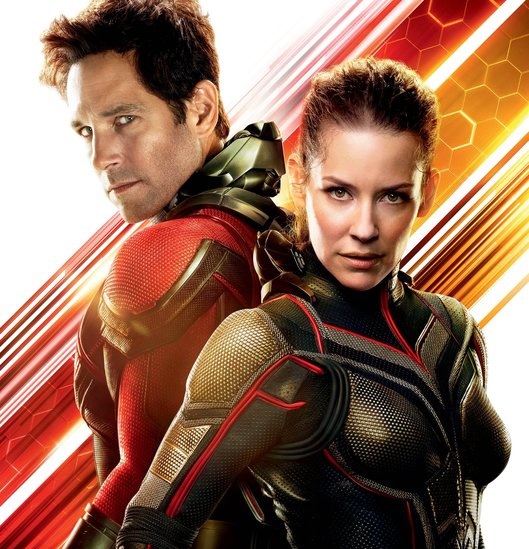
            This makes things a bit awkward for me, because marketing folks love series  (book one, book two, etc–heck, I’ve seen places where Rogue One is marketed as Star Wars Book #18) and some of them are reeeeeaally pushing Threshold as a pure, straightforward series, even though I’ve said again and again it isn’t.  This may give some folks false expectations of what some books are going to be about, and I apologize if that’s you.  I don’t want to lie to you, but I also don’t want to have to explain every book in advance (see #10).  So I’m just trying to make things extra-good and fun so you won’t be too bothered that maybe you went in expecting Avengers: Endgame, and you ended up getting Ant Man and the Wasp. 
            Again, if that makes sense.
            As a name, Thresholdfits in a few different ways.  It’s part of a doorway, and doorways figure big into most of this series. It also refers to reaching a certain critical level—another recurring issue in these stories. And, finally, it’s also a reference to an old H.P. Lovecraft short story.
            Which has nothing to do with anything, but I thought it was kinda cool…

6) So how does Dead Moon fit into this?

            As it happens, I wrote a whole book explaining this.
            (see #1, above)
7) Why do you keep saying “Audible exclusive” ?
            There’s a very solid argument to be made that the majority of my fanbase is audiobook listeners.  Odd, I know, but there it is.  Audible knows this, too, and because of this they made me an extremely generous offer for exclusiverights to those two Threshold books (Dead Moon and that other one I mentioned up above).  Both of these are going to be audiobook only for the first six months they’re out.  After that, we’re talking to some folks, and (as I said above) I should have some answers for you by the time I update this FAQ.
            And, yeah, I know this is going to make some of you grind your teeth. I’m very sorry if you’re die-hard against audiobooks and this leaves you out of the loop for a bit. My agent and I talked about it a lot, believe me (even with that generous offer).  Every other day on the phone for about six weeks. 
            In the end, I really wanted to tell these stories and—for a couple different reasons—this was the best way to do it. Again, I’m sorry if this puts you in a bad spot.
8) Will there be a sequel to The Junkie Quatrain?
            Very doubtful.  I think a lot of the fun of The Junkie Quatrain was the overlapping- interconnected nature of the stories.  It’d be tough to replicate that without feeling kinda forced and awkward.  I think we’ll probably have to draw our own conclusions about what eventually happened to those characters.  Well, the surviving characters.
            Although, one of them may have already shown up somewhere else…
9) Do you make more money if I buy one of your books in a certain format?
            This sounds like an easy question, I know, but there’s about a dozen conditionals to any answer I give.  Figure a huge chunk of each contract is just all the different terms and conditions for when and if and how people get paid.
            For example… format matters, sure, but so does where you bought the book.  And when.  And how many people bought it before you. And if it was on sale. And who was actually holding the sale.  And all of this changes in every contract.  What’s true for, say, The Fold may not be true for Paradox Bound.
            TL;DR—just buy the format you like.
10) Why don’t you like people talking about your books?
            To be honest, I’m still thrilled people talk about anything I wrote. Seriously.  What I can’t stand are spoilers.
            I’m thrilled Yakko enjoyed it so much when the protagonist found that and discovered this and learned about them.  When he tells people about it, though—no matter what his intentions—Yakko’s ensuring that other folks won’t have as much fun with the book as he did.  It’s like if I tell you how a magician does all her tricks and then take you to see her performance.  You’re not supposed to see a magic show being aware of the resolutions in advance and knowing how all the tricks work.  It kills most of the fun, because you’ve destroyed the structure that created a sense of wonder and discovery.
            That’s why I avoid those questions in interviews, and why I always delete posts that reveal information from the back half of a book (yep, that’s probably what happened to your post).  It doesn’t matter if the rest of the post was positive or negative—spoilers get deleted.
            And not just my stories!  You shouldn’t mess up other stories, either. Movies, TV—if you enjoyed it, try to give other people a chance to enjoy it the same way.
           If you suffer from the heartbreak of spoilers Tourettes and absolutely must discuss your fan theories about my books, there are a couple secret groups on Facebook.  There’s one for the Threshold books here, and one for the Ex-Heroes series here.
11) Do you have any plans to attend ******Con?
            Right now…probably not
            To be honest, last year was such a mad jumble with working on books and going to cons and moving that… well, I didn’t make a hell of a lot of plans for this year.
            At the moment, the only thing on my schedule is WonderCon at the end of March.  Absolutely nothing else.  Not even sure I’m going to wander down to SDCC this year, to be honest.
            But—things change all the time.  If you want to see me at your local con, you need to let them know!  Yeah, them, not me.  I’m willing to go almost anywhere I’m invited, but if I’m not invited… well, there’s not much I can do.  So, email them, tweet them, post on their Instagram account.  Reach out and let your voice be heard.
            And keep in mind that most cons finalize their guest list five or six months in advance, so if your local con’s in three weeks… odds are not in your favor.  Sorry.

12) When are you going to make a movie/ TV series/ cartoon/ graphic novel/video game of your books?
            Okay, there’s a misunderstanding of how Hollywoodworks in this sort of question.  When you see a film adaptation or TV series, it means the studio went to the writer, not the other way around.  I mean, if it was just about the writer saying “hey, make this into a movie,” wouldn’t most books be adapted by now?  Everyone would be doing it.
            Alas, I have zero say in whether or not Netflix wants to do an Ex-Heroes series or SyFy does aLycanthrope Robinson Crusoe movie.  They’re looking for things that have piqued a certain level of interest, and so far these stories of mine have only just scraped that threshold. 
            No, me (or you) writing the screenplay won’t make a difference, unless your name happens to be Shane Black, James Gunn, or David Koepp—and even then it’s not a sure thing.  Because in case you forgot…

13) Wasn’t there going to be a TV series based on 14?
            Yeah, in theory.  A few years ago I was approached by Team Downey, the personal production company of that guy from Kiss Kiss Bang Bang.  Turned out he’s a fan of 14and he wanted to do something with it.  So a deal was struck with his company and Warner Brothers TV.
            But… there are no sure things in  Hollywood.  It’s all a big game of if.  If a pilot gets greenlit, if it gets shot, if it turns out okay, if the assorted executives like it, if it gets picked up…  Plus, some of these ifs are on a time limit.  WB paid to extend that time limit once (which got a bunch of us very hopeful), but… in the end, it just didn’t happen.

            Which all kinda goes with what I said up above in #11.  Robert Downey, Jr. had signed on as an executive producer and that wasn’t enough to get the show made. 
            I still get to say he liked one of my books, though.
14) So, is there anything we can do to help?
            Well, buying books is always a good step.  Hollywoodlikes to see big sales numbers and interest.  If you want to see something—anything—on the air, talk about it a lot on social media.  Write reviews on websites.  Producers/ directors/ actors all hear about this stuff the same way you do.  If #ParadoxBound or #DeadMoon started trending on Twitter tomorrow, there’d probably be a film deal within a week.
            (true fact—an easy way to help do this?  Don’t buy books from Amazon.  Write reviews there, sure, absolutely, but Amazon doesn’t report sales figures, so they don’t get included in things like the NYT Bestsellers list.  Yeah, I know, a purchase from your local bookstore might cost a buck or three more, but it’s a purchase Hollywood is more likely to notice)
            (Plus, then you’re one of those cool people who supports local businesses…)
            (Yeah, Amazon owns Audible, but Audible reports audiobook sales.  I don’t know why.  Nobody does. It’s a mystery of the universe…)
15) Will you read my story and tell me what you think?
            Short answer… no.
            Part of this is a time issue—if I say yes to some folks, in the spirit of fairness I have to say yes to everyone. Now I’m spending all my time doing critiques instead of writing. Not to sound too mercenary, but… writing is how I earn my living.  So when someone asks me to read stuff, they’re asking me to give up a few hours of work.  
            Plus, I do have this ranty blog sitting right here, y’know, with over a decade of writing advice and tips.
            It’s also a legal thing.  Some folks are lawsuit-crazy, often for no reason,, and the bad ones ruin it for everyone else. Let’s say Phoebe gives me a piece of fanfic to read where she has Harry and Eli showing up at a certain post-apocalyptic film studio.  And then, a few years from now, I decide to do a big crossover story. 
            That’s when Phoebe sues me for stealing her material.  
            Yeah, it sounds stupid, but I’ve seen this happen so many times.  Seriously.  Hell, I’ve actually been subpoenaed and deposed over a case with less behind it than that example I just made up.
            This is why I’m verrrry leery when I get a long message along the lines of “Hey, you know what should happen next with the Ex-Heroes series…”  It’s why some writers have responded with cease & desist orders when they get sent stuff like this.  It’s also why I’m not part of those above-mentioned spoiler groups.
           So, the long answer is also… no.  And if you send stuff without asking, I’ll delete it unread, just like spam mail. Sorry.

16) Will you at least be my friend on GoodReads?
            Nope.  Nothing against you (well… most of you), I just don’t like Goodreads.  I’d explain why, but I’m taking the Thumper approach.
            I post nothing there and spend as little time there as possible (which usually works out to “no time”).  If you see anything there from “me,” it’s something someone else posted.  I understand a lot of folks love the site and if it works for you, that’s fantastic.  Glad you like it.
            I won’t be there.

17) What’s up with your Facebook page?

            Man.  Facebook.  What a mess, huh?
            I started that Facebook fan page ten years ago, dreaming of a day when maybe—maybe—I’d have five hundred followers. Now it’s closing in on twenty times that and I have kinda regular thoughts about deleting the page.
            Simple truth is, Facebook’s made it almost pointless to have a fan page.  They’ve tweaked their algorithms so my posts have gone from being seen by 70-85% of fans to barely scraping 20% most of the time, all with the goal of having me pay to reach the people who’ve already said they want to see my posts.  They’ve overcomplicated pages so it takes more time to do the same things I’ve always done.  Hell, they’ve actually made it faster and easier to schedule posts than it is to live-post and directly interact with people.
            And sure–it’s their site.  They have the right to do what they want with it and run it the way they like.  And of course they absolutely deserve to make money off it.  I’m a progressive, but I still believe in (regulated) capitalism.
            But then that brings us to all Facebook’s little side ventures.  Which all seem to boil down to the buying and selling of… well, us, at the core.  As many folks have pointed out, Facebook’s real product is us, and their real customers are the people buying and using everything about us. 
            Maybe I’m old fashioned, but when someone talks casually about buying and selling people… it makes me uncomfortable.
            So I’ve scaled way, way back on Facebook.  Personally and professionally.  I have no plans to change this in the near future.

18) What about Twitter or Instagram?

            I’m @PeterClines on Twitter.  Fair warning–as some of you may have figured out, I’m progressive and I’m a bit more political there.   On Saturdays I also drink a lot and live-tweet bad movies so…  hey, you know what you’re getting into.   I’ll also say right up front I don’t believe in Twitter high school, where I’m supposed to follow someone just because they followed me. So if that’s your approach, I’ll save you time now…
            Instagram (also @PeterClines) is probably the geekiest of  my social medias.  How is that possible, you ask?  Well, there’s little toy soldiers, LEGO, classic toys.  And cats.  Can’t have an Instagram account without cats.
            Yeah, I know Instagram’s also owned by Facebook, but (for the moment) they’re not being quite so reprehensible over there.  So (also for the moment) I’ll still be there.
            And that should answer about 90% of your questions, yes…?

January 3, 2019 / 4 Comments

What Are You Looking For?

Welcome to 2019!  A dystopian world unlike any you could’ve imagined…

I wanted to start the year by just tossing out a couple introductory thoughts for you about writing.  Or why we’re writing, really.  Maybe something to consider while those resolutions are still firming up.

Really, it all kinda boils down to one question.

 Why are you doing this?

It’s a question I think a lot of folks don’t ask themselves, and it’s kind of important.  What I actually hope to get out of an activity should really effect how I approach said activity.  Is writing just a hobby for me?  Is it a form of artistic expression?  Do I just want to make a little money on the side with it or am I hoping to make a career out of this?  Do I just want all the little side perks that come with being a famous writer? Maybe some combination of some or all of these things?

Almost all of these are valid ways to approach writing.  But if I don’t know—or I’m not honest with myself—about where I want to end up, I can waste a lot of time on the wrong path.  And when I don’t get where I wanted to go… well, there’s only one person I can blame.

Now, I’m willing to bet some folks reading this are already grumbling.  Internally if nothing else.  Experience has taught me that a lot of people don’t like talking about writing in a concrete way like this.  If I had to guess why, I think it’s because keeping things vague and soft is comfortable.  It’s easy. If I don’t declare what my goals are, it’s pretty much impossible for you to tell me I’m not getting closer to them.  I can just keep doing whatever I want in this big hazy cloud of possibilities and declare success.

So let’s not talk about writing.

Let’s fall back on one of my favorite parallels—cooking.  We can talk about cooking without anyone getting mad, right?  It’s a safe, simple topic.

Why do you cook?

I mean, we all cook to some degree or another.  Maybe it’s just using the microwave or the toaster, but I think everybody reading this can at least feed yourself without resorting to ordering a pizza, right?   Some of us might even be able to make pizza from scratch.  Or maybe go all the way to ravioli in vodka sauce with homemade garlic bread.

(I might be a bit hungry while I type all this—just warning you now)

So yeah, some people might be happy just having those bare basic skills and maybe some folks want to do a bit more.  Maybe you’re just really into pasta or baking or soups and you have a lot of fun experimenting with them.

Or maybe I want to go all the way with this.  I want to be a chef.  Like, a trained and accredited chef.  Do they accredit chefs?  You get the idea.  I want to wear that white jacket and the apron and work in a restaurant.  Hell, maybe I want to own a restaurant! 

It’s possible to approach cooking a lot of different ways, depending on where I want to go with it.  And there’s nothing that says I can’t change direction at some point.  I can just play around with pies and cakes for my own amusement and maybe one day decide I want to open a bakery.  But I need to acknowledge that’ll mean a big shift in how I approach things.  Baking cookies for me and my friends is not the same as baking them for the Wednesday lunch rush.

Another thing about cooking—we can all agree there are some rules to it.  There are tons of recipes that’ll have flexibility, sure, but in the end, it needs to be edible.  Some ingredients need to be cooked certain ways.  Yeah, breaking these rules is possible, but it’s really important that I know how to break them.  Like, I can do things with raw eggs, but it’s risky.  If I don’t know exactly what I’m doing, I might make someone sick.  Like full-on poison them.  Fatally.

And that’s not going to get me a lot of repeat dinner guests.

Or repeat customers, if I’ve decided to go pro with this.

That’s a nice lead in for my last point about cooking.  The business side of it.  Yeah, maybe you don’t want to go that way, but it’s worth at least thinking about for a minute.  I think the vast majority of us wouldn’t mind making money at our cooking, right?

(everybody remembers this is an extended metaphor, right?)

The minute I decide to start thinking about cooking in a business sense, I need to start thinking about it… well, like a business.  If I want to open a restaurant or a bakery, I need to consider what my customers want, sales numbers, investment returns, and more.  It’s painful to say, but at this point I need to ignore the art side of things for a bit and start looking at hard numbers.

Like, okay, cooking’s always going to have a personal edge to it.  I really like things on the spicy side.  My partner’s a vegetarian.  Maybe you hate anything that doesn’t include bacon.

But once we’re talking about cooking as a business, it’s not all about us anymore.  It’s about them—my potential customers.  What do they like?  What are they going to spend money on?  What are they going to take a chance on?  Yeah, my maggot brulee might be the most amazing (and carbon-friendly) dessert you’ll ever have, but I shouldn’t be too shocked if nobody wants to try it.  Customers probably won’t want to eat it (not enough to support a restaurant, anyway) and investors probably won’t want to back my little writhing cafe.

And again—this doesn’t mean the maggot brulee is bad.  This isn’t about good or bad, it’s about making smart business decisions.  Cooking professionally means not doing as many adventurous things, and being very smart about the risks I take and the rules I break.  It means finding that perfect sweet spot where I can make my customers (and investors) feel very safe and comfortable while also getting them excited about trying something new.

It’s tough.  That’s why so many restaurants fail.  Depending on which numbers you look at, it’s generous to say only one out of five restaurants lasts three years.

Which, honestly, is still better numbers than most writers.

That’s what we’ve been talking about, remember?

Y’see, Timmy, there’s no “correct” endgame with writing.  You wanting to do it just for the art isn’t any worse or better, decision-wise, than me doing it for a living.  They can do it for fun, she can do it as therapy, and he can do it as an ongoing social-psychological exploration as what it means to be a brilliant mind trapped at the mall food court serving orange chicken to capitalist sheeple every day (it’s too deep for you to understand, just deal with it).  Whatever I want to do with writing… that’s the right choice for me.  And whatever you want to do is the right choice for you.

Just make sure you’re on the right path to get to that goal.  Or at least headed generally toward it.  Path A could be a smooth, unchallenging run, but it doesn’t lead to D.  And path C lets me take the moral high ground, but it’s not going to get me to E.

I freely admit, this blog is overall about getting on a career path with writing.  Or maybe getting over some of the rough parts of that path a little easier.  And you may find some tools here you can use on other paths.  Rope’s very helpful with mountain climbing, but you use it a lot in sailing, too.  Some writing advice is like that.  It can get you closer to publication, but it can also make your Dungeons & Dragons blog really pop.

So… that’s what we’re going to do this year.

And maybe a tiny bit of self promotion for a couple projects coming out.

Next time, well… we should probably talk about getting started.

Until then, go write.

November 20, 2018

Top Ten Rules for Writers

            Two posts a week is becoming a  kinda regular thing here, isn’t it…?
            So, hey, you may have seen that a certain set of writing “rules” was passed around Twitter recently.  Not so much rules, in this case, as a collection of trolling and rejected fortune cookie messages.  People made fun of it.  I was one of them.

            But a few people also put up serious, much more useful lists.  Things to help with being a writer and with the writing itself.  And I thought, hey, I’m not going to be posting on Thursday because of Thanksgiving (I’ve got a turkey to cook and classic movies to watch)… maybe I could do a top ten list, too!
            Because I always make sure to jump on every trend a good week after it’s dead.

            I did a whole post about it over on my MySpace page.
            Anyway, for your enjoyment and possible education—and with the Golden Rule firmly in mind—are my top ten rules for writers.
1 – Write Every Day
            Yeah, this is one that gets batted around a lot, pros and cons, all that.  I’ve talked about it at length before.  Here’s why it’s the first rule I’m going to toss out…

            If I want to do this for a living, I have to think of writing as a job.  That’s an ugly truth.  This is my job.  I do it full time.  Probably more than full time.  I’d guess at least once or twice a month I’ll have a week where I work hours close to my film crew years.
            Yeah, you may not be there yet.  I get that.  But the whole reason I got here is because I started treating my writing like something that had to happen every week.  It wasn’t a hobby, it was something that needed to get done.  Because if it didn’t need to get done… well, it usually didn’t.

2 – Read
            As I write this, I’ve just finished reading my 46th book of the year.  That’s not counting a ton of comics, research material, a bunch of gaming rule/ sourcebooks, and probably three or four Washington Post articles every day.  Like anything, writing is input-output.  I can’t get the engine to run of it doesn’t have fuel.
            No, alcohol isn’t fuel.  It’s just lubricant.  And too much lubricant eventually just makes you spin and place without accomplishing anything.
3 – Learn to Spell
            I’ve talked about this many, many, many times.  Learn words. Learn how to spell them.  Learn what they mean.  Words are the building blocks of writing.  The bare-bones foundation.  Wanting to be a writer when I can’t spell is like wanting to be a chef when I don’t know the difference between salt and sugar.
            Don’t be scared to grab a dictionary or type something into Google.  Nobody will judge you for it.  I do it all the time, even just to confirm I’m right about exactly what a word means.  Hell, I did it twice late last night as I was finishing up copyedits on a book.
4 – Exercise your mind
            I just talked about this a while ago, too.  I’m a big believer that the mind is like any other muscle group.  You can’t just do one thing with it.  Don’t be scared to experiment with other creative things.  Build a bookshelf.  Play with LEGO bricks.  Cook a meal.  Sketch something.  Paint something.  Sing something.  Hell, balance your checkbook.  Do your taxes.  Let your brain flex in different ways.
5 – Exercise your body
            Another sad truth about writing.  It generally involves sitting on your butt and well, not doing much.  From a physical point of view.
            Cool science fact.  The brain needs oxygen to work.  Oxygen comes from blood.  Blood flow increases with exercise and decreases when we… well, sit on out butts.  So exercise actually makes it easier to write.
            And I don’t mean go buy a punching bag or get a gym membership.  If you can do these things, great, but just stand up from your desk or kitchen table and move around a bit.  Go for a walk.  Play with your dogs.  Just get that blood flowing.  Khorne cares not from where the blood flows, as long as it flows!  Skulls for the skull throne!
            Wait, sorry, ignore those last bits…
6 – Learn the Rules
            I know nobody likes to hear this part but… there are rules to writing.  Like spelling (see # 3 up above). They aren’t ironclad things, but they do exist and they exist for a reason.  Rules are the common ground we interact on as authors and readers.  You know why I can’t read Chinese?  Because I don’t know the basic language rules of Chinese.  Those writers are communicating in a way I can’t understand.  And the same holds for writing in English if I don’t know the basic rules of English.
            Likewise, there are rules to storytelling.  Again, not unbreakable ones, but they’re real and. on one level or another, we’re all aware of them.  Certain universal expectations, and also some that are more tailored for different genres or styles.  I need to have a good sense of how these rules work if I want to tweak or openly subvert them.
7 – Have Fun
            I know, I know… After some of the other things I’ve said, this sounds impossible, right?
            Whatever reason I have for writing, I should be having fun with it.  Don’t listen to those weirdoes who talk about starving artists or suffering for their art or any of that nonsense.  All that approach does is make you… well, not like writing.  Why would I want to spend all my time doing something I inherently don’t like?  Believe it or not, you can be a real writer without ever once feel tortured, anguished, or misunderstood.  Like so many things in life, if writing makes me feel miserable and frustrated… maybe I’m doing it wrong.
            Again, be really cautions about listening to those “artistic” folks who insist writing has to be  a traumatic experience.  Write about stuff you love, about ideas you’re enthusiastic about.  Let writing be the high point of your day, and let that joy carry through onto the page.
           
8 – Write
            Yeah, again.  It’s important.
            At the end of the day, the only real yardstick we have for progress is making words appear on the screen (or in the legal pad or on that parchment you make yourself at that secluded cabin out in the hills).  I can attend all the conferences and seminars I want, read every instructional book or blog post with a list of rules, but if I’m not actually writing… it doesn’t really matter. 
            I was that guy for a while.  I could tell you a lot about writing, what it meant to be a writer, what I planned to write… but I never wrote anything.  I never made any headway.  And if I don’t write—if I never produce a finished manuscript—it means I can never write a second manuscript.  I can never have a better draft. 
            The only way to move forward is… writing.
           
9 – Don’t be Scared to Break the Rules
            So there are rules.  No question, no discussion.  Rules exist.

            But I don’t need to be trapped by them.  I shouldn’t feel like rules are the end-all, be-all of writing.  Just because someone can quote a rule that my story breaks doesn’t necessarily mean I’m doing anything wrong.  It doesn’t mean I’m doing anything right, either, but it doesn’t mean automatic failure.

            This is why I always get a bit leery about gurus and books that say things like “by page twenty-three, you should have…” or “heroic quests follow this pattern…”  A side-effect of saying “do this” is people get the idea things always need to be done that way.  If the worksheet’s telling me I mustknow the answer to these seventeen questions about my character, the implication is that if I only know twelve I must be a bad writer who made a bad character.  Even if I know the answer to seventeen different questions, or twenty-nine other questions, the book said those were the important ones.
            Yeah, screw all that.  Ignore it. 
            I read these books sometimes, but I don’t worry about ignoring half of what they say and just pulling out what works for me and the story I’m telling.  Or using none of it and just tossing the whole thing.  Writing is an art.  Even if I’m writing for commercial purposes, it’s still an art.  And art is unique to every artist.  I can use creative misspellings and odd story structures and characters who don’t fit perfectly in that heroic mold.  Or the heroic tights.  Or the heroic top… which seems to have shrunk a little in the mid-section since I became a full-time writer.
            For example, if everybody’s doing lists of ten, you could just stop at nine.  That’s okay.  It doesn’t mean your list is wrong

            And that’s that.

            I’ll see you all at the end of the week for the usual Black Friday talk, and next Thursday we’ll talk about, well… next time.
            Until then, go write.
            Once you nap off all that turkey.

Categories