
December 19, 2025 / 1 Comment

Then to Now

Oh! Hello there. Yes, this is very overdue, isn’t it?

The past month has just been wild. The book tour. Thanksgiving. Three or four vet visits. Two or three doctor visits for me (minor stuff, in the big scheme, don’t worry). Assorted holiday activities.

Oh, and this book I’ve been editing. And another book I’ve been poking at.

It’s still really weird to me sometimes to think I’ve had over a dozen books published. Me! That’s not even counting all the short stories and collections. It’s just… weird.

Which leads me to this (very overdue) ranty blog post. I’d planned to do it waaaay back at the start of November but… y’know, maybe it’s better now, as we’re all starting to think about top ten lists and how much we got done and all that sort of thing. Those can be fun, but I think they can also be kind of demoralizing. It can be rough when you’re trying to find time to write while someone else is pounding out three or four books a year. Heck, even once you’re kind of established, it’s easy to watch people talk about all those end of year accomplishments and feel like… wow, I didn’t do much at all, did I?

One thing it took me a while to figure out was that a lot of us have very skewed ideas of the time frames involved when we talk about “how long things take” when it comes to art and artistic careers. F’r example, when I first started out, people thought I was ridiculously prolific because I had four really solid books (and a bunch of short stories) published in less than two and a half years. But it actually took five years to write all of that. Likewise, right now it looks like it took me three years to write God’s Junk Drawer, since that’s how long it’s been since The Broken Room came out. But I actually wrote three books in that time. You just haven’t seen them all yet. And when those start coming out, I’ll bet you anything someone pulls out the prolific label again.

Like, okay, how often do we (as a society) dwell on how long it was since someone started writing until they sold their first book? Once they decided to do this, how long did it take them to get published? It sounds straightforward, but all of these are kind of tricksy points in time. Like, okay, my first published novel (Ex-Heroes) was written in 2008 but it came out in early 2010. And there were a few novels before that one, but they didn’t sell. For good reasons.

And the starting point? When did I actually start writing? Well, if we use when I started telling stories as an eight year old (using my Death Star playset as a slowly-evolving diorama of Star Wars figures), then from that to first published novel was about thirty-two years. But if we go off when I first actually writing things out on my mom’s typewriter and my first attempt at a “novel” (the often-mentioned Lizard Men From the Center of the Earth), then we’re looking at about thirty years.

Then again, we could go off when I first tried submitting stuff (some just-as-awful comic book “scripts” to Marvel when I was eleven) and then it’s twenty-nine years from starting to write to first published novel. But those were comic book submissions, not novels soooooooooo… I don’t know. Do we count that? Yes? No?

If we want to start at when I actually learned how to submit (whoa, publishers and editors and agents have guidelines? who knew?), then I guess we’re looking at about twenty-two years from “starting to write” to “published novel.

We could also consider the college novel as my starting point, so now it was nineteen years. Or if we use the after college/ moved to California novel it was maybe seventeen.

Also, to be honest, for about seven years in there (while I was working in the film industry) I put books aside and just worked on screenplays. Had some mild success, too, relatively speaking. But like with the comic book scripts… should we count that time? Skip over it? Half-count it as general storytelling?

It was in 2001 that I decided I’m going to go back and finish the after-college novel. Polish it up, actually turn it into something I could submit. I remember the moment I decided it. So if we go from there, it only took nine years to get from “starting to write” to “published novel.”

And, of course, in late 2006 I left the film industry to focus on writing. Fiction and non-fiction. If we want to use *that* as the starting point… well, it only took me two years to sell a novel once I put my mind to it.

See what I mean? Those points are pretty damned flexible. Depending on how we want to look at it—and the story we want to tell—it can look like my career took forever to take off or I did it without much effort at all.

This is true of most books. There are early inspirations and ideas, first thoughts, outlines, drafts. Once we mix in behind the scenes stuff—like the very random amount of time between writing and publication—it’s not hard for people to look very slow or very prolific. Sometimes deliberately, sometimes accidentally.

Y’see Timmy, we shouldn’t beat ourselves up over those end-of-year lists. I got a lot of stuff done. I bet you did, too. That’s what matters. Not how much someone else got done.

Next time…

Hell, next time is Christmas. And the Thursday after that is, well, next year. But I’ll still try to squeeze in one more post about… something? I’m taking requests, if there’s something you’d like to hear me blather on about.

Oh, and if you’re looking for a last minute gift– hey, maybe a copy of God’s Junk Drawer? No, no, Grandma will love it. Really.

Until then, go write.

May 30, 2024 / 4 Comments

Five by Five

Tomorrow’s another big birthday for me. I think Patton Oswalt called it “the double nickel” a few months back when he also hit said milestone. I’m probably going to spend it doing something silly. Maybe random toy shopping. Maybe playing games. I’m probably going to watch a Godzilla movie or two and try to keep up that tradition.

Anyway, I often try to mark the day by offering you some semi-useful thoughts on writing in general. More the whole big idea of writing and being a writer than the nutsy-boltsy stuff I tend to blather on about most of the time. And this is going to be one of those posts. Apologies if it’s a little long.

So, for my 55th birthday, here’s five things I wish I’d known at various points in my writing journey.

1) You’re never too young
For a long time I thought I wasn’t old enough to tell stories. I was writing well before I hit my teens, yeah, and even submitting some of it. But that was all just being young and stupid and not knowing any better. Once I started taking my writing seriously, I felt like I needed more experience—in just about every way possible—before anyone was going to give me any consideration. And I didn’t shake this feeling until well into my twenties. It took me a long time to believe my work was going to measure up to all these other folks.

What I discovered much later was that so many of those people I’d admired as writers hadn’t been much older than I was when they started out. Some of them had only been a few years older than me at that point. It’s not so much that they’d been drastically more experienced, they’d just been willing to take a few chances. Not wild, longshot risks—there’s still a wide swath of property between “brave” and “foolish”—but they decided to try rather than wait until they’d hit some self-imposed limitations.

So don’t rush to do something as soon as you can… but also don’t wait to hit some weird benchmark you read somewhere on the internet or just made up yourself.

2) Don’t worry about getting it perfect
I went through a long phase of trying to get everything perfect. Of trying to make it all, y’know, real writing. And I was usually trying to do it on the first try. I’d spend hours on each paragraph, trying to find the perfect phrasing, the perfect word, not moving on until I’d gotten things just right.

Of course, what this really meant was it was taking me ages to do anything. My first complete draft of The Suffering Map took actual years (plural) to get done. Because I was so wrapped up in what it should be like by the time it was done, I wasn’t acknowledging how many more steps there were before it was done.

It’s something a lot of folks have to get past, but the truth is… there’s going to be a second draft. I’ll get to clean and polish and, yes, pick better words. In fact, they’ll probably be much better because I’ve had time to think about them in context rather than obsessing over this single phrase in chapter three for an hour or so.

Which means for the first draft, I can just write. Not sure about that word? Just say “fast” for now and we’ll find the perfect word in the next draft. Not sure about her name? She’s “Phoebe” for now and if a better name comes to me I’ll start using it then. It took me years to realize this, but once I did my productivity probably quadrupled.

3) Finish things
For the longest time, the biggest thing holding me back was that I never finished anything. Which sounds silly but… there it is. All those early submissions I made to Marvel? I was sending in the first issue of what was clearly a multi-issue story. And in complete honesty, I had no real idea how the rest of it would go. A lot of the early “novels” I’ve mentioned here? Lizard Men From the Center of the Earth? All that Doctor Who and Boba Fett fanfic? The Werewolf Detective? The Trinity? None of them were ever completed. Still haven’t been. I’d just rocket from one thing to the next. Usually just writing the fun, cool parts before I got bored and moved on.

Weirdly enough, my first real, serious interest came from a completed script for Deep Space Nine, which got me half an hour in a room with Ron Moore, and then later another half hour or so with Hans Beimler. Later, when I actually finished a novelThe Suffering Map—I started getting interest from agents.

Yeah, some of the fun goes out of writing when I made that jump from “writing the fun parts” to “writing all of it.” But it was also a huge moment when I realized I’d actually finished an entire, start-to-finish book manuscript—something Drusilla Campbell once told me less than one out of a hundred people who call themselves writers ever do.

And, off my own experience, I’d guess it’s something 99 out of a hundred agents and editors want to see.

4) You’re never too old
Every now and then someone starts talking about ageism in publishing. Or Hollywood. Or comics. A friend’s dad once told us, right after college, that if you haven’t made your mark by age 25 it was never going to happen. End of story.

And it’s easy to see why people feel this way. Society loves youth (sometimes, but that’s another discussion). You don’t hear about a lot of forty year old breakout stars. Forbes doesn’t do a “Sixty under Sixty” list. And yeah… publishers aren’t always as eager to publicize their *cough* more mature writers.

But the simple truth is, there are countless stories out there of people over the age of twenty-five writing their first book or making their first movie and finding success. I sold my first novel at 39 and it didn’t see print until just before I turned 41. This keeps happening, even as people say it doesn’t happen. I mean, just think about it. Can you honestly picture a publisher saying “Damn, this is the most page-turning, uplifting manuscript I’ve ever read and we’ll sell a million copies, easy… but the author’s forty-three.”

I think—and this is just me spitballing with a bit of evidence—that a lot of ageism complaints come from people who aren’t willing to change or adapt. “This is how we did it thirty years ago and it worked just fine then!” When I used to read scripts, I got some that were clearly very old scripts that had gotten a fresh coat of paint to update them. But often this “update” made it clear the screenwriter didn’t understand a lot of the terms they were using and that they were… well, old.

(seriously, how do you not know how an iPod works?)

Look, I’m minutes away from turning whatever-that-double-number-is years old. I grew up in a very different world than most of you reading this. Different views and values. Different technologies. And very different ways of telling stories. I’m trying hard to be better when it comes to writing the world as it is, not as it was—in so many ways. It’s not about whether I can do it, or if anyone will let me do it–it’s about whether I can learn to do it or not. Am I willing to change and grow, or do I want to keep insisting it’s 1988 and complaining that nobody else understands how things should work?

5) Do it because you love it
This may feel obvious, but I honestly couldn’t tell you how many folks I’ve met who look at writing for all the wrong reasons. They think it’ll be easy. That they’ll get rich quick. That it’ll get them invited to all the cool parties. They think it’ll get them a movie/ streaming deal. I’m talking probably hundreds of people I’ve personally been in the presence of.

On a similar note, there’s a lot of people who write in certain genres or formats because of… well, all those above things. It’s not what they’re interested in, but scribbling out a romance will be easy, right? First person is what everyone’s buying. Fantasy means I can just make it all up—it doesn’t have to make sense. Thrillers are where the big money is right now.

I tried chasing the boom for a while. I tweaked my writing to what I thought it needed to be to succeed in this genre or that style. And doing this led me down a lot of dead ends. Stories I didn’t enjoy writing. Stories I wasn’t all that excited by. Stories that went nowhere.

Again, the response to my work got a lot better when it was my work. The kind of weird, twisty stories I liked. The kind of characters I liked. All written in the style I enjoyed writing in. Because I really, truly believe readers can tell how the author felt about a story. They know if I had fun writing this or not. If I was excited about writing it, and about them reading it.

So don’t worry about meeting someone else’s expectations or about what’s hot right now. Write the things you want to write. Tell your stories the way you want to tell them. They’ll be stronger, they’ll be more authentic, and that love you have for them will show through.

Anyway, that’s all the old man birthday wisdom I’ve got for you. Hope some of it was useful or encouraging. Or at least entertaining. All birthday thanks can be given in the form of action figures or rum. If you don’t know how to get action figures or rum to me, you don’t need to worry about it (but thanks of the thoughts). Please don’t sing. I really can’t stand that.

Next time, I’ll probably talk about some of the people I’ll be talking with at StokerCon tonight.

Until then, go write.

April 4, 2024

Simple as A to Z

Okay, I’ve been dancing around this one for a while, but let’s do it.

Let’s talk about structure.

I think the first thing we need to address is that there are many, MANY types of story structure. If you think of a house, we can talk about its internal structure, but that could mean we’re referring to plumbing, heating, electrical, the actual 2×4 framework, the insulation, or even just the way walls and doors are laid out in the floorplan. All of these are the structure of the house, yes. But we understand that swapping out a circuit breaker isn’t going to fix some clogged pipes, and it’s definitely not going to make a shorter path between the bedroom and the living room. Different structures do different things in different ways, and the ways to implement or fix one don’t necessarily work for the others.

When we talk about structure in writing, it’s the same thing. There’s dramatic structure, narrative structure, three act structure, and more. And some of these have multiple names depending on what school of literature your professors were fans of. And like with a house, we need to account for them all, but they’re definitely all their own thing. And like with a house, we can’t apply the fixes for one to another. What works for this probably isn’t going to apply to that.

And this is why I end up having a problem with a lot of guru types announcing you have to this with structure or you never have to bother with that for structure or sometimes just saying… well, nonsense. It’ s really clear a lot of them have no idea what they’re talking about. I saw someone once arguing that three act structure is outdated and there’s no reason you can’t have five or seven or twelve acts. Which sounds really cool and whoo-hoo we’re breaking rules, especially if you’ve got no idea what three act structure is…

Point is, there’s a lot of folks out there talking about structure who have no idea what they’re talking about and you should probably ignore them and what they say.

With that said… let me talk with you about structure.

I’ve mentioned a lot of this stuff here before, and I’ve done this three part lesson or lecture or whatever you’d like to call it before, too (about six years ago). So if you’ve been reading the ranty writing blog for a while, you’ve probably seen some of it or been referred back to it. I figure it’s never a bad thing to revisit stuff, maybe update some examples, explain things in new ways.

Over the next few weeks, the three forms of structure I want to blather on about are linear structure, narrative structure, and dramatic structure. All of these interact and work with each other, and it’s my personal belief that all three of them have to be strong if I want to tell a strong story. If you want a quick, thumbnail explanation of them–

Linear structure is how my characters experience the story.

Narrative structure is how I, the author, decide to tell the story

Dramatic structure is how the reader gets the story

There’s a little more to it that that, but I’ve found this is a good, quick way to think of them.

So this week we’re going to talk about linear structure. Again, simple version, this is how my characters experience the story. Remember how I mentioned different names for things? Well, the Russian literary term for this is fabula. Another term you may have heard for this is continuity. It’s the line of events from past to present. Thursday leads to Friday which leads to Saturday and then Sunday. Breakfast, coffee break, lunch, dinner. Birth, childhood, college years, adulthood, middle age, old age, death.

If you like, remember I’ve mentioned Watsonian and Doylistic a few times? Things happening within the story as opposed to things I’m doing to the story? Linear structure is a Watsonian thing. I’m still choosing the characters and events, sure, but the linear structure happens entirely within the story.

Now, I mentioned all of these forms of structure are really important, and I’m tempted to say linear structure’s the most important (although I don’t want to pick favorites). And there’s a simple reason for this–most of us are experts when it comes to linear structure. Linear order is how we experience things all the time, every day. We’ve been studying this form of structure our entire lives.

This is why it gnaws at us when somebody knows something now, but doesn’t know it later. We pick up on it when ages don’t quite line up. We tend to notice when effect comes before cause, even if it’s subtle. Even if the story gives these elements to us out of order, our minds tend to sort things back into linear order. Because it’s how we’ve been taught to deal with the world. Things that don’t match this universal structure rub us the wrong way, even if we don’t always realize why.

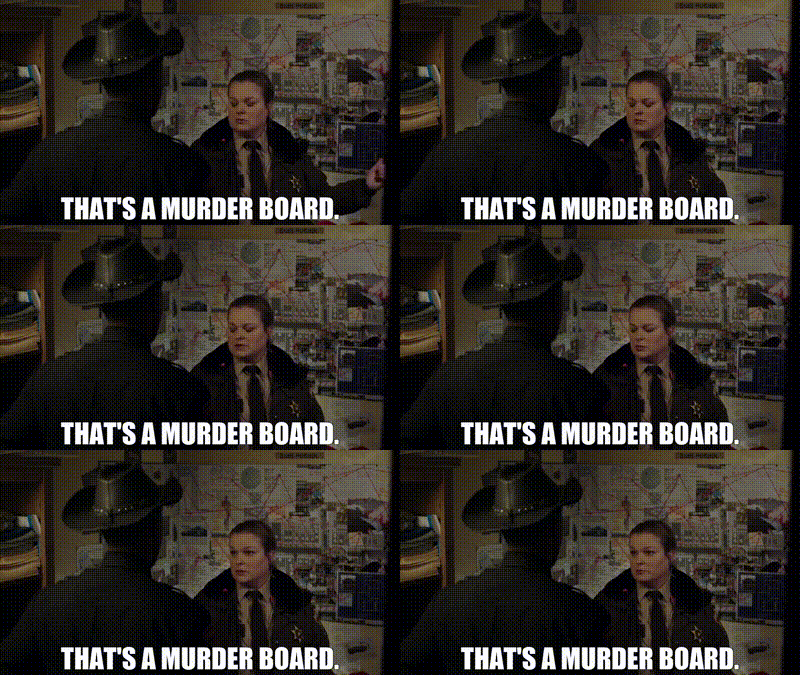
Another way to think of linear structure is a timeline. And it also lets me point out a key aspect of this. If you’ve ever watched a procedural show or a detective show, it’s really common for the characters to take the various clues and incidents and break them down into on a chalkboard or whiteboard. Maybe they stick up some photos, too. And they all go in the order they happened– 4:08, 4:15, 4:16, 4:23, and so on.

Now, that key thing to keep in mind? It doesn’t matter what order the detectives discover the clues in. If we first learned the maid was here at 4:16 and then later on we learn the butler heard the gunshot at 4:08… well, it may sound silly to say but the gunshot still happened first. Learning about them out of order doesn’t change the order the events actually happened in.

So if I’m writing a story—even if I’m telling the story in a non-linear fashion—there still needs to be a linear structure. And the linear structure needs to make sense. Because readers will notice if it doesn’t.

A good way to test the linear structure of my story is to just arrange all the flashbacks, flash-forwards, recollections, frames, and other devices in chronological order. Pull apart my outline or notecards or whatever I’m using and just… put the story beats in order. Simple, right? The story should still make logical sense like this, even if it’s lost some dramatic punch at a few points (more on that later).

If my story elements don’t work like this—if effect comes before cause, if motivations get really weird, if people know things before they learn them—it probably means I’ve messed up my linear structure. I got so focused on doing clever, out-of-order things that nothing works in order. And—not to keep hammering this point—but people will notice this. They have to. It’s how our brains are wired, to put things in linear order.

There was a show I watched a few months ago that had a non-linear gimmick. Lots of flashbacks in every episode. And not all to the same period. Like, if the episode was set on Friday, we might start with flashbacks to Wednesday afternoon, but then move on to Monday morning flashbacks, and then some from Thursday night. And then the next episode is Saturday, but it flashes back to Tuesday and Wednesday morning and maybe also Thursday night, but for a different character.

On one level this was fantastic and I loved it. But as the show went on… it started to gnaw at me. And I found myself analyzing the show more than watching it, trying to figure out how this flashback and that flashback lined up, especially if we were saying the current episode was set Sunday morning. I talked to a couple friends who were watching it and discovered they were all having the same issue. Started good, but as the show went on the structure became more and more problematic.

In the end, the story didn’t make a lot of sense when you put it in order. There were just too many weird issues that didn’t line up. And it messed up a lot of the characters, too. The way they’d act and react, things they say (or not say). It was all being done to preserve big reveals later in the show, rather than being natural dialogue “now.” Once it was all in order, it was obvious the characters didn’t have any reason for the way they were acting or talking.

Y’see, Timmy, no matter what order I decide to tell things in, my characters are experiencing the story in linear order. And their actions and reactions, their dialogue and motives, they all have to reflect that. If halfway through my book Wakko flashes back to what happened a month ago, this isn’t new information for him—it happened a month ago. So everything he does or says before the flashback should be taking that information into account in a natural, believable way.

I know it sounds pretty straightforward and… yeah, it is. Linear structure is going to be the easiest of the three forms I blather about over the next few weeks because it’s the one we all know. Also, it’s just a logical, objective thing. There isn’t a big debate to be had about whether or not Thursday comes before Friday.

And yet, people still mess this up all the time. And mistakes with linear structure are almost always because of narrative structure.

But we’ll talk about that next week.

Until then, go write.

August 17, 2023

Only Ten Seconds

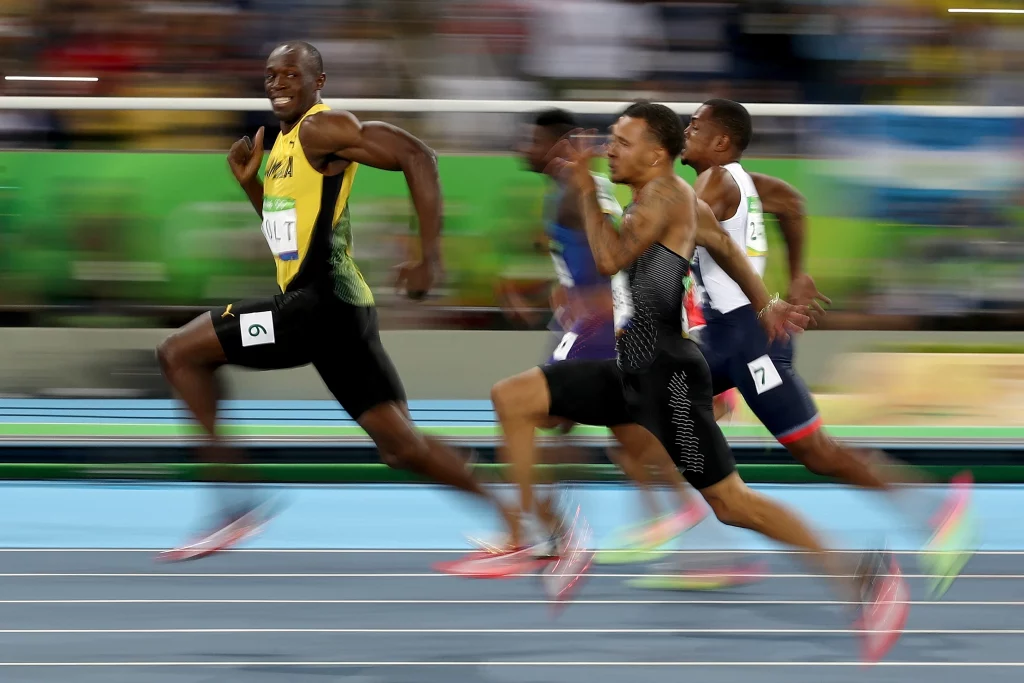
Did you know most Olympians run the 100 meters in about ten seconds. Seriously. Ten meters per second! Men tend to come in a hair under that, women just a bit over, generally speaking. Usain Bolt’s held the record for about fourteen years now with a time of nine-point-five-eight seconds.

So we can say that taking part in an Olympic event requires about ten seconds and then you’re done.

That’s not much of a time commitment at all, is it? One sixth of a minute and I can call myself an Olympic runner? Makes you wonder why more people don’t try it.

Of course, we all know it takes a lot more that ten seconds, even for someone as fast as Usain Bolt. There’s probably going to be months of training for that one specific event, not to mention years of work before that. Most of the major runners were probably training two or three hours every day while they were still in their teens.

So it’s not really about the ten seconds. It’s about all the years before those ten seconds. That’s what makes the ten seconds possible. That’s how you get to the Olympics.

And we understand that. It takes time to be good at something, It’d be silly to think otherwise. Running. Cooking. Dancing. Painting. Brain surgery. There’s some folks who may have a knack for it, may start a rung or two up the ladder, but everybody has a climb ahead of them. Nobody decides they want Olympic gold and just walks out onto the track at… well, wherever the Summer Olympics are this year. Paris? Really? Okay.

Anyway, you can guess where I’m going with this, right?

A while back I saw a self-publishing website talking about how easy it is to write a book. They’d broken it all down into math. According to them, it takes an average of 475 hours to write a novel. Just under twelve standard work weeks to complete a book. Not even three months.

Now, in all fairness, that’s about what it took me to write the first draft of –14-. But this number’s very misleading. It doesn’t count all the hours I put in before writing this book. There were only a handful of outline pages, sure, but that was still a few weeks of random scribbling and thinking. Not to mention all the books I wrote before it. Yeah, they count. Do you think Usain Bolt went straight to the Olympics without running one other race? D’you think he didn’t learn anything from those earlier races? That they didn’t help him?

I think (he said, pulling out his thick cardigan and pipe) there’s a lot of folks out there trying to convince us that time doesn’t matter. That spending time to get good at something is wrong. You shouldn’t have to practice at writing. You already know all the words! Just throw ‘em down and put that first draft up on Amazon! Why wait? Why listen to those gatekeepers who tell you you’re not ready for the Olymp– sorry, to be published! Ignore them and publish now.

What’s that? Don’t even know all the words? Well double-screw those gatekeepers. AI will write the story for me. That’s just as good as me writing it myself. I mean, if Usain Bolt sells me his gold medal, it means now I’m the fastest man alive, right? And I didn’t have to waste any time with all that “years of practice” nonsense. Heck, he doesn’t even have to sell it– AI can just copy his medal and now I’m the fastest man alive. It’s that easy. And heck, if AI copied his medal without permission and just stuck my name on it, well… I mean, I’ve still got the thing saying I’m the fastest man alive. That counts, right?

Whoooo. Sorry Getting a little warm in here. The ranty writing blog’s feeling especially ranty today, isn’t it?

Look, my point is, if you want to do this… don’t be worried about time. Yeah, it looks like she did something so much faster than you or he just popped up out of nowhere, but usually those numbers are just what’s on the surface. You’re only seeing a small part of the writing iceberg. We all had to put the hours in. You’re going to have to put the hours in.

I’ve mentioned here again and again how much writing I’ve done (and still do!) that nobody’s ever seen. So many half-completed (or fully completed!) books, comics, stories, and screenplays. So much stuff. But it’s all experience. It’s training.

Because you’re never going to make it to the Olympics without training.

Next time, I’d like to talk to you about paint. And Arabic grammar.

Until then, go write.

Categories