
Okay, not so much rant.

Well, no more than usual, I guess.

I try to have a running list of seven or eight topics for future blog posts. That way if nobody asks a question or something doesn’t leap out at me, I’ve got something to fall back on. One of the ways things end up on the list is that I’ll be dropping links into a post, pointing back at when I previously talked about this or that, and I’ll suddenly realize I haven’t talked about whatever it is for six or seven years.

At which point I’ll usually let out this tired sigh and think something like holy crap I’ve been doing the ranty writing blog for a long time.

Which brings us to me ranting.

No, wait. That brings us to dialogue.

Hopefully we all understand how important dialogue is, yes? It’s how we bring characters to life, making them sound and speak like real people (sort of—more on that in a moment). It’s also the absolute best way to communicate information to my readers (or any audience) about the characters, their world, or the situation they find themselves in.

Likewise, dialogue is one of the easiest, quickest ways to alienate a reader. If my characters sound forced or stilted or just… well, unnatural, it’s going to push my readers away. So it’s something I’ve got to get right.

I know! There’s so many friggin’ things I need to get right for this to all work. But this is why so many people give up and you’ve stuck with it.

Anyway, I’ve talked once or thrice recently about different aspects of dialogue—vocabulary, subtext, arguments—but it’s been a while since I did a big “here’s a dozen or so tips” rants. So what I’d like to do is toss out a bunch of general “hey, think about this” things I’ve picked up from years of screenplay reading and manuscript reading. Just little things I should to keep an eye on in my dialogue. If it’s something I’ve ranted about in a bigger way at some point, I’ll link back to it.

And, as always, not every one of these is going to apply to every situation in every book. Nobody knows your book better than you. No one. That’s why it’s up to each of us to figure out exactly how this character sounds and speaks to move my plot along, to develop their story, to keep my narrative going, and so on.

Here we go.

Grammar – As you’ve probably noticed in your own life, very few people speak in perfect, grammatically correct English. Our tenses don’t always match. Verbs don’t always line up with our nouns. A lot of “spoken” English can look awful on the page. And this makes some folks choke, because they can’t reconcile those words with the voice in their head. When I lean into grammar I lose that natural aspect of language in favor of the strict rules of grammar, and I end up with a lot of characters speaking in a precise, regulated manner that just doesn’t flow.

This doesn’t mean toss grammar out the window and write however you want. People still need to understand what my characters are saying and that I’ve chosen to have them speak this way. But dialogue does give us a little more freedom in how we say stuff. See?

Contractions– This is kind of a loosely-connected, kissing-cousins issue with the grammar thing I just mentioned. Some folks avoid contractions because they’re trying to write correctly! But most of us use contractions in our everyday speech—even scientists, politicians, professors, soldiers, everyone. It’s just human nature to make things quick and simple. Without contractions, dialogue sounds stilted and wooden. If there’s a reason for one of my characters to speak that way, then by all means do it. If my characters are regular, native English-speaking mortals, though…

As a bonus, using contractions also drops my word count and page count. Win-win.

Transcription– Okay, some of you know I used to be a journalist and did lots and lots of interviews. One thing it taught me is, with very few exceptions, people trip over themselves a lot when they talk. We have false starts. We repeat phrases. We trail off. We make odd noises while we try to remember words. It’s really common and normal

BUT… anyone who’s ever read a strict word-for-word transcription of a conversation (or typed up a lot of them) will tell you it’s awkward, hard to follow, and a lot gets lost without the exact inflection of certain words. This kind of ultra-realistic dialogue will drive readers (and editors) nuts. Plus it wastes my word count on dozens of unnecessary lines. This sort of rambling can work well in actual spoken dialogue, but it’s almost always horrible on the page.
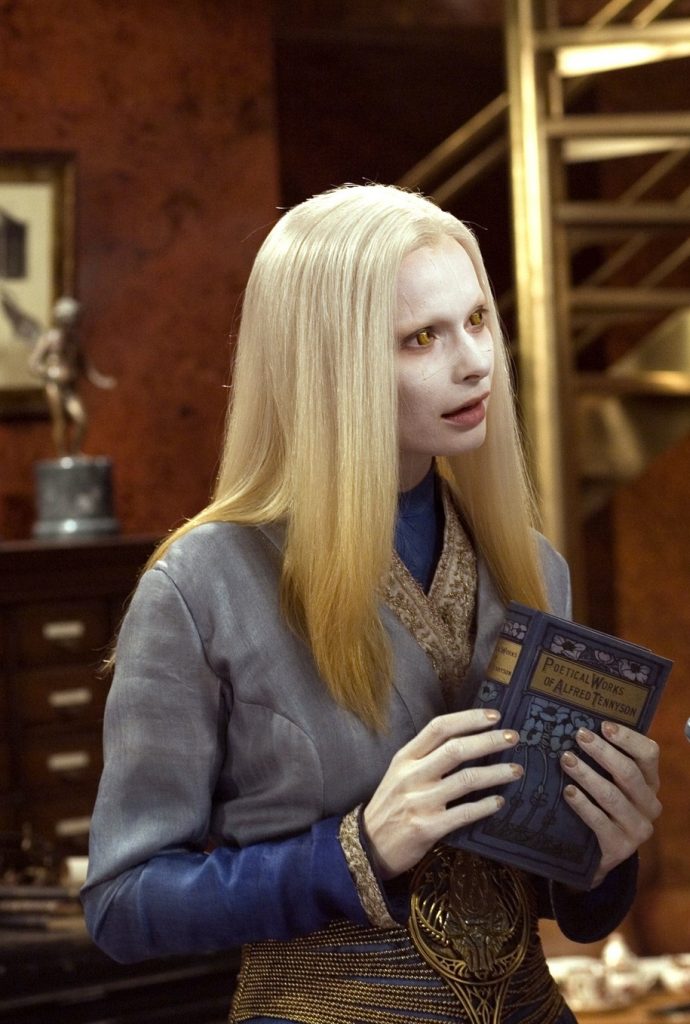
Similarity– People are individuals, and we’ve all got our own unique way of speaking. People from Maine don’t talk like people from California, people living in poverty don’t talk like billionaires, and fantasy elven princesses don’t speak like futuristic bio-engineered soldiers. My characters should be individuals, with their own tics and habits that make them distinct from the people around them. If a reader can never tell who’s speaking without seeing the dialogue headers… I might need to get back to work.

On The Nose—If you’ve ever heard someone call dialogue “on the nose,” they mean the characters are saying exactly what they’re thinking without any subtlety or subtext whatsoever. It’s the difference between “Would you like to come up for a cup of coffee?” and “Would you like to come up and have sex in my living room right now?” There’s no inference or implications, no innuendos or layered meanings. And the truth is, we’re always layering meaning into what we say.

Pro tip—I’d guess nine times out of ten, if a character’s talking to themselves out loud, it’s on the nose dialogue. It just works out that way. I’d guess half the time it’s just exposition (more on that in a minute).

Humor—Here’s another human nature thing. A lot of us tend to make jokes at the worst possible times. Breakups. Office reviews. Funerals. It’s just the way we’re wired. The more serious the situation, the more imperative that release valve is for us. In fact, be honest… people who never crack jokes make us a little suspicious or uneasy. Not everyone and not at every moment, but when there’s no joking at all, ever, it just feels wrong.

Plus, how a character jokes says something about them. Do they make non-stop raunchy jokes? Do they have a dry sense of humor? A completely awful sense of humor. Do they have any sense of when it is and isn’t appropriate to tell a certain joke?

Flirting—Flirting’s like humor in that it’s almost universal. People show affection for one another. They flirt with friends and lovers and potential lovers. Sometimes—like with humor—at extremely poor times. It’s not always serious, it can take different forms, but that little bit of playfulness and innuendo is present in a lot of casual dialogue exchanges.

Flirting is also like joking because it’s impossible to flirt with on the nose dialogue. Flirting requires subtlety and implied meanings. If nobody in my story ever flirts with anyone on any level, I might want to take a second look at things.

Profanity—Yet another ugly fact of human nature. We make emphatic, near-automatic statements sometimes. We react verbally. We throw out insults. How we swear and respond to things says something about us. Phoebe doesn’t swear like Wakko, and Phoebe doesn’t swear in front of Wakko the same way she swears in front of her mother. Or maybe she does. Either way, again, that’s telling us something about her and making her more of an individual.

Fun fact—some profanity is regional. The way we swear and insult people here is not how they do it there. So this can let me give a little more depth to characters and make them a bit more unique. I mean, I had a character who often shouted “tarnation” or “pissbucket!”

Accents– Speaking of regional dialogue… Writing characters with accents. There are a handful of pros out there who can do truly amazing accented dialogue, yeah, but keep that in mind—a handful. The vast majority of the time, writing out accents and odd “language” tics will drive readers and editors nuts.

I usually show accents by picking out just one or two key words or sentence structures and making these the only words I show it with. Just a bare minimum. Like most character traits, my readers will fill in the rest.

Dialogue TagsI just talked about this a few months ago, so we won’t spend long on this. I don’t always need to put Yakko said, Dot replied, Wakko said, because after a point it should be apparent who’s talking. Plus with less words, dialogue gets leaner and faster. Tension builds in the exchanges because the reader isn’t getting slowed down by ongoing reminders of who’s talking.

Names—Related to those dialogue tags, if I don’t need names around the dialogue, I need them even less in the dialogue. Pay attention the next time you’re on the phone with someone. How often do they use your name? How often do you use theirs? Heck, if my friends call my cell phone I know who it is before I even answer—and they know I know—so I usually just say “Hey, what’s up?” We don’t use our names, and we definitely don’t use them again and again in the same conversation. If I’ve got two established characters, it’s really rare that they’ll need to keep using each other’s names. Especially if they’re the only ones there.

Monologues – Here’s another observation. Most of us don’t talk for long. We don’t give lectures or monologues. We tend to talk in bursts—two or three sentences at best. When I have big blocks of dialogue, I usually think about breaking them up. Is this person just talking to themselves (see above)? Is nobody there to interrupt them with a counterpoint or question or a random snarky comment? Is this monologue even necessary? Does it flow? Could I get all this across another way? Is this a time or situation where Yakko should be giving a four-paragraph speech? Especially if it’s the fifth or sixth four-paragraph speech…?

Cool lines— Our latest ugly truth (so much truth in this rant)—everything becomes mundane when there’s too much of it. If everybody can sink a basket with a hook shot from the three point line… sinking a basket isn’t that impressive, is it? If everyone can fly, being able to fly doesn’t seem like such a big thing, does it? As a wise supervillain once said, when everyone’s super… no one is.
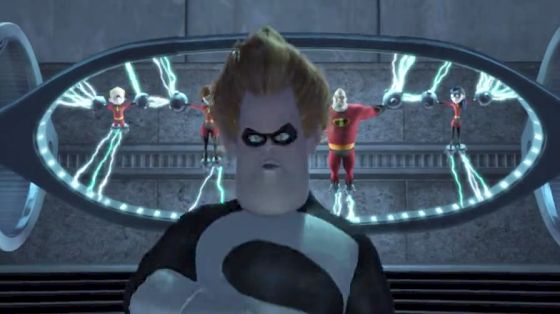
The same holds for dialogue. We all want to have a memorable line or three that stands out and sticks in the reader’s mind forever, but that’s the catch. They’re memorable because they stand out. They’re rare. If I try to make every line a cool line, or even most of them, none of them are going to stand out. When everything’s turned up to eleven… well, it’s all at eleven. It’s monotone.

Exposition—Remember being a kid in school and that one teacher who just read right out of the textbook? Just raw, boring facts poured out in front of you, often without a lot of context? That’s what exposition is like to my readers.

Simple test. If a character ever gives an explanation of something the other characters in the room should already know (or my reader should know)… cut it. Seriously, just slice it out and see if it really makes that much difference. If nothing gets tripped up and things move faster…

“As you know…” – Closely related to exposition. I’ve mentioned this once or thrice before. I need to find every sentence or paragraph in my writing that starts with “As you know” or one of its cousins. “As you may recall…” “You all know…” Once I’ve found these, I need to delete them.

Think about it. A character saying “As you know” is openly acknowledging the people they’re talking to already know what’s about to be said. I’m wasting time, I’m wasting space on the page, and I’m wasting my reader’s patience. If I’ve got a rock-solid, lean-and-mean manuscript, I might be able to get away with doing this once. Just once. Past that, I need to get out my editorial knife and start cutting.

Listen to It—You may have seen the suggestion to read your manuscript out loud to help you see how things flow. Personally, I think this works great for catching errors, but not as good for catching dialogue issues. Since I wrote these lines, so I know how they’re supposed to sound and what they’re supposed to convey. When I read them aloud, there’s a chance I’ll be reading things that aren’t on the page, if that makes sense.

So if you’re worried about dialogue… get somebody else to read it out loud. A real person, not a text-to-voice program. Just a few pages. Let a friend or family member who doesn’t know it read it out loud and see what they do with it.


And there you have it. A big pile of tips which should help your fictional dialogue seem a little more real. Fictional-real, anyway. Not real-real.

Next time…

Holy crap! WonderCon is this week! Like, tomorrow! If you’re going to be there, I’m doing a Friday night panel called Neighborhood Nightmares, a Sunday afternoon session of The Writers Coffeehouse, and a later-Sunday autograph session. Plus I’ll probably be wandering the floor before/after those. If you’re going to be there, please stop by, say hello, ask a question or two!

Anyway… next time here, because it came up on Bluesky… I’d like to talk about twists.

Until then, go write.

February 9, 2024

Birds AND Bees

Last week was a bit of a flop, sorry. It happens sometimes, and I’m trying to be better about not letting it throw everything off for a week. We’ll still talk about throwing things out, don’t worry. I’m rescheduling a bit, moving a few things back on the calendar

Speaking of the calendar… Valentine’s Day is next week! With all the fun indoor (and sometimes outdoor, if you’re daring) activities many of us associate with said holiday.

So I though, in the spirit of the day, it might be worth revisiting the sometimes awkward topic of… writing sex scenes.

Don’t worry. None of this is going to be too explicit or NSFW and it probably won’t get your work machine flagged. You know your boss better than I do. Move forward accordingly.

Like sex itself, a lot of writing sex is going to come down to our own personal preferences, comfort zones, and what works in a given situation. As such, it’s going to be really tough to offer any specific advice about when and where and how these moments should happen in your book.

What I wanted to talk about here is more the act itself, so to speak. Writing sex scenes is a skill, just like writing action or gore or anything else. It’s a balancing act of too much vs. too little, exciting the reader or maybe horrifying them, and it’s ridiculously easy to make people roll their eyes.

No, not like that.

So here’s a few things I tend to keep in mind when writing a sex scene.

One is that we don’t always need to show sex happening in order for sex to have happened in my story. Nuance and subtext are a huge part of sexiness—on the page and in real life. If Phoebe drags Yakko off into the forest while the rest of us are siting around the campfire, we can make an educated guess what they’re probably doing out there. Especially with context. If they’ve been flirting for the whole trip up to the mountain, whispering to each other while setting up tents, and they come back half an hour later with stupid grins, wrinkled clothes, and leaves in their hair… I mean, is anybody confused what they were doing out there?

So depending on the overall tone of my story, maybe I don’t actually need to write out my sex scene—I can just let my reader fill in the blanks themselves. And again, like so many well-done subtle things, this can end up being much, much sexier than actually spelling everything out. As an artist friend once pointed out, “nudity isn’t sexy. It’s what you don’t see that gets you turned on.”

Probably worth noting that, like any kind of subtext, there’s always the possibility it’ll slip past some folks. So depending on how important this particular hookup is to my plot or my story, I may want to be a little… y’know, less subtle. Just to help keep things moving. Still don’t have to show anything, but maybe drop one or two more clues when we return from our walk in the woods.

Two, if I’m going to show my sex scene, I want to remember that sex is… well, action. Not necessarily in “expending lots of energy and effort” (although that might be the case in this story), just that actual, physical things are happening in my story. And like any other action, it gets dull fast when it’s written poorly. Yes, it can get dull.

There’s going to be some exceptions, but I think most action shouldn’t feel like it takes much longer to read then it would take to happen. Nobody wants to read about a three paragraph sniper shot or a four page fist fight. When I over-analyze or over-describe anything, I’m slowing the pace of my story, and I don’t want to slow things down to tell my reader how fast things are happening.

And writing about sex works the same way. I’m not saying every sex scene has to have the frantic intensity and enthusiasm of two college sophomores, but If I’m telling you these two people are eagerly ripping each others clothes off and it’s taking six paragraphs for it to happen… you’re probably going to start skimming. And that’s never good. Strong action trusts that the reader’s going to fill in a lot of the blanks and understand what happened between A and C.

Now, since we’re talking about describing all that action…

Three would be personal taste. I think the catch with writing explicit sex scenes is they essentially become porn. Porn, as a friend once pointed out, is when we see everything. And after a certain point, that’s pretty much exactly what we’re talking about with any written-out sex scene. And some people like porn, some don’t. No judgment either way. That’s just a simple truth.

But there’s more to it than that. Because even the people who do like porn don’t all like the same kind of porn. This particular act really turns me on, but you find it kind of quaint and almost routine. Reading about that might weird me out, this might be a complete non-starter for you, and that… okay, that seriously disturbs both of us. On a number of levels. It’s a pretty safe bet that the more explicit—or shall we say, exotic—my sex scene becomes, the less people it’s going to appeal to. And the more people it’s going to… not appeal to.

This is going to be one of those points where I want to have a very clear sense of who the audience is going to be for this story. And I need to be honest about that. What kind of sex scene I put in, and how I describe it, is going to have an impact, so I want to be sure it’s the kind of impact I’m trying for.

Four, last but not least, is something I’ve also talked about with my rules of love that I bring up now and then. Y’see, Timmy, for a long time Hollywood tried to convince us if two good looking people (or even average-looking people) ended up alone in an apartment, a car, an office, a cave, whatever… they’d have sex. It was just what people did. What else were they going to do? Talk? Watch television? Read?

And there are a lot of reasons to think this way. A fair number of people enjoy sex. A decent amount of folks have a phase in their lives where sex is a high priority. And crass as it may sound… sex sells. More than a few filmmakers sold an additional ticket or three (or four or five rentals) off the promise of skin and naughtiness.

But the truth is… most of us don’t have sex at the drop of a hat. And there are times and places that it’s just not going to work. For any number of reasons. Sometimes the reason that sex scene feels kind of forced and gratuitous is because… well… it is

So go forth on this holiday and write your sexy moments. But please consider if you really need to show them. And how they’re paced. And who you’re writing them for. And if they should be there at all.

Next time… I’d like to talk about the new tabletop game my friends and I have been playing. And how it relates to writing.

Until then, go write.

Happy Valentine’s Day.

I’d like to start by telling you about my one of my favorite film edits of all time. Top five, easy. It’s a single, straight cut between one scene and the next and it’s beyond brilliant. There’s a simply unbelievable amount of character and plot development in it. No joke, it’s a level of storytelling that most filmmakers and authors (self included) don’t have a prayer of ever achieving. I say this with complete and utter sincerity.

And Sam Raimi did it in a Spider-Man movie.

You probably know the moment. Struggling student/ photographer/ superhero (shhhhh) Peter Parker has just been introduced to physicist/ genius/ role model Otto Octavius. Otto takes a moment to criticize Peter for his laziness, but they warm up to each other as Peter makes some insightful observations about Otto’s new fusion reactor. Then Peter asks a question and Otto answers it as they finish off dinner at Otto and Rosie’s apartment later that night.

D’you know that moment? Seriously, go watch it if you don’t. Alfred Molina’s freakin’ amazing as Doctor Octopus.

Anyway, point is, we instantly know what happened during that cut. All of it. We understand how the discussion went. How they ended up back here. How their views of each other have changed over the past few hours. Yeah, it’s clearly been hours and we all know exactly what happened during them.

And just to be clear for those of you who might like to look down on superhero movies, none of this is because of pre-existing knowledge. Raimi and screenwriter Alvin Sargent were going in an all-new direction with Otto’s backstory and how it overlapped with Peter’s. They’d never been seen in this way before.

How many pages of storytelling did they fit into that cut?

Maybe a better way to look at it is, how many script pages did the movie not need because of that cut?

Truth is, most of us are pretty smart. We can figure out what goes between A and C. And between X and Z. As writers, we don’t always need to fill in every detail. Especially all the boring details. There’s lots of stuff we can skip over without hurting our story in the slightest. In a lot of cases, it’ll even make our story better.

I think this works on both a micro and a macro level. On the micro level, I’m talking about clauses and sentences and maybe paragraphs. I’ve talked in the past once or thrice about trimming away excess details. Steps in the process. Parts of the routine. Things the majority of readers will figure out happened. To put it another way, the thing that happens between A and B.

On the macro level, I’m talking about scenes or story beats or maybe even whole chapters. It’s the same idea as the micro, except we (the writers) have taken it even further, adding more details and nuance to what was already… well, unnecessary details. I’ve cut multiple pages and even whole chapters out of manuscripts once I realized the whole thing was a beautifully rendered and detailed scene that ultimately just wasn’t necessary.

And I’m sure someone just read that and said “whoa whoa WHOA! What about the art?! If that chapter’s beautifully written, isn’t that reason enough for it to be in the book?”

Well… no, to be honest. Don’t get me wrong. I love a beautiful turn of phrase or exquisite prose as much as the next guy. Probably more. I’ve read some things where other writers choose the absolutely perfect word or come up with a beautiful description and all I can say is “goddamn.” And sometimes “I’m jealous as all hell.”

The catch, of course, is those words are all describing something that needs to be in the story. It’s an aspect of writing I’ve mentioned once or thrice before. Just because something’s good doesn’t necessarily mean it’s good for my book. Something can be fantastic and still just not belong in there. For any number of reasons.

F’r example, one or two of you may have read a book called Paradox Bound. And you may have heard that, in the first draft my editor saw, I had a full chapter describing Eli’s bus trip across America after he flees the Faceless Men. It was about seven or eight single-spaced pages. And it was about Eli seeing the bigger world for the first time. The assorted people on the bus. The places they briefly stopped. The food he ate for a three day bus-ride, Sleeping sitting up. Wearing the same clothes for three days. And some clever observations about life and humanity and mass transit scattered in there too.

But ultimately, when viewed as part of the whole story, absolutely none of this mattered. It was about Eli getting on a bus in Boston and getting off a bus in Pasadena. All that quiet stuff in between… well, you would’ve just assumed most of that happened. Seriously. What else would he do on a bus for three days? How much of it would’ve been painfully obvious once he stepped off the bus?

Here are three general rules of thumb I’ve developed for myself when it comes to such things. I generally cut something if…

1) The average person would know, or logically assume, B had to happen between A and C. If my character leaves work and the next time we see her she’s arriving home with a Jack in the Box takeout bag, do you immediately assume I made a big continuity error? “She didn’t have that bag when she left work!!!” Or do you just assume she stopped at Jack in the Box on the way home? We make these kind of cuts all the time. We don’t show people traveling between two points. They go to the gym and suddenly they’re in workout clothes. We see two folks sneak upstairs at the house party and then suddenly they’re in bed– flopped on their backs, breathless, and (hopefully) looking kind of happy. None of us have any confusion about what we “missed” in any of these examples.

2) If B is completely irrelevant to A and C. We can safely assume it happened during the timeline of the story (see above rule), but it has no effect whatsoever on the tale I’m telling. Perfect example of this– how many books have you read that take place over three or four or more days? Probably a lot of them, yes? If anything, a story taking place entirely in one day is a bit of a rarity.

How many times have you read about someone using the bathroom? It’s something we all inherently know happens, but we also know it’s just not that important to most stories. So we don’t question when it’s not there. Same with eating. Did these people really go for a week without eating? Or did the author just not bother showing it and save a page or two?

3) If it just works better without it. Because sometimes it does. The paragraph reads better, the action flows better, the horror has a little more punch. Sometimes I don’t want to get bogged down in the details, and neither does my reader. And as I’ve been saying above, if people are probably going to figure it out anyway, why bog things down? To paraphrase a famous lawyer, we could skip all that and just, well… get to the good stuff.

And to repeat, all three of these are just rules of thumb. It’s not hard to find examples of some beautiful writing that contributes absolutely nothing to the plot or story. But I feel safe saying it’s also not all that common.

Y’see, Timmy, if I trust my audience to figure this stuff out on their own, they’ll appreciate that trust. They’ll know I trusted them to fill in the blanks. And when they figure something out on their own, even a little thing, they’ll love what they’re reading even more.

So look back over your manuscript, go over some of those beats… and maybe give your readers the benefit of the doubt.

Next time, unless anyone’s got a better idea, I’d like to talk about this personal teleporter I invented.

Until then, go write.

So here’s an easy thing to look for. I used to do this… let’s say a fair amount in my early writing. I see it happen in other’s people’s writing—especially first big projects. And I see it happen all the time in low-budget B-movies that didn’t bother with, well, a script. It’s really common when actors start to ad-lib scenes. Enough so that I feel very comfortable saying it’s really common.

What is it? Well, wouldn’t you like to know. No, I don’t have to tell you. BECAUSE I’M IN CHARGE, THAT’S WHY! WELL THEN GO START YOUR OWN WRITING BLOG!!!

Okay, let’s just pause for a moment, all take a breath, and try this again…

NO, YOU DIE! YOU GO TO HELL AND YOU DIE!!!

Anyway…

If you spend any amount of time online, arguments almost feel like the default form of human interaction. Because let’s be honest, there are some folks out there who just want to argue. About anything. You like kittens? Of course you would. That’s exactly the kind of thing someone like you would like!

As we’ve all learned, these sort of arguments rarely go anywhere. The people starting it, well… they’re not really interested in opposing views or hearing a counter-argument. So these discussions often amount to a lot of yelling that goes nowhere. Everyone ends up more or less right where they started, position-wise. Nobody’s been convinced to hate kittens or stop carrying their AR-15 to the elementary school bus stop. So in retrospect… they’re kind of a waste of time.

When we’re writing, I think arguments are an easy form of dialogue. Lots of folks think shouting means conflict and tension and drama, so if all my characters are shouting at each other, well, my story must be filled with conflict and tension and drama. Right? Plus, wow, that just filled three pages. It must’ve been good.

So characters argue about a lot of really stupid stuff. Like, anything at anytime can set off an argument. And these irrational arguments go on and on, no matter what else is going on. There can be a kaiju stomping toward our car but the five of us will sit and argue for ten minutes about driving away vs getting out of the car and running away vs just sitting here because maybe we’re just imagining the kaiju, did you think of that?

No? Well that’s why I’M IN CHARGE!

Anyway…

I think a lot of the time when characters are arguing in a book or movie, it’s the writer trying to create a false sense of tension. Or just padding. Or both. Maybe consciously, maybe unconsciously.

Please note I said a lot of the time. Not all. This isn’t a blanket rule, and there are some fantastic examples out there of characters who have heated discussions in books and movies. Or who just, y’know, argue all the time. Because in any good story there’s going to be actual conflict and there are going to be things people have real, justified arguments about.

And, sometimes arguing can be funny. It can actually lighten the mood to see people start bickering over something really silly and irrelevant. Especially when we see the context of what they’re arguing about and where/ when they’ve decided to argue about it.

But all of these arguments have a point to them. They’re either advancing the plot somehow, or advancing the story of one (or both) of these characters. In some cases, they might even be representative of some other intense interaction…

As of late, if I find my dialogue sliding into combative arguments, I try to step back. Look at the scene and the story as a whole, not just my brilliant and snarky dialogue exchanges. What else is going on right now? What’s the actual point of this moment? Does it make sense that these people would be arguing about this? Right now? Is this really driving anything forward?

Or are my characters just arguing to make it seem like there’s some sort of conflict going on? Is it a bunch of false drama that doesn’t really make sense when you consider the characters and what’s happening to them at the moment? Am I just boosting my page count?

So if you’ve got a two and a half page argument… maybe look at it again. See if it actually makes sense. And if it’s really doing anything for the story as a whole.

BECAUSE I SAID SO, THAT’S WHY!!!

Next time… well, next week’s my birthday, so I think I’d like to put on my old white beard and blather on about some life-experience wisdom type stuff. As I have in the past.

Until then, go write.

Categories