
October 23, 2025 / 6 Comments

Seeing the Invisible Man

Revisiting an older post with a Halloween themed post! Sort of! But still with lots of thoughts and (hopefully) informative tips and hints.

I’m going to go out on a limb and guess most of you are familiar with The Twilight Zone. It’s one of those lightning in a bottle things that people have tried to re-create again and again over the years. I think we’re up to… three remake series? And the movie?
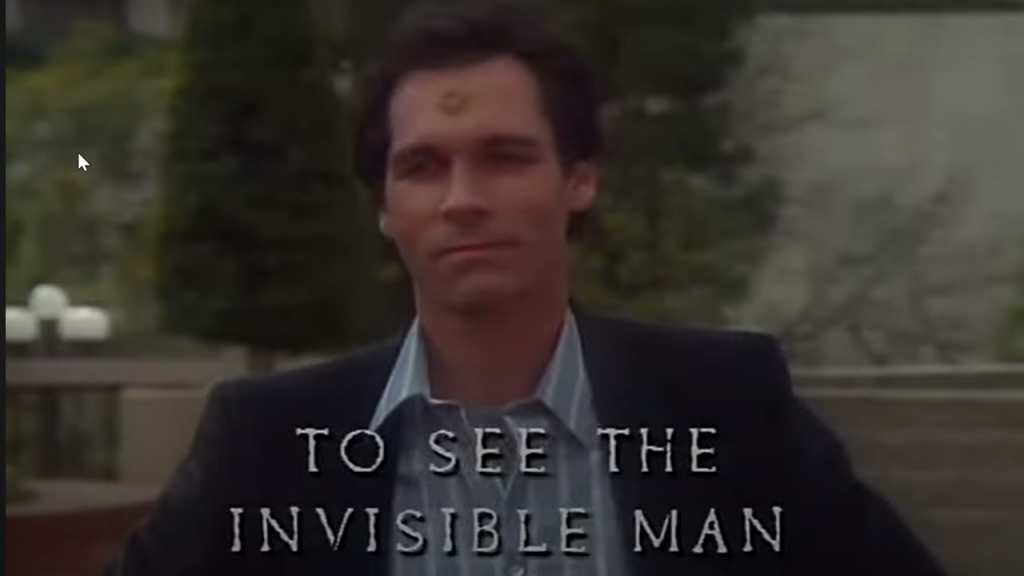
During the ‘80s revival, they did a story called “To See The Invisible Man” (adapted by Stephen Barnes from an old Robert Silverberg short story). It’s about a man in a somewhat-utopian society whose asshole behavior gets him sentenced to a year of “public invisibility.” Key thing though…

They don’t actually turn him invisible. He just gets a small sort of implant-mark on his forehead that tells everyone to ignore him. That’s the curse of it. Everyone can see and hear him–and he knows they can– but no one’s allowed to react to him or anything he does. Even when he desperately needs to be acknowledged (I remember an eerie scene in a hospital emergency room after he’s been hit by a car), people just all pretend he’s not there. Even though they know he is.

Why do I bring this up?

In a weird way, this story’s kind of a metaphor for being a writer. The reader absolutely knows I’m there, that I’ve created this story, made up these characters, and chosen these individual words. But at the same time… they don’t want to admit that. They want to get caught up in the flow and immerse themselves in the story and pretend for an hour or an afternoon or a commute home that all of this is real. That it’s just them and the characters and the plot and I’m… not there. Not part of it.

It’s just my opinion, but I think one of the worst things a writer can do is draw attention to themselves in their writing. We need to be invisible. I mean, we want our characters to be seen. We want our dialogue to be heard. We want our action and passion and suspense to leave people breathless. But us—the writers? We’re just distractions. Less of us is more of the story. Being able to restrain myself is usually just as impressive as how excessive i could be.

So here are some ways not to be seen.

Vocabulary— A fair amount of would-be writers are determined to prove they’re cleverer than everyone else. More often than not, they latch onto (or look up) obscure and flowery words because they don’t want to use something “common” in their literary masterpiece. These folks write sprawling, impenetrable prose and all too often they’ll try to defend this habit by saying it’s the reader’s fault for having such a limited vocabulary. After all, I can easily picture a glabrous man in habiliments of titian and atramentous, not my fault you’re so basic.
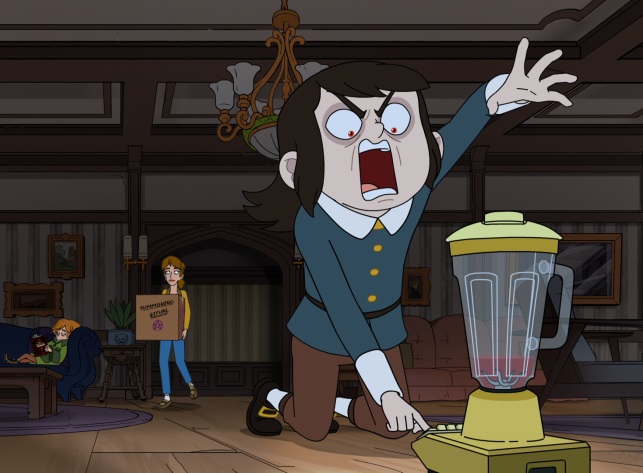
Any word I’m choosing just to draw attention, to prove I don’t need to use a common word, is the wrong word. Any word that makes my reader stop reading and start analyzing is the wrong word. I can try to justify my word choice any way I like, but when my reader can’t figure out what’s being said for the fourth or fifth time and decides to put the book down and go get caught up on Haunted Hotel… well, there’s only one person to blame. And it’s not them.

Complication— This is kind of like the vocabulary issue. Sometimes folks try to prove how clever or artistic they are by creating overly-elaborate sentences or structuring their whole narrative in a needlessly complicated way. I mean, I once tried to read a book with—no joke—a three-page opening sentence. Yes, sentence.

If I have an actual reason for doing this sort of thing in this piece of writing, fantastic. But if not… why would I do something that makes my readers more and more aware they’re reading a book rather than letting them get immersed in it? My writing should be clean, simple, and natural.

Said— I just talked about this recently so I won’t spend a lot of time on it here, but said is invisible. People skim over said on the page. It’s fantastic that I know a hundred other dialogue tags, but save them for when they matter. If every single tag is the special one, then none of them are special. So I shouldn’t draw attention to myself with twenty different descriptors on the page when I could just use said.

Names. If I use them in moderation, names are invisible. They’re just shorthand for the mental image of a character. But any name that repeats too often becomes the name we see everywhere and then it becomes noise distracting my readers from, y’know, the things I’m actually trying to show them. When Dot talks to Bob and Bob talks to Dot and Dot calls Bob by name and Bob calls Dot by name and then Bob and Dot… I mean, personally I start flinching a bit at that point.

Y’see, Timmy, every time I make the reader hesitate or pause for a second, I’m breaking the flow of the story. I’m encouraging them to skim at best, put the manuscript down at worst. I never want my reader thinking about how much they’re enjoying the latest Peter Clines book—I don’t even want them to think about the fact that they’re reading. I just want them to be immersed in this world alongside Noah, Parker, Olivia, Sam, Josh, the Castaway, Ross, Dieter, Neith, and all the rest.

If I’m the one they’re looking at, something’s gone wrong.
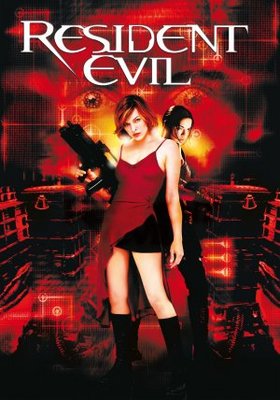
Next time… I thought I’d stick with the Halloweenish theme and do something I’ve threatened you all with for a long time now. I’m going to talk about Resident Evil. A lot.

Oh! And this coming Tuesday night I’m going to be at Mysterious Galaxy in San Diego talking with Eric Heisserer about his fantastic new crime procedural-reincarnation book Simultaneous. You should stop by and check it out.

(and do your homework– go watch Resident Evil)

Until then, go write.
March 4, 2022 / 2 Comments

Those Are All Made-Up Words!

I wanted to jump back to something I mentioned a few weeks ago. Creating my own words for stories. Yes, all words are made-up– don’t be the clopos in the room, okay? I recently got a new laptop and as I was bringing everything over I stumbled across a very old blog post about using made-up words. It had a few nice rules of thumb for separating good uses from bad uses, and I thought it might be worth revisiting them.

So let’s dive right in.

First off, let’s talk about names. Proper names for people, places or things. This may sound kind of simple, but I’ve seen it go wrong enough that I think it’s a good place to start off.

When we’re worldbuilding an alien or fantasy world, or sometimes one in the distant past or future, there’s an urge to hand out a lot of different names. For characters, towns, deities, what have you. On the surface, there’s nothing really wrong with this, but I should think a bit about how I’m going to introduce these names. Especially if I’m going to do it in dialogue or a first person POV.

Let me give you a few quick, example sentences.

    “Tim, it’s good to see you.”
    “We’re going to try for another child, if Phoebe’s willing.”
    “Sarah, what are you doing here?”

Pretty straight-forward, yes? No confusion about what any of these sentences mean. Heck, the second one even slips in some personal information about the speaker. But watch what happens when I switch the names like this?

    “Jesus, it’s good to see you”
    “We’re going to try for another child, if God’s willing.”
    “Christ, what are you doing here?”

See? Now these these sentences are conveying different information. They’ve shifted to expletives and figures of speech. But we only know that because we recognize this second set of names. Because watch what happens when we don’t have reference for any of these names…

    “Tokar, what are you doing here?”
    “We’re going to try for another child, if Ostriax is willing.”
    “Grothnixian, it’s good to see you.”

Soooooo…. now what are these sentences saying? We can’t really parse them without a frame of reference for those names. Is Ostariax the speaker’s wife, husband, or chosen deity? Heck, Tokar and Grothnixian might not even be names at all. Maybe they’re swears I made up and they’re just capitalized because they start the sentence. I mean, it’s clear to me, the writer, so I guess if you don’t understand it in context the problem’s just you…

The problem here is that when a reader stumbles across this, their brain’s going to make a decision and stick with it. It’s going to say Grothnaxian is a proper name, Ostariax is a god, and Tokar is one of those words you might use with your close friends, but not in polite company. You definitely wouldn’t use it on the internet where it might come back to haunt you years from now.

And when, fifteen or twenty pages later, my reader realizes Ostariax is actually someone’s sister… It’s going to break the flow. Like, shatter it. My reader’s going to stop and re-read those last ten pages to see how many things they misunderstood, or if some things make more sense now. And they’re going to double check Tokar to make sure they aren’t misunderstanding that name, too. Heck, odds are pretty good they’re going to be cautious moving forward, because I’ve shown I can’t really be trusted to be clear about this. All the names are suspect now.

As I said above, I need to be very careful about how I first introduce these.

Also, as a quick aside, something to consider for distant past/future names. Truth is, they’re probably not going to be that different. I mean, how many Biblical names are still in common use today? Matthew, John, Mary, Joseph, Luke, Thomas (and let’s not forget Peter). Odds are you even run into some of the Old Testament ones on a regular basis—David, Abigail, Joshua, Leah– heck, Adam and Eve. Regardless of your religious beliefs, it’s clear these names have been around historically for thousands of years. It’s not hard to believe a lot of our present names will go that far into the future. I mean, does anyone even think twice about it when names from today show up in the hundreds-of-years-from-now world of Star Trek? Christopher, Michael, James, Will, Beverly, Ben, Miles, Katherine, Tom, Harry…

You get my point. Do I really need to create “ancient” or “futuristic” names? Probably not.

As for making up words for regular things—calling eyeglasses optykwear or motorcycles bipulsors or a breastplate torsarmor—maybe I should stop for a moment and consider why I’m renaming them. Am I doing it because it actually matters to the story or plot somehow? Or is this a cheap, quick attempt at worldbuilding? Just hitting something with a coat of literary paint to try to make it look shiny and new?

Here’s one of those easy rules-of-thumb I mentioned up top. Try to sum up your whole story in about two pages. You don’t actually need to write it all out, but try to at least have the whole thing organized in your head so you could jot it down or explain all of it to me in under five minutes. This is the long-ish elevator pitch.

Got it?

Okay, if at any point find myself simplifying some of my terms for this summary—just talking about my character’s glasses or her motorcycle or the breastplate that saves her life—then this is the term I should probably be using in my story. Why force the reader to remember an awkward name for something common? Let’s just call a sword a sword and be done with it. We’ve got better things for our readers to spend their time on, right?

Y’see, Timmy, I don’t want to overcomplicate my story with details that are just going to slow it down and drive readers away. If I don’t need to make up a name or a term… then why would I? It’s better just to keep it simple and let them enjoy the read without me getting in the way.

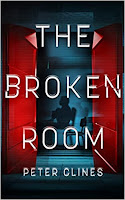
Speaking of getting in the way, this is the point where I awkwardly insert a reminder that my latest book just came out this week. The Broken Room is an action/thriller/sci-fi/horror story with a lot of heart. No, really. One blurb called it “a cosmic horror John Wick” which I was kind of fond of. You can pick it up at your friendly local bookstore, and probably in any format you could want. Fair warning—it does sound like there may have been some supply chain issues this week, so try to be patient with folk if they can’t put something in your hands right this second.

On which note, I did a signing with Mysterious Galaxy last night and scribbled in their extra copies. You could give them a call and they could ship you one. And this Saturday, for you LA-area folks, I’m going to be at Dark Delicacies in Burbank, scribbling in even more books. If you’d like one personalized, please swing by. Or give them a call ahead of time.

And speaking of time… next time, I’d like to talk about framing things.

Until then, go write.


January 28, 2021 / 2 Comments

Keeping Our Heads Down

This is something I’ve talked about several times here on the ol’ ranty writing blog, but I realized I haven’t talked specifically about it in, well, many years. Too many years, really. Definitely not since I’ve tried to lean away from the more ranty, accusatory tone I tended to write in back at the start of this.

Look, reading all those movie scripts made me pull out a lot of hair.

I talked a month or so back about the idea of a contract between author and reader. There’s one other aspect to that contract, a sub clause, and I think it’s one of those “so obvious we don’t think about it” sort of things. To be blunt, nobody’s picking up one of my books to hear from me. Or to see me.

I mean, sure, they like a lot of the characters and worlds I’ve created. Some folks probably (hopefully!) like my style enough that they’re willing to try something new from me. But they still don’t want to see me. They want the story, and they definitely don’t want me getting between them and it.

Now, this doesn’t mean I’m going to follow you home from the bookstore and stick my hand between you and the page or sing nonsense in your ear. It’s just that nobody wants me distracting them from the fact they’re reading my story. They just want to sink into that world and get lost.

Yeah, of course, on one level you know I crafted each of those sentences and paragraphs, chose where all

the breaks

should go, but we have this quiet understanding that I won’t be leaning over your shoulder asking “Did you like that? Did you see what I did there? Wasn’t that clever?” You just want to immerse yourself and forget about the world for a little bit. Or at least get to look at it from a neater angle.

That was jarring, wasn’t it? That weird paragraph break? It was only two lines, but it broke the flow for a second, and you stopped hearing my voice and started hearing your own instead. Probably saying something like “was that a mistake? Is he doing beat poetry? Was he trying to do something funny there?”

And this is the worst thing that can happen to a writer. I don’t want you thinking about me. I want you to be thinking about Hector and Natalie and the people they’re running away from. If you’re noticing me, thinking about what I’m doing… it means I’ve done something wrong.

Think of it this way. It’s the difference between the tough guy in a story who commits unimaginable acts of excessive violence to look tough… and the tough guy who doesn’t need to commit those acts. The one we understand is more impressive without seeing a blatant demonstration. Being able to restrain myself is usually more impressive than how excessive I can be. Less of us is more of the story.

So here’s four easy ways I can keep my literary head down.

Vocabulary— When I started out, I know I desperately wanted to show I had a better vocabulary than the average person. Because that’s a hallmark of a good writer, yes? I didn’t want to use common, pedestrian words, the words just anyone would use. I was a skilled anecdotist, after all, not some mere amanuensis.

And let’s be honest—I wasn’t alone. This is a phase a lot of us go through as we’re starting out. We latch onto (or more often, look up) obscure and flowery words for our literary masterpiece, as if we’re going to get a quarter every time the reader has to look something up. And if the reader doesn’t enjoy going to the Miriam-Webster site every three paragraphs? Well that sounds like their problem, doesn’t it? Not my fault you’ve got such a limited vocabulary.

Truth is, any word I choose just to get attention—to prove I don’t need to use a common word—is the wrong word. Any word that makes my reader stop reading and start analyzing from context is the wrong word. I can try to justify my word choice any way I like, but nobody’s picking up my book hoping for a vocabulary lesson. When a reader can’t figure out what’s being said for the fourth or fifth time and just decides to toss my manuscript in the big pile on the left… there’s only one person to blame.

(It’s not them, in case you had any lingering thoughts on the matter)

Structure— Just like obscure vocabulary, convoluted structure’s another common sign of writer ego. One of the most common forms of this is insisting on grammatical perfection. This usually mean a lot of rigid, formal text and very stiff dialogue. It’s when I get so insistent on proving I know the correct way to structure a sentence my words end up sounding forced and artificial. Also worth noting the flipside of this which is insisting I don’t need to follow any grammar or spelling conventions. Punctuation? Capitalization? Those are tired tropes for losers.

The second most common sign is needless complication. I can admit I used to write—or try to write—sprawling, impenetrable prose. Sentences that went on and on. Descriptions that never ended. It took someone two pages to step through a doorway because we had to know what kind of socks and underwear they were wearing and what flavor toothpaste they preferred. If they were mentioned in the text, I had to remind you of these facts and how they were posed at the exact moment they spoke. Believe me, if something could be explained or described in less than ten words, I’d find a way to do it in at least fifty.

And while I never got quite that bad, there are also some writers who choose arcane story structures or points of view or tenses. Just because they can. Things will go from non-linear first person musings to omniscient third person flashbacks to second person song lyrics and then to a telepathic gestalt mind that only speaks in one of those single, three page sentences I was just talking about. There’s nothing wrong with any of these things, in a general sense, but so often they’re not there to serve the story. It’s just an attempt to look cool and do cool things. If I want to do something like this, I should be able to explain why I’m doing it. And the explanation needs to better than “y’know… reasons,” or I’m just going to leave my readers confused and frustrated as they get knocked out of my story again and again.

Said—Sad admission, kind of going with the vocabulary point up above. For many, many years I didn’t use said. Said was, in my opinion, the lowest common denominator of dialogue descriptors. It’s the kind of word used by writers who weren’t going places, writers not destined for greatness, like I clearly was. Not only that, I’d try to never us the same descriptor on a page twice. So in my early work my characters would respond, retort, exclaim, demand, muse, mutter, sneer, snap, shout, snarl, grumble, growl, whimper, whisper, hiss, yelp, yell, exclaim, or ejaculate. 

Oh, grow up. It was a common dialogue descriptor for years. Really.

Of course, once I finally got to sit down and talk with a professional editor and show him a few pages, this was the very first thing he commented on. Truth is, nobody notices said on the page. It’s an invisible word. Yeah, of course there’s going to be times when my characters are hissing or shouting or gasping. But I should save those words for then so their impact hasn’t been used up and weakened. The vast majority of the  time… stick to said.

Names—If used in moderation, names are also invisible. If you think about it, they’re just a shorthand note for the mental image of my character or MacGuffin or whatever. And they help us keep things straight if I’ve got a bunch of people all talking together.

It’s worth mentioning many fledgling sci-fi or fantasy writers feel the need to rename a lot of things. Or everything. Characters have all-new, correct-for-this-world names and so do their pets. And their gods. And their elements. And their system of weights and measures, their money, their units of time…  It’s great worldbuilding, but I’d guess 83% of the time this is just wasted words.  My elaborate sci-fi empire won’t collapse if I call mind-to-mind communication telepathy, but it might if I keep calling it intralobeech, which, as we all know, is short for “intralobe speech.”

Which, as we all know, is telepathy.

Always remember that moderation is key. Even a simple name like Bob can stack up and get distracting really quick. Which is why the ancient ones created…

Pronouns–when those proper names start to stack up, we switch to pronouns.  Just like names are shorthand for story elements, pronouns are shorthand for those names. When nouns start to clutter up my writing, they’re there to leap in and shoulder the weight.  It’s how Hector becomes he, that mysterious island becomes there, and a Hudson Hornet becomes it.

The catch here is I need to make sure my pronouns are clear. No questions exceptionally clear, ‘cause the moment someone gets confused about which her I’m referring to, they’re going to stop reading my story and start studying the page. We’ve all had to do that, right? Feel our way though a paragraph so we’re clear who she is. Or work backwards through the dialogue, trying to figure out who’s speaking which lines. I’m always super-careful with pronouns, because I don’t want that happening to anyone in my books.

Again—pronouns good. Pronoun confusion—bad. And it’s a writing rule you can apply to real life.

So there they are.  Four simple ways to keep our collective heads down so readers don’t see us standing there. Staring at them. Waiting to be noticed.

Y’see, Timmy, every time I make my reader hesitate or pause just for a second, I’m breaking the flow of the story. I’m encouraging them to skim at best, put the book down at worst. My reader should forget they’re paging through the latest Peter Clines novel, hopefully forget they’re reading altogether. And the easiest way to make that happen is for them not to see the writing.

It’s tempting to wave our arms and shout and try to get the reader to admit they can see us, but all this does is ruin things for everyone. It’s like Sherlock Holmes showing how he came to his amazing deductions or a magician explaining their greatest illusion. That moment is when the whole thing falls apart.

As writers, we need to go unnoticed. We want our characters to be seen and our dialogue to be heard, yeah. We want our action and passion and suspense to leave people breathless, absolutely.

But we’re just distractions.

Next time… hmmmmm. Not sure. I’m open to requests or suggestions if anyone has any. If not, I might tell you about a conversation I recently had with someone about getting published.

Until then… don’t let me see you writing.

March 16, 2020 / 4 Comments

Again and Again and Again and Again and

So, hey… things are a little crazy and intense in this world of ours right now. Hopefully you’re somewhere safe and hunkering down a bit. Also hopefully you’re not someone going “Ha ha ha look at me” as you wander around potentially endangering other people.

Be a hero. Don’t willfully endanger anyone else right now. Okay?

Anyway… bonus post. Figured everybody could use a little extra stuff to read while they’re stuck at home.

I’d like to share a random writing-type thought that’s bounced back and forth through my head a few times recently. I think it’s something a lot of you may automatically get, but this might help solidify it a bit in your own heads. And for some of you, this may be an all new concept.

I’ve mentioned the idea of repetition in writing here a few times, coming at it from a few different angles. It’s one of those elements that can be very powerful if used the right way… and completely brutal if I use it the wrong way. Or overuse it. It’s like one of those vitamins or minerals that we absolutely need to live, but just a little too much and now it’s a deadly poison.

Anyway, it recently struck me why repetition can turn on us like that and—oddly enough—it ties back to another idea I’ve mentioned here once or thrice. And that’s a concept Damon Knight talked about in one of his short story books. The idea of information vs. noise.

To sum up quickly, it goes like this. When we come across a fact we don’t know, it’s information. When we come across a fact we already know, it’s noise. We pay attention to information, but we tune out noise because… well, it’s noise. It’s just a distraction, keeping us away from the stuff we’re actually here for.

Now, Knight was talking about this mostly in the sense of exposition, and this makes perfect sense. We don’t want to read two pages about why Nazis were bad because, well, we all know that already (okay, most of us know that…). But we’re up for two pages about how true artificial intelligence came into existence, because this is something we don’t know and (hopefully) find interesting and relevant within the context of the story.

Getting hit with the same facts we already know is… well, boring. Sometimes flat-out aggravating. It feels like the author is padding and wasting time rather than giving us what we want.

But here’s the thing. This is true of pretty much all repetition. As I’m putting words down on the page, repeating anything the reader knows (or can figure out) is going to quickly become noise.

Think of names in dialogue. We roll our eyes when characters constantly use names while talking to each other. Or if the author constantly uses dialogue descriptors with names rather than pronouns (or just assuming we can follow who’s talking). After hearing Wakko said… a dozen times on one page, we start grinding our teeth. We can’t help it. It’s noise to our ears.

The same thing holds for descriptions. Yes, I know Phoebe is over six feet tall. You’ve mentioned it seven times in the past ten pages. Or that the blood is bright red. Or that Phoebe is six feet tall. Or that Yakko is a cyborg. Or that one of my over-six-foot characters is Phoebe. See what I mean? I’m clearly doing it as a humorous way to make a point, but it’s kinda getting on your nerves, isn’t it?

And I’ve talked before about doing this with reveals. The first time I reveal something to my readers is an amazing, jaw-dropping thing. Because it’s facts they don’t know. It’s information. But the second time I show it off it’s… well, it’s not as interesting. And the third time, if there’s no point to this, it’s kinda boring. By the fourth time okay seriously can we just get on with this? What? A fifth time? Seriously?

Repetition can turn anything I have to say into noise fast. So I want to be very careful if I’m going to repeat any information for a third or fourth time. And like I just joked, if I hit a fifth time…

Wow, I should probably rethink some things.

Next time we’re going to jump back to the A2Q and talk about theme. Yeah, I know. You just had this gut, high school reaction to that word. I’m going to try to help you get past that.

Until then, go write.

Categories