
August 7, 2014

Choose Wisely…

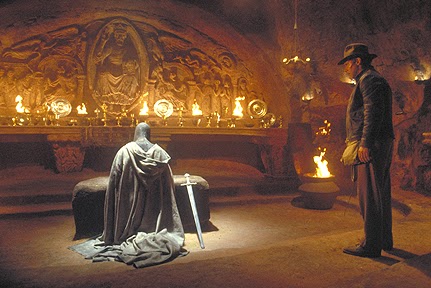
            Very appropriate title for this week.  If you don’t know it, shame on you.
            This may be a controversial post in some eyes, but hopefully folks will read and digest before diving for the comments to make an angry response.
            On the first week of the first television series I ever worked on, I witnessed a minor snit between the line producer and the director of photography.  The episode was falling behind schedule, and the producer had decided it was the camera department’s fault.  He berated the DP for a while, questioned the abilities of the camera crew, and—in a very passive-aggressive way—drove home the need to pick up the pace.
            When he was done, the director of photography held up three fingers.  “Fast.  Cheap.  Good,” he said with a smirk.  “Pick two.”
            The catch, of course, is that it was a very low-budget show (which we all knew).  And no one was going to say it didn’t have to be good.  So the one thing it wasn’t going to be was fast. 
            The line producer fired the DP at the end of the week.  But the rule held true, and I saw it proven true again and again over my time in the industry.  I would guess that four out of five times if there ended up being a train wreck on set, it was because someone was trying to find a way around this rule and get all three choices.
            I worked on Bring It On, the cheerleading movie.  It was incredibly low budget.  But the director had a very relaxed schedule because, at the time, Kirsten Dunst was still a few weeks away from her eighteenth birthday.  As a minor she could only work so many hours a day.  So the film was inexpensive and good, but it wasn’t fast.  I also worked on a bunch of B horror/action movies that were cheap and shot super-fast, but the directors acknowledged they were making straight-to-DVD genre movies so we didn’t waste time with artsy composition or elaborate lighting set-ups.  We all went in knowing these projects weren’t going to be winning any awards–they just needed to be competent films that would entertain people for ninety-odd minutes or so.  And they were
            Are there exceptions to this rule?  Yeah, of course.  But exceptions are very rare and specific by their nature, so I should never start off assuming I’m one of them.  Because we all knows what happens when I assume…  And I saw more than a few projects crash because someone above the line kept insisting they could get all three.
            The “pick two” rule doesn’t just hold for moviemaking, though.  It holds for writing and publishing, too.  We get to make the same choices for our work, and trying to find a way around that choice—a way to have all three—almost always makes a mess.
            Allow me to explain…
            I’m going to go under the assumption most of us here are aiming for good.  Yeah, some of you are shooting for great, but for today’s little experiment, that’s the same as good.  Which means one of my choices is gone right there. 
            So the real question is, are we going for fast or for cheap?
            Several folks decide to go fast, blasting through drafts and edits like a snowplow through slush.  But going fast—and keeping it good—requires lots of eyes and/or lots of experience.  And those aren’t cheap.  A decent editor is hard to come by, and the good ones aren’t going to work for free—especially not work fast.
            If I want to go fast, and I want it to be good, there’s going to be a cost for someone.  That’s just the way it it.  I know a lot of folks who write very fast, but they realize there’s going to be a big investment after that if they want the book to be good.
            On the other hand, I can decide to keep it cheap and good.  And this is when I really take my time.  I do multiple drafts, going through each one line by line.  No spellcheckers or auto-grammar websites.  If I plan on doing this for a living, then I need to be able to do this for a living.  I can’t pretend I know what words mean or how to string them together.  I need to examine each page and paragraph and sentence with my own eyes.
            Doing a manuscript this way could take seven or eight months—maybe even more.  But that’s how I keep costs down—by doing it all myself and being meticulous about it.  And, yeah, meticulous means slow.  It means seven or eight pages a day if I’m lucky.
            What combination does that leave us?
            Fast and cheap.  It’s one I’m sure we’ve all seen.  The people who aren’t willing to take the time or to make an investment.   Fast and cheap means I write one 85,000 word draft in a month, show it to my friend who scraped by with a C in high school English, run it through the spellchecker, and then put it up for all the world to see.
            That’s fast and cheap.  And odds are it’s not good. 
            Again, that isn’t an absolute.  There are a few books out there that managed all three.  If I choose to go fast and cheap, though, good is definitely the exception, not the rule.
            So be honest with yourself and choose your two.
            But choose wisely.
            Next time, on a related note, I’d like to blabber on about some words every writer should know.
            Until then, go write.
April 24, 2014 / 2 Comments

Draft Bored

            See what I did there?  A clever play on words.  Not quite a pun, definitely not a pop culture reference, but… well, it’ll do.
            It’ll do, pig.
            Also, random note—I set up a Tumblr a while back.  If you ever want to ask a quick question, send anonymous insults, or whatever, please feel free to stop by.
            Anyway, I’m about to wrap up this draft of my current project and it struck me that I haven’t blabbed on about the drafting process, so to speak, in a while.  A lot of folks hate doing drafts.  Some folks skip them altogether, convinced their words are gold the minute they’re set down.  And a few folks get caught in an endless loop of writing and rewriting and rewriting and rewriting and…
            So, here’s a basic step by step of how I go from bare idea to something I’m willing to hand to an editor.  And when I say editor, I mean “someone who will pay for these words I’ve written.”  That being said, this is also a good time to bring up the ever-popular golden rule.
What works for me might not work for you,
and it almost definitely won’t work for that guy.
            I’ve mentioned once or thrice before that we all have our own way of writing.  Working through drafts in this way helps me a lot, but it’s not a guarantee of success for anyone except me.  You might need to modify these steps a bit, or maybe a lot.  But I think this is a good baseline method.
            To begin…
            While I’m working on a book, I usually scribble down notes and thoughts about the nextbook.  Characters, dialogue, action moments, reveals… all sorts of different elements.  I’ll shuffle these around into more or less the order I think they’ll end up.  These notes serves as a very, very rough outline, just enough so I can start writing on page one and go when it’s time to start…
            The First Draft—In my mind, this is the “just finish it” stage.  I just want to finish this draft with a beginning, an end, and the majority of points in between.  I don’t worry about catching typos or crafting every subtle moment in the plot. 
            Consider this… diamonds don’t come out of the earth as clear, faceted gems.  They come out as ugly blobs that need lots of cuts and polishing.  So if I dig up a ten-gram diamond, I can’t expect it to make a ten gram gemstone.  If I’m lucky, I might get three or four grams out of it.  It’ll shrink as I work on it, because that’s how I improve it (see below).  So if I’ve got a ten-gram diamond and I’m insisting on a 9.9 gram gem… well, that’s going to make a pretty crappy engagement ring, yes?
            At this early stage, I don’t hold anything back.  I let dialogue, descriptions, and action scenes run on a bit longer than they probably should.  I know I’ll be cutting eventually, so there’s no reason to worry about length now.  For this stage, it really is quantity over quality. 
            If I get stuck on something (an awkward conversation or complex action scene), I’ll just skip it.  Things might not be perfect right now, but I know I’ll be able to go into the exact details of that conversation or this sequence later, so I’d rather keep moving forward and leave that stuff for Future Peter to deal with.  Again, for me, the most important thing is to get the overall frameworkdone.  It’s a lot easier to think about the little things when the big things aren’t looming over you.
            Depending on the book, this process takes me anywhere from two to three months. I had one book take about six weeks, but that was pretty rare for me.
            I don’t show this draft to anyone.  I may take a night off, work on something else for a day, and then it’s right back for…
            The Second Draft— Remember all those problems I left for Future Peter to deal with?  Those need to be dealt with now.  Gaps get filled in.  Characters get fleshed out a little more, and sometimes renamed.  All those awkward knots get worked out.   Because I can see a lot of these elements in relation to the whole story now , I’ll usually find the answers to these problems are more apparent. 
            The goal with this draft is to have a readable manuscript.  No more little notes to myself  or trailing paragraphs that need to get connected somehow.  Someone should be able to pick this up and read it start to finish without thinking they lost a few pages or only got my notes on a chapter.
            Keep in mind this doesn’t mean I do show it to people.  It just means I should be able to.  Really, the only person who might see this is my lady-love, and not even her always.  Usually she has to wait.
            For some folks, this stage would really be the first draft.  Those people have nice pages of their own somewhere out there on the web.  This isn’t one of them.  Plus, breaking it up like this takes a lot of pressure off, which I think is a good thing when you’re trying to treat writing like a real job.  No one likes a high-pressure job.
            Okay then, so… now I step away for a couple of days.  Maybe as much as a week.  I’ll watch movies, work out a little, or maybe even scribble up a few ranty blog posts in advance.  The goal is to push the manuscript as far out of my mind as possible.  Don’t look at it, try not to think too much about it. 
            I’m just into this now with The Albuquerque Door, for those who care about such things.
            The Third Draft—Time to make like a slasher and cut, cut, cut.  Two great rules-of-thumb I’ve mentioned a few times—
one adverb per page, four adjectives
2nd draft = 1st draft – 10%
            Yeah, the second rule goes off the previously mentioned assumption that my first clean, readable draft is my first draft.
            I spend this draft tracking down adverbs, adjectives, pointless dialogue descriptors, and so on.  If they can be cut, they get cut.  One thing I also go after here is common padding phrases that don’t really do anything (sort of, somewhat, kind of, more or less).  One of my regular readers dubbed this somewhat syndrome, and I still call it that.  I like to tell myself I’ve gotten much better about it now that I’m aware of the problem. 
            Sometimes I also like to tell myself that I haven’t gained that much weight since college…
            At this point I’ve gone through the whole manuscript at least twice, so a few larger cuts should be apparent, too.  Overcomplicated descriptions that slow down the narrative.  Awkward sentence structures.  Extensive character moments that really add nothing to the character, the story, or the plot.  Many of these things get tightened or cut altogether.
            I spend a week or two doing this.  This is usually when I let my lovely lady have a look.  She’s my first set of eyes and lets me know I screwed up and I’m too close to see it.
            The Fourth Draft–This is the first big polish.  I go through sentence by sentence, looking for words that come up too often or stilted dialogue.  I also make sure all the cuts and swaps from the last draft haven’t messed anything up.  Are the logic chains still complete?  Did I forget to change Pash’s name to Veek anywhere?  Does Arthur still have time to get that pistol?  Are there any odd character tics that I forgot to remove or add?  Does the whole thing have a good flow to it
            This draft doesn’t take long.  Just a day or two.  It’s just one slow, careful read of the story.
            Once I’ve got a solid fourth draft, I send it off to folks to get fresh eyes.   I generally use four or five friends I’ve know for years.  All of them are all professional writers and editors who know how to give useful criticism.  Not to beat a dead horse, but by professional I mean they get paid to do this for a living.  They have actual credentials.
            Speaking of which, some folks might hire a professional editor at this point. Nothing wrong with that.  The important thing is to get an opinion I can trust to be honest, even if I have to pay for it.  A few folks might argue that this is the publisher’s job, but I need to get a publisher first, and why are they going to bother with my crap manuscript?
            Anyway, this draft goes off into the world and it may be two weeks to a month before I look at it again.  The challenge is to resist messing with it while those people are looking at it.  I try to spend the time relaxing a bit, scribbling down ideas for later books (see above), or flexing different mental muscles.
            More than once, I’ve cleaned my office.
            The Fifth Draft— Now I’ve gotten notes back from the folks I begged/ blackmailed/ paid to read this thing.  I go through the whole manuscript page by page with their comments.  If you’ve got multiple monitors, this is a great time to use them.
            Page one… what did everyone think?  What about page two?  How’s page three look?  As I’m doing this, I’ve also got my own copy of the fourth draft that I’m using as a “master document.”  This way I can see all the notes and make whatever changes are required. 
             I mentioned that I ask four or five people to make notes for me.  That gives me a broad sampling on each note/ issue that comes up.  If four people like something but one doesn’t, odds are I’ll call that good.  Nothing’s going to work for everyone.  If three don’t and two do (and of course I do, or I wouldn’t’ve written it), I’ll sit and give it a good look.  If nobody likes it, well… I’m smart enough to admit when I’ve screwed up and something doesn’t work.
            This draft can take another two weeks or more to finish with a full book manuscript.
            The Sixth Draft— This one’s another polishing draft, just like the fourth.   I need to make sure everything still works now that I’ve made those changes and tweaks from my reader’s comments.  So, yet another line by line reading, adjusting as I go.
            And at this point… this is when I’m done.  There’s only so much a given writer—in this case, me—can do with a given story.  There comes a point when further work accomplishes nothing and I’m just rewriting for the sake of rewriting. I’m sure we all know someone who’s just been working on the same manuscript for years and years because they’ve got another one or two drafts to put it through.  If my manuscript’s not ready for a publisher (or film producer) by now, it probably means I screwed up something big right at the start. 
            Maybe with my initial idea of rebooting the Laff-A-Lympics as a medical drama starring a gender-swapped, alcoholic Captain Caveman.
            Next time… well, if there’s anything next week it’ll be really quick.  I’ve got a flight on Thursday.  If you’re in Dallas next week, please swing by Texas Frightmare and say hi.  I’ll be in the Made in Texas room.
            Either way, go write.
February 20, 2014

Perfect

            I’m kind of on a roll right now with the new book, so—if you don’t mind—I’m just going to make a quick observation and get back to it.  Next week I’ll prattle on for far too long like I normally do.
            So… said with the golden rule firmly in mind
            Worrying if all the words are right in a first draft is a lot like worrying if I’m getting a band or a DJ for my wedding when I’m not dating anyone.  It just doesn’t matter at this stage.  If I keep obsessing over those later elements, I’m never going to take care of the earlier ones.
            Write a first draft.  Perfection will show up in the later ones.  Honest.
            Next time, we’re well into screenwriting contest season, so I thought I’d talk about the stories contest readers hate.
            Until then, go write.
August 15, 2013

Admissions Board

             This is going to be one of those posts that sounds a bit harsh at first, but hopefully you’ll stick through ‘till the end before posting those angry responses.  If you’re feeling a bit thin-skinned, maybe you should come back next week.
            Writing is tough.  It’s hard work.  I know this, because I do it for a living.  When someone tells me how easy and wonderful and fun writing is, I’m often tempted to point out that they’re probably doing something wrong.
            Instead, I bite my tongue and scribble notes for a ranty blog post or two.
            There was a point when I thought writing was easy and fun.  To be blunt, that was back when I wasn’t taking it seriously.  My plots were either contrived or derivative (some might say that hasn’t changed).  My characterization was weak and my motives were… well, whatever they needed to be at the moment to make that weak plot move along.  I rarely edited. 
            Perhaps most important of all… I thought I was a literary genius.  My stories didn’t just deserve Stokers and Hugos, mind you.  Once I got around to finishing them and sending them out, they were going to get Pulitzers and Nobels.
            Needless to say, my writing made huge leaps when I was able to admit a few things to myself.  I think that’s true of most people in most fields—if we can’t be honest about where we are, it’s hard to improve.
            That being said…
My writing sucks—This sounds harsh, yeah, but it needs to be.  Too many beginning writers just can’t get past the idea that something they wrote isn’t good.  I know I couldn’t.  It’s just against human nature to spend hours on something and then tell yourself you just wasted a bunch of time.  Why would I write something I couldn’t sell?  Obviously I wouldn’t, so my latest project must deserve a six-figure advance.
            The problem here is the learning curve.  None of us like to be the inexperienced rookie, but the fact is it’s where everyone starts.  Surgeons, chefs, pilots, astronomers, mechanics… and writers.  Oh, there are a few gifted amateurs out there, yeah—very, very few—but the vast majority of us have to work at something to get good at it. 
            You noticed I said “us,” right?  Lots of people think of Ex-Heroes as my first novel, but it wasn’t.  There was Lizard Men from the Center of the Earth (two versions), a God-awful sci-fi novel called A Piece of Eternity, some Star Wars and Doctor Who fan fic, a puberty-fuelled fantasy novel (which I haven’t admitted to in twenty years or so), The Werewolf Detective of Newbury Street, The Trinity, The Suffering Map, about half of a novel called Mouth… and thenEx-Heroes.  And I can tell you without question that most of those really sucked.  It doesn’t mean I didn’t try to sell some of them (we’ll get to that in a minute), but I couldn’t improve as a writer until I accepted that I needed to improve.
My first draft is going to suck—There was a point where I would fret over my writing.  I’d spend time laboring over individual words, each sentence, every paragraph.  I’d get halfway down the page and then go back to try to fix things.  It meant my productivity was slowed to a crawl because I kept worrying about what had happened in my story instead of what was going to happen.
            The freeing moment was when I realized my first draft was always going to suck, and that’s okay.  Everyone’s first draft sucks.  Everyone has to go back and rework stuff.  It’s the nature of the beast.  With those expectations gone, it became much easier for me to finish a first draft, which is essential if I ever wanted to get to a second draft, and a third draft, and maybe even a sale.
My writing needs editing.  Lots of editing—So, as I just mentioned, I’ve been doing this for a while.  Arguably thirty-five years.  Surely by now I’ve hit the point where my stuff rolls onto the page (or screen) pretty much ready to go, yes?  I mean, at this point I must qualify as a good writer and I don’t need to obsess so much over those beginner-things, right?
            Alas, no.  We all take the easy path now and then.  We all have things slip past us.  We all misjudge how some things are going to be read.  And I’m fortunate to have a circle of friends and a really good editor at my publisher who all call me out when I make these mistakes or just take the easy route when I’m capable of doing something better.
            Also, as I mentioned above, part of this is the ability to accept these notes and criticisms.  I’m not saying they’re all going to be right (and I’ve been given a few really idiotic notes over the years), but if my default position is that any criticism is wrong then my work is never going to improve past the first draft. 
            Which, as I also mentioned above, sucks.
My writing needs cuts—Sticking to the theme, if I believe my writing is perfect, it stands to reason all of it is perfect.  It’s not 90% perfect with those two odd blocks that should be cut.  When I first started to edit, one of my big problems was that everythingneeded to be there.  It was all part of the story.  Each subplot, every action detail and character moment, all of the in-jokes and clever references.
            The Suffering Map was where I first started to realize things need to be cut.  I’d overwritten—which is fine in a first draft as long as you admit it in later drafts.  I had too many characters, too much detail, subplots that had grown too big, character arcs that became too complex.  It took a while, but I made huge cuts to the book.  It had to be done.  Heck, with one of my more recent ones, 14, I needed to cut over 20,000 words.  That’s a hundred pages in standard manuscript format.  All cut.
My writing is going to be rejected –You know what I’ve got that most of you reading this will never have?  Rejection letters.  Actual paper letters that were mailed to me by editors.  I’ve got lots of them.  Heck, I’ve probably got a dozen from Marvel Comics alone.  And since then I’ve got them from magazines, big publishers, journals, magazines, ezines.
            But when that first one came from Jim Shooter at Marvel… I was crushed.  Devastated.  How could he not like my story?  It was a full page!  It was typed!  I even included a rendering of a cover suggestion in brilliant colored pencil.  It took me weeks—whole weeks, plural—to work up my courage to try again, and then he shot that one down, too.
            Granted, I was about eleven, and those stories were really awful.  But even good stuff gets rejected.  Heck, even with the list of credits I’ve got now, the last two short stories I sent out were rejected.  Editors and publishers are people too, and not everything is going to appeal to everyone.  I came to accept being rejected once I realized it wasn’t some personal attack (okay, once it was…), just a person who didn’t connect with my story for some reason.
            And, sometimes, because my stories sucked.
            If I can admit some of these things to myself, it can only make me a better, stronger writer.  It’s not a flaw or a weakness.  In fact, if I look at the above statements and immediately think “Well, yeah, but I don’t…,” it’s probably a good sign I’m in denial about some things.
            And that won’t get me anywhere.
            Next time, I’d like to say a few clever words about saying the word said.
            Until then, go write.

Categories