September 2, 2011

The Sonic Screwdriver

First off, my apologies for running late. Lots of work on the new book.

Second off, a bit of shameful self-promotion. If you haven’t picked up my “debut novel” Ex-Heroes, the publisher’s put the ebook version on a fantastic sale right now. $2.99 for the next week (starting today). Kindle, Nook, Kobo, whatever. If you haven’t grabbed it, now’s a great chance. If you’ve been pushing a friend to get it, tell them about it now. Or just buy it for them. After all, the sequel’s out in about four weeks.

And now, with that ugly bit of capitalism out of the way…

If you’re a big fan of Doctor Who (like me), you know the sonic screwdriver is about the most useful tool ever invented. It opens and closes locks, takes readings, repairs barbed wire, gives phones universal roaming, acts as a TARDIS remote control, and hundreds of other things. Put simply, it’s the greatest all-in-one tool that has ever existed.

Alas, most of us just have to buy a whole tool box worth of stuff. Hammers. Wrenches. Pliers. Tape measures. And of course, screwdrivers. But it’s not enough to have all this stuff. You can only really work on something if those tools are handy.

For example…

Let’s say your significant other comes home from the market and says “Hey, the flux capacitor on the car isn’t fluxxing. You might want to check it out.”

So you go out to the car and see you need a screwdriver to open the housing on the flux capacitor. So you go back inside, dig your toolbox out of the cabinet under the sink, and get a screwdriver out. Then you go back out to the garage and discover you needed a Phillips head screwdriver, not a flathead. Head back in, grab a Phillips, back out to the garage.

You get the housing open on the flux

I’m sure you can all see what’s going wrong here. It’s not that we’re trying to fix the plutonium intake when the problem’s clearly in the flux dispersal array. The problem is that we’re attacking this project piecemeal, trying to solve it a single element at a time, and in doing so things are dragging out far longer than they need to. Unless you’ve actually got a sonic screwdriver, you can’t grab one tool out of your toolbox and go see what the problem is. You also don’t go check the problem, walk back, and grab the next item you need at this particular stage.

No, you take the whole toolbox. You bring everything. Because it’s worth the little extra effort to have it all handy and there to work with if you need it. Yeah, you’re not going to use every single tool you brought out there, but the amount of time you save is worth that initial extra effort.

For the record, my friend Laura got me a sonic screwdriver for my birthday.

But that’s not important right now.

How many of you have figured out the point of this little scenario…?

A lot of people take forever when they write. Years and years. Sometimes it’s basic procrastination, yes, but sometimes it’s just that they’re trying to get every single element right before they put it down on paper (so to speak). They won’t write one word unless they know it’s the word they’re going to have in the final draft. So each sentence takes hours and each chapter can take weeks.

Now, there’s nothing wrong with wanting to get things right. That’s the whole point of feedback and editing and doing multiple drafts. Thing is, you can’t do a second draft until you have a first one. Which means the entire process is really at a dead halt until that first draft is done.

When I sat down with my new project, -14-, I spewed out pages and pages of stuff over three months, and soooooooo much of it got cut in later drafts. A lot of it got reworded and some of it got completely rewritten. But I was able to keep working because I had stuff to work with.

Y’see, Timmy, it’s always better to have something to work with than to have nothing to work with. Don’t be scared to put everything in your first draft. Bring it all. Don’t hold back because you think you might not need something or it might not work. Write bits you know you’re going to cut and characters you know are going to be trimmed out. Because you can’t edit or rewrite a paragraph that doesn’t exist.

Next week, unless I get a really cool request or suggestion, a little free verse love poem about the Oxford English Dictionary.

Until then, go write.

July 28, 2011 / 3 Comments

Slasher Porn!

No, it’s not what it sounds like, or even pop culture. I’m just trying to boost the hit count a bit. Of course, some of you read this at work, so I probably just got half of you blocked.

So, let’s talk about cutting things up.
I’ve got a lot of slashing to do in my near future. The first draft of my new book is almost done, which means a polish draft and then I start cutting. And there’s going to be a lot to cut. It’s closing in on 140,000 words and around 110,000 is where a trade paperback starts to get a little too heavy. I already know a few sections that are going to vanish, but there’ll have to be more to get this down to fighting weight.
So, there’s a little tip I’ve mentioned here once or thrice. First time I heard it was in Stephen King’s On Writing. He got it from an editor when he was a kid, and still tries to follow it today. It’s not a hard-fast percentage, but it’s a great rule of thumb. I’m sure you remember this one–


Second Draft = First Draft – 10%
Now, by coincidence, I’m also going over layout pages for Ex-Patriots right now. It’s coming out in about two months, and it’s already out as an audiobook. By further lucky coincidence, I actually kept track of some exact numbers for Ex-Patriots as I started to edit it. So let’s go over some of them.
The first full draft of Ex-Patriots was 109,088 words. For me, that’s really the second draft because I tend to fly through the first draft and neaten up in my second draft. It means some stuff gets cut early, some stuff gets tightened up, but some stuff gets added, too.
For example, I lopped out one whole chapter because I realized after the fact it didn’t fit the tone and a couple elements in it were happening a bit too soon in the big scheme of things. It was only half-formed, granted, but I still thought it was well done and I liked it, so I plucked the whole thing out before it even got polished. It’ll probably show up in Ex-Communication. Seventeen months from now you can say “Ah-HAH!” when you read the dinner party chapter. That was 500 words gone before I even start the serious cutting.
So my second draft tends to be tighter and leaner, but still a bit larger overall. Let’s see how much I can cut out of this with just a few passes.
First off, I removed 225 thats in the third draft. Almost a full page of them. For the record, I cut over one thousand thats from The Eerie Adventures of the Lycanthrope Robinson Crusoe. I’ve mentioned that before as a word which is easy to cut. Go through your writing and I’ll bet you’ll find half your uses of that could go away with no problem. Right there, the draft is down to 108, 863 words.
Then I cut 406 words worth of adverbs and adverbial phrases. I’ve mentioned a couple times how easy it is to lose adverbs. It usually forces you into using better words, too.
Next I got rid of useless modifiers. This is a bad habit I developed along the way that a friend (and editor) of mine named Somewhat Syndrome. It’s when I use modifiers as half-strength adverbs and adjectives. It comes up a lot when I have to describe measurements (a bit over a mile, almost two hundred pounds, and so on). I deleted 61 kind ofs, 14 sort ofs, another 61 uses of almost, and a whopping 70 a bits. That’s over 200 more words gone altogether. At this point the manuscript’s down to 108, 251 words.
Then there was some general tightening. I’d go through and look for places where contractions would make the dialogue flow better or excess verbiage had just crept in one way or another. It happens when I think too much, to be honest, and start wondering if sentences are clear or if I’m being specific enough.
For example, what’s the difference between I’ll drive my own car and I’ll drive my car? Not much except for some emphasis, which might already be established with the tone of the moment. Or what about she blinked her eyes open and closed, as if there was some other way to blink and some other part of your body to do it with.
Another 220 words went away during this pass.
So check this out. Remember that great little tip from Mr. King? At this point I’ve cut well over a thousand words, five solid pages of manuscript, and I haven’t even changed anything. I haven’t taken out any dialogue or removed characters or shortened sequences.
Y’see, Timmy, editing isn’t always painful and arbitrary. A lot of the time it’s necessary. And the necessary stuff isn’t that hard to deal with. All those cuts I just mentioned used the Find feature in word, so that’s only a day’s worth of work.
A few other chunks went away later in the editing process. There were a few jokes and ten percenters I’d added that I since admitted weren’t worth the payoff. One scene went away when I realized it made no sense with my revised timeline.
By the end of the third draft of Ex-Patriots, I’d cut over thirty-five hundred words. Not the mathematical ten percent we’re aiming for, but with the cuts and revisions between first and second, I felt pretty good about it.
Of course, you can get the book in a few weeks and tell me if I messed up
Next time… well, I’m open to suggestions. If no one has any, I might rant about spelling again (we’re due). I’ve got one potential idea, but I’m not sure if it’s been done already…
Until then, go write.
January 20, 2011

I May Have A Few Ideas…

So, two weeks back I mentioned an online conversation I had with a friend of mine. At least, the first half of it. I wanted to ramble on a bit now about the second half of that conversation and expand on some of the thoughts and ideas it sparked.

The topic is, what do you write?

There’s two ways to read that question. One could be reworded to that ever-popular, where do you get your ideas? I’m sure most of you reading this have heard a few of the punchier answers to that query. Some people want to sit down and write, but have no idea what to write about, while other people polish off a new screenplay over a long weekend.

There’s one very important thing any writer needs to understand if they want to be successful. Ideas are cheap. Ridiculously cheap. They’re a dime a dozen. I would guess on an average day I have at least ten ideas for books, short stories, screenplays, or television episodes. Last year one blogger (and for the life of me I can’t recall who) posted an idea on her page every day for the entire year, just to demonstrate how simple and cheap ideas are.

Now, from where I’m sitting, there are two issues beginning writers often hit when it comes to ideas, and they’re really two flipsides of the same problem.

Some folks lament that they never have good ideas. Yeah, they have a couple clever thoughts, but none of them are on that high level like Jurassic Park or American Gods or The Girl with the Dragon Tattoo. The ideas these people come up with are… well, kind of pedestrian. They’re not worth writing about, so these folks don’t write. They hold off and wait for the good ideas to strike.

The second group has too many ideas. They’re barely done writing their fourth screenplay this month when they get an idea for a series of epic novels. And they’re only on the second one of those when they think up a hit television series (which, naturally, leads back to a movie franchise).

Both of these groups are suffering from the same misconception. They think anything that goes on the page has to be pure, award-winning gold. The difference is that the first group won’t put anything down because they know it isn’t gold, and the other folks are assuming it must be gold because they got it on the page. Make sense?

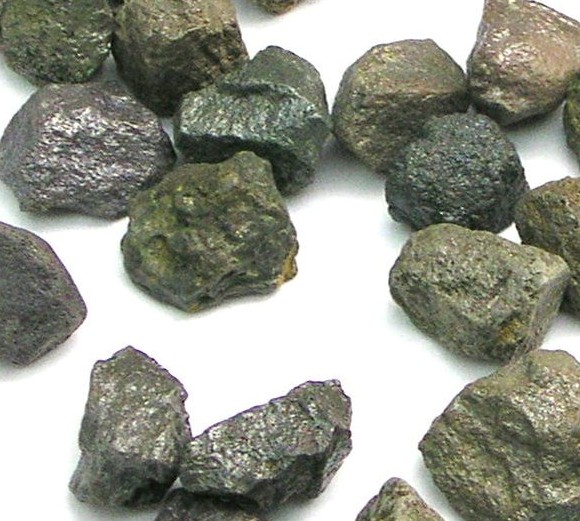
The catch, of course, is that most of the stuff that you put down isn’t going to be gold. It’s going to be rewritten and edited down and polished. Don’t think of story ideas as gold, think of them as diamonds. When a diamond first gets discovered, it’s a black, crusty, misshapen thing. Its got potential value, but not much past that. Diamonds need to be cut and recut, measured and examined, cut one more time, polished, and placed in a setting. Then they’re worth something.

The first group is tossing out all those black, coarse stones because none of them look like engagement rings. The second group is sticking the little lumps on gold bands and asking three months salary for them. Hopefully it’s easy to see why neither of these is the right approach.

So, once you’ve got an idea, it needs work. It’s not ready to go as is. Which brings us to the back half of this week’s rant.

The second way to read “what do you write?” is to ask which of these ideas do you pursue? If you have three or four solid ideas, which one do you start working on? How do you pick the idea you start with?

Well, first you need to keep in mind that one idea all on its own rarely translates to a story. “Some kids go to a haunted house,” is an idea, yes, but there’s not really a bestselling novel there. Likewise, you can’t do much if all you’ve got is “a girl who wants to build a time machine.” Just like cooking, you can’t make a story with only one ingredient. An egg on its own is an egg. An egg with cheese (and maybe a little turkey and a dash of pepper) is an omelette.

Once you understand this, then it just comes down to writing. How do the kids going to the haunted house and the girl who wants to build a time machine intersect and overlap? Is the girl one of the kids? Is the haunted house her secret lab? Is she going to rescue them? Is she hiding there after being made fun of and they’re coming to save her? Is anyone going to die in this house? Will anyone make it out? Is it just part of a plan cooked up by Mr. Haversham, the carnival owner?

Is that a hand in the back? Ahhh, yes. The question is, but what if the idea leads to a dead end? How do you know it’s a good idea until you actually sit down and write it? This one’s easy to answer.

You don’t.

Again, this kind of thinking goes back to that “it has to be gold” mentality. Sometimes you work your way through a hundred pages and discover there’s just nothing there. You wrote a chapter (or a bunch of chapters) that don’t work for one reason or another. Maybe more than one reason. Sure you could cheat a bit, tweak a few things, maybe toss out a deus ex machina or three, but in the end it doesn’t work because it doesn’t work. There’s no clever phrase or substituted word that’s going to change it.

I know a lot of people have trouble accepting this, even though it’s something we’ve all seen in other jobs. Chefs come up with recipes they never use. Architects design buildings that are never constructed. Hell, how much money does the auto industry spend on concept cars each year?

Consider this…

Once or thrice here I’ve mentioned a rule Stephen King talks about in his phenomenal book On Writing (there’s a link to it in that carousel at the bottom of the page). Said rule is–

Second Draft = First Draft – 10%

You remember that one, yes?

Well, if Mr. King follows his own rule–and we’ll assume he’s not a hypocrite–lets do a little math. The final version of Under The Dome is 1072 typeset pages. Even if we say there weren’t any other cuts in later drafts, that implies he cut just over 119 pages from his first draft. In standard manuscript format (Courier, double-spaced), that’s closer to 240 pages. Heck, that’s almost half of Ex-Patriots. It’s almost 2/3 of Ex-Heroes. Think about that. He typed up 240 pages of character and plot and description… and then tossed all that work.

Y’see, Timmy, almost every writer puts out a fair degree of material that’s never going to be seen by anyone. Again, don’t get paralyzed wondering if the next words on the page are going to be gold. Odds are they aren’t. But you will find some diamonds in the rough, and once you know how to spot them it’ll be an easier (and quicker) process to find them.

For now… take what you’ve got and work with that. There’s a good chance there’s a diamond or two in there somewhere. If you really put the work into it.

Next time, on a somewhat related note… well, contest season is lapping at my ankles. Which means more bad scripts to read. So we’ll talk about some of those.

Until then… go write.

You’ve probably heard at least half of this week’s title before. If you’ll indulge me for a bit, I’ll explain the other half.

Since I’ve been waist-deep in the drafting process, I figured I could toss out a rough guide of what that usually means to me. I’ve given lots of suggestions about this sort of thing before, but I thought it might be cool to show a step by step, solid example of how I take a project from a pile of rough ideas to something I’ll show friends, to something I consider worth showing to… well, people who might give me money for it.

Before going into this, I also want to remind everyone of the golden rule.

What works for me might not work for you, and it almost definitely won’t work for that guy.

As I’ve mentioned once or thrice before, we all have our own way of writing. Doing these drafts in this way helps me, but you might need to do something a little different.

That being said…

The 1st Draft— This is just the “get it done” stage, as far as I’m concerned. I don’t worry about catching typos or crafting every subtle moment in the plot. I just want to finish this draft with a beginning, an end, and the majority of points in between.

I tend to skip around a lot in the first draft. I’ll scribble down random beats or dialogue exchanges that occurred to me while the idea was fermenting in my head and drop them more or less where I think they’d go. This serves as a very, very rough outline, just enough so I can start writing on page one and go.

At this early stage, if I get stuck on something (an awkward conversation or complex action scene), I’ll just skip it for now. I know I’ll be able to go into the exact details of Wakko’s nervous breakdown later, so I’d rather keep moving forward and leave those snarls for Future Peter to deal with. Again, for me, the most important thing is to get the overall framework done. It’s a lot easier to think about the little things when the big things aren’t looming over you.

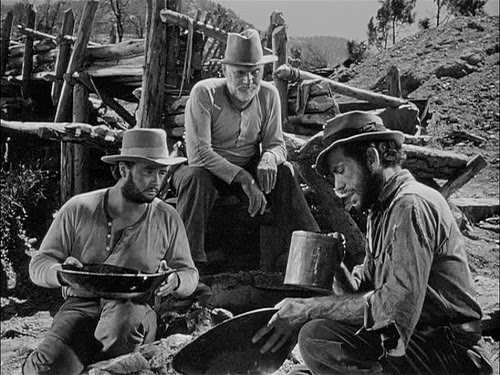
I also don’t hold back here at all. I let dialogue, descriptions, and action scenes go on forever. I know I’ll be cutting eventually, so there’s no reason to worry about length now. For this stage, it really is quantity over quality. I mentioned this visual once before. Think of the first draft like prospecting for gold. If you wanted to find a pound of gold, how much soil would you dig up? Seventeen ounces? Five pounds? Five hundred pounds? Where are your best odds for finding that pound of gold?
I don’t show this draft to anyone. My lovely lady may get an out-loud reading or a little peek if I think I’ve done something exceptionally clever. There have been one or two times she’s called me out on something that sounded good in my head but was kind of flat and awkward in someone else’s. I also don’t do much past a night off to celebrate the end of this draft before diving into…

The 2nd Draft— Now it’s time to smooth it out. All those problems I left for Future Peter to deal with need to be dealt with. Gaps get filled in. All those awkward knots get worked out. Because I can see a lot of these elements in relation to the whole story now , I’ll usually find the answers to these problems are more apparent.

The goal with this draft is to have a readable manuscript. No more little notes to myself or trailing paragraphs that need to get connected somehow. Someone should be able to pick this up and read it start to finish without thinking they lost a few pages or only got my notes on a chapter.

Keep in mind this doesn’t mean I do show it to people. It just means I should be able to. Really, the only person who might see this is my lady-love, and not even her always. Sometimes she has to wait.

A few people have argued with me these two drafts really just amount to me doing a first draft in two stages. That may be true, but they’re not writing the ranty blog, are they?

Okay then, so… now I step away for a couple of days. Maybe as much as a week. I’ll watch movies, work out a little extra (I need it after three or four months at my desk), build little toy soldiers, or maybe even scribble up a few ranty blog posts in advance. Sometimes I’ll play with a short story idea. The goal is to push the manuscript as far out of my mind as possible. Don’t look at it, try not to think too much about it. And then…

The 3rd Draft–Stephen King says to start cutting on draft two, but as I said, my draft two is what some people may call a solid first draft. As such, I usually wait until draft three to start slashing. This is where I hunt down adverbs, adjectives, pointless dialogue descriptors, and so on. Two fun rules I’ve mentioned here before–

2nd draft = 1st draft – 10%

one adverb per page, four adjectives

One thing I really go after here is the padding phrases I have a bad habit of dropping in everywhere (sort of, somewhat, kind of, more or less) that don’t really do anything. One of my regular readers dubbed this Somewhat Syndrome, and I like to tell myself I’ve gotten better about it now that I’m aware of the problem. Sometimes I also like to tell myself that Famke Janssen and I would have a really deep, emotional connection if we ever met…

Anyway, at this point I’ve gone through the whole manuscript at least twice, so a few larger cuts should be visible. The long description of Wakko ceremonially sharpening his katana. Dot’s flashback to the summer she lost her virginity during a midnight swim with a handsome stranger. That impassioned speech Wakko gives against taxing the rich. That’s some beautiful writing there, but is it actually doing anything?

This tightening process is also when I can usually spot flaws in the overall structure. In larger stories, it’s not uncommon to end up with “floating” events that are important, but aren’t tied to a solid point in the script. This one may be here right now, but with all of the story in front of me I might realize it would work better there.

If I haven’t already, this is when I let the lady love have a look. She’s my first set of eyes to let me know I screwed up something (10%) and I’m too close to see it.

For the record, this is where Ex-Patriots is right now.

The 4th Draft–This is the first big polish. I go through sentence by sentence, looking for words that come up too often or stilted dialogue. I also make sure all the cuts and swaps from the last draft haven’t messed anything up. Are the logic chains still complete? Transitions still good? Parallels parallel? Arcs smooth? Did Dot just pull a skeleton key out of her pocket that she shouldn’t have yet? Did Yakko just turn into a woman for a few minutes in the middle of the chapter?

This draft doesn’t take long. Just a day or two. It’s just one slow, careful read of the story.

Once I’ve got the fourth draft all shiny, this is the one I show to folks for comments. I generally send it out to five people. They’re a carefully selected bunch, all of whom have some level of literary background, and I don’t think there’s one among them I’ve known for less than five years. One’s actually been reading and critiquing my work for over two decades now, and she still doesn’t cut me any slack. The key thing is they’re all people who will give honest, useful criticism.

This goes off into the world and it may be a month before I look at it again. The trick here is to resist messing with it while those people are looking at it. Again, it’s a great time to flex different mental muscles. Maybe I’ll do a lot of research on an upcoming project. Maybe I’ll build a model tank. Or maybe I’ll just get caught up on laundry.

The 5th Draft— Now I’ve gotten notes back from whatever folks I cajoled into reading this thing. I sit down with all the comments and go through the whole manuscript page by page. This is one of those times that having a second monitor’s very helpful, because I can have three or four versions open and visible at once.

So, what did everyone think of page one? What comments were there on page two? How’s page three look? As I’m doing this, I’ve also got my own copy of the 4th draft that I’m using as a “master document.” This way I can get all the notes assembled in the relevant place and make whatever changes are required. This document is more or less the 5th draft, and it can take another two weeks or more to finish it with a full book manuscript.

I mentioned above that I get five people to make comments for me, and that’s so I can get a broader sampling on each issue that comes up. If four people like something but one doesn’t, odds are I’ll call that good. Nobody’s going to get every joke or like every chapter. If three don’t and two do (and of course I do, or I wouldn’t’ve written it), I’ll sit and give it a good look. And if nobody likes it, well… I’m smart enough to know when I’ve screwed up something doesn’t work.

6th Draft— This one’s yet another smoothing, polishing draft. I need to make sure everything still works now that I’ve made those tweaks and changes from my reader’s notes,. So, yet another line by line reading, adjusting as I go.

And honestly, at this point… this is usually when I’m done. There’s only so much a given writer–in this case, me– can do with a given story. There comes a point when further work accomplishes nothing. If it’s not ready to show to a publisher by now, it probably means I screwed up something big right at the start. Perhaps when I first thought I could adapt To Kill a Mockingbird into a hardcore tween vampire romance starring the Animaniacs.

Y’see, Timmy, there’s a real danger that if you keep trying to come up with reasons to do another draft, you’ll keep finding them. I’m sure we all know someone who’s just been working on the same manuscript for years and years and years because they’ve got another one or two drafts to put it through. After a while of that, your story stops looking like a coherent tale and a bit more like the Frankenstein Monster. And not the nice, clean Boris Karloff version. I’m talking about the seriously messy Roger Corman one.

Maybe even, dare I say it, Mr. Stitch.

Next time it’s going to be Christmas. Well, the Eve of Christmas Eve. So I might prattle on with some ideas about how you can have holiday fun.

Until then, go write
Categories