
April 24, 2015 / 4 Comments

Slow Down, You Move Too Fast

            Both of you who are still here, many thanks for your patience during my long absence.
            The title’s a pop culture reference to some band my mom listened to a lot.  Garfunkel and Oates, I think…
            Okay, I’ll warn you right up front, this post is going to annoy some of you.
            I wanted to talk with you for a few minutes about cooking.  As I’ve mentioned in the past, cooking and writing are great parallels.  There are certain rules that must be followed, but there’s also a degree of personal style and taste involved for both the creator and the consumer.  We also understand that while almost all of us can do it on a simple, day-to-day level, there’s a big difference between that and cooking on a professional level as a chef.
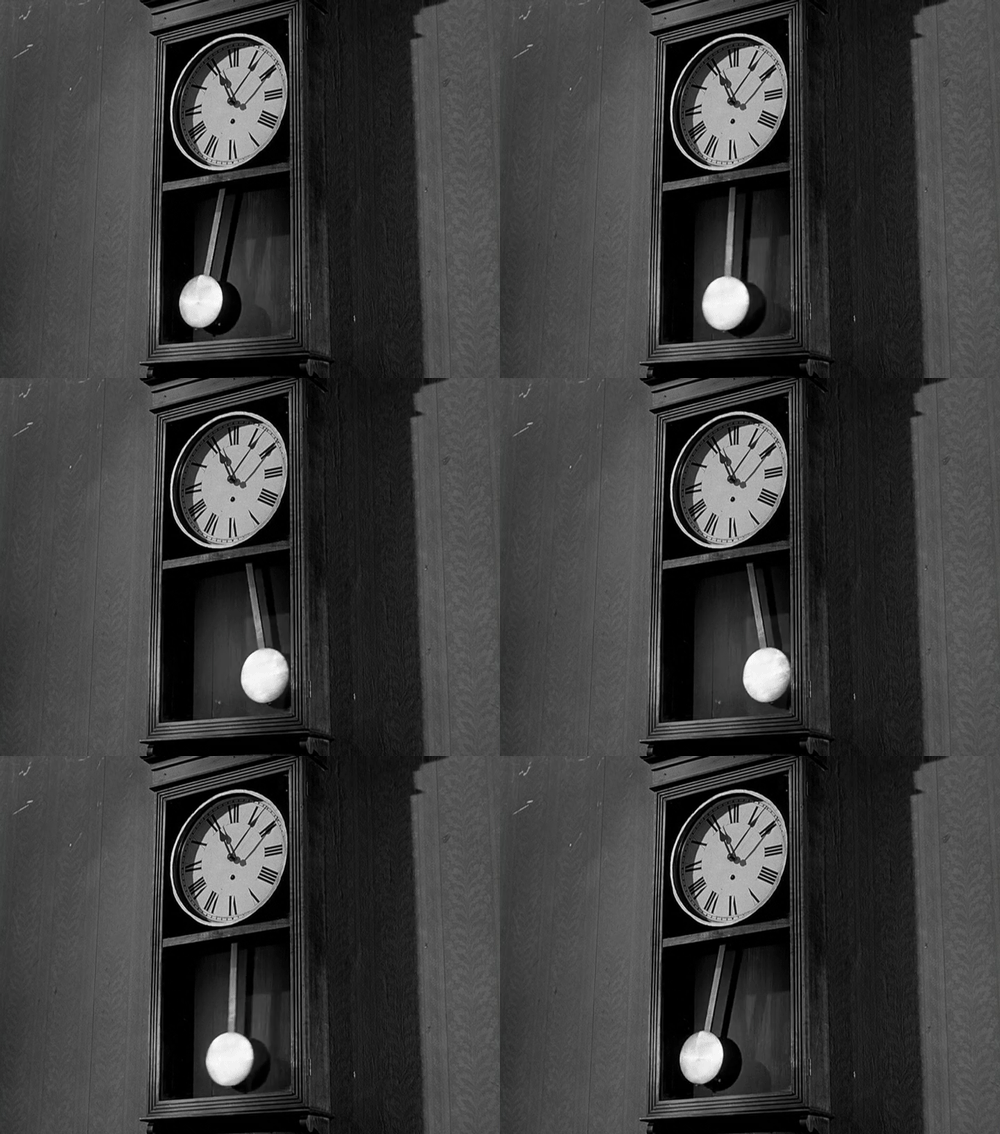
            In cooking, we understand there are certain time elements that can’t be changed.  A three minute egg needs to boil for (big surprise) three minutes.  I can’t bake a cake in half the time by turning the temperature up twice as high.  Trying to speed these things up doesn’t improve them.  We all get that.  We all understand it.
            This is true in a lot of things.  If I’m building a house, I need to let the concrete in the foundation set before I start working on the frame.  Doctors often need to do procedures in multiple steps to give the patient time to heal.   It’s boring as hell, but sometimes you actually just need to watch paint dry. 
            Likewise, I think there’s a time element in writing.  The more it gets rushed, the more I end up with… well, a burned cake.  Or a crappy foundation.  Or severe hemorrhaging.  Or a lot of smeared paint.  Pick your favorite metaphor.
            That being said, there’s a lot of pressure to rush through writing these days.  I’ve seen more than a few would-be gurus pushing a business model of quantity over quality.  The ease of publishing through Amazon has made the idea of moving slow seem… well, clunky and antiquated.  It draws comparisons to, dare I say it, dinosaurs.  And with the raw amount of stuff being e-published, I think all of us have a lurking fear that if we don’t get our idea out there now, someone else is going to have it out there first thing tomorrow.
            But the most important thing, above all others, is for me to write well and write something good.  Churning out 6000 words a day or 300 pages for NaNoWriMo is an achievement, yes.  But it’s better to have 2000 good words and 200 polished pages if I want to do something with them.
            Odds are, that’s just not going to happen in my first draft.  Or my second draft, especially if that’s just a quick pass with the spellchecker.  Or my third.  Maybe not even my fourth.  Oh there’s always a chance that my first book is just pure gold on the first pass, but the majority of us just don’t have the ability or the experience to put out material that doesn’t need work.
            Yes, us. The book I just turned in took six months, start to finish.  It went through four drafts, and there’s no question in my mind it’s going to get another.  In the end, I even asked my editor for more time.  Because it needed more.  A lot of my word choices, my phrasing, my structure… it was all first-pass stuff.  It wasn’t really bad, but it also wasn’t good. Definitely not great (although I like to think there were still a few moments of greatness in there somewhere).
            Writing takes time.  Like the cake or the surgery or the paint, I can’t rush through an edit draft in a day and expect to get the same results as someone who spends three weeks going over their manuscript line by line.  My first draft is never going to be as good as someone’s fifth or sixth draft.
            Because of this time factor (ready for more angry comments?), I often find myself questioning people who say they wrote a book in a month.  Or even six weeks.  I completely believe a draft can be written in that amount of time.  I wrote the first draft of 14 in about six weeks.  But a finished book manuscript?  Something ready to hand off to an editor?
            You’ve probably heard of Stephen King.  You probably also know how often he’s been mocked and criticized numerous times for the speed he puts out books.  I mean, he’s got to be putting out how many novels a year?
            Two.  That’s it.  Less than that on average, really (although he did have a bit of a dead zone (zing!) after getting hit by that van).  In forty years of professional writing, he’s barely had fifty books published.  And so many people still call him a hack because he churns stuff out at such a fast rate…
            Now, going slow isn’t an ironclad rule.  Just a few weeks back I pointed out that some folks go so slow they pretty much come to a dead stop.  And sometimes everything just lines up and a draft takes a few days.  No two projects are the same and no two writers are the same. 
            But if every draft of every project goes fast… maybe I should take an effort to slow down for a while and see how it affects my writing.
            Because the goal for all of us is to be great.  Not to rush toward good and stop when we get there.
            Next time I’d like to have a quick chat about zombies.  And vampires. And mysteries.
            Until then, go write.
April 2, 2015 / 6 Comments

Instructional Promotional Offer

            So, I’m just finishing up my last polish of Ex-Isle, which means no real post this week. Sorry.
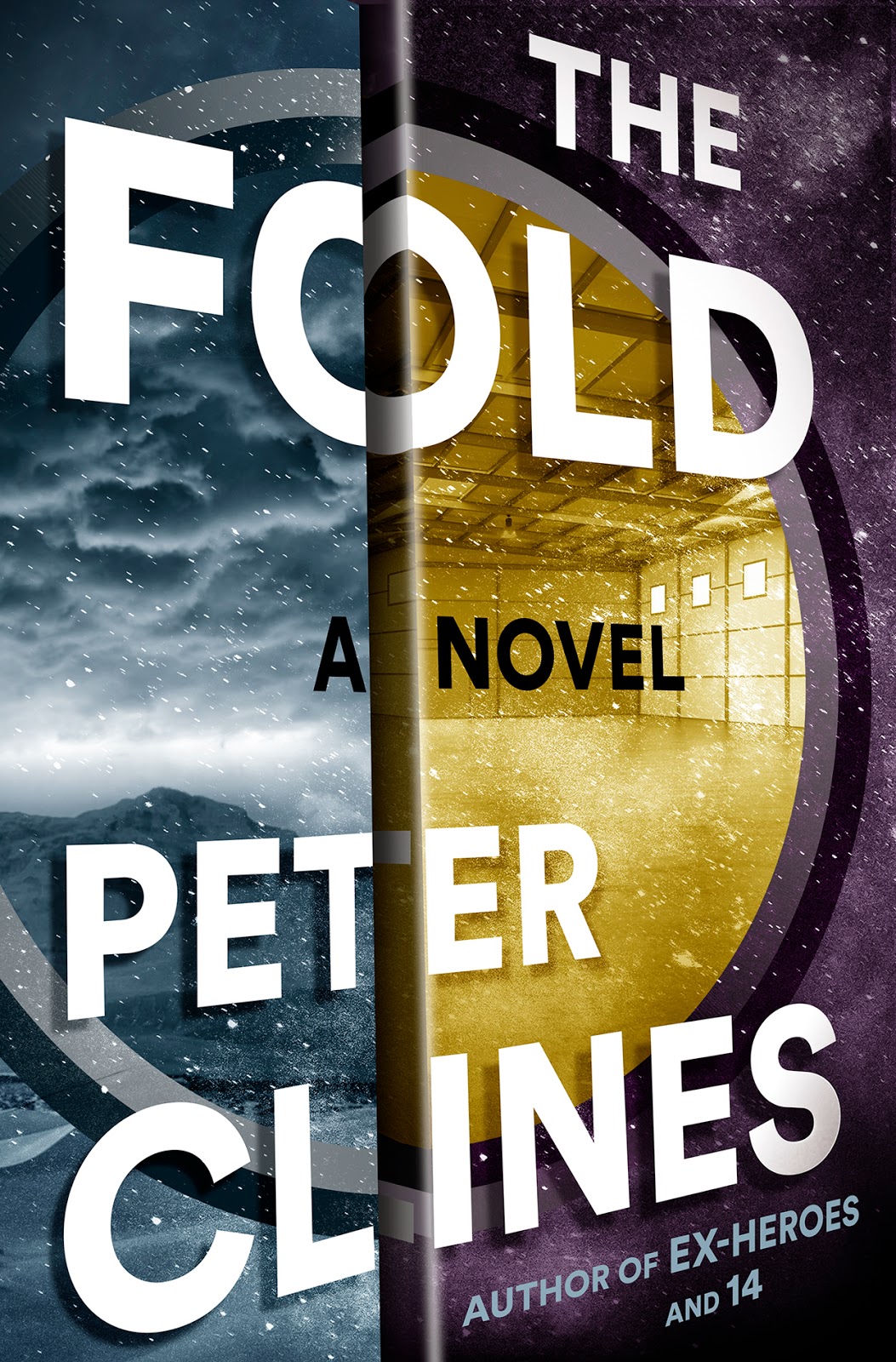
            However…  My publisher, Crown, just started a promotion for my new book, The Fold, (out in hardcover two months from today).  Pre-order the book now from your favorite local store (if you haven’t already), enter your info over at my other website, and you’ll get a free galley copy, one of the early, unedited trade paperbacks that was sent out to reviewers, some book stores, and so on.
            What does this mean for you, reader of the ranty blog?
            It means you’ve got a chance to see an earlier draft (the first layout, essentially) and the final novel side by side.  You can read the book, then go through the earlier version and find all the places my editor and I changed things. Every tweakand adjustment as we prepared the book to go to the printer.  And there are a lot of them, so it’s a worthwhile exercise. And all it costs you is… well, pre-ordering the book.
            And heads up—there are only about a hundred or so galley copies available for this, and I think over a dozen of them have been claimed since this promotion started yesterday.  Also, just because it needs to be said… you can’t “pre-order” the book once it comes out.  So there is a time issue involved here.
            Finally, for the record, I’m doing signings at Mysterious Galaxy in San Diego, Dark Delicacies in Los Angeles, and Borderlands Books in San Francisco.  So pre-order your book from them and then come back so I can scribble in it.
            And next week… back to our regularly scheduled ranting.
            Until then, as the Trickster would say, write, write, WRITE!
November 7, 2014 / 2 Comments

Take It From The Top…

Musical reference.  If you were ever in band class, you already have an idea what I’m talking about.

Here’s a quick tip I wanted to toss out for a common problem…

I think most of us have some project—a novel, a screenplay, a short story—that we really loved at one point, but had to put down.  Maybe it was because of work.  Family stuff could’ve cropped up.  Perhaps circumstances forced us to move on to other things.  It happens.

Then we go back to it.  Not just to dabble with it over a weekend, but to pick up things where we left off.  And—no surprise—it’s tough to make things work the way they did before the break.

If you’ve been reading this little pile of rants for a while, you may remember me referencing a novel I started about zombies on the Moon.  I began work on it back in late 2009, but put it aside after a few months because my publisher at the time wanted me to try a mash-up novel.  When I tried to go back to the zombie idea, he’d just bought another “zombies in space” novel and warned me he probably wouldn’t want another one (I ended up writing a book about a creepy apartment building instead).  I even tried to go back to Dead Moon again two years ago, and… well, it was a struggle.  I couldn’t remember how the characters sounded in my head, or where some of the plot points were leading.  I banged my head against it for about three months and then, well, circumstances required I move on again.

My lovely lady recently had a similar problem.  She tried to finish a first person manuscript that was about 4/5 done, but she hadn’t touched it in about a decade and it was very, very voice-heavy with a very tricky plot.  That last 20% took her months.

And I made the same mistake again, even after my attempts to get back to the Moon.  One of my most recent books began as a different novel back in 2007.  It was set aside twice (much like Dead Moon), and I’d kind of given up on it.  But then I realized I could salvage a lot of the plot and characters and use them as kind of a spin-off-side-quelto that creepy-apartment story.  Which sounded great on a bunch of levels.

Except what really happened was that I tried to pick up right where I left off.  I fumbled with it for a long time before I realized I needed to forget X and start writing Y.  And I was 2/3 through Y before it hit me that the whole thing was really just clinging to X again.  I pulled it apart (now with a deadline creeping close) and finally got Z put together.

Which my editor looked at and immediately caught a bunch of Y stuff.

Y’see, Timmy, if we’re doing things right, we all keep growing as writers.  We gain experience (some good, some bad).  We learn new things.  We swear never to do certain things ever again.

And because of this, we stumble when we try to go back.  It’s kind of like bumping into an old ex and pretending nothing’s changed when… well, a lot has changed.  There’s skewed memories, things we know that we don’t want to talk about, and experiences that make casual conversations kind of awkward.  Because we’ve grown and moved on.  There can still be something there, sure, but it’ll never be what it was back then.

Final anecdote.  A month or two back I was offered a spot in a high-profile anthology.  My first thought for a story that fit was actually an unproduced script I’d written for a television show back in 2001.  But this was a themed anthology—my story had to fit this theme and these characters.

So I read through the old script twice to get the story and the beats back in my head.  Then I put it aside.  Didn’t look at it again.  I wrote my first draft in a week (about 12,000 words) and had three more drafts done in the next two and a half weeks.  The editor loved it.

So, here’s my tip.

If I’m going to go back to a half-done project that I haven’t done anything with for a significant amount of time, I might be better off just starting from scratch. Don’t try to save or salvage or repurpose.  Just start over.  This way I’m not fighting with present vs. past experience or voices or plotlines.  I’m just writing

Sometimes it’s faster to start over on a project than to pick it up after a long time away from it.

Next time, I’m going to introduce a reader request about characters.

Until then, go write.

August 30, 2014 / 2 Comments

The Plimoth Experience

            Very sorry this is so late.  I mentioned last time that I was working on a major rewrite of the new book which was due last week.  Then I looked at it again over the weekend and asked my editor if I could take another pass at the last fifty pages before he read it.  And he said I could, because he’s very forgiving of my screw-ups since I own up to all of them.  Which is why I’m late this week.
            But enough with the excuses.
            Speaking of last time, it struck me a while back that I’ve never talked about why I end every one of these little rants with “Go write.”  Is it supposed to be a clever catchphrase or something?  Encouragement?
            Let me answer that by telling you a funny story about Plimoth Plantation.           
            No, it’s relevant.  Really.
            While I mostly grew up in Maine, I spent my high school years in Plymouth, Massachusetts.  Yes, the same Plymouth as the rock and the Pilgrims and the Mayflower and all that.  One of the big tourist attractions is Plimoth Plantation, a recreation of the original colony (with original spelling) complete with actors playing specific historical roles.  You can walk in and the colonists will talk to you, answer questions, and usually ask about your odd (modern) clothes.
            Every year in Plimoth Plantation is 1627.  It replays again and again, following the historical record.  Births, deaths, marriages, and so on.  A friend of mine worked there for a few years with her parents, and because of her age she was assigned a specific role.  Part of her role was getting married at the end of the summer to another historical  character, Experience Mitchell (ahhh, have to love those Puritan names).  The catch was that my friend was kind of interested in another Pilgrim.  So on “the big day,” one of her co-workers gave her a wedding gift in the changing room, a t-shirt that said…
            Experience is what you get when you don’t get what you want.
            I laughed when she told me about it, but the phrase stuck with me.  Mostly because it’s true.  If you talk to anyone who’s considered experienced, it’s because they failed or screwed up.  A lot.
            Now let’s jump forward a bit.
            Comic writer and artist Brian Michael Bendis has a new book out called Words For Pictures.  We happen to have the same publisher (well, where this book’s concerned) and the director of marketing slipped me a copy while I was at San Diego Comic-Con last month.  I read it as soon as I got home.  It’s great, you should buy a copy.
            Words For Pictures is mostly (as the title implies) about writing for comics.  But there’s a lot of solid advice in there for writing in general.  In fact, it was interesting to see that Bendis addresses a lot of the same points in his book that I have here on the ranty blog.  In pretty much the same ways.
            One of them is this.  To be a writer, I need to write.  I need to write a lot.  You’ve probably heard this before.  Many people have said the same thing.
            Here’s the part you probably haven’t heard.
            The reason everyone says to write a lot is that we’re all going to put out a lot of crap. 
            Tons of it. 
            I believe it was Neil Gaiman (in one of his books) who said that everyone has at least three great stories in them.  While I believe this is true, I think there’s an unspoken corollary there which is just as important.  All of us have lots and lots of bad stories in us.  Dozens of them.  Maybe even hundreds.  We have contrived plots, weak characters, awful dialogue, and  terrible structure
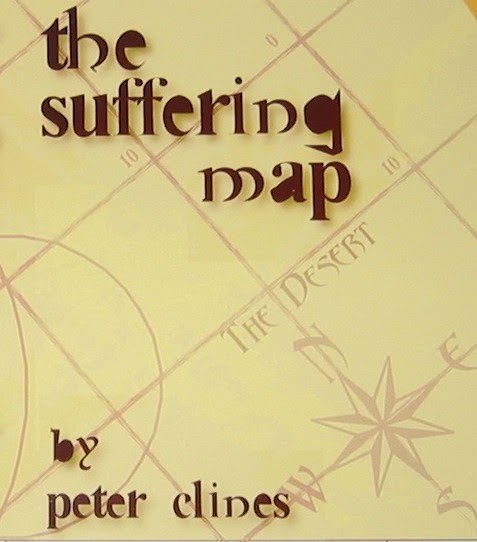
            I wrote a ton of bad stuff that none of you ever have—or ever will—see.  I spent about twenty years getting out all my bad stories and habits.  My first attempt at a novel (in third grade), Lizard Men From the Center of the Earth.  My Doctor Who and Boba Fett fan-fiction.  My middle-school sci-fi novel.  My junior high fantasy novel.  My high school werewolf-detective novel.  My college novel, The Trinity.  My after-college-moved-to-California novel, The Suffering Map (which went through eight or nine full drafts).  Plus a ton of comic scripts, short stories, screenplays, and I think even one or two attempts at stage plays.  Thousands of pages.  Thousands of hours of work. 
            Some of you may have noticed I’m in no rush to self-publish these, despite the constant assurances from some quarters of easy money. 
            Why?
            Because, pretty much across the board, they suck.
            My early work sucks.  It’s bad.  I spent days and days writing stuff that should never see the light of day.  I have no problem admitting it.  In fact, it was being able to admit it that let me move from being a random dabbler to a serious writer.  I dug through all the bad stories and found the good ones underneath.  Maybe even one or two great ones.
            Writing all those stories was my experience.  Whenever you hear about an overnight success or an amazing “first” novel, odds are that writer really has a long string of work—and a lot of failures—behind them.
            We accept that in every field of work someone needs a certain level of mastery and experience before they’ll be considered a professional.  Taking an auto shop class in high school doesn’t make me a mechanic, and taking a CPR class doesn’t make me a doctor.  Home Ec didn’t make me a chef, and oddly enough the White House hasn’t called me about any foreign policy decisions, despite my B+ in history. 
            And these people have screwed up, too, on their path to being a professional.  Ask your mechanic and she or he probably broke a couple cars while learning how to fix them.  Lots of doctors misdiagnose patients, and some patients die from these mistakes.  Your favorite chef cooked a lot of really bad food over the years.  Some of the better politicians are the ones who admit they were wrong about an earlier position they held.
            And we understand that in all of these fields, these mistakes are part of the learning curve.  I don’t get the success, but I get the experience.  It’s why it takes so long to become a doctor or a chef or even a mechanic.
            Or a writer.
            This is one of the reasons I harp on spelling so much.  It’s an easy-to-spot symptom that usually implies bigger problems.  If my manuscript is loaded with spelling mistakes and misused words, it means I don’t know how to use my tools.  And it also means I didn’t really spend a lot of time (if any) on my drafts and polishes.
            Y’see, Timmy, at the end of the day this is all up to me.   It’s not someone else’s responsibility to make my book good.  It’s mine.  If I can’t spell, have a weak vocabulary, poor plots, thin characters, flat dialogue… that’s all on me.  Which is why I asked my editor to hold off reading this new draft so I could fix some things.  Part of being a professional is knowing how to do all this stuff and, well… doing it.
            There’s an all-too-common belief that just finishing something means it’s good.  That the act of struggling to finish that first novel is the experience I need to call myself a good writer.  I mean, I made it all the way through to the end of a novel on my first try.  That’s a lot of writing.  That novel must be worth publishing and being read, right?
            But the truth is, the vast majority of first novels are awful.  The second ones are pretty bad, too.  The third ones are at least tolerable.  Ex-Heroes might’ve been my first novel that was published, but it was my seventh-and-a-half attempt at writing one.  And, as I mentioned above, I’m really glad it was the first one people saw.
            Because that junior high fantasy novel… man, that was embarrassing.  On so many levels.
            Next time, I’d like to hit another problem right on the nose.
            Until then… go write.

Categories