August 15, 2019

The Body on Page One

Welllllll… guess there’s no putting this off, is there? In the end, this is where every story leads in the long run. I’ve crafted a fantastic character with some wonderful nuances and habits, and a detailed backstory.  It’s a character every reader can picture in their minds and relate to on a personal level.

And it’s time to slit their throat. Or watch them die from an awful disease. Maybe even have a zombie horde devour them.
Killing characters in a story is a delicate thing.  I don’t mean this in some artsy, poetic way.  I mean it more in a “stitch up that major artery up before he bleeds out” way. It’s something that has to be done just right for it to work. And just like stitching up an artery, if I’m only going to do a quick, half-assed job with it… I mean, why even bother?

Here’s a couple of loose guidelines for killing someone…
First off, if I’m going to kill a character… well, I need a character, right?  A real character.  I can’t expect there to be a lot of emotional impact from the death of a paper-thin stereotype.  I mean, killing paper-thin stereotypes is cool if I just want to drive a body count, but it’s not going to drive a plot and it’s not going to motivate anyone on a personal level.  It’s not going to affect the reader, either.  I can’t create Phoebe on page fifty, kill her on page fifty-one, and think it’s going to have any emotional weight—with the other characters or my readers.
Second, this death needs to drive my  plot forward.  That’s what good story elements do, right?  They keep the narrative moving—not necessarily upward or into positive place, but forward.  Killing a character who’s well-developed but has no connection at all to the plot doesn’t really do anything.
We’ve probably all seen storytellers who create unconnected charactersjust to kill them off a few pages later.  The plot’s heading into act two and we pause to meet Phoebe.  She’s thirty-three, blond, likes to wear combat boots with everything from jeans to her little black dress to her bikini on the way to the beach.  She’s been seeing a great guy for a couple of months now and she really think there’s a good chance she’s going to get a promotion (and a raise) at her job with OH, she’s dead.  The zombies got her.  Now let’s go back to the plot for a few chapters before I take a moment to introduce you to Wakko.  He’s a college dropout who went to work for the park service.  He’s also been seeing a great guy for a couple of months now (not the same one as Phoebe) and he’s been thinking it may be time to give him a key so they OH, the zombies got Wakko, too.

This kind of thing works once.  Maybe twice.  But it gets old fast because we all understand these people, as columnist Rob Bricken once put it, are just collateral damage. The characters don’t really do much and their deaths don’t actually accomplish anything in the story. They’re just narrative window dressing to make things look more serious instead of… y’know, actually making things more serious.

If I’m going to kill a character and have it mean something, it needs to have an actual affect on my story.  It should up the stakes, or be a new challenge for my characters as far as succeeding at one of their goals. If the big goal is to distribute the zombie cure that Dr. Carmichael designed, and we’re just waiting for her to arrive because she’s the only one who knows the formula, well suddenly it’s a big “oh CRAP” moment when we realize she’s Dr. Phoebe Carmichael who wears combat boots with everything. What are we going to do now??
Now, this leads into a Second-Point-One or maybe a little outline sub-A. It’s a very specific version of this we all want to watch out for. You may have heard of fridging. On the off chance you haven’t, it comes from an awful Green Lantern comic twenty-five years back where GL’s girlfriend was killed and stuffed in a refrigerator for him to find later. When we talk about someone getting fridged, it’s usually a woman, often a less-developed supporting character, who suffer a violent, horrific, and sometimes abusive end for no purpose except to be an inciting incident for the hero.  And maybe to let said hero get in some grief-filled, character-building monologues. Her death is all about him.
Don’t freak out. Not every female death is automatically a fridging. But it’s a good term to know and keep in mind if I’m going to fall back on the whole describe-and-die device, because it can slip into fridging very easily.

Third is that this death needs to fit in my story structurally.  I’ve mentioned before, the dramatic structure of a story needs to be a series of ups and downs.  There need to be slowly increasing challenges, which require greater efforts for my characters to overcome, and help build tension.  If I’m going to kill someone off, their death needs to fit within this general structure.

To go back to the example I just gave, if Phoebe’s the only one who knows the formula for the zombie cure, this could be horrible. In a good way. I’ve just dropped a huge, last-minute challenge between my characters and saving the day.

But if we got Phoebe to the bio-lab on page fifteen and the zombies pounced on page sixteen… that’s not going to come across as much of a challenge. We’ve got the whole book to figure it out, after all.  It’s definitely not going to have the same impact as her dying on page 300, because tension rises as my story progresses. I need to think about how much impact I want this death to have and where that means it needs to happen in my plot. Which is going to affect how I structure things. And why, yes, it is a juggling act, thanks for noticing.

Now, all of that being said…

Some writers claim killing characters is no big deal.  They almost brag about randomly ending lives in their stories. These folks have no qualms about killing characters because it tells their readers that nobody’s safe! Anything could happen! This is how real life works, which means it’s how art works!

I personally find this to be a really counterproductive and stupid approach. 

For a couple of reasons.

One is that we’re not talking about real life, we’re talking about fiction. Real life is chaotic and structureless and, yeah, people often die for no reasons at extremely inconvenient times. But in the stories I’m writing… I’m God. Every single thing that happens in my story is my choice.  My decision.  It’s part of my divine plan.  And if it isn’t part of my divine plan… well, why’s it in my story?

Which brings me to point two.  I just mentioned the juggling act a minute ago. If my characters are dying at random, that means their death isn’t advance any element of the story, which means my story doesn’t have any sort of dramatic structure to it. I mean, how can it have a structure if I’m just doing things randomly?

Plus, if I’m ninety pages in and Phoebe, my main character, is randomly tackled by zombies and maybe joins the hungry dead… well, what happens now?  Seriously. Did the story just end? Is Dot the main character now? If Dot’s the main character for pages 90 through 445… well, why did I spend those first ninety pages with Phoebe? Maybe I should’ve just started with Dot?

And that’s my third point.  Odds are a random, unstructured death just means failure.  One way or another, Phoebe’s blown it big time—even if it’s not her fault.  She died with her boots on but failed to reach her goals (she had goals because she was a real character, right…). Which means my readers just spent a hundred pages investing in someone who didn’t win.  On any level.  We’ve been identifying with a loser with crap luck (she must have crap luck—she just got randomly killed by zombies, right?). 

I don’t know about any of you, but that isn’t going to make me happy.
A good death (if there is such a thing) is going to have real characters. Their death is going to help drive the plot and create challenges.  And it’s going to happen at a point in the narrative that makes structural sense.  If I’ve got two out of three of those, I’m probably in good shape.  One out of three… maybe not so much.
And if I honestly don’t know if I’ve hit two or three of those points… well, maybe I should hold off on setting those zombies loose.

Next time, I’d like to talk about the next book.

Until then, go write.
June 27, 2019 / 2 Comments

Investment Advice

This might be a weird, kinda rambly one. Also on the shorter side because I’m really trying to get through all these manuscript notes before my editor goes on vacation.

Also, if you came here for some reason expecting financial advice… seriously, how did you end up here? I’m really curious. But, no, not what I’m going to be blabbering on about. Buy low. Sell high. Diamonds are inherently worthless. Go green.

That’s all I’ve got for you on that front.

What I want to talk to you about is investment in stories. One issue I see a lot is a sort of general assumption that we’ll just care about the characters in stories. This is a story about Dot. Dot’s a person. You care about people. Hey, look you’re invested in my story.
Except Dot isn’t a person. She’s a fictional character. I made her up. You know she’s not real. Heck, you know she’s not even a character.  She’s just a name, even if you didn’t really acknowledge it until I just pointed it out now. Seriously, what color are her eyes?  What’s she wearing?  How tall is she?  And she’s a name I use all the time for these generic examples, one I lifted from a cartoon I watched all the time back in my twenties.

That’s why you kinda skimmed past her and why you’re waiting for me to get on with whatever hints I’m going to offer, right?  You’ve got no reason to linger on her. She’s barely a placeholder.  She’s punctuation in a vaguely human form.

Jump back. That’s a great way to think of it. The lingering. When we keep thinking about the characters or the story after we’re done reading. We wonder what happens to them next. We try to figure out the puzzle. We hope Wakko gets what’s coming to him. Because we all know he deserves what’s coming.

That’s investment.  These characters or stories are sticking around.  They’ve earned a few hours or days or maybe years of free rent in my head. Enough to make me keep going back to the story to see how things turn out, and maybe even enough that I find that storyteller and beg them for more.

We get investment through characters. Ones we can, on some level, relate to. Characters we can believe in within the world of this story. And, yeah, ones we like reading or watching stories about

When we connect to characters this way, they become, to some extent, real people. We project onto them, and so they get bigger than the page, bigger than the screen. I may be off base, but I think it’s the moment when we start thinking of them in terms of ourselves. Maybe we empathize with how they feel about something, or remember what it was like to be in a similar situation. Maybe it’s agreeing with their stance or envying their accomplishment. It might even be a wish-fulfillment thing we know we’d never really do—I wish I had the guts to quit like that. Or the ability to take down a worldwide crime syndicate because one of those bastards killed my dog.
That’s investment. That’s us letting these characters in the same way we’d let a person into our lives. We think about them. We want to know how they’re doing. We consider their existence past that bit we’re told.  We actively worry about them, get excited for them, want them to win.

Y’see, Timmy, without that investment in the characters and the story we’re just… reading.  Watching. Observing dispassionately from a distance.  The only connection is eye contact, and the minute that’s broken we’ve got nothing.
If any of you follow along during my Saturday geekery movie sessions, there’s a phrase you’ve probably seen me use once or thrice or every other movie.  “Who am I supposed to be rooting for?”  So many of these stories push characters who just aren’t likable or relatable in any way.  They’re obnoxious.  They’re cruel. They’re ignorant.  They’re sexist. They’re just plain annoying.  And they’re supposed to be the hero.

Because of this, it’s tough to get invested in these stories. The characters are literally pushing me away from them.  And if I keep watching under these conditions, well…it’s easier to focus on the flaws because there’s really nothing else to focus on. I mean, these movies are rarely known for their top-notch special effects.

I should ask myself a few questions as I get started.  Why should someone be invested in my story? What am I offering?  What’s here that my readers are going to like or relate to?  Are they going to believe in my characters… or roll their eyes at them?

Next time…

Oh, wow. Next time’s the Fourth of July. I’m going to be eating grill-cooked food and playing with little toy soldiers and just possibly enjoying a beverage or two. So no post next Thursday.

Maybe on Wednesday I’ll talk about computers a bit.

Until then, go write.

May 23, 2019 / 1 Comment

Recycling

So, I wanted to blather on about something that seems to come up now and then.  I’m guessing for at least three out of four of you, this is going to seem kinda obvious.  But for that other person… you may really need to hear this.  No matter which direction you’re approaching it from.

I’m a big fan of recycling. Fan’s probably not even the right word. It just seems like a no brainer to me. Why wouldn’t you do it? Why would someone be against it? We recycle our glass and plastic. We compost a lot of our food waste and cardboard and even some old clothes. Yeah, you can compost old clothes.  Weird, I know.

We reuse and repurpose a lot of stuff, too. That comes out of, well, being poor.  Even though I’m on a much better footing these days, financially, I still try to reuse things. We never broke the habit of using those spaghetti sauce mason jars as glasses. Half our Tupperware is take-out containers. And I still look at frozen pizza boxes as potential tanks.

What’s odd, though, is a certain subset of folks who’ll mock you for doing this with your writing.

I’ve brought up many, many times the need to cut manuscripts.  We write so much stuff that gets trimmed away.  Clever bits of descriptions.  Cool dialogue.  Sometimes whole scenes, subplots, or even whole characters. When it comes time to hone and focus that first draft, all these things can fall under the editorial knife.

Now, weird as this may sound—like I said, for most of you this is going to sound bizarre, but—some people think this cut material’s gone for good. It’s been deleted. Even if some record still exists, it’s unusable now. Toxic. Radioactive. It’s somehow been tainted forever.

I think a lot of this comes from people who lean a little too heavily on the art side of writing. Oddly enough… the ones who don’t write that much.  They get a little too focused on the idea and the craft and the ART of it. I put these words together in this way for this story.  I didn’t use them like that or like that, and so pulling them out and putting them somewhere else would just be wrong.  It’s not what I first intended.  It’s not what those phrases were created to do.

If I listen to those folks too much… or maybe if I am one of those folks (it’s okay, admitting it is the first step)… I probably have a somewhat shallow view of recycled material.  Those dialogue exchanges that I cut, or that subplot or character… they’re not going to work anywhere else.  I’m not being artistically honest or something like that.  How could a character crafted for story A possibly work in story B? Dialogue that I’d intended for X just shouldn’t work coming out of Y’s mouth, especially if Y’s in a completely different book.
And if I do try it and it does work… well, that just says something about me, doesn’t it?  I probably don’t know what I’m doing. My writing must be pretty thin and generic if I can just pluck some material from here and drop it in over there.  I’m probably lazy as hell in other aspects of my life, too.

If you happen to be the one out of four who thinks this… sorry.  It just isn’t true.  In any way.  Just in case my tone wasn’t carrying through.

Of course I can repurpose material. Artists have done it throughout history.  We jot down notes for one thing and end up using them for another.  We cut from that and then repurpose it for this.  Exchanges of dialogue. Neat ways to describe something.  Maybe a whole scene of morning-after awkwardness or a supporting character who got nixed for space.

Granted, none of this is going to slide right in without a bit of work and some tweaks.  I’m probably going to have to change a few proper nouns, and possibly a few personal pronouns, too.  Maybe an adjective or three.  That’s just the nature of such things. But it’s still absolutely fine to use it.

And honestly, because it’s older stuff I didn’t use before… I may have improved since I first wrote it (hopefully I have). That was a great bit back then, but y’know, if I just did this it’d be fantastic.  Or maybe he seemed like a good character for back then, but now I realize this should all really be centered around her.

I’ve got a book coming out later this summer/early fall called Terminus(that’s probably what we’re calling it), and it’s got a discussion between two characters I’ve been trying to use for almost eight years now. Seriously. I had to cut it from another book, but it’s got some great character stuff and I’ve always wanted to use it. Terminus finally gave me a great place where it could fit. And, yeah, it needed some adjustment to fit in this story with these characters at this point in the overall story. But it’s still 80-85% the same and I think folks are going to love it when they read it.

Still not convinced? Are you one of those one out of four who’s ready to pop down to the comments and point out I’m one of those lazy hacks who barely qualifies as a real writer?

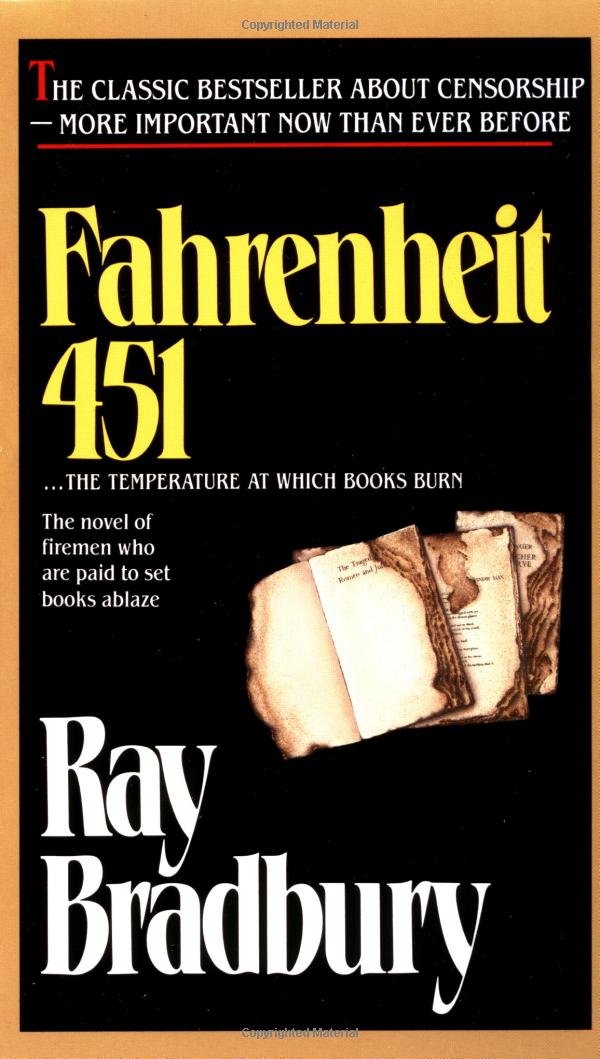
How about Ray Bradbury? Is he a lazy hack? Most of Fahrenheit 451 is recycled ideas, after all. Bradbury had already used the firemen (the book burning ones) in a bunch of different short stories.  They even show up in The Martian Chronicles.  He’d also done longer stories about book burning and corpse-burning (seriously).  The spider-like Mechanical Hound is from an old short story he’d never finished.  There it‘s a law-enforcement tool used by sheriffs and police. He lifted the entire description, almost word for word, and dropped it into 451, along with some dialogue about it. Heck, the whole book is an expanded version of his short story “The Fireman” which he expanded into a novella and then expanded again into a full book.

And he’s not alone. Lots of writers have files of material they had to cut. And they’re always trying to find that material a new home.

Y’see, Timmy, yeah, writing is an art. But like every kind of art, the “how I do it” is entirely up to me. My manuscript might be pristine and pure and new. It might make Frankenstein look like somebody with a small appendectomy scar. But honestly, none of that matters. The only thing that matters is the manuscript I have at the end. Does it flow? Are the characters believable?  Is the plot interesting? Does the dialogue ring true?

Then it’s good.  And that’s all that matters.

Next time… okay, to be terribly honest, next time is the day before my birthday. One of those milestone, “we should make note of this” birthdays. What I’m saying is, I’m probably going to be drunk. Which means I’ll end up talking about Godzilla or something.

Until then… go write.

May 2, 2019

That Figure in Black

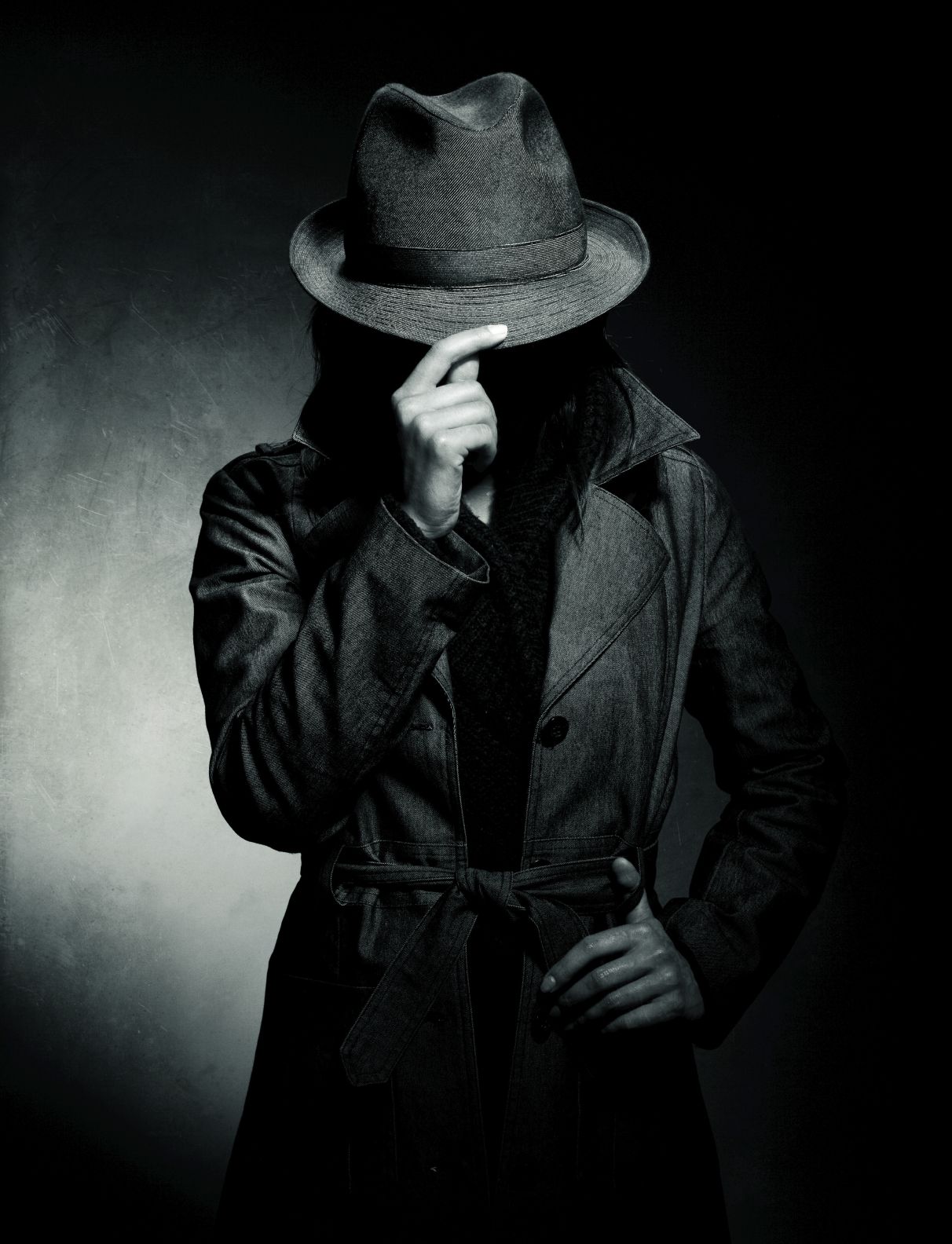
Today, I was hoping we could have a quick talk about that mysterious figure across the street.  You know the one.  Over there.  The person in the hat and trenchcoat who’s just standing on the edge of the shadows, watching us as we dig up this old time capsule.  The one who said something cryptic as you walked by.

You know who I mean.

No, seriously.  We all know the character I’m talking about, right?  The one who shows up in the first chapter, spouts a few  statements, and then vanishes for the next three or four hundred pages.  Heck, maybe they don’t come back at all.

Maybe—and let’s be honest here—maybe we’ve even written a character like that.  I know I have.  It’s okay.  Admitting it is the first step to getting better.

Truth is, characters like this are the one of the reasons so many agents and editors say they hate prologues.  So often, these characters don’t do anything except waste our time building a  false sense of mystery, dropping psuedo-hints that rarely, if ever, amount to anything.  They just… they’re awful.

So… how could we make them better?

Let me ask you this.  Forget the aura of mystery. What if they spilled their guts in chapter one instead?  They’re standing there across the street, then they walk over and just start telling us everything.  I mean, almost uncomfortable amounts of personal information.

What would this character say?

Who are they?  No, seriously—who are they?  What’s their actual name?  Who do they work for?  Why are they here?  Why are they dressed all in black?  Why are they saying these words?  What do they know? If they know more, why aren’t they just explaining everything?  Are they on my protagonist’s side?  If they are, why don’t they stick around to help?  If they aren’t, why aren’t they taking more direct action against the protagonist?  Why are they so cryptic?

Now, once I know all that… let’s look at my original version of this moment.  Is my mysterious figure acting believably?  Naturally?  This is my chance to make sure everything lines up, so my readers—including agents and editors—won’t feel cheated later on.

I’ve talked about something similar to this before—the detective’s speech.  That sometimes it’s worth writing out a chapter I might never use because it’ll help me figure out exactly how things are working in my story.  Because… well, I should know how things work in my story.  And why they work that way.

And why that guy’s sitting in his car across the street, watching us talk.

Next time… Look, I’ll be honest.  Next time might get a little explicit.

Until then, go write.

Categories