
February 27, 2014

The Ecchh Factor

Pop culture pun.  I don’t do puns, normally, but it works.  As you’ll see.

This is mostly going to be for screenwriters.  Writers of prose—please don’t feel left out.  There’s a couple of things in here for you, too.

Tis the season for screenplay contests.  A few of the big names have opened their mailboxes for submissions, and there’s a dozen more noteworthy ones past that.  It’s a great way to get your name out there and even win some decent money, too, if you plan accordingly.

However…

As some long-time readers know, I used to read for a couple of screenplay contests (four different ones, in fact). I have several friends who read for some of the same ones, and some others, too. This time of year used to be a time of great sadness for us. And also a time of great drinking. Usually for the same reasons.

For an average contest, I’d probably read about a hundred scripts per year. That means there were years I’d read over three hundred scripts, usually all in the space of three or four months. It was a fascinating (and sometimes horrifying) overview of amateur screenwriting. To be honest, it’s one of the big things that convinced me to start the ranty blog.

It also gave me a real sense of certain patterns. There were certain types of scripts that would show up again and again and again. And it got to the point that I (and most of my friends) would let out a groan—an Ecchh, if you will—when we opened the next script and realized it was another one of those stories. Usually we could tell within the first few pages. In rare cases, the story would go along fine for twenty or thirty pages and the big first act reveal was… it’s just another one of those stories.

I drank a lot during this period of my life.

Now, I’m not saying any of these are automatically bad scripts that no one would ever pay a dime for. We could probably check IMDb box office listings right now and find examples of more than half of them. But contests aren’t about the box office, they’re about the submissions pool. Unless it’s something truly, utterly spectacular, each of these all-too-common screenplays is going to get an automatic response from a contest reader. An Ecchh.  And that means my script is already starting in the negative. And even if the reader’s just subconsciously knocking off two or three points for being an Ecchh-inducing script, those points could mean the difference between making it to the next round or winning a contest.

So, a few types of screenplays you should think twice about before submitting.  I’ve mentioned some of these before, so if they sound familiar… well, I thought it was worth repeating.

The 50% Script
I’ve mentioned this idea here a few times. In any pool of submitted material, around half of the submissions can be usually be disqualified by page three. It’s when I submit my stoner sex comedy to a Christian values screenplay contest.  Or my romantic comedy to a horror contest. Or my five-act play to… well, any screenwriting contest. The same goes for short stories. Very few screenplay contests want to see short stories. Hard to believe, I know, but there it is.

The 50% scripts are also the result of me being incompetent and/or lazy. If I  don’t know how to spell, have only the faintest understanding of grammar, and no concept of story structure…  that’s a 50% script. Or if I send in a first draft with all its flat characters and wooden dialogue. Or if I don’t even bother to learn how to format a screenplay. Or if I wrote my screenplay under the assumption I’d be directing it from this draft.

If my script falls in that 50% group, the reader’s going to know very soon. And they’re going to Ecchh because a lot of contests require them to read the whole script… even if they know it’s not going to win. Most readers will toss a 50% script as soon as they can. Sometimes sooner, if they think they can get away with it.

The Writer Script
I’ve said this a dozen or so times. Do not write about writers. I did the math one year as a reader and it turned out almost 15% of the scripts I read had a writer as one of the main characters (yeah, I started keeping track of this stuff). When I was interviewing contest directors for Creative Screenwriting, one joked that if her contest banned scripts about writers they’d probably lose a quarter of their entries. More than a few professional editors have said they’ll toss a book manuscript if it opens with someone writing on their computer.

No one cares about the day-to-day struggles I go through as a writer. No one. Most of you don’t—you’re here to learn about the successes. Definitely not a bunch of script readers, many of whom are writers themselves. If I’m being sincere, I’m going to bore everyone (more on that in a bit). If I make up some idealized writing lifestyle, the readers will Ecchh over that because now I’m delving into fantasy.

Let’s assume they didn’t toss my script aside as soon as they saw the writer character. If they get to the end and said writer-character finally sells their book or screenplay and wins the Pulitzer/ Oscar/ whatever… the reader will crumple my script into a ball and burn it so nobody else will have  to read the damned thing. Then they will get my personal information from the contest director, hunt me down, and cram the ashes in my mouth.

And I probably won’t advance in the contest.

The Current Events Script
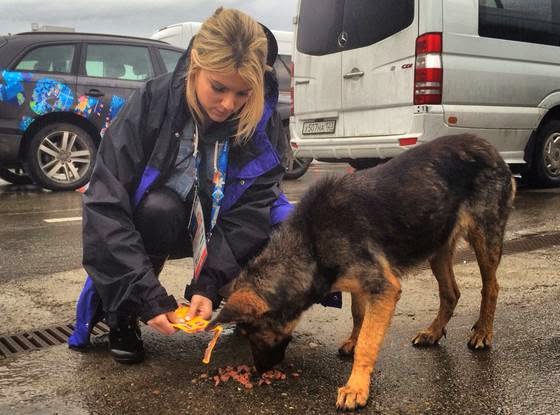
I’m going to go out on a limb here. If we could look at the pool of Nicholl submissions for this year, I’d bet we’d see a fair number of Olympic scripts.  Several of them would be about stray dogs in Sochi. Also a bunch of screenplays that tie somehow to health care laws. A few on government gridlock, too. And most of them were probably written in four weeks or less.

Y’see, Timmy, if I saw a news report about some fascinating nuance of the world and realized it’d make a great script… it’s a safe bet at least a thousand other aspiring screenwriters saw the same news story and had the same idea. Probably more with the way stories spread on the internet. Even if only half of those writers do anything with the idea, and even if only ten percent of those people are sending their script to the same contest as me… that’s still fifty people rushing out scripts about the exact same thing I am. Even if half of them are completely incompetent and the other half are just barely on par, it means the contest reader is going to be reading a dozen scripts just like mine. Ecchh. And that’s if we stick to a thousand as our base number.

Mine may be the best in the batch, of course, but it’s going to lose a lot of appeal because now it’s a tired, overdone idea. And none of us want to be thought of as the best take on a tired, overdone idea.

The Actor Script
When people are trying to be positive about this one, they’ll call it “a character script.” It means my screenplay is just a thin plot with a handful of over-detailed character sketches piled up in it. There’s usually lots of deep and meaningful multi-page conversations about mundane things, often held in a few basic locations, and very little action. Of any sort.

The thing is though, is there anything remotely interesting about a story that’s indistinguishable from the boring, everyday life we all lead? Is there anything impressive about me putting all that boring stuff down on paper? Is there any sort of challenge there, for me as a writer or you as a reader?

Ecchh.

As it happens, this leads nicely into…

The True Script
A kissing cousin of the character script is the true script. On the cover or either the first or last page (sometimes several of these) I assure the reader this tale is based on true events involving me/ my parents/ my best friend/ someone I read about in a magazine article. These true events are often stressed to give a certain validity to what the reader is about to take in. After all, they can’t call my story or characters or dialogue unbelievable if it really happened, right?

Thing is, no one cares if my story is true or not. Nobody. Ecchh. They just care that it’s a good story and it’s well-told.  So my tale of prepubescent paraplegic drug addicts in 1990s Los Angeles needs to be as enjoyable—on some level—as a story about Neanderthal superheroes battling prehistoric lizard men in 1990s Los Angeles. Whether or not one of them’s a true story is irrelevant. In the end, I’m telling a story, and it’s either going to be good or it isn’t. Reality doesn’t enter into the equation for the reader, so it can’t for me.

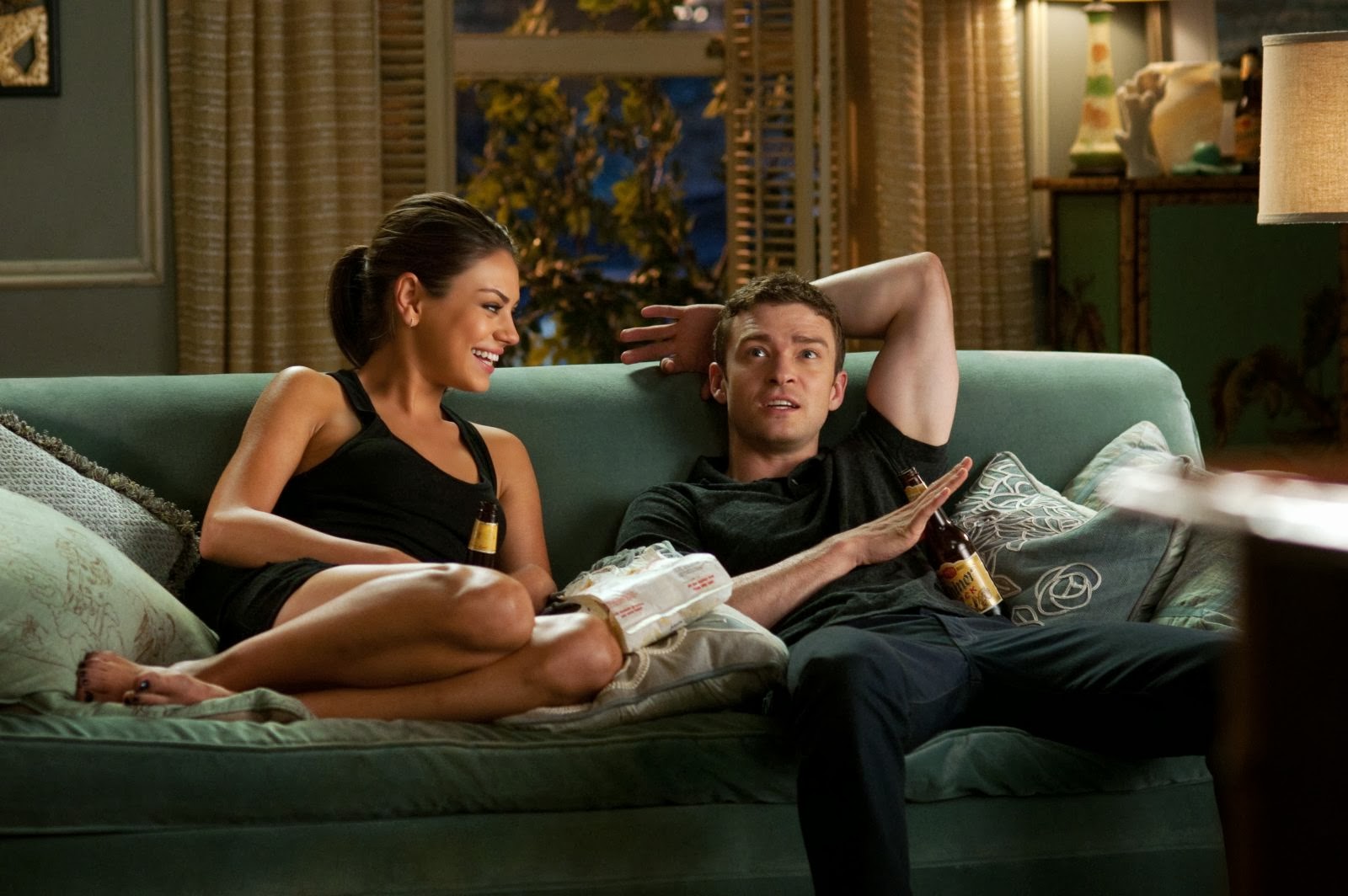
The Formula Rom-Com
The man pursuing his dream girl realizes his best friend has been his real dream girl all along. A woman’s engaged to a condescending, controlling executive and then meets a poor artist and discovers he’s the real love of her life. Aphrodite/ Cupid/ an angel comes down to Earth on an assignment and falls in love.

Do any of these sound familiar? They should. Pretty much every one of them has been made into a dozen movies and a few thousand screenplays. Yeah, flipping the genders doesn’t make them any more original, sorry. Once it’s clear on page three this is a rom-com… Ecchh.

My romantic comedy has to be really spectacular and original to impress a reader. Again, it’s that sheer numbers thing. In four years of contest reading—a hundred romcoms, easy—I read one that stood out. Just one.

The Holiday Script
If you add in straight-to-DVD, movies of the week, and pretty much everything Shane Black‘s done, there’s a good argument to be made that holiday films are one of the best selling genres out there. However, just because my script is very sellable does not mean my script is very good. Or original. And if my contest is looking for good (see above), well…

The trick is to come up with something a contest reader hasn’t already seen again and again, to the point that they go Ecchh as soon as they see the mention of Halloween decorations. And—speaking from experience—they’ve seen most of it. They’ve Santa Claus quit, get fired, and get replaced by a temp, an elf, Mrs. Clause, his son, his daughter, his evil twin, his evil other personality, a robot, an alien, another holiday figure, another supernatural figure, Jesus. It’s all been done. The Easter Bunny has learned the true meaning of Easter, Cupid has learned the true meaning of love (see above… again), and Gobbles the Turkey has learned the true meaning of Thanksgiving. The hard way. Many, many times and in many, many ways.

There you are.  Seven very common types of scripts that will make a contest reader Ecchh. Probably more like eight or nine if you read between the lines a bit.

Again, I’m not saying I could never, ever win with one of these scripts. But I am saying that if I’m going to go this path I absolutely must knock it out of the park. No questions, no conditions, no exceptions.

Speaking of movies, next week I’d like to talk about the lessons we can all learn from that fine classic film Satan Met A Lady and its slightly more well-known remake, The Maltese Falcon.

Until then, go write.
February 14, 2014

Must Love Jaws

            Pop culture reference.  Very funny video.  Even Spielberg liked it.
            Well, in the way of my people, I’m spending the day before Valentine’s Day back at the dentist.  New teeth.  That’s weird.
            Which made me think about love. Mostly, how much I love painkillers…
            But you don’t want to hear me whining again
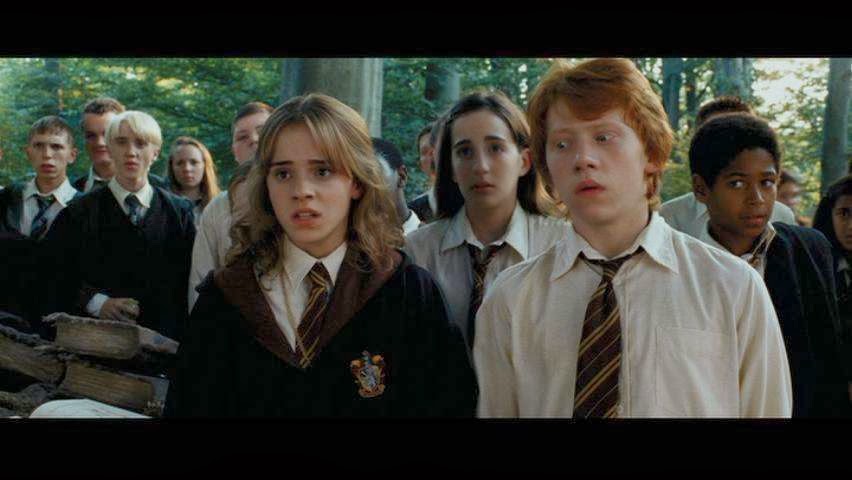
            A lot of folks were horrified or—depending on how your particular ship sails—vindicated a few weeks back when J.K. Rowling announced that she probably shouldn’t’ve had Ron and Hermione get together as a couple at the end of the Harry Potter books.  Definitely not as a “they lived happily ever after” couple.  In retrospect, she felt she’d forced the relationship and it didn’t feel believable.
            Now, granted, she’d been slowly pushing things that way for four books, so it’s not like this came out of nowhere.  But I can kind of see what she’s saying.  It made for some interesting articles and assumptions online.  And also gave some validation to my Harry and Luna Lovegood theory…
            Everyone loves a good romance because we all love the idea that there’s someone out there who’s a fantastic match for us.  A soulmate, if you will.  It’s a relatable idea.  And when we can relate to something, as readers or audience members, we can believe it.
            However…how often have you been reading a book or watching a movie when suddenly, out of nowhere, two of the characters started professing their mad love for each other?  Few things can sink a story faster than a pasted-on love interest, because none of us like fake emotions.  It makes people roll their eyes while reading books and it makes movie audiences laugh.
            So, let’s revisit a few simple rules that can help make a love for the ages…
            The First Rule of Love —  Like I just said, love needs real emotions, and I can’t have real emotions without real people.  And real people, oddly enough, act in realistic ways.  I’m not saying rational ways, because love is one of the most irrational things most of us will ever encounter in our lives.  If my characters are real, though, they’re going to have needs, desires, plans,and tastes.  And it’ll stand out if they make choices that go against those traits.  Yes, opposites attract—they even have a lot of fun together—but if we’re talking about real emotions, odds are these two are going to have more in common than not. 

            In other words, the career-minded conservative banker probably isn’t going to make long term plans with the quirky socialist art student.  Not unless he’s trying to get her to sign over her grandmother’s art studio or something.  Although… maybe he’s a failed artist himself, and she reminds him of another path he could’ve taken.  Having past conflicts and secrets can make a character seem real, too.

            Even then, how far and how fast they take things should be consistent.  Some folks live in the moment.  Others plan every day in half hour increments.  People can be confident or nervous, experienced or awkward.  Some people are tearing each others clothes off half an hour after they meet, while for some the huge moment might be that tentative kiss on the third date (if it’s really a date, because that first one was just coffee—not a date!).  
            Simply put, my characters need to be believable if their relationship is going to be believeable.
            The Second Rule of Love  —  If you’ve ever been in a situation where friends are offering advice and pushing you to say something, you know the real result is it makes you want to get away from the object of your potential affection.  Nobody likes feeling forced into something, and we don’t like to see other people forced into things.  That’s just human nature.
            Now, for the record, “other people” includes me, the writer.  Characters need their own motivations.  I can’t just have them do things for the convenience of the story.  If I’ve based my whole story around the mercenary and the archeologist saving the villagers out of mutual respect for each other, then I need a real reason for them to get together (as mentioned in the First Rule). 
            And no, the reason can’t be something like “because they need to face the gargoyle lord as a unified couple in chapter fifteen.”  It also can’t be “I need a sex scene to hold people’s attention.”  If this is the basis of Wakko and Phoebe’s relationship… well, they probably won’t be celebrating any major anniveraries.  Not with each other, anyway…
            To sum up– People get together because they want to get together, not because other people think they should be together.
            The Third Rule of Love – This one could actually count as real-world advice.  Don’t confuse sex with love.  There are lots of points in a story where it might be completely acceptable for two characters to have sex.  We’re all mature adults here (not counting you two), and I’m willing to bet most of us have had sex with someone we weren’t madly in love with at the moment… or at any time later.  Sex is fun.  It’s a stress-reliever.  It lets you not think about other things.  Heck, it can even keep you warm.
            Sex doesn’t always translate to love in stories any more than in the real world, though.  If two characters fall into bed (or up against a wall, in a closet, out in the woods…), I need to make sure I’m clear what it means for both of them.  Forcing something casual into something serious will just read as forced (refer to the Second Rule).
            So… sex and love are not the same thing.
            The Fourth Rule of Love— This is the tough one, because Hollywood keeps trying to insist otherwise.  How often have you watched a movie where you can immediately spot “the love interest” as he or she is introduced?  It doesn’t matter what kind of film it is or what’s going on, it’s easy to pick out him/ her the first time we see them.  In screenwriting, this moment’s often called the “meet-cute.”
            Y’see, Timmy, a romance doesn’t always fit in a story.   Someone could be wounded, fighting for their life, or so scared they’re an inch away from a heart attack.  Maybe they’re already in a relationship with someone else. 
            Forcing something in these situations also poses the risk of making one or both characters very unlikeable.  There was a very odd movie a few years back where the main character develops feelings for his brother’s fiance over a long weekend—and they both act on them!  It made it hard to feel sympathetic toward either of them.  I also read a manuscript once where the two protagonists start feeling urges toward each other while they’re searching for the woman’s abducted daughter.  Not years-back abducted, mind you—four hours ago abducted and possibly at great risk.  But, wow, doesn’t this private detective have a nice smile and great arms…?
            In ten words or less—sometimes it’s just not going to happen.
            So there are the rules.  Now go forth and spread the love.
            Where appropriate for your age group, of course.
            Next week, I might just say something quick, if I can find the right words.
            Until then, go write.
January 31, 2014 / 1 Comment

The Eight Worst Words You Can Hear

            Many thanks for all your patience while I was busy having my teeth drilled out .  Hope you enjoyed Thom’s rant last week and he didn’t hurt your feelings too much.  No matter how you felt it about, rest assured… you were having more fun.
            But enough of my whining…
            …whining like a high speed drill on enamel…
            This week I said we’d talk about Robocop.  The original, not the remake.  I haven’t seen the remake yet, so I can’t comment on it.  Well, not in a non-nerdy, non-whiny way…
            And we said enough whining…
            I wanted to talk to you about a common problem that can lead to a lot of issues in a story, no matter what the story is.  It doesn’t matter if I’m writing sci-fi (like Robocop), romance, horror, fantasy, or an intense little character piece—this can kill my story.  And, in a way, it’s something I’ve talked about here before.
            As it happens, this issue’s been summed up by a few people in one simple sentence.  These are the eight worst words a writer can hear.  There’s no way to put a positive spin on them.
            What are these deadly words…?
            I don’t care what happens to these people.
            You’ve probably heard that old chestnut about the tree falling in the forest.  If there’s no one there to hear it, does it still make a sound?  Let me ask you this—is Jason Voorhees still scary if no one’s in the forest for him to kill?  Is that candlelit dinner on the rooftop still romantic when it’s just sitting there?  Are explosions that action-packed if there’s no one running away from them?
            I’ve said many, many, many times that my story depends on my characters.  A good character has to be relatable, believable, and (on some level) likeable.  If my characters are just thin, undeveloped stereotypes, they’re just empty placeholders.  If spies are hunting Man #3, it doesn’t mean anything.  If I tell you they’re after Bob, it’s a little better, but not much.  Once you hear they’re after Jason Bourne, though, now this suddenly means something.
            This is the big problem with “starting with action.”  That was a storytelling mantra for years.  “Start with action—don’t make us wait to be interested.”  It didn’t help that some people misunderstood “action” to mean explosions rather than just “something happening”.  Thing is, like I was just saying, action is meaningless if I don’t know the stakes and I don’t care about the characters.  It might grab me for a moment, but I need someone to latch on to, to identify with, to care about. 
            Consider this.  I’m betting you’ve seen a commercial or headline for the news sometime in the past couple of days.  Odds are, with the extent of news coverage and the way it leans toward the sensationalist—you’ve probably seen something along the lines of “five dead in a house fire” or “two killed in shooting” or something like that.   Sound familiar?  You’ve probably seen at least a dozen variations on this  since  New Year’s, yes?
            How many of these stories stuck with you?  Can you name any specifics from any of them?  Can you even remember when you saw them?
            Odds are, the reason you can’t is because you weren’t connected to them in any way.  The news was starting with the events—the action—not with the people.  And it bored you. 
            It’s okay to admit it’s boring.  We can all be awful people together.
            There is no way I can make a story work if the reader doesn’t care about the characters.  None.  It doesn’t matter how amazing my futuristic predictions are, how clever my zombie origin is, how fantastic my descriptions are.  If there aren’t any fleshed-out characters, it’s just trees falling in the forest.
            Now, there are a few exceptions to this, but they’re finesse things.
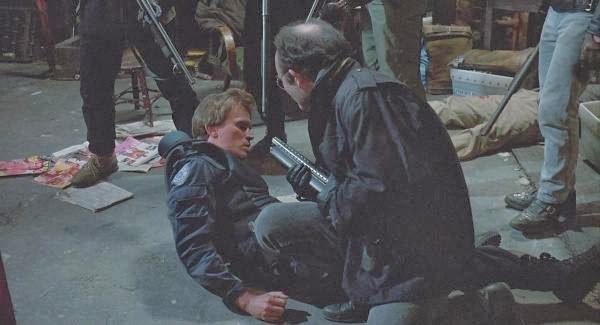
            Many years back, I read an interview with Paul Verhoeven about the original Robocop(see, I told you we’d get back to it).  The journalist was questioning him about the extreme (at the time) levels of violence in the film—most notably when Murphy is blown apart little by little with shotguns until Clarence Boddiker gets bored and puts a bullet in his head.  How could Verhoeven justify this?
            It was pretty easy, actually.  As the director explained, he only had two scenes with Murphy to establish him as a character before killing him.  Not much at all.  And while he did good things with these scenes, he realized that the death scene could be used, too, to trick his audience a bit.  By giving Murphy a brutal, utterly nightmarish murder—the kind of death any decent person wouldn’t wish on anyone—he immediately built sympathy for him.  We don’t know much about Murphy when he dies, but we know he sure as hell didn’t deserve that.  It’s the same technique used by a lot of horror stories, especially slashers and torture porn.  We might not care about the specific character, but we can identify on a basic human level and know this is an awful thing.
            Again, though… it does take a little finesse.  I can maybe do this once or twice, tops. After that, my readers are going to be numbed to that shock
            And then they’re not going to care anymore.
            So remember to build great characters that your readers care about.
            And then do awful things to them.
            Next time, speaking of awful words… I wanted to rattle off a few more.
            Until then, go write.
October 24, 2013 / 2 Comments

The Finest Emotion

            Talking about scary stuff, because it’s the season.  Not in the way we usually do, though…
             H.P. Lovecraft once said “The oldest and strongest emotion of mankind is fear, and the oldest and strongest kind of fear is fear of the unknown”  Stephen King said terror is the finest emotion.  And Terror, Inc. once said “My name is my business, and business is good.”
            Okay, that last one’s a bit obscure.
            Anyway…
            I’ll go one step further with this and say that fear is one of the most common emotions.  Most of us live in a state of fear.  I don’t mean that in some socio-political way.  On a regular day, most of us experience fear on some level or another.  Fear of failure.  Fear of rejection.  Fear of injury.  Fear of humiliation.  Maybe even the big ones like fear of helplessness or fear of death.
            In most stories my characters are going to begin things in a state of fear.  Again, maybe not a crippling, hiding-in-the-corner level of fear, but that fear is going to be there. There’s going to be something they don’t want to happen—or something they want to happen—but fear of some kind is going to  keep them from it.  Maybe Yakko wants to ask Phoebe out but is scared she and her friends will laugh at him.  Maybe Dot really wants to make detective, but doesn’t want to risk failing the test for a third time.  Or maybe Wakko just doesn’t want to be torn apart and eaten by a zombie horde.
            Hey, it’s a valid worry.
            Now, I know a lot of people pitch stuff about “strong characters,” and it’s not uncommon for people to misread this to mean characters that are powerful, smart, capable, and confident.  Being afraid of things doesn’t fit into that idea, does it? 
            “Strong characters” isn’t supposed to refer to physical/ mental abilities—it’s about how well they hold up to examination.  Are they believable?  Relatable?  Fleshed out? A strong character can still be nervous about asking Phoebe out in front of her friends.  They can be worried about failure to a point of near-paralysis.  He or she can even be a snivelling coward… as long as they aren’t a shallow, stereotypical snivelling coward. 
            By having my characters begin in a state of fear, I’ve just made them very relatable.  Even better, I’ve automatically set up a challenge for them to overcome.  I’m forcing them to become active and do something.  Better still, my characters have to change internally to overcome fear.  Conquering fear isn’t an exterior challenge (although there can be plenty of those, too).
            Y’see, Timmy, when people are done being scared, they have to be brave.  And that’s when they shine.  Because now that  I’ve forced them to grow and change, they have an arc.  They’ve become better people right in front of us.
            Those characters who aren’t scared?  Well, a few times I’ve mentioned the problem with uber-powerful characters who can deal with anything or who are utterly prepared for everything.  That also ties into this idea of beginning in a state of fear.  It can be summed up best with a joke I heard once…
            A police officer pulls over an elderly lady for a busted tail light.  He’s stunned to see a pair of shotguns and an assault rifle in the back seat, and a pistol strapped to the old woman’s thigh.  She also admits to a pistol in her purse and another one in the glove compartment, as well as a few more rifles and extra ammo in the trunk.  But she has all her permits and everything’s in order. 
            As they’re finishing up, the police officer says, “Ma’am, I have to ask… What are you so afraid of?”
            And the old woman smiles sweetly and says, “I’m not afraid of anything.”
            If my characters don’t have anything to fear, they don’t have anywhere to go from there. They don’t need to grow and change.  They don’t need an arc.  I’ve begun my characters where basic storytelling says they should end.
            So, be afraid.  Be very afraid.  Let your characters be afraid, too.  They should be scared of pain and rejection and failure.  And perhaps also of zombies and werewolves and little alien worms that wiggle into their ears and burrow into their brains.
            Next time… well, I won’t be posting on Halloween for religious reasons, so next time will be in November.  And considering what comes out in theaters around then, I might let somebody else talk about writing movies for Marvel.
            Until then, go write.

Categories