
June 12, 2014 / 1 Comment

You Never Get A Second Chance…

            This week’s title isn’t so much a pop culture reference as a “good general advice” reference.  It works for real life, and for writing.
           (If this is the first time you’ve stumbled across the ranty blog, I try to have clever and referential titles.  I usually fail….)
            Anyway, I wanted to talk about first impressions.
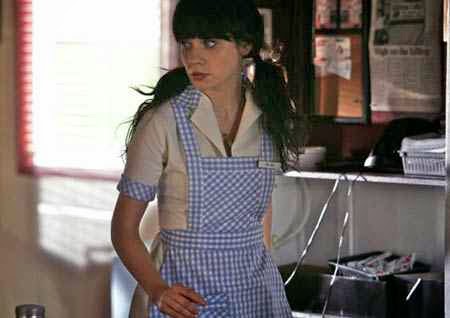
            I read a book a while back that introduced one of the main characters while they were yelling at a server in a restaurant.  I mean actually yelling.  I’ll call said character Wakko (not his real name).  Something was wrong with Wakko’s lunch  order and Dot (the server) was apologizing and offering to go get it fixed.  But he wouldn’t let it go.  He just kept berating this woman over the food—something that really wasn’t even her responsibility—and she kept saying she’d get it fixed as soon as possible.  And we were inside this guy’s head, too, so we saw some of his rude thoughts and annoyance even after the server had walked away.  He just couldn’t grasp the idea that someone would’ve brought an imperfect order to him.
            Then his new food came, he ate lunch, and wandered off into the events that began the story.
            Thing is… I have to admit, I wondered why we were spending time with this guy. Was he going to be ironically killed off in that getting-to-know-the-victim way (which would be cool)?  Was he the villain?  When the lovely heroine first meets him and is immediately left a little weak in the knees, my only thought was “wow, you’re in for a shock…”
            First impressions matter.  In the real world and in fiction.  Maybe even more in fiction.
            This ties back to an idea I’ve mentioned once or thrice before.  You’ve probably heard it as three act structure, although that term gets misused and misunderstood quite often.  When we talk about three act structure in storytelling—any kind of storytelling—what we’re really saying is that every story should have a beginning, a middle, and an end.  As a writer, I establish the norm, I introduce conflict into the norm, and then I resolve that conflict.  Three steps.
            Easy, right?
            Y’see, Timmy, when I first introduce a character, nine times out of ten I’m establishing the norm.  This is what said person is like most of the time, without the added pressure of that conflict I’m going to be introducing in a little bit.  These first impressions is where my character arcs are going to begin. 
            Silly and obvious as it may sound, this is why we generally meet protagonists doing good things (or at the very least, neutral things) and antagonists doing negative things.  Because if I start with someone yelling at a waiter, they’re a jerk.  That’s all there is to it.  Especially if I don’t know what led up to screaming fit. 
            And it’s tough to get past that first impression.  Not impossible, no, but if I go this way with my character then I’m choosing an uphill battle as my starting point.  If your first thoughts are that my character’s kind of a rude bastard or just a general ass or maybe a bit creepy in a bad way…  I’ll have to spend a lot of time getting past those perceptions.  And that’s time I can’t spend getting to, well, the plot.
            Run through a list of some of your favorite characters from books or movies and think about how we first meet them.  How often are the heroes and heroines doing essentially decent things?  Are the villains usually doing something bad or disturbing when you first see them?
            Consider Lee Child’s hero, Jack Reacher.  Most Reacher books begin with him in a very quiet, subdued setting.  He’ll be on a bus or sitting in a roadside diner.  Every now and then he’ll actually be in a real restaurant with servers who he usually tips well.  Because that’s the kind of guy he is.  Despite his intimidating appearance, he doesn’t go looking for trouble.  He doesn’t like problems.  He just wants to travel around and see the country.
            Granted, if you screw with Jack Reacher, you are in for a world of hurt.  He’s a huge, dangerous man who has no problem doing what he needs to do to survive.  People can talk about honor and fair play, but Reacher will do what it takes to win, and he’s very, very good at winning.  But that doesn’t come out until Child introduces some kind of conflict.
            Now, to be clear, there are a few ways I could structure my story so I first meet someone a bit further along their arc, and that might change things a bit.  It’s also possible I could have a real twist planned, and it turns out Dot is actually the little girl from the 1993 flashback, just with glasses now!  And you know she’s just flirting with those guys as part of her revenge plan…  It won’t end well for them
            Even then, I need to have a consistent beginning, middle, and end to his or her arc.  As I’ve mentioned before, these elements may be in a different narrative order but they still need to make linear sense.  If good people are going to go bad (or vice versa) I need to see a clear, believable chain of events.
            And I still need to introduce an interesting and semi-likable character.  Or, at the very least, not an unlikable one.  If my readers don’t want to follow a character, there’s a really good chance they’re just going to stop reading.  And then they’ll never see that cool twist I set up at the start.
            So think about those first impressions.  Because you really want to make the right one. 
            Next time, I wanted to talk about something big.
            Until then, go write.
May 16, 2014

Character Cheat Code

            Up up, down down, left right, left right—novel.
            If only it was that easy…
            I haven’t blathered on about characters in a while.  Well, not strictly about characters.  Characters are the heart of storytelling, so really I’m always blathering on about characters.  And I saw something great a few weeks ago that got me thinking.
            Anyone here watch Game of Thrones?  I wanted to talk about a bit at the start of this season.  No, don’t worry, no spoilers
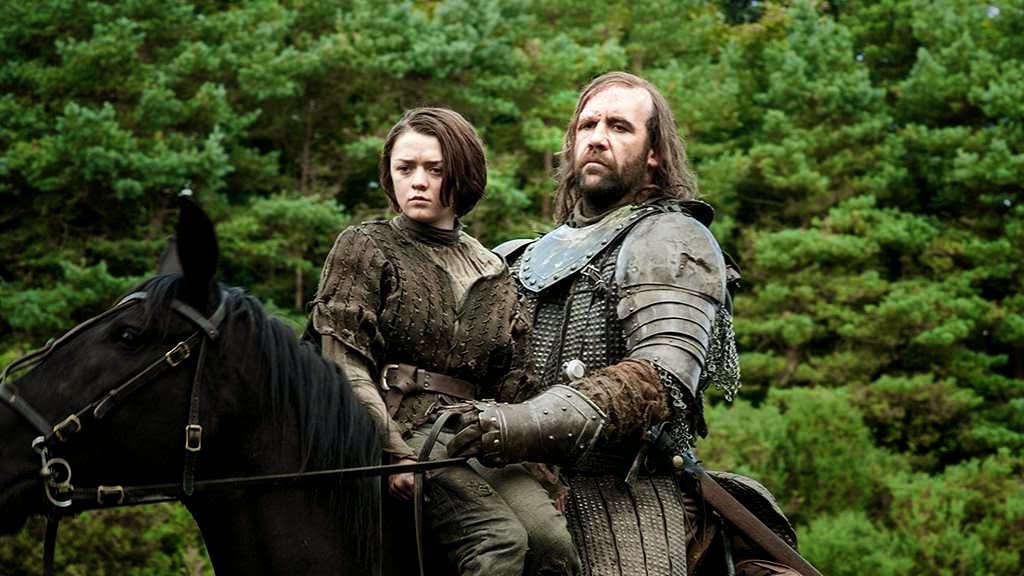
            On the off chance you don’t watch, Arya Stark is the tomboy daughter of a noble family.  She’s on the run after a good chunk of said family’s been killed.  The Hound is a giant, mercenary brute who’s served as bodyguard, champion, and enforcer for the king, depending on what the moment calls for.   He snatched Arya up thinking he might get a reward for saving her, and they’ve formed sort of an uneasy alliance since then.  In the bit I mentioned, Arya and the Hound are riding doubled-up through the forest and she’s complaining about their lack of food and her lack of horse.  She berates the Hound for not stealing any gold from the King before he fled the city.
            “I’m not a thief,” he growls.
            Arya, who’s had some unpleasant encounters with the Hound in the past, glares at him and says “So killing an unarmed eight year old boy is fine, but you won’t steal?”
            The Hound looks past her, shrugs, and says “A man’s got to have a code.”
            My friends and I all chuckled at that.  The truth is, I think the Hound went up a few notches in everyone’s opinion right there.  He became a better character.
            Why?
            We like people who have a code.  It doesn’t need to be something spoken aloud or written down or sworn to in an oath.  It doesn’t mean they have to give up their possessions or disavow their former lives or change their name.  It just means these people are true to their beliefs.  True to themselves.  They say this is who they are and what they do, and they’re being honest.  The Hound.  Leon the Professional.  Dexter.  Barney Stinson.  Hannibal Lecter.  The Terminator.  All of these characters should be villains, or loathsome at best, but we like them because they all have a certain code they follow, and they won’t change that for just anything.  Awful as it may sound, we all like the fact that the Hound can kill a child without question, yet be insulted at the thought he’d pocket a few coins he wasn’t entitled to.
            From a writer’s point of view, a code is good because it means my audience can get a clear definition of my character.  It gives me a bit of background and development, because I can now explain or hint at why this person has said code.  It also provides me with an immediate source of conflict, because I now know there are things my character won’t be willing to do (and because a character who can do anything gets boring fast).
            The downside, of course, is that once I establish a character has some form of personal code, it’s tough to have them go back on it.  Y’see, Timmy, people don’t base their lives around an idea and then just change their minds on a whim.  These beliefs are an integral part of the character, so altering them is a major thing.  If someone tosses their vows or beliefs aside over something minor, it makes them look like very weak. 
            Which, by extension, doesn’t make me look too good as a writer.
            Next time, I’d like to talk about compression.
            Until then, go write.
April 10, 2014

The Flow Factor

            I tried to come up with a clever title using Flo from those Progressive Insurance commercials, but I couldn’t come up with anything that didn’t feel… well, kind of awkward.  They weren’t bad titles, they just didn’t read well.  Or they required a bit of mental gymnastics to make sense.
            Either way, they didn’t work.
            Which is, oddly enough, what I wanted to blather on about this week.
            Have you ever read a book you just couldn’t put down?  One where you start reading just after lunch and suddenly realize it’s two in the morning?  Or maybe it was a movie that sucked you in and you were stunned to realize that the 163 minute run time was already used up.
            Oscar-winning screenwriter Bruce Joel Rubin made a wonderful observation a while back.  To paraphrase, we experience good stories in our gut, not in our head.  A good story grabs us at an emotional level—in the gut.  But whenever something goes wrong, we start to analyze and examine it—we go into our head. 
            The best term I’ve heard for this is flow.  Put at its simplest, flow is the readability of my story.  It has to do with how much effort it takes for the reader to keep reading.  Having good flow means my writing is smooth and slick, that every line, paragraph, and chapter rolls into the next and carries you along for the ride.  Readers can’t stop because it’s actually easier to keep turning the page than to put the book down. 
            On the other hand, a story with bad flow will make a reader stumble a lot.  If I’m reading a book, whenever I pause to roll my eyes, scratch my head, or go back two or three pages to figure something out… each one’s another bump in the road.  If you’ve ever tried a book and just couldn’t get into it, odds are the flow sucked.  You’d read, trip over a page or two, and put it back down.  You can’t get into it because you keep getting knocked back out.
             Flow is a large part of editing.  I’ve mentioned giving things a polish before, and it’s just what it sounds like.  It’s going through my manuscript and smoothing down the rough edges. It’s me knowing this could be a little clearer and people might get hung up on that.
            Unfortunately, this means flow isn’t something I can just fix by changing a word here or there.  It’s one of those things where you can tweak each element but still not affect the final outcome.  Getting good (or even better) at flow is an experience thing that just comes from writing.  The more I write, the more subtle methods and tricks and fixes I develop.
            That being said… here are a few things my story needs to do if it’s going to have good flow.  Or, if you prefer, these are some of the things a story with bad flow often won’t do…
            Be interesting–  Easiest way in the world to keep my story from lagging—don’t be boring.  This doesn’t mean I need five explosions and a swordfight on page one, but when I’m telling a story, I need to get to the story.  If it’s sci fi, I should show the reader something amazing.  If it’s a love story, my characters need to display some passion.  If it’s a horror story, I need to scare some folks, or at least weird them out a bit.
            Have characters act in character–  A writing coach named Drusilla Campbell once commented that when the nun viciously kills a gardener, that’s also when most people remember that laundry they have to fold.  People who are blatantly incompetent at their jobs, cruel people who do nice things, people who are just a little too smart or too scared or too law-abiding when it suits the story.  It’s jarring when my characters act in contradictory ways to what the reader’s come to expect.  And that jarring is what gets books and screenplays tossed in the big left-hand pile.
            Have smooth  dialogue–  Kind of related to the last point.  I can get away with one character who talks like a computer.  Maybe another who keeps slipping into a foreign language.  But too much stylized, unnatural, or just plain bad dialogue brings things to a grinding halt.  Adults should talk like adults, kids should talk like kids, and cybernetic lizard men should talk like… well, you know.
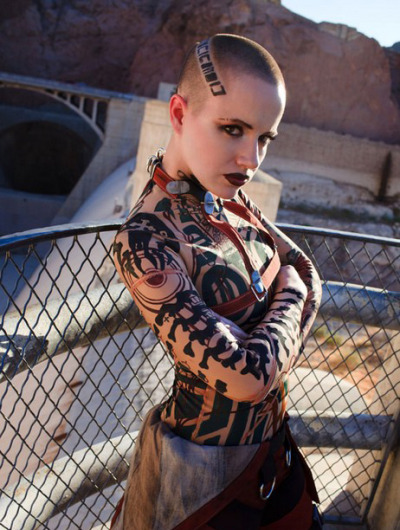
            Watch the word choice–  If I’m picking obscure or overly-long words just to create flowery descriptions or show off my vocabulary, there’s a good chance I’m disrupting the flow of my writing.  It’s really cool that I can describe someone as a female with resplendent obsidian ink ornamented across her glabrous scalp, but it’s much smoother and just as visual for me to say she’s a bald woman with dark tattoos.
            It’s worth noting that typos and misused words fall into this category, too.  Anytime someone sees something like that in print, it pulls them out of the story and puts them back in analyzing mode.  In their head.  And that’s not where I want them to be.
            Take it seriously.  Everyone makes a joke now and then to break the tension, but things need to carry the correct amount of gravity in my writing.  Death, rape, unrequited love, violence… I shouldn’t bring these things up and not address them in an appropriate way.  If my characters are drowning cats, threatening their employees, or punching strangers in the head, these acts should all be getting a response from my characters.  If the reader thinks I’m not taking the events in my book seriously, well… why should they?
            Again, though, just adjusting these elements doesn’t guarantee that my writing now has great flow.  Every story is unique and has its own path to follow.  But if you keep at it and continue to work on it, one day you’ll start to see the patterns.  And then you’ll be able to go with the flow.
            Next week, unless any of you have some requests or suggestions, I’ve been thinking about Captain America and superheroes a lot lately.  So I wanted to make a small distinction.  
            Until then, go write.
             Pop culture reference.  Long overdue.
            This is overdue, too.  Many thanks for your patience while I was away last week.  ConDor was lots of fun, got to speak with some great people, and even ended up with a few ideas for future ranty blog posts.
            Speaking of which…
            I blabbered on a while back about the bad habit of sticking absolutely everything into a story—the kitchen sink approach to storytelling, if you will.  If I’m writing a historical story, it’s crammed full of historical events and people.  If it’s a sci-fi story, I make sure every single person, place, and thing has a sci-fi, high-tech twist.  When I do this, it can get distracting really fast as my reader is buried in facts and details that really have nothing to do with my actual story.
            Sometimes, writers do this with their characters.  They give them lots of elements and defining points.  Lots of them.  Again, the kitchen sink approach.
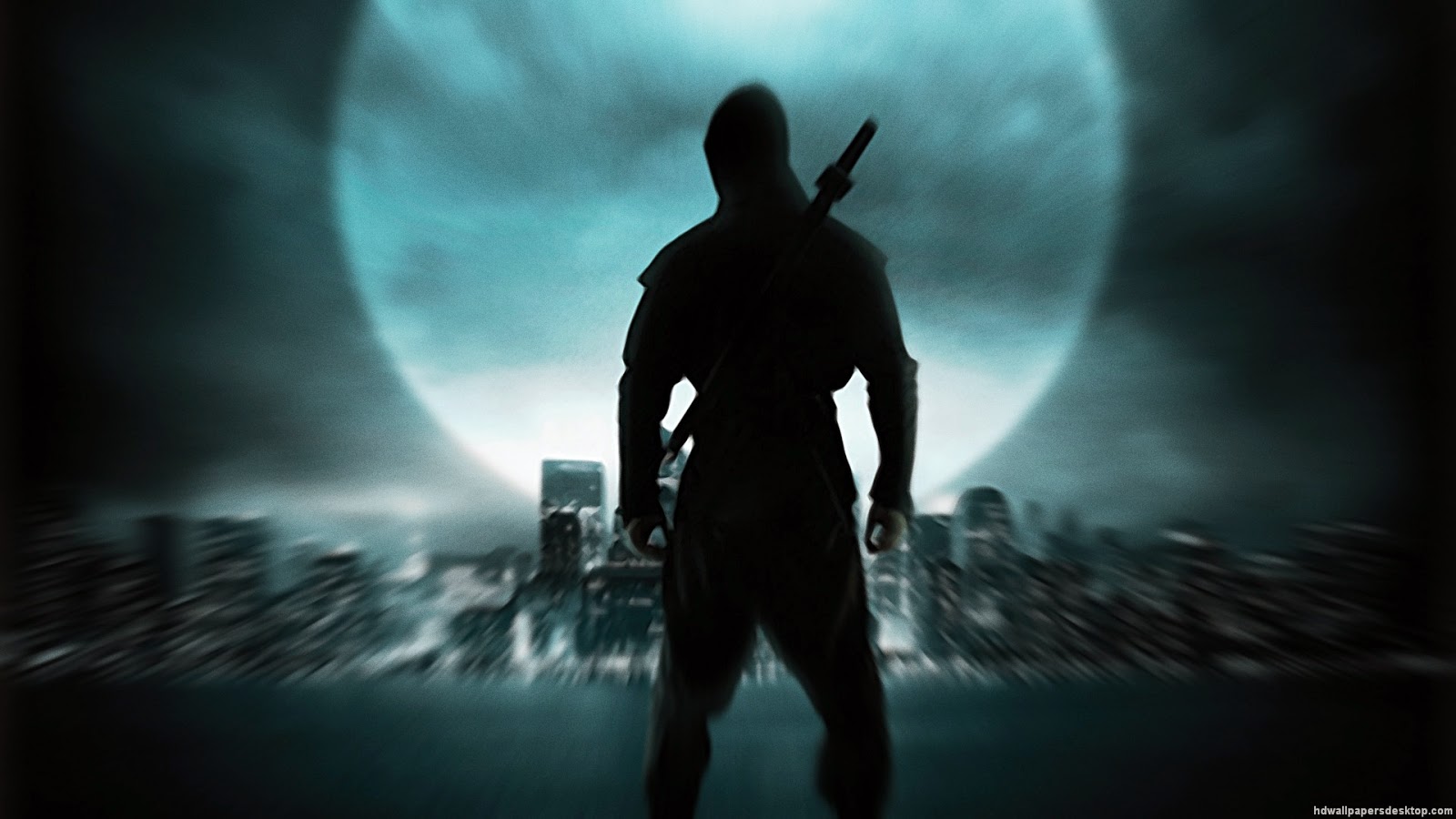
            For example, I could make Yakko a guy from the backwoods of Maine and constantly reference his sheltered New England upbringing.   And he’s also a Piggers fan (go Piggers!) who’ll cheer/ defend/ quote/ relate things to the Piggers at every chance he gets.  Oh, and he’s also a ninja who studied for twenty years in Japan before returning to America.
            Now, in and of themselves, none of these are bad character elements.  Being the fish out of water isn’t far from being the ignorant stranger.  Ninjas are cool.  Lots of folks love the Piggers.
            But if Yakko’s ninja skills are never going to be necessary to further the plot—or even just to deal with an action set piece—maybe they’re not such a great character element after all.  If his devout love of the Piggers is irrelevant to the story, maybe I shouldn’t spend forty or fifty pages on it.  And if I could switch his background from rural Maine to suburban Texas with no repercussions, maybe it’s not that much of a character trait.  Again, none of these are inherently bad elements, but I really should spend time on an aspect of Yakko’s personality or backstory that has an affect on the story. 
            And if he doesn’t have an aspect that affects the story… well, why is he there?  Sure, he cracks some funny jokes and other characters bounce some dialogue off him.  Maybe he even throws a key punch during a fight. 
            But in the long run, does Yakko do anything that another character couldn’t do?  What makes him unique?  Why is he here and not Wakko or Dot?
            I see a lot of this, I hate to say, in genre material.  Fantasy.  Urban fantasy.  Sci-fi.  Writers add in lots and lots of stuff to show how their world is different from other fictional ones.  And they do the same thing with their characters.  No one is just human.  They’re all sorcerers, telepaths, half-zombies, androids, paladins, and time traveling prophets.  But four out of five times this is just a label that’s been slapped on them as an attempt at characterization.  None of these traits are relevant in any way.
            For example…
            I read a story recently where one of the characters, a very small woman, turned out to be a female leprechaun.  Kind of makes sense—little leprechauns have to come from somewhere, right?  Whenever she got worked up (in any sense) her eyes and hair would turn green and she’d get a sparkly rainbow aura.  Halfway through the story she’s bitten by a vampire and becomes one herself.  So now she’s a vampire leprechaun.  No, I’m not joking.  She’d even change into a green bat.  And eventually she dies when she can’t find cover at sunrise.
            This all sounds kind of cool, yeah, but the thing is… none of this had any affect on the story. Not a single bit.  Her leprechaun abilities didn’t do anything.  Her vampire abilities didn’t do anything.  The combination of them didn’t do anything. 
            In fact, the biggest effect on the story was a four page discussion over drinks about being a leprechaun, followed by an interesting scene (see above) back at the protagonist’s apartment, and then many references to the fact that she was now one of the undead, and an undead leprechaun at that.  Heck, sunrise happened during a big fight scene, so she just could’ve been killed by one of the evil plant people.  If she’d just been a small woman the story would’ve progressed almost exactly the same, just with more time and space to give her some… well, useful traits.  And she would’ve been a lot more relatable
            If I had to give this a name, I’d call it the Stefon Factor.  If you’re not familiar with Stefon, the overly-enthusiastic club promoter from Saturday Night Live, he tends to talk about clubs that are filled with… well, oddities.  Lots of oddities.  In his own words, “This club has everything!”  But the truth is he rarely talks about the clubs themselves.  They just get defined by the patrons (which, granted, was part of the joke).
            Y’see, Timmy, in the same way a pile of random story points don’t automatically add up to an interesting story, a handful of assorted character elements doesn’t always result in a worthwhile character.  When I’m creating a character, his or her traits should have an effect on the story.  As I’ve mentioned before, every superhero group has a strong guy because at some point they need a strong guy.  And if my story has a vampire leprechaun, then at some point things should come to a dead halt if I don’t have the powers  of a vampire leprechaun to call on.
            Now, let me give you a more positive example…
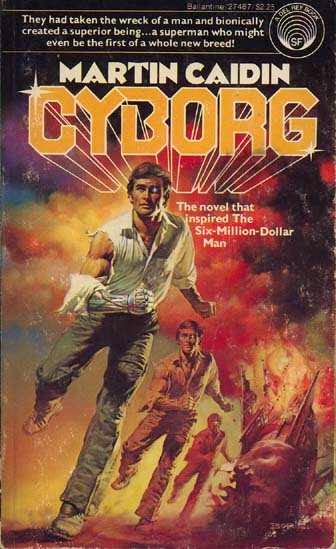
            There’s an old Martin Caidin book called Cyborg which inspired a much more well-known television show called The Six Million Dollar Man.  Now, this may sound kind of obvious, but the entire book is about the fact that Colonel Steve Austin has been loaded full of bionic parts after a plane crash.  He goes on a couple of missions which would be nigh-impossible without his cybernetics.  The story also focuses on Austin coming to grips with the fact that his government has turned him into a Frankenstein’s Monster, that almost half of his body isn’t him anymore.   If he wasn’t a bionic man, none of this would work.  The plot would struggle and his character arc would be nonexistent.  It’s not just a random label—the whole book hinges on the fact that he’s a cyborg.
            So give your characters relevant traits.  Make them necessary to your story.  Because if they aren’t… why are they there?
            Next time, a few quick thoughts on dating.
            Until then, go write.

Categories