
November 13, 2015

Beware… The Mosquito!

            Okay, first, please forgive me for some shameless pandering…
            Somehow, my book The Fold was nominated for best sci-fi book of 2015 over at Goodreads.  I don’t know how. I don’t even go to Goodreads. 
            Regardless, it was nominated and made it to the semi-final round, which ends on Saturday.  So if you happen to be reading this and didn’t read anything better this year (like, say, Armada or The Water Knife—both also in the running), I’d appreciate it if you could hop over to Goodreads and cast a vote for The Fold.
            Sorry about all that.  Kind of annoying, wasn’t it?
            Anyway, this week I want to talk about annoying things. To be exact I want to talk about mosquitoes.  I’ve seen a lot of them lately.
            A mosquito is the frustrating, you-want-to-slap-them character who shows up in books or movies.  That man or woman who simply cannot take a hint or get a clue, no matter how hard the other characters hit them with one.  Usually the mosquito won’t shut up.  Ever.  No matter what.  Plus, it’s a safe bet if someone tells them not to do something, that will be the very next thing they do.
            They’re just… well, they’re annoying as hell.
            Worse yet, the mosquitoes never acknowledge the problems they’re causing.  They leave shattered plans, damaged treasures, and unachieved goals in their wake—almost never their own—and often don’t grasp why it’s such a big deal.  Was that important?  Don’t get so worked up.
            And… wow, when the mosquito is the main character?
            By the way, this is just my name for this type of character.  Don’t expect to find the term “mosquito” in use anywhere else until I put out my how-to book on writing—Storytelling-the Ed Wood Method! Also, I may come up with a better term before the end of this post.
            Now, this is just my thinking, but I feel there are two big reasons mosquitoes get annoying so fast in stories.  One is that… well, they aren’t good characters.  I don’t mean this in the sense of poorly written or imagined, just that they aren’t the kind of characters people like to read about or follow.  I’ve mentioned a few times here that good characters have to be likeable, relatable, and believable.  As we just said, mosquitoes aren’t likeable—they’re annoying.  That’s why they’re mosquitoes.  They’re also not relatable, because nobody thinks they’re this kind of person, which means no one will identify with them. Think about it—the most talkative, clueless person you know doesn’t think they’re talkative or clueless.  So right off the bat, a mosquito is failing two of the three basic criteria for a good character.
            The other reason mosquitoes are annoying in a story is because they violate the rule of three.  It’s a term I’ve brought up here once or thrice in the past.  It usually applies to screenwriting, but you can find it in books, too.  At its core, the rule of three tells us that if something keeps getting mentioned, it’s important to the plot or story.  If it wasn’t important, it wouldn’t be mentioned three times. 
            Simple, yes?  I’ve mentioned something similar with names.  If I make a point of telling you the waiter’s name, he must be important to the story somehow.  A bare bones version of this would be the popular adage of Chekov’s Rifle, which says if we see a phaser rifle on the bridge in Act One, it should be set to overload and kill someone in act three.  If something is in my story, there’s a reason for it being there.
            I see a lot of mosquitoes buzz around and around… but they don’t actually do anything.  Their buzzing doesn’t distract the bad guy at a key moment.  Their failure to follow instructions doesn’t save the day. Their refusal to admit fault doesn’t give a vital clue. What little they do contribute could easily be done by someone else.  Anyone else.
            They’re just annoying. 
            Y’see, Timmy, when a character has such a defining trait that doesn’t pay off somehow, we end up wondering why said character’s even here.  Why did I put someone in my story that nobody likes or relates to?  That serves no purpose?
            That being said… what are some good reasons to have a mosquito in my story?
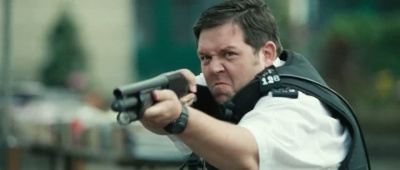
            Contrast—Sometimes I start off writing a character as a mosquito so they can go through a transformation.  That’s a basic character arc, to start one way, change somehow, and end up as someone a bit different. In Hot Fuzz, Constable Danny Butterman is a mosquito.  He’s the screw-up, chattering cop that type-A police officer Nicholas Angel is partnered with.  Through the course of the film, though, Danny learns to take his responsibilities as a police officer more seriously, and by the end of the story he’s grown up a bit and become a different kind of cop.  In this case, the character starts annoying so they have room to grow.
            We’re All Thinking It—Every now and then, somebody needs to lay the cards on the table. Maybe say some things other characters don’t want to hear. And my mosquito can do this, since they’re usually talking non-stop anyway.  Vince Vaughn has played this character a few times, like in Made when he points out to his friend Bobby (Jon Faverau) that everybody knows Bobby’s would-be girlfriend is sleeping with their boss.  In Love & Other Drugs, Jamie’s little brother Josh pretty much gives a monologue about how eye-opening it was to have sex with someone he didn’t care about, and how up until now he’d really envied his big brother but now he kind of pities him.

            In the same way, if I’ve already got a mosquito, they can beat the audience to asking questions and pointing things out.  This can calm some nitpicky readers and help carry the suspension of disbelief.  On The Flash, Cisco’s tendency to babble makes it more acceptable that he’s constantly coming up with super-villain codenames for the metahumans he and his friends fight.   As with many things, though, this is something I want to be cautious with.  This should be a tool, not part of my core structure.
            Breaking Points—Sometimes the mosquito uses their annoyance to their own benefit.  “The Ransom of Red Chief,” Ruthless People, and The Ref all use the idea of kidnappers stuck dealing with a mosquito.  In The Usual Suspects, Verbal Gint’s nonstop babbling make it hard for the police to catch small holes in his story.
            It’s worth pointing out, though, that in all of these examples, the mosquito is the antagonist of the story.  Not necessarily the villain, but definitely the antagonist.  They start off with them as the victim, but our sympathies slowly shift to the other characters—they’re the ones we’re identifying with and relating to.
            Fast friends—Okay, I was tempted not to mention this one, but… what the hell.  I’m trusting you to use this responsibly.
            Sometimes we need to introduce a character just to kill them off.  The problem is that it’s really hard to have any sympathy for a character we’ve only known for seven or eight pages.  In this case, a mosquito can work because… well, if they’re talking non-stop they have to talk about something, right?  Family, goals, television shows, dirty jokes—there’s any number of things this character can spew out.  The reader can have a reason to like them and before the character gets annoying BANG they’re dead, just like that.
            The thing is… I can only do this rarely.  Once a book is almost too much.  More like once every two or three books.  The moment I start to overuse this, it becomes a cheap gag—the sort of thing done in bad horror movies and SyFy films from the Asylum.
            Keep in mind, there are other ways to make a mosquito acceptable, too.  The important thing is that I have a reason for giving my character such an abrasive trait.  If I don’t… it’s going to be really challenging for me to keep my readers interested.
            And writing is challenging enough as it is without making it harder for no reason.
            Next time, let’s take this storytelling thing on the road.
            Until then, go write.
November 5, 2015 / 2 Comments

Do Something

             Remember, remember, the fifth of November…
            So, at the risk of possibly getting some grumbly comments, I wanted to talk for a little bit about a new buzzword I see popping up more and more often.  Agency.  Journalists and critics are latching onto it to talk about characters (often women and people of color, but I’ve seen it applied to characters of all genders and races). Like so many buzzwords, though, I rarely see it defined by the folks using it.
            Which, of course, makes it easier for them to use…
            This is a bit misleading, though. Agency isn’t a new word. It’s actually a fairly old sociology term (from the Enlightenment) that’s migrated into literature.  Well, migrated’s a bit misleading, too.  Maybe it was chloroformed and woke up tied to a chair, unsure what it was doing here.
            In a sociological and philosophical sense, agency refers, in simple terms, to free will. Can a person make their own choices and affect the world around them?  How much does the world or society they exist in constrain that ability to make choices? Does it cancel out free will altogether, or just the appearance of free will?  Is there a point where I no longer have free will?
            While this is fascinating stuff to debate over drinks, it doesn’t really have anything to do with literature.  As I’ve mentioned in the past, when I’m writing, I’m more or less the god of this little world I’m creating.  And I’m a micro-managing god, too.  None of the characters move, speak, or have a single thought without my say-so.  There is no free will. Zero.  Because I’m creating all of it.  Every sentence, every idea, every word, every punctuation mark.  It all comes from me.
            Okay, in all fairness, some of the punctuation comes from my beta-readers and copyeditor.
            When critics and literary pundits talk about characters having agency, at the core they’re talking about something we’ve addressed here many times. A a writer, I need to make my readers believe these characters are people who are having an actual effect on the story.  My characters shouldn’t be window dressing, they need to do things.  If I’m going to make a point of Wakko or Yakko or Dot being in my story, then there should be an actual reason they’re in the story.
            I read a book a while back that was your standard “chosen one shall save us” sort of thing.  A young girl—we’ll call her Phoebe—discovers her birthright and powers, must go into hiding, has to fight off enemies she didn’t know she had, needs to learn how to harness and direct her abilities.  We’ve all seen this a few dozen times at this point, right?
            Except… well, Phoebe didn’t really do anything.  She didn’t discover her powers, she learned about them from her parents.  She didn’t decide to go into hiding, she was told to go—pretty much forced.  There were two guardians who fought off the enemies for her (one actually sacrificed himself so she could get away).  Hell, when Phoebe finally got to the Tabernacle and began to train, people were even walking her through that.  She just kind of stood around looking dazed and confused.  Phoebe didn’t make an actual, independent decision about something until page 114.
            Not exactly inspirational, that chosen one.  In fact, for those first 113 pages Phoebe could’ve been a duffelbag full of towels all the other characters were handing off to one another.  She just didn’t do anything.
            Y’see, Timmy, my characters need to face challenges and need to respond to them.  They should make choices—ones that are consistent with who they are.  They need to be active, with their own thoughts and opinions.  And they should have a real affect on how the story plays out.
            Here’s a simple test we can perform.  Let’s say I scribble out a two or three page summary of my current novel or story or screenplay (choose which one applies to you).  I want to be as thorough as possible without changing how I’m telling the story.  So I put all the introductions, reveals, explanations, and so on in the same order they appear in the book.  Make sense?
            Okay, so let’s look at this.  What characters did I mention? Which ones did I skip over?  Reading through my summary, I mention Eli, Harry, Zeke, Theo, and Fifteen.  I don’t mention Eli’s childhood friends by name, the bus driver, the cashier, or the cigarette man.  That’s because they’re all supporting and background characters.  By nature of the beast, they should be a little more… well, two dimensional.  They’re the stepping stones and redshirts of our story, so we’re not going to focus on them too much.
           So let’s look at the characters we made a point of mentioning and naming.  These should all be important to the story, right?  Every one of them is key somehow.
            Now, take one of them out.
            If these are actual characters who are supporting the plot and making things happen, my story should fall apart without them.  If Dot can step in and immediately pick up the slack from Wakko’s absence… well, he can’t have been that important to things.  If nothing at all changes when Yakko vanishes, he definitely wasn’t important.  And if they’re not important, if they’re not having an effect… I really need to ask myself why they’re here.
            So do great stuff with your characters.  By having them do stuff.
            Next time… I’d like to talk about the bug problem.

            Until then, go write.

August 6, 2015 / 6 Comments

Go Fish

            Wow.  If anyone’s still reading this, I’m amazed.  I’ve been absent for a long time, and I am very sorry for that.  There was a whirl of conventions, a bunch of rewrites, edits on the rewrites…
            It’s all kind of a blur, to be honest. 
            Anyway…
            I wanted to dive right back into things with a quick talk about fish. Well characters as fish. A fish out of water, as the saying goes.
            If you don’t know the saying, it basically means someone’s unfamiliar (and usually a bit uncomfortable) with the situation they’ve ended up in.  When the small town girl moves to the big city and has to find her place, that’s a fish out of water story.  When the big city boy moves to a small town and has to figure out his place, that’s one, too.  And when the special ops veteran has to babysit three adorable little kids for a month. The idea has a pretty broad scope.  It can refer to feeling a bit awkward at a party where I don’t know anyone, or being dumped on the side of the road somewhere in eastern Europe and having to find my way home while dealing with ninja werewolves every night.
            If you’ve been following my rants here for any amount of time, this idea may sound kind of familiar.  It’s because I’ve talked about the flipside of this as a problem once or thrice before.  It’s when a character is so completely prepared for everything that nothing is a challenge for them.  They’re never worried about anything because they’ve got the skills and the tools and the weapons and the flares and the antibiotic ointment and the European voltage adaptor and so on.
            If my character is always prepared, that means they’re more or less in control of things. And if they’re in control… well, there isn’t going to be any conflict, is there?  He or she will just kind of amble around and face… well, no challenges.
            I don’t know about you, but that sounds dull as hell to me.
            Our characters thrive and grow when they’re forced to learn new things and deal with unexpected situations.  This is basic character arc stuff.  My character starts here and ends there.  And I shouldn’t be talking about his or her position on the couch when I say this.  Through the course of my story, my characters should grow and change.  Circumstances should make them reconsider choices.  Necessity should be the mother of invention.
            And it’s not a solid rule, but I’d bet in a good three-quarters of our favorite stories, this growth isn’t something the character chooses. It’s a sink or swim situation. Going home to my normal life isn’t an option.  I either need to make things better or they’re going to get a lot worse.
            What’s my point with all this?
            At some point in my story, my character should be a fish out of water.  Pretty much needs to be, really.  They should be gasping, floundering, unsure what’s going on and why, and how they’re going to get out of this situation.  Maybe not gasping and floundering in a strict literal sense, but on some level they need to be baffled and looking for solutions.  It doesn’t matter if my story’s about love, work, faith, personal discovery, computer simulations, alien invasions, terrorist attacks, or Lovecraftian horror.  Some part of this needs to be something my characters have never seen before, something they aren’t prepared to deal with.  
            Y’see, Timmy, that’s how my characters learn and change. Which is how they get an arc. Which is one of the key elements of great storytelling.
            If they’re never put in that unfamiliar, uncomfortable situation—or if it’s impossible for them to end up in one—what motivation do they have to move along that arc?
            So pull your characters out of their comfortable fish bowl and toss them up on dry land.  Or up a tree.  Or into the most awkward family reunion ever.  Especially if it’s not their family.
            Next time…
            Well, since I’ve been away for a bit, I wanted to toss the floor open to all of you.  Is there anything specific you’d like me to blab about?  A character or structure or dialogue issue that’s been gnawing at you?  Please let me know in the comments below and I’ll offer my best thoughts on it.
            And if no one says anything… I don’t know, I’ll go back and look at some earlier stuff.
            Until then, thanks once again for your patience.
            Now… go write.
May 9, 2015 / 5 Comments

In The Words of Zefram Cochrane…

            Geeky Star Trek reference.  I’ll explain as we go along…
            But first, a story…
            Back when I was a young man in college and our country had just won its liberty from the British Empire, I took a class on early American literature.  There were only two books to study, both from earlier that month.  It was considered an “easy A” course.
            Okay, that joke died pretty quick.
            Anyway, I was in my early American literature class and we were discussing Wielandby Charles Brockdon Brown, first published in 1798.  It’s considered an early American classic, the first noteworthy American novel, and its author died penniless and drunk in a snowbank.  Story is, his own mother wouldn’t even buy his books.  He was pretty much unknown during his lifetime outside of a small circle, which shrank rapidly after his death.  It wasn’t until the 1920s that he became kind of known and retroactively entered into the canon of great literature.
            I asked my professor about this.  Why was this book now being considered great literature?  It had failed then, and barely anyone knew about it now, how does it qualify?  Surely is it was great, people would read it on their own.  Why should we consider it relevant nowwhen the author’s own mother didn’t even consider it relevant then?
            Rather then telling me to shut up or tossing me out of his class, said professor congratulated me for bringing up a good point.  What’s considered “great literature” changes all the time.  Every time someone publishes a new paper on Longfellow, Irving,  Melville, or Dickinson… the canon changes.  A lot of what we consider “classics” were either ignored or thought of as populist crap in their time. A fraction of it was literature.  Almost none of it was art.
            Back in 1989 (just around the time I was questioning my professor about Brown’s book), Robin Williams gave an interview where he talked about a production of Waiting for Godot that he’d been in with Steve Martin the year before.  “I dread the word ‘art,’” Williams told the AP.  “That’s what we used to do every night before we’d go on with Waiting for Godot.  We’d go, ‘No art.  Art dies tonight.’  We’d try to give it a life, instead of making Godotso serious.”
            Believe it or not, the play sold out every performance.  People loved it.  They lined up every night hoping for no-shows and cancelled reservations.
            Williams knew something a lot of folks just can’t wrap their heads around.  I can’t make art.  No matter how much I try or how long I work or how many guides I follow, art isn’t up to me.  It’s up to everyone else.  And how they define art changes all the time.  With every new paper or critique or review, what’s art now becomes shallow and tired.  And the hack stuff that stands the test of time?  Well, suddenly that’s art.  Or maybe not.  Nobody knows.
            Y’see, Timmy, art doesn’t suck, but trying to make art really does.  And usually (not always, but usually, in my experience), the results of trying to make art suck.  It feels forced and pretentious.  There’s so much message there’s no actual story.  It’s so busy trying to be art that it doesn’t feel alive.
            Before I worry about art, I need to worry about my plot and my story. Do I have believable characters?  Will my readers identify with them and want to see what happens to them?  Do they have arcs?  Do they have good dialogue?  Are there interesting challenges for my characters to overcome?  Is the outcome ever in doubt?  Does tension build?
            If I don’t have a good story, art is irrelevant because no one’s going to read it.  I can have the most magnificent sentence structure and vocabulary ever committed to paper, but if my characters are boring it doesn’t matter because the reader’s going to put the manuscript down in six or seven pages.  Because boring characters are… well, boring.  That sounds painfully obvious, I know, but you’d be surprised how many people ignore that simple fact in the name of art.
            Somebody once said “don’t try to be a great man—just be a man.  Let history make its own judgments.”  And the same goes for my story.  It just has to be a story.
            Someone else will decide if it’s art or not.
            I shouldn’t be worrying about that.
            By the way, before I forget, there’s still about a dozen galley copies left in that pre-order promo deal I mentioned a few weeks back.
            Next time, I’d like to talk a little bit about talking a little bit.
            Until then, go write.

Categories