August 17, 2018 / 1 Comment

Last-To-Be Chosen Ones

            Day late.  Sorry.  Still recovering from the move.  It’s just this sort of ongoing project…
            Anyway, an idea crossed my mind recently and—after batting it around for a bit—I thought it might be worth sharing with all of you.
            A while back I talked a bit about a certain type of character—the chosen one.  That lucky person pretty much preordained for a great destiny.  Sometimes literally preordained.  Ancient scrolls and prophecies aren’t that uncommon, although there are also legendary parents and preternatural skills to take into account.
            The most common beginning for such a story is, after a chapter or two establishing their completely normal and mundane life, somebody shows up to collect said chosen one and whisk them off to that amazing destiny we were just talking about.
            And that’s kinda the bit I want to talk about.
            I think it’s very important to note that our chosen one’s story doesn’t begin because of some overwhelming threat.  It’s almost always for simpler reasons.  They’re finally the right age.  They found the hidden room.  They inherited that special book or locket or sword.
            You might be able to find an exception to this rule, sure, but let’s go over a few popular examples…
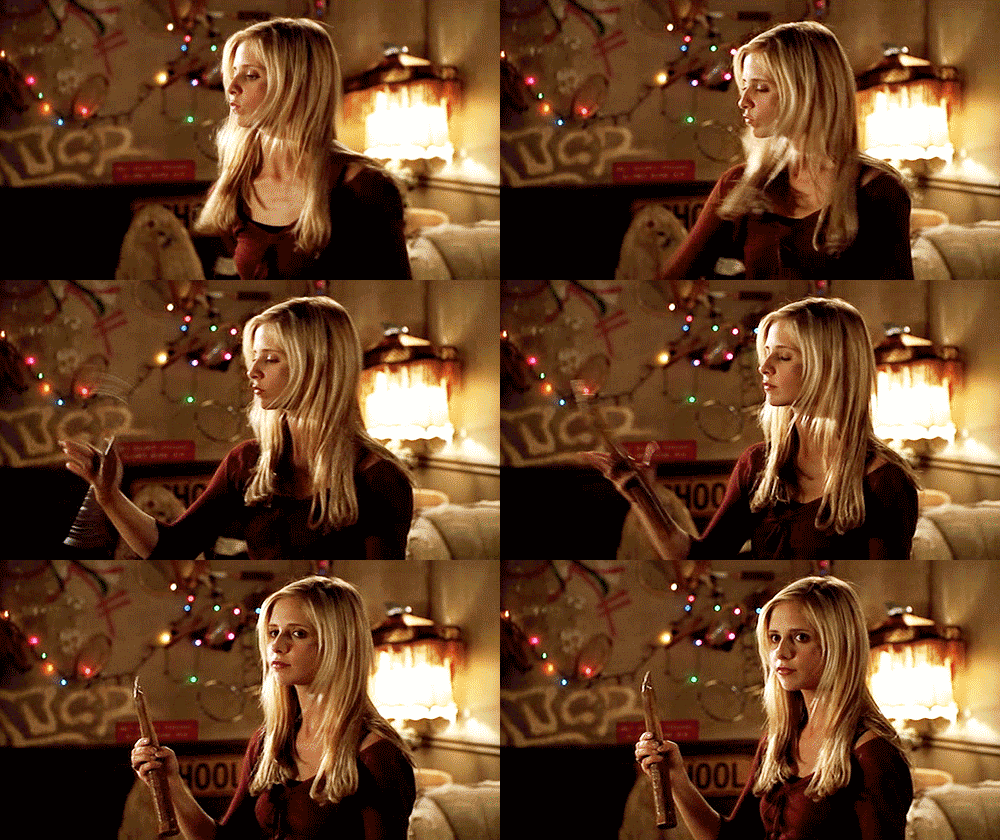
            Buffy Summers doesn’t receive her Slayer calling because the Master is rising in Sunnydale—the last Slayer died and she inherited the power.  That’s it.
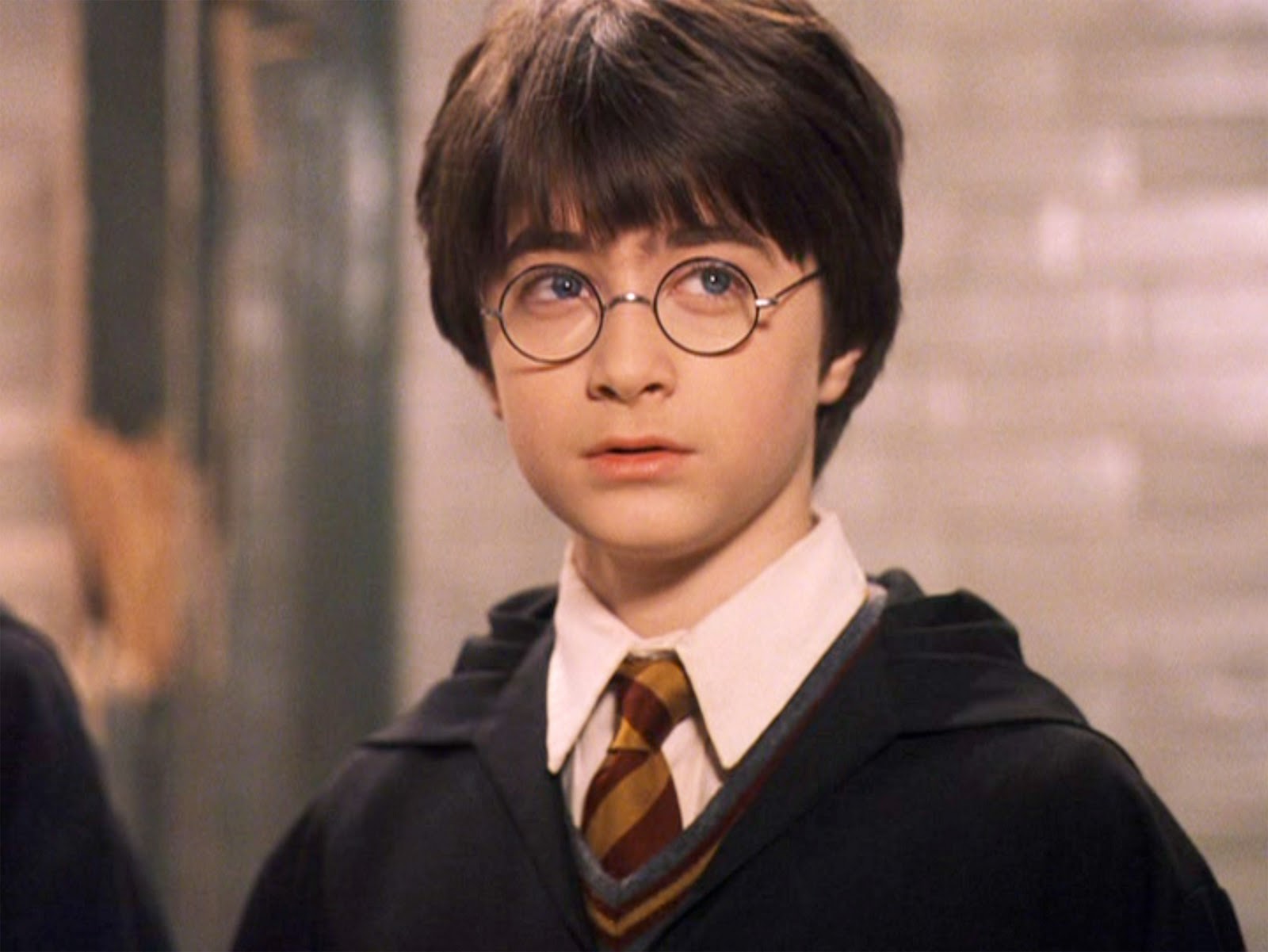
            Harry Potter isn’t brought to Hogwarts to fight Voldemort—he’s only brought cause it’s his birthday and he’s old enough to start classes.
            Katniss doesn’t take her sister’s place to become the symbol of the resistance—she just happens to be successful in the Hunger Games in the right way at the right time.
            Luke doesn’t join the Rebellion to blow up the Death Star.
            Rey didn’t join the resistance to fight Kylo Ren.
            Jay didn’t join the MIB to stop an Arcturian Battle Cruiser.
            I think the reason for this is that if X is this overwhelming threat… all these training montages and bonding moments are going to seem like a horrible waste of time.  “Wow, Phoebe’s the chosen one—the one who was foreseen—who will save us from the murderous threat of the Yakkonator.  Even now it closes in on our city of three million people, ready to drain their blood and harvest their souls. But first… you need to practice your footwork for a few days.  Also, you and Wakko need to figure out how to be better partners—in every sense.  Focus on that for a bit.”
            One of the big tricks to a successful chosen one story is that it’s really two parallel stories.  It’s about Phoebe discovering her destiny/parentage/abilities, yeah, but it’s also about our heroes discovering, oh, crap, it looks like the Yakkonator is waking up now, not in 2021.

            These threads need to stay separate so they can each develop on their own.  Phoebe needs that time to train and grow as a character, because if all we need to do is toss a nineteen year old Banana Republic clerk in front of the Yakkonator—trained or not—to fulfill her destiny, then the Yakkonator isn’t much of a threat, is it? And if she absolutely needs training but the Sacred Order of Antiyakkination waited until the last possible minute to bring her into the fold… seriously, what’s wrong with these guys?  If you’re trying to fit six years of training into six days, maybe you just could’ve started six years ago?  These people just look stupid now.  And if she needs those years of training but pulls it off in days… well, aren’t we back at that first example again?

            So when I’m plotting out a great destiny to for my chosen one, I need to remember not to tie them immediately to that destiny.  Give them space to grow.  Maybe not hit them up with that ultimate evil in the first hour or two.
            Everyone’ll have more fun with it that way.
            Next time, I’d like to encourage you to take a few deep breaths.
            Until then… go write.
August 7, 2018 / 2 Comments

Advance!

            Holy crap.  So very sorry it’s taken me forever to post.  I just moved and it was kind of a hell move.  Not that anything truly awful happened, just… well, when you’ve been in one place for almost twelve years, it’s not going to be easy getting out of it.  And it wasn’t.  Nor has it been easy getting things set up at the new place.  For example, I just got internet three days ago.
            Anyway…
            I wanted to bounce something off you fast, just so we can hit the ground running, so to speak.  This came to me a while back during one of my Saturday geekery tweetstorms.  See—I’m totally worth following on Twitter.
            Plus A. Lee Martinez brought it up the other day.  So I guess he’s totally worth following, too.
            I’ve talked about backstory here once or thrice.  It’s all those fun things that happened to our hero or heroine before my tale of wonder begins.  Their time just off the coast of Madagascar.  That earlier romance with a supporting character.  The mysterious past they avoid talking too much about.
            Here’s the thing I need to remember.  Backstory isn’t character development.  Backstory just gets my character to where they are now.  It gets us to where the story begins.
            Y’see, Timmy, character development should be moving things forward.  It’s progressive, because by its very nature it means my character is progressing in their development.  No forward movement=no progression=no character development.
            My character can have the coolest backstory ever… but readers want to know why they’re interesting now.  What they’re doing now.  How their lives and views are changing now.  I need to be sure I’m not confusing fleshing out all the stuff behind us for all the character growth ahead of us.
            Next time, I’d like to talk about exercise a bit.
            Until then, go write.
            And sorry again for the delay.
            Despite the title, you might like this little rant…
            We talked about characters for a while at the Writers Coffeehouse this past Sunday.  Mostly about my long-standing (but sometimes contentious)  three necessary character traits.  And I figured I’d already threatened all of you with a character post, so we could spin off in a slightly different direction here…
            I can’t have a story without characters, right?  Should be obvious.  Oh, sure, I’ve seen one or two clever pieces that are just elaborate settings with no actual people in them, but I’m going to say 999,999 times out of a million no characters means no plot, no story, no nothing.  They don’t need to be human.  They don’t even need to be alive.  But if my reader doesn’t have someone to focus, I’m going nowhere fast. 
            For all of us, the goal’s to create characters that seem alive on the page.  People a reader can identify with and picture in their mind.  Characters will make or break my writing, which means they deserve attention. 
            A mistake I see again and again and again, however, is writers who give their characters too much attention.  Their writing becomes all about character and not about anything else.  These characters never get off the page because… well, they get buried alive there.
            A couple of good rules-of-thumb.  As always, your mileage may vary, but these seem to be pretty solid and common, in my experience.

            I shouldn’t describe characters in exacting physical detail.  I’ve mentioned this before.  We, the audience, don’t need to know someone’s precise height, weight, waist, inseam, shoe size, cup size, hair color, eye color, or how much of what they shave and how often.  We really don’t need to be told the exact tie pattern he’s wearing, where her skirt hits her thigh, if he likes boxers or briefs, if she likes thongs over bikinis, how many fillings either of them have, the name of her first pet, the state his parents grew up in, how they both did on that third grade geography test, and precisely what they had at the restaurant last night for dinner–including condiments.

            I don’t need any of that in my writing.  I promise.  Because these sort of long descriptions bring things to a grinding halt.  The longer the description, the louder the squeal of brakes. And the harder the crash. 
            When I do this, I’m doing an infodump.  I’m throwing out a pile of information at a time the reader wants action and forward motion (which is—for the record—always).  It’s wonderful to know that, as Phoebe steps out into the street, everyone notices her D & G bag, Yves St.Laurent jacket,  eel-skin boots, platinum wedding band with matching engagement ring (not to mention the size of that rock—three carats, easy), the small St.Christopher’s medallion she wears outside her emerald-green satin blouse, her meticulous eyeliner, and her $300 hairdo that’s starting to sag, giving her one loose strand that hangs loose over her face in a kind of sexy way as she puffs and swipes at it with her free hand.
            You know what’s far, far more interesting than all of that, though?  Why’s Phoebe stepping into the street?  Is it a crosswalk?  Is she getting into a limo?  Throwing herself in front of a bus?  She’s been frozen there in mid-movement while the writer (in this case, me) prattles on about her clothes and hair.  Heck, after all that description, did you even remember she was outside?
            There’s another simple reason to not spend time on physical descriptions, whether I’m writing a novel or a screenplay.  Silly as it sounds… I don’t have much say in what this character looks like.  When we read, we all form our own mental images, and they’re usually pretty different from the ones written out.  An example I’ve mentioned before, from Dan Abnett’s excellent Ravenor books, is the  character of Kara Swole, who I always picture like my friend Penny from college.  Their descriptions don’t really match up (well, they’re both female gymnasts, but that’s about it) yet this is how I picture Kara as I read each chapter.  Something just clicked in my mind and that’s what she looks like.
            But my Kara probably doesn’t look like your Kara.  If you read the books, maybe you picture her more like Melissa Benoist.  Or Zazie Beetz.  Or that cashier at the grocery store you were kinda crushing on.
            So extensive, super-elaborate physical descriptions are probably going to be a waste of everyone’s time.  I should use broad strokes and only fill in details where I really need to.  Pick three or four good descriptive words for the character (not their clothes), and stick with them.  Their dialogue and actions will bring them to life and my readers will fill in the rest. 

            In the novel I’m finishing up right now, one of the main characters is a tall, dark skinned woman with frizzy hair who wears the same uniform/jumpsuit as everyone else.  You’ve got her in mind just off that, don’t you?  Without anything else.  Yeah, a hundred people are going to interpret that description a hundred different ways, but you’ve got a solid image in your head, yes?  Which means I’m now free to go talk about her new Caretaker job on the Moon and how it goes horribly wrong when that meteor hits out at Hades Cemetery and the dead start to rise and hey this is already more interesting than a long list of personal details, isn’t it?
            Now, as far as the mental/ emotional/ historical side of my character goes, if this stuff is important, of course it should be included.  If my romantic lead has lost everyone he’s ever cared about, if my adventurous heroine suffered from asthma as a child, or if a knowledge of rural New England history will be critical to resolving this mystery, then there’s a chance these things need to be in my writing.
            However, there’s a good rule of thumb for all of this stuff, too (so many thumbs).  Is it critical to what’s going on within these pages?   My audience is going to assume if I’m giving all this information, it’s because they need this information.   After my fourth or fifth exhaustive description of a given character’s childhood traumas, college love life, or medical history, my reader’s going to make the natural assumption none of this is going anywhere and start skimming.  First they’ll skim paragraphs, then pages, and then over the bookshelf or television listings to see what else could be filling this time…
            Now, there’s an argument to be made that any event in someone’s past affects their present and every single decision shapes a person’s life to some degree.  As a wise man once said, we are the sum of our memories.  Thus, anything I choose to include is relevant to the story on some level, right? 
            Well… sort of.  A point I’ve tried to hammer home many, many times before—this is not real life.  No one wants to read about a character’s personal or family history that doesn’t have any bearing on what they’re experiencing right now.
            Again, for example…
            When I was five years old I saw my dog, Flip, get hit by a car in Maine.  That same year I got stabbed in the eye with a pair of sewing scissors.  I got my heart horribly broken junior year of college, to the point that several friends thought I might kill myself.   A year after graduating from UMass, I decided to move to California on a whim, quit my job on the spot, and spent two weeks quietly terrified that I’d made the worst decision of my life.
            All formative event that still affects me to this day?  Absolutely. 
            Do they have anything to do with the tips, rules, and suggestions I post here? 
            Not really. 
            But they build character, right?  They all expand the vast tapestry of my life. They tell everyone here a little bit about me and make me more human.
            So what? 
            I’ve got an actual story, don’t I?   I don’t want to waste your time with stuff that has no bearing on the writing advice you’re here for.  If I want to focus on one thread in the tapestry of my life, I should choose one that shows them how my life relates to this.  
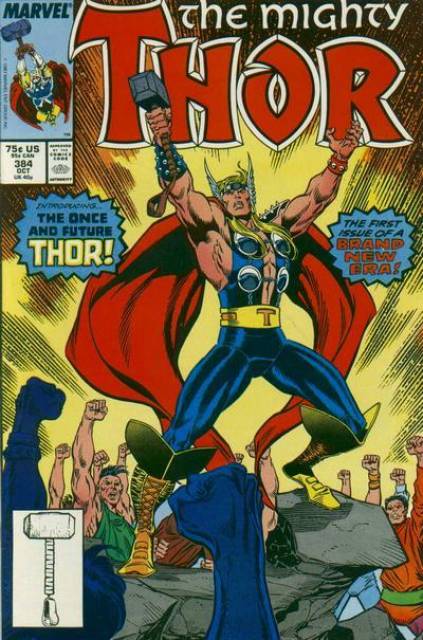
            I’ll tell you about how annoyed barely-a-teenager me was when a doctor casually told me that writing wasn’t “a real job.”  I can explain how thrilled high school-senior-me was when I got a personal letter from Tom DeFalco rejecting my Marvel Comics story but including some tips, a Marvel submission guide, and a full copy of one of his Thor scripts for reference.  I can give you the wonderful visual of me in a panicky, cold sweat sitting outside Ron Moore’s office, waiting to pitch a few Deep Space Nine stories I’d come up with.  And maybe I can break the rule of threeand finish it off with the story of financially-desperate megetting an offer to write some bonus material for Audible just when I reallyneeded the money.
            See?  That’s all relevant.  You’re reading that and saying “Wow, this guy’s been serious about writing for a while now, hasn’t he?”
            That’s the kind of stuff I need to put in my writing.  The relevant description and backstory.  The stuff that matters to the story I’m telling.
            And you’ve forgotten my dog’s name, haven’t you?  No, don’t worry about it.  He’ll always be important to me, but I understand why he’s not important to you. Especially in this context.  
            No, really, I do.
            Build fantastic characters.  But don’t build unnecessary stuff. Or, at least, don’t put it in your story.
            Next time… well, I’m on a deadline so you may just get something quick from me.  or maybe a guest post.  We’ll see.
            Until then… go write.

April 12, 2018

Story vs. Plot

            This title might sound familiar, but I’m going to blab about something a little different this week.
            Also I may be using the words “narrative” or “tale’” a lot this week, just to cut down on confusion.  You’ll see why as I go on.  Trust me, it’s easier this way.
            I’ve talked about plot and story here a few times.  You may remember the idea that plot is what takes place outsidemy character, story is what takes place inside my character.  Plot affects the world while story affects my character.
            I’d like to add to that a bit…
            I was writing up a post a few weeks ago and found myself second-guessing a statement I made. Paraphrasing, I said that everything my character does, the decisions they make, the actions they take, is plot.  And I pondered that for a few minutes, then even discussed it with my special lady-friend. After all, aren’t there decisions that fall under story?  Aren’t their actions that could be considered part of the story?
            Maybe not…
            I think story tends to be a bit more passive than plot.  While plot results from a character’s decisions and actions, story tends to develop from their experiences and observations.  Plot develops from what they’re doing, story develops from what’s done to them.  Story is character development, their arc.
            No one decides to fall in love, or to learn to trust again, or to shift their political views.  There’s no single moment where Ebenezer Scrooge decides to give up his miserly ways and be a better person.  We may come to realize these things have happened, but that’s after the fact.  The change kinda happened on its own as we were exposed to new facts and new situations.  Simple truth is… we rarely change by choice.
             Even if I have a narrative where someone doesmake an active decision to trust again, that usually isn’t their story.  Think of any successful tale where someone makes an active decision to change—the end lesson they learn, their big realization, is almost never about that change.  If I decide to lose fifty pounds, I’ll find out I do have the willpower to do this.  Or that ultimately looks aren’t as important as happiness, and Phoebe’s really shallow for thinking otherwise.  Or that I secretly have pyrokinetic powers which have been activated by the sudden metabolic increase in calorie-burning.
            But a narrative where I decide to lose fifty pounds and then I just lose fifty pounds?  That sounds boring as hell, doesn’t it?
            There’s a good phrase to remember, and I’ve already used it a few times– “…comes to realize…”  If I’m using this, I’m implying something already happened and my character’s kinda getting caught up. A lot of the time, when I’m talking about Phoebe coming to realize she’s hated her job for years or Wakko coming to realize he’s been pursuing the sexy nurse when he’s really in love with Phoebe… that’s a huge part of their arc.  That’s their story.
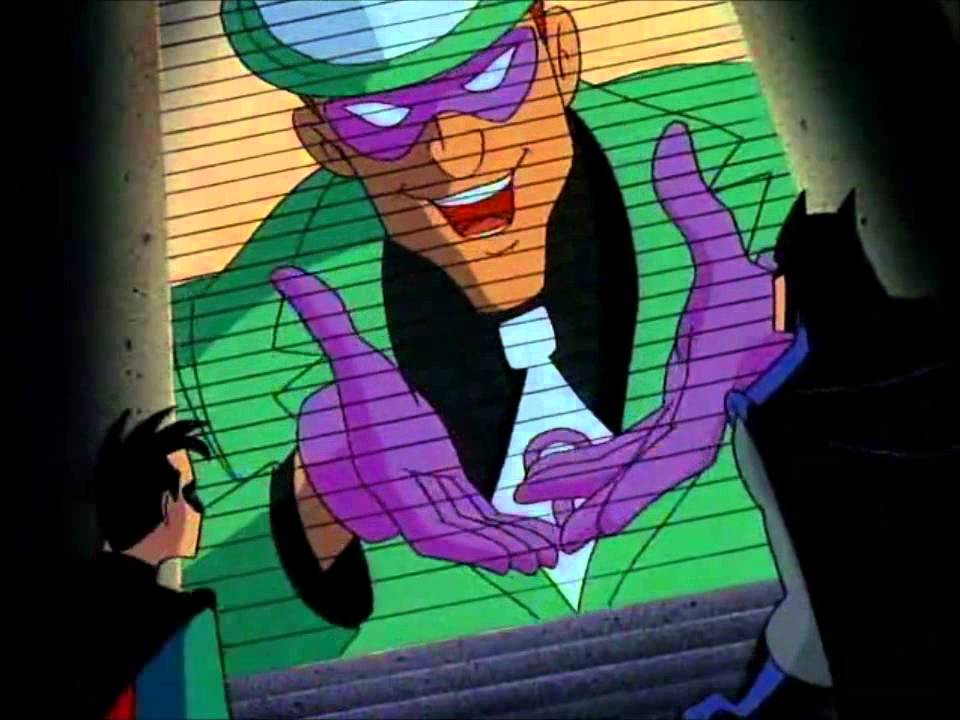
            Yes, Batman can also come to realize the Riddler’s been behind this all along. That’s a different kind of realization.  Don’t get pedantic on me.
            And it honestly just hit me while I was writing that Batman joke, this might be why so many “story” heavy narratives end up feeling a bit shallow.  To me, anyway.  If I accept that story develops from things happening to my character—that this is where their arc comes from—then how can they have a story without a plot?  If today’s just another day in my characters life where nothing different happens… why would they change?  And any change that did happen to them would feel really unmotivated because…well, there’s no motivation for it. Because there’s no plot.
            So when I’m trying to find that plot-story balance in my work, maybe I should keep this aspect of it in mind.  My character can do things to affect plot… but the plot needs to have an effect on the story, too. Despite the title of this little rant, it’s not really plot vs. story, so much as it is the two of them in this sort of mutually-symbiotic relationship where they feed off each other and grow stronger together.
            Next time… I’d like to talk about horses.
            Until then, go write.

Categories