
July 8, 2021 / 1 Comment

Dating Profile

I (finally) wanted to step away from the usual process stuff we talk about here—structure, dialogue, characters, editing, and so on—to talk about another important part of the process.

Dating apps.

When we’re looking to find that partner for life—or, y’know, maybe just for the weekend—these apps can be phenomenal. They’re not perfect, no, but they can save a lot of time by, well… weeding out a lot of folks that aren’t going to work for me. For whatever reason. Maybe I have some really firm personal philosophies. Perhaps I know exactly what kind of relationship I’m looking for right now. Maybe, hey, there’s a certain body type I prefer—or one I don’t. Regardless of what my criteria are, whether they’re right or wrong, these apps can help whittle down my prospects to a manageable size by matching me up with the people who meet my requirements.

Except… well…

Okay, look. Clearly there can be basic misunderstandings now and then. She said she likes football, I said “hey, I like football,” but it turns out she meant soccer and okay, well… this was awkward. Sorry I scheduled our first date during the World Cup.

Or maybe it was a little more deliberate. Maybe I realized I get a lot better matches when my profile says I’m six foot even and 179 pounds with a thick head of dark hair. Which, for the record, is a 100% accurate description of me that I’m just using for this example. Except then we finally meet face to face and now I can’t hide that, okay, yeah, I’m closer to 5’9” and 225 pounds (look, lockdown was very stressful) with a silver-gray widow’s peak that’s pulled back a bit over the past decade or so. But I have a great personality and I’m sure… well, it wouldn’t be much of a surprise if the matchee wasn’t too interested when they finally saw me. They might even be justifiably annoyed. I mean, they spent time looking for a good match on this app.

Hell, maybe I’m just going to be kind of obnoxious about it and rationalize away their criteria. Her profile clearly says she doesn’t want short guys and no sci-fi/superhero geeks, but she’s hot, dammit. I’ll just explain to her how short guys are more dependable (in so many ways) and that Star Wars is actually more in the science-fantasy genre, so we should definitely hook up. I mean, that’s what DMs are for, right? To make my case and skip over all those limitations she’s putting out there to weed out other guys exactly like… me.

Anyway, where were we? Oh, right, why the hell are we talking about dating apps on this here writing page? What’s going on?

Well, as I’m sure a lot of you have already figured out, using a dating app is a lot like submitting my work somewhere. It’s trying to find that perfect person who’s looking for what I’m offering. Either a long term partner like an agent or maybe just a quick, one-time thing like placing a short story in a magazine, anthology, or a contest. And I’m going to have my best results with these submissions if I’m being honest. With myself and with them.

Yeah, sure—there’s always going to be the occasional mistake. I might spell someone’s name wrong or misread a requirement. Hell, one time I submitted to a magazine and the editor politely wrote back and pointed out thanks but they’d gone out of print six months earlier. These aren’t a lack of honesty as much as signs I’m maybe rushing things a bit at times and need to slow down a bit.

But I really don’t want to be lying about what my manuscript is. I shouldn’t reformat it to make it hit a certain page count. I don’t want to call it a romance when it’s a thriller with a minor romance subplot. I definitely shouldn’t say it’s got strong religious themes without being clear the “religion” is a doomsday cult trying to summon the old gods to cleanse the Earth.

I especially don’t want to ignore what they’ve specifically said they want. Yeah, they don’t want urban fantasy novels—but they’ll want mine, dammit! All short stories have to be under 7500 words, but once they read mine they’ll understand why it’s 11,000. No explicit violence toward women or animals… but I mean, they just say that to weed out the real weirdoes, right? And I know I’ve mentioned the guy who sent his sex comedy to a Christian values screenplay competition… ?

If I want to make a connection—a serious one that’s going to lead to something, even if it’s only something short term—I need to be honest. I can’t lie about what I’m offering. I can’t ignore what they want. If I do, I can’t blame them when they toss my manuscript in that big pile on the left.

Or, y’know, if they swipe that way.

Next time, I really want to not talk about something.

Until then, go write.

July 1, 2021 / 2 Comments

Random Musings

I had a post on dating apps all ready to go but… well, the past two weeks have been especially rough for me. On a bunch of fronts. I’m still here at the desk, though. Scribbling away. Being pretty productive, honestly, even though I’d really rather just be drinking, building toy robots, and listening to Lore again from the beginning.

Which got me thinking. The past few years—2020 especially—has been tough on creative folks. It’s been crisis after crisis, and it’s been exhausting on so many levels. Spiritually. Emotionally. Even physically. I don’t know about you, but I feel seriously beat up after 2020.

And when you’re already that beat up, every new wound hits that much harder. Bad news is the worst news. Any little bit of criticism is a knife in the back. Self-doubt can swell up into this Hulk-like manifestation of your childhood bully to make everything even worse. Or I guess Abomination-like is more trendy right now. You get the point. It’s friggin’ huge.

Not surprising at times like these, we all feel the urge to walk away for a while. To take a mental health day or three. The desire to put this project down and come back to it when we’re feeling a little less beat up and a little more inspired. Maybe to just spend today—and maybe tomorrow—comfortably playing games on the couch and not thinking about anything.

Because holy crap, there’s a ton of stuff it’d be nice not to think about, isn’t there?

All that said, I just want to warn against something that becomes really tempting at times like these. And that’s waiting for something to make me want to write again. Waiting until the muse pushes me, until I feel inspiredagain.

Yeah, okay, we all write for different reasons. It might be more of a hobby. It might be therapeutic. But I’m guessing for most of the folks reading this, the hope is to someday make a steady living at it. Financially speaking.

And if I’m one of these folks, I need to accept that writing is work. Most of the time it’s fantastic and fun and creative, but sometimes I need to do it even when I don’t feel like it. Sometimes I need to do it when I don’t want to. I just need to get in there and write another thousand words about this guy going down into a haunted mine. Or that woman trying to find out the secrets her parents hid from her. Or those college students on that boat trip that went… well, less than great.

I’m not saying I need to work twelve hours a day, seven days a week. Neither do you, if I wasn’t clear. It’s 100% understandable to need a vacation or just a mental health day. Real life is out there with vet appointments and grocery shopping and maybe even another human or two we kinda enjoy spending time with. No job should be my whole existence, no matter what it is. And like I said above, it’s a rough time in a rough world. We all need to take care of ourselves and the people we care about.

But also… we need to be sure we’re not using all that roughness as an excuse.

Y’see Timmy, at the end of the day, I should want to write. I should enjoy it. Yeah, some days are less enjoyable than others, like any job, but it shouldn’t be the thing I put off for the third week in a row because I’m just not feeling it. I can’t put things off waiting for the perfect inspiration or a certain mood or a precise atmosphere. If wanting to write isn’t my default state, if the thought of it makes me miserable…

Maybe that’s my brain telling me something.

Anyway, just some random thoughts. Next time, we’ll talk about getting the most out of those dating apps.

Until then, go write.

No seriously. Go write. Stop making excuses.

June 24, 2021

Two Days Earlier…

A couple weeks ago I talked about a certain kind of opening that shows up in a lot of books and movies. It’s when that prologue or first chapter or first scene has some stuff happen (computer virus is stolen, monster lands on earth, vampire comes out of the earth, etc) and then it jumps forward in time four day, five weeks, six months, or more. It can be a problematic opening, and the fact that I feel the need to point out that time gap—how separated these events are—should usually be a sign to take a serious look at how important that opening chapter or scene really is.

Today I wanted to talk about the reverse of that opening. It’s another one you’re probably familiar with, and I’d guess it should probably be an even bigger red flag. It’s not always a sign I’m doing something wrong… but I think it’s really leaning that way.

What I’m talking about, of course, is the infamous opening scene of high action, desperate people, severe crisis, screams, shouts, gunfire, exclamations, and then—

Thirty Six Hours Earlier…

You’ve seen this, yes?

Now, on a casual first glance, this opening seems great, right? We’re diving right into the action at the start. We’ve got tension. Strong character moments. And then—usually—a following scene that shows these characters in very different circumstances, leaving us with the mystery of “how do they end up there?”

Thing is, the more we look at it, the more this opening tends to falls apart.

First, it’s dropping us deep into the action. Sounds good on the surface, but as we’ve talked about before, a lot of folks who do this misunderstand what “starting with action”  really means. By its very nature this opening is out of context, and there’s a good chance I don’t know any of the characters involved, so this “action” opening has superficial stakes at best.

Think about it. Me telling you Wakko has a knife to Dot’s throat is… bad? Good? Bad for Wakko?  Without context, there’s a drastically different way to view almost any scene any of us can imagine. Seriously. Kids on the playground, people fooling around on the couch, someone reading a book in the library—in the right context, any one of these can be funny, sexy, sinister, or right out creepy.

Ah-hah! Says random internet guy #108. That’s the whole point! Like you said above, it’s creating a sense of mystery!

Funny you should mention that…

Second, this opening’s trying to build mystery by showing me an out of context piece of my story. But, a lot like the straight action, this opening mystery is a mystery without any stakes. If I need another six or seven scenes to establish “no, it’s really weird that Wakko would have Dot at knifepoint,” well… doesn’t needing another seven scenes to explain it kind of hint my opening isn’t that powerful?

Plus… this isn’t really a mystery. It’s just withheld information. We expect things are going to be different at the end of my story. The tension level should be higher. My characters should be in a different place, on several levels. It’s sort of like if I said “Wait, he’s Spider-Man at the end of the movie, but he’s just Miles Morales at the beginning?? Whoa! How could that possibly happen?”

The point of the story, quite literally, is to tell us how we get to the end of the story.

Third, it sucks a lot of tension out of my story. One way or another, I’m telling people who makes it to the end. Nothing that happens to Wakko until then is going to be a real threat, because I know he needs to be there at the end to hold a knife to Dot’s throat. Likewise, Dot’s got to be there to be knife-helden. Anyone standing around watching this? Well, we know they’re going to make it, too. This may sound silly, but if I tell people what happens at the end of my story… they’re going to know what happens at the end of my story.

Small note—if I’m gambling on my readers/audience forgetting that opening bit and being surprised when the plot guides us back to it, well… does that sound like a great opening? One I’m hoping my readers forget?

Fourth and finally, I think when I use this kind of beginning, it’s me admitting I just don’t have a great beginning for my story.

Y’know how I’ve suggested cutting off some prologues and seeing how the story works without them? I’d bet three out of four times, if I cut this “One Week Earlier” opening off my story, I’ll find the one I’m left with is kind of weak. Nothing really happens. The characters aren’t that interesting. It kind of meanders a bit before it gets back to the plot.

Y’see, Timmy, if I’ve started my story at the wrong point, the “Two Days Earlier” opening can seem like a quick fix. It’s me pasting on a more interesting beginning. But odds are it hits a lot of those problems I just mentioned. That’s why I think it’s such a big red flag.

I should consider starting my story now instead of at the end. I’m not saying this never, ever works, but if now feels like such a lousy place to start my story… well, that might be my subconscious telling me something.

And maybe I should listen to it.

Next time, I’d like to tell you why you should delete all your dating apps and meet someone the old fashioned way.

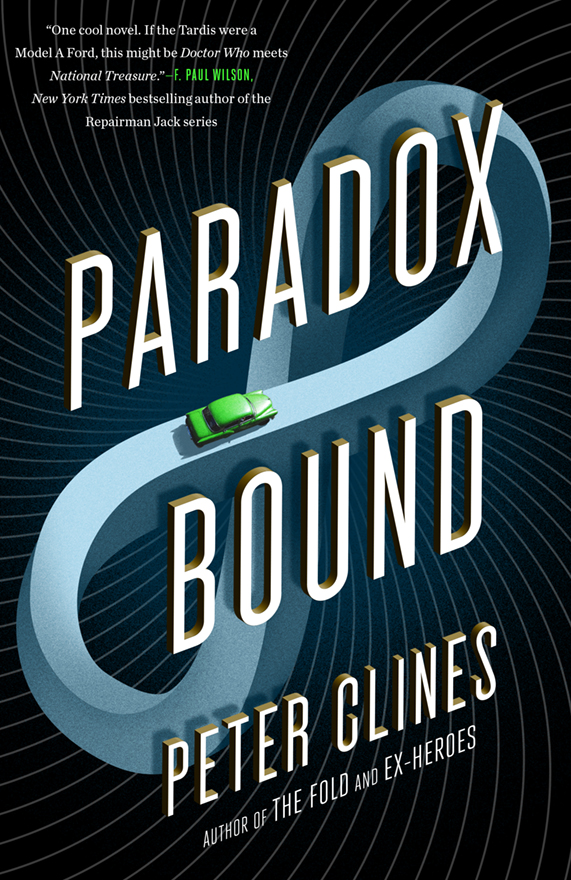
Oh! And a shameless self-plug. NPR is doing their summer reading lists and is looking for sci-fi and fantasy books that you loved from the past ten years. And while I’d never stoop so low as telling you how to vote on such a thing, I’m not above reminding you how much you liked Paradox Bound and how it’s a wonderful stand-alone novel that would appeal to most anyone. Just something to have in mind. While you vote.

Anyway, until next time, go write…

June 17, 2021 / 1 Comment

Experience Points

I’ve mentioned experience once or thrice over the past few posts, and I figured it might not be a bad thing to blather on about. It’s one of those things we all talk about and acknowledge, but also all like to believe we’ve got enough and don’t need any more. Mostly because… well, how much is enough? How do you even measure experience? Are there real-world units of experience?

Anyway, let me toss out a few things we can all think about. Like this story you may remember. It’s funny and I’ve told it before.

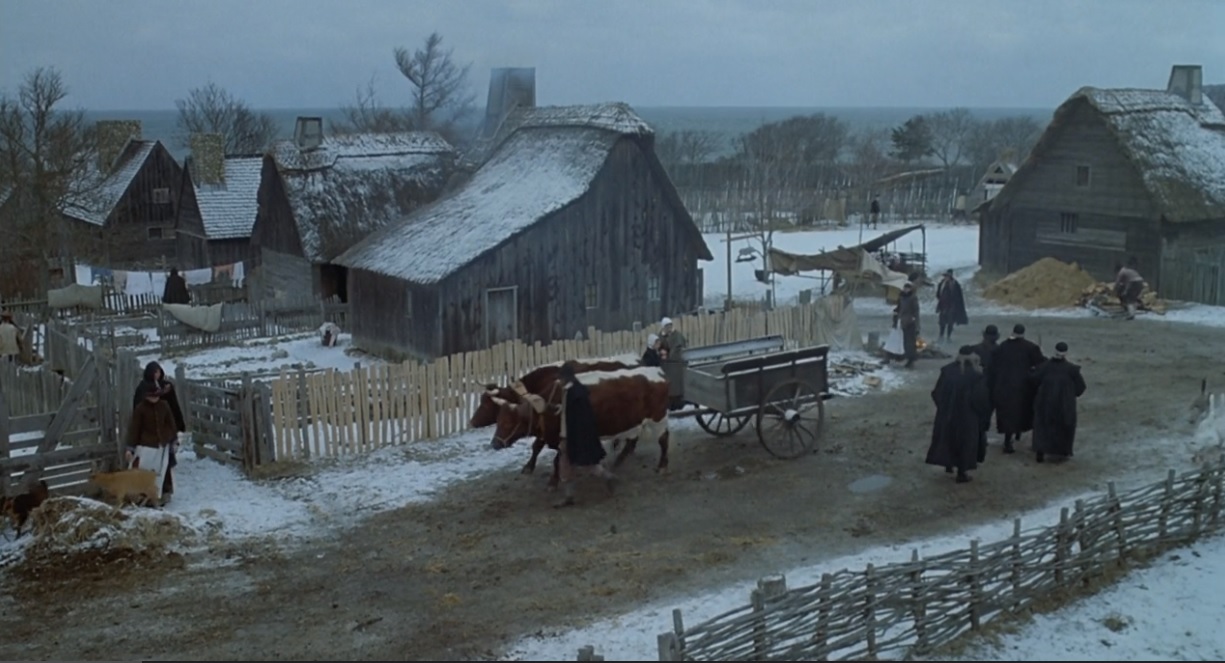
As it says over on the About page, I’ve got really old New England roots. I mostly grew up in Maine, but I spent my high school years down in Plymouth, Massachusetts. Yes, with the Rock and the Mayflower and all that. One of the big tourist attractions there is Plimoth Plantation, a sort of ongoing LARP museum/interactive show of the original colony in the year 1627. Likewise, all the actors there are playing specific, actual historical figures from that year. You can walk in, talk to the different “residents,” and they’ll answer questions about what they’re doing at the moment or “current events.” Sometimes, depending, they’ll also ask about your odd and extremely improper clothing (young lady, are you showing your shoulders?!? In public?!?)

(weird fun fact—if you’ve ever seen that late ‘80s movie Warlock, the whole “Boston Colony” sequence they show at the beginning with the little town is actually Plimoth Plantation)

Anyway… a friend of mine from high school worked at the Plantation. They assigned her an age-appropriate historical role, and part of that role was getting married at the end of the summer to another character, Experience Mitchell (ahhh, Puritan names). The thing was, my friend kinda had a behind-the-scenes thing for another Pilgrim. So on the big day, she told me one of her co-workers gave her a “wedding gift” in the changing room, a t-shirt that said…

            Experience is what you get when you don’t get what you want.

It was a clever pun, yeah, but the phrase stuck with me because… well, it’s true.  If you talk to anyone who’s considered experienced, it’s because they failed or screwed up. Probably a lot.

Now—somewhat back on track—in one of the Sandman books, I remember someone (I think it was Eve?) told Matthew the Raven that everyone has at least three great stories in them. This is true, but I think there’s also an unspoken corollary there which is just as important. And it gets ignored a lot.

Yes, we all have at least three great stories in us, but we also have all have lots and lots of bad stories in us. Dozens of them. Maybe even hundreds. We have awful characters, contrived plots, cringe-worthy dialogue, and some incomprehensible structure. We’re not even going to talk about those horrible twists or the very awkward sex scene.

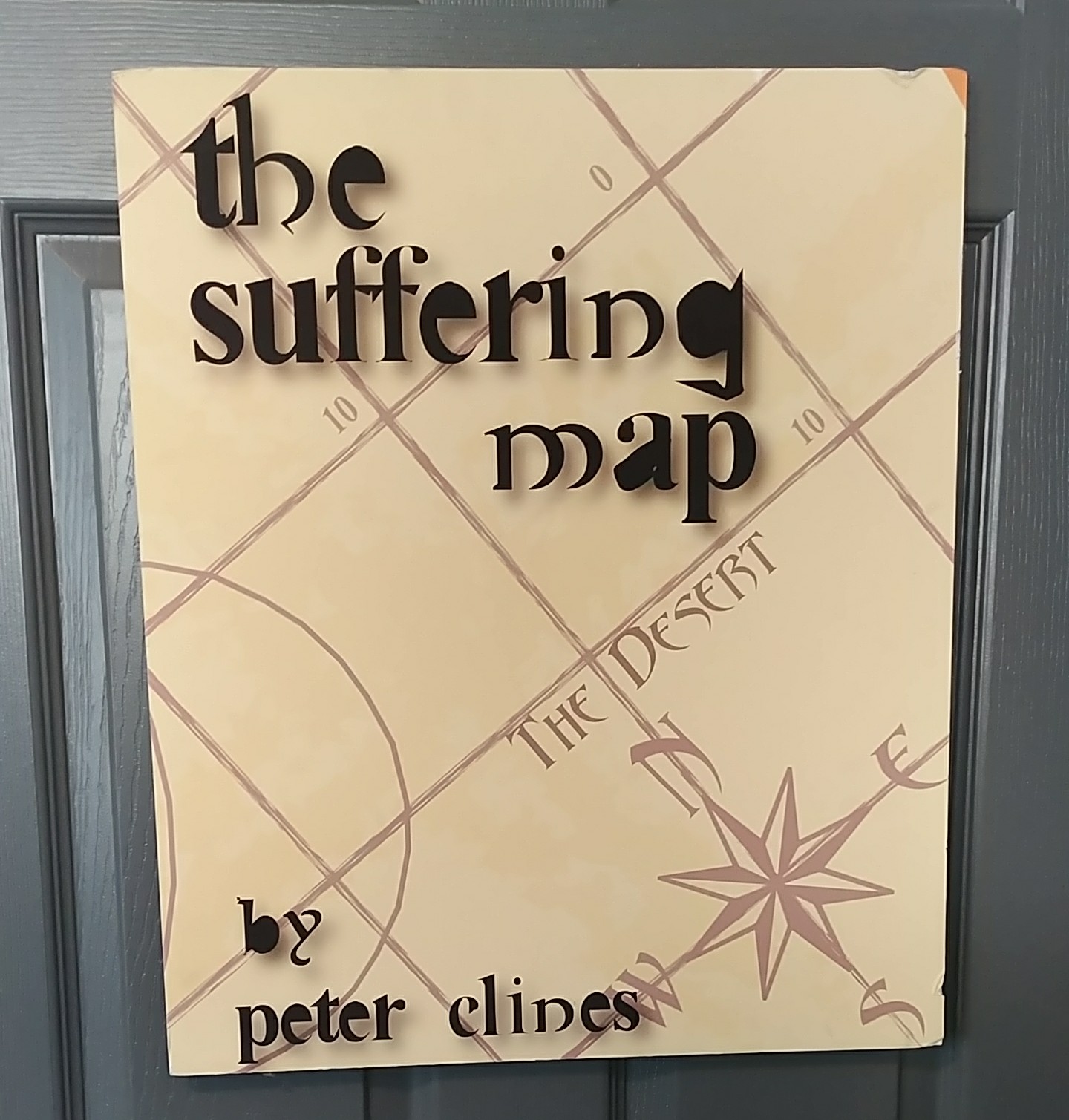
Yes, I’m saying we. I’ve written sooooooo much bad stuff none of you are ever going to see. My third grade attempt at a novel, Lizard Men From the Center of the Earth.  My middle-school sci-fi novel.  My Boba Fett and Doctor Who fan-fiction. My junior high fantasy novel.  My high school werewolf-detective novel.  My college novel, The Trinity.  My after-college-moved-to-California novel, The Suffering Map. And mixed in there are a ton of comic scripts, short stories, screenplays, and I think even one solid attempts at a stage play. Thousands of pages.  Thousands of hours of work.

And pretty much across the board, all that work sucks.

It sucks on different levels, for different reasons, but don’t doubt that most of it sucks hard. I spent weeks and months and years in one case writing stuff that should never again see the light of day. I’ve got no problem admitting it. In fact, being able to admit it let me move from being a random dabbler to a serious writer. I spent about twenty years digging through all those bad stories and found the good ones underneath.  Maybe even one or two great ones.

Writing all those stories was my experience. I had to get them out. Whenever you hear about an overnight success or an amazing “first” novel, odds are that writer’s got a really long string of awful work behind them. Sure, there’s always a chance they really are an overnight success—sometimes those great stories are right on the surface, the way a prospector might kick over a rock and find a gold nugget just sitting there. But for the most part, becoming a good writer means a lot of, well, not getting what you want. Doing the work and then doing… more work.

Y’see, Timmy, there’s an all-too-common belief that just finishing something means it’s good. I mean, I made it all the way through to the end on my first try. That’s a lot of writing. That novel must be worth publishing and being read, right?

But the truth is, the vast majority of first novels are awful. And that’s okay. The second ones are pretty bad, too. Ex-Heroes was my first published novel, yeah , but it was my seventh-and-a-half attempt at writing one. And, as I hinted above, I’m really glad it was the first one people saw.

Because that junior high fantasy novel… jeeeeez, less said about that one the better. So embarrassing. On so many levels.

Sometimes we pour our hearts into something, spend weeks or months or even years on it, and we still don’t get us what we want. But at least we get some experience. If we admit we need it.

Next time, I think I want to talk about what was happening a few days before this.

Until then… go write.

Categories