
April 7, 2016 / 4 Comments

Looking For Something To Lean On?

Wow.  This is so crazy overdue.  My sincere apologies, and many thanks to the six of you who’ve hung around this long waiting for a new post.

Alas, I’m going to be touching on an old idea, and doing it with an old story.  But it’s all kind of relevant…

So… true story time.
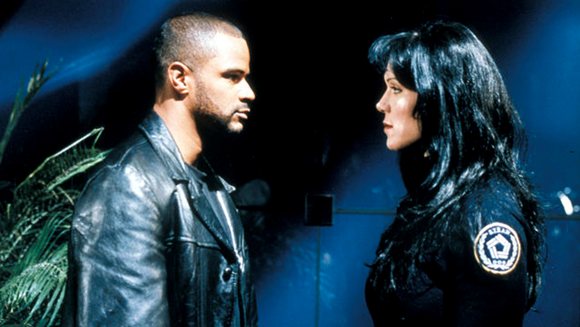
As many of you know, I worked in the film industry for many years as a prop master. What some of you may not know is that about… wow, seventeen years ago I was working on an alien invasion film and messed up my knee. Ruined it, really.  I was running up a staircase with a case of props for the alien autopsy scene and turned too fast on a stairwell landing. Well, I turned. My knee twisted. It actually made a bubble-wrap noise.

I spent about an hour that night in a quiet part of the set crying into my arm because the pain was so bad.

After that, I spent two and a half months walking with a cane and dry-swallowing painkillers before I got in to have my meniscus rebuilt.

On my 30th birthday.

No, seriously. Think of all the many things you could do/did on your 30th birthday. Not for me. No booze, no party, no sex, no presents. I had a friend who drove me home from the outpatient clinic and dumped me on the floor of my apartment. And then three months of rehab after that.

I finally got back to full mobility, got back to work, and guess what happened?  Less than five months later, I damaged the other knee on a straight-to-DVD movie.  This time it was three months of waiting for workman’s comp to schedule surgery.

At least the cane was broken in by this point.

After almost a year and a half of sitting around doing nothing… I’d put on some weight. And when I say “some” I mean it in the same way some folks say “yeah, Jeb Bush could’ve done better in those early primaries.” To be blunt, I’d packed on almost fifty extra pounds. And I am not a tall guy, so fifty pounds really shows on me.

Fortunately, an actor I was working with knew I was trying to trim some fat and shared a few tips. He also had a great personal trainer. Jerzy—said trainer—showed me a few exercises, offered some diet tips, but for most of those first two hours we just talked. And one thing became very clear.

There would be no hand-holding, no prodding. Jerzy wasn’t a “shout at you to do crunches” kind of trainer. I would get the instruction book, the rules, and then I’d be left on my own for a month. This was all my responsibility. After all, if I was going to lose this weight, the only person that could really make it happen was me. Jerzy gave me his home phone number, his cell, and his email. “But,” he said with a shrug, “if you really need me to tell you ‘don’t eat the chocolate cake’… you can’t be that serious about losing the weight.”

See where I’m going with this?

With the Writer’s Coffeehouse, this ranty blog, random messages on Twitter or Facebook, I’d guess every three or four weeks I get asked something along the lines of “how do you do it?” How I manage to sit down every day and pound out a few thousand words? How do I exercise the self control to plant myself in front of my desk and write?

The answer’s simple. There’s no trick to sitting down and writing. None at all.

You just do it.
Y’see, Timmy, if I’m serious about this, I shouldn’t need to find some clever reason or inspiration to get myself in the chair every day. I should want to be there. The real problem should be getting me out of the chair.

Which brings me back to Jerzey. I lost sixty pounds in fourteen months working with him. And in about two weeks I’ll be starting my tenth novel. That’s tenth published novel, to be clear. Published by someone else. Who gave me money for the right to publish my work.

I’m not saying that to brag or to disparage anyone else. I’m saying to make the point that one of the main reasons it happened is because I sit my butt in a chair and write. Every day.

And nobody needs to tell me to do it.

Oh, while I’m thinking of it, this Sunday is the Los Angeles Writers Coffeehouse! Noon to three at Dark Delicacies in Burbank. We’re going to talk about mysteries and twists and reveals. It’ll be fantastic, it’s free, and all you have to do is show up.

Next time—and next time will be very soon, I promise—I think we need to talk about what’s at stake.

Until then… go write.
March 17, 2016 / 5 Comments

All Purpose

            I’m sorry this is a bit late.  Well, four  weeks late.  That’s not a bit, that’s crazy-late.  I’m in the final weeks for this manuscript and I’m really trying to make it fantastic.  That’s pretty much been my main focus the past month or so, for what I hope are obvious reasons.
            Hey, speaking of which…
            One of the most common things that makes a character unbelievable is when they have no purpose for their actions.  We’ve all seen it.  The guy who decides to pick a fight over something petty in the middle of a crisis.  The person in charge who continues to ignore someone with key information.  The spouse who’s just a jerk.  The ninja who attacks for no reason.
            Nothing knocks a reader out of a story faster than people just randomly doing stuff.  There’s a simple reason for this.  In the real world, when people do things for no reason, they’re usually considered to be insane.  Not an interesting insane, either, but the “lame motivational excuse” insane.  If I run into a  burning house to save a baby or a dog, I’m going to be considered a hero whether I make it out or not.  If I run into the flaming house just because it’s there, I’m going to be considered an idiot.

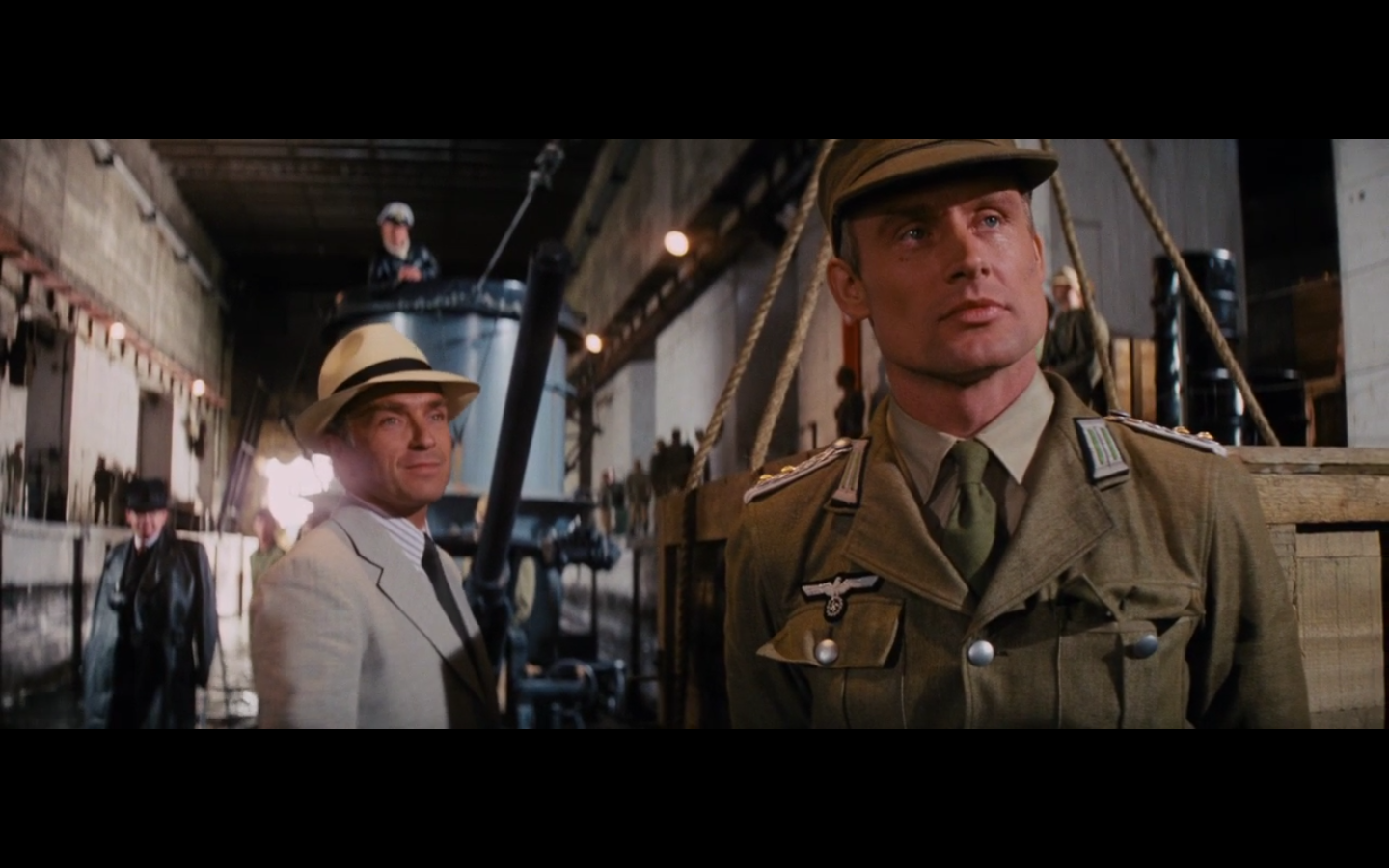
           People need a reason to do things.  Real reasons.  Reasons that jibe with their background and their personality and with basic rules of behavior.  That’s why you’ve heard of people motivating horses with a carrot on a stick but not with a t-bone steak on a stick—horses like veggies, not meat.  In Raiders of the Lost Ark, it’s completely understandable that Belloq wants to open the Ark before taking it to Germany, and believable that the Nazi officers would feel uncomfortable about performing a “Jewish ceremony.”  This fits with Belloq’s smarmy background and it makes sense—historically, even—that the officers would be a bit by disturbed by what needs to be done to open the Ark.

            So here’s a challenge for you—try to picture that scene reversed.  Imagine if, at that point in the film, the Nazi colonel was insistent on performing the ceremony and Belloq said “no, no, I really think we should just take it to der Fuhrer and let him deal with it…”  It wouldn’t make any sense, would it?
            In the big scheme of things, most people’s motivations tend to be simple.  If you’ve ever seen a procedural show, they often talk about the common motives for murder.  Love, money, revenge—they’re very basic ideas.  The unspoken motive for the investigators on these shows is justice, or perhaps closure.  In Raiders, Belloq is looking for glory and maybe a bit of power (I think it’s safe to say he was secretly hoping he’d get all the benefits of that “hotline to God”).  Indy wants to stop the Nazis and save the Ark for a museum.  The Nazis want to obey the orders from their commander.
            In the book I’m working on right now, a major motive for the main character is infatuation.  It’s why he takes the actions he does that kick off the story.  But not very far in, fear and survival become big motivators for him.  His actions might not always be rational, mind you, but his actions fit who he is and what he thinks he can accomplish.
            Now, sometimes the story needs people to act a certain way.  It’s been plotted out and the characters need to do this now so that can happen later.  What some writers don’t seem to get is that this need doesn’t make a character’s actions more believable or forgivable.
            The reader has to be able to relate to my character’s purpose for doing things.  While characters might have very true and proper motivations within the context of their tale, those motivations still need to be interpreted by the chosen audience.  This is especially important for stories set in different cultures (Japan, for example, or India under the caste system) or perhaps in entirely fictitious ones (Barsoom, Diagon Alley, or the grim darkness of the future).  It’s common to hit this wall when the writer knows their chosen setting too well, or maybe had to build it from the ground up.  To me, it’s completely clear and understandable why a Thark warrior would act this way—why waste time going over it, right?  To you, though… this may not be so clear.
            Let me toss out one other thought about motivations.  Up top I gave a list of situations that many of us have probably dealt with.  The random aggressive person.  The jerk spouse/boyfriend/girlfriend.  The willfully ignorant boss.   These people really exist.  Hell, I had that higher-up boss for two years at one point.
            But…
            As I’ve said here many times, reality is not a story point.  It’s not part of a character sketch, either.  Once I put that boss into a story, my readers are going to expect there’s a purpose to him being there.  That there’s an actual reason for his behavior.  And if there isn’t… that’s on me as the writer.
            Look at the characters in your story.  Follow them for a few pages.  Can you explain their actions with one or two simple words?  Are they words most people will know?  Do these words relate to the character and not my outline?
            Then you’ve probably got some very driven characters.
            I’m not sure I’ll be able to post anything next week because I’m a “special guest” at WonderCon here in Los Angeles.  And I’ll be in the last two weeks before this new book is due.
            Or maybe I’ll just stop making excuses and write something.
            Until then… well, hopefully you feel motivated to go write.
February 18, 2016

My Dream Woman

First, before I forget…  Folks in the Los Angeles area, this weekend is the Writers Coffeehouse. Sunday, noon to three, at Dark Delicacies in Burbank. It’s free and it’s open to writers of all levels—from bare-bones beginners to seasoned professionals, and even a few mid-list hacks like myself.  Stop by, ask questions, have fun.

Speaking of writing advice…

This week I wanted to prattle on for a moment about one of those off-topics I tend not to talk about much.  It’s more of a mindset, and it applies to writers of prose and scripts alike.  I’ll give you a hint—it’s not a good mindset to have.

Let me toss out a hypothetical situation for you.  More exact, a hypothetical person.  I’ll call her Phoebe.  If you want to substitute a different name or gender, please go right ahead.

Just for the record, I have never known a Phoebe. I know two or three folks who’ve changed their names, and they weren’t a Phoebe before or after. That’s why it’s one of my four fallback names I use here all the time (the other three belonging to the Animaniacs). If I randomly referred to a woman in one of these examples as Colleen, Becky, Jennifer, or Katie, for example… I would get many calls/messages from people I know asking “is this supposed to be me?”

So… Phoebe.

Phoebe is, for the record, my dream woman. She’s what every man aspires to in a significant other. Smart.  Funny.  Kind.  Sexy.  Gorgeous. I can’t think of anything I’ve wanted more than to be with Phoebe. Feel free to take “be with” any way you like–you’ll be right.  She is, in all ways, perfect.

Well, perfect might be overstating it.

Just a bit.

To be honest, she could use one tiny improvement in the facial region. Her chin is kind of sharp. Makes her face a bit too triangular and pointy. A rounded chin would bring out her cheeks and her smile more.

Also… slight overbite.  You can’t really notice it until you’re close to her.  That’s when you can also see one of her incisors has this little twist to it.  Nothing braces couldn’t fix, though.  Maybe those transparent ones.  Invisalign?  Something like that.

Plus, she’d be much hotter if her hair was a bit lighter.  And not so long.  If she was more of a platinum blonde, Phoebe would be unbelievably hot.  So really she’s just a haircut and a box of dye away from being my perfect woman.

Speaking of which—please don’t judge me for this—Phoebe is a touch on the small side. Not flat, by any means, and they’re nicely formed. Really nice.  I’m not talking about anything grotesque, mind you, but something in a B-cup would give her an absolutely killer figure.

Again, though, that’s minor. Really minor. Heck, I think it’s just outpatient surgery these days.

Y’know, thinking about it, if she wore some nicer clothes, it’d help show off that figure, too.  Everything Phoebe owns is that kind of frumpy-baggy look.  It was kind of cute in college, but come on.  Dress up a bit now and then.  Would it be so wrong to wear something eye-catching?  Once we’re together, I’ll take her on a nice shopping spree before we go out anywhere.

Although I don’t know where we’ll go out.  We don’t have many of the same interests. She can’t stand superhero movies.  Or shows.  Or books (which is a bit of a sore spot).  I’ll work on that, get her to watch something better and stop subjecting me to that crap stuff she likes to watch.

And, I mean… I sit in a chair nine hours a day and she makes me look kind of athletic. She’s still got that young metabolism, lets her eat half a pizza before bed and she actually wakes up weighing less than she did the night before.  That’s not going to last forever.

At least, with that body—well, the potential body we’re talking about—the sex will be worth it.

As long as she doesn’t make that same weird noise she makes when she’s excited. That sound creeps me out.

Still my dream girl, though, and I’d love to be with her—in any sense of the phrase.

So, at this point I can guess what a lot of you are thinking.  Why the hell is Phoebe my dream girl? She sounds like a good, solid person as she is, but it’s pretty apparent she’s not what I’m looking for, despite my insistence that I want to be with her. I mean, why would anyone want to be involved with someone just to change everything about them?

Which… is the point I wanted to make.

Between this ranty blog, conventions, signings, Twitter, Facebook, the Coffeehouse I mentioned up above… I meet a lot of writers. Several of them are so far past me I’m astonished when they strike up a conversation. A couple…I think it’s safe for me to say I’m on the same level as them.

Most of them are beginners, though. Maybe they’ve got a small sale under their belt, but often not even that much. You probably know some folks like this, yes? Maybe you’re one of them. These folks will talk about how much they want to be writers, how it’s been a lifelong dream to see their name on a shelf in a bookstore, or to hear actors reciting their dialogue.  There’s nothing they want more, and they’ll do whatever it takes, to make that dream become a reality.

However…

Just after this, some of these folks follow it up by explaining how biased and unfair the publishing industry is. Or maybe listing off all the things that are wrong with Hollywood.  Don’t even get these folks started on agents. Agents of all types need to be a lot more open, especially considering they usually do nothing and then take a cut of your money.

Or maybe they swing the other way.  Perhaps they’ll  point out how much self-publishers are screwing things for everybody. It’s not even real publishing, right?  They’re just oversaturating the markets with all their crap and making it harder for good stuff—my stuff—to get noticed.

As a finale, these people will announce all the things they’d change about the industry.  All the things they’re going to change once they’re in that position of power.  In fact, the industry’s changing now and they’d better watch out!  We don’t need any of those dinosaurs anymore, right?!

By what I’m sure is a complete coincidence, very, very few of these people have ever sold a book. Or a screenplay. Or a short story.

Which only shows how corrupt and broken the system is and why it needs to be fixed. Right?

Y’see, Timmy, I can’t go into any sort of relationship thinking I’ll be the one to change her! Or him. Or them, if I’m feeling adventurous. Those relationships are always doomed one way or another. Either they fail horribly or they “succeed” with one person or the other becomes a twisted, compromised version of themselves (and probably hating the other person for it).

Likewise, I can’t expect to have any sort of success in the publishing world or in Hollywood if I’m starting from the mindset of “they’re all wrong.”  Definitely not if it’s my main focus.  It’s no different than my mad pursuit of Phoebe just so I can change everything about her.  I’m either looking for a relationship or I’m looking for someone to be my Eliza Doolittle-esque test subject.

My main focus as a writer should be (ready for this?) my writing. It needs to be my main concern. It’s very good to know about different forms of publishing, about marketing and networking and social media… but first and foremost, I’m a writer. Personally, when someone introduces themselves as a writer and the first thing they want to talk about is everything wrong with traditional publishing… I get a little cautious.

What’s your first concern? Do you want to date Phoebe… or do you just want everything on your terms?

Next time…

Oh, almost forgot! This Tuesday, Ex-Isle is finally out on audiobook after delays that are pretty solidly my fault. And they brought back the whole cast for the production. Check it out!

So… next time, if I may, I’d like to talk about your purpose.

Until then… go write.

February 11, 2016 / 1 Comment

Ignorance Is Bliss

            I just realized that Valentine’s Day is this weekend. If I’d remembered earlier, I wouldn’t‘ve spent the time on this post, I would’ve done my traditional love and/or sex themed post.  And while surprise sex usually goes over well with everyone, I’m afraid I don’t have the time for it right now. Maybe next year.
            Wow.
            It sounds pretty grim when I say it like that.
            Anyway, I wanted to go over something one more time.  Because a couple of you still seem to be baffled by this for some reason…
            Take the Blu-ray case off the shelf.  Use your thumb on the right-hand edge to open the case.  Locate the Blu-ray disc inside the case.  Note that if this is a multi-disc set, you’ll need to select the specific disc you want to watch.  They’re usually numbered.  The number will correspond to a guide of some sort, usually located on the opposing panel of the cover or on the back of the case.  Look for the specific material you want to watch, then find the disc with the same number.  Remove the disc from its bracket.  Hold it by the edges (you don’t need to do this, but it’s easier in the long run).  Set the case back down.  Press power on your television controls.  Press power on your Blu-ray player, and then open.  A small tray will extend out from the player.  Set the disc on the tray with the picture/logo side up and the shiny side down.  Let go of the disc.  Press play and the tray should retract.  Go sit on the couch.  Pick up the remote control for the Blu-ray player.  If you are given the option to skip over all of the previews, do this.  Watch the movie or television episode you have selected. Do not talk during the movie or television episode.  If you have seen the movie or television episode before, do not spoil plot points or character moments for other viewers..
            Now, let’s stop and consider the previous paragraph.
            How many of you started skimming halfway through that?
            It’s okay.  It was kind of mind-numbing for me to write, so I can’t imagine reading it was any better.  As it happens, though, pretty much every reason why exposition tends to suck is in that fascinating explanation of how to watch a Blu-ray. 
            Allow me to explain. 
            First, that paragraph is something we know.  I know it, you know it.  I know you know it. You know that I know you know it.  
            Exposition is boring and pointless if we know the information being presented to us.   It’s just wasting time while we wait for something to happen.  Plus, none of us enjoys sitting through a lecture on something we already know, right?  The more detailed (read—unnecessary) it is, the less interested we are.  So we just zone out and start skimming.
            Damon Knight pointed out that a fact we don’t know is information, but a fact we do know is just noise.  No one wants to read a story full of noise.  As writers, we need to know what our audience knows and work our story around that.  I don’t want to waste time telling people how to open a Blu-ray case.  It’s just a given.  All those words are better spent on something useful.
            The Second  thing to consider is that a lengthy explanation about how a Blu-ray player works serves no purpose here.  None.  This is a blog about writing tips, so a paragraph about electronics is a waste of space.  Nobody came here looking for that information, and the people who are looking for it won’t be looking here.  You’ll notice that those instructions don’t tell you the best way to kill a Deathclaw in Fallout 4—even though Fallout is a really cool game which (like Blu-rays) can be played on a PS4.  The instructions also don’t mention that I don’t even own a Blu-ray player. Or a PS4.  Mildly interesting facts, sure, but even less relevant than the bit about killing a Deathclaw.
            These two points are, on a guess, about 83% of the reason most exposition sucks.  Find any book or story  with exposition that gnaws at you, and I’ll bet it falls into one of those two categories.
            So, how do we get around that?
            I’ve mentioned something called the ignorant stranger  a few times.  It’s my own term, one which I came up with while writing a review of Shogun years ago.  It’s a simple way to use as much exposition as I want in a short story, screenplay, or novel.    
            Just have a source of information explain something to someone who doesn’t know these facts.
             Easy, right?  Just remember these three things…
            First, my ignorant stranger has to be on the same level as my readers.  I don’t want to confuse ignorant with stupid.  It’s only this particular situation that has put him or her at a disadvantage.  The reader or audience is learning alongside my character, so we don’t want to wait while the stranger’s educated on how Amazon works, where Antarctica is on a map, and why people eat food.  Again, my ignorant stranger can’t actually be stupid
            Second, the person explaining things, the source of knowledge, has to be smarterthan the stranger on this topic, and thus, smarter than my audience.  If what’s being explained is something my readers can figure out on their own then the Source is wasting everyone’s time (and my page count) by explaining it.  Remember, I want information, not noise.  Yeah, maybe this particular Source doesn’t know much about baseball, Star Wars, or the eternal mystery that is love, but on the topic they’re explaining this character needs to be an authority.  It needs to be clear the Source’s knowledge dwarfs the ignorant stranger’s on this topic.
            Finally (or third, if you like), there needs to be a pressing need for the Source to explain this.  There may be lots of things our stranger (and the reader) is ignorant about, so why are they talking about this fact right now?
            Shogun gets away with tons of exposition because Blackthorne—an English sailor trapped in feudal Japan—is a perfect ignorant stranger.  He’s a smart man, a man we can relate to, but he’s in a  country where he doesn’t know the language, the customs, the culture, anything.  So even as his situation forces him to interact with people, they’re forced to explain pretty much everything to him.
            So there it is.  If anyone tries to tell you only bad writers use exposition in a story, tell them it’s only the bad writers who don’t know how to use exposition.  Then explain the ignorant stranger to them.  And then look smug while you pop in a Blu-ray and watch Star Wars
            Next time, I’d like to tell you about my perfect woman.
            Until then, go write.

Categories