

May 6, 2011 / 3 Comments

This IS Ceti Alpha Five!

If you get that title reference, you probably feel an equal mix of pride and shame. Just like I do for coming up with it.

For those of you who don’t get it, it’s from a sci fi movie where the characters suddenly discover they aren’t on the planet they thought they were. They (and the audience) had gone along assuming they were on planet A, only to discover they were on planet B instead. It’s a mistake that costs them dearly—they end up getting little parasitic worms stuck in their ears.

Silly as it may sound, a key part of storytelling is knowing the world your story is set in. I can tell the story of a noble knight on a quest to find the Holy Grail, but depending on the world I set it in, he can be a glorious hero (The Once and Future King) or a deranged madman (The Fisher King). We’d all frown if one of the Bourne books had him stopping an alien invasion and we’d shake our heads if Jack Reacher took on a cult of Satanists that had summoned an actual demon.

One of the biggest ways writers mess this up is to take too long to establish what kind of world they’re in. For example, they’re doing a spoof-comedy, but the first thirty pages have been completely straight. Or (on the flipside) they do establish the world and much later in the narrative try to switch that world to something else. I’ll blab on about that in a minute.

For now, consider the movie Predator. The original, with Governor Arnold, Governor Jesse, Secretary of Defense Carl Weathers, and screenwriter Shane Black.
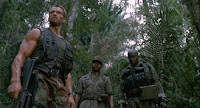
Predator begins with the team landing in Central America and getting briefed on their mission. They head into the jungle, locate the crashed plane, find the enemy camp, and have an awesome gunfight. Then Arnold discovers that Carl set them up and dumped them in the meat grinder. They head back out for the rendezvous… and that’s when they discover there’s something else in the jungle.

We’re, what… half an hour into the film at this point?

Except… that’s not how Predator begins. If you think back, the movie actually begins with an alien spaceship flying past Earth and launching off a small shuttle/ drop pod. We’re told in the first minute of the film that this is, ultimately, a sci-fi story. We may get distracted for a bit by the hail of bullets, but when the title alien shows up it isn’t a surprise… just a bit creepy.

On the other hand, one recent book I read was 100% set in the real world. Everything about it was realistic. The basic idea was two people who had found the last notebook of a dead research scientist who claimed (in his notes) to have discovered a cure for cancer. The cure for cancer. The entire book was about them trying to figure out what the heck they had while half a dozen pharmaceutical companies chased them—all wanting the notebook one way or another. Well, in the end they escape big pharma, sell the notebook to a group of researchers for a couple million dollars, and cancer is cured across the globe.

Yep. We cured cancer everywhere in the last seven pages. Go us.

I also once saw a script that started out as a dramatic comedy sort of thing. Young woman, single mother, trying to make the best of life even though she keeps getting knocked down… we’ve all seen it a few dozen times. That was the first forty odd pages. Then, on page 44, if memory serves (almost 3/4 of an hour into the movie, mind you), we discover that the old man she just helped cross the street is actually the Easter Bunny, who decides to reward the woman with a wish for her random act of Christian charity.

That’s right. A key point in this story is that the Easter Bunny spends his downtime walking among us disguised as an octogenarian. And the Easter Bunny is all about Christian charity because… well, the brown of the chocolate and the brown of the wood of the cross… or something…

Like any other disruption in the flow of a story, it’s very jarring when a story is set up in one world and then veers off into another one. It’s like discovering that one of your main characters has actually been insane all along. It forces the reader to re-examine what’s come before, and not in a good way. In fact, more often than not, these sudden shifts in tone and world force a story into pure comedy. Again, not in a good way.

Consider this. There’s a classic Saturday Night Live skit which claims to be the famous “lost reel” of It’s A Wonderful Life. In this, just as everyone’s sitting around singing and rejoicing, Uncle Billy remembers that he misplaced the money in the newspaper Mr. Potter took. It only takes a few moments for this realization to turn the celebrating friends and family into an ugly mob, and they march to Potter’s house, give the man a mass beating, and burn his home to the ground. The End. The Simpsons did something similar with a lost final reel of Casablanca. Here Ilsa parachutes out of Laszlo’s plane to be with Rick, saving him from (and killing) Adolph Hitler in the process. The happy couple is married shortly afterwards. The End…?

No, seriously. That’s how they “ended” Casablanca, with the ellipse and the question mark. Which, as Bart points out, leaves them open for a sequel.

So just by (hypothetically) shifting the tone/world of the endings, both of these classic, award-winning films become absurdist comedies.

Now here’s a key thing to remember. You can still have a fantastic story set in the real world provided the events of your story don’t change the world. If I wage a secret battle against lizard men from the center of the Earth and at the end of my story no one knows the war happened, then the world hasn’t changed, has it?

Perfect example—Raiders of the Lost Ark. Not only does this story involve a Nazi plot to seize arcane objects across the globe, it has reputable archeologist Henry “Indiana” Jones finding hardcore evidence that God is real. Think about the repercussions that information would have. If someone went public in the 1930s with absolute, undeniable proof of God’s existence, what kind of world would we be living in today? What kind of story would you be telling?
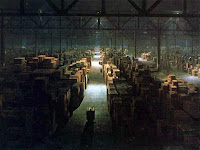
Which is why that evidence never goes public. We’re left with the distinct impression no more than a dozen people know what Dr. Jones recovered from that island, and that he’s been well-paid not to talk about it. And the Ark… well, we all know what happens to the Ark, don’t we?

I really, really hate to use this analogy, but it is perfect. If you want to set an amazing story in the real world, you need to use conspiracy theory logic. Yep, the same reasoning used by the birthers, moon-landing deniers, and “9-11 was staged” folks is what makes for a good fiction story. How sad is that?

By conspiracy-theory logic, the lack of evidence for X is the proof that X is true. Any facts that disprove X are manufactured by the powers that be, thus further proving X is true. And if you stumble across a few coincidences that imply X is true, well, that of course is solid proof that X is true.

Y’see, Timmy, by this chain of reasoning, the untouched real world is undeniable proof the imaginary world of your story is true. Only the BPRD knows what really happened to Adolph Hitler after the Occult Wars, so it’s understandable that most of us only know the publicized version of events. There are a dozen enchantments that keep the magical world of Hogwarts and Diagon Alley separate from the real world, thus the fact that no Muggle has ever seen Hogwarts pushes the idea that the stories about it are true. Only a worthy mortal can lift the hammer of Thor (bonus points if you remember its name—offer not good after Friday), but we all know we’re not 100% worthy so we accept that we’ve never had the chance to lift it. The fantasy world doesn’t change the real world, so that fantasy world is more believable.

So do amazing things in amazing worlds. Just make sure no one finds out about it.

Next time, I wanted to rant a bit about sounding like a professional.

Until then, go write.

January 27, 2011 / 3 Comments

On Your Mark… Get Set…

Hey! It’s contest season again, isn’t it?

Technically it’s always contest season, yeah, but it’s the start of the year and a couple of the big ones are opening their doors for new submissions. So, as I often do at this time of year, I was going to offer a few insights into things that make all those contest readers want to put a gun in their mouth.

Well, that’s probably a bit extreme. There are some really awful scripts out there, but you can rest assured none of them are going to drive a reader to suicide. Murder, maybe, but not suicide.

Now, as I’ve said many times before, none of these mistakes are sure-fire ways to lose. But they’re all things that make readers roll their eyes and reach for the Captain Morgans, which means it just got that much harder to impress those readers. So keep that in mind before you fill out an entry form and maybe give your masterpiece one more good look. I mean, really look at it

Spelling — Yeah, I’m harping on this again. There’ll probably be a whole post coming up sometime in the near future.

Because it matters, that’s why.

Over the course of a few years I wrote two different contest columns for Creative Screenwriting, interviewed dozens of contest directors, and asked each of them about tips for aspiring entrants. Across the board, the first thing most of them said was spelling and grammar.

Now, a random typo doesn’t mean you blew it. We all make mistakes, and readers know that, too. If they go through and find a their on page 42 when it should be there, they’re going to cluck their tongues but keep reading. If there’s a typo on every page, though… Heck, there were a few screenplays I looked at where I wasn’t even thirty pages in and I’d lost track of how many there were.

Whenever you hand off a manuscript you’re trying to convince the reader that you’re a real writer. Someone who can do more with words than just sign their name, scribble a shopping list, or send a txt mssg (ROFL LOL STFU). The absolute, bare-bones basic tools of writing – any writing– are vocabulary, spelling, and grammar. Which means you need to master them, not your spellchecker. If you establish early on that you can’t handle the basics, why would a reader look any farther?

Apostrophe S — You could argue this goes under spelling, but speaking as someone who’s read a thousand or so scripts by aspiring screenwriters, I can say it’s in a class by itself. Messing up an apostrophe S stands out like a flare to anyone who knows how to use it. As I said above, we all make mistakes now and then, but it’s painfully obvious when a writer’s just throwing down random apostrophes and getting a few right by sheer chance.

Knowing the difference between a plural, a possessive, and a contraction is past basic—it’s a fundamental part of the English language. Stop writing, go get a grammar book–even a fun one like Eats Shoots & Leaves (look at the carousel down below)–and actually read it. Promise yourself that as of this moment there will be no more guessing or wild stabs in the dark.

Logic holes — A friend of mine called me once, laughing in hysterics. He was reading for a contest and was halfway through a sci-fi script where human colonists were struggling with the affects of a war that had taken place 200 years earlier. The enemy had released a bio-weapon that wiped out pre-pubescents, so every generation of colonists had lost all their children for the past two centuries.

Give it a second. You’ll start laughing, too.

You’ve probably heard of “movie logic,” a term which also applies to television and even prose. It’s when the writer bends the laws of common sense to solve an issue or a problem. As long as you don’t look at it too close, movie logic can usually get skimmed over and carry you to the next scene or paragraph.

The flipside of this is a complete lack of logic, which makes readers call their friends to share the joke. A lack of logic knocks the reader out of the story, which means it breaks the flow of the story. And that gets scripts put in the big pile on the left.

Fortune Cookie Talk — Also sometimes called Confucius-speak by another friend of mine. This is when a screenwriter tries to cut down their page count by cutting all the articles, “small” words, and transitional bits from their script. I think there’s also a misguided belief that this gives their writing more “punch.”

Neo walks streets. Man pulls gun. Neo dodges. Drives kick into man’s chest. Man out cold. Neo is One.

Trust me, there are only two things this leads to. One is annoyance as the story slowly edges into unreadable. Two is laughter. Not the good kind of laughter. The “all the kids die every generation for 200 years” kind of laughter.

The Squashed Script Sometimes the writer refuses to make any more cuts (for conscious reasons or sheer denial) and ends up with a 170-or-so page script. So they change the font size or the margins or the line spacing and crush the script down into an acceptable number of pages. After all, going from 12 to 9 point Courier can shrink a 170 page script down to 130 pages. That’s a fine length for a script, right?

This is annoying on a bunch of levels. First and foremost, if any writer is manipulating their script like this, it means they know their script is unacceptably long and they’re making no real effort to fix the problem. Second, it shows that the writer is assuming the readers won’t realize what’s going on (and why), which is kind of arrogant if you think about it.

Believe me, readers love arrogant writers who assume they’re idiots. It makes the job soooo much easier.

(not in a good way, in case the sarcasm wasn’t showing…)

Reality is What You Make It More often than not, either the title or final page of this screenplay assures the reader that this tale is, in fact, based on the true accounts of me/ my best friend/ my brother/ my parents/ my grandparents/ someone I read about in a magazine article. These are tales of cancer, disease, genocide, military struggles, marital struggles, crises of faith, and various other conflicts of this world we live in. Alas, sometimes they’re also about struggling writers searching for someone to recognize their genius. Often, the fact this is all true is stressed to give a certain validity and gravitas to the screenplay.

Thing is, it doesn’t matter if the story is true or not. Nobody cares. They just care if it’s a good story and it’s well-told. And in that respect, a tale of an orphaned cancer survivor in Rwanda needs to stand up against the story of a black-ops secret agent who teams up with prehistoric lizard men from Atlantis to save the world from a zombie apocalypse. Whether or not its true is irrelevant. In the end, you’re telling a story, and it’s either going to have its own validity or it isn’t. Reality just doesn’t enter into the equation for the reader, so it can’t for the writer.

Frankenanite — A large percentage of genre scripts involve nanites which somehow go rogue and endanger mankind. Don’t know what a nanite is? No problem–a couple of these writers don’t either. If you’re writing a genre screenplay about nanites (or something indistinguishable from nanites like genetically-altered bacteria or something) think carefully. If I had to pick the ten most overused plot devices, these little guys would be in the top three.

Epic — Avoid the word epic. The only time the word epic should appear in your script is if someone in the script is telling a very overblown story. It’s a word for critics, publicists, and producers. Screenwriters can use it in interviews, but not in their writing.

Orbs — No orbs. You would not believe how much this word is overused. People throw it in everywhere because they think it’s better than pedestrian words like round or sphere. Much like mellonballer is guaranteed to get you a Nicholl Fellowship, using the word orb to describe eyes, mystical stones, the sun, or pretty much anything else will make the reader shake their head and pour themselves a second drink. Then they will pour a third drink onto your script and set fire to it.

To Be Continued — You get one script to impress someone with. One. Nobody wins anything with the first of an epic trilogy (see above). That one manuscript has to stand on its own. Ending a screenplay – especially a contest entry screenplay- with “to be continued” hammers home the fact that this is an incomplete tale. It tells the reader you had no idea how to end this story in 120 pages.

Remember, The Matrix, Pirates of the Caribbean, and Highlander were not written as trilogies. Despite everything you may have heard, neither was Star Wars. Every one of these films was conceived of, written, and shot as a lone entity. They had to stand alone and succeed alone. If they had to do it that way, don’t think for a minute that your story won’t have to.

And there you have it. Ten ways you can make a reader sigh and shake their head in disdain. Which really means this is ten ways you can avoid getting the head shake, and that means your manuscript is that much closer to dodging the big pile on the left and ending up in the right pile.

Next time… well, I’m not sure what I’m going to rant about next time. But there will be a point to it, I assure you.

Until then, go write.

January 6, 2011

The Crutch

Yeah, the last post was late but this one’s on time. So you get two in one week. Enjoy.

So I was talking with a friend of mine on Facebook a while back. For the record, I don’t recommend it. Facebook really has to stop creating new profiles every three months and try fixing a few actual problems, like their stupid chat system.
But I digress…
Anyway, he wanted to know how I manage to sit down every day and pound out a few thousand words. How do I exercise the self control to plant myself in front of my desk and write? Which is a fair question.
Which I will answer with a story…
About ten years ago I was working on an alien invasion film for the Sci-Fi Channel (back when they had executives who knew how to spell) and messed up my knee. I was running up a staircase with a case of props for the alien autopsy scene and twisted too fast on a stairwell landing. My knee actually made a bubble-wrap noise. End result– two and a half months of walking with a cane and popping pills (Gregory House eat your heart out) before I got in to have my meniscus rebuilt. On my 30th birthday. Seriously. And then three months of rehab after that.
I finally get back to full mobility and guess what happens less than five months later? The other knee gets damaged on a straight-to-DVD movie. This time it was three months of waiting for workman’s comp to schedule surgery. At least the cane was broken in by this point.
So, after almost a year and a half of sitting around doing nothing I had put on some weight. And when I say “some” I mean it in the same sense people say “the Bush administration could’ve handled things better.” To be blunt, I’d packed on almost fifty extra pounds.
Fortunately, an actor friend of mine knew I was trying to lose weight and shared a few tips. He also had a great personal trainer and shared his name and number with me. Jerzy–a former Olympic weightlifter– showed me a few exercises, but for most of those first two hours we just talked. And one thing became very clear.
There would be no hand-holding, no prodding. I would get the instruction book, the rules, and then I’d be left on my own for a month. This was all my responsibility. If I was going to lose this weight, the only person that was going to make it happen was me. Jerzy gave me his home phone number, his cell, and his email. “But,” he said with a shrug, “if you really need me to tell you ‘don’t eat the chocolate cake,’ you can’t be that serious about losing the weight.”
See where I’m going with this?
Y’see, Timmy, there is no trick to sitting down and writing. You just do it. If you’re serious about this, you shouldn’t need to find some clever way to get yourself in the chair every day. You should want to be there. The real problem should be getting you out of the chair.
I lost sixty pounds in fourteen months with Jerzy. And in about two weeks I’ll be starting my fourth novel. The publisher liked the idea so much he wrote up a contract and paid an advance just off my pitch.
If that’s what you want, do I really need to tell you to sit in the chair and write?
Next time, let’s talk about gods, super-aliens, and other omnipotent forms of existence.
Until then… go write.
November 6, 2010 / 2 Comments

Why You Didn’t Win

This week’s rant is a bit screenwriter-centric, but it really applies to any sort of submission anywhere. The following words are going to be a bit harsh (even for me), so if you’ve got thin skin… well, next week I was going to talk about characters a bit. If you’re quick to offend, maybe you should just go check out John August’s blog for now and come back here next week.

So, last night I was at the Nicholl Fellowship dinner to see the five new folks get awarded their fellowships. I couldn’t help but notice a lot of you weren’t there. In fact, lets be honest… most of you reading this weren’t there. I’d even be willing to bet a few bucks none of you were there.

Granted, I’m betting not all of you entered the Nicholl this year, but I’m pretty sure a couple of you did. And you weren’t there last night, were you?

A shame really. The steak was fantastic. I mean, seriously, it was amazing. Three of the best meals I’ve ever had have been at Nicholl dinners.

But I digress…

First off, let’s get one thing straight. Nobody deserves to win a contest. Just because all your friends won doesn’t mean you get to as well. It’s never your turn, it’s never about time, and luck has very, very little to do with it. We’re not talking about statistics. A screenplay contest (or any writing submission) is not a lottery.

With that being said, the ugly truth is, most of you reading this don’t deserve to win a contest anyway. Especially not one as prestigious as the Nicholl. That’s all there is to it. You can argue all you like but that’s the way it is.

Let me explain.

For the sake of this discussion, let’s say I’ve decided to hold a contest for horror screenplays. One grand prize, with four lesser prizes. Everyone who subscribes to the ranty blog enters, and let’s say some folks past that, too. By fortunate coincidence, I end up with 100 entries.

Let’s look at those 100 scripts (or short stories, or novels, or whatever it is sitting in a big pile in front of me).

Well, first off, there’s the 50% rule. Out of these 100 screenplays, odds are half of them are going to go right out the window. Figure some people submitted comedies or dramas that features zombies, but they figured it wouldn’t hurt to try. Some of them probably didn’t even have a horror element–they were just straight romcoms or fantasy or sci-fi. I’ll probably recognize their genius and give them an award anyway, though, won’t I?

Plus a few of them will be short stories, not screenplays, and probably a few that are in stage play format, too. One or two will be novels that were very poorly converted into a screenplay template (I mean, it’s all essentially the same thing, right?).

And some will just be God-awful. No other way to say it. Twenty blatant typos on page one. Characters so flat they could slide under a door. Dialogue that makes it sound like English is everyone’s second (or third) language. A plot that sounds a lot like a five year old explaining where dinosaurs came from.

So right there, 50% gone from my horror screenplay contest with almost no effort on my part. Maybe as few as 40. Perhaps as many as 60. In my experience, though, 50% is a great rule of thumb.

The next level of cuts will be those scripts that just don’t measure up. They’ve got an interesting premise, maybe a very clever take on an old idea, but they just didn’t do enough with it. Maybe the writer didn’t work on the screenplay enough because they took the lottery mentality and tried to enter four or five scripts that all could’ve used another two or three drafts. Or maybe it was just one script and it really just needed one more polish.

True story. A few years back I entered a contest that kept their own message boards up so people could talk. One guy proudly stated on these boards that he’d entered over a dozen screenplays. He also directed people to his website, where he had loglines for the three dozen or so scripts he’d written in the past two or three years. When none of his scripts placed, it was all the proof he needed that this contest was obviously a scam.

(I came in third. Got a free copy of Final Draft and a nice certificate.)

If this is the first draft of your script, it’s not going to win a contest. A lot of you may argue that there’s always a chance, I shouldn’t be negative, you may be a truly gifted amateur, blah blah blah, yadda yadda yadda. This is true. It’s also true, by every known law of physics, that random atoms in the air could come together in just the right way as to form an ounce of pure gold that drops right into your lap. True, and statistically possible, but the odds of it happening are so insanely, ridiculously low that you might as well say it’s impossible.

Please note, this doesn’t mean the script is bad or the writing is inherently flawed. It just means it isn’t polished enough. Despite what you may believe, there are actually tons of diamonds in the world. Literally, tons of them. They’re not all gem-quality, though, and not all of the ones that are get cut and polished correctly. That’s why engagement rings cost half a year’s pay.

So, that kills almost 2/3 of the scripts that are left. They’re good, but they aren’t great. Now we’re down to seventeen entries (rounding up, because I’m feeling generous).

Next is the rough one. It’s the human factor, and it pervades every single level of the judging process to a small degree. Readers are human beings doing a job. They have good days and bad days. They can get distracted or they can focus on the wrong thing. Think of your day job– are you 100% focused on it every minute you’re there? Or does your mind wander to your holiday shopping, your personal life, wondering about the cute temp’s personal life, wondering if your boss is that clueless or that brilliant…?

Well, readers do the same things. And, alas, they do it while reading your script.

There’s plusses and minuses to this. On the downside, your sci-fi romance screenplay might land on John’s desktop. John hates sci-fi and he just found out Phoebe’s dumping him for someone else. So today, well… today it might be a little tough for him to be impartial. You’re probably going to lose a point or three from him, and those points are crucial.

Or it might land on Wakko’s desk. Wakko loves sci-fi. Lives and breathes it. He’s got an Enterprise telephone and a TARDIS cell phone charm. Plus, he had his third date with Phoebe last night and… well, the third date went very, very well. So he’s thrilled to get your script and he’s almost definitely going to pass it on to the next level, even if maybe it doesn’t really deserve to make the cut..

Then again, it could go to Dot. She’s okay with some sci-fi, doesn’t mind it, but your script will get a fair shake with her. But little indy character dramas with no plot? Man, she loathes those things…

Maybe you’ll luck out. Maybe you won’t. Alas, statistically, the human factor is more likely to hurt than help. Y’see, Timmy, a good script that gets shot down stays shot down. A so-so script that doesn’t get shot down now most likely will get shot down later and then stay shot down. So if the human factor has a permanent effect, it’ll be a bad one.

At the most though, as I said, we’re only going to lose a few scripts to this. Let’s say three.

Now we’re down to fourteen out of the original hundred. See how quick they go away?

Last but not least…not everyone wins. When it comes down to it, contests have only so many slots for winners, and they can’t hand out prizes to every script that may deserve them. I’m giving away five prizes. That’s it. You can write a spectacular script and still come in second. Or even eighth.

That’s not just math, it’s life.

Keep in mind, while not winning is heartbreaking, it doesn’t have to be the end. Many contests offer feedback and judges’ comments on entries, so losing can still get you valuable information about how your script was perceived. You can use these responses to hone and polish your script even further, so the next time it goes out it will be stronger than ever.

It’s also worth noting that several producers, agents, and managers who keep track of contests look at the semi-finalists and finalists with just as much interest as the actual winners. James V. Simpson was a finalist for the 2006 Nicholl Fellowship. He didn’t get the fellowship, but his screenplay, Armored, still ended up selling for almost half a million dollars and got released earlier this year with a star-studded cast.

You will not win every contest, but–as special-snowflake as it sounds– you can try to make every one a positive experience.

Next time around, I want to talk about character. Because good characters rule.

Until then go write. And don’t get discouraged just because you didn’t win this time.

Categories