
February 13, 2026 / 1 Comment

Just Between Us

This is one of those things I’ve meant to revisit for a little while now. So, hey, let’s talk about the Children of Tama.

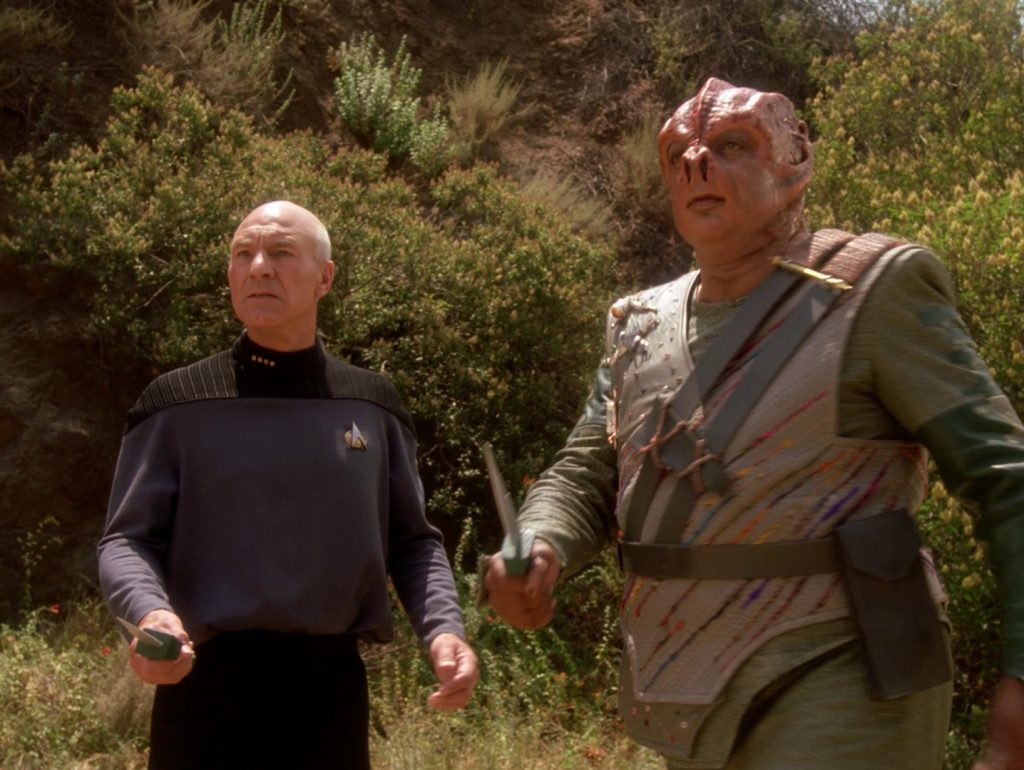
“Darmok” was one of the most popular episodes of Star Trek:The Next Generation, but on the off chance you don’t know it (it’s been *cough* thirty years, after all)–the Enterprise crew is attempting to open relations with an alien race called the Children of Tama. All previous attempts have come to a grinding halt because the universal translator can’t make sense of their language. It can be rendered in Federation English, yeah, but the words and sentence structure are just… gibberish. Determined to solve the problem, Dathon–the Tama commander—kidnaps Captain Picard, dropping the two of them on a hostile planet where they have to learn how to communicate and work together in order to survive. Through the course of this, Picard comes to realize Dathon’s language isn’t based on individual ideas and concepts, but on stories and metaphors. The Children of Tama wouldn’t say “I’m so relieved and happy to see you,” they’d say something along the lines of “Carol, when Zosia returns to Albuquerque.” It’s been impossible to properly translate the Tama language because the Federation doesn’t share their history and folklore.

In a way, all of us do this every day. We reference movies, TV shows, books, pop culture events, and then we stack and combine them. And we know people will understand us because they get the reference. It’s why we understand memes and reaction gifs and emojis.

Heck, want to know what an ingrained aspect of our language this is? When Bluesky first opened up, it didn’t have the functionality for gifs yet. So for almost a year, people responded to posts by just writing out things like “DiCaprioToast.gif” or “CasablancaShocked.gif.” And then the next step was (no joke) screenshots of Dathon from the “Darmok” episode describing various gifs. No seriously, that was a thing for a while.

Now, we also do this on a smaller scale. All of us have jokes and references that are only understood by certain circles. Coworkers. People who share a common interest. I may not get that programming joke, you might not understand School Spirits references, and neither of us are going to get those hardcore biathalon jokes. Pretty much every job has its own “inner language” and shorthand.

And sometimes those circles get even more intimate. Friends. Family. Even individuals. My gaming group has a bunch of things we all say that nobody else would comprehend. I’m in an ongoing group chat with a bunch of writers and we’ve got a few inside references none of you would get. And heck… my beloved and I have little things we say and do that nobody besides us would really understand (it’s how we’ll identify each other when the pod people/ body swappers take over). But to an outsider they could sound rude or confusing or like, well… gibberish.

Now, I’m willing to bet you all understand what I’m talking about here. The real question is, why am I bringing it up on the ranty writing blog?

A not-uncommon problem I see from some folks is they write dialogue loaded with references and figures of speech from their own personal experience. It might make sense within the writer’s personal circles, but outside readers just end up scratching their heads. And when this gets pointed out, the writers responsible for this issue will try to justify their words in a number of ways…

One is that their friends talk this way, and their friends are real people. Therefore, people really talk this way, and there’s nothing wrong with it. The thing is, as I’ve brought up here once or thrice before, “real” doesn’t always translate to “good.”

Two is they’ll argue this joke or reference is common knowledge. They’ll say the material is generally known– universally known, even– so the problem isn’t them, it’s the uneducated, unaware reader. This one’s tough, because it can be hard to agree on what “everybody knows” or even what’s generally known. If somebody honestly believes that everybody knows who won Best Original Screenplay in 1938, there’s not much you or I can do to convince them otherwise short of assembling a large focus group.

Y’see, Timmy, I can’t just write for my five closest friends. I mean, I can, sure, but not if I want to have some degree of success. I’m not saying my writing has to appeal to everyone and be understood by everyone, but it can’t be loaded with so many in-jokes and obscure references that nobody knows what I’m talking about.

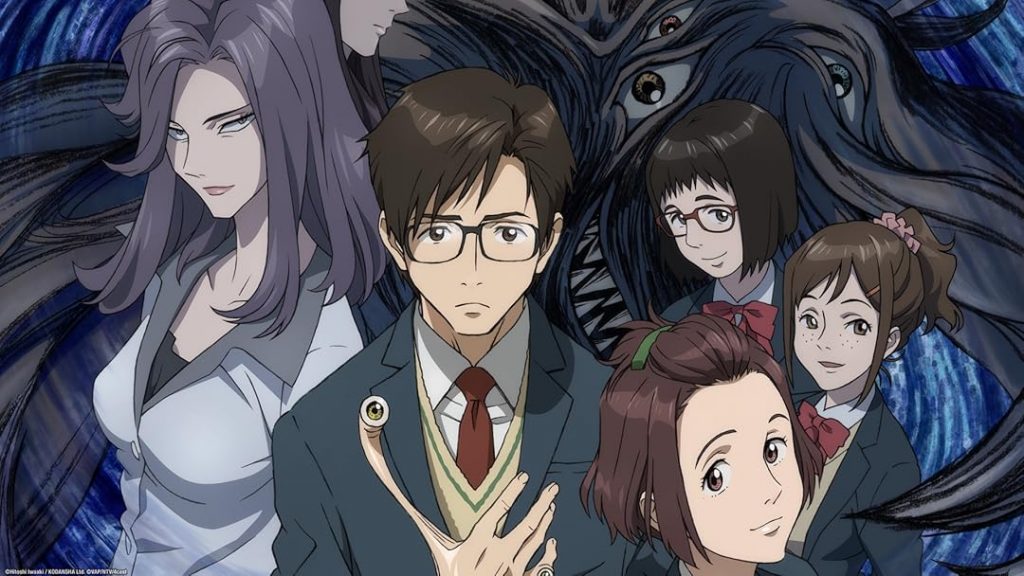
This is one of those inherent writer skills that we all need to be good at. We need to keep learning and being aware of the world. Not just the world as we want to see it, not just the parts that interest us—all of it. Because if a large swath of my story assumes you know the entire Japanese voice cast of Parasyte, Vietnam-era military jargon, or why talking about squirrel voices counts as sexy talk… it probably means I’ve just knocked my readers out of the story.

And knocking people out of my story is never a good thing.

In conclusion, the Children of Tama eventually joined the Federation. Lt. Kayshon was chief of security on the USS Cerritos and everyone could understand him. Most of the time. Commander Ransom, the first officer, even learned some Tama phrases.

Also, nobody won Best Original Screenplay in 1938. The category wasn’t invented until 1940.

You didn’t know that…?

Next time, I’d like to talk about what was really going on when we met.

Until then… go write.

Well, okay, haven’t done an actual ranty blog post in about a month. Sorry. These past four weeks have been pretty stressful, overall. Two sick cats and, by the time you read this, seven visits to the vet (they’re both doing better now). And that’s made editing this book a little tough. Then there was San Diego Comic Con, where I didn’t do any panels or signings but still had to shoulder my way through the unmasked crowds looking to pick up a few things.

Like covid, for example. I picked up covid. Lucky me.

I also had a quiet, casual meeting with one of the writer-producers of Orphan Black. And the producer of In The Mouth of Madness and Ghosts of Mars. And the writer-director of The Fog and Big Trouble in Little China and a couple other things you might’ve heard of. It was really cool and we chatted about some interesting things we might be doing together.

Or maybe I’m just making that last bit up. It’d be amazing if a group of people like that all liked one of my books and wanted to adapt it, wouldn’t it? And it’s not outside the realm of possibility. At the very least it sounds good, right? You could believe something like that could happen if any of those people had actually been at Comic Con this year.

And that of course brings us to this week’s topic. Well, really it brings us to Harry Houdini. Perhaps more specifically, to the time he claimed he’d discovered the lost city of Atlantis.

Okay, so some of you may have heard stories about Houdini and how he often tried to self-publicize by writing up stories about his “adventures” around the world. Escaping from Egyptian tombs, fighting werewolves, stuff like that. It was mostly nonsense and his ghost-writer—a wanna-be aspiring writer named Howard P. Lovecraft– flat out said so and often did page one rewrites of Houdini’s “true” adventure stories.

Except for one story Houdini submitted. One where he claimed that, on his way home from Europe, the ship he was on got blown a little off course in a storm and came across an uncharted island. And apparently even from the ship they could see all the buildings on it. So they diverted, sent a few boats out (with Houdini and his wife Bess on board, of course) and spent the next twelve hours exploring all these ancient Greek-styled buildings. And then a giant crab attacked them (no seriously) and killed one of the sailors and Houdini had to save everyone by making this clever set of snares to slow down the crab. Because if you can get out of knots, it kind of make sense you know how to tie them, too, right? And of course Bess lost her camera in the rush to get back to the boats, so there’s no evidence but Houdini swears on his honor it all really happened.

And, yeah, it all sounds like pulp nonsense, I agree.

But here’s the thing that made Lovecraft hesitate a bit. The log books from the ship Houdini was on, The Ocean Queen, still exist. There’s even scans of them online. And it turns out, yeah, they really were blown off course on that trip and they actually did investigate an uncharted island (at Houdini’s insistence) that appeared to have ancient structures on it. And a deckhand who’d gone along, Leslie Davis, was killed on said island and his body wasn’t recovered. Again, this is all true, historical fact. So maybe, in this case, Houdini wasn’t just making up stories. Maybe they actually found something out there.

Or maybe I just made it all up here on the spot. Every bit of it. Maybe it’s no more true than me claiming I met John Carpenter at Comic-Con.

See, here’s the thing. Lots of people tell true stories. And they often let you know it’s a true story on the cover or the first page or at the end of the manuscript. And I think they do this—not always, but quite often—to put a sort of armor around their writing. You think these are bad characters? Well guess what, they’re based off real people, so you’re wrong! The plot’s kind of thin? Well these are all true events so you’re wrong! The whole thing just comes across as a ridiculous pile of coincidences? Wrong, wrong, wrong! You can’t say any of it’s bad if it’s all true! If it really happened!

And look, here’s another ugly truth. Nobody wants reality. They may say they do, but they’re lying. To me or to themselves. The majority of readers prefer their reality with a thin (or very thick) veneer of fiction over it. They want clean dialogue. They want things to make sense and story threads to get tied up, or at least gathered together in an orderly fashion. They want characters who win (maybe not cheerfully or without scars, but they do win).

Y’see, Timmy, reality’s messy. All of it. No, seriously, take a good look at that thing. It’s clumsy and awkward and weird, borderline impossible things happen all the time for no reason.

But I don’t want my writing to be messy. I don’t want it to feel like a pile of random coincidences. I want it to be clean and polished and perfect. As many people have said, in a few different ways, the difference between fiction and reality is that fiction has to make sense. When I’m a writer I’m the God of my world, and if things just randomly happen without serving a greater purpose… well, I’m kind of a piss-poor god, aren’t I?

One final note about this. You know what finally did Houdini’s career in? Well, didn’t kill it, but definitely caused a lot of bleeding? Movies. He’d done thousands of live shows, escaping from so many different locks and handcuffs and so on in front of audiences, he figured movies were the next big thing for him.

Except movie audiences had already figured out that you could do anything in movies. They’d seen people travel to the moon. Monsters of several types. And yes, many daring escapes. They knew the “reality” of what was on screen was a lot more flexible, and a lot less important than if it was entertaining in some way or another. Houdini didn’t grasp that on screen anyone could be a great escape artist. The fact that he was actually doing all this stuff… it just didn’t matter.

Sorry to hammer it home but, again, nobody cares if my story’s true or not. They just care that it’s an interesting story and it’s well-told. If it’s a boring story told in a lackluster way, being “real” isn’t going to make up for it. If I want to tell the true story of drug addicted sex slaves in 2010’s Texas, it needs to be just as compelling as a story about, say, Houdini discovering the lost city of Atlantis. It doesn’t matter if one of them’s true or not. In the end, I’m telling a story, and it’s either going to be a story that holds my reader’s interest or it isn’t.

Reality doesn’t enter into that equation.

Next time, I’d like to give you a quick, easy lesson on storybuilding and conflict.

Until then, go write.

October 12, 2021

Behind the Mask!

Oddly enough, not a Halloween-themed post. Although… maybe it is. It’s all perspective, I guess.

Since I first started taking this whole writing thing seriously, there’s been a general mindset I’ve seen bubble to the surface once a year or so. Maybe more in some places. It’s the idea that I can’t write about X if I haven’t personally experienced X. Can’t write it well, that’s for sure. If X hasn’t been an integral part of my life at some point or another, I’m just wasting everyone’s time by trying to write about it. Definitely by putting that writing out there. It’s a version of the old “write what you know” superball that gets bounced around. If you’ve never known X, you certainly can’t write about X.

Starting out in the horror community, I’d see this again and again. The folks who’d insist it just wasn’t possible to write horror without a horrific, awful background. You want to write horror? Real horror, not this weak “vampires and demons and zombies” crap? Well you better have fought in a war and had several people killed in front of you. Or had a horribly abusive family. All your pets better be dead, and most of your friends too, and if you’re not dealing with it through life-crippling addiction to something, you’re just a goddamn tourist who has no business in this genre.

Because of this, I’d see some folks get scared off from their chosen genre. Have I experienced real, soul-wrenching love? I mean, really experienced it? Maybe I shouldn’t be writing romance. My parents loved me a lot, I get along well with my brother, and I’ve got a bunch of really cool friends. Maybe I don’t have any business writing horror. And, heck, I’ve never even killed a human being before. I guess murder mysteries really aren’t for me.

At least, that’s what notorious serial killer Sue Grafton always said.

And a friend of mine recently pointed out this is such a pervasive idea that even some readers believe it. There’s no way I could write about a character that awful unless I myself am truly that awful, right? I mean, somebody couldn’t just make that stuff up, right? If one of my characters has sex more than twice, I’m clearly a sex addict (and let’s not even talk about what their chosen sex position says about me). Heck, I think I’ve talked before the weirdness that can happen when you name a character after a family member or friend without thinking about it.

Now, before I go any further… as I mentioned above, this has all been proven wrong again and again. Seriously. Yeah, there’s definitely some horror writers out there who’ve seen some awful stuff and I’ve known one or two folks over the years who’ve written intense erotica as an outlet when, y’know, no other outlet was available. There are some action writers out there who have very intense backgrounds in the military or private security, and a few sci-fi writers with pretty solid scientific credentials.

But I also know a ton of horror writers who had really nice childhoods and now live very happy lives, without a single dismemberment or traumatic beating or other ghastly event in their past or present. I know action writers who haven’t been in a single barfight or high speed chase or gun battle. I know people with no military experience  who write very successful military books. There are more than a few sci-fi writers who haven’t traveled in time or even left earth orbit once. And I know people who write sex scenes in their books who have, if I may be so bold, fairly vanilla sex lives. At least, going off all the pictures one of them showed me. Like, insisted on showing me.

That was a really weird brunch.

Anyway…

I think all of this ties back to a few things I’ve talked about here a few times. So I thought  maybe it’d be worth mentioning a few totally valid ways we can write about things we haven’t actually experienced. For example…

Voice—A big step for all of us is the day we realize midwestern grocery store clerks don’t talk the same way as third-generation bio-apocalypse survivors. Dwarven warrior queens have a different vocabulary than techbro CEOs. And fresh-out-of-grad-school schoolteachers don’t sound the same as battle-hardened Army sergeants. And getting that voice right, knowing how she’d say this vs. how he’d say it vs. how I’d say it is a big step in our growth as writers.

Research—seriously, we live in a freakin’ golden age of resources for writers. I’ve been doing this just long enough that I remember ads in the back of magazines for small press books about what it’s really like to be a doctor or a homicide detective . Or I’d spend hours in the library trying to find pictures of Paristhat didn’t involve the Eiffel Toweror a museum. These days, if I need to know something I have access to so many sources. I can find research papers or anecdotal accounts or heck, even actual people who will answer my questions or help me find the answers, and usually tell me some other useful things if I’m paying attention.

Extrapolation— I’ve never been shot in the knee, but I’ve had the meniscus behind my kneecap rupture (and collapse again and again and again). I’ve never done super heavy drugs but I’ve been very drunk a few times. I’ve never been able to fly, but when I was a kid there was a bridge in my hometown we all used to jump off into the river. Yeah, these experiences aren’t the same, but I can use them as building points. If this registers as a six, what would a nine be like? If it felt like this for ten seconds, what would it feel like after twenty? Or thirty? I stayed conscious here but would that much short out my brain for a few seconds (from pain or pleasure or excessive introduced chemicals)? It’s a basic creativity exercise. 

Empathy—I’ve talked about empathy here a few times, and I have to say once again it’s the most important trait a writer can have. Seriously. It’s what everything here really boils down to. Being able to put myself in someone else’s shoes. I’ve never had a parent die, but I’ve had friends who did. I’ve never served in the military, but I have family who did. I’ve never been married or had kids or burned dinner when someone’s coming over I really want to impress. But I look at my friends and family, I listen to them, I take note of what they’re saying and what they’re not saying, and I try to relate it to things I’ve gone through. I try to imagine how I’d feel in a similar situation, based off my own experiences. And I use some of that in stories.

In fact, let’s take this one step further and address one of the points that started this off. If I’m going to tell someone they can’t write great horror unless they’ve been through awful stuff (like I have)… well, isn’t that kind of implying I don’t have great empathy? I mean, think about it. I’m saying I can only write this because I experienced it, and I’m also admitting I can’t imagine being a person who can write it without experiencing it.

Maybe it’s just me, but I don’t think that’s something I should be bragging about.

Y’see, Timmy, much like “write what you know,” this mindset assumes people can’t learn or grow or imagine anything. And if I want to be a good writer, I have to be able to do that. I can’t tell myself not to write about bank robbery until I’ve actually tried to rob a bank. Hell, where does that people who write murder mysteries? Or giant robot sci-fi? Or dark period fantasy. I mean, if you haven’t had sex with at least three people from the twelfth century, how do you expect to write medieval romance? I need to understand most writers research things, extrapolate feelings and reactions, get inside their character’s heads, and just try to have an honest sense of what someone else would feel in this situation.

Look, the truth is, if I’m doing my job right, you should feel like all my characters are real people in real situations. The janitor. The nymphomaniac barista. The half-human, reluctant cultist. The little kid with PTSD. The burned-out secret agent trying to forget most of his life. The world-ending cosmic event that they’re all tied up together in. And when we read a description of a real person, when we hear about the believable, relatable aspects of their life, it’s natural for us to assume they’re… well, real.

And the obvious real person is me, the author, telling you this story. So it’s not surprising some people think I must’ve experienced these things firsthand.

But I shouldn’t need to.

Anyway…

Next time, I want to throw a bunch of characters at the wall and see which ones stick.

Until then, go write.

March 12, 2020 / 6 Comments

A2Q Part Five—Setting

We’re still in the early days of creation. I know that seems weird. We’re five parts in, but I’m still saying it ‘s early days. Not quite halfway through, going off my rough outline for this whole thing.

One of the things I’m trying to do with this A2Q thing, especially with these first few parts, is point out a lot of elements we need to think about before we sit down and get going. I really think the reason a lot of writing projects hit a wall is ‘cause people get one or two cool ideas, start writing, and then hit that first big gulf those ideas don’t cover. And that gulf will always appear, because one or two cool ideas don’t make a book.

Like I mentioned last time, it’s a lot like trying to cook. I want to make sure right up front I’ve got everything the recipe needs, because I don’t want to get halfway through and find out I don’t have that half-cup of brown sugar. We’ve all been there, right? Suddenly I’m wasting time digging through the cabinets or looking online for brown sugar substitutes and going through the cabinets for those. Now the oven’s smoking because it’s been preheated for a while and the dough’s been sitting half-mixed for fifteen minutes while I’m trying to figure out if I really need the brown sugar and wow cookies were a bad idea and jeeeeez I shouldn’t’ve tried this.

I don’t want any of you to go through this with your writing. So that’s why we’re going to make sure we’ve got everything we need before we sit down and start with the serious writing. And why I want to continue this gathering-up-of-elements by talking about settings a bit.

I know at first glance, the setting might not seem like a big deal. I mean, if I’m writing something super-sci-fi set on another planet or a fantasy in some alternate world… well, sure. Setting’s important then. People are going to be blue with orange hair and swords will talk and everything’s going to be different.

Thing is though, almost every fictional world is going to be slightly different from the real world. Especially the real world of the reader. Maybe I’m writing about spy thrillers in Europe or werewolf hunters in northern California or a galactic hit man who just crashed on an unnamed alien world. There’s going to be big, obvious differences and small subtle ones, too.

Charlie Jane Anders made a wonderful observation a while back. To paraphrase, if my setting is “a world just like ours, except…” then it’s not really a world just like ours. Like that butterfly effect I mentioned last time, any change worth noting is probably going to have a ton of repercussions across all levels of society.

And if I don’t see those repercussions in the manuscript… it’s going to ring false. In a world where anyone can turn invisible and everyone knows this, why wouldn’t I have better safeguards in my home? Why would I assume “the wind must’ve knocked it over” or those footsteps upstairs are “Just the house settling in for the night.” That kind of thing makes my characters (and me) look dumb. They should understand the world they live in and not be shocked or surprised or caught off guard by it.

Another key thing to remember here is that a lot of the setting is my character’s view of the world. So even if they’re in the “real” world, their day to day experiences may not be just like mine. Odds are really good they’re not. Simple truth, I don’t live in the same world as somebody who lives in Egypt. There are so many elements that make our day-to-day experiences–our thought processes—different. The climate. The economy. The history. The government. The society. And all of these little differences—these excepts— make for a very different world.

Heck, my world’s radically different than someone living in Canada. Just the simple fact that they don’t worry as much about healthcare. Or childcare. Seriously, just take those two items off your plate right now and how is it going to change your view of your job? Does it matter as much that you didn’t get that two dollar raise? Or the extra overtime shift? And if you’re not working overtime, how does that affect your life?

And just what a character knows can change their view of the world. Maybe they learned an ugly truth or got the veil peeled back, and now the world is a very different place for them. The best example I can think of this is that old-timey flick of yesteryear, The Matrix. For the first third of the film, Neo thinks he knows and understands the world. But later, after learning some ugly truths, he goes back and is shocked just to see a noodle shop he used to go to a lot. Because now he sees the world as a very different place.

Let’s talk about Phoebe’s world for a little bit and flesh some things out.

We’ve established she doesn’t make a ton of money, and she’s responsible for her teenage sister. These two things are going to be big factors in a lot of her decision making throughout the book. For example, we know she’s not living in a mansion, and even though she’s renting a house, it’s not going to be a great house. Not too big, probably some faults here and there. Maybe crap plumbing or an old, too-small water heater. And the wiring’s from the ‘50s so don’t try to run your laptop and a hairdryer while the lights are on. Plus, this lack of money’s going to be reflected in her diet, her wardrobe, and probably—to some level—her self esteem.

Of course, this isn’t the big element. Phoebe lives in a world where werewolves are real. We already know some of the changes this implies—there are professional werewolf hunters, with lots of related jobs and organizations.

But one of the other things we’ve kinda been dancing around is… who knows? Is the werewolf-hunting world hidden away from prying eyes? Or is it commonly known and you can buy werewolf-repellant spray at every Home Depot?

(seriously, don’t buy that stuff—it’s a scam and it never works)

See, this is really going to change the book depending on which way we go. It’s going to affect who Phoebe can talk with about different things. It’s going to affect her day job. Heck–it’s going to affect how she dresses at different times. If people don’t know werewolves are real, it’s going to be tough explaining why every four weeks or so she goes out wearing a heavy leather trenchcoat, heavy boots, a quiver of crossbow bolts on her belt, a bandolier of silver-plated knives.

Again, it’s a world just like ours, except

I’ve gone back and forth on this while talking about plot and story and character, and I’m going to say people in general don’t know about the werewolves. They exist, they’re 100% real, but to the vast majority of the population, they’re just fiction and folklore. These folks all believe they’re living in the regular real world you and I are living in right now.

Why am I going this way?

First, the more I played around with it, the more it felt like making werewolves something everybody knew about would make my book lean a little more into comedy. Not a full fledged comedy, probably a lot of gallows humor, but it’s still just not the direction I want this to be going. If we’re going to talk about lycanthropy as a global problem, it just seems like we’re going to be very serious (which I don’t want) or pretty goofy (which I also don’t want). Making it so most people don’t know gives me two worlds, essentially, that Phoebe can move back and forth between. This will give me some nice, believable transitions when I want to shift tone a bit one way or the other.

Second is that if everybody know werewolves are real, it’s logical to assume the lodge would be publicly subsidized somehow. Maybe even fall under a state or federal government office. The CDC or maybe the DOD, depending on how I approached it. Heck, maybe the Department of the Interior. This’d put a different tone to the underpaid/undersupplied aspect of Phoebe’s story that I don’t want to deal with.

Also, kind of a third thing, somewhat related to the above point. If we follow the logic that the lodge is connected to the government, then like it or not this story’s becoming a bit of a metaphor. The government having licensed contractors eliminate “undesirables” or the underfunded government office that’s woefully unprepared for a major outbreak. Hahahaa, yeah, no way any of that could seem political in this day and age. I’m not at all against political elements in work, but—for what I want to do with this story—it just feels like it could easily be a little too much right now.

Plus—on a more positive side—I kinda like that werewolves being unknown will add a little more conflict in Phoebe and Luna’s lives. It’s a big aspect of both their lives they have to keep hidden from people, like a good old-fashioned secret identity.

Worth mentioning that thinking about all this solved another small issue and added a little more depth. Why would Phoebe be using a crossbow in this day and age? Well, to be honest, I just said crossbow a couple of times at first because it’s kind of a werewolf-hunter standard. But thinking of the setting and financing made me think of something else. Silver’s expensive, even for the lodge. Oh, sure, if there’s a major outbreak there’s going to be boxes of silver 9mm and buckshot for everybody, but nowadays, on regular patrols, crossbow bolts are reusable, which means they’re cheaper.

Heck, they could be heirlooms you leave to your daughter for when she takes over the family business.

This is also a good place to point out something I see crop up. Some of you might be seeing a contradiction here. I said earlier that characters need to understand the world they live in, but now I’m saying most people don’t know there are werewolves. This really isn’t a contradiction, though. If most people don’t know werewolves are real, then their world is built around the idea that werewolves aren’t real. As I also mentioned above, their day to day experiences tell them they live in a normal, werewolf-free world, and they’re going to act and react to things accordingly.

I know this seems silly to point out, but it’s amazing how often I’ve seen this kind of thing pop up in manuscripts (or geekery movies). Characters are confused/ surprised by/ completely ignorant of the world they live in, and behave in unbelievable ways because of it. I can’t say everybody in the world can read minds, than have one of my characters surprised that somebody read his mind, followed by “Oh, of course—you read my mind. Hahahaa.”

Again… I’ve seen this exact sort of thing.

So play around with your setting a bit. Figure out what it is and how your characters see it. Try to work on a couple of those sharper corners now so we don’t get snagged on things later.

I’ve got one other thing I want to talk about in the A2Q before we (finally) start putting stuff together. But that’ll be in two weeks.

(unless you’re all seriously loving this and just want me to focus on the A2Q for a while. The comments have been kinda dead so I have no idea)

Next time, I’d like to talk a little bit about information and noise.

Until then, go write.

Categories