
December 19, 2025 / 1 Comment

Then to Now

Oh! Hello there. Yes, this is very overdue, isn’t it?

The past month has just been wild. The book tour. Thanksgiving. Three or four vet visits. Two or three doctor visits for me (minor stuff, in the big scheme, don’t worry). Assorted holiday activities.

Oh, and this book I’ve been editing. And another book I’ve been poking at.

It’s still really weird to me sometimes to think I’ve had over a dozen books published. Me! That’s not even counting all the short stories and collections. It’s just… weird.

Which leads me to this (very overdue) ranty blog post. I’d planned to do it waaaay back at the start of November but… y’know, maybe it’s better now, as we’re all starting to think about top ten lists and how much we got done and all that sort of thing. Those can be fun, but I think they can also be kind of demoralizing. It can be rough when you’re trying to find time to write while someone else is pounding out three or four books a year. Heck, even once you’re kind of established, it’s easy to watch people talk about all those end of year accomplishments and feel like… wow, I didn’t do much at all, did I?

One thing it took me a while to figure out was that a lot of us have very skewed ideas of the time frames involved when we talk about “how long things take” when it comes to art and artistic careers. F’r example, when I first started out, people thought I was ridiculously prolific because I had four really solid books (and a bunch of short stories) published in less than two and a half years. But it actually took five years to write all of that. Likewise, right now it looks like it took me three years to write God’s Junk Drawer, since that’s how long it’s been since The Broken Room came out. But I actually wrote three books in that time. You just haven’t seen them all yet. And when those start coming out, I’ll bet you anything someone pulls out the prolific label again.

Like, okay, how often do we (as a society) dwell on how long it was since someone started writing until they sold their first book? Once they decided to do this, how long did it take them to get published? It sounds straightforward, but all of these are kind of tricksy points in time. Like, okay, my first published novel (Ex-Heroes) was written in 2008 but it came out in early 2010. And there were a few novels before that one, but they didn’t sell. For good reasons.

And the starting point? When did I actually start writing? Well, if we use when I started telling stories as an eight year old (using my Death Star playset as a slowly-evolving diorama of Star Wars figures), then from that to first published novel was about thirty-two years. But if we go off when I first actually writing things out on my mom’s typewriter and my first attempt at a “novel” (the often-mentioned Lizard Men From the Center of the Earth), then we’re looking at about thirty years.

Then again, we could go off when I first tried submitting stuff (some just-as-awful comic book “scripts” to Marvel when I was eleven) and then it’s twenty-nine years from starting to write to first published novel. But those were comic book submissions, not novels soooooooooo… I don’t know. Do we count that? Yes? No?

If we want to start at when I actually learned how to submit (whoa, publishers and editors and agents have guidelines? who knew?), then I guess we’re looking at about twenty-two years from “starting to write” to “published novel.

We could also consider the college novel as my starting point, so now it was nineteen years. Or if we use the after college/ moved to California novel it was maybe seventeen.

Also, to be honest, for about seven years in there (while I was working in the film industry) I put books aside and just worked on screenplays. Had some mild success, too, relatively speaking. But like with the comic book scripts… should we count that time? Skip over it? Half-count it as general storytelling?

It was in 2001 that I decided I’m going to go back and finish the after-college novel. Polish it up, actually turn it into something I could submit. I remember the moment I decided it. So if we go from there, it only took nine years to get from “starting to write” to “published novel.”

And, of course, in late 2006 I left the film industry to focus on writing. Fiction and non-fiction. If we want to use *that* as the starting point… well, it only took me two years to sell a novel once I put my mind to it.

See what I mean? Those points are pretty damned flexible. Depending on how we want to look at it—and the story we want to tell—it can look like my career took forever to take off or I did it without much effort at all.

This is true of most books. There are early inspirations and ideas, first thoughts, outlines, drafts. Once we mix in behind the scenes stuff—like the very random amount of time between writing and publication—it’s not hard for people to look very slow or very prolific. Sometimes deliberately, sometimes accidentally.

Y’see Timmy, we shouldn’t beat ourselves up over those end-of-year lists. I got a lot of stuff done. I bet you did, too. That’s what matters. Not how much someone else got done.

Next time…

Hell, next time is Christmas. And the Thursday after that is, well, next year. But I’ll still try to squeeze in one more post about… something? I’m taking requests, if there’s something you’d like to hear me blather on about.

Oh, and if you’re looking for a last minute gift– hey, maybe a copy of God’s Junk Drawer? No, no, Grandma will love it. Really.

Until then, go write.
October 9, 2025

Massive Cuts!

Running a little late with this one, sorry. This fall/ early winter’s going to be very chaotic for me.

Last month when I was guest-hosting the Coffeehouse, we talked a bit about word count. Not in the sense of making your word count, but what publishers are generally expecting from books in different genres. Should we be aiming for those points as we write? Or do we just write with the acknowledgment we may need to cut some later?

Since this is something I have some experience with—some very recent, in fact—I thought it was worth talking about a bit more. It’s one of those things where we’re going to dance a little bit between writing and publishing, going back and forth between the art and business sides of the line.

First off, let me be clear up front– you should always write the story you want to tell. Always. Don’t try to chase a trend or guess what some agent or editor might want to see. The thing they want to see is your story, as you wanted to tell it. That’s what gets attention—the story with all that passion and energy and excitement.

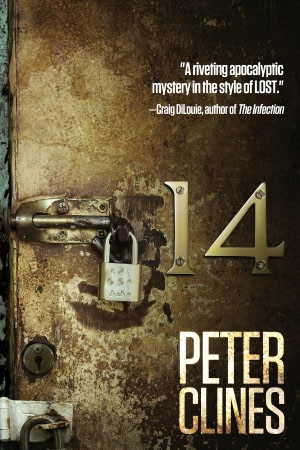
For example, let me talk about two of my books. One of them—the one you know—is -14-. It was a wild, crazy story that had been bubbling in my mind for a while. I wrote it out, tightened it up, polished it and sent off the to the small press publisher I was working with at the time. He absolutely loved it. Told me it was one of the best things that’d he’d ever received as a submission and offered me a contract pretty much right then and there.

The other book is the one we just sold last month. If you’re subscribed to the newsletter, it’s the one I’ve been calling TOS. Three different publishers wanted it. And they all loved it. All of them talked about how much the loved the story, the characters, the writing, how it was equally playful and fun and terrifying.

So, let’s be clear. In both cases, the editors/ publishers loved the book I wrote. These book sold because I wrote the book I wanted to write and people could see that passion and excitement in it.

Then… the business aspect of this sets in.

In the case of -14- the small press used print on demand, and that meant there were very solid costs that came come down to specific page counts. One line past this page and the book goes up by X. Go past this page and it goes up by 3X. And the publisher either has to absorb those costs (not great) or pass them on to the customer (also not great). So the publisher loved it, but we had to make some serious cuts just to make the book affordable. No way around it.

And with TOS… well, it’s a book that definitely leans into horror, and most horror books tend to lean on, well, the lean side. Yeah, there’s some big, beefy horror books out there, but two editors—the final two, in fact, who wanted it the most—both made it clear the book was going to have to lose some weight. One thought 20K. The other thought closer to 35K.

Yeah. Scary thought, isn’t it? Happy October!

As a slight aside, I think this is one of those things that makes people say “Big publishers will make you change everything about your book!” And on one hand, yeah, they’re absolutely asking me to change things. Kind of insisting on it, in fact. But they’re not just doing it at random. Remember, they bought my book because they like my book. Why else would they have bought it? But this is definitely a business vs. art thing.

Also please keep in mind—none of this is me saying we can ignore actual submission guidelines. If anything, this is kind of making that case. If somebody doesn’t want to see anything over 100K words and my manuscript’s currently at 135K… well, I’ve got some cutting to do if I want to submit to them.

Anyway…

All this brings me to an exercise I wanted to bounce off you, especially for those folk working on an early draft of a first novel (but it works for everyone, so don’t feel shy). I want you to imagine, right now, you open up your email and you’ve got an acceptance letter. That publisher you sent your book to likes it They love it! They want it, they want to sign you, it’s a done deal. There’s only one catch…

You need to cut 20,000 words out of the book. It has to be shorter. Maybe it’s a marketing thing, a financial thing, a random decision from someone higher up the food chain. But you must lose 20,000 words. They’re willing to sign that big contract with you today, but there’s no negotiation on that point. 20K gone before it can see print.

So, let’s open up our latest draft and take a long, hard look at it.

What can go?

No, come on. What can go? Do we really need all that description? Every one of of those funny dialogue exchange? All that banter? Does Phoebe need that little soliloquy about rediscovering the sanctity of life?

What really happens in that driving chapter? Yeah, Phoebe gets Dot caught up on everything, sure, but the reader already knows all of it. I’m just repeating information, having her re-tell it to Dot. And wouldn’t we probably assume she told her if they just got out of the car an hour and fifty miles later and Dot said “So that’s all of it?”

Do we need Wakko at all? No, seriously. What does Wakko do in this story? He makes some random comments, carries some stuff at one point, has a few funny lines, but does he actually affect the plot or Phoebe’s story in any way? Would anything at all change if we just cut him out altogether?

Be honest– would it? Think hard, because we have to cut 20K words.

I’ve already cut two full chapters out of TOS. Big, full chapters. One was near the end, and it was sort of a fun, pushing-the-conceit-of-the-book bit that also helped show how horribly wrong things had gone. One was closer to the beginning, and it played with another conceit while also… damn, it had one of my favorite passages in the book. One of those bits that was simple but also kind of deeply, under-your-skin creepy. And that might just be gone for good. It’s so situation-specific I’m not sure I could ever use it for anything else. But ultimately, that three-quarters of a page is the only reason this whole chapter exists. Everything else in it is kind of redundant.

So right there… almost 5000 words cut out of the 20K my editor’s asking for.

One more time, I’m not saying we should plan on this—again, write the book you want to write. But it’s worth thinking about. Because no matter who we’re writing for, we’re going to have to edit and tighten cut. That’s a basic part of the process.

And if I’m finding it really easy to cut something out… well, maybe that’s a sign it wasn’t needed in the first place.

Next time, I’d like to talk about that phaser rifle Chekov left on the bridge

Until then, go write.

February 3, 2025 / 3 Comments

Weird Decisions and Publishing Math

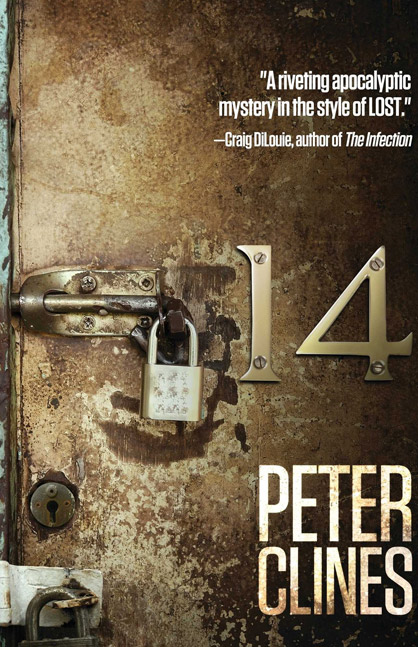
A few folks on Bluesky recently asked about -14- and why it’s not available in paperback. As I’ve said once or thrice before, it’s a whole weird confluence of things all piling up on this one book, and it’s not easy to explain in a handful of social media posts. Especially when you know somebody’ll jump in halfway through to say “Well, have you considered trying…”

So I figured, what the heck. Bonus blog post.

First, before you read any further here, please go read this post about book publishing. Also, while I’m thinking about it, go read through the FAQ, too. Punishment will me meted out if you ask a question/ make a statement regarding any of this that’s already been covered.

So, first off, let’s have a general talk about numbers.

Whenever a publisher considers a book, one of the main questions they ask is “how many copies of this do we think we can sell?” That’s not shocking, right? They actually have teams that sit down and try to figure this out based off the book itself, but also the author, past performance (if any), market trends, and so on. This is also one of the numbers they use when calculating advances. They’re only expecting XXX sales total, so they’ll offer an advance of X that makes sure they at least break even.

This all makes sense, yes?

Now, these numbers also matter when a publisher decides to pick up a book that’s been previously published—either by another traditional press or self-published. If I tell them my book’s only sold eleven copies in the past year… well, I’m not exactly making a great case for them to re-publish it. Why would they pick up a book that doesn’t sell?

But by the same token, they also don’t want a book that’s sold too many copies. Y’see, Timmy, if all the research numbers say my book’s going to sell 50,000 copies, but I tell them it’s already sold 45,000… well, hang on. How many should they really expect to sell now? We’re pretty much saying 90% of the potential audience already has the book. Sure, there’s wiggle room in there, but… it kind of sounds like this book’s sold all the copies it’s going to sell, yes?

Hopefully this also makes sense. I’m not asking you to like it. But from a business point of view—and publishing is a business—you should see why someone would think this way, yes?

Okay, so, with all that in mind… let’s talk about -14-.

14- started out at a small, traditional press. I feel safe saying it was one of the most (if not the most) successful books they had. By a significant margin. I’m pretty sure it was a factor in the original owner selling off the whole press to a group who put some, politely, less-experienced people in charge.

After maybe two years of fairly questionable decisions on all fronts, the new owners decided to take it up a notch and stop publishing physical books. Y’see, they ran the math and realized physical books had the smallest profit margin, so only putting out ebooks/ audio books meant more profits. For them. Theoretically. If you know the publisher I’m talking about, you may recall this caused a bit of discourse for a few days.

I will take a moment to point out the publisher was 100% in their legal rights to do this. It was an incredibly stupid decision in so many ways (again, one in a long chain) and all of the many, many authors they’d signed over the past two years were very rightfully furious. But it was absolutely the publisher’s stupid decision to make.

And while -14- was one of the very few books they kept in physical print… they also stopped pushing it. Because, y’know, profit margins. They had a loose distribution deal with a larger house they let kind of wither away. People would try to order the book from their local bookstore or Amazon and be told there weren’t any copies available. When the contract ended and I got the rights back, the publisher told me they had almost 250 copies just sitting in their warehouse. No, seriously.

Okay, so I’ve got the rights back now! Super-easy to find another publisher who wants this book, right?

Well… remember that math?

Y’see, even though it’d been effectively out of print for almost two years at this point, with ebook and audio -14- was selling phenomenally well, even seven years after it’d been released. Like, I’m pretty sure 99.5% of the people reading this would be seriously jealous of the royalty checks -14- was still getting from Audible when their contract ran out a few years ago. And your heads would explode if I told you what they offered me to renew that contract for another ten years.

But other publishers looked at that and said… oh. So it’s already sold that many copies? Hmmmmm…

Hang on, my agent and I said. There’s still a huge market for the print book, though. I’m constantly getting requests from folks who want to own a physical copy of it.

At which point the publisher would usually ask how many physical copies it was selling under the old publisher, before their rights expired, and we’d have to say “Well… none. For a couple of years.”

And that’s where we were kind of stuck. Because, yeah, it makes absolutely no sense that a publisher would stop selling copies of their most successful book. None. So the real answer has to be that the book has run its course and doesn’t actually sell.

Despite all the sales it’s still racking up to this day.

Does this mean -14- is doomed to never be in print again? Maybe? It all comes down to something changing that math and pushing that number higher. If my profile radically increased for some reason or the book got notably more popular. Heck, if someone announced a Netflix series tomorrow there’d probably be publishers fighting over it.

But right at this moment, for the foreseeable future… we’re probably not going to see it.

Sorry.

August 11, 2023 / 2 Comments

The Spot X Used to Mark

I don’t like to talk about non-writing related things here on the ranty writing blog. In the sense of I like talking about writing (the art) as opposed to writing (the career). It’s why I rarely talk about publishing, marketing, agents, publicity, any of those after-issues. I’m a big believer that there’s not much point in me worrying about any of the career stuff until I’ve actually done the art stuff. Like I talked about a few weeks back, if you’re here, you’re 100% interested in the art, but not necessarily in the career.

But these are interesting times, and as I find myself navigating a path through them, I figured I might as well drop a bird crumb or three. Or beat the whole loaf into crumbs and just dump it out here. We’ll see which one turns out to be the better approach…

In case you missed it, the human embodiment of the Dunning-Krueger Effect spent an ungodly amount of money to buy a company he had absolutely no idea how to run. What followed next was kind of like a car crash I was once in. Another car slammed us into the side of the freeway, our car kind of bounced off the concrete wall, but momentum and a jammed steering wheel guided us back into side of the freeway again, where we bounced off again, slammed into the wall again, and continued doing this for maybe a full minute/ three or four impacts before the car finally came to rest a few hundred yards down the freeway. And no, the other driver never stopped, just shot off down the 405, looking for another car crash to cause.

So that’s what Twitter’s been like for the past couple of months.

Really, even before the Muskrat, things weren’t looking great. In general, the social media landscape’s been looking more and more like some bombed out no-man’s land during World War One. Algorithms have made sites less and less usable, while a complete lack of algorithms have made other sites less appealing. At this point, the only thing social media shows you is ads and the only thing you can easily find is outrage.

Where does this leave us all now?

Not in a great place.

I’m hardly the first to say it, but I think the age of social media may be over. It’s crumbling fast, at the very least. Yeah, there are a few places that have tried to step up and fill the gap, but none of them are moving at a good speed, either in growth or management. Bluesky’s probably my favorite right now, but it’s still got huge issues. Plus, if they shift to the federated idea, I think that pretty much kills them right there.

Yeah, federation’s just weird. It feels like a buzzword too many techbros are leaping at, even though it pretty much boils down to “social media, but with less reach.” It also feels a lot like “look, we invented subreddits!”

Anyway…

Hopefully it’s clear this really sucks for artists of all types. For a while now publishers (of all types) have kind of been leaning on artists to get their own message out. After all, through social media we can reach everyone pretty much everywhere, right? So… reach! New book coming out, book signing this weekend, anthology story in November, con appearance next month!

BUT… we all hate it when artists just say “buy my stuff” again and again. And most artists hate doing it. That’s why we’re usually just trying to… well, be ourselves. Show you other stuff we’re interested in. Movies, cooking, photography, LEGO, exercise, toys, pets, whatever. I think most people appreciate that honesty, even if it’s not something they might not be interested in themselves.

(like, for example. two writers I know from the fleshworld talk a lot on social media about Magic the Gathering, a game I know absolutely nothing about past “you play it with cards.” But I love their passion for it. It doesn’t matter that I’ve got no clue about it– I can enjoy their love of it)

Worth noting—I’ve never heard of an author not getting a deal because of a small social media following. I don’t think any publisher’s ever said “Wow, it’s the most amazing thing I’ve read this year and we think we can easily move 100K copies BUT you’ve only got 200 followers on Twitter. So sorry. Please try again later.”

I have, however, heard more than a few stories where blame for a book’s failure is quiiiiiiietly shifted to the author. They should’ve promoted more. They should’ve talked about it more. Clearly their fault. Nothing we could’ve done that would’ve changed things.

And the key thing here is it’s been shown time and time and time again that big social media numbers really don’t, in any way, translate to sales. There are famous examples of people with millions of followers who can’t even sell 500 copies of a book. I mentioned a while back how Nathan-freakin’-Fillion tweeted how much he liked the first two Ex-Heroes books and it barely bumped the needle on sales.

So all of this should be inconsequential! Social media collapsing really shouldn’t be the giant source of stress that it is for so many creative folks. But we keep doing it because… everyone expects us to. And we all have this nagging worry that if we don’t do it maybe sales will go down. Maybe my feeble attempts at keeping your attention really are where a third of my sales come from. Which would be sad on numerous levels. For all of us.

Plus… I made a joke about this a while back and Chuck Wendig actually just did a whole post about it over on his site. Most artists are exhausted by all of this. This whole collapse and trying to find a new place and… all of it. Seriously. I mean, we need to use social media—to some extent—as a business tool. So imagine having to move your whole office to another building. The office you’d spent years getting settled into and arranging, where everyone knew where you were and all your clients and associates knew right where to find you. But now you have to move.

So you pack everything up, move it all, get everything unboxed, start moving it all around, figuring where everything’s going to go, you give everyone your new phone number and new address and WHOA hang on, turns out this place has a ton of security issues. Sooooo pack it all up again, move again, get it all unboxed again, give everyone your new-new phone number and address and HOLY CRAP this new place is also owned by a narcissistic billionaire? Okay… pack it all up again, find another place, set it all up again…

And of course, every time you do this you lose something. A few photos. A little memory. There’s one or two people you forget to tell you’re moving. Five or six people who just can’t find that new address. Another five or six who refuse to drive to that part of town.

Again, that’s what the past few months have been like for most artists. Exhausting.

Which leads us to… what can we do?

Well, first off, a lot of it’s going to depend on you and what you can tolerate. What you want to be part of. What you want to support.

Past that…

I think, personally, if you like an author, an artist, a franchise, a toyline, whatever… you should probably bookmark their site now. Not their Twitter page or Instagram account—their site. Every writer and artist I know is trying to let everyone know where they’re going, but there are so many barriers in the way. We’re all scattering and some people are going to get lost. So ignore all the random platforms and just go straight to their little corner of the web. I guarantee you they’ve got something out there, even if it’s just 83% placeholder. So bookmark it, try to check it now and then. Like in the olden times, when the internet was just stone tablets that we threw at each other.

If said artist tells you they’re going somewhere… try to follow them. I screenshotted so many Bluesky addresses before I got an invite. All those folks saying “find me over here.” And when I finally got a code… I found as many of them as I could. Newsletters? Probably not a bad idea to sign up for those, too, if that’s your thing. Do you need a Bluesky invite? Seriously, I’ll just drop codes here if it helps people get away from Twitter. Because none of us can depend on it anymore. For anything.

I don’t know. This is feeling rambly. I have so many thoughts, and I’m also worried nobody’s ever going to read them. Because social media’s collapsed and I have no way to tell you I’ve put up a new post here on the ranty writing blog.

I guess we’ll all just have to see what happens.

Next time, I think I’d like to talk about how little time it took Usain Bolt to win an Olympic gold medal. Unless you’d like to talk about something else? Feel free to leave any thoughts, suggestions, or comments down below

And until then… go write.

Categories