Pop culture reference.  Long overdue.
            This is overdue, too.  Many thanks for your patience while I was away last week.  ConDor was lots of fun, got to speak with some great people, and even ended up with a few ideas for future ranty blog posts.
            Speaking of which…
            I blabbered on a while back about the bad habit of sticking absolutely everything into a story—the kitchen sink approach to storytelling, if you will.  If I’m writing a historical story, it’s crammed full of historical events and people.  If it’s a sci-fi story, I make sure every single person, place, and thing has a sci-fi, high-tech twist.  When I do this, it can get distracting really fast as my reader is buried in facts and details that really have nothing to do with my actual story.
            Sometimes, writers do this with their characters.  They give them lots of elements and defining points.  Lots of them.  Again, the kitchen sink approach.
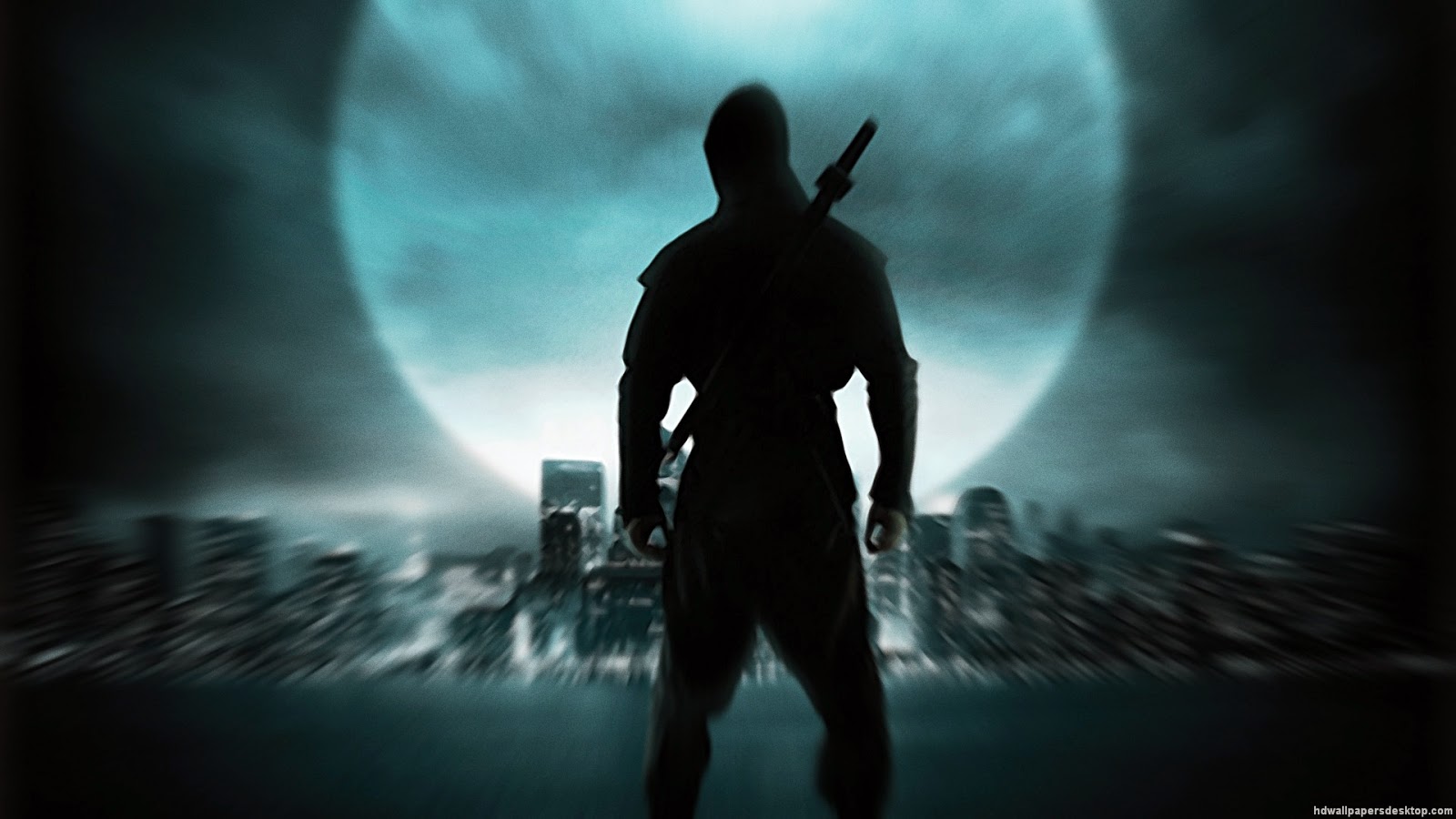
            For example, I could make Yakko a guy from the backwoods of Maine and constantly reference his sheltered New England upbringing.   And he’s also a Piggers fan (go Piggers!) who’ll cheer/ defend/ quote/ relate things to the Piggers at every chance he gets.  Oh, and he’s also a ninja who studied for twenty years in Japan before returning to America.
            Now, in and of themselves, none of these are bad character elements.  Being the fish out of water isn’t far from being the ignorant stranger.  Ninjas are cool.  Lots of folks love the Piggers.
            But if Yakko’s ninja skills are never going to be necessary to further the plot—or even just to deal with an action set piece—maybe they’re not such a great character element after all.  If his devout love of the Piggers is irrelevant to the story, maybe I shouldn’t spend forty or fifty pages on it.  And if I could switch his background from rural Maine to suburban Texas with no repercussions, maybe it’s not that much of a character trait.  Again, none of these are inherently bad elements, but I really should spend time on an aspect of Yakko’s personality or backstory that has an affect on the story. 
            And if he doesn’t have an aspect that affects the story… well, why is he there?  Sure, he cracks some funny jokes and other characters bounce some dialogue off him.  Maybe he even throws a key punch during a fight. 
            But in the long run, does Yakko do anything that another character couldn’t do?  What makes him unique?  Why is he here and not Wakko or Dot?
            I see a lot of this, I hate to say, in genre material.  Fantasy.  Urban fantasy.  Sci-fi.  Writers add in lots and lots of stuff to show how their world is different from other fictional ones.  And they do the same thing with their characters.  No one is just human.  They’re all sorcerers, telepaths, half-zombies, androids, paladins, and time traveling prophets.  But four out of five times this is just a label that’s been slapped on them as an attempt at characterization.  None of these traits are relevant in any way.
            For example…
            I read a story recently where one of the characters, a very small woman, turned out to be a female leprechaun.  Kind of makes sense—little leprechauns have to come from somewhere, right?  Whenever she got worked up (in any sense) her eyes and hair would turn green and she’d get a sparkly rainbow aura.  Halfway through the story she’s bitten by a vampire and becomes one herself.  So now she’s a vampire leprechaun.  No, I’m not joking.  She’d even change into a green bat.  And eventually she dies when she can’t find cover at sunrise.
            This all sounds kind of cool, yeah, but the thing is… none of this had any affect on the story. Not a single bit.  Her leprechaun abilities didn’t do anything.  Her vampire abilities didn’t do anything.  The combination of them didn’t do anything. 
            In fact, the biggest effect on the story was a four page discussion over drinks about being a leprechaun, followed by an interesting scene (see above) back at the protagonist’s apartment, and then many references to the fact that she was now one of the undead, and an undead leprechaun at that.  Heck, sunrise happened during a big fight scene, so she just could’ve been killed by one of the evil plant people.  If she’d just been a small woman the story would’ve progressed almost exactly the same, just with more time and space to give her some… well, useful traits.  And she would’ve been a lot more relatable
            If I had to give this a name, I’d call it the Stefon Factor.  If you’re not familiar with Stefon, the overly-enthusiastic club promoter from Saturday Night Live, he tends to talk about clubs that are filled with… well, oddities.  Lots of oddities.  In his own words, “This club has everything!”  But the truth is he rarely talks about the clubs themselves.  They just get defined by the patrons (which, granted, was part of the joke).
            Y’see, Timmy, in the same way a pile of random story points don’t automatically add up to an interesting story, a handful of assorted character elements doesn’t always result in a worthwhile character.  When I’m creating a character, his or her traits should have an effect on the story.  As I’ve mentioned before, every superhero group has a strong guy because at some point they need a strong guy.  And if my story has a vampire leprechaun, then at some point things should come to a dead halt if I don’t have the powers  of a vampire leprechaun to call on.
            Now, let me give you a more positive example…
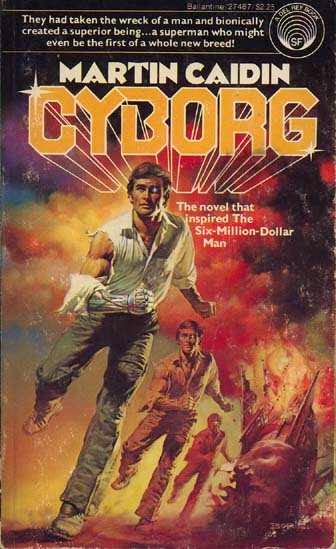
            There’s an old Martin Caidin book called Cyborg which inspired a much more well-known television show called The Six Million Dollar Man.  Now, this may sound kind of obvious, but the entire book is about the fact that Colonel Steve Austin has been loaded full of bionic parts after a plane crash.  He goes on a couple of missions which would be nigh-impossible without his cybernetics.  The story also focuses on Austin coming to grips with the fact that his government has turned him into a Frankenstein’s Monster, that almost half of his body isn’t him anymore.   If he wasn’t a bionic man, none of this would work.  The plot would struggle and his character arc would be nonexistent.  It’s not just a random label—the whole book hinges on the fact that he’s a cyborg.
            So give your characters relevant traits.  Make them necessary to your story.  Because if they aren’t… why are they there?
            Next time, a few quick thoughts on dating.
            Until then, go write.
            This week’s blog title is from a future Asylum movie for SyFy.  It’s not in development or anything, as far as I know, but I’m pretty sure just by writing that online I’ve caused it to happen.  It’s the internet butterfly effect.
            And speaking of that geeky reference to a geeky reference…
            What that title really comes from is a note from a friend of mine, the editor at a sci-fi/ science site called Giant Freakin Robot (check it out—it’s fun and educational).  He was explaining what kind of movies and television shows the site covered.  To paraphrase, if the zombies have biochemical or viral origins, GFR will cover them, but not if they’re raised by voodoo spells or curses.
            Over the past few years, a lot of genres have really blended together.  In books and movies, it’s not uncommon to see strong action, drama, or even comedy threads mixing in with sci-fi, fantasy, or horror.  Nowadays it’s just as common for protagonists to fight the undead as it is to run from them, and in doing so writers and readers have created dozens of subgenres.
            Personally, as I’ve mentioned before, I’m a big fan of this.  I think any story that stays too much in one vein tends to get dry pretty quick.  There’s almost always some humor in every situation, even incredibly dark ones.  It’s not uncommon for men and women to have inappropriate thoughts at really inopportune times (or to act on them).  Hey, I grew up on Doctor Who, so in my mind it makes perfect sense for religion-obsessed barbarian tribes to be descended from intergalactic survey teams or for aliens to be controlling the Loch Ness Monster.
            Now, sad but true, there aren’t a lot of firm rules on mixing these things.  Every story is different, so the way mystory blends horror and comedy is going to be different from the way yourstory blends them.  Ten of us can use the same basic plot, but we’re each going to end up with our own unique story.  My characters won’t react the same way as yours, hers will make different decisions than his.
             As such it’s hard for anyone to say which amount is right or wrong without having all the context.  To use one of my frequent cooking analogies, it’s kind of like if I asked “is this too much sugar?”  It’s an impossible question to answer without knowing what I’m cooking, what are the recipe standards, what are my preferences, and what are the preferences of the people who are going to be eating it.  My own skill level in the kitchen matters, too, on whether I should be trying a fried Alaska, death by chocolate, or maybe just a bowl of Captain Crunch.
            However… all that being said…
            I think when these mixed genre stories go bad, a lot of folks tend to look at the small issues and ignore the big ones.  Something isn’t bad because it mixed androids and artificial intelligence with Arthurian legends, or because it introduced a lot of comedy into the Cthulhu mythos.  Those are just the easiest targets, so they get the criticism first. 
            What I’ve come to realize is that most bad genre stuff tends to be bad for the same three reasons.  Granted, there’s always going to be someone who tries to write a sexy mutant cockroach story (or something worse), and there will always be people who just load up on basic mistakes like spelling or flat characters or incoherent plotting. In my experience, though, most genre stuff goes wrong in three basic ways—whether my story is one pure genre or several overlapping ones.
            The firstand often biggest mistake is when authors try to make their stories too fantastic.  If I have an idea, it gets included in the story.  No matter what it is, I’ll cram it in there.  If you’ve ever watched old slasher movies, you know most of them just devolved into creative ways to kill people, and sometimes there are excess characters for no other reason but to allow for more inventive deaths.  Most of us have probably read a sci fi novel that went to great lengths to explain how the weapons, shoes, uniforms, food, transportation, education, and economics are all very different on that other world or in that not-so-distant future.  I read a book recently that had to do with… well, everything.  No, seriously.  Government conspiracies, bio-engineering, super-soldiers, angels and demons, secret identities, zombies, aliens from Neptune, extraterrestrial dragons, thrill-killers, child abuse, sadism, torture porn, regular porn, and lost civilizations in the Amazon.  All of these things were major threads and elements in one average-length novel.  Heck, I’m tempted to say it was even on the shorter side.

            The problem with writing a story like this (book or screenplay) is my audience has nothing to connect with as they’re overwhelmed with all these unfamiliar elements.  The people are different.  The setting is different.  Motivations are different.  I may have created the most amazing post-apocalyptic matriarchal feudal society run by a supercomputer (and its secret android army) that’s ever been seen, but my readers need to be able to understand those characters and that society and relate to it right now while it’s on the page in front of them.

            This is closely related to the second problem—when the writer tries to explain everything.  Bad enough that I felt the need to include the secret android army, but now I’m also going to write about how they were first developed by the Mysteridroid Corporation three hundred years ago, how they see the world, and even how they recharge in various situations.  I think most people reading this have read a story or two that suddenly deviated into exposition like that.  Edgar Rice Burroughs had an awful habit in his Mars books of having his characters stop and explain various aspects of Barsoomian technology (one midnight walk with the Princess famously spun into a discussion of how radium bullets are manufactured and used).  A few recent horror films have gone to great lengths to explain why their antagonist turned out the way he or she did, even though that mystery was part of the character’s strength.
            What this often leads to is stories that feel very exotic and detailed, but very little ever actually happens in them.  Page after page of explanation can add up really fast, and no matter what my chosen format is, there’s only going to be so many pages.  Suddenly a third of my book is just… details.  And while I’m going over those details, my characters are just sitting around twiddling their thumbs, waiting for something to happen again.  This can also lead to a bit of resentment from the reader as I’m spoon-feeding them all this information.
            As it turns out, problem number three is the flipside of two.  It’s when the writer doesn’t explain anything.  I’ve gone through whole chapters of a book trying to figure out which character was KristoMystery Science Theater 3000 once had a running gag about a mystical object (or maybe it was a person…) called “the Sampo.”  We’ve all seen stories where people ride “twyrfels” and we’re left wondering what the hell a twyrfel is (an animal? a vehicle? some kind of transporter beam?).
            There’s also the folks who hide motives and actions to create a sense of mystery.    Characters will appear, make a mysterious statement or three, and then vanish from the story.  Creepy messages will be found on walls, sidewalks, or computer screens and we never learn how they got there.  Disturbing objects are found in the cellar, but never discussed again.  Ever.
            There are two general causes behind this, in my experience.  In the first case it’s when I’ve sunk so far into my fictional world and spent so much time there that I forget the reader isn’t quite so familiar with it.  I can tell you the whole history of the twyrfel as transportation, so I forget that you don’t even know what one looks like.  In the second case, they’re trying to duplicate the tone of books like House of Leaves or shows in the vein of LOST or Person of Interest, but they don’t really understand how those stories achieved that tone.  This is especially frustrating when there’s clearly no real mystery, just a bunch of withheld information.
            So, there’s three big, common mistakes in genre fiction.  Sci-fi, horror, fantasy—we could probably give an example of each failing for each genre.  We could even make a chart.
            Or we could go over a few simple ways to avoid these issues…
            For that firstproblem up above, my story needs to have something my audience can immediately relate to in some way, and it’s best if it’s the main character.  Someone who hates their job, who wants something they can’t have, or maybe who just feels like an outsider.  Simply put, a person with a universal need or desire. 
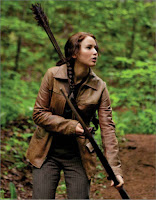
            I’ve mentioned once or thrice that believable characters make for believable stories, and that’s especially true here in the genres.  Seriously, pick a popular genre story and I’ll bet the main character has a very humble, relatable origin.  Dan Torrance is a nursing home orderly before he’s forced to confront the True Knot.  Katniss Everdeen is just trying to put food on the table when she’s forced to fight for her life in an arena.  John Anderson (a.k.a. Neo) was a cubicle drone who was dragged into a war between humanity and sentient machines.  Dana, Marty, Jules, and their friends were regular college students before they decided to spend their vacation at that old cabin in the woods.  Hell, even in Pacific Rim, one of the most over-the-top movies of the year, our hero Raleigh is working a construction job when we catch up to him in the present, still shaking off the death of his brother.

            If a reader believes in my characters, they’ll believe what’s happening to my characters.  It has to do with willing suspension of disbelief—I can’t believe in the big elements of a story if I don’t believe in the basic building blocks of it.  Once I’m invested in Wakko’s life, then I’ll be more willing to go with it when he finds a lost civilization under the bowling alley or when he finds out the crab people have been running his life since he was born.

            I think there’s two ways to deal with the second problem, too much information.  One is a concept I’ve talked about here in the past—the ignorant stranger.  If things are going to be explained, I should have an actual, in-story reason for that explanation.  Yakko may know all about the secret android army, but Dot doesn’t.  This gives him a valid reason to talk about the Mysteridroid Corporation for a page and a half.  I just need to be sure this really is an ignorant stranger situation and I’m not falling back on the dreaded “as you know…” crutch.

           The other way is, well, for me to just get rid of all that excess information.  Cut it.  I can delete anything that isn’t actually necessary to the story.  This can be tough, because genre stuff tends to involve a lot of new spins on pretty mundane things.  Special pistols, close combat weapons, energy sources, transportation, zombie origins… all that stuff I mentioned up above.
            But is it necessary to the story, or is it just there to help push things deeper into my chosen genre?  It’s cool that my hero has an energy sidearm that uses ultrasonic beams focused through a blue quartz crystal to set up a harmonic vibration in the target’s cells which causes extreme pain and eventual molecular disruption, all powered by a cold-fusion microbattery… but in the long run is this any different than just saying he has a blaster?  Or a pistol?  I may have the most inventive take on teleportation ever, but if there’s no point to teleportation technology in my story except to show off this idea… why bother?  If the plot flows along fine without it, why take up space on the page with it?
            The thirdproblem, not explaining anything, is a little tougher.  On one level, it’s just a matter of skill and practice.  I need to be a good enough writer to know how my plot’s shaping up and to empathize with my audience. 
            A friend of mine gave me a great rule of thumb once—my main character should mirror my audience.  If my main character’s angry about something, the reader should be angry about it.  If my protagonist is puzzled, it means the audience should be puzzled. And if my hero is annoyed because he still doesn’t know what’s going on… well, that’s probably a sign I should have a reveal or two in the immediate future.
            The other way to deal with that third problem is to be sure my story actually has a real mystery, not just the sense of one.  Tying in to what I just mentioned, nothing will aggravate my readers more than to stumble through a story alongside my hero and then discover I’m not revealing a single thread of my mystery.  Or, worse yet, they might realize there isn’t a mystery at all—I was just stringing them along with some nonsense clues.  I need to know what the secret is going to be and work backwards, making sure my characters are smart enough to uncover it or honestly motivated to hide it, depending on which side of the mystery they’re on.
            Are these three the only problems that might crop up in my genre writing?  Not by a long shot.  But these are the ones I see cropping up again and again, so they’re worth looking at and considering.  And fixing.
            Next time, the last post before Christmas, I’d like to share a little holiday conversation I had with the writer-director of Iron Man 3, back when he was just the guy who did Kiss Kiss Bang Bang,
            Until then, go write.

            Does that title sound a little too familiar?
            Maybe we should talk about that…
            A few months back I read a book that I couldn’t figure out.  It left me completely baffled.  I’m not talking about the plot (granted, I was having trouble with that, too), but the setting. 
            I honestly couldn’t figure out the world.  At times, it seemed like it was the modern world that we all know and love—granted, with some sci-fi/ fantasy stuff going on in the background.  At other times, it seemed to be a sort of alternate history, post-apocalyptic “present.”  It didn’t help that every character was somehow tied directly into that sci-fi/ fantasy thread, because for all of them this was the “normal” world and they didn’t notice anything different about it.
            Why does this matter?
            Well, knowing where a story is set helps me, as a reader, to set my expectations and reactions.  It lets me get a sense of what’s possible, or what might be possible.  The setting is an automatic set of guidelines for the reader, for the characters, and for the writer, too.
            For example…
            A few years back I read an absolutely wonderful essay on Scooby-Doo and secular humanism.  No seriously.  You can read the whole thing here.  The writer made a very interesting point that shows why it’s so key to know what kind of world my story is set in.  He uses it as one link in a larger chain of logic, but for our purposes we can examine it alone.
            In all the classic Scooby-Doo episodes, the supernatural threat is always revealed to be a fake.  It’s someone in a costume (probably Carl the stuntman or Mr. Bascombe) using special effects of one kind or another for an ulterior motive.  It has to be, because in the world of classic Scooby Doo, ghosts and monsters aren’t real.  That’s why it makes sense for Velma, Fred, and Daphne to act rationally and why it’s funny when Shaggy and Scooby get scared and run away—they’re scared of the fake monsters.
            But…
            If the supernatural is real (as it is in some of those later stories), suddenly everything shifts.  The rules of the world have changed, so we have to look at the characters in a new light.  Now Velma and the others are foolish for trying to apply logic to inherently illogical creatures and for exposing themselves to life-threatening monsters like werewolves and vampires.  Not only that, Shaggy and Scooby are now the smart ones, because being scared of vampires is a perfectly rational response in a world where vampires are real.
            Here’s another one.
            I recently read a piece by one of the editors at Marvel comics.  He proudly spoke about how their stories are set in “the real world.”  The characters, their reactions, the world around them…
            And I have to admit, my first thought was… what a bunch of nonsense.
            (I may not have used the word nonsense.  I tend to be a bit more emphatic with my internal dialogue…)
             Let’s consider a few details about the Marvel Comics universe.  It is commonly known that some people can fly.  It’s not exactly secret that magic is real and aliens exist.  Super-powered human mutants are also real and receive tons of media attention.  There’s a large, tropical valley in Antarctica where dinosaurs still live, visible on Google Earth and written about in several textbooks.  Energy weapons are commonplace, as is high-tech battle armor.  There are numerous publicly-known artificial intelligences in the world.  Standing next to detonating atomic weapons can give you superpowers.  Hell, in the Marvel Universe, you can jump off the Empire State Building and there’s actually a halfway decent chance someone will catch you on the way down.
            Does this sound remotely like the real world
            Would the people of this world have the same expectations you and I do?  Would they think and react to things the same way?  I live in LA, and when I hear a faint rumble and the building shakes, I normally check Facebook to see if anyone else felt an earthquake.  In the Marvel Universe, I’d probably assume it was superheroes battling a giant monster.  If I got a headache, I’d be checking to see if it was telekinesis or some form of optic blasts.  And then take aspirin.  And then check for telekinesis again, just in case it interacts with drugs somehow. And the thing is, these would be perfectly rational reactions in the Marvel Universe.
           Now, one more example.  Harry Potter.  In this world there are wizards, giants, dragons, hippogriffs, goblin bankers, house-elves, gnomes, and much, much more (no aliens, though).  But the thing is, it all exists kind of… off to the side.  The average person in the world of Harry Potter has never heard of Hogwarts and can’t find Diagon Alley.  The magical world rarely overlaps with the mundane one, and we learn there are whole government departments charged with making sure they stay separate.  The real world for them is the real world we all know about, one where there’s no such thing as magic.
            Starting to make sense?  If I can’t define my world, I can’t define what is and isn’t possible.  I can’t have characters react appropriately if I don’t know what would be appropriate.
            On the flipside, there’s a period show on right now that kind of gnaws at me.  Mostly because it’s set in Victorian London and one of the supporting characters never wears a hat… but also because of the setting.  The main plot revolves around our protagonist attempting to perfect wireless, broadcasted electricity, something Tesla worked on for decades.  Our hero hopes to destroy the fortunes of a group of wealthy oilmen by rendering their investments worthless.
            Now, here’s the thing.  We know broadcast power wasn’t invented at the turn of the last century, so if the show ends with our hero succeeding, it means the whole story’s been set in an alternate history.  But if his broadcast power fails, it implies the story’s set in the real world.  But until one or the other happens, I can’t tell you the setting.
            Of course some of you may know what program I’m talking about and I’m sure you’re going to bring up the larger point—the vampires.  But here’s the interesting point.  The vampires are irrelevant.  Much like Hogwarts and Diagon Alley, no one knows the vampires exist. 
            But the broadcast power… that’s in the news.  There were press releases and huge parties.  Broadcast power changes everything.  That’s a world where, from the beginning of the electrical age, nothing needs batteries or wall outlets.  There are countless changes and repercussions if broadcast power is real.
            Y’see, Timmy, my fantastic story can still be set in the real world provided the events of my story don’t change the world.  I mean, within the world of the show only a handful of people in London know vampires are real.  It’s not public knowledge.  And today in the modern world we’ve never heard of or seen evidence of vampires in the Victorian era, so that part of the story has an aura of truth and reality to it.    
           If you want to set an amazing story in the real world, you need to use conspiracy theory logic.    I’ve used this analogy before, and bizarre as it may sound it works.  Yep, the same reasoning used by moon-landing deniers, “9-11 was staged” folks, and the birthers is what makes for a good fiction story. No irony there…
            By conspiracy-theory logic, any facts that disprove XYZ are an attempt to hide the truth, thus further proving XYZ is true.  The very lack of evidence is the proof that it’s true.  And if I stumble across a few coincidences that imply XYZ might be true, well, that’s just more evidence XYZ is true.
            Didn’t I just describe the world of Harry Potter?
            The vampires hide all trace of their existence.  There is no evidence that vampires exist.  Ipso facto (fancy Latin words) my story rings true because it lines up with all known facts.  Follow me?
            The world of my story has to have its own consistent logic.  Because if I don’t know my world, I can’t know how characters in my world react to things.  And if I don’t know my characters, well… that’s it.
            Next time… well, is there any topic anyone would like covered?  I can probably ramble on about most anything (as this post shows).  Let me know in the comments if there’s something you’d like me to babble about.
            And if no one does, I’ll come up with something worthwhile.
            Until then, go write.
September 7, 2013

Easter Eggs

            Months early for Easter, I know.  But, as some of you may have guessed, I’m not really talking about those Paas coloring kits.  Or the Cadbury Bunny.
            For those few of you who are still waiting to see if Betamax is going to win the format wars, an Easter egg is a hidden bonus on a DVD or Blu-ray.  As of late, the term’s been broadened to include any little onscreen reference or in-joke. 
            A lot of superhero movies tend to have “Easter eggs,” in this broad sense.  Captain America’s shield (or a version of it) showing up in Tony Stark’s workshop.  Superman and General Zod crashing into a Wayne Industries satellite while they fight.  Agent Coulson stopping at a Roxxon gas station on the way out to New Mexico.  Professor Horton’s synthetic man at the WWII Stark Expo (a two-for-one Easter egg, really).  Heck, I remember giggling with geeky joy when Val Kilmer’s Bruce Wayne made an offhand comment about some people being “halfway to Metropolis by now.”
            I think most writers do this on one level or another.  We put in little in-jokes and references.  Sometimes they’re ten percenters, others they’re so small and private maybe only a dozen people in the world are going to get them.  I know I’ve done a bunch of them in different books and short stories.
            Now…a few weeks back I read an interview with Joss Whedon about the new Agents of SHIELD show.  The interviewer wanted to know if we’d be seeing lots of guest spots from some of the movie characters like Nick Fury or Cap or maybe Dr. Banner.  Whedon kind of shrugged it off and said while he wasn’t against it, the show wouldn’t last long if it was all about waiting for the next guest star or movie reference.  It needed to stand on its own feet, without support from the films.
            See, that’s the catch with these sort of in jokes and clever references.  My story needs to work despite these ten percenters, not because of them. If all I’ve got is a few clever nods to other things, I don’t have a real story—no matter how clever those nods are.
            This is also relates to a common prequel problem.  In prequel stories, there are often Easter eggs to all the stuff the audience knows is in the future.  Smallville would often dress teenage Clark Kent in blue t-shirts with a red jacket, or have numerous guest stars who would be important later in his life (like ace reporter Perry White).  Hannibal Rising had the titular character learning to cook and trying on samurai half-masks that hinted at the signature muzzle he’d wear later.  The Star Wars prequels showed us glimpses of the Death Star and hints of the Empire.  As I write this, there’s a pair of shows on the air, each about a famous fictional serial killer at an earlier part of their life.  And each show relies heavily on the fact that we, the audience, knows who this character is going to become.  There are constant winks and nods and references to things in their respective futures.
            In most of these cases, though, when you strip away all the references to “the future,” it becomes clear there’s very little going on in the now.
            There’s a similar problem you’ll see a lot in bad comedies.  It’s when the plot grinds to a halt to show us a painfully long setup for a joke that does nothing except get a quick laugh.  It’s not humor advancing the story, it’s just humor for the sake of humor.  And that gets old real quick, no matter how funny the gag might be on its own.
            I’ve mentioned seeing this in a fair number of genre stories.  A writer comes up with a really cool and new (or what they think is really cool and new) idea about zombie origins or time travel mechanics or vampire biology or cyborg implants or something.  But they don’t actually have a story.  They just have this one cool idea trying to carry everything. 
            All of these examples tie back to something I’ve brought up before.  One cool idea isn’t a story.  It’s just a story point.  And one story point—or even a dozen of them—does not make a book.  Or a movie.  Or even a short story.
            Easter eggs are cool and fun, no question about it.  But you can’t live off them. And a story can’t survive on nothing but sly winks.
            Next week, I think it’s time for that long overdue lecture on structure that I’ve been promising for months.
            Until then, go write.

Categories