
February 8, 2026

Maximum Effort

There’s a little maxim you may have heard– work smarter, not harder. If you haven’t, what it means is some folks solution to every problem is to throw 100% of their effort at it. They’d throw 110% at if that was possible. But it’s not.

Meanwhile, another type of person will look at the problem and figure out how much effort it actually needs. Do we want to do the time and work to dig through the mountain when we could go over it? Or around it? And then we can save all that effort and energy for somewhere we actually need it rather than burning out early on problems we could’ve just, well, easily gone around.

I mention that so I can tell you a few stories. There’s a theme. Trust me.

A bunch of you know I worked in the film industry for about fifteen years. Mostly television, some movies. Some of it’s even stuff you’ve heard of.

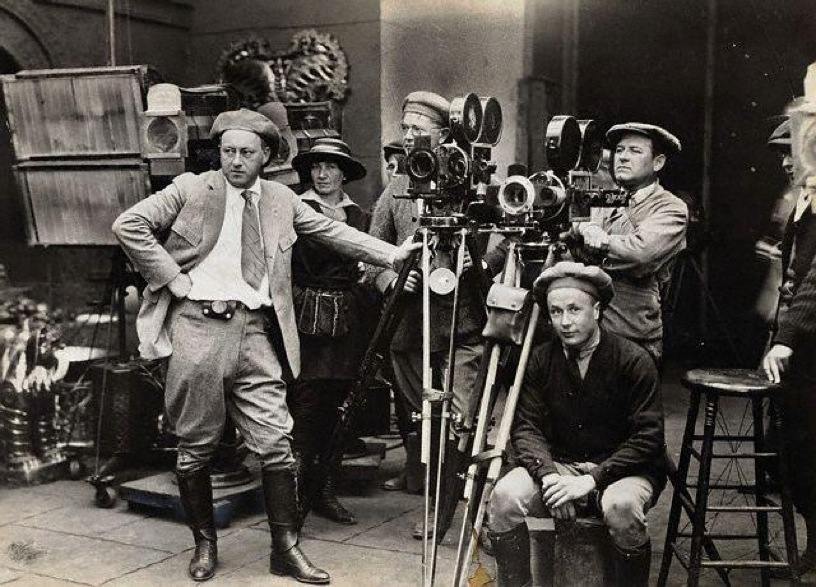
An all-too common problem I saw from beginning directors (and let’s be honest– also from plain bad directors) was an urge to make every single shot special. Every one had to be Oscar or Emmy-worthy. Didn’t matter if it was a wide shot, a close-up, a master, or coverage. Didn’t matter where it fell in the story. Didn’t matter what the day’s schedule looked like. Every shot of every scene required hours of set up and rehearsals and discussions and little tweaks and adjustments.

Now, on one level, yeah, this is sort of the director’s job. To make it all look good. But there’s a lot of nuance there. I can make an individual shot look good, sure. But does it fit with the last good shot? Does it fit with the rest of the scene? Is the editor going to be able to cut these shots together in a way that works within the filmic, visual language we all know on some level? Heck, does it even fit in the story I’m telling?

Plus, well… this is going to be an awful shock for some of you, but there are a few capitalist aspects to filmmaking. Yeah, sorry you had to find out this way. Making a movie costs money. It has a budget, and one way that budget’s expressed is in how long you have to shoot something. Spielberg can take a week waiting for the absolute perfect sunset his heroes can ride off into, but I’ve got today and it took us too long to get to this location so I might get two tries at this if I’m lucky and that’s it.

Anyway, what this meant for the crews I worked with was we’d get stuck with a new (or bad) director and they’d spend hours on the first two or three shots of the day. Like I mentioned above, it didn’t matter what they were or were they fell in the story. These folks would spend the whole morning working on whatever scene happened to be first up, and then we’d come back from lunch and surprise we still have 83% of today’s schedule to shoot in the last six hours of the day. So we’d rush through all that stuff—again, no matter what it was—and then come in the next day and, well, usually watch them do the whole routine again.

And this was really bad, from a storytelling point of view. The final film or TV episode would end up uneven because there was all this visual emphasis on random scenes that didn’t need it and often very little on scenes that did. Heck, once or twice I saw folks spend all this time on a random “pretty” shot and it wouldn’t even get used because there was no way to cut it in. These directors were so focused on making individual shots look amazing—no matter what that particular shot was—that they didn’t stop to think of the film as a whole.
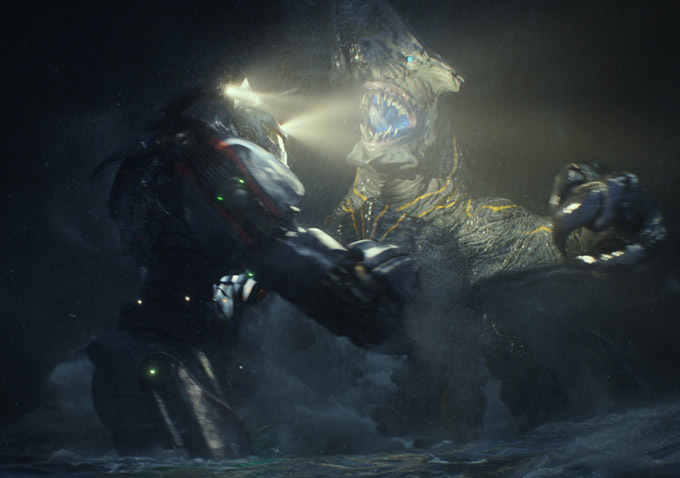
Okay, this actually reminds me of another fun story (still semi-related). A few years after I got out of the industry, my beloved took me to an Academy screening of Pacific Rim (yeah, she’s super cool) and Guillermo del Toro was there talking about the movie. One of the things he stressed was even though he knew large swaths of the movie were going to be mostly computer-generated, he didn’t want any sort of wild, impossible “camera moves.” You know, the ones where the camera’s essentially whizzing through the air and then it loops down under the monster’s armpit to come back up between punches from the giant robot and then it circles around the two of them before pulling back for the panoramic shot of the city in flames as they fight? We’ve all seen some of those, right?

Yeah, del Toro didn’t want any of that in Pacific Rim. He understood those sort of visuals becomes distracting very easily, and once the audience is thinking about them they realize how impossible these moves are. And suddenly a big chunk gets lopped off their willing suspension of disbelief. They become consciously aware they’re just watching a movie rather than getting drawn into the story. That’s why the CGI camera shots in Pacific Rim are all set up as if actual, physical cameras are there doing regular, normal shots.

Now… I told you all this so I could tell you about Krishna Rao.

I worked with Krishna on a show called The Chronicle, back when the SyFy Channel was called the Sci-Fi Channel. Krishna started out in the crew (one of his very first film credits is on John Carpenter’s Halloween) and over the years worked his way up the ladder (seriously check out his list of credits), becoming a director of photography and quite often a director as well. Which is how I knew him. He had a loose rule he tended to follow when he was filming an episode. Honestly, I’m not sure he ever even put it into words, because it didn’t really click in for me until the second or third time I worked with him.

Krishna would only really plan on one pretty shot a day. That’s it. Once a day we’d have a complicated move with the camera dolly or some other elaborate shot that required lots of set-up and rehearsal. Everything else would be simpler, workhorse stuff– masters, overs, some coverage if it was needed. And I’m sure a few folks reading that may have some thoughts about “real” directors or the lack of art in American television or whatever. But here’s a few things to keep in mind.

Krishna made his schedule pretty much every day. Because he didn’t overload himself trying to do too much, he could make sure all his material fit together just how he wanted. He still had at least seven solid, very pretty shots per episode—that’s a cool shot every six minutes in a standard 42 minute television episode. And because he was being careful about using them, they always landed where they’d have the most visual impact.

And, sure, like any rule, sometimes he’d bend it a bit. He wasn’t against doing something fun or clever if he could do it quick. Sometimes we’d do two pretty shots in a day, maybe because of stunts or special effects. But these were always the exception, not the rule.

And his episodes always looked fantastic,

Okay, all interesting, but what does it have to do with books? With, y’know, our kind of storytelling? We don’t deal with visuals.

Y’see Timmy, something I’ve talked about a few times here on the ranty writing blog is pointless complexity. In structure. In dialogue. In vocabulary choices. I’ve seen stories with the most confusing non-linear structure just because the writer… felt like using non-linear structure. There are folks who scoff at using pedestrian words like blue or house or said. They spend all their time figuring out how to bury their story (or hide the fact that they don’t actually have one) behind layers of complexity.

To be clear, I’m not saying any of this stuff is inherently bad in and of itself. Personally, I love a story with a clever structure, an author who knows how to use their full vocabulary, and some twisty-turny character motivations. But a key thing is that when they do this—when they make a choice that isn’t the basic, workhorse choice—is that it’s actually making things better. This added complexity is an improvement, not an affectation.

And one other thing to consider. Sometimes… we need the simple stuff. We need the workhorse to just come in and deal with this paragraph or page. Because if I try to make every single sentence/ paragraph/ chapter the one that gets me an award, what I’ve really done is make a flat, monotone manuscript. If every single line is the utterly amazing artistic-piece-of-beauty one, they all have the same weight. Nothing has emphasis. To paraphrase one of great modern philosophers, once everything is super… nothing is.

So think about where you’re putting your effort. And how much of it you’re putting there. And how much you might want somewhere else.

Next time, I may blather on about the Children of Tama. Haven’t talked about them in a while.

Until then, go write.
January 15, 2026 / 1 Comment

Infinite Growth

Well, hey… 2026 managed to go off the rails pretty quick, didn’t it?

I totally get it if you can’t get your head around the idea of writing right now. It’s tough to be creative when it feels like you’re trapped in a burning house. But I’m going to soldier on because, well, it’s my job. And the ranty writing blog is part of it.

That said…

It being the start of the year, a lot of us are setting goals of some kind. Things we’re going to achieve. Ways we’re going to change. How we’re going to improve. And yes, maybe some of this is writing related.

There’s a saying you may have heard– change is good. As I may have mentioned before, I’m not a huge fan of it. It’s easy for change is good to become a defensive thing, a shield from criticism. After all, if change is good, and I changed something, my change must be good, right? It’s not my fault you can’t accept change.

What I prefer to say is that change is necessary. Change happens, whether we like it or not. And sometimes… yeah, we won’t. Styles go out of fashion. Preferences shift. Standards change. Lines get redrawn. What’s acceptable (or possible) changes. We learn new facts and (hopefully) shift our view of the world to embrace them. Not every change is going to be good, but… things are going to change.

As some of you know, I used to work in the film industry. At various times I found myself working with different producers. Knew a few folks who’d worked with others. And at some point I realized two of them made for an interesting study on creativity. Both of had begun their careers at the same point, making very similar movies and shows, but ended them very differently. And a lot of that had to do with their willingness to change.

Names shall be avoided out of basic politeness, but it wouldn’t take too much digging if you really had to know who some of them were.

At first, Producer One was the more successful by far. By a lot of metrics, the most successful producer of the decade—television or film. And the next decade too. He was the guy behind some filmmaking techniques people take for granted today. I could probably name half a dozen shows he did (or more) and I’d bet serious money you’d know every one of them

But as that next decade started to wind up… this producer started to lose popularity. Y’see… as audience and studio expectations progressed, he was continuing to make what were essentially the same shows in the same way. I worked with him maybe ten years after that point and he was still making the same shows. Same kind of characters, same kind of plots and storylines, insisting on the same kind of shots and edits that had worked for him twenty years earlier. It got harder and harder for him to get projects off the ground because his work just felt more and more dated. Heck, when a few of his earlier, better-known things got rebooted, I heard from a few folks that the studios openly paid good money for him… not to have anything to do with them. To stay away and not be involved at all.

On the other hand, producer B kept growing and changing. He’d been making the same sort of shows at first, but he paid attention to the shifts and changes in what audiences expected. And what filmmakers could do with stories, and what they could do within different formats. He kept making hit shows, because he was willing to learn and grow and change. Maybe more importantly, he was willing to let go of old ways of doing things and old ways of thinking. And that growth kept him relevant. And very successful well into the 21st century.

But I know what you’re saying. Pete, I don’t want to work in Hollywood. Being a producer means nothing to me. What is this all about?

Let me put it to you this way…

I knew a genre author a few years back who talked constantly about how big publishers made so many mistakes and how self-publishing was the only way forward. And a main part of this author’s proof that publishing was doomed was, well, twenty years earlier they (the author) had been huge in their genre. A damned-near superstar. They’d learned how to write at the feet of a fantastic editor in the genre back in the 90s, learned exactly how to do the characters, the story beats, the payoffs. They’d taken those lessons to heart and sold a lot of books back then.

But over the years their sales diminished more and more. When I asked what they’d changed, they were pretty adamant—nothing! They were still writing books just like they’d learned how to in the 90s. The right way. The problem, I was told, was publishers were just chasing new trends and not sticking with what worked. Which is why, they would tell me again and again, traditional publishing was doomed.

And when I tried to gently hint that maybe there was something to learn from some of these new books… well, that was nonsense. After all, they had learned exactly how to write these books. Twenty years ago. From a master. Why would they change?

Y’see, Timmy, it’s tough to be creative when I’m not willing to acknowledge new things. Creation is, literally, making something new. I can’t improve if I’m not open to growth and change.

I’ve mentioned The Suffering Map here once or thrice—my first serious attempt at a novel, finished back in my mid-thirties. And I’ve also mentioned it wasn’t that good. Bordering on bad. For a bunch of reasons. But I’ve gotten better since then. Because I made an effort to learn. To change how I did things and looked at things. To grow as a writer.

Hell, I’ve tried to grow as a person. I’m glad a lot of my views and opinions have changed from what they were when I first started taking this seriously twenty years ago. Or thirty years ago. And sweet jebus, let’s not even talk about being a teenager in the eighties. Sooooooo glad I’m not that stupid kid anymore. He had a lot to learn about so many things.

I can’t do anything new if I’m not willing to try anything new. I can’t be current if I’m determined to stay in the past. And I definitely can’t expect to catch a lot of attention with an idea (or a mindset) that was outdated thirty years ago.

So as we stride forth into this new year, maybe think about letting go of those outdated ideas. The worlds moving on with or without us. Let’s learn some new stuff and do cool thing with it.

Next time, speaking of the film industry, I’d like to tell you about one of my favorite directors I ever worked with.

Oh, and if you’re reading this just as it published, tonight (Thursday) I’m going to be at Mysterious Galaxy in San Diego talking with Jeff Rake and Rob Hart about their new book, Detour. If you’re in the area, stop by and say hi!

Until then, go write.

October 26, 2024

…Fear Itself

A few years back I was on a panel with Pierce Brown (back when cons were safe) and he made the great analogy that genre is like a compass. It’s a thing pointing you in a certain direction. You like sci-fi, go north. Fantasy is off to the west. Romance, head east. Sexy romance, you head south-east. You may not find the exact thing you want, but that’s the direction of things that’ll probably interest you.

I think genre is also a set of expectations. Really, I think genre sets expectations. If you tell me something is horror, at some point I’m going to expect something scary or creepy. If you tell me it’s comedy, I’m going to be waiting for the laughs. If it’s a murder mystery, where the heck is my body? I WAS PROMISED A DEAD BODY!

And I think this is where problems can arise. Because if I’m following that compass and I’ve got those expectations, it can be very disorienting to get something else. More to the point, no matter what it is, that something else is going to fail to meet those expectations I have. And when something doesn’t deliver like that, our automatic reaction is almost always that this thing is bad. It’s wrong.

Look at it this way. If you tell me we’re going to the LEGO store and instead we go to the book store… well, I mean, these are great and I enjoy them both a lot. But they’re still different places. And depending on how much I was looking forward to one, I might be less inclined to see the good points of the other.

Likewise, if I’m referring to something as the wrong genre, or leading people to believe it’s a different genre… they may view things with a harsher eye when they follow that compass to my work. I mean, you can try to defend it any way you like, but the simple truth is the latest Hellraiser movie is the worst-written, worst-structured romantic comedy you’re ever going to watch. It’s just horrible. Seriously, it misses every single romantic comedy benchmark you can think of. The two leads don’t even kiss at any point!

Of course, Hellraiser wasn’t trying to be a romantic comedy. Not remotely. It’s a fantastic horror movie, but that won’t matter when I’ve told everyone to judge it by romantic comedy standards. They’ll look through that lens and nothing will line up. It’ll all be… wrong.

And this holds of sub-genres, too. We all recognize that “horror” isn’t one, monolithic thing. There are so many different types and flavors of creepiness. Cassandra Khaw’s The Salt Grows Heavy is horror, sure, but that doesn’t mean we immediately lump it in with The Last Voyage of the Demeter. Cherie Priest’s The Toll is horror, too, but that doesn’t mean it’s doing the same things as Chuck Wendig’s Black River Orchard, which doesn’t approach things the same way as the Out There Screaming anthology. And none of these are like my own book, The Broken Room, which has a bunch of horror elements.

Why do I bring this up?

When most of us start off as writers, we flail a bit. We attempt to copy stories even though we don’t quite understand all the mechanics of them. We’re not sure where our own stories fit under that big horror umbrella (or sci-fi, or fantasy, or…). We’ll begin a tale in one sub-genre, then move into a plot more fitting a different one, wrap up with an ending that belongs on a third, and have the tone of yet another through the whole thing.

Y’see, Timmy, it’s important to know what I’m writing for two different reasons. One is so I’ll be true to it and don’t end up with a sprawling story that covers everything and goes nowhere. Two is that I also want to be able to market my story, which means I need to know what it is. If I tell an editor it’s not torture porn when it plainly is, at the best I’m going to get rejected. My readers may toss it aside.

At the worst, they’ll all remember me as “that idiot” the next time they see something of mine.

Next time… well, for some of you November means NaNoWriMo. It used to, anyway. So I wanted to toss out a few quick thoughts about that.

Until then, go write.

October 3, 2024

Reading Is Fundamental!

Old person pop culture reference.

If you’ve been following along the ranty blog these past few months, or maybe subscribed to the newsletter, you may have picked up on a few subtle hints that the past four or five months have… not been great here. Sickness. Sleepless nights. Anxiety. Lots of stress.

Lots of stress.

One thing that’s helped me get through it is stories. This might not exactly be a surprise, but I love a good story. Reading them. Listening to them. Watching them.

But let’s face it, that should sort of be a default for us, yes? We take in material to produce material. Input—output. If I want to build muscle, I need to eat a lot of protein. If I want to grow nutritious food, I need soil with lots of nutrition in it.

And if I want to write… look, it only makes sense that I have to read, yes? Again, input, output. No input, no output. We have to feed the machine.

That’s why, even with all the crap that’s been going on in my life, I’ve still read twenty books in the past nine months. Plus a bunch of comics and short stories. And I was glad to do it. Hell, I definitely wouldn’t’ve been able to write half of what I did this year without these pauses to rest and recharge with some good stories.

Now, the reason I bring this up every now and then is… well, every couple of years I tend to see some”pro” or “coach” insist that “real writers don’t have time to read.” Time reading is time you should be writing, they’ll say. And the folks saying this sort of thing, politely, tend to be the people who like to talk very loud and very confidently.

Despite being, y’know, 100% wrong.

I mean, this is kind of like saying real drivers don’t have time to stop for gas. I’ve met lots of professional writers, interviewed a bunch of them, and read about even more. And the one thing they pretty much all have in common is… they love stories. They love input. Seriously, check out some of your favorite writers and see how often they’re talking about other books, shows. movies. They all love stories.

Also, quick pause here. I’m going to talk about “reading” a lot in the next dozen or so paragraphs, but I don’t want you to think this is some screed about “only the printed word counts” or anything like that. Audiobooks count as reading. And ebooks. You don’t like ‘em, fine, that’s you. But they count as reading.

I’m a big believer that a writer should have a regular diet of works in their chosen field. I think it lets me keep up on what’s currently out there and what’s been done before. Plus it also… well…

Look, I think a lot of the folks who push this view are coming from a place of “I took classes. I‘ve read textbooks about this. I know how to write!” And that’s great. I’m all for educating yourself and learning the rules. For the most part.

But as I’ve mentioned here before, writing isn’t really something you can teach. Never has been. Because all of us are going to be telling our own stories in our own ways, and my process isn’t your process and it’s definitely not his process. All these classes teach us is the baseline rules. They’re showing us how to avoid the easy, common mistakes.

It’s not until I start reading and exposing myself to lots of other work that I really start learning how to break those rules. That’s when I begin to see how what would be a mistake there is brilliant here (and vice versa). How great writers sometimes use the fact that you, the reader, also have a grasp of the rules to guide you through their story in mischievous ways.

But again, I have to read. To expose myself to that beyond-the-basic material. It’s a knowledge vs experience kind of thing.

Having said that, let me give you a few little provisos experience has taught me.

I know some folks try not to read similar things while they’re working on a project because they don’t want to be influenced. I think it’s fair to be a little concerned about that. But I also think this just serves as another bit of learning for us. Figuring out if we’re doing our thing or just copying someone else’s. Most of us learn by copying to some extent or another, but I think we’re also very aware of it and notice it happening pretty quick.

(I was going to tell you a whole story about how I inadvertently turned my weird western into an episode of Old Gods of Appalachia, but it’s just a little too long. Trust me, funny, relevant, very educational and relatable)

I also think sometimes this idea, trying to avoid influence, gets taken to an extreme and that’s where some of the “don’t read” mentality comes from. Don’t read. Don’t listen. Don’t watch. Definitely don’t talk to other writers!

Again, just my opinion, but I think this kind of advice ends up as more of a punishment. You’re a writer—don’t enjoy the written word! Don’t watch shows or movies with your friends! And while I know there’s some folks who believe being a writer is all about suffering, I’m a big believer that if my personal process makes me dislike writing, or openly hate it… maybe I’ve got a sucky process.

Read. Read everything you can. Read in the genre you want to write in. Read related genres. Read that genre you have zero interest in and see what the writers are doing there. Read that bestseller you can’t stand and try to figure out why it sold almost a million copies.

And as a bonus–you’re supporting other writers. And your local bookstore. Or maybe your local library. It’s all a win.

Next time, I want to talk about spelling. Yes, again. It’s been a while.

Until then, go write.

Categories