
February 8, 2026

Maximum Effort

There’s a little maxim you may have heard– work smarter, not harder. If you haven’t, what it means is some folks solution to every problem is to throw 100% of their effort at it. They’d throw 110% at if that was possible. But it’s not.

Meanwhile, another type of person will look at the problem and figure out how much effort it actually needs. Do we want to do the time and work to dig through the mountain when we could go over it? Or around it? And then we can save all that effort and energy for somewhere we actually need it rather than burning out early on problems we could’ve just, well, easily gone around.

I mention that so I can tell you a few stories. There’s a theme. Trust me.

A bunch of you know I worked in the film industry for about fifteen years. Mostly television, some movies. Some of it’s even stuff you’ve heard of.

An all-too common problem I saw from beginning directors (and let’s be honest– also from plain bad directors) was an urge to make every single shot special. Every one had to be Oscar or Emmy-worthy. Didn’t matter if it was a wide shot, a close-up, a master, or coverage. Didn’t matter where it fell in the story. Didn’t matter what the day’s schedule looked like. Every shot of every scene required hours of set up and rehearsals and discussions and little tweaks and adjustments.

Now, on one level, yeah, this is sort of the director’s job. To make it all look good. But there’s a lot of nuance there. I can make an individual shot look good, sure. But does it fit with the last good shot? Does it fit with the rest of the scene? Is the editor going to be able to cut these shots together in a way that works within the filmic, visual language we all know on some level? Heck, does it even fit in the story I’m telling?

Plus, well… this is going to be an awful shock for some of you, but there are a few capitalist aspects to filmmaking. Yeah, sorry you had to find out this way. Making a movie costs money. It has a budget, and one way that budget’s expressed is in how long you have to shoot something. Spielberg can take a week waiting for the absolute perfect sunset his heroes can ride off into, but I’ve got today and it took us too long to get to this location so I might get two tries at this if I’m lucky and that’s it.

Anyway, what this meant for the crews I worked with was we’d get stuck with a new (or bad) director and they’d spend hours on the first two or three shots of the day. Like I mentioned above, it didn’t matter what they were or were they fell in the story. These folks would spend the whole morning working on whatever scene happened to be first up, and then we’d come back from lunch and surprise we still have 83% of today’s schedule to shoot in the last six hours of the day. So we’d rush through all that stuff—again, no matter what it was—and then come in the next day and, well, usually watch them do the whole routine again.

And this was really bad, from a storytelling point of view. The final film or TV episode would end up uneven because there was all this visual emphasis on random scenes that didn’t need it and often very little on scenes that did. Heck, once or twice I saw folks spend all this time on a random “pretty” shot and it wouldn’t even get used because there was no way to cut it in. These directors were so focused on making individual shots look amazing—no matter what that particular shot was—that they didn’t stop to think of the film as a whole.
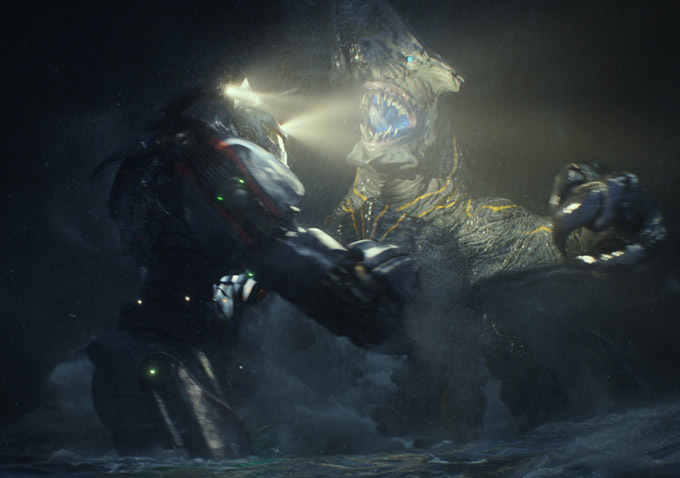
Okay, this actually reminds me of another fun story (still semi-related). A few years after I got out of the industry, my beloved took me to an Academy screening of Pacific Rim (yeah, she’s super cool) and Guillermo del Toro was there talking about the movie. One of the things he stressed was even though he knew large swaths of the movie were going to be mostly computer-generated, he didn’t want any sort of wild, impossible “camera moves.” You know, the ones where the camera’s essentially whizzing through the air and then it loops down under the monster’s armpit to come back up between punches from the giant robot and then it circles around the two of them before pulling back for the panoramic shot of the city in flames as they fight? We’ve all seen some of those, right?

Yeah, del Toro didn’t want any of that in Pacific Rim. He understood those sort of visuals becomes distracting very easily, and once the audience is thinking about them they realize how impossible these moves are. And suddenly a big chunk gets lopped off their willing suspension of disbelief. They become consciously aware they’re just watching a movie rather than getting drawn into the story. That’s why the CGI camera shots in Pacific Rim are all set up as if actual, physical cameras are there doing regular, normal shots.

Now… I told you all this so I could tell you about Krishna Rao.

I worked with Krishna on a show called The Chronicle, back when the SyFy Channel was called the Sci-Fi Channel. Krishna started out in the crew (one of his very first film credits is on John Carpenter’s Halloween) and over the years worked his way up the ladder (seriously check out his list of credits), becoming a director of photography and quite often a director as well. Which is how I knew him. He had a loose rule he tended to follow when he was filming an episode. Honestly, I’m not sure he ever even put it into words, because it didn’t really click in for me until the second or third time I worked with him.

Krishna would only really plan on one pretty shot a day. That’s it. Once a day we’d have a complicated move with the camera dolly or some other elaborate shot that required lots of set-up and rehearsal. Everything else would be simpler, workhorse stuff– masters, overs, some coverage if it was needed. And I’m sure a few folks reading that may have some thoughts about “real” directors or the lack of art in American television or whatever. But here’s a few things to keep in mind.

Krishna made his schedule pretty much every day. Because he didn’t overload himself trying to do too much, he could make sure all his material fit together just how he wanted. He still had at least seven solid, very pretty shots per episode—that’s a cool shot every six minutes in a standard 42 minute television episode. And because he was being careful about using them, they always landed where they’d have the most visual impact.

And, sure, like any rule, sometimes he’d bend it a bit. He wasn’t against doing something fun or clever if he could do it quick. Sometimes we’d do two pretty shots in a day, maybe because of stunts or special effects. But these were always the exception, not the rule.

And his episodes always looked fantastic,

Okay, all interesting, but what does it have to do with books? With, y’know, our kind of storytelling? We don’t deal with visuals.

Y’see Timmy, something I’ve talked about a few times here on the ranty writing blog is pointless complexity. In structure. In dialogue. In vocabulary choices. I’ve seen stories with the most confusing non-linear structure just because the writer… felt like using non-linear structure. There are folks who scoff at using pedestrian words like blue or house or said. They spend all their time figuring out how to bury their story (or hide the fact that they don’t actually have one) behind layers of complexity.

To be clear, I’m not saying any of this stuff is inherently bad in and of itself. Personally, I love a story with a clever structure, an author who knows how to use their full vocabulary, and some twisty-turny character motivations. But a key thing is that when they do this—when they make a choice that isn’t the basic, workhorse choice—is that it’s actually making things better. This added complexity is an improvement, not an affectation.

And one other thing to consider. Sometimes… we need the simple stuff. We need the workhorse to just come in and deal with this paragraph or page. Because if I try to make every single sentence/ paragraph/ chapter the one that gets me an award, what I’ve really done is make a flat, monotone manuscript. If every single line is the utterly amazing artistic-piece-of-beauty one, they all have the same weight. Nothing has emphasis. To paraphrase one of great modern philosophers, once everything is super… nothing is.

So think about where you’re putting your effort. And how much of it you’re putting there. And how much you might want somewhere else.

Next time, I may blather on about the Children of Tama. Haven’t talked about them in a while.

Until then, go write.
October 12, 2023

Speed Limits

Wanted to try out a sort-of new analogy. Congratulations! You’re all my test subjects.

I’m going to make a bit of a leap here and assume most of you reading this know how to drive. Just, y’know, basic driving. A car. A pick-up. Maybe some of you even know how to drive a motorcycle.

I’m also going to assume most of you have a degree of experience at driving. You’ve been doing it for a while. Yeah, there’s a chance one or two of you are still in high school and only just got a learner’s permit, but the general vibe I get here in the comments—and from my readers in general—is most of you are solidly in the “adult” demographic, which means I can say you’ve probably been driving for at least a decade. You’ve got a license and got a solid feel for it. We can put you behind the wheel of a car and you can follow the rules of the road.

Of course… well, let’s have a little moment of honesty here. We’re all friends, right? We trust each other to a certain degree? And we can all admit that maaaaaaaybe we don’t always follow the rules of the road.

No. No we don’t. Come on, we said we were going to be honest. Okay, look. Quick show of hands. Just put your hand up, nobody else can see it. Well, I mean, all those people there at work, but they don’t know why you’re doing it. If they ask, tell them you’re stretching.

How many of us have broken the speed limit in the past week?

Don’t nitpick. It doesn’t matter if you were only going five miles over or that there wasn’t anyone else on the road at the time. Going over the limit means you broke the speed limit. So put your hand up if you’ve done it in the past week.

Yeah, that’s what I thought.

Oh, of course I’ve done it too. I’m not lording it over anyone.

I’m sure more than a few of us have also failed to come to a complete stop at a stop sign. Made a U-turn we weren’t supposed to. Let’s not even getting into signaling for turns or lane changes.

Now here’s the thing. We all know this is wrong. We know we’re breaking the rules. But we keep doing it. And a lot of the time, we get away with it.

Why?

Well, a lot of it ties back to the experience thing I mentioned up above. Yeah, we were all taught the rules by a relative, in a drivers’ ed class, or maybe from a friend. We had to demonstrate we knew the rules to get our license.

And most of the time we need to follow the rules. I can’t just decide red lights and stop signs don’t apply to me anymore and plow through ‘em all at full speed. Eventually that’s going to catch up with me. So to speak.

But the thing is, once we’d been out on the road for a while, we started to see there’s still a degree of flexibility. Like driving on the freeway. Ten, fifteen miles an hour over? It’s breaking the rules but it’s also… just kind of accepted. We all do it.

Because we’ve all learned when and where it’s acceptable to break the rules of the road. When it’s going to make my driving experience a little faster or easier without hurting anyone. We know we can be a little excessive on the freeway, but we should probably rein it in a bit in school zones and parking lots. Making that u-turn on an empty road in the middle of the night isn’t the same as making it at lunchtime in heavy traffic. We understand why why it’s okay to do it here, but not here.

Let’s have one more moment of horribly honesty. Some folks get caught speeding and get a slap on the wrist. Other people get large tickets. Or worse. The ugly truth is, some people can get away with breaking the rules just because of who they are. Doesn’t mean the rest of us get to break them in the same way. Sucks, but that’s the way life goes sometimes.

And yes… there’s definitely someone out there who taught themselves how to drive and didn’t bother getting a license and drives 83 miles per hour past the school and the police station every day and they’ve never gotten a single ticket. Hopefully it’s clear this person is a rare exception, not a role model. Please don’t follow their example.

Now, hopefully you see where I’m going with this.

Y’see, Timmy, there are rules to writing. Absolutely, no questions, no arguments. There are rules, we need to know them, we should be able to pass a basic test on them. And a lot of the time we’re going to have to follow these rules to some extent or another.

But…

Once I’ve done this for a bit, I’ll get a sense of when and where I can bend those rules. Or break them. Or flat out shatter them. And I’ll know I’m totally, 100% justified in doing it. I’ll be able to tell you exactly why it’s okay. Yeah, the rule says do this, but I’m doing this because it’s better for the dialogue, the flow, the suspense, or what have you.

I definitely don’t want to break a rule and then just say “ehhhh, I don’t know why. I just felt like breaking it. Shake things up a bit, y’know? I’m disrupting storytelling.”

That’s not going to go over well.

Next time…

Well, there’s a whole aspect to this rules thing I just barely touched on, so next time I think I’m going to talk about why Doctor Watson told all those stories about his old roommate.

Until then, go write.

July 8, 2021 / 1 Comment

Dating Profile

I (finally) wanted to step away from the usual process stuff we talk about here—structure, dialogue, characters, editing, and so on—to talk about another important part of the process.

Dating apps.

When we’re looking to find that partner for life—or, y’know, maybe just for the weekend—these apps can be phenomenal. They’re not perfect, no, but they can save a lot of time by, well… weeding out a lot of folks that aren’t going to work for me. For whatever reason. Maybe I have some really firm personal philosophies. Perhaps I know exactly what kind of relationship I’m looking for right now. Maybe, hey, there’s a certain body type I prefer—or one I don’t. Regardless of what my criteria are, whether they’re right or wrong, these apps can help whittle down my prospects to a manageable size by matching me up with the people who meet my requirements.

Except… well…

Okay, look. Clearly there can be basic misunderstandings now and then. She said she likes football, I said “hey, I like football,” but it turns out she meant soccer and okay, well… this was awkward. Sorry I scheduled our first date during the World Cup.

Or maybe it was a little more deliberate. Maybe I realized I get a lot better matches when my profile says I’m six foot even and 179 pounds with a thick head of dark hair. Which, for the record, is a 100% accurate description of me that I’m just using for this example. Except then we finally meet face to face and now I can’t hide that, okay, yeah, I’m closer to 5’9” and 225 pounds (look, lockdown was very stressful) with a silver-gray widow’s peak that’s pulled back a bit over the past decade or so. But I have a great personality and I’m sure… well, it wouldn’t be much of a surprise if the matchee wasn’t too interested when they finally saw me. They might even be justifiably annoyed. I mean, they spent time looking for a good match on this app.

Hell, maybe I’m just going to be kind of obnoxious about it and rationalize away their criteria. Her profile clearly says she doesn’t want short guys and no sci-fi/superhero geeks, but she’s hot, dammit. I’ll just explain to her how short guys are more dependable (in so many ways) and that Star Wars is actually more in the science-fantasy genre, so we should definitely hook up. I mean, that’s what DMs are for, right? To make my case and skip over all those limitations she’s putting out there to weed out other guys exactly like… me.

Anyway, where were we? Oh, right, why the hell are we talking about dating apps on this here writing page? What’s going on?

Well, as I’m sure a lot of you have already figured out, using a dating app is a lot like submitting my work somewhere. It’s trying to find that perfect person who’s looking for what I’m offering. Either a long term partner like an agent or maybe just a quick, one-time thing like placing a short story in a magazine, anthology, or a contest. And I’m going to have my best results with these submissions if I’m being honest. With myself and with them.

Yeah, sure—there’s always going to be the occasional mistake. I might spell someone’s name wrong or misread a requirement. Hell, one time I submitted to a magazine and the editor politely wrote back and pointed out thanks but they’d gone out of print six months earlier. These aren’t a lack of honesty as much as signs I’m maybe rushing things a bit at times and need to slow down a bit.

But I really don’t want to be lying about what my manuscript is. I shouldn’t reformat it to make it hit a certain page count. I don’t want to call it a romance when it’s a thriller with a minor romance subplot. I definitely shouldn’t say it’s got strong religious themes without being clear the “religion” is a doomsday cult trying to summon the old gods to cleanse the Earth.

I especially don’t want to ignore what they’ve specifically said they want. Yeah, they don’t want urban fantasy novels—but they’ll want mine, dammit! All short stories have to be under 7500 words, but once they read mine they’ll understand why it’s 11,000. No explicit violence toward women or animals… but I mean, they just say that to weed out the real weirdoes, right? And I know I’ve mentioned the guy who sent his sex comedy to a Christian values screenplay competition… ?

If I want to make a connection—a serious one that’s going to lead to something, even if it’s only something short term—I need to be honest. I can’t lie about what I’m offering. I can’t ignore what they want. If I do, I can’t blame them when they toss my manuscript in that big pile on the left.

Or, y’know, if they swipe that way.

Next time, I really want to not talk about something.

Until then, go write.

February 25, 2021

The Six-Mile Drop

I follow a lot of writers over on Twitter (and I’m friends with two or three of them), and it’s not unusual for a lot of them (and me, too) to occasionally toss out storytelling advice of one kind or another. As best you can in 280 characters, anyway. Or a longish-thread. Sometimes it’s random encouragements or self-care reminders. A fair amount of time it’s basic guidelines or rules. It all depends on what sparked this particular bit of Twitter-musing.

When we’re talking about guidelines that talk usually revolves around publishing–the business side of things—and how it may affect our writing. Manuscript length. Genre definitions. The preferences of a certain agent or editor.

If someone’s talking about rules, it’s usually stuff every writer eventually has to learn. I need to know what words mean and how to spell them. I’ve got to have a solid understanding of structure. A firm grasp of grammar. My characters will need to measure up in certain ways. The stuff that we see come up again and again, oddly enough, when we talk about good writing.

And the sad truth is, learning the rules generally means study and practice and failure. Followed by more study and more practice and more failure. And eventually some success.

Now, as you’ve probably guessed, anytime someone offers advice like this… there’s pretty much always someone who argues against it. They’ll mention an article they read about someone who did it differently or another tweet they saw about an editor who bought something that didn’t follow the guidelines. In short, they’re pointing to an exception to the rule in an attempt to disprove the rule.

A lot of the time, oddly enough, these folks are doing this to justify their own opinions and preferences.  I don’t like statement X, or what it implies, so I’ll find an example where X isn’t true and use it as proof that X is never true. Therefore, my opinions and preferences aren’t wrong.

Now, let’s be clear on one thing—there are always exceptions to the rule. Always.  Anyone who tells you that something is never-question-it, 100% always this way can be ignored. Especially if they shriek “no exceptions!!” I don’t care who they are or how many million copies they’ve sold (or not sold, as is more often the case)

BUT…

Exceptions to the rule are very, very rare. You could say exceptionally rare. That’s why they’re the exception and not the rule.

I mean, sure, there’s a double handful of authors who sold awful manuscripts filled with horrible spelling, bad grammar, and not the slightest clue about formatting. But the vast majority of those manuscripts never made it past the first reader for an agent or editor. We can point at a dozen or so people who sold their first book because they knew/ were related to/ were sleeping with the right people. But there are tens of thousands of writers (probably hundreds of thousands over the years)who broke in by taking their time and writing really good books. And, yeah, maybe I can point to a few people who sold the first draft of the very first novel they wrote. But I can also point to the tens of millions of people—actual, literal millions—whose first draft submissions were rejected.

Now of course, the downside of this is… well, it means most of us aren’t the exception. We’re all in the majority. And nobody wants that. Nobody likes the thought of eventually breaking in, we want all the success and recognition now! We want to be the exception!

And maaaaaybe we are. Maybe what we’ve done is good enough that it doesn’t matter I broke a ton of rules and guidelines. But we definitely shouldn’t assume we’re the exception. Because that’s where things get dangerous. Just ask Vesna Vulovic.

(yes, I’m going to tell this story again)

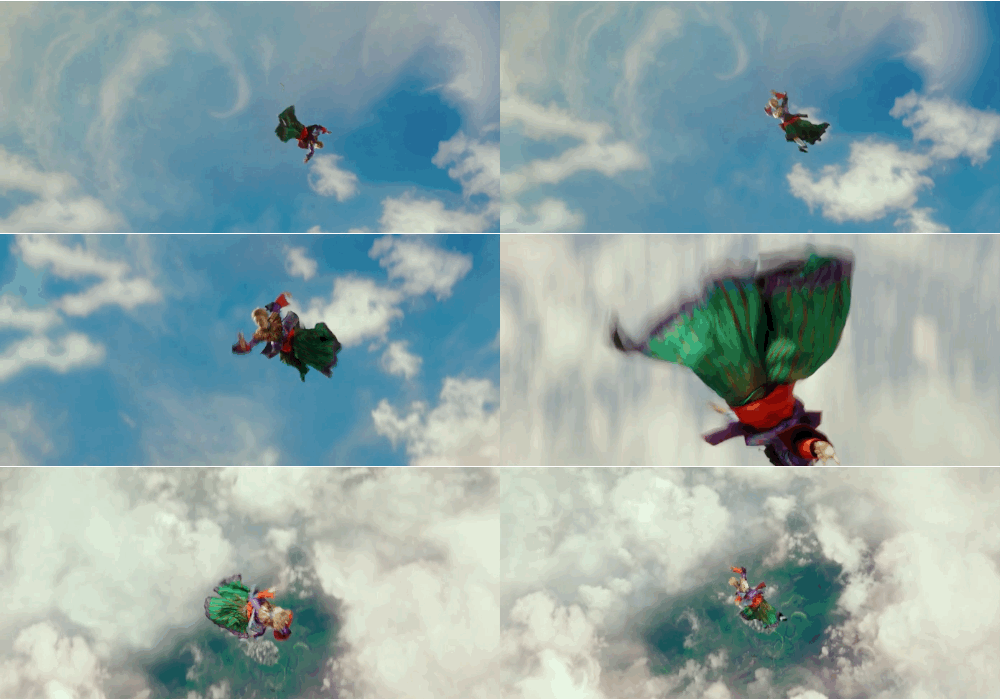
For those of you who never heard me explain this at the Writers Coffeehouse (either at Dark Delicacies or Mysterious Galaxy), Ms. Vulovic was a flight attendant back in the early ‘70s. And in 1972, the airliner she was working on was bombed in mid-flight. She was trapped inside the plane’s hull as it plunged over six miles to the ground. 

BUT…

Vesna didn’t die.  She fell 33,000 feet to the ground and survived. In fact, she was only in the hospital for a couple of months before being discharged. She recovered for a bit longer, but ultimately she was… fine. She ended up with a limp. That’s it. Seriously. She just died a couple of years ago, in her mid-sixties.

So… anyone here want to assume they’re that exception to the rule? Feel like taking that chance? Sure, the vast majority of people would die horribly after a six mile fall—I mean, assuming our hearts didn’t explode during the fall—but Vesna did it so I guess it probably applies to everyone, right?

What? No takers?

As I was saying, it can be dangerous to start with the assumption that I’m the exception.  That the rules or requirements don’t apply to me.  I’m always going to be bound by the same rules as pretty much every other writer, and I’m going to be expected to follow them.  Until I show that I know how to break them.  If I don’t know what I’m doing or why, I’m just a monkey pounding on a typewriter, unable to explain how or why I did something and also probably unable to do it again.

Now, again, I’m not saying exceptions don’t exist. That’d be silly—they clearly do.  But it’s important to understand they are the exception. They’re the unusual rarity, not the common thing.  That’s why we’ve heard of them—because it’s such an oddball thing to happen. Like, y’know, surviving a six-mile drop.

But exceptions can’t be my excuse not to learn those rules and guidelines. All these rules have developed over the decades for a reason, and they apply to all of us. 

Well… the vast, overall majority of us.

Next time… I’m kinda drawing a blank to be honest. I’m about to dive into something new and that’s occupying a lot of my headspace is right now. Feel free to toss suggestions or requests down below, and if I don’t get any, I guess I’ll come up with something.

Until then… go write.

Categories