Wow. It just fully hit me that NaNoWriMo starts on Sunday. And I’d hoped to partake this year as well.

I have to admit, my brain is kind of fried. Wouldn’t be surprised if yours is too. But this is the job. Time to buckle down and…

Okay, look. This is actually, legally, my career. I’ve hit that fortunate point where I don’t have to do anything else except write (and maybe watch the occasional B-movie now and then while I build toy soldiers). I mean, at this point my accountant and the IRS both consider me a full-time writer.

And maybe some of you are there too. Or maybe you’re aspiring to be there. And because you are, and because you take this seriously, you’re trying your god-damndest to treat this like a real job. You understand writing is work, and it needs to happen if you want to advance.

So one important thing to remember.

You get days off from work.

Sometimes, I think we get so caught up in that idea of writing as a career and having to write every day that we forget we can just… take a sick day. Hell, take a personal day. Use up all that vacation time you’ve been saving up. And holy crap could we all use a mental health day right now. 

And that’s okay. It’s completely fine. Yeah, even if you take this really seriously.

Look, we’re heading into our seventh or eighth month of pandemic lockdown (depending on when you started), during a third surge which most likely is just the ongoing continuation of the first surge. We’re in the middle of a USelection that’s probably going to drag on for at least a month after it technically ends, and depending on how it ends things could be very not-good in the world for a while. And this weekend a perfectly good once-in-a-blue-moon (literally) Saturday Halloween is probably going to go to waste.

It’s completely understandable that you might not feel like typing out three or four hundred words right now. I know it’s been brutal on me, and I know I’ve been very lucky during all this. I’m self-employed and I spend 90-95% of my time at home when the world isn’t on fire. So this hasn’t been that disruptive for me and I’m still friggin’ stressed out worrying about my family and friends. Because there’s one or two good reasons to worry about… well, anybody. Everybody! I can barely imagine what it’s been like for those of you who are dealing with homeschooling kids or sick family members or who are at the end of your financial thread.

Well, I know exactly what that last one’s like, and I wouldn’t wish it on anyone.

My point is, any decent boss would give you some time off if you were going through all this. Again, sick day. Personal day. Mental health day. They might even send you a card. 

Y’see Timmy, if the goal is to eventually be our own boss, then shouldn’t we all want to be a good boss? The kind we always wanted? The ones who actually made us like our jobs? Yeah, we need to keep on track, hit goals, try to get in a few hours a week… but we also want our employees (also us) to stay healthy. Physically and mentally.

So don’t beat yourself up if you need to take some time or maybe move a little slower right now. You’re not alone. In that, and in a lot of other things.

Thursday, the usual Halloween post. And then some more NaNoWriMo encouragements.

Until then, if you’ve up for it, go write.

But don’t worry if you’re not up for it.

July 24, 2020

B-Movie Mistakes

If you’ve been following me for any amount of time, you’ve probably caught on to my questionable Saturday viewing habits. Questionable in the sense of “why would someone keep doing this to themselves? And to their liver?”

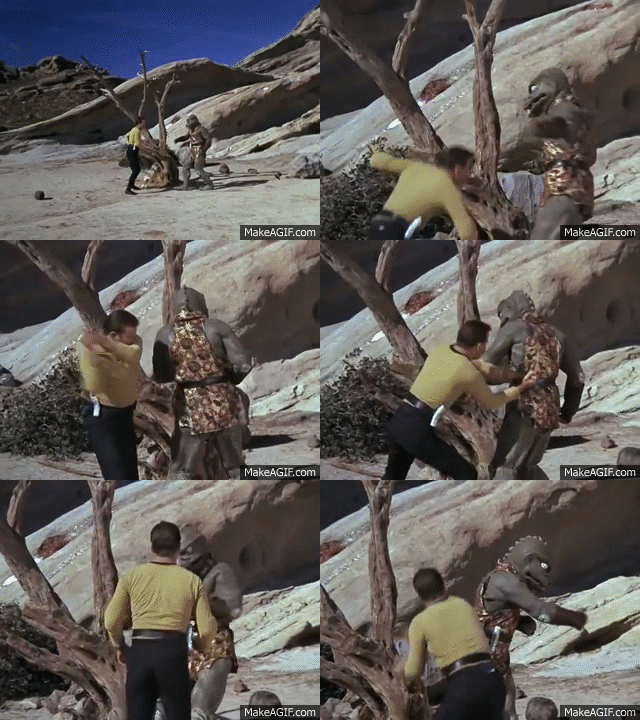
I’ll sit down with some little toy soldiers to build, put on a movie with aliens or giant monsters or werewolves, and tweet out the occasional observation, critique, or scream of pain. It’s kinda fun, in a masochistic sort of way, and I’m a big believer that you can learn a lot from figuring out where bad things went wrong and how they could be fixed. And I’ve seen a lot of screenplays go wrong over the years. Some I worked on. Some I read for contests. And… some I watched while building little toy soldiers.

Over all this time, I’ve seen definite patterns emerge. The same mistakes happening again and again and again. It was part of what made me start this whole ranty blog way back when in the distant before-time.

And screenwriting is a form of storytelling, which means some of these mistakes—maybe even all of them—are universal. I might not have any interest in writing movie scripts, sure. Not everyone does. But these issues can show up in books, short stories, comics… all sorts of storytelling formats.

So maybe they’re worth checking out.

Anyway, here are my top ten B-movie mistakes, updated a bit since the last time I write them out. Some of it may seem generally familiar. Some of it… well, I’ve found new ways to look at some problems over the past three years.

10) Bad directing
Let’s just get this one out of the way, because it’s the easiest one. It’s also the most universal one. This’ll be a horrible blow to anyone who likes auteur theory, but while there are some phenomenal directors out there, the simple truth is there’s also a lot who have absolutely no clue what they’re doing. None. Yeah, even some directors you’ve heard of.  They have no concept of narrative, continuity, pacing… anything.

This is a killer because ultimately, the director’s the one interpreting the story on the page into a visual story on the screen. Even if they didn’t write the script, the best story can be ruined by a bad storyteller.  How often have we seen a book or movie that had a really cool idea or an interesting character and it was just… wasted?

Because of this—random true fact—whenever you see a horrible story on screen, it’s always the fault of the director and producers. Never the screenwriter. The only reason scripts get shot is because the director and producers insist on shooting them. If it was a great script and they butchered it—that’s their fault. If it was a bad script and they decided to shoot it anyway—that’s also their fault.

9) Showing the wrong thing
This kinda falls under bad directing, but I’ve seen it enough times that it really deserves it own number. Sometimes a story keeps pushing X in our face when we really want to see Y. Or Z. Sometimes the story calls for Y to be the center of focus, but we still keep putting X on camera. And sometimes there’s no need to see X at all—we understand it through dialogue and acting and other bits of context—but we show X anyway.

A lot of this is a general failure of empathy—the filmmakers aren’t thinking about how the movie’s going to be seen. I’ve also talked a couple times about subtlety, using the scalpel vs. the sledgehammer, and that’s a big part of this, too. Sometimes there’s a reason we’re seeing a lot of nudity or a swirling vortex of gore, but all too often… it’s just because the storyteller doesn’t know what else to show us.

8) Bad action

Pretty sure we can all think of an example of this. The almost slow-motion fight scenes that feel like they filmed the rehearsal. The medium-speed chase that drags on waaaaaay too long. The pointless shoot-out that clearly wasn’t thought through since everyone’s standing out in the open.

Action gets seen as filler a lot of the time, and it doesn’t help that a lot of gurus teach it that way. “Hit page 23—you need an action beat! Hit page 42—another action beat!” There’s absolutely nothing wrong with action, but bad action is particularly bad in the visual storytelling format of movies. Unnecessary action isn’t much better.

Think of scale, too. It’s always better to have a small, well-done action scene than a sprawling, poorly-executed one. We can relate to two people fighting so much better that two gangs of sixty people each slamming together. Especially when it’s supposed to be two gangs of sixty members each but there are maybe eight people on screen. Moving in slow motion.

7) Too Much Stuff
Remember when we were young and there was that one kid (we all knew this kid) who got so excited to be Dungeon Master? And he made that awesome dungeon with five liches and a dozen displacer beasts and twenty gold dragons and thirty platinum dragons and fifty minotaurs all wearing +3 plate armor and using +5 flaming axes and a hundred zombies and Demogorgon and half the Egyptian gods and…

I think we’ve all played that game, right? Let’s be honest… maybe some of us were that kid?

Some B-movies get like that.  The filmmakers have too many ideas—way more than their budget or schedule allows—and they try to stick everything into the story.  Every cool idea from every other cool story, sure to be just as cool here, right? Truth is, they almost never are.  All these extra ideas just end up being under-developed distractions at best. 

6) Killing the wrong people
There’s always going to be collateral damage in certain types of stories. Thing is, by nature of being collateral damage, the story doesn’t focus on these people and their deaths don’t really register.  And they shouldn’t. That’s what collateral means after all—they’re secondary. Not as important. But in the tight, compressed nature of a movie, we need these deaths to be important. They need to serve a purpose in the story, hopefully on more than one level.

I’ve talked about the awful habit of introducing characters for no purpose except to kill them.  We meet Phoebe, get three or four minutes of backstory and bamshe’s dead without moving the plot forward an inch. Because Phoebe wasn’t really part of the plot, she was just there to wear a bikini top and let the FX crew show off their new blood fountain.

The only thing worse than this is when it’s time for the ultimate sacrifice… and my hero doesn’t make it. A minor character steps forward to throw the final switch or recite the last words. And the “hero” sits back and watches as someone else saves the day.

5) Wasting Time
This one’s the flipside of point #7. I just mentioned that in the limited space of a movie script, everything needs to serve a purpose. If that touching backstory linking two characters doesn’t affect the plot or story somehow, it’s just five minutes of filler I could’ve spent on something else… like the plot or the story. If these shouted arguments don’t somehow reveal something key to the progress of the movie… they may just be a lot of wasted time.

One of the most common time-wasters in B-movies is the unconnected opening. It’s when the first five or ten minutes focus on a group of characters we’ll never see again, usually never even reference again, and who have no effect on the rest of the plot. Honestly, I don’t think I’ve ever seen one of these openings that couldn’t be cut, and I’d guess 83% of the time the whole movie would be stronger—on many levels—without it.

4) Not knowing what genre my story is
I’ve mentioned a few times that I worked on a B-level sex-revenge-thriller-sequel where the director thought he was making a noir mystery. I’ve seen horror films done as sci-fi and fantasy movies that were done as horror films, and vice versa.  Heck, I’ve written stories where I’d planned it as one thing, and realized halfway through it was something very different.

I’ve talked about genre a lot over the past few weeks, so I won’t go into it much more here. To sum up quick if you don’t want to hit the link, all genres have certain expectations when it comes to tone, pacing, and even structure.  If I’ve got a story in one genre that I’m telling with the expectations of another, there’s going to be a clash. And that clash probably won’t help my storytelling.

3) Plot Zombies
All credit to A. Lee Martinez, creator of this wonderful term. Sometimes, characters do things that are unnatural for them just to further the plot. The brave person becomes cowardly. The timid person does something wild and unpredictable. People argue and storm off for no reason. Well, so one of them can get murdered by the monster after going for a calming nighttime swim in the lake, but past that… no reason.

Plot zombies just stumble around a movie, doing whatever the story calls for. They don’t have any personality or agency, and really, one plot zombie’s pretty much the same as any other plot zombie. If I have an inspiring speech or an act of wild abandon or a last minute moment of brilliance, and there’s no reason I can’t swap all the characters around in it… it means I’ve got plot zombies.

2) Horrible dialogue
Bad dialogue always makes for bad characters.  If we can’t believe in the characters, we can’t believe in the story.  If I can’t believe in the story… well, that’s kind of it, isn’t it?

So many movies have painfully bad dialogue. Pointless arguments. Annoying characters. Awful technobabble.  And sometimes—too much of the time—it’s just bad.  It’s lines that sound like they went back and forth through Google translate and then the actor’s seeing them for the first time on a teleprompter while they’re filming.

Personally, bad dialogue drives me nuts, because it means the storytellers have no idea what human beings sound like. It’s a massive failure of empathy, and that empathy almost always shows up elsewhere. I’ve never, ever seen a story with bad dialogue that excelled everywhere else. It just doesn’t happen.

1) Who am I rooting for?
This is still the number one killer in America. This is what brings so many B-movies—so many STORIES—to a gear-grinding halt. 

So many movies have absolutely no likable characters. Everyone’s self-centered, obnoxious, stupid, or arrogant… or a combination of these traits. They’re all awful, sometimes disgusting people. All of them. The bad guys and the good guys.  People start dying and I’m always glad, no matter who they are.

If I’m expected to sit here and watch this for ninety minute, I need a reason to follow someone besides “they’re the main character.”  I need to like watching their story play out. I need to be able to identify with some aspect of their personality. The movie needs to have someone I actually care about. ‘Cause if it doesn’t. I won’t care if they win or lose. And if I don’t care about that… well… I’m not going  to be sitting here for ninety minutes

And that’s my personal, current top ten B-movie mistakes.

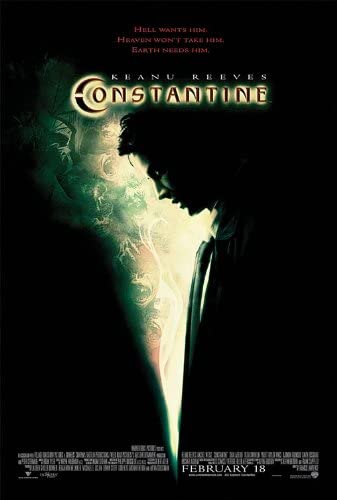
Hey, speaking of movies… this Saturday I’m doing my usual Saturday geekery, but for SDCC @ Home I’m doing it as a watch-along party. Come hang out on Twitter starting at noon (PST) with Krull, followed by the Keanu Reeves Constantineat 2:30, and finishing up the day with Resident Evil at 5:00. It’s going to be fun and maybe a little informative. Plus there’ll be a couple other folks chiming in with the #KrullKon2020 hashtag, and even a few giveaways.

And next time here, I thought I’d talk a bit about editing this new book.

Until then… go write.

And maybe enjoy a movie or three.
May 14, 2020 / 2 Comments

My Chronicle of the Plague Months

I finished up the A2Q last week, and for a brief moment I had no idea what I would blather on about this time. Seriously, a complete blank. There’s just so much crap going on in the world right now (as I talked about a few weeks ago) and I was stressing a bit over my own manuscript that I’m working on right now (the non-werewolf one).

So I thought I might talk a little bit about that. The stress and the non-werewolf manuscript. Because maybe you’re stressing about the same thing. Or something closely related. Probably not the fact that your work in progress doesn’t have any werewolves. That’s a much bigger problem you’ll have to deal with on your own.

My new book opens in a bar. The first three chapters are set there (granted, I write kinda short chapters compared to most people). And as I’m heading toward the end of this draft and getting ready to loop around for another look, I’m kinda dreading those chapters.

I mean… is a bar even normal anymore? It was when I started this, but now it feels a little weird. What’s going to be “normal” when my agent and editor see this in a month or two? Do these dozen or so bar patrons—does the whole vibe of the bar—come across differently now? Should they be wearing masks? Should the bartender have gloves? And what does it mean if I write them not wearing masks of gloves. How will people see the book? Hell, how will people see me? I mean, for some idiot reason wearing/not wearing a mask during a pandemic has become a political statement.

How much of the real world should I be incorporating into my writing? I mean, a lot of really smart people are saying things can’t go back to the way they were. Do readers and editors want to see the world that is? The world that was? Should I be incorporating masks and social distancing and hell is the romance angle in this totally stupid now? Can two people have a casual meet-cute in a world where most people don’t go anywhere casually? Are people still hooking up in the plague years, or is this scene going to come across as less sexy and more incredibly risky?

If you’re having these kinda thoughts well… join the club. It makes sense, after all. It shows you have a good level of empathy, that you’re thinking about these things and how they’ll be seen by other people.

But thinking about them doesn’t answer the big question. What should we do? How should we—or should we—be altering things in our work to match the world better?

I think what we’re all experiencing right now is a kind of common problem, it’s just rare for all of us to be going through it at the same time, and on this scale. We’re trying to write for the future. We’re trying to guess what readers and agents and editors are going to want to see in nine or ten months.

To some extent, this is always an issue. There are people who find themselves writing political thrillers during major elections. Folks have written books about cutting-edge technology that’s obsolete by the time anyone gets to read it. If you’re a Lee Child fan, you may have heard the story of how a change in the way currency was designed and printed made the entire twist of his first Jack Reacher novel, The Killing Floor, completely impossible. I wrote a book about the American Dream in late 2015/early 2016, and by the time it came out parts of it looked almost foolishly optimistic. These things happen. The world keeps progressing.

Hell, even more hardcore genre books can have this problem. How many sci-fi books and movies are set in a future that we’ve already reached and passed? 2001: A Space Odyssey and its sequel 2010? Back to the Future? Thundarr the Barbarian? A ton of Star Trek? All of these stories involved “future” events and well… we know those futures didn’t happen.

Y’see Timmy, we can’t predict the future. Even the relatively near future. And our readers and editors know this. Things will always happen that might make some part of my book obsolete or impossible. If it doesn’t happen in the process of writing it, it’ll definitely happen at some point. It’s inevitable.

My point is… don’t worry about it right now. Take a breath. The world’s in a very weird place and nobody has any idea what it’s going to be like a year from now. Absolutely no one. So for this book, just do what feels right. And a year from now we can all worry about what things are like a year from now.

I will toss out two small addendums to this.

First, the easy one. If this really gnaws at you, maybe you could incorporate some “current” elements at a lesser level. I mean, here in southern California (probably in most cities)it wasn’t exactly rare to see people wearing masks, especially during flu season or some outbreak. Heck, if you’ve been at an airport any time in the past few years, I’m sure you’ve seen people wearing them there. So it’s not like it would be unnatural to mention masks on a few people, or someone keeping that one alligator-length away from other folks.

Addendum the second. I’ve mentioned once or thrice there are some writers who seriously excel at pumping out really fast, very topical books. It’s a really specific type of market and you need to be a very specific type of writer to do well in it.

I bring it up because I guarantee you these folks have already written the lockdown murder mystery novel, the “have to venture out during quarantine” novel, the “falling in love over Zoom” novel, the “lost soul finds new purpose handmaking masks” novel, the “unfeeling businessman learns the real meaning of life after a beloved person dies of covid-19” novel, and probably far to many “brave reporter uncovers the real conspiracy behind the lockdowns” novels. Wow, that was a hell of a run on sentence. If Ray Porter narrated my blog, he would smack me upside the head for that one.

My point is, unless I’ve already finished it, I should probably hold off on something that ties directly to current events. There’s a really good chance a lot of writers already beat me to it (in the sense that their novel’s already done). Which means there’s a really good chance agents and editors are already swamped with these brilliant, high-concept ideas that I just thought up off the top of my head and all of you could immediately picture. Even if I go the self pub-route, odds are these other writers have already sewn up that market. Or bled it dry. Maybe both. Whichever of those works best for you.

But my big point still stands. For now, try not to worry too much about this. Make sure your book works overall, that all the big beats work before fretting over small details. Even if some aspect of the world means my book is now 100% impossible, it can still be looked at as a story of the world that was, and it’ll still need to be the best book I can make it.

Anyway… that’s my semi-inspirational, reassuring ramble for this week. Hopefully it helped a few of you. It actually calmed be a bit just writing it out.

Next time… I don’t know. After three months working on the A2Q, I feel a little lost. Is there a particular topic anyone would like me to address and blather on about? Something from the A2Q I could clarify? Just a random question that’s been bugging you? Let me know down below.

And if nobody has anything… well, I’m sure I’ll come up with something exciting.

Until then, go write.

November 21, 2019

Do You Think I’m An Idiot?

No, no… don’t rush to answer that. I’m pretty sure I can guess how most of the comments section would go.
However…it is an important question, whether I’m writing books or screenplays. The folks who just bought my new Lovecraftian techno-thriller aren’t expecting a long lesson about how memes work. If I’m billing myself as the next Dan Brown, the clue “man’s best friend” better not leave half a dozen codebreakers baffled as to what the three letter password is for the doomsday device. Heck, even if I’m hired to pen the next Pokemon movie, I probably shouldn’t spend a lot of screen time explaining all the medical reasons why little kids shouldn’t drink paint.
Cause let’s face it—nobody likes to be called stupid.  Not even kids.  Heck, especially not stupid people.  We all hate being condescended to and having things spoon-fed to us at a crawl. We get angry about it. At best we get frustrated with the person throttling the speed we can absorb things at.
So, having established that nobody likes being considered an idiot, it stands to reason most people like to feel smart, right? And that includes my readers. I want them to like my stories, not feel angry or frustrated because of them.
But a lot of stories assume readers are stupid. They spell everything out in painful detail. They drag things out. They repeat things again and again and again. These authors think their readers won’t know or understand or remember anything, and they write their stories accordingly.
So here’s a few easy things I try to do so my readers feel smart and they’ll love my stories…
I know what my audience knows
I’ve talked a couple times here about empathy and common knowledge. It’s stuff I can feel safe assuming everyone knows. Grass needs water and sunlight to grow. Captain Americais a superhero. Nazis are still the bad guys. Maybe you noticed that a few paragraphs back I rattled off Lovecraftian, Dan Brown, and Pokemonwithout bothering to explain any of them. I know the folks reading this would have—at the very least—an awareness of these words and names. Knowing what my specific audience knows is an important part of making them feel smart, because this is what lets me judge what they’ll be able to figure out on their own.
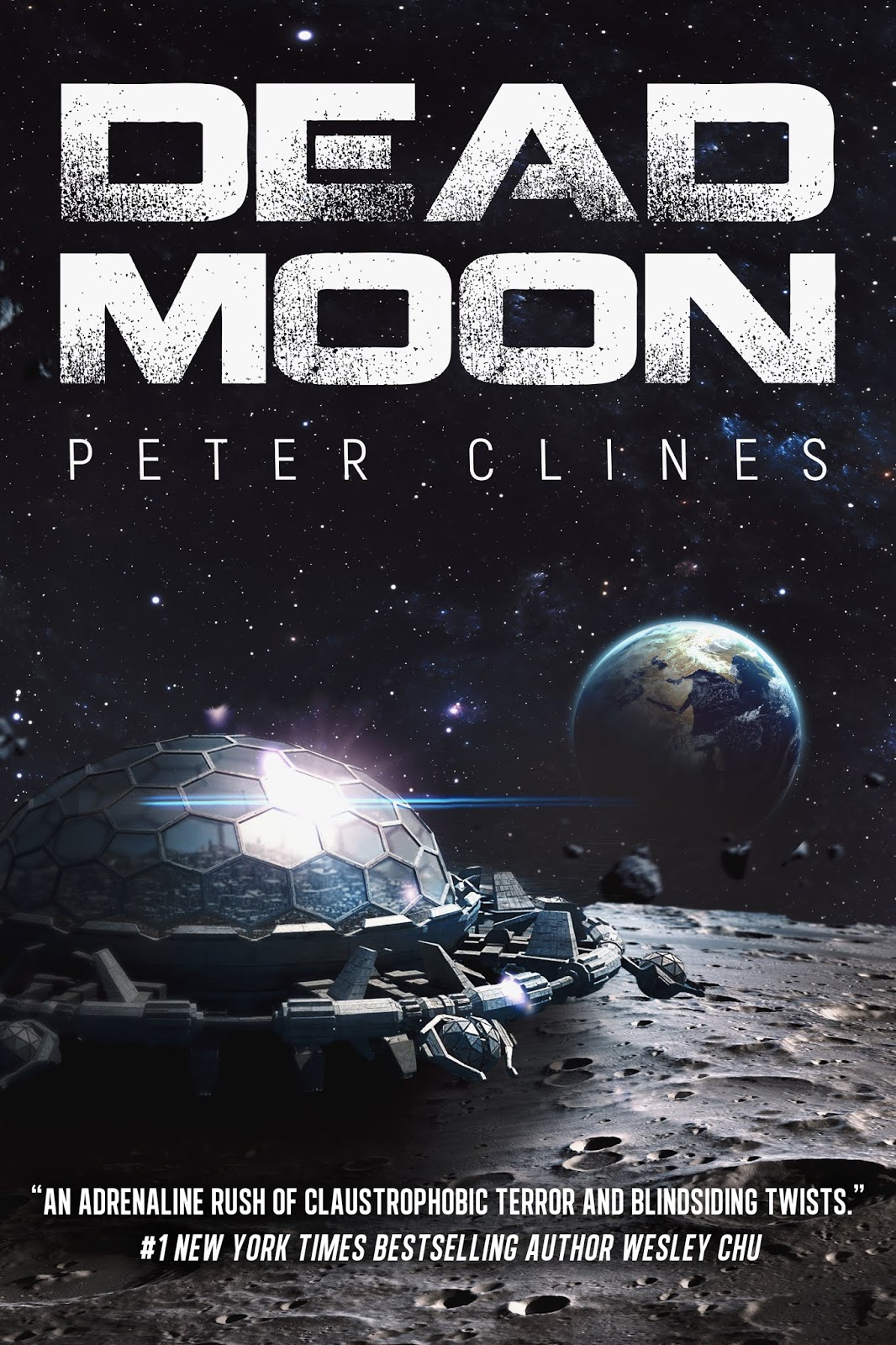
This goes for things within my story, too. Yeah, odds are nobody’s ever heard the term Caretaker used precisely the way I use it in Dead Moon, but I don’t have to keep explaining it. I can make a couple references at the start and then just trust that my readers will remember things as the story goes on. It’s a completely made up word, but I bet most of you know what a Horcurx is. Or a TARDIS. Or a Mandalorian. They don’t need to be explained to you again and again.
I try to be smarter than my audience
There’s an agent I’ve referenced here, once or thrice, Esmund Harmsworth. I got to hear him speak at a writing conference years ago and he pointed out most editors will toss a mystery manuscript if they can figure out who the murderer is before the hero does.
Really, though, this is how it works for any sort of puzzle or intellectual challenge in a piece of writing. If I’ve dumbed things down to the point of simplicity—or further—who’d have the patience to read it? It’ll grate on their nerves, and it makes us impatient when we have to wait for characters to figure out what we knew twenty minutes ago.
I don’t state the obvious
Michael Crichton got a very early piece of writing advice that he shared in one of his books. “Be very careful using the word obvious. If something really isobvious, you don’t need to use it.  If it isn’t obvious, than you’re being condescending to the reader by using it.”
Of course, this goes beyond just the word obvious. Revisiting that first tip up above, should I be wasting half a page telling my readers Nazis were bad? When Yakko staggers into a room with three knives in his back just before collapsing into a puddle of his own blood, do I need to tell anyone that’s he’s seriously hurt? I mean, you all got that, right?
I take a step back 
When something does need to be described or explained, I think our first instinct is to scribble out all of it. We want to show that we thought this out all the way.  So we put down every fact and detail and nuance.
I usually don’t have to, though. I tend to look at most of those explanatory scenes and cut it back 15 or 20%. I know if I take my audience most of the way there, they’ll probably be able to go the rest of the way on their own. People tend to fill in a lot of blanks and create their own images anyway, so getting excessive with this sort of thing rarely helps.
I give them the benefit of the doubt

This is the above tip, but the gap’s just a little bigger. Three-time Academy-Award-winning screenwriter Billy Wilder said if you let the audience add 2+2 for themselves now and then, they’ll love you forever. That’s true for writers of all forms. Every now and then, just trust they’ll get it. Not all the time, but every now and then I just make a leap of faith my audience can make a connection with almost no help whatsoever from me. Odds are that leap isn’t as big as you think it is. 

Y’see, Timmy, when I spell out everything for my audience, what I’m really telling them is “I know you won’t be able to figure this out on your own.”  My characters might not be saying it out loud, but the message is there.  You’re too stupid for this—let me explain.
And that’s not going to win me a lot of return readers.

Hey, next week is Thanksgiving here in the U.S. and my parents are coming  to visit for the holidays and hahhaaaha I’m not stressing about it YOU’RE STRESSING HOW IS IT THE END OF NOVEMBER ALREADY OH CRAP

…sorry, that was a typo. What I meant to say was it’s Thanksgiving so I’ll probably just do something quick on Tuesday or Wednesday. And after that… well, if you’ve been following the ranty blog for any amount of time you know what I’ll be talking about on the day after Thanksgiving.

Until then, go write.

Categories