
August 23, 2018 / 5 Comments

Slow Motion

            Wanted to take a few minutes and talk a little bit about a way that writing and publishing overlap.  It’s not my usual sort of thing but I figured… ehhh, it’s been a while since I talked about this.
            There’s a lot of pressure to be as fast as possible with writing these days.  More than a few would-be gurus—and even some small publishers—push  a business modelof quantity over quality.  Why take the time on one book if I can rush through half a dozen or so and get the same result?  Selling a hundred copies of ten books is the same as selling a thousand copies of one, right?
            On top of that, the ease of electronic distribution has pushed the idea that moving slow is clunky and antiquated.  Any person or publisher that moves at such a pace gets compared to… well, dinosaurs.  
            This need for speed creates an awful sense that time’s being wasted if I write something that doesn’t sell.  That spending time on editing or revisions is wrong.  And with the raw amount of stuff being e-published, I think all of us have a lurking fear that if we don’t get our idea out there now, someone else is going to beat us to it and have it out there tomorrow.
            I know there are folks (some of whom I know and like a lot) who advocate publishing everything.  Trunk novel?  Throw that up on Amazon.  First draft no agent or editor would accept?  Kindle format for a buck-ninety-nine.  Get it out there because somebody might love it, and at the worst you make fifteen or twenty bucks off it rather than nothing.  You’d pick up twenty bucks if you found it laying in the street, right?
            And I get that this is a really appealing idea.  We want to get paid.  We should get paid.  I’m a big fan of artists (of all types) getting compensated for their work.
            But…
            We also need to acknowledge there’s a learning curve. 
            It shouldn’t be too much of a shock that the first thing I put down isn’t going to be that great.  Or the second thing.  Maybe even the third. 
            Sure, there’s always a chance that my first book is pure gold on the first pass.  Scientifically speaking, there’s some chance almost anything could happen.  I mean, I wouldn’t put money on any of those things but, hey… there’s a chance.
            Because of this—he said, bracing for angry comments—I often find myself really doubtful when people say they wrote a book in four or five weeks.  I completely believe a draft can be written in that amount of time.  I wrote the first draft of 14 in about six weeks, and that was around 150,000 words.  But a finished book manuscript?  Something ready to hand off to an editor?  Or put up for sale?
            I just don’t buy it.  Sorry.
            Writing takes time.  It can take a lot of time.  It takes time to learn how to do it right and then it takes time to do it right.  I can’t expect the first thing I write to compare to something written by someone with years of experience.  I can’t rush through one edit draft in a day and expect to get the same results as someone who spends weeks going over their whole manuscript line by line. 
            Simple truth is, the majority of us aren’t ever going to put out material that doesn’t need work.  Not later in our careers.  Definitely not at the start of our careers.
            Yeah, ourcareers.  This holds for me, too. I wrote a lot of stuff that never got published and probably never will.  Why?  Because it’s bad!  It’s that first attempt at making chocolate chip waffles or trying to grill Ahi tuna.  It may be edible—barely—but no one should be asked to pay for it.
            I’ve mentioned The Suffering Map here a few times.  Okay, a bunch of times.  Consider this… when you pare away all the time where I worked on other projects, it’s probably fair to say I spent two, maybe two and a half years on that book.  My first 100% completed novel.
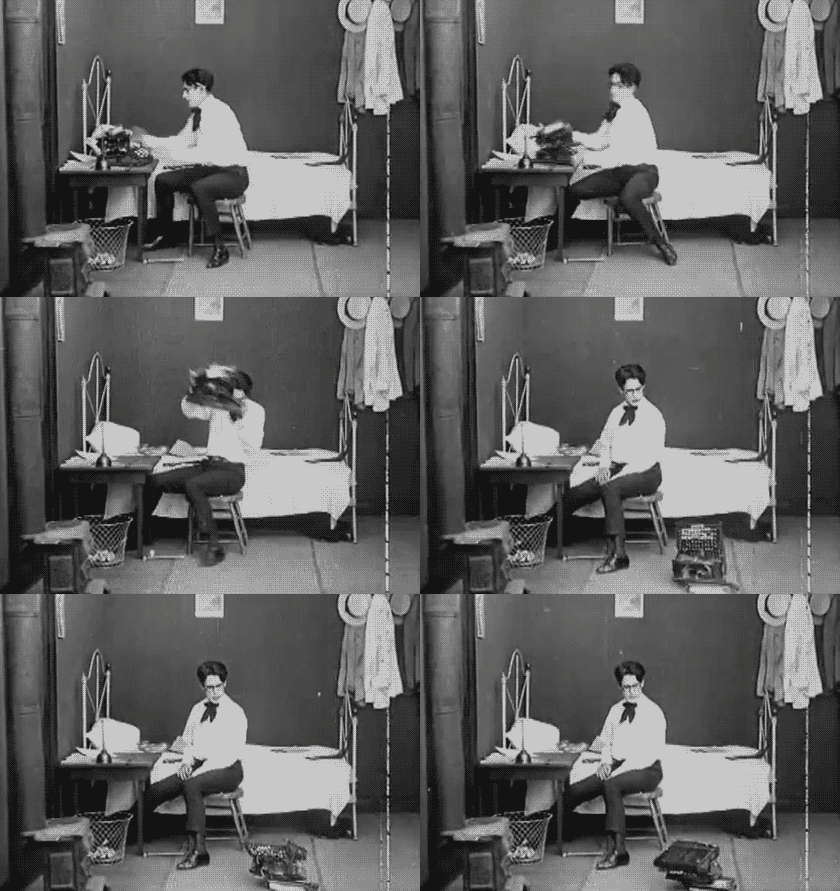
            Any d’you know what I’ve done with it?
            Nothing.
            Oh, sure, I submitted it a lot at the time.  It got some interest.  But everyone passed on it, and (lucky for me) most of them offered a few suggestions of where it needed work.  And they were right.  It did need work.  It had some real problems, and I’m glad it’s not out there hanging on my career like some kind of literary albatross on a cursed mariner or something like that.
            Or consider the book I just turned in.  That took seven months, start to finish. And that’s considering I’d plotted out a good chunk of it years ago  It went through four drafts before I even turned it in to my editor, because there were lots of things that needed tweaks and adjustments to make the book as good as it could be.  Believable characters.  Sharp dialogue.  Solid pacing. 
            And that’s okay.  Really.  The important thing is for me to write something good.  Churning out 8000 words every day or 400 pages for NaNoWriMo is an achievement, yeah, absolutely.  But in the end it’s always better for me to have 1000 good words or 100 polished pages.
            Now, going slow isn’t an ironclad rule.  Sometimes everything just lines up and my third or fourth draft only takes a few days.  No two projects are the same and no two writers are the same. 
            But if every draft of every project I work on goes fast… maybe I should take an effort to slow down for a while and see how it affects my writing.
            Because the goal for all of us is to be great.  To write the best thing we can.  Not to rush toward “okay” and stop when we get there. 
            Even if it makes us fifteen or twenty bucks.
            Next time I’d like to come clean about a couple more things.
            Until then, go write.
July 5, 2018 / 7 Comments

Feeling a Draft

            Okay, yeah. That’s a friggin’ lazy title.  
            I’m pressed for time.  Sorry.
            Why am I pressed for time? Well. I’m trying to pack up my apartment (and my office), while at the same time finish a final polish on this book and write the ranty blog and prep for a Writers Coffeehouse this weekend and holy crap San Diego ComicCon is in two weeks.
            Now that I think about it, it’s kind of amazing how well I’m keeping up with this…
            Anyway, while you read this I’m finishing a draft of my current project and it struck me that I haven’t talked specifically about drafts in… well, a couple of years now.  So it’s definitely a topic worth revisiting.
            Some people hate doing drafts.  Others get caught in this endless loop of writing and rewriting and rewriting and rewriting and…well, you probably know someone like that. And there are folks who skip “drafts” altogether, convinced their words are NYT bestselling gold the minute they’re set down.
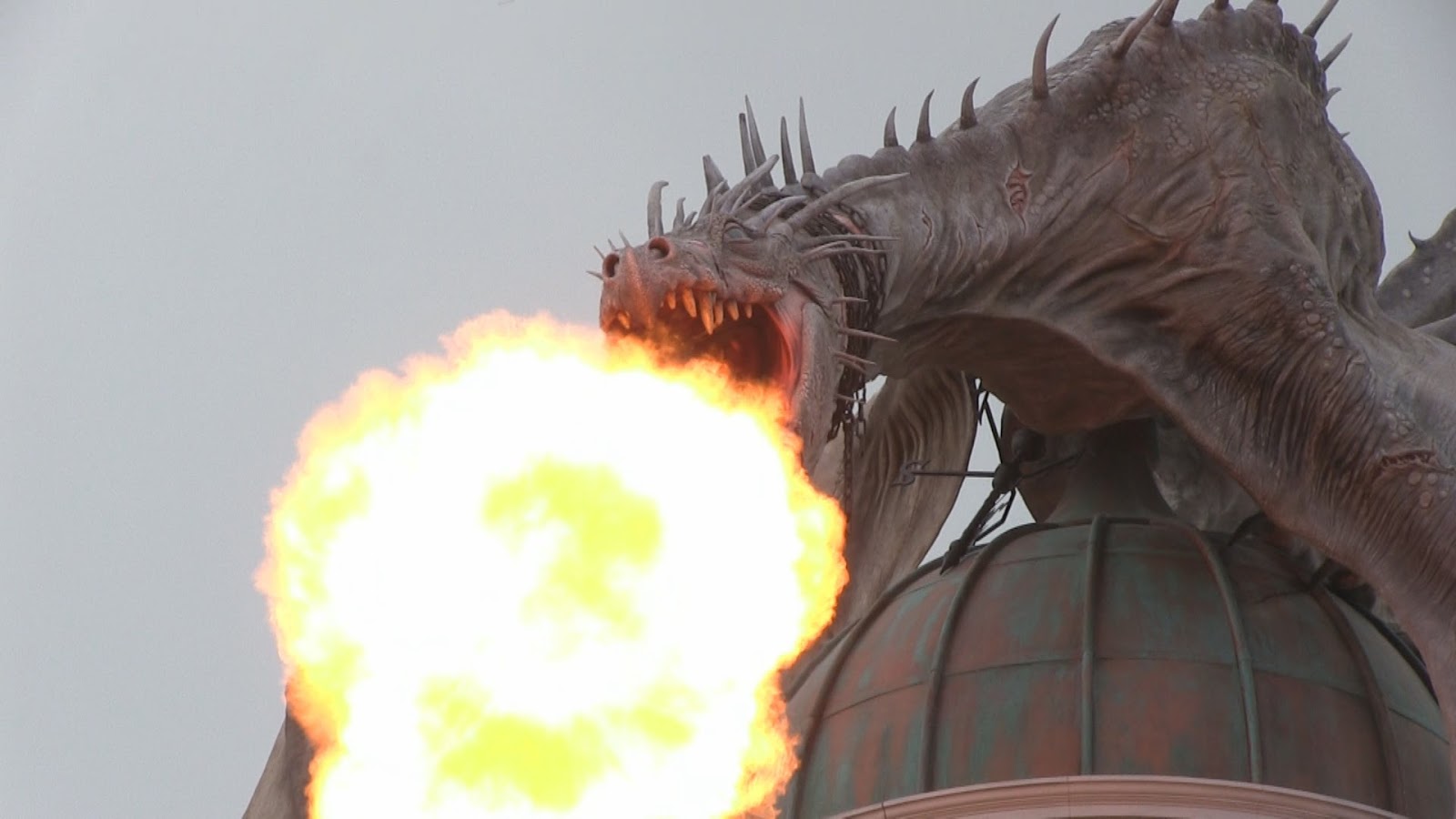
            What I wanted to do here is sort of a step-by-step guide of what I do to get something to the point that I’m willing to turn in to an editor.  And by “editor,” I mean “someone who will give me money for these words I’ve written.”  This is final step stuff. Here be dragons. If you think of editors as scaly, fire-breathing folks.
            Of course, all that mother of dragons stuff being said, it’s important that we all remember the Golden Rule
            I’ve mentioned once or twice or thrice before that we all have our own methods of writing.  Doing drafts this way helps me a lot, but it’s not a guarantee of success for anyone except me.  You might need to modify these steps a bit.  Or a lot.  But all things considered, I think this is a good base to start from.
            So…
            Here’s what I do.
            While I’m working on a book, I’m usually scribbling down random thoughts about the nextbook.  Characters, dialogue, action moments, reveals… all sorts of different elements.  I’ll shuffle these around into more or less the order I think they’ll end up.  Over the past two years or so, I’ve become a bigger fan of outlines than I used to be, but not enough that I’d say “This is the one and only true way! Bow before your meticulously outlined god!!!!”  I shuffle things around, maybe plan a few extra beats, and get a sense where I want to start and where I’m going.
            Once I’ve got all that and the current project is done, I dive into…
            Draft One—So, for me, this is the “just finish it” draft.  I just want to this draft to go from beginning to end with… well, most of the points in between.  I don’t worry about typos or crafting nuances here.  It’s just the “plow through and get it done” phase of writing.
            At this early stage, I don’t hold anything back.  I let dialogue, descriptions, and action scenes run on a bit longer than they probably should.  I know I’ll be cutting eventually, so there’s no reason to worry about length now.  For this stage, it really is quantity over quality. 
            Also, like I hinted above, if I get stuck on something at this point… I just skip it.  Seriously.  My first drafts look like old silent movies with the little “Scene Missing” card that pops up for twenty or thirty seconds. I know I’ll be able to go into the exact details of that conversation or this sequence later, so I’d rather keep moving forward and leave that stuff for Future Peter to deal with.  Again, for me, the most important thing is to get the overall framework done.  It’s a lot easier to think about the little things when the big things aren’t looming over you.
            Depending on the book, this process takes me anywhere from two to three months. I had one book take about six weeks, but that was pretty rare for me.  If I factor out the time I lost to some personal stuff, this last one was just over three.
            A key thing to remember.  I don’t show this draft to anyone. Not my girlfriend, not my agent–nobody.  The first draft isn’t meant to be seen, it’s just meant to give me something to work with
            I may work on something else for a day, maybe even take the whole weekend off, and then it’s right back for…
            Draft Two—So, all those problems I left for Future Peter to deal with?  I’m him now. Those need to be dealt with.  Gaps get filled in.  Characters get fleshed out a little more, and sometimes renamed.  All those awkward knots get worked out.   Now that I can see a lot of these elements in relation to the whole story, I’ll usually find the answers to these problems are more apparent. 
            The goal with this draft is to have a readable manuscript.  No more little notes to myself  or trailing paragraphs that need to get connected somehow.  Someone should be able to pick this up and read it start to finish without thinking they lost a few pages or only got my notes on a chapter.
            Again, keep in mind—this doesn’t mean I do show it to people.  It just means I should be able to. 
            For some writers, this would really be their first draft.  That’s one of those personal preference things—again, advice over rules.  Personally, breaking it up like this takes a lot of pressure off me, and I think that’s a good thing when you’re trying to treat writing like a real job.  No one likes a high-pressure job.
            Okay then, so… now I step away for a couple of days.  Maybe as much as a week.  I’ll watch movies, work out a little more, maybe even scribble up a few of these ranty blog posts in advance.  The goal is to push the manuscript as far out of my mind as possible.  Don’t look at it, try not to think too much about it. 
            Draft Three—And now, the long night of a thousand cuts begins.  Two great rules-of-thumb I’ve mentioned a few times—
one adverb per page, four adjectives
2nd draft = 1st draft – 10%
            Yeah, the second rule (courtesy of Stephen King) goes off the previously mentioned assumption that my first clean, readable draft is my first draft.
            I spend this draft tracking down adverbs, adjectives, pointless dialogue descriptors, and so on.  One thing I also go after here is common padding phrases that don’t really do anything (sort of, somewhat, kind of, more or less).  One of my regular beta readers dubbed this somewhat syndrome a while back, and I still call it that.  I like to tell myself I’ve gotten better about it now that I’m aware of the problem.
            Hey, we all have the little lies that get us through the day.
            And this little stuff adds up fast.  In my current manuscript I cut 200 instances of that. Almost a full page gone, just by checking on one word.
            Again, to be clear, though—these are rules of thumb. They’re guidelines.  I want to stick close to them, but there’s going to be times I want a couple adverbs and a good double handful of adjectives. No editor will freak out if there are three adverbs on one page. But if there’s four or five on everypage… well…
            At this point I’ve gone through the whole manuscript at least twice, so a few larger cuts should be apparent, too.  Overcomplicated descriptionsthat slow down the narrative.  Awkward sentence structures.  Extensive character moments that add nothing to the character, the story, or the plot.  Many of these things get tightened or cut in this draft.
            I spend a week or two doing this. 
            The Fourth Draft–This is the first big polish.  I go through sentence by sentence, looking for words that come up too often or stilted dialogue.  I also make sure all the cuts and swaps from the last draft haven’t messed anything up.  Are the logic chains still complete?  Did I forget to change Gilford’s name to Gillyman anywhere?  Does Gordon have a pistol or a baseball bat in this scene?  Are there any odd character tics that I forgot to remove or add?  Does the whole thing have a good flow to it? 
            This draft doesn’t take long.  Just a day or two.  It’s just one slow, careful read of the story. And, yeah, sometimes I still miss stuff.
            Once I’ve got this clean draft, I send it off to my beta readers to get fresh eyes.   I generally use four or five friends I’ve know for years.  They’re all professional writers and editors who know how to give useful criticism.  Not to beat a dead horse, but by professional I mean… they have actual credentials.  Some folks may decide to hire a professional editor at this point.  Nothing wrong with that.  The important thing is to get an unbiased opinion I can trust, even if I have to pay for it. 
            A few folks might argue that editing is the publisher’s job.  Okay, sure, you could look at it that way.  I need to get a publisher first, though, and why are they going to bother acquiring my crap manuscript that wasn’t even edited?
            Anyway… this draft goes off into the world and it may be a week or three before I  look at it again.  For me, at this stage in my career, it usually depends on deadlines.  But I don’t look at it during this time.  I try to relax a bit, scribble down ideas for later books (see above), or flex different mental muscles.
            For example, as I mentioned before, right now I’m packing up a lot of my office.  Turns out I’ve got a ton of LEGO and Warhammer and Gundam models and comics all piled up in the closet here.  Who knew?
            Well, okay.  I kind of suspected…
            The Fifth Draft—So, I’ve gotten notes back from those wonderful folks I begged/ blackmailed/ paid to read this thing.  Now I go through the whole manuscript page by page with their comments.  At one point I did this with multiple monitors.
            So, page one… what did everyone think?  What about page two?  How’s page three look?  This way I can see all the notes at once and make whatever changes are required.  I’ve also got my own copy of the fourth draft that I’m slowly rewriting into the fifth draft as we go.
             I mentioned I ask four or five people to make notes for me.  That gives me a broad sampling on each note/ issue that comes up.  If four people like something but one doesn’t, odds are I’ll call that good.  Nothing’s going to work for everyone.  If three don’t and two do (and of course I do—that’s why I write it), I’ll sit and give it a good look.  If nobody likes it, well… I’m smart enough to admit when I’ve screwed up and something doesn’t work.
            This draft can take another two weeks or more to finish with a full book manuscript.
            The Sixth Draft— This one’s another polishing draft, just like the fourth.   I need to make sure everything still works now that I’ve made those changes and tweaks from my reader’s comments.  So, yet another line by line reading, adjusting as I go.            And at this point… this is when I’m done.  There’s only so much a given writer—in this case, me—can do with a given story.  There comes a point when further work accomplishes nothing and I’m just rewriting for the sake of rewriting.  If my manuscript’s not ready for a publisher (or film producer) by now, it probably means I screwed up something big right at the start

            Next time… well, if there’s anything next week it’ll be really quick. As you may have figured out, I’m moving, and the big day is a week from today.  And then the week after that is San Diego ComicCon!  Oh, hell– and the Writers Coffeehouse is this weekend.  If you’re in LA,stop by Dark Delicacies noon to three on Sunday.
            But, yeah, next time… I’m sure I’ll have something
            Anyway… go write.
March 8, 2018 / 7 Comments

Step 1: Collect The Underpants

            Whoa!  A relevant pop culture title. First one in ages!
            Okay, there’s an issue that pops up at the Coffeehouse now and then.  Someone sent me a message about it on Facebook a week or three back, too.  And it’s something I’ve kinda had in the back of my mind to mention again.
            It takes a couple different forms, but what this usually boils down to is keeping enthusiasm up for writing.  It’s always fun to start a new project, but then they almost always boil down to… well, work.  And when we think of writing, people don’t like to think about work.  They want passion and muses and wild nights of drunken creativity when the words flow at a rate of two thousand an hour or more.
            But the ugly truth is… it’s often work.  A lot of work.  Suddenly all that excitement of that first step is gone and enthusiasm begins to ebb.  We’re not exactly sure what we’re supposed to do next.  And we’re only on chapter four!
            So here are a few things I can do to make that first draft a little easier
–Know where I’m going
            Writing a book is kinda like taking a trip.  It’s going to take time.  I’m going to need some skills.  I may need some supplies.  I can plan out every step of the way or I can be a little looser with it, but either way I should probably have some idea where I want to end up.
            Yeah, sure, there’s something wonderful and romantic about saying “wow, I just learned how to drive this weekend—it’s time to explore America’s highways!!”  Just jumping behind the wheel and taking off. No destination, no maps, nothing. Just me and my best woman/man/dog in the passenger seat.  We’ll figure it out as we go!
            Again… sounds wonderful and romantic, but I think we can all guess how a trip like that will really turn out.
            If I’m going to write a book, I should start off with a really rough idea of how it’s going to end.  I don’t need to stick to that ending, but it’s tough to keep moving forward when I don’t know what direction forward is.  So even just a very general endpoint—“Wakko and Dot sell their invention and get rich.”  “Yakko uses his giant Mechbot to stop the aliens”  “Phoebe’s the only one who gets out alive.”—will give me something to aim for.
–Schedule the time
            Okay, I admit… this can be a tough one.  I’m in a lucky position when it comes to writing.  It’s my full-time job, and I make a living at it.  I do it from home.  I don’t have kids.  My girlfriend’s a writer, too, so she needs her own time just as much as I need mine.  Most people aren’t in this position.
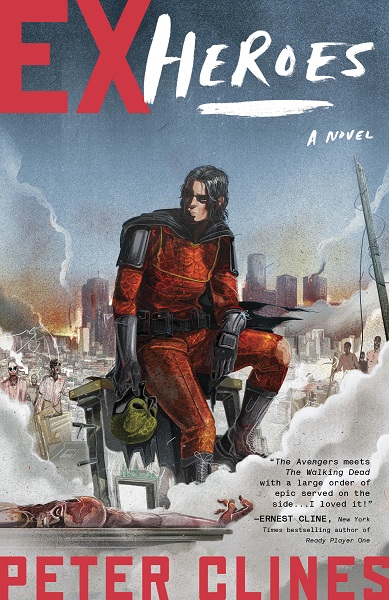
            But y’know what?  I wasn’t always, either. I had a full-time journalism job while I wrote Ex-Heroes and Ex-Patriotsand my Crusoe mash-up novel. And I haven’t always been in such writer-friendly relationships.
            Heck, I’ll be honest. There were a few romantic relationships in my past where me announcing “I want to write for a while” got a bit of a… negative reaction.  There were rolled eyes, some gentle mocking, even a bit of resentment. And being a younger man who wanted to preserve certain day-to-day aspects of these relationships… I put my writing aside. It was ultimately my choice, and that was the choice I made.  Which is why I didn’t have much writing success in my twenties—writing was a very low priority that I was willing to ignore for other things.
            There’s always going to be other things, so I need to make time for myself to write. An hour before bed,  on the train into work, or a big block on the weekend.  Just like exercise or learning the violin or finally watching Downton Abbey,  writing’s something that’s easy to put off.  It can very quickly become the thing I’ll do nextweekend.  So I need to figure out a time and try to stick to it.
–Don’t starve myself
            I know some folks try not to read similar things while they’re working on a project because they don’t want to be influenced.  I think sometimes this leaks out and becomes one of those telephone-game pieces of advice where new writers end up thinking they shouldn’t read anything while they’re writing.  Or watch anything. or listen to anything.  Or talk to other writers.  Or…
            We need input. That’s just common sense.  No input, no output.  I can’t expect to build a lot of muscle if I’m not eating anything.
            Also—and this is, again, just my own opinion—this kind of “starvation” approach can easily turn writing into some sort of punishment.  I’d like to hang with my girlfriend or read a comic or watch the finale of Rebels…but I didn’t write today so I get nothing!  If my method makes me hate writing… maybe I don’t have the best method.
            But again, don’t use feeding appetites as an excuse to put off writing until next weekend.  Don’t fall for the same traps twenty-something year old me did!  Learn from my mistakes!
–Know what I know
            This is also a good time for me to toss out my usual comments about voice and spelling and drafts.  It’s important to learn and develop these things, because it’s easy to lose momentum when I end up second-guessing myself a lot.  If I stop to double-check every four-syllable word or verb tense or read each line of dialogue out loud… it’s going to be easy to lose enthusiasm.  Don’t forget that none of this matters in a first draft.  It’s definitely going to matter—just not right now.  First drafts are big, messy, gap-filled things.  They’re not the point where I should be worried about little stuff. For now, just plow ahead. I’ll get to deal with all that stuff soon enough.
–Just do it
            I know this sounds like crap advice, but sometimes the way to keep writing is just, well… to keep writing.  At the end of the day, sometimes that’s what it comes down to.  I can keep making excuses, let myself get distracted, promise myself to do it later.  Or I can just do it.
            Or maybe ask myself why I keep not doing it.
            So there you go. A few easy ways to keep yourself on track. If you’ve got a favorite of your own, feel free to add it below.
            Anyway… hopefully, next week’s rant will be better than this one.
            Until then, go write.
November 6, 2017 / 1 Comment

NaNoWriMo Tip

            Hey, y’know what I realized over the weekend?  It’s NaNoWriMo!  Who’s trying it this year?
            I’ll be honest. I’ve never tried it myself.  By the time I first heard of it, as it was just starting to gain popularity, I’d already been writing professionally for a year or two.  Might’ve even already been writing full time (non-fiction, but still).  For the past eleven years… well, every month’s been about word count for me.
            That doesn’t mean I don’t have some ideas and thoughts on NaNoWriMo.  In fact, a lot.  At this early point in the month, I have one very firm reassurance, and one solid tip.
            Which I shall share with you now.
            First piece of reassurance.  No matter who you are, I can tell you with absolute certainty, you are not going to sell the manuscript you write this month.  No agent will consider it.  No editor will look at it.  It’s just not going to happen.

             HANG ON!  This isn’t a kick-in-the-gut thing.  This is liberating.  It’s freeing.

            I’m not saying nobody will ever buy this book.  But what we’re doing during this month is a first draft.  A rushed first draft at that.  It’s going to have plot holes and factual errors and typos.  It will, trust me.  It’s a fantastic starting point, but it’s going to need more work after November 30th. No question about it.
            Again, this is a good thing.  Stop worrying about if an agent or editor or your significant other is going to like this. They’re never going to see it.  This draft is for you and you alone. Be selfish.  Go crazy.  This is the “dance like nobody’s watching” part of the process.  Let your creativity run wild, eat nothing but chips, drink nothing but whiskey, run naked in the coffeeshop, and don’t worry about anyone else and what they may think.  They can see the second or third draft, maybe, but not this one. Do what you want to do with it.  Do anything.  Because this is just the first draft.
            Okay, don’t actually run naked in the coffeeshop.  Yeah, I know they smile at you a lot there, but they’re paid to be nice to you.  They don’t want to see that. Especially not in a place that sells food.
            Second thing—the solid tip.
            Write.
            That’s it. Just write.
            I know that sounds kind of flip and arrogant, but stop and think for a moment.  Like we just said, this draft isn’t for anyone else.  We’re not going to worry about spelling, research, current hot genres, book advances, any of that. All that matters for this month is getting words on the page.
            Sooooo… get the words on the page.
            In my first drafts, I change character names halfway through.  I snip off plot threads and remind myself to pull them out later. I snip off some characters halfway through, and then jump to the alternate timeline version of the book where I killed them sixty pages ago (like I now know I should’ve done in the first place).  And I can do all this because this is going to get another draft.
            For now, the most important thing is to just write.  Put words on paper or on the screen or on your arm or your friend’s shirt or whatever medium you’ve decided to work in. Stop trying to filter or rein in your creativity and get it all out.
            So for now…
            Go write.

Categories