
December 18, 2014

Bulletproof

A simple, straightforward title for this week.

I was talking with my dentist a few weeks back about new television shows (he’s very chill that way) and we brought up… well, I’ll be polite and not mention it by name.  He was interested to see where this show went.  I’d already predicted a bunch of issues it would need to overcome which it instead chose to embrace fully.

Allow me to explain.

I’m going to create a series from scratch here (although I’m sure some of you will figure out what I’m referring to pretty quick).  Let’s say I’m doing a show called Young Revolutionaries.  It’s going to be an early-twenties George Washington at university (probably Penn State—that was around then, right?) with early-twenties John Adams and early-twenties Thomas Jefferson and mid-twenties Ben Franklin.  There’s also mid-twenties Martha Dandridge who George has an undeclared love for, her sexy designer friend Betsy, and that creepy mid-twenties kid, Benedict, who just lurks around classrooms a lot eavesdropping on people.
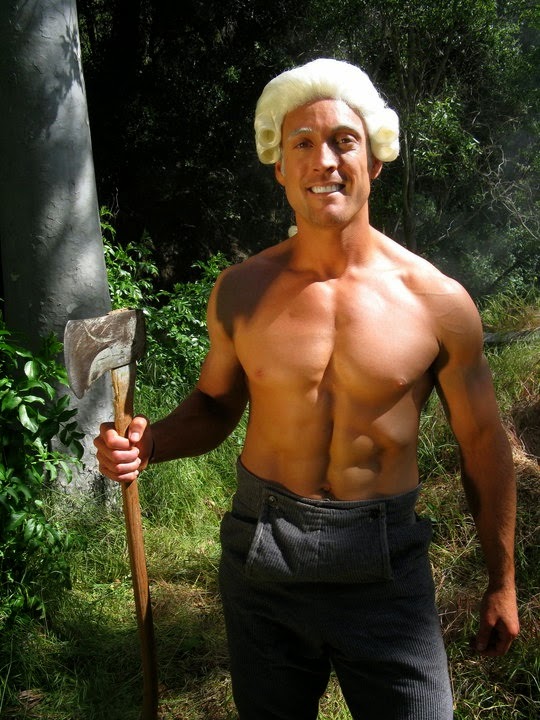
photo: Kat Bardot

Here’s a few quick episode ideas.  What if George gets in trouble during ROTC (that was around then, right?) for chopping down that cherry tree and is told he’ll never be an officer?  Maybe he even resigns from the Army.  Or maybe Thomas injures his hand in a duel over the honor of foreign exchange student Sally Hemings (that’s more or less correct, right?) and now he may never write anything again.  And Ben can have a small breakdown from exam stress and decide he’s giving up on his science/history/philosophy degree and going to be a baker.  Or what if Martha decides she’s in love with Benedict and decides to marry him.  And when John finds out and tries to stop them from eloping, Benedict shoots him. We could end season one with young John Adams bleeding out in his log cabin.

(Also, I apologize in advance—by putting this out onto the internet there’s a good chance this show just went into development at Fox or the CW.  Hopefully I’ll at least gets a “created by” credit when it premieres next fall).

So… what do you think of Young Revolutionaries so far?  Sound like a bunch of solid episodes, yes?  Lots of dramatic potential?

Even if you’re reading this from somewhere in Europe, you’ve probably already spotted a few holes in my story plans.
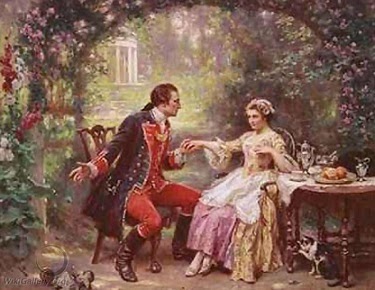
It’s tough to build drama when we already know a lot of details about where the story’s going.  I can’t get anxious about whether or not George and Martha get together when I already know they get together.  There’s a bit of mild interest how it’s going to happen, sure, but the truth is, because I’m replaying history, this isn’t the first time this has happened.  And things lose our interest when they get repeated.  That’s just the way of the world.  The movie I’m glued to the first time I see it eventually becomes the movie I’ve got on in the background while I’m working on little toy soldiers or something.

Likewise, it’s hard to build up drama by using incidents that I know are nullified by later events.  George Washington doesn’t just become an officer, he becomes a full general, and me trying to imply this isn’t going to happen is kind of silly.  We know Jefferson’s going to write a ton of stuff.  John Adams isn’t going to die, either.  Heck, he won’t even have any lasting scars or side-effects from that gunshot.  The bullet could’ve just bounced off him for all the effect it actually had on things.

And bulletproof characters are boring.

So let’s think about Young Revolutionaries again.  George Washington won’t catch a bullet.  Ben Franklin definitely won’t.  Neither will Martha.  Or Thomas.  Or Betsy.  Even Sally’s pretty safe.

What can I really do with this series?  Not much.  It’s pretty much just narrative thumb-twiddling as my plot drags along to the points we all know it’s going to hit. That it has to hit, really, because we all know the story.

Y’see, Timmy, if my characters can’t be put at risk, it’s tough to give them any sort of interesting challenge.  I can’t have many cool twists to their story if I already know how the story goes and how it ultimately ends.  And it’s tough for my readers to relate to a character who’s going against…well, established character.   There’s just not much for me to do.  It’s very similar to an issue I’ve mentioned a few times before—the characters who are prepared for any and everything.

This is one of the big reasons I’m against prequels.  Not as some hard-fast rule, but I think it’s extremely rare that they’re worth the effort (either reading them or writing them).  It just tends to be a melodramatic re-hashing of events that ultimately lead… well, right were we knew they were leading all along.

Now, I’d mentioned this “bulletproof” idea to a friend and he made the point that, well, isn’t this true of almost any series character?  Marvel isn’t going to kill off Iron Man any time soon, and DC probably doesn’t have a Batman obituary waiting in a drawer. Odds are pretty good Jack Reacher’s not taking a bullet in the head anytime soon.  I feel safe saying Kate Beckett won’t be losing an arm in this season’s Castle finale.

We all understand these characters have an aura of safety around them, so to speak.  So does this mean alleries characters are bulletproof? Are all these stories destined to be rote melodrama?

Well, no.  Let’s look at something like, say, The Sixth Gun (one of my personal favorites right now).  Odds are writer Cullen Bunn isn’t going to kill off Drake Sinclair or Becky Montcrief anytime soon.  But it doesn’t mean he won’t and can’t.  None of us know what’s happening in issue fifty.  Or sixty.  Or one hundred.  Even if we can be relatively safe in assuming they’re relatively safe… well, there’s still a chance Bunn could pull a Joss Whedon or J.K. Rowling on us and suddenly kill one of his main characters.  We can feel pretty safe… but we don’t really know for sure.

And there is a world of possibility in that little gap of certainty

But if Bunn decides to flash back to what Sinclair was doing five years ago… well, we all know he didn’t die in a gunfight after a poker game.  So hinting that he might is kind of a waste of time.  Same thing if he says he’s moving to Asia and never coming back.  It’s just more thumb-twiddling until we get back to the real story.

Again, I’m not saying this kind of prequel storytelling can’t work.  But it is very, very difficult to do it well.  A lot tougher than many Hollywood executives seem to think.  And it’s choosing to do an inherently limited idea when I could be doing one where anything could happen.  One that’s moving forward, not treading water.

Next time…

Well it had to happen.  Next Thursday is Christmas.  And the Thursday after that is New Year’s.  Some folks believe this only happens every 2342 years, and other folks have looked at a calendar before.

Whichever camp you happen to fall in (I don’t judge…much), I probably won’t be posting on either day.  But I’ll probably drop my usual year-end summary here sometime before January.

Until then, go write.
December 11, 2014 / 3 Comments

On the Cover of a Magazine…

            As promised, two in one week.  Both with clever titles.
            So, want to know an easy way to boost the hits on your website or Twitter account?  Post a sentence along the lines of this…

            Wakko slammed a fresh clip into his pistol and got back to spraying lead across the street.

             I’m sure several of you already see the problem, yes?  I used clip instead of magazine.  Well, here’s the catch…
            Yes, as usual here, there’s a catch.
            At the risk of angering a lot of folks… If I ever feel the need to correct someone about this, I’m probably not a good writer.  Seriously.  I would say nine times out of ten when I see other would-be-writers make this complaint…they’re wrong.
            (And I say would-be because that does seem to be where a good three-quarters of the comments come from—newbies intent on explaining to established writers where they messed up)
            Now, I’m sure a few folks are already leaping down to the comments to tell me I’m wrong.  There is a difference between a magazine and a clip.  And it matters! 
            To those people I have one thing to say.
            Paintbrushes.
            You heard me.
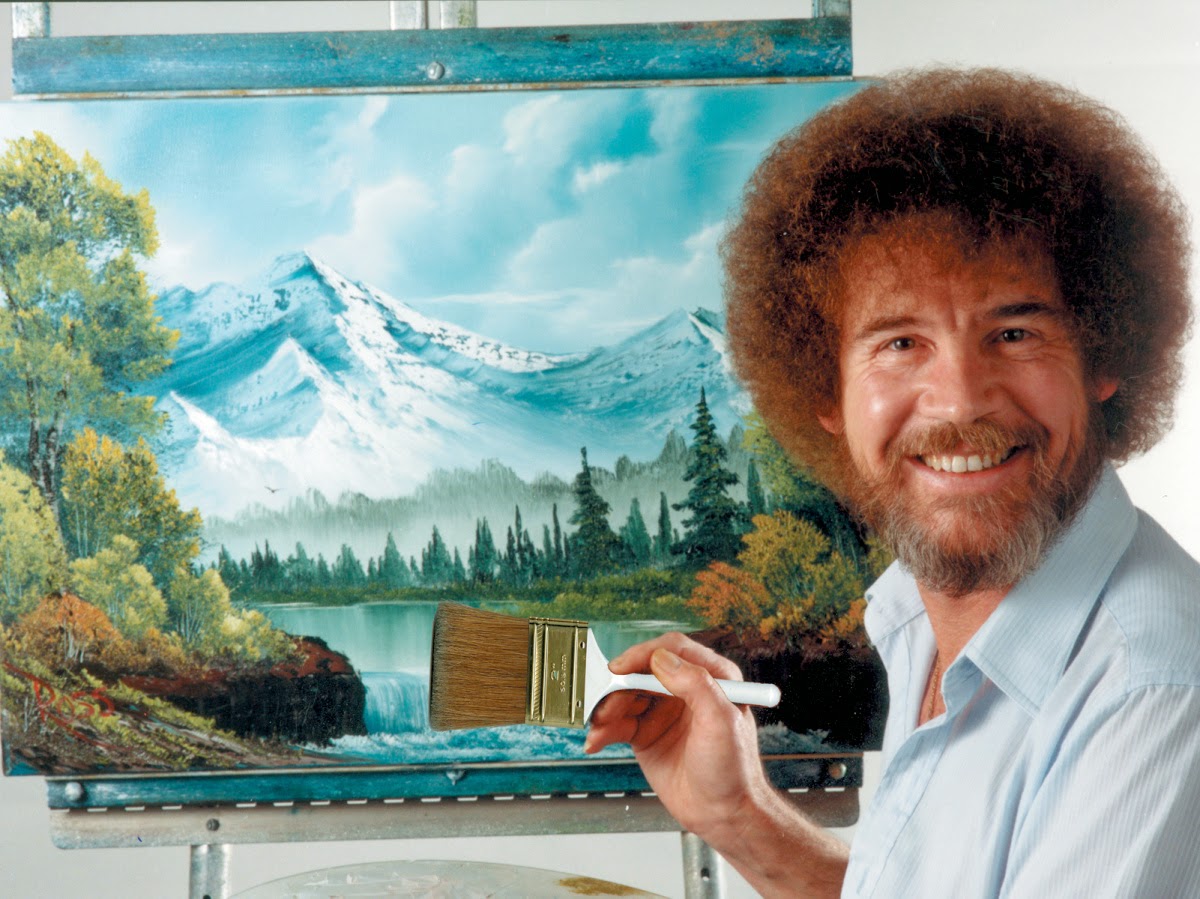
            Remember Bob Ross, the happy painter on PBS with the bushy hair?  Even if you never actually saw his show, he’s such an iconic part of Americana you probably know him.  Heck, it wouldn’t surprise me if there’s a large number of people outside the US who can identify him.
            Bob Ross could paint a gorgeous landscape in under half an hour and make it look easy.  He did it with an array of paints, a few specialized tools, and maybe six or seven different brushes.
            Name three of them.
            Any three brushes he used.  Or any painter uses.  Go.
            I’m sure a lot of you thought of the fan brush.  Then maybe smiled and thought of the happy brush.  Maybe… wasn’t there an angled one, like a… a wedge, or something? 
            But even then… their actual names?  No clue.
            That’s not really surprising, of course.  I’m willing to bet most of us here have never done more than dabble in painting.  It’s not our field of specialty, so we don’t know a lot of the specific terms.  We just know the brushes on sight or maybe by the names we’ve given them or heard a few times.  Like the happy brush.
            In a similar manner, if my characters don’t know anything about weapons, it wouldn’t be unusual for them to not understand the difference between a magazine and a clip (or between a Sig and a Glock, or a broadsword and a longsword, or…).  They’d just go off what they remember from television and movies, or maybe some novels they read.  Sure, Yakko the former black ops guy would know, but Wakko the homemaker?  Odds are, he’s going to call that thing full of bullets a clip. Just like Mr. T did on The A-Team.
            Y’see, Timmy, all those people muttering about magazines vs. clips—they’re not wrong about terminology. They’re just focused on the wrong thing (one might even say it’s an empathy issue).  The important question here is not which term is factually correct, it’s which term should be used in my story,  We’re not writing textbooks, after all, we’re writing fiction.  And one of the bigger lessons to learn in fiction is that sometimes my characters will get things wrong. They’re not going to know everything.  Because characters who know everything tend to be very boring and wooden.
            If I had to guess why some people get so adamant about this—and I’ll try to tread lightly here—I’d think it’s because firearms are a divisive subject.  They tend to divide people politically, ethically, and even socially.  And this can cloud a writer’s view of things in both directions.  Some folks don’t want to make a stupid libtard mistake.  Others don’t want to listen to some crazy, overbearing gun nut.
            But, as I mentioned earlier this week, this isn’t the real world—it’s fiction.  If I want to keep my point of view consistent, I’m going to have some characters who load their pistols with clips.  Maybe a lot of them. And, yes, also some who know it’s called a magazine.
            Next time, I’d like to keep talking about characters and gunslingers a  bit by talking about bulletproof people.
            Until then, go write.
November 14, 2014

Introduction to Orientation

            Running a tiny bit late.  Trying to get a bunch of stuff done before the weekend and dealing with many disruptions and distractions.
            Anyway…
            I’d like to start this week by talking about  college.  It’s something I bet most of us here experienced, so it’s a great analogy for my real topic.  I’m sneaky like that.  Sometimes.
            If you’ve been reading these rants for a while, you know I grew up in a very small town in Maine.  For high school, my dad got a new job and we moved to a somewhat large town (arguably a small city) in southern Massachusetts for four years.  And then I went to a giant state school for college.  No joke, my freshman dorm almost had more students in it than the entire school system I attended in Maine.  And I wasn’t even living in one of the larger dorms.  The college had a larger population than my hometown.
            It was, needless to say, a bit overwhelming.
            There were lots of orientations, of course.  Then I was introduced to tons of people in my dorm, and then people on my hall (we won’t even get into classes).  We all talked about ourselves a bit.  I think so, anyway.  It was all a bit of a blur.  For a while there were just the two skinny guys across the hall,  the woman with the short hair who smiled a lot, the big guy with the glasses further down the hall. But after a while details and names accumulated, these people became clear in my mind, and they became Mike, Jon, Karen, Henry, and so on. 
            Most of us can relate to something like this, yes?
            When I’m introducing characters in my story, it’s a lot like this.  Sometimes things are a whirl of action.  Other times, everyone’s just sitting around studying each other.  Some people stand out—either on their own or because of my own interests—and other people just warrant rough placeholder descriptions for now.
            Context is everything when I introduce a character.  In the middle of a firefight, Wakko may not notice much about the person who dives in to join him behind the barricade.  They’re wearing body armor and they have a rifle—score!  If he’s dealing with a job applicant, though, he’s got time to notice how sharp the creases are in the slacks, how the tie is knotted and the hair is combed, not to mention the smell of shampoo and the state of fingernails.
            Likewise, during that firefight, there’s not much personal info Wakko needs to know past “you’re on my side, right?”  In the middle of the interview, he can ask “what are the three worst jobs you’ve ever had?”
            And in either case, he might not learn about that tattoo or the special shirt or the naughty story behind her nickname.  Some things are only seen or discussed in more intimate situations.  These are all details that come out with booze or debriefing or sex or some combination of all three. 
            Y’see, Timmy, there isn’t a certain way or time to introduce characters.  It’s all a matter of context.  Context, and a bit of relevance.  I need to think of it in terms of my narrative and my main character (or the character I’m focused on at the moment). 
            At this point in the story, is there time to notice more than a few basic physical attributes about this new character?  Is there any one or two things about him or her that my point-of-view character might focus on for the moment?  Is there even time to trade names?  If there’s a lot going on, I don’t want to bring things to a crashing halt with a page of description or exposition.
            I think one of the problems some writers have is they keep seeing examples of bad storytelling and character introductions in television and movies.  There’s an all-too common belief that things need to be frontloaded, that the audience needs to know everything about someone up front.  How many stories have you seen that begin with the “let’s all introduce ourselves” scene?  We learn their names and how they talk and their likes and dislikes and usually some clumsy anecdote about them or a blatant example of I’M THE UNSTABLE ONE!!!  GAHHHHH!!!  
            These scenes almost always feel unnatural because this isn’t how we meet people in real life.  Most of the time, we learn things about them in bits and pieces.  A little here, a little there.  Sometimes we never learn a character’s name, sometimes it’s the first thing we learn.  Some characters are willing to spill everything about themselves, others don’t want to know anything about you because it makes the job simpler.
            Now, I mentioned relevance up above.  It’s a close companion to context.  My story may end up in a place where we can take the time to get to know someone, but that doesn’t mean I need to say everything there is to be said about them.  Yes, everything in a character’s life helps define them, rich tapestry, all that, but if it really isn’t relevant to the moment at hand, or the story as a whole, there’s a good chance it doesn’t need to be there.  Bob explaining that he had to slit the throats of sheep growing up on a farm is important when we’re choosing who has to fight in the wolverine pit, not so cool during speed dating.  And someone telling you their sexual fantasies might be very exciting on a third date, but it can be a bit creepy during a job interview (no matter who’s talking).  When someone does this in real life, it’s called oversharing, and it tends to make us uncomfortable because… well, we don’t need to know these things in this particular situation.
            This can also help me weed out characters that… well, might not need to be characters.  If their introduction doesn’t fit in context, and the facts about them aren’t relevant… maybe I should question why they’re in my story here and now.  Maybe their introduction—or the full extent of it—should be pushed back or pulled forward.  Or maybe they’re just delivering the pizza and don’t have anything to do with the story at all.
            It all depends on context.  And relevance.
            And speaking of introductions, next time I’d like to go one step further and talk about dating.
            Until then, go write.
October 29, 2014

The Man With No Name

             So very sorry for the long delay.  You’ve all been very patient.  Like, eligible-for-sainthood patient.  
            I could make a bunch of excuses but, well… I’m probably going to bombard you with self-promotional stuff next year.  Let’s just put it that way.
            Sorry.
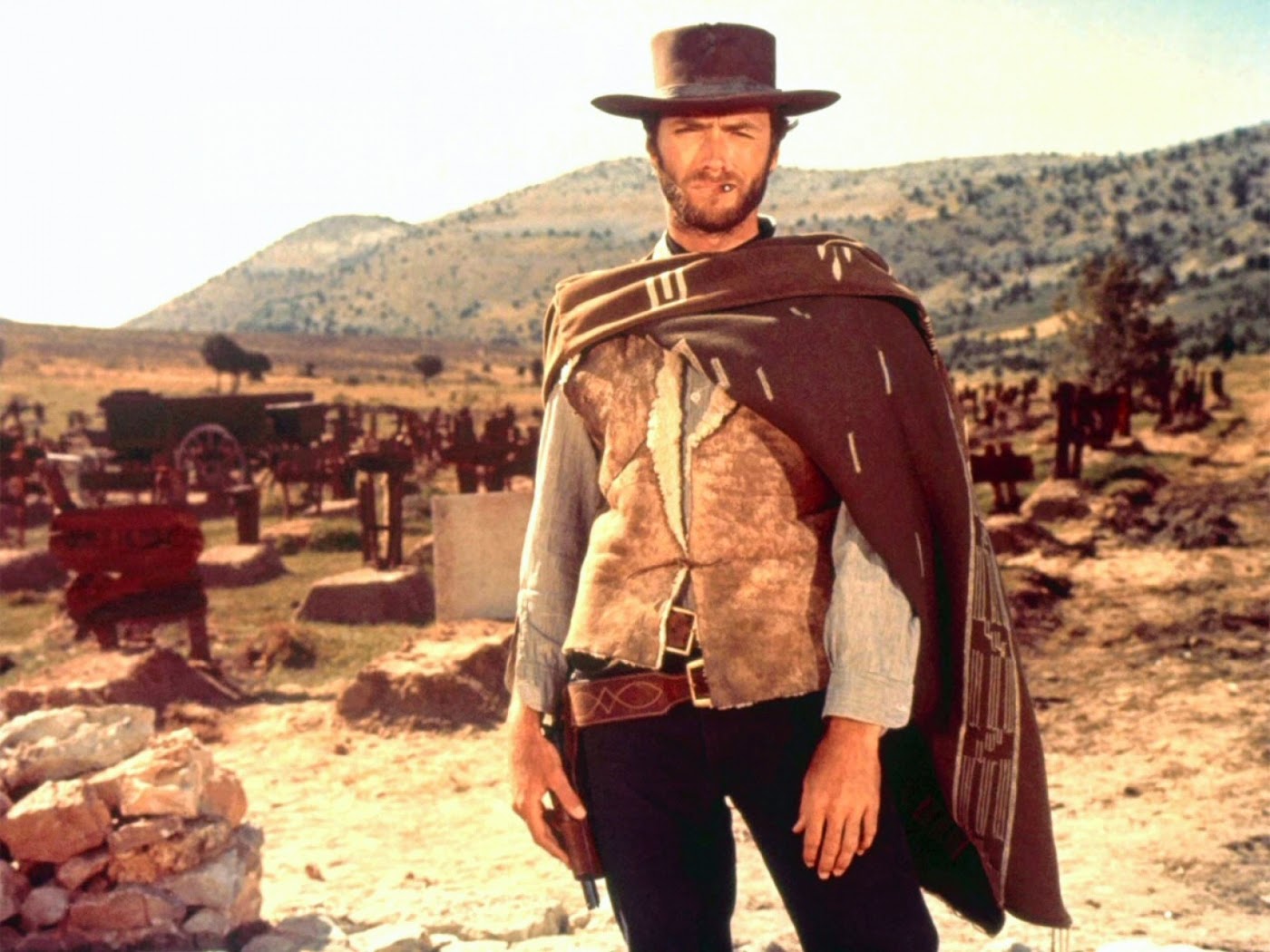
            Anyway… let’s talk about that title.  Pop culture reference from fifty years ago.  In the hit western A Fistful of Dollars (also known as “that old western they’re watching in Back to the Future II”) and its sequels, Clint Eastwood’s character is never named.  Never. 
            Why do I mention this?
            Let me go over a few things first.
            There are three types of characters in any story.  You may have heard a bunch of different literary terms for them, but for our purposes I’m going to break them down to main characters, supporting characters, and background characters.  Every character in my story can fit under one of these three umbrellas.  Or in one of these classes, if you prefer.
            My maincharacters are my heroes, and sometimes my villains, too.  These are the people making things happen in my story, and the ones my narrative will spend most of its time with.  If someone makes a movie out of my book or screenplay, the main characters are going to be the ones on the poster.  There could be six or seven main characters in a good-sized ensemble, but it starts getting hard to balance (or juggle) things when it goes much higher than that.  Not saying it’s impossible, but if my story has fourteen main characters, I might want to rethink some things.
           The supporting characters are the ones around my main characters, usually offering some kind of support (surprise) in either a physical or emotional way.  They appear and disappear from the story as they’re needed.  We don’t focus on them as much because they’re secondary in the story.  They help out, in a variety of ways, but they aren’t the ones who save the day or stop the bad guy.
            Finally, we have the background characters.  They’re just what they sound like.  These are the window dressing people.  The ones who fill tables at a restaurant, bring drinks to our heroes, and stand at the bus stop outside so they can be obstacles when said heroes come racing out at high speed.  In the film industry, they’re actually called “background” or just “extras” (and sometimes less flattering terms depending on who’s listening).  Background characters rarely get more than a line or two of description, and it’s almost always physical.  More than that’s a bad precedent, because I’m setting up the reader to think they’re more important than they are.  When my story’s focusing on the flight attendant, I don’t need tons of history and  psychological background about the rude woman in seat 4C.
            Now, before we get back to Clint Eastwood, let me mention something else that’s come up here once or thrice before.  Names.  Names are important for characters, because a name is great shorthand to my readers for how relevant a character’s going to be to my story.  If I introduce a character with a name, there’s a good chance they’re going to matter so the reader should pay attention to them. 
            (I mean, I’m not just going to name some random guy over at table three in the diner, right?   Can you imagine how much Guardians of the Galaxy would’ve dragged if it started by naming every single person in the hospital room with Peter Quill’s mom?  Or all of the prisoners and guards in the Kyln?  That’d just get silly and confusing, and there’d be no point to it…)
            So, what am I getting at?
            I need to keep track of what class of characters I’m writing about and balance things accordingly.  It’s hard for me to say Bob is one of my main characters if the bus driver gets more description than he does.  If everyone in my script is named, how’s the reader supposed to keep track of the important people?
            A while back I mentioned Theresa Cano, a character in early drafts of my many-times-rightfully-rejected novel The Suffering Map.  Except Theresa wasn’t even a character.  She was a rich and detailed transitional device that filled two pages.  When I cut her out (in the fourth or fifth draft, if memory serves) it didn’t change a single thing in the story.
            So, really, she was a two page distraction that broke the flow.
            In A Fistful of Dollars there’s so much focus on the main character that he doesn’t even need a name.  And it’s not like this complicates things  He’s almost always present  and people rarely use names when they talk to each other.  Cormac McCarthy does the same thing in his novel The Road.  We never learn the father’s name or the son’s.  Same with Ryan Gosling’s character in Drive.  We’re more than halfway through Fight Club before it’s pointed out that Ed Norton’s character has never been named.  Heck, Boba Fett’s name is never spoken in the Star Wars movies until about twenty seconds before he’s knocked to his doom in the third movie.
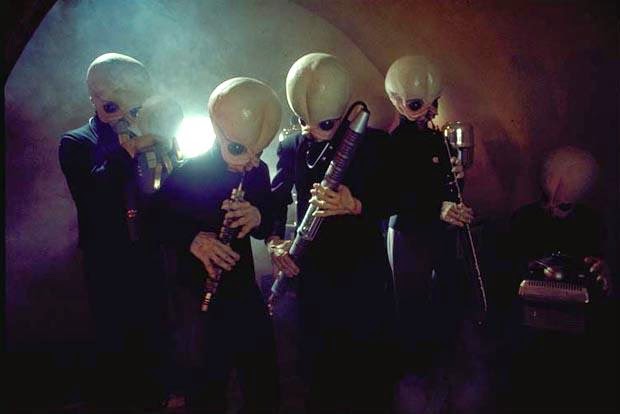
            Speaking of Star Wars… one of the biggest complaints about all the Special Editions and additional canon is how overcomplicated it’s made things.  The folks at Kenner and LucasArts were looking for more marketable material, but rather than making new things they just inflated what was there.  Think of that famous cantina scene with the band and the alien trying to rough up Luke.  Did you know the band has a name?  All the individual musicians do, actually.  So does the alien smacking Luke around (he’s called Ponda Baba).  And the bartender.  In fact, pretty much every single alien in that scene now has a proper name and a race and a back story.
            Good thing none of it’s actually in the movie.
            When I’m writing, I have to know what’s relevant.  I shouldn’t make extended detours to cover irrelevant characters because a detour, by definition, is off the path.  It’s breaking the flow.  People can argue about art or style or literature all they want, but if my heroine runs into the drugstore for first aid supplies after a vampire attack and I spend the next seven paragraphs talking about the twenty-two year old failed football jock who’s running the night shift register because he tore a ligament in his junior year of college and had nothing to fall back on when he didn’t go pro, and how he got his name from his grandfather and it caused a huge argument between his dad and his mom when he was little which was what drove him to be a super-successful athlete and why the torn ligament was such a dream-killer… wait, why was my heroine coming in here?  Does she know this guy?   Is he secretly a vampire hunter (doubtful, since we just heard his whole history)?  Is he the love interest?  Is he a potential—no, never mind.  Our heroine just ran back out to get on with the story.
            Once I start breaking the flow—going off the path—I risk losing my reader.  I need to stay focused on my main characters and the actions they’re taking, with some help from the supporting characters now and then.  The background characters, by and large, should stay in the background, with maybe an odd line of dialogue or description now and then–giving them a name and a page of description isn’t going to add anything because they’re not supposed to add anything.  And if I really feel compelled to put the best man in every scene of my wedding story, then maybe I need to rethink who the main characters are and restructure things accordingly.
            Because if I’m not sure where my characters belong in my story… well, who will be?
            And there you have it.  Clint Eastwood.  Hope it was worth the wait.
            Next time…
            Y’know what?  This is so ridiculously late, and it’s a holiday week, so in a day or two I might revisit the idea of how to horrify people.
            Until then, go write.

Categories