
December 15, 2017

Family Tree

            Ugh.  Completely missed last week.  So very sorry.  I was trying to get a pile of outlines done. 
            Yeah, I know.  Me doing outlines. The world really has turned upside down.
            So, a few weeks back and I asked about possible topics and I got one request that seemed… well, it could be very relevant.  I’ll know in a couple hours, but I won’t say anything.
            Most of us are related to someone.  It’s really rare for someone to have no relations. So rare that it’s usually a major issue—for someone to have no parents or grandparents, no siblings or cousins. It’s almost off-putting, isn’t it?
            Likewise, most of our characters are going to be related to someone. Because our characters are realistic, relatable people.  And again, if we’re introduced to a character with no family at all… it usually says something about them, doesn’t it?
            Over the past ten or fifteen years, maybe, it’s become a big thing to have notable relations. Everybody is someone’s daughter, the brother of that guy, or the second-cousin of her mother-in-law.  Historical figures, mythological figures, other fictional characters.  How often have we seen a character who’s descended from this line or heir to that empire?
            Now, there are some plusses to me doing this sort of thing.  The quickest one is that it’s an easy connection to previous stories and can save me some worldbuilding.  Just by telling you my next book is about King Arthur’s secret daughter, I’ve established a timeframe, the general world, some potential history,
            Plus—it can be a bit of fan service—which isn’t always a bad thing.  If you’re a comic book fan, you may be familiar with the Huntress.  In a simpler time, the Huntress was living proof that Batman and Catwoman hooked up (something we now just kind of take for granted).  So her parentage was very important to her character.
            Which is kind of the big point with this sort of thing.  If I’m going to bring up these relations… well, there should be a reason for it.  If I decide to bring up Wakko’s uncle and tell you he was the guy who invented lasers, yeah, it’s neat, but so what?  Likewise, if my peasant Dot is secretly the illegitimate daughter of the king, this better be a story about bloodlines and inheritance.  Because if it isn’t… well, why does it matter that she’s the illegitimate daughter? Why did I waste precious time and word count telling you this?
            I’m stressing this because there’s also a bit of a trap with this device, and I think the trap is what people tend to think of when they gripe about this sort of thing.
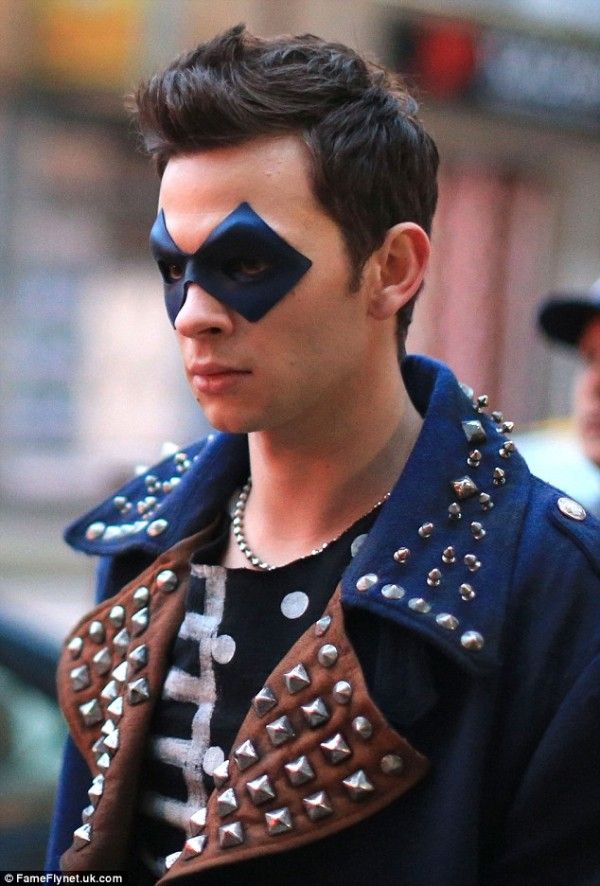
            Y’see, Timmy, sometimes this relationship to another person is all the character development someone gets.  Characters get defined by their relationships to other characters rather than by actual, active traits of their own.  Or the relationship’s a stopping point—once we know this, we don’t really need to know anything else.  They cease developing at that point because… hey, look who his mom is.  What else could you possibly need to know about him?
            I’ve seen this happen a lot.  If I had to guess, I’d say at least a third of the time when I’ve seen a big “relative reveal,” that’s pretty much it for character development.
            And I’d guess another, somewhat overlapping third of the time, the relation’s completely irrelevant to the story.
            That overlap’s a bad place to be.
            Just sayin’.
            So don’t be scared of giving your characters a family.  Even ancestors, if it comes to that.  Just make sure there’s a reason for it in the story you’re telling.
            Next time…
            Okay, I still feel bad about missing last week, so I’m going to try to make next week a twofer.  Tune in Tuesday and we’ll talk about getting feedback from your (former) friends and how to avoid being disowned when you give it.
            Until then… go write.
November 23, 2017

Not-That-Bad Guys

            So very sorry I missed last week.  I’ve been trying to get this draft finished before Thanksgiving and last week just kind of sped by before I realized it.  My apologies.
            Also, thanks to all of you who sent me suggestions for topics. I think the rest of the year is filled up kind of nice, but if you happen to be reading this and still have some things you’d like me to blab about, feel free to mention them below.  I’m always up for more writing-related ideas you’d like to hear about.
            On which note…
            Thanksgiving.  A holiday we in the U.S. equally love and dread.  Love because… well, lots of food, friends, and family.  Maybe some booze and a lot of old black and white movies, or football if that’s your thing.  Perhaps a Twilight Zone marathon.  All wonderful things to enjoy on this feast day of thanks.
            Dread because… okay, let’s be honest.  The in-laws are kind of political zealots.  It’s almost impossible to have any discussion with them that doesn’t hit “those crazy liberals” within five minutes.  Your cousin’s significant other, the would-be-chef, is going to have lots to say about the turkey (and the stuffing, and the pie, and the potatoes, and…).   And if Uncle Randy has a third glass of wine (he says it’s just wine, anyway)… well, that’s when all the dark family secrets start coming out.  Some of them are even true.
            Granted, it’s not like these people are actually evil.  They’re not villains.  Okay, yeah, Uncle Randy had a brief stint in jail but that was over parking tickets (he says he was protesting the state government).  And two-thirds of the sentence was reduced to time served.
            But, seriously, they’re not villains.  They’re not what we’d think of as “bad guys.”  They’re just… kind of annoying.  Closer to obstacles than enemies.
            So let’s talk about antagonists for a few minutes.
            I’ve talked before about bad guys and antagonists.  About how my story often needs someone to oppose my hero or heroine, even if that someone is just standing in for a larger, less defined opponent.  An IRS agent can represent the government.  A junior executive can represent big business.  A doctor can represent a debilitating condition or perhaps even death.
            These people aren’t necessarily villains, though.  They may be working—or seem to be working—against my protagonist, but it’s not like they’re up to some nefarious plot.  Oh, sure, they could be, but in most of these examples, they’re probably just people doing their job.  I’m sure pretty sure most IRS agents aren’t gleeful about telling poverty-stricken people they messed up some forms and owe thousands of dollars.  I have a good friend who’s a doctor, and she’s never mentioned getting overly excited about telling people they’re going to need an organ transplant.
            And yet… we still tend to see these people as a challenge to overcome.  Someone we have to beat or prove wrong.
            This isn’t exactly a unique thing.  Having antagonists who are also (on some level) good people is a very common plot device.  Especially once we bring in police, soldiers, doctors, and even government agencies. Yes, even in this day and age.  So my hero has to deal with antagonists that are basically… well, heroes in their own right.
            For example, let’s take a look at a classic antagonist from one of America’s iconic folk tales, one that’s been produced for film and television.
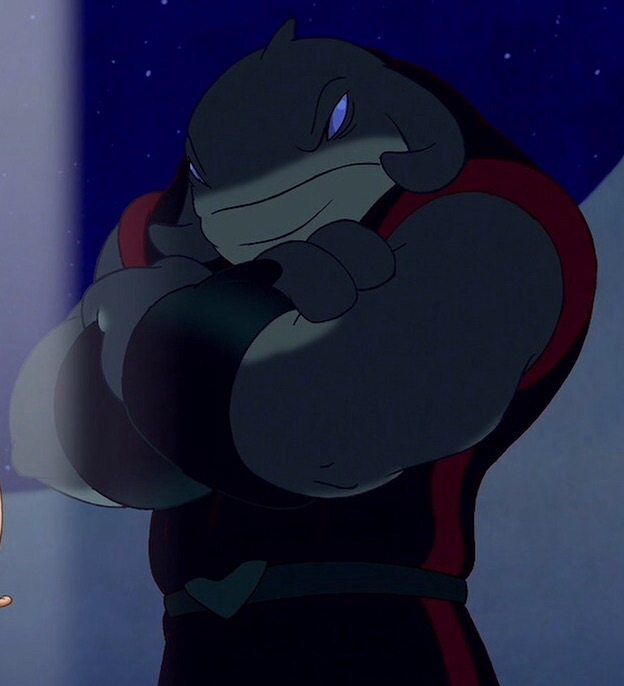
            Captain Gantu from Lilo & Stitch.
            Gantu (voiced by the super-talented Kevin Michael Richardson—seriously, check out this guy’s resume) is the chief antagonist in the movie.  He imprisons Stitch at the beginning of the movie, tried to ship him off to what amounts to eternal exile on an asteroid, and then—after Stitch escapes—Gantu hunts him down to make sure that sentence is carried out.  Although his attitude at this point could loosely be described as… well, it wouldn’t be stretching things a lot to say “dead or alive.”
            But… is Gantu really a villain?  He is CaptainGantu, after all.  He’s risen through the ranks to be an officer of the Galactic Federation, and he’s the right hand man of the Grand Councilwoman.  When he goes after Stitch, it isn’t a personal vendetta—he’s following his leader’s orders to enforce the law.  Stitch is, after all, a fugitive from justice who’s broken even more laws by escaping to Earth.
            So Gantu’s definitely the antagonist of Lilo & Stitch.  And he’s a bit overzealous, yeah.  Maybe even a bit prejudiced against lab-created life forms.  But he’s not exactly a villain.
            Which means… what, as far as we’re concerned?
            Well, first off, this is an empathy issue.  As the writer, I have to be able to see things from Gantu’s (or Uncle Randy’s) point of view.  There has to be more to them than just “opposed to my protagonist,” especially if they’re not a villain… I might want it to be more on the positive side.  Is my antagonist doing this out of a sense of duty—even a misguided one?  Are they a reluctant antagonist?  Maybe it’s a lesser-of-two-evils situation?

            Keep in mind, this doesn’t have to work both ways.  While my readers need to have some empathy for the antagonist in this case, my antagonist doesn’t necessarily have to have any for my hero.  After all, in their eyes, there’s a good chance my hero is “the villain,” and should be treated as such.

            Second is that these antagonists actually need to be good people. If we find out Gantu’s in charge of the Galactic Federation’s concentration camps, or that the in-laws regularly firebomb Planned Parenthood offices and burn crosses on people’s lawns… well, they really are villains, then.  Again, empathy. If they’re going to be good guys then they need to be good guys.  Their actions may be antagonistic towards my hero or heroine, but it should still be clear to my readers they’re decent people at heart.  At the least, they’re just trying to do their jobs.
            Also, something related to keep in mind here—something a writer-friend of mine was recently wrestling with.  If my antagonists are secretly good guys, if this is a twist that comes out somewhere in my third act… well, like any good twist, things still have to line up.  It’s going to be hard to reconcile a last minute “we’re actually the good guys” after 300 pages of murdering innocent bystanders and torturing supporting characters.  If I need my readers to misunderstand the antagonist’s earlier actions… they need to be actions that can be misunderstood.  It’s really tough to come back from shouting a bunch of racist, xenophobic slurs at strangers or shooting schoolteachers in the head.
            Y’see, Timmy, all I have to do is make them good people and have a little empathy.  If I have a real conflict, everything else should fall into place.  Or pretty close into place.
            Assuming I have solid characters.  And an actual plot.  And good dialogue. And… you know.
            Happy Thanksgiving, if you’re here in the states.  Hope tomorrow’s a peaceful and pleasant day for you, wherever you are.
            Next time… a great mystery tip.
            Until then, go write.
October 19, 2017

Center of Attention

            This week I wanted to blather for a minute about an unusual character/structure issue that I see come up now and then.  It’s one of those kinda basic ideas that can actually be difficult to spot.  Or explain.  And, to be honest, it’s something I’m dealing with a bit in my current book.
            I’ve talked before about protagonists.  How my main character should be the main focus of the story, the ones we’re spending the most time with.  Secondary characters should be secondary.  Background characters should kinda blur into the background. This all sounds straightforward, right?  I think we all understand this.
            However…
            A mistake I sometimes see is when every other character in the story immediately recognizes this character as the protagonist.  They all stop doing their own, natural thing and start treating the main character as… well, the center of things.  The character stops moving through the plot, and instead the plot begins to revolve around them.
            Let me give you an example…
            A few weekends back, one of my random movies was about a guy (we’ll call him Yakko) who wanted to propose to his girlfriend.  Had the ring and everything.  Thing was, said girlfriend got roped into being in charge of some office team-building thing up in the mountains. She had to cancel their plans for the weekend, unless…  He was an experienced camper/hiker and he had a big SUV—if he wanted to drive they could still kinda spend the weekend together.  Yakko thinks about it, decides sure, he can propose up by the lake, and agrees to help out.
            Thing was… as soon as their group got together and started driving up into the mountains, everyone started to defer to Yakko.  All the office folk who’d never met him before.  That jerk Evan from accounting.  Even his girlfriend, the one who was supposedto be in charge.  Suddenly the protagonist was the boss and nobody questioned it… or even mentioned it.
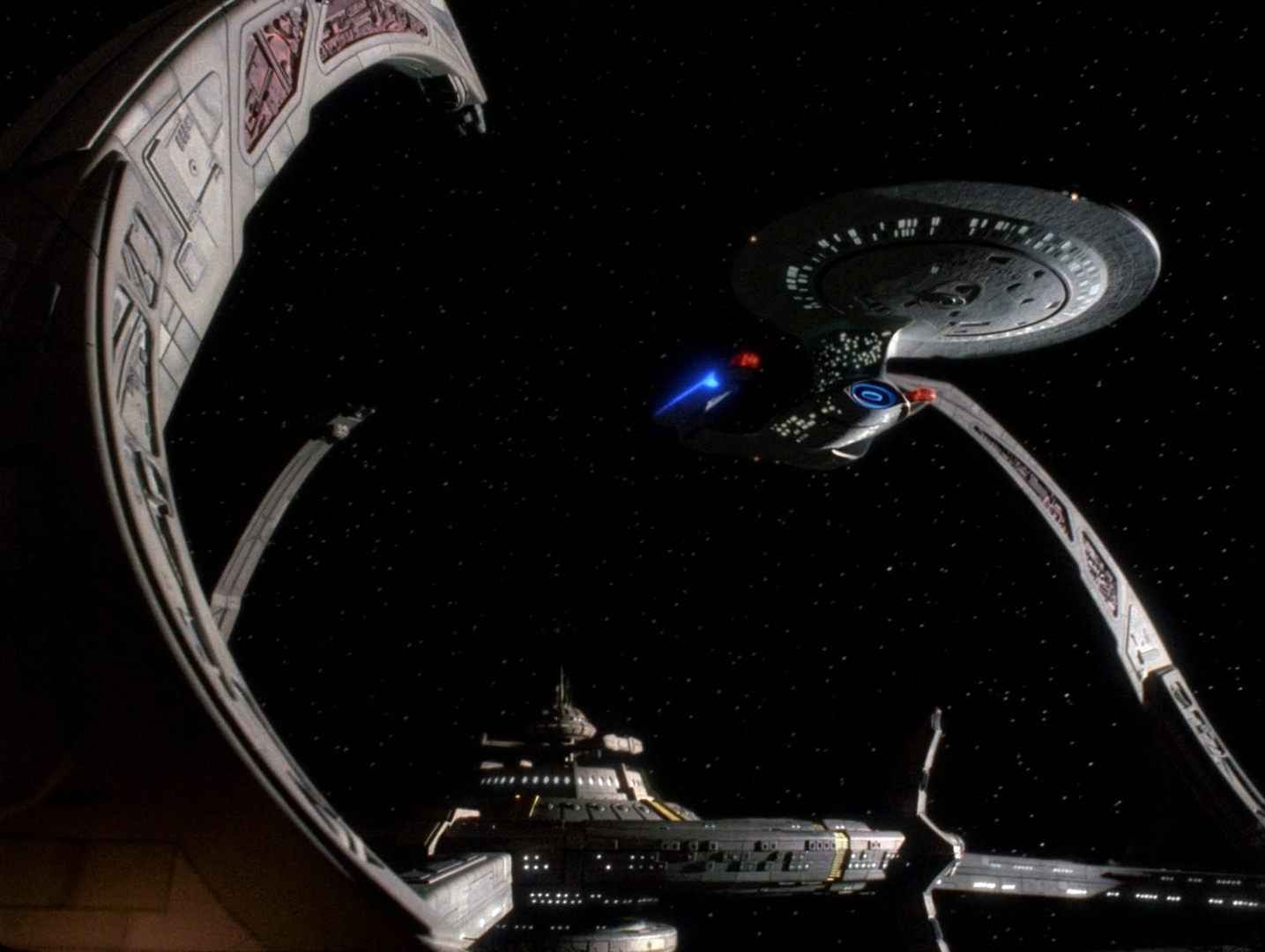
            This isn’t really surprising, on one level, that writers end up doing this.  If I want my character to be active and do things, they need to be in a position to do things, right?  Their decisions need to count and have an effect on the plot.  There’s a reason most of the Star Trek shows are about command officers and not the enlisted crew.  It’s tough to be active when everything about my position requires me to defer to someone else.
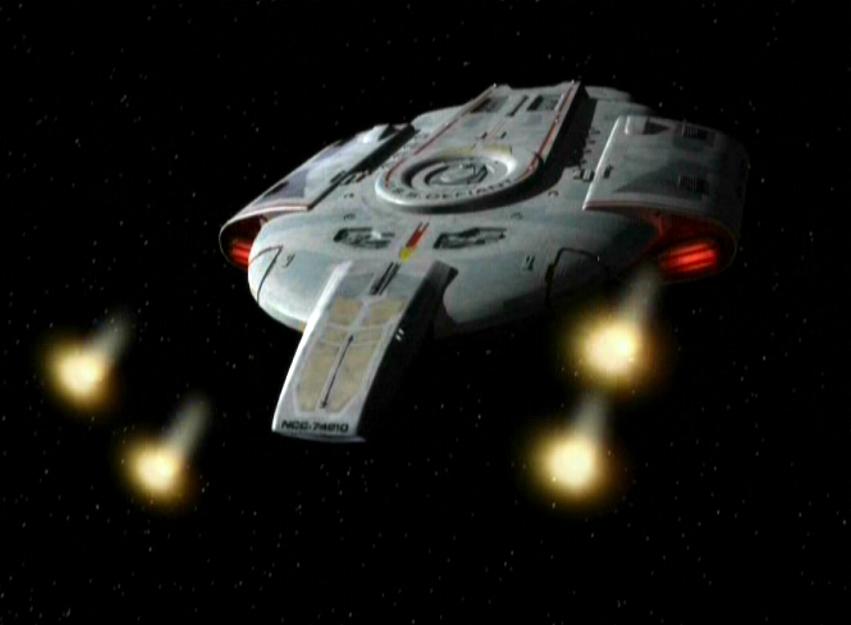
            Of course, the answer to this isn’t for me to have the unconnected boyfriend suddenly become the key figure on the teambuilding trip.  Or for the junior crewman to take command of Deep Space Nine.  Just because someone’s the center of attention in my story doesn’t make them the center of attention in theirstory.  There’s other stuff going on in the world and structures in place.  The wheels are in motion, as some folks like to say.  I may focus my story on an Army private, but that doesn’t mean suddenly everyone in the military should defer to that private just because she’s the protagonist.  The Army has a whole chain of command that would… well, kinda stop that from happening.
            How often in your own life have you had something to do, something important to say, and people just brushed you off or ignored you or talked over you?  It’s happened to me countless times.  Hell, it just happened yesterday on the phone with the bank.  It’s my life, but for some reason everyone else refuses to treat me as the most important person in it.
            Now, I can already hear people typing frantically in the comments, ready to explain three or seven ways that everyone in the US Armed Forces could end up deferring to a private.  And sure, it could happen.  Anything could happen. That’s the joy of fiction.
            But…
            Y’see, Timmy, if I’m going to do it, that explanation has to be part of my story.  It can’t be something that just happens, that I gloss over.  That’s lazy writing. That’s me writing myself into a corner and then smashing a hole in the wall rather than figuring a way out.
            I’ve talked about a similar idea before—the idea that I’m telling the right story.  It’s a weird idea, I know, but if I’ve set up a situation that requires a lot of stretching of conventional norms… well, I have to explain that stretching.  Why are we all deferring to the boss’s boyfriend?  Who put that crewman in charge of the Defiant?  Why is the general insisting everyone follow the private’s orders?
             Is my main character someone who’s going to be able to navigate my plot?  Is their social status, financial status, employment, or health going to be an unbelievable (or maybe flat up impossible) hindrance to the story I’m trying to tell?  If they aren’t, I’m probably going to need to explain or justify a lot of things.
            Or maybe I’m just focusing on the wrong person.
            In my current project, the main character is the fish out of water.  My ignorant stranger.  She’s the new kid on the job, and this means she’s pretty far down the totem pole.  So… why does she end up in the important meetings once the crisis occurs?  How is she an active person, making decisions that affect the story when there are so many people above her making their own decisions?
            It’s taking a bit of work.  But I’m making it happen.  Hopefully in a believable way.
            Next time, I wanted to talk about the creepiest thing I’ve ever seen.

            Until then… go write.

            I posted a link to last week’s rant over on my Facebook fan page, and somebody asked a question about it.  And I started answering there, but then I realized it’d be better over here. And then (as I was scrawling my response in the comment section) I realized it’d work even better as a quickie Tuesday post.
            So… the question.
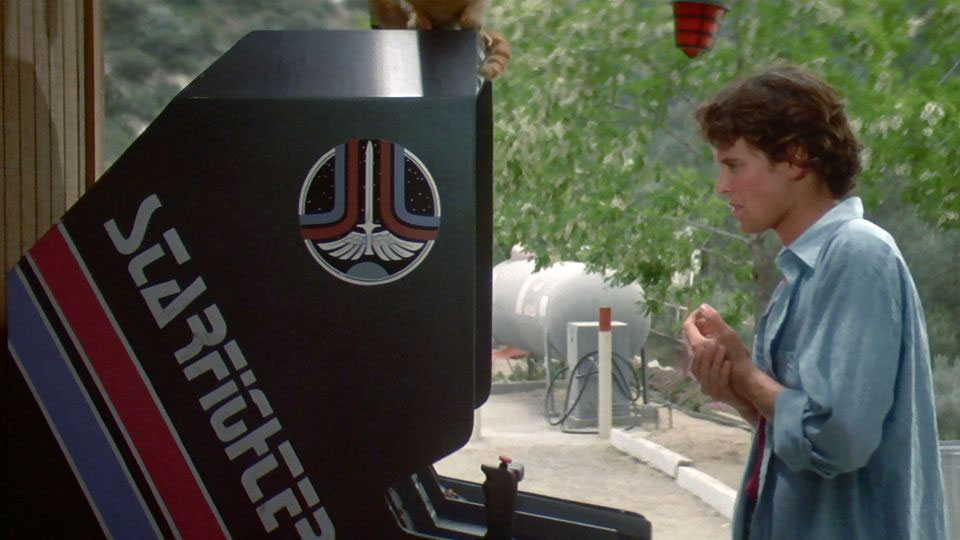
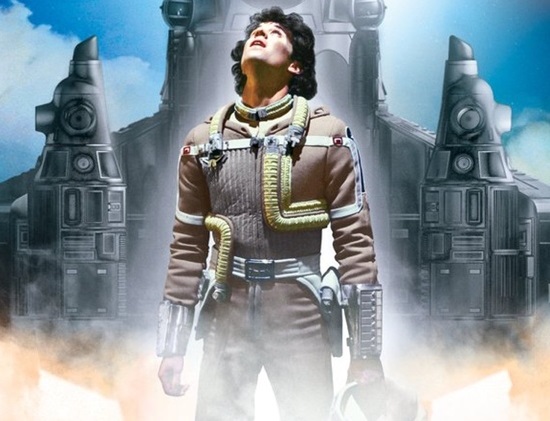
            I’m curious how you view Alex Rogan’s arc in “The Last Starfighter”. It seems to violate your rule about chosen ones not getting invested in the other world. As a character arc, it was pretty believable to me, 
            A fair point.  I tried to make this clear, but I can see where it might not be.  Two points from Ravenclaw for that one.
            Okay, I hate that I have to refer to this but…
            (shudder)
            In his various musings on story, Joseph Campbell has a step—“rejecting the call.” At first glance it seems like it’s a rebuttal of my “not getting invested” point, but it’s not. Y’see, rejecting the call happens much earlier in the plot. In The Matrix, for example, it’s Neo refusing to trust Morpheus when they first talk on the phone (and getting arrested). In The Force Awakens, it’s Rey insisting she can’t leave Jakku and has to stay behind. And here, in The Last Starfighter, it’s Alex learning about aliens, the KoDan Armada, the head-crushing bad guy, and saying “nope, nope, nope—take me home!”
            But really, how long does that refusal last?  In any of these cases? Alex is home for all of… what, an hour?  Two?—before he realizes he has to go back.
            One of the thing about investment is that it takes time. In-story it takes even more time.  When a plot dives head-first into action on page one, it doesn’t mean much because we don’t know who these people are. And how often do we roll our eyes when a story tries to convince us of “love at first sight”…?
            When someone refuses to get invested and walks away, that happens later in the story.  In the particularly bad movie that sparked that rant, the chosen one walked away over an hour into the movie.  Within the movie, weeks had passed, weeks of people training this guy as the chosen one.
            In a way, this is a lot like the difference between saving the cat and patting the dog.  The isolated acts themselves look very much the same, but they’re different because of when they happen in my story and what they’re trying to accomplish.  Refusing the call is a character thing.  It’s a believable response to being shown a bigger world, or a bigger destiny, and it helps ground our suddenly-overwhelmed protagonist and make them more believable.
            But refusing to be invested is just a cheap attempt to build tension.  It undercuts any character growth that’s happened and makes the reader/audience question if this character can really be trusted. Which really sucks if the character is my long-heralded chosen one protagonist.
            In short, it makes my story worse.
            Next time, character stuff. For real.
            And, hey—two weeks from today I’ll be at Borderlands in San Francisco with my brand-shiny-new second hardcover, Paradox Bound. Give ‘em a call, reserve a copy, and come say “hi!”
            Until then, go write.

Categories